Saffron Soaked in Milk: Best Time for Maximum Flavor and Benefits
Soak saffron in warm milk for 15 to 30 minutes before drinking it or adding it to a recipe. That is usually enough time for the milk to turn golden and take on a clear saffron aroma. A longer soak is harmless if the milk remains safely refrigerated, but it does not follow that every extra minute produces more flavour or a greater health effect.
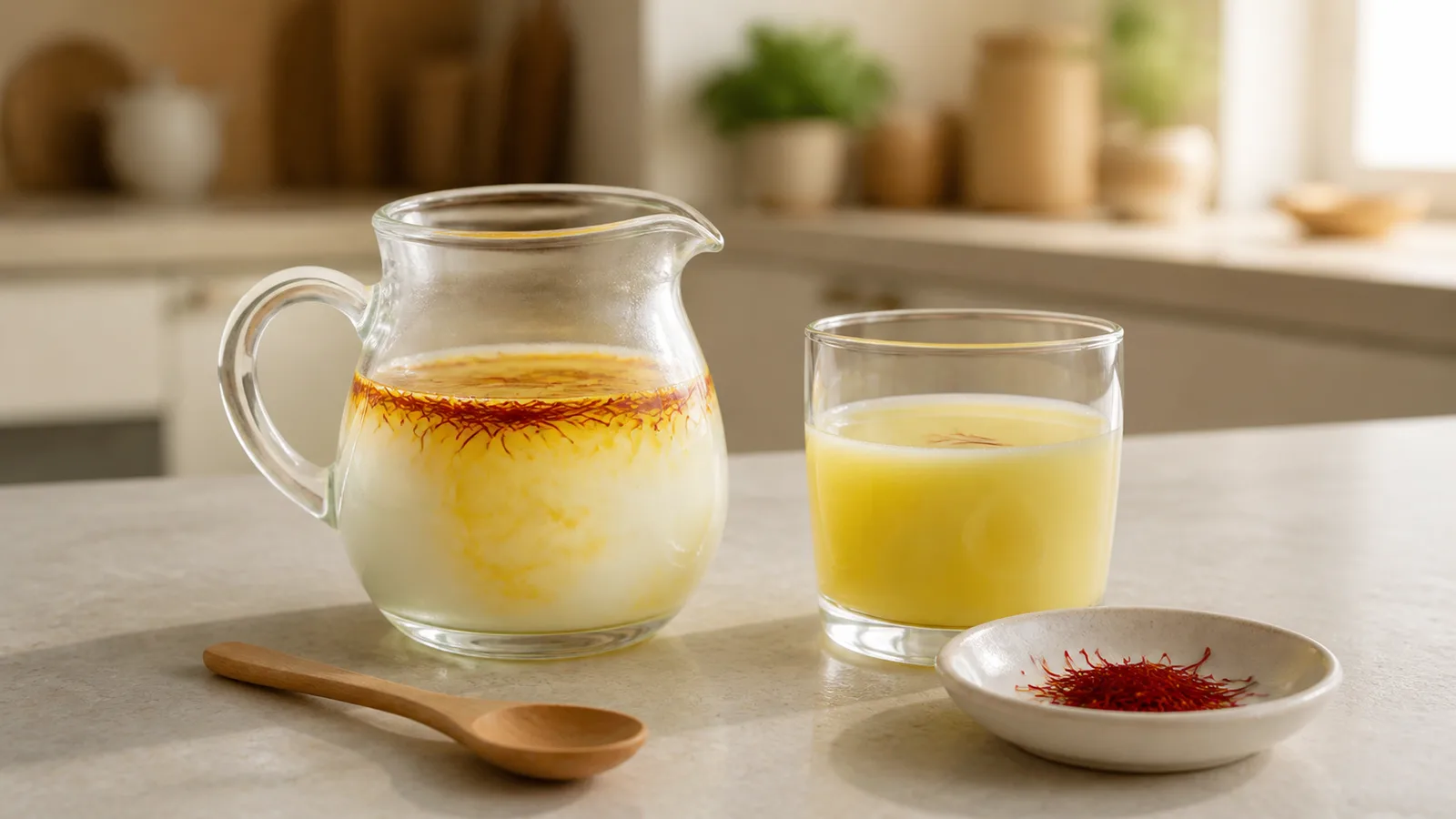
That direct answer protects what matters in the question: how long to soak saffron in milk. In practical terms, the saffron soaked in milk time is guided by colour, aroma and the dish you are making, not by a medical absorption target. Warmth speeds the infusion; a hard boil is unnecessary.
Soaking Time for Saffron in Milk
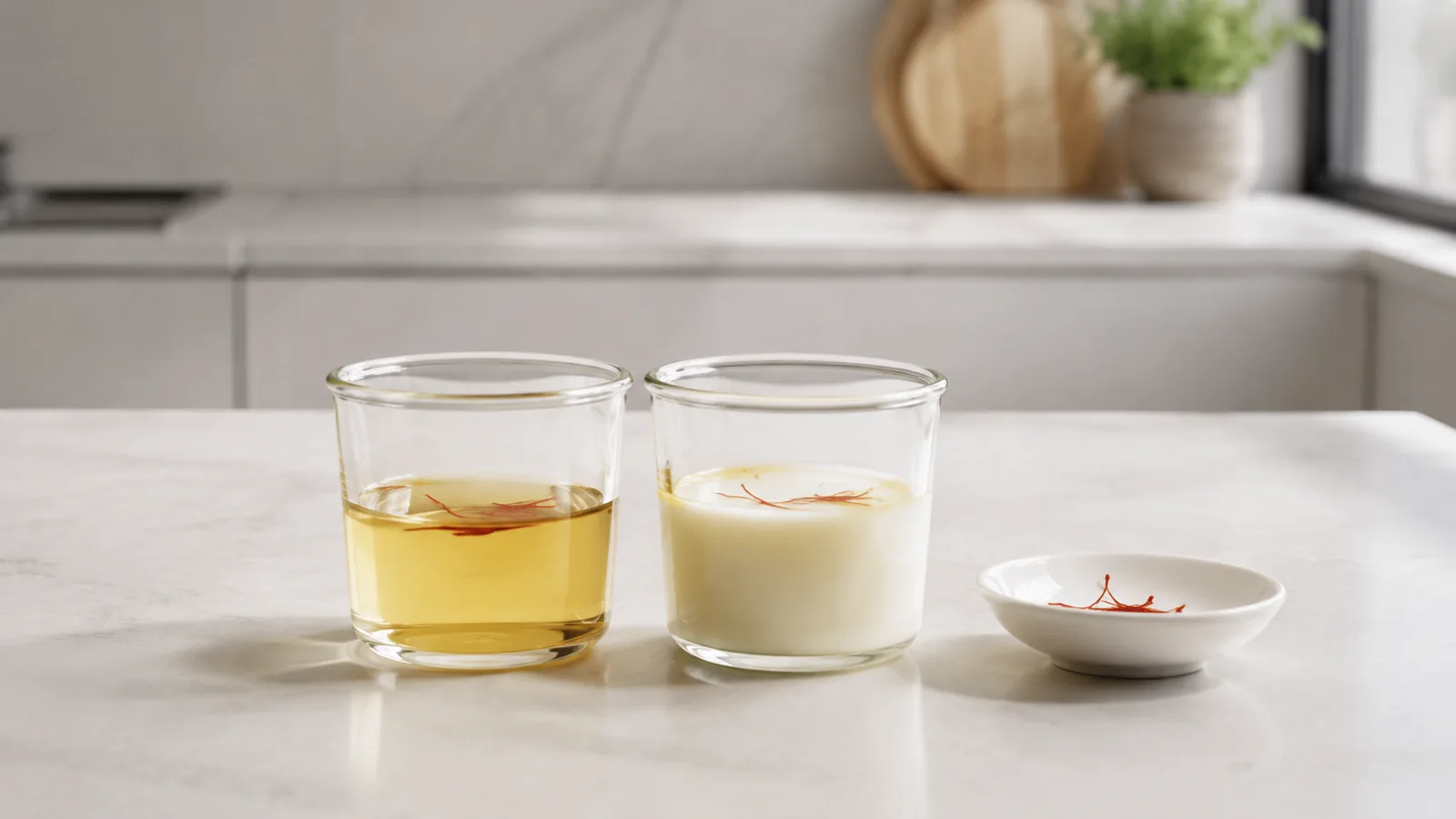
Use milk that is warm and steaming gently, not violently boiling. Lightly crushing the threads increases the surface area exposed to the liquid. With saffron soaked in warm milk, look for an even golden colour and smell the infusion after 15 minutes. Give it the full 30 minutes when the threads are left whole, the milk is only lukewarm or you want a fuller aroma.
Cold milk works more slowly. If you prepare saffron milk in advance, cover it and let it infuse in the refrigerator rather than on the counter. The extraction will continue, but there is no fixed point at which the drink suddenly becomes “more beneficial.” Food temperature and storage are separate from saffron chemistry.
Does saffron dissolve in milk?
Saffron does not dissolve or melt in milk like sugar. Its water-soluble colour compounds disperse into the liquid, and aroma and taste move out of the threads, but pieces of stigma may remain visible. That is normal. A drink can be fully infused while still containing fine red strands.
If you are wondering how much time saffron takes to dissolve in milk, judge the infusion rather than waiting for the threads to disappear. Does saffron melt in milk? No. The answer to how to dissolve saffron in milk is to bloom it: the colour and aroma infuse the liquid while some thread material remains. Light crushing, warm liquid, stirring and a 15–30 minute rest are the useful steps. Straining is optional: leave the threads in for appearance, or pass the milk through a fine strainer for a smoother dessert.
Why Soak Saffron in Milk?
Soaking spreads saffron’s colour, aroma and slightly bitter, honeyed flavour through the milk before it reaches the rest of a dish. That prevents one spoonful from receiving all the threads while another gets none. It is especially useful in rice pudding, custard, cake soak, ice cream, kulfi and drinks.
Milk is not required to “activate” saffron, and it has not been shown to make saffron compounds automatically easier for the body to absorb in a clinically meaningful way. Water can also bloom saffron well. Choose milk when its flavour and texture belong in the recipe; choose warm water when you want an infusion without dairy.
How to Prepare Saffron Milk
Here is how to make saffron milk at home. This is also how to use saffron in milk for a drink, pudding or cake soak.
- For one cup (about 240 ml) of milk, begin with a small culinary pinch—roughly 8 to 12 average threads. Thread sizes vary, so adjust future batches by taste rather than treating the count as a dose.
- Lightly crush the threads with clean, dry fingers or a small mortar. Do not grind them into dust.
- Warm a few tablespoons of the milk until steaming. Remove it from direct heat.
- Add the saffron, cover, and leave it for 15 to 30 minutes.
- Stir the golden infusion into the remaining warm or cold milk. Sweeten only if the recipe needs it.
Can we boil saffron in milk? Milk may be brought to a simmer when a recipe requires it, and the visible clicked query is answered directly here, but prolonged hard boiling is not needed to extract saffron. Heat the milk first, take it off the strongest heat, then add the bloomed infusion near the end. This also reduces the chance of scorching or boiling the milk over.
Honey, sugar, cardamom, pistachio and almonds are optional flavour choices, not requirements. Account for allergies and the added sugar in sweetened drinks. Use pasteurised milk, refrigerate leftovers promptly and discard milk left at room temperature beyond safe limits; FoodSafety.gov’s handling guidance gives the standard two-hour rule, shortened to one hour in very hot conditions.
Benefits of Drinking Saffron Milk
The clearest saffron milk benefits are culinary: a fragrant drink, golden colour and the nutrients supplied by the milk you choose. Dairy milk can provide protein, calcium and other nutrients; a plant drink has a different profile, so check its label. Adding saffron does not transform either one into a treatment.
Clinical research has examined defined saffron extracts or stigma preparations for particular outcomes. A 2026 GRADE-assessed review of mood trials found improvement on some self-reported depression and anxiety scales but not on several clinician-rated or other measures, with substantial differences among studies. Those trials do not prove that a pinch in milk lifts mood, improves cognition, treats anxiety, aids digestion, lowers inflammation or produces general wellness.
Claims about saffron milk benefits for male or female health need the same restraint. The drink has not been shown to increase fertility, testosterone or sexual performance. Nor is drinking milk with saffron a skin whitening method. Hydration and nutrition support ordinary body function, but saffron milk does not change a baby’s complexion, lighten adult skin or replace care for pigmentation.
What is the best time to drink saffron milk?
There is no scientifically established best time to drink saffron milk. Questions about how to take saffron with milk or how to drink saffron with milk have the same practical answer: morning and night versions contain the same ingredients. Drink it when it suits the meal, your digestion and your total energy intake. Someone who finds milk heavy before bed may prefer it earlier; someone using the infusion in a dessert will follow the recipe instead.
Benefits of saffron milk at night are often described as guaranteed sleep or relaxation, but a homemade drink has not been proven to treat insomnia. Avoid very hot milk, and do not add more saffron because you want a stronger effect. If milk triggers reflux or lactose symptoms, changing the time will not necessarily solve the underlying problem.
Can we drink saffron milk daily? For many adults who tolerate the ingredients, a lightly flavoured culinary drink can fit into an ordinary diet, but daily use is optional. Sweetened kesar milk can add substantial sugar, and a daily food habit should not be confused with taking a concentrated saffron supplement.
Saffron milk and pregnancy
Searches for saffron milk benefits in pregnancy often promise a fairer baby, easier labour, better fetal growth or a special month in which kesar milk should begin. Those promises are not established. A current review of saffron practices and pregnancy evidence found that conclusions depend on preparation, amount and timing and that the evidence remains limited.
There is no evidence-based answer saying that every pregnant person should start saffron milk in a particular month, trimester, morning or night. Do not use concentrated saffron or try to induce labour. Culinary exposure and a medicinal extract are different, but individual advice still matters because pregnancy, medicines, allergies, diabetes and other conditions change the decision.
If you are pregnant, trying to conceive or breastfeeding, show your midwife, doctor or pharmacist the actual saffron product and explain how much you intend to use. A question such as how many saffron threads per day in milk cannot be converted into a universal pregnancy dose: threads vary, and clinical preparations are not measured by household strand counts.
Kesar milk, golden milk and dessert variations
Saffron milk is also called kesar milk, kesar doodh or kesar dudh. The core method remains the same: bloom real threads, then stir the infusion into milk. Cardamom and nuts make a traditional flavoured drink; turmeric creates a different “golden milk” profile; chilled milk can become a smoothie or milkshake.
For saffron tres leches, kunafa milk cake, custard or dulce de leche, use the 15–30 minute infusion as one component of the recipe. The dessert’s sugar, fat, baking and refrigeration requirements still apply. A saffron-flavoured packaged drink may contain sugar, flavours or allergens that loose threads do not, so read its own ingredient and nutrition label rather than assuming all kesar milk is equivalent.
Where to Buy High-Quality Saffron
Choose dry whole threads in a sealed, clearly labelled pack with a net weight, seller details and traceable batch information. Whole threads are easier to inspect than powder. Colour alone cannot prove purity or origin, and an extremely low price for a claimed weight deserves caution.
For this recipe, quality shows itself in a clean saffron aroma, gradual golden colour and balanced flavour without a chemical smell. Store the remaining threads in a tightly closed container, away from light, heat and moisture. Buying a small amount you will use well is better than leaving a bulk pack open beside the cooker.
Conclusion: The Best Time to Soak Saffron in Milk
Soak saffron in warm milk for 15 to 30 minutes. Crush it lightly, keep the milk below a hard boil, and judge the infusion by its golden colour and aroma rather than waiting for the threads to vanish. Longer is acceptable under refrigeration, but it is not a shortcut to stronger health effects.
Use saffron milk for flavour first. Treat benefit, daily-use and pregnancy claims with care, keep sweeteners proportionate, and follow milk-safety rules. That produces a better cup—and a more honest one.