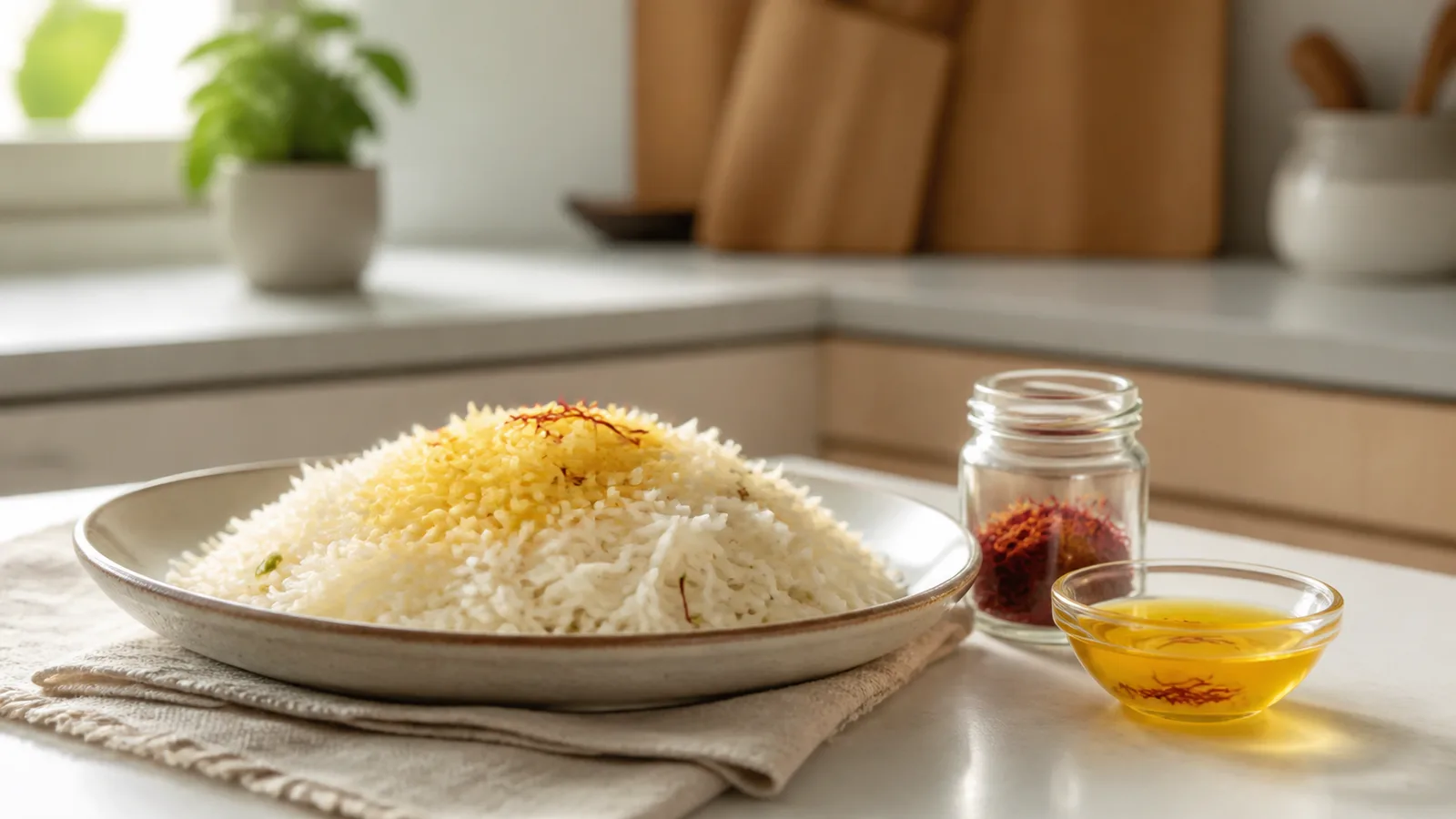
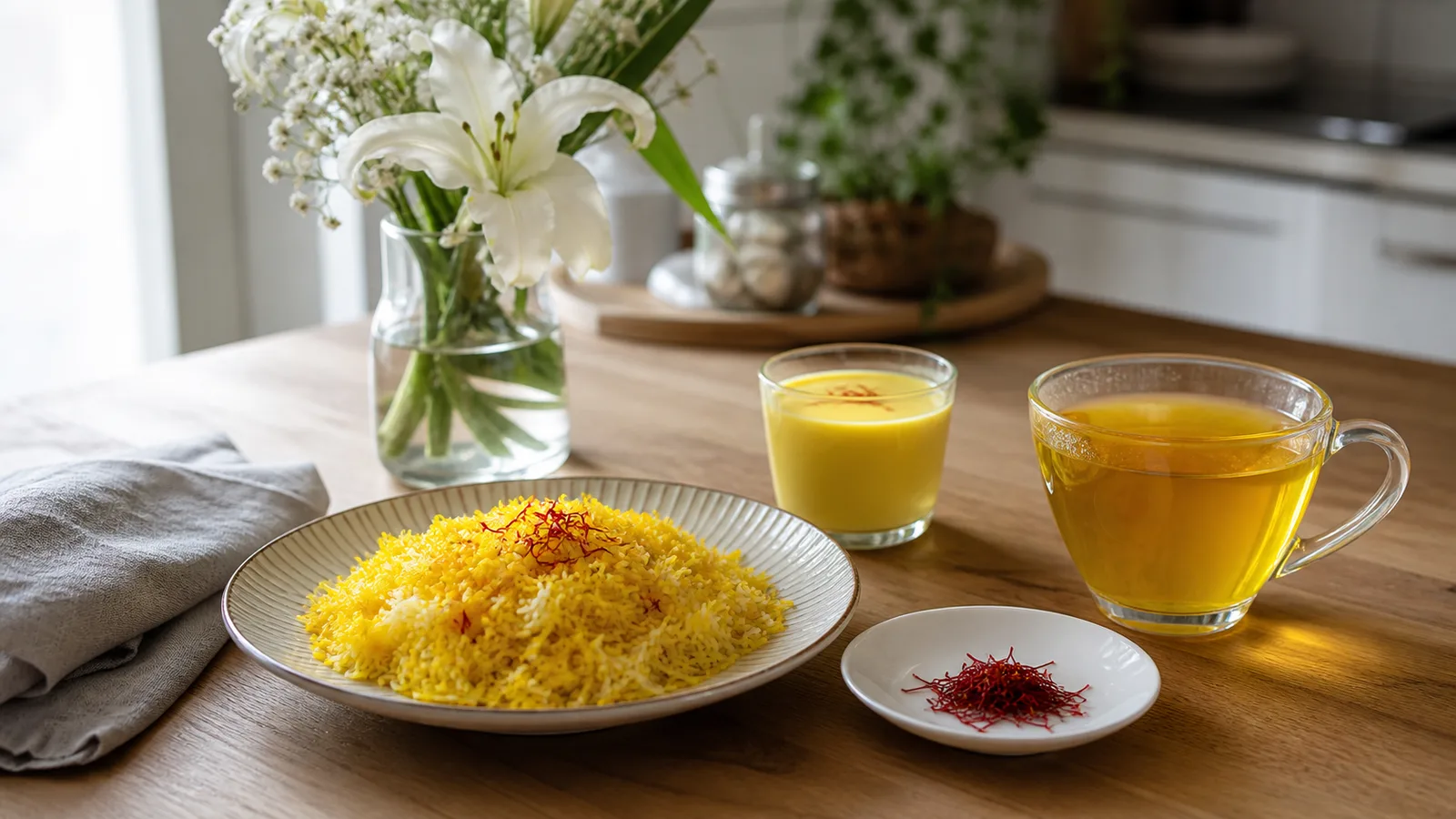
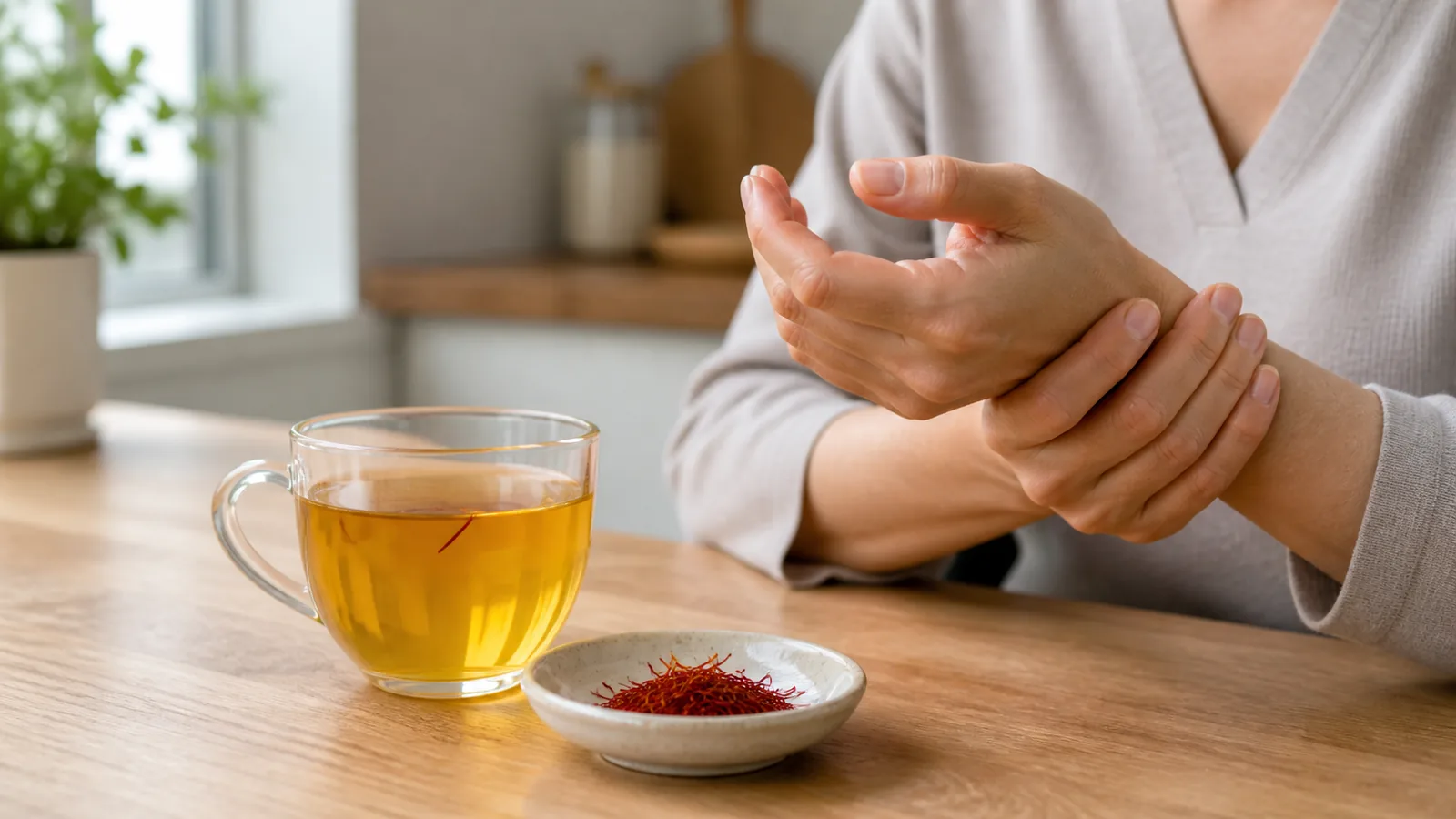
Saffron tea benefits start with a straightforward cup: hot water draws colour, aroma and flavour from a few saffron threads, creating a normally caffeine-free drink without added sugar. Saffron itself has been studied for mood, sleep, sexual function, menstrual symptoms and metabolic markers. Most of that research, however, used measured powders or standardized extracts—not ordinary tea.
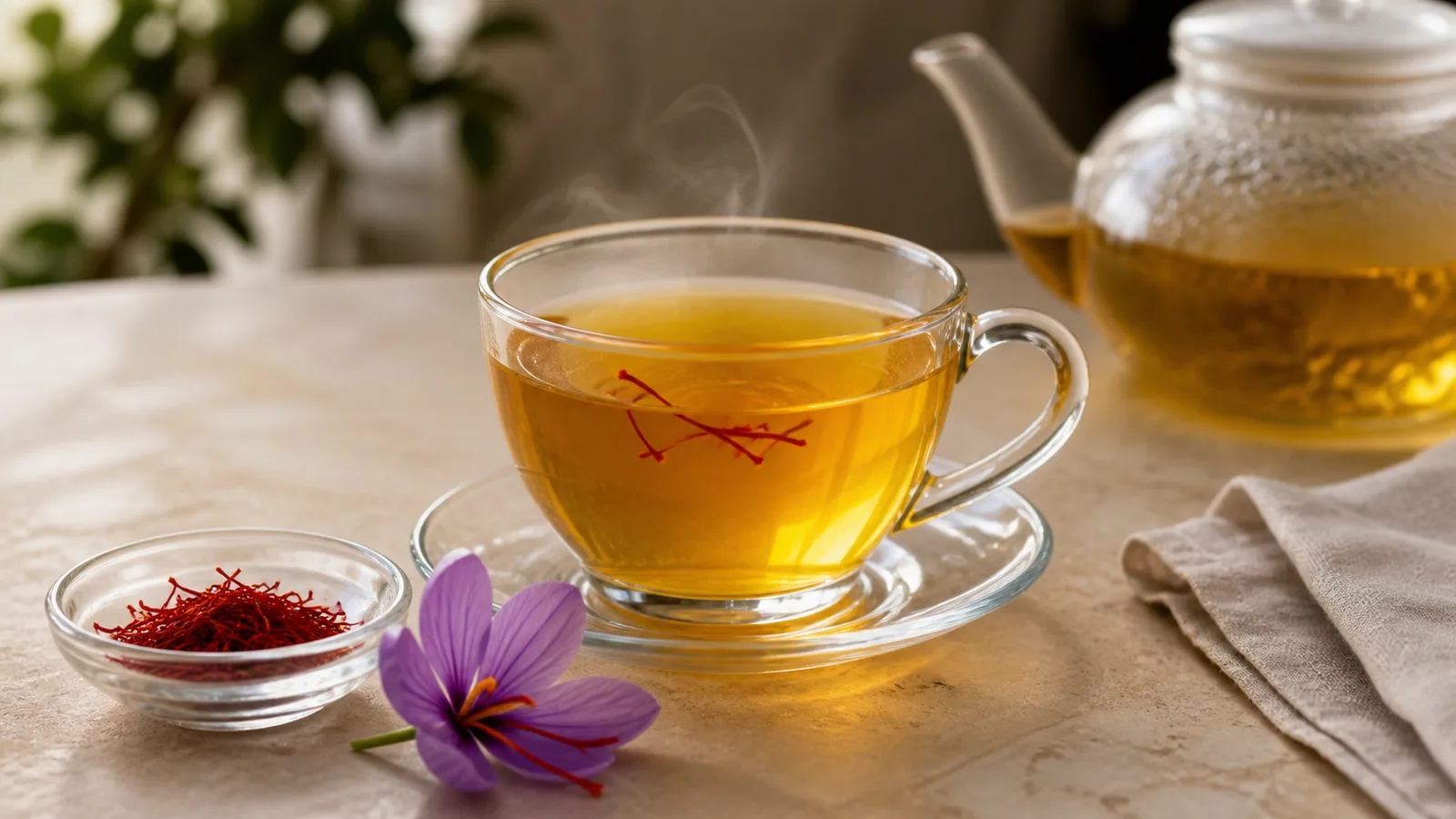
That distinction changes the answer to “what is saffron tea good for?” It can be an enjoyable way to use the spice and a calm part of a routine. It is not established as a treatment for depression, insomnia, sexual dysfunction, heart disease, cancer, PMS or weight loss. “Healing power” in the title should not be read as a medical guarantee.
What is saffron tea?
Saffron comes from the red stigmas of Crocus sativus. A true saffron flower tea therefore uses those dried red threads. It is not normally made from the purple petals, although petals and stigmas contain different compounds and are both investigated in research. Product labels should state which plant part is inside.
To make one cup, lightly crush 3–6 threads, cover them with 240 ml freshly boiled water and steep under a lid for 8–10 minutes. Strain if desired. Honey, lemon or cardamom can be added for flavour, but none is needed to “activate” saffron.
Does saffron tea have meaningful nutritional value?
Dry saffron contains carbohydrate, protein, fibre and minerals when analyzed by weight. That does not make a culinary infusion nutrient-dense. A tablespoon of saffron would be an unusually large serving, and a few threads contribute too little material for their calories, protein, iron, magnesium, manganese, phosphorus, potassium or vitamin C to matter nutritionally.
The old per-tablespoon table also listed more grams of protein and carbohydrate than its stated 2.1 g serving could physically hold once fibre and minerals were added. It should not be used to plan a diet. The relevant compounds for an infusion are the ones involved in saffron’s colour, taste and aroma, including crocin-related pigments, picrocrocin and safranal.
Benefits of saffron tea: an evidence-based view
Antioxidant and anti-inflammatory activity
Saffron and compounds such as crocin, crocetin and safranal show antioxidant or anti-inflammatory activity in laboratory work. Kaempferol is discussed more often in relation to saffron petals than the stigmas used for tea. These descriptions concern mechanisms; they do not demonstrate that one cup lowers chronic inflammation, relieves inflammatory pain or prevents cardiovascular, autoimmune or metabolic disease.
Mood, stress, anxiety and depression
This is one of the better-studied areas for saffron preparations. A current GRADE-assessed review found moderate-certainty evidence for improvement on some self-reported depression and anxiety scales, while several clinician-rated outcomes were not significant and study results varied. The trials did not establish saffron tea as a natural antidepressant. Persistent low mood, panic, loss of function or thoughts of self-harm need qualified support.
Sleep quality and insomnia
A meta-analysis of randomized trials reported improvements in several sleep scales with saffron supplementation, but the included preparations and doses were far more defined than a home infusion and long-term safety still needed study. A warm caffeine-free cup may fit a bedtime routine. It has not been shown to regulate a person’s sleep cycle, increase deep sleep or treat insomnia in tea form.
Libido and sexual function
A systematic review of five small studies found a pooled positive effect of saffron preparations on sexual dysfunction, with differences across outcomes and substantial variation among studies. Some trials involved people experiencing antidepressant-related sexual effects. They used measured interventions, such as 30 mg daily for several weeks, under study conditions. That does not justify putting 30 mg into tea, stopping an antidepressant or calling the drink an aphrodisiac treatment.
Heart health, cholesterol and blood pressure
Research on saffron supplementation and cardiovascular risk markers is mixed. One systematic review and meta-analysis found a small change in diastolic blood pressure but no significant change in lipid profile, systolic blood pressure or several other measures, and called for longer trials. This is not evidence that saffron tea lowers LDL cholesterol, prevents plaque, improves circulation or prevents heart attack and hypertension.
Cancer prevention or treatment
Saffron compounds have been studied in cells and animals, including work on colon, skin, prostate, lung, breast, cervical and bone-marrow cancer models. A cell result cannot show that tea selectively destroys cancer in a person or makes chemotherapy work better. The US National Cancer Institute states that there is no proof a food, herb or supplement can slow, cure or prevent cancer from returning. Saffron tea must not delay diagnosis or treatment.
Saffron tea benefits for female health
Searches for saffron tea benefits for female health often refer to premenstrual symptoms, period pain or mood changes. A 2026 systematic review reported favourable pooled results for defined saffron interventions in PMS and dysmenorrhea trials. It did not establish an ordinary cup of tea as treatment, show that inhaling its aroma for 20 minutes reliably lowers cortisol, or prove that the drink regulates hormones.
A warm drink may feel soothing during a period. Severe pain, fainting, unusually heavy bleeding or a major cycle change needs clinical assessment. During pregnancy or breastfeeding, culinary quantities and concentrated saffron products are not interchangeable; discuss frequent or medicinal use with a clinician.
Appetite and weight loss
Unsweetened saffron tea is a low-energy drink, but that is different from causing weight loss. Studies of appetite or body weight generally use supplements, and results cannot be assigned to tea. Crocin and crocetin do not make a cup a fat-burning remedy. Adding honey or sugar also changes the drink’s energy content.
How much saffron belongs in tea?
Use a few threads for flavour, not a clinical-study dose. More saffron can make the cup bitter and does not guarantee a larger benefit. Supplements and extracts differ in concentration, composition and testing, so milligram amounts from research papers are not kitchen instructions.
- Ask a clinician before frequent medicinal use with antidepressants or medicines for blood pressure, blood sugar or bleeding.
- Do not replace a prescribed treatment with saffron tea or change a medicine because of a small study.
- Stop and seek help for swelling, breathing difficulty, severe dizziness or another sign of an allergic reaction.
- Persistent sleep, mood, sexual, cardiac, menstrual or weight concerns deserve an assessment aimed at the cause.
The practical answer
The health benefits of saffron tea are frequently overstated because evidence from extracts, powders, cells and animals is collapsed into one cup. The honest version is still worthwhile: saffron tea is aromatic, colourful, usually caffeine-free and easy to drink unsweetened. Research on saffron preparations is promising in selected areas, but preparation and dose determine what a study can actually support.
For detailed steeping guidance, see our saffron tea preparation guide. If you want flavour variations rather than another evidence review, the six saffron herbal tea recipes pair the threads with chamomile, cinnamon, lemon balm, cardamom, orange blossom and thyme.