Is saffron good for diabetes? As a spice, it can fit into a diabetes-aware meal because a few threads add colour and aroma with very little carbohydrate. It does not treat type 1 or type 2 diabetes, replace insulin or other medicine, or make a sugary drink or large serving of rice harmless.

Research on saffron for diabetes is more interesting than a simple yes or no, but it needs careful reading. Clinical trials have studied measured saffron powders and extracts, not the small culinary amount scattered over dinner. The difference between seasoning and supplementation matters.
Does saffron contain sugar?
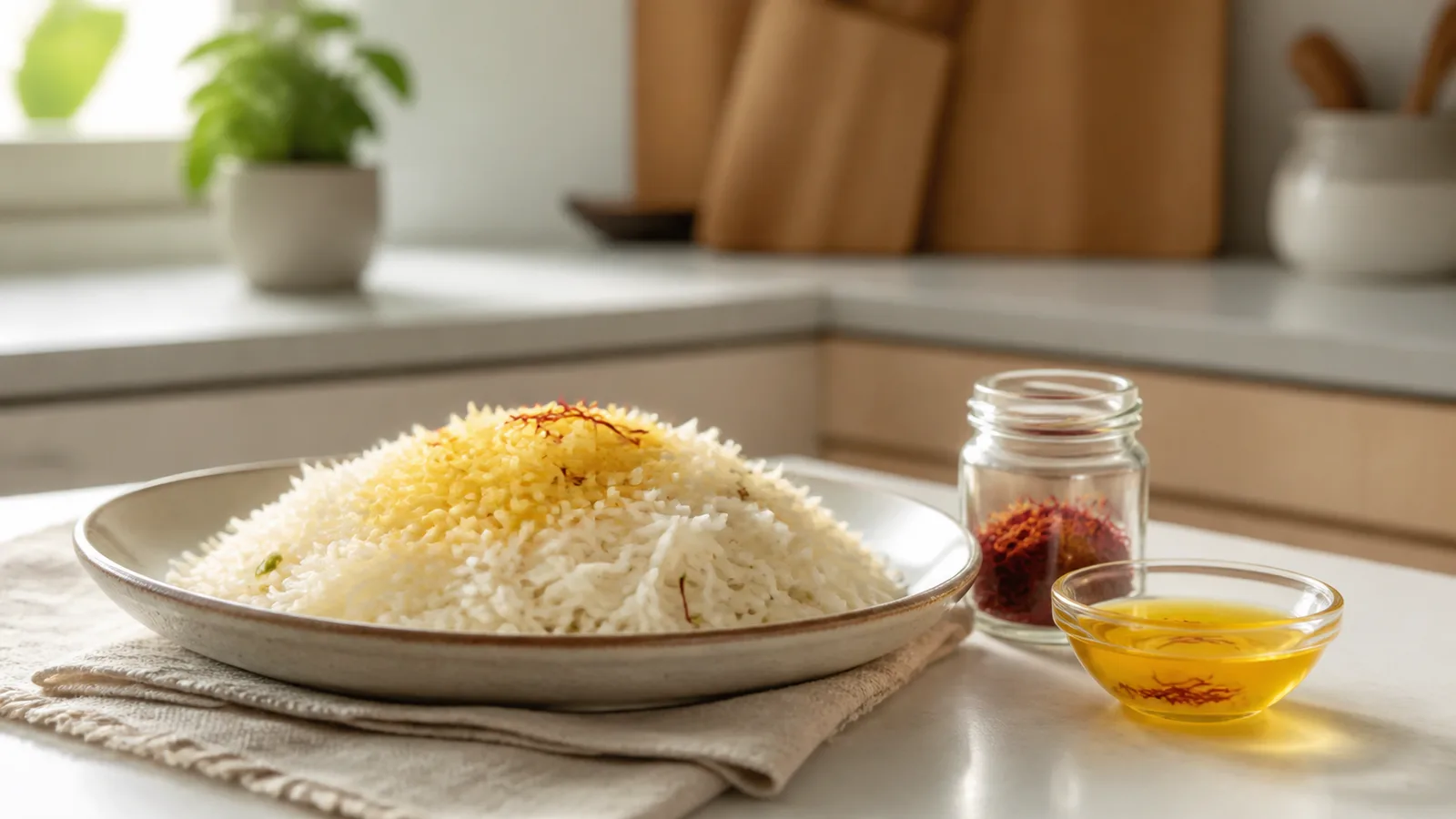
Dry saffron, like other plant material, contains carbohydrate. The practical question is quantity. A dish normally uses only a small pinch, divided among several servings, so the threads themselves are not a meaningful source of sugar in ordinary cooking.
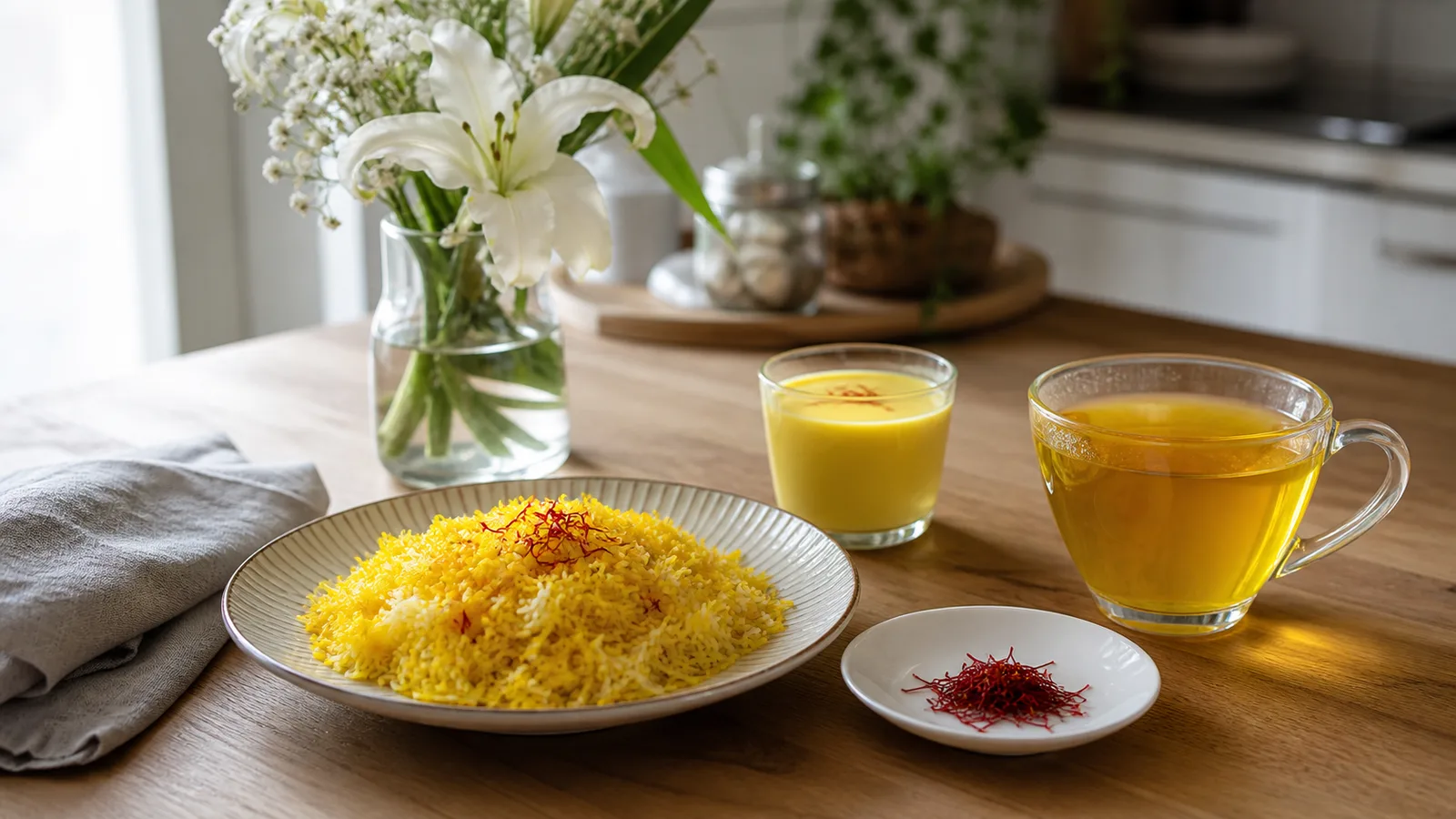
Look instead at what accompanies them. Honey or syrup added to saffron tea contributes added sugar. Milk contains lactose, and sweetened milk adds more. Rice, bread, potatoes and desserts contribute starch or sugar even when their colour comes from saffron. The CDC’s carbohydrate-counting guidance explains why total carbohydrate in the portion—not whether a food tastes sweet—is central to meal planning.
What studies of saffron for diabetes actually found
A 2024 systematic review and meta-analysis combined 10 randomized trials with 562 participants who had diabetes. Compared with placebo, saffron supplementation was associated with an average reduction of about 8.4 mg/dL in fasting glucose and 0.22 percentage points in HbA1c. It did not significantly change insulin, HOMA-IR or QUICKI measures.
Those averages are modest, and the authors warned that the studies differed in quality. Interventions ranged from 5 mg to 1 g per day—an unusually wide span—and used defined supplements under trial conditions. The result does not establish saffron as diabetes treatment, identify an effective household dose, or show that saffron tea, milk or rice produces the same effect.
A later GRADE-assessed review of randomized trials likewise examined measured supplements in people with diabetes or prediabetes. That is a reason for continued research, not a reason to replace established care. The US National Center for Complementary and Integrative Health states that reliable evidence does not currently show herbal supplements control diabetes or its complications and warns against substituting them for medical treatment.
Antioxidants, manganese and stress: three common overclaims
Antioxidants do not prove blood-sugar control
Saffron contains crocin-related pigments, crocetin, safranal and other plant compounds. They are studied for antioxidant and metabolic effects. A mechanism seen in cells or animals cannot show that a pinch of saffron lowers a person’s glucose, prevents diabetic complications or repairs tissue damaged by long-term high blood sugar.
A pinch is not a manganese supplement
Manganese participates in normal metabolism, but the amount of saffron used to season one meal is tiny. Describing it as a significant manganese source for regulating blood sugar confuses the nutrient composition of dry spice by weight with what a person actually eats.
Feeling calmer is not diabetes treatment
Stress can affect sleep, appetite, medication routines and glucose readings. Saffron preparations have separate research on mood, but a calming association does not make the spice a way to control blood sugar. Persistent anxiety, low mood or diabetes distress deserves support in its own right.
How do you use saffron in a diabetes-aware meal?
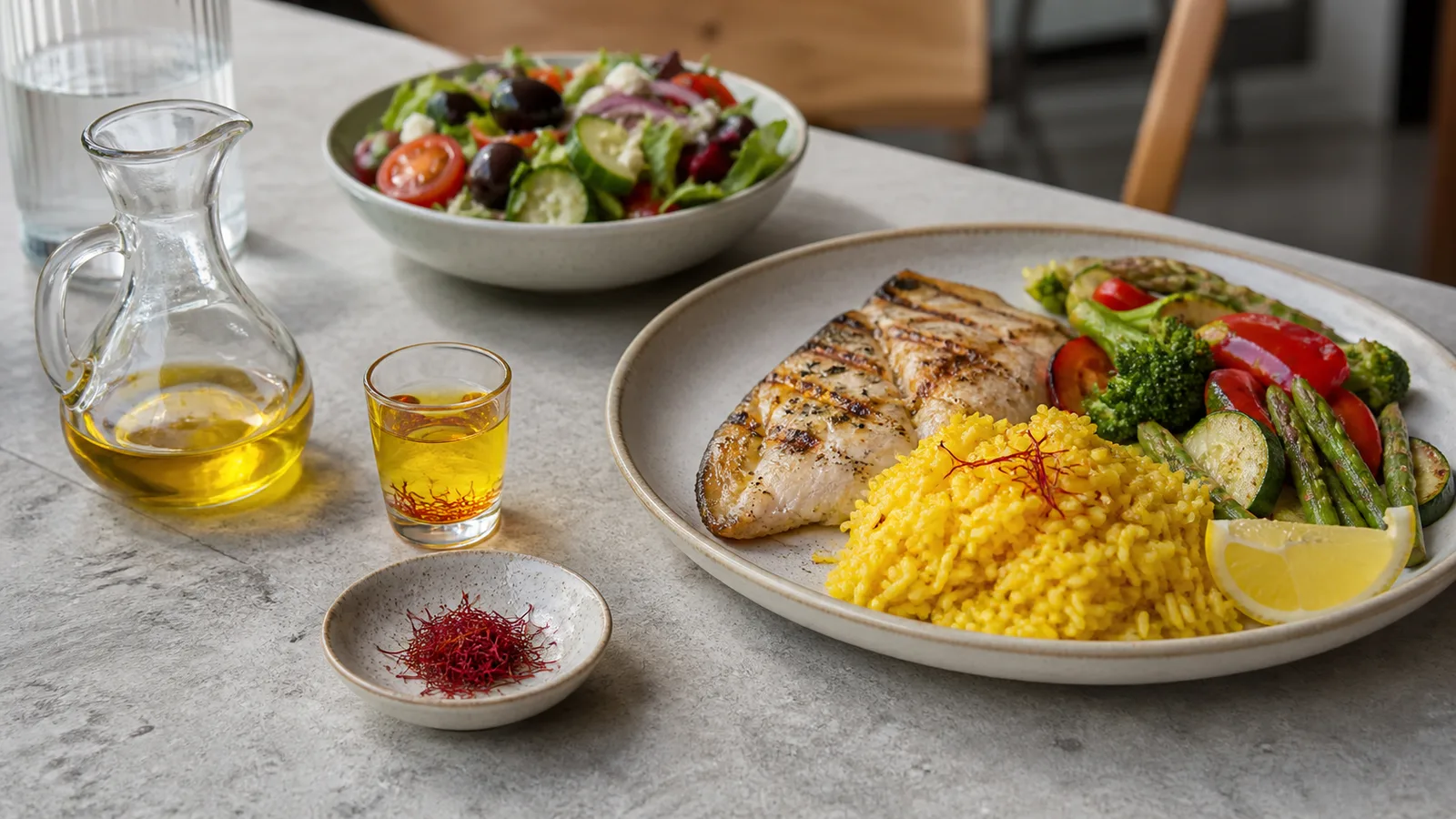
Use saffron for flavour rather than as medicine. Lightly crush a few threads, steep them in a tablespoon or two of warm water for 10–15 minutes, and add the infusion to the dish. This spreads the colour evenly without needing sugar. Our guide to using saffron in cooking explains the blooming method and suitable dishes in more detail.
- Rice: season it with saffron, but count the rice portion as carbohydrate. Saffron does not change the starch content.
- Stews and vegetables: add the infusion near the end for aroma. Check sauces and packaged ingredients for added sugar.
- Tea: steep a few threads in hot water and leave it unsweetened. Honey, rock sugar and syrups are separate carbohydrate choices.
- Milk: use the milk or unsweetened alternative that fits the person’s meal plan, and count its carbohydrate. “Saffron milk” is not automatically sugar-free.
The CDC recommends checking Nutrition Facts for total carbohydrate and added sugar in packaged foods and drinks. That is more useful than labelling one colourful ingredient “diabetic friendly.” Individual carbohydrate targets vary, especially for people who match mealtime insulin to food.
Culinary saffron and supplements are different decisions
Normal seasoning uses are not the same as daily capsules, extracts or large homemade doses. A supplement may have a different concentration and may be combined with other ingredients. It can also create a practical problem if someone interprets a lower glucose reading as permission to reduce prescribed medicine without advice.
Before taking concentrated saffron, speak with the clinician or pharmacist who knows your medicines, glucose pattern, pregnancy status and kidney or liver health. Bring the exact product label. Do not start it during an unexplained run of low readings, and never change insulin or another diabetes medicine to “make room” for a supplement.
Type 1, type 2 and prediabetes are not interchangeable
Type 1 diabetes requires insulin because the body makes little or none; saffron cannot replace it. Type 2 diabetes care may involve food choices, activity, monitoring and one or more medicines. Prediabetes is managed around an individual’s measured risk and a sustained lifestyle plan. Research in one group should not be transferred automatically to another.
High or low glucose needs the person’s established care plan, not saffron tea. Seek urgent help for severe confusion, fainting, difficulty breathing, repeated vomiting or another sign of a diabetes emergency.
The practical answer
Is saffron good for diabetics? It can be a useful unsweetened seasoning, and early supplement research deserves further study. The strongest everyday benefit is simpler: saffron can make vegetables, lean proteins, rice or an unsweetened drink more aromatic without adding a sugary sauce. What matters for blood sugar is the complete meal, the portion and the person’s treatment plan.
For a drink, use the measured steeping method in our saffron tea safety guide and leave out added sweeteners. Enjoy the spice for what it contributes to food; do not ask it to do the work of diabetes care.