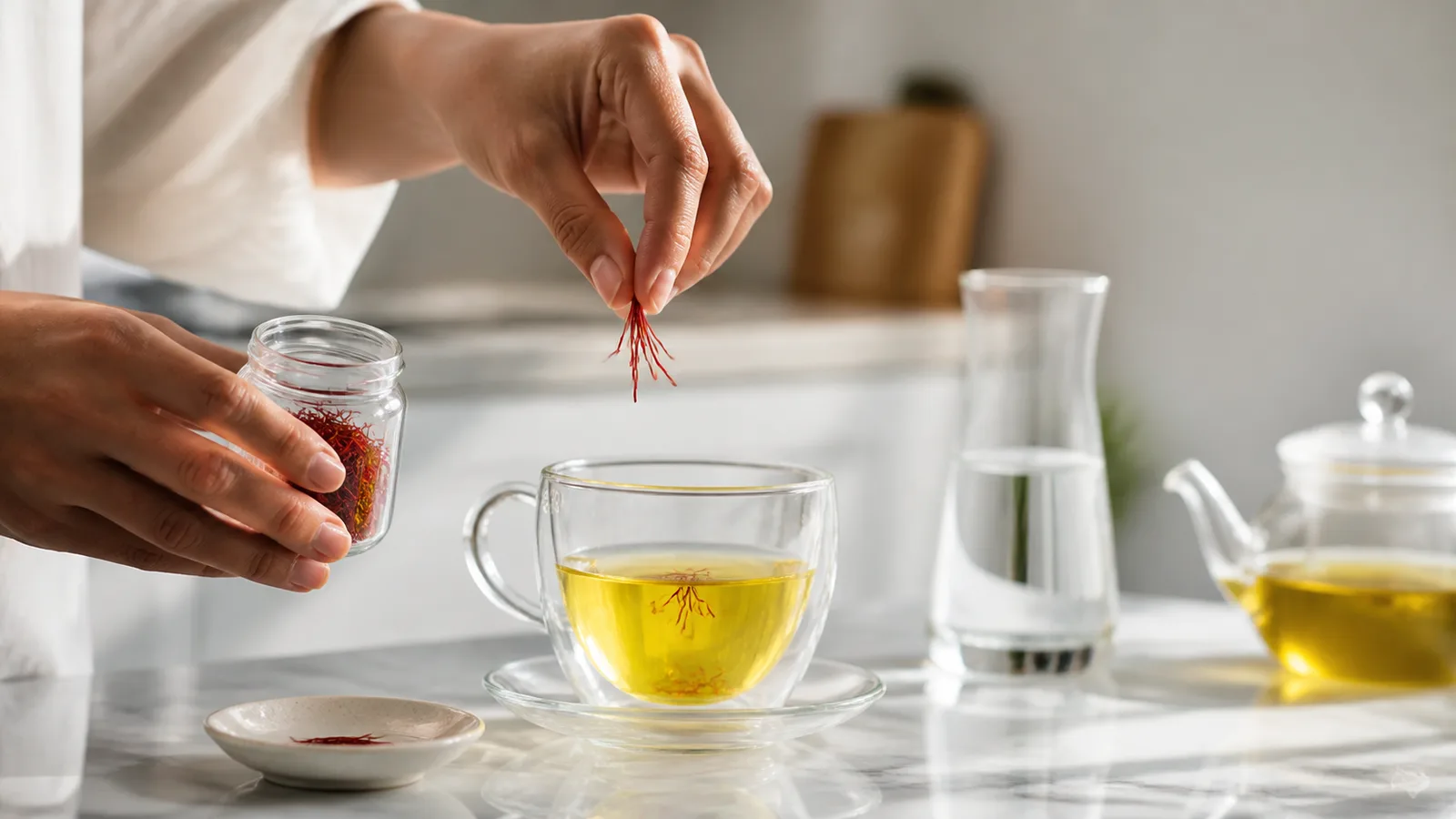
Saffron tea is harmful to anyone is an awkward translation of an important question: can saffron tea harm some people? It can. A lightly brewed culinary cup is generally well tolerated, but side effects, allergies, pregnancy, medical conditions, medicines, caffeine and the total amount of saffron all matter.
This does not mean saffron tea is harmful to everyone. It means “natural” is not the same as risk-free, and a pleasant drink should not be turned into an unmeasured high-dose treatment.
Saffron tea side effects at a glance
Human trials usually study measured saffron powders or extracts rather than homemade tea. A 2026 systematic review of 102 trials and one case report found saffron preparations were generally well tolerated. Across the included evidence, the most frequent adverse events were gastrointestinal and usually minor and self-limiting. Other reported effects in saffron research include nausea, dry mouth, headache, dizziness, drowsiness, restlessness and changes in appetite.
The side effects of saffron tea cannot be assigned one exact rate because cups are not standardised. Thread size, quantity, steeping, added tea leaves and individual sensitivity vary. A strong extract capsule and five threads in water are not equivalent doses.
Who should be cautious with saffron tea?
Pregnant or breastfeeding people
The old page advised all pregnant women not to drink saffron tea because it would raise heart rate and might cause miscarriage or early delivery. That explanation was too certain. Current evidence distinguishes trace culinary use from concentrated or medicinal exposure, but pregnancy safety data remain limited. Reviews describe uterine effects and greater concern with higher doses or occupational exposure.
If you are pregnant, trying to become pregnant or breastfeeding, ask your maternity clinician about saffron beyond ordinary food seasoning. Do not use a strong tea or supplement to start labour, change the baby’s appearance, treat anxiety or achieve another medical effect.
People with an arrhythmia or heart condition
The previous article specifically warned people with an unknown cardiac arrhythmia and those taking anti-arrhythmic tablets or beta-blockers. It did not provide evidence that an ordinary saffron infusion interacts with those medicines, so this should not be presented as a proven tea–drug interaction.
Caution is still reasonable. Saffron supplements have been studied for effects on blood pressure and cardiovascular markers, and the black or green tea used in a blend adds caffeine. Palpitations after “saffron tea” may therefore relate to caffeine, the dose, another ingredient or the person’s condition. Do not stop or change a heart medicine. Ask the prescriber or pharmacist before using concentrated saffron regularly.
People who are sensitive to caffeine
Pure saffron in hot water is caffeine-free. Iranian tea made with black tea and saffron is not. The US Food and Drug Administration lists typical caffeine amounts of about 71 mg per 12-fluid-ounce black tea and 37 mg for green tea, with real amounts varying by product and brewing method.
If a cup causes shakiness, insomnia, anxiety or a racing heartbeat, check the tea base as well as the saffron. Decaffeinated tea or a water-only saffron infusion changes that part of the equation.
People with allergies or reactions to the drink
Stop drinking it if you develop hives, swelling, wheezing or another suspected allergic reaction. Seek urgent help for breathing difficulty, fainting, severe swelling, persistent chest pain or a sustained fast or irregular heartbeat. Honey, cinnamon, rose, cardamom and tea leaves can also be the trigger in a mixed drink.
Can I drink saffron tea every day?
There is no evidence-based rule that everyone should drink it daily, nor that exactly two or three cups a week is ideal. The old page recommended saffron tea two to three times weekly and apple on the other days, claiming apple had the same properties without heart problems. No source supported that equivalence.
For a healthy adult who tolerates saffron, an occasional lightly brewed cup made with a small culinary amount is different from daily medicinal dosing. If you want it every day, keep the recipe consistent, include caffeine in your daily total, and do not combine tea with saffron capsules or extracts without counting both sources.
Regular use deserves professional advice if you take prescription medicine, have low blood pressure or a heart-rhythm disorder, are pregnant or breastfeeding, or are using saffron for a symptom rather than flavour.
How much saffron is in a lightly brewed cup?
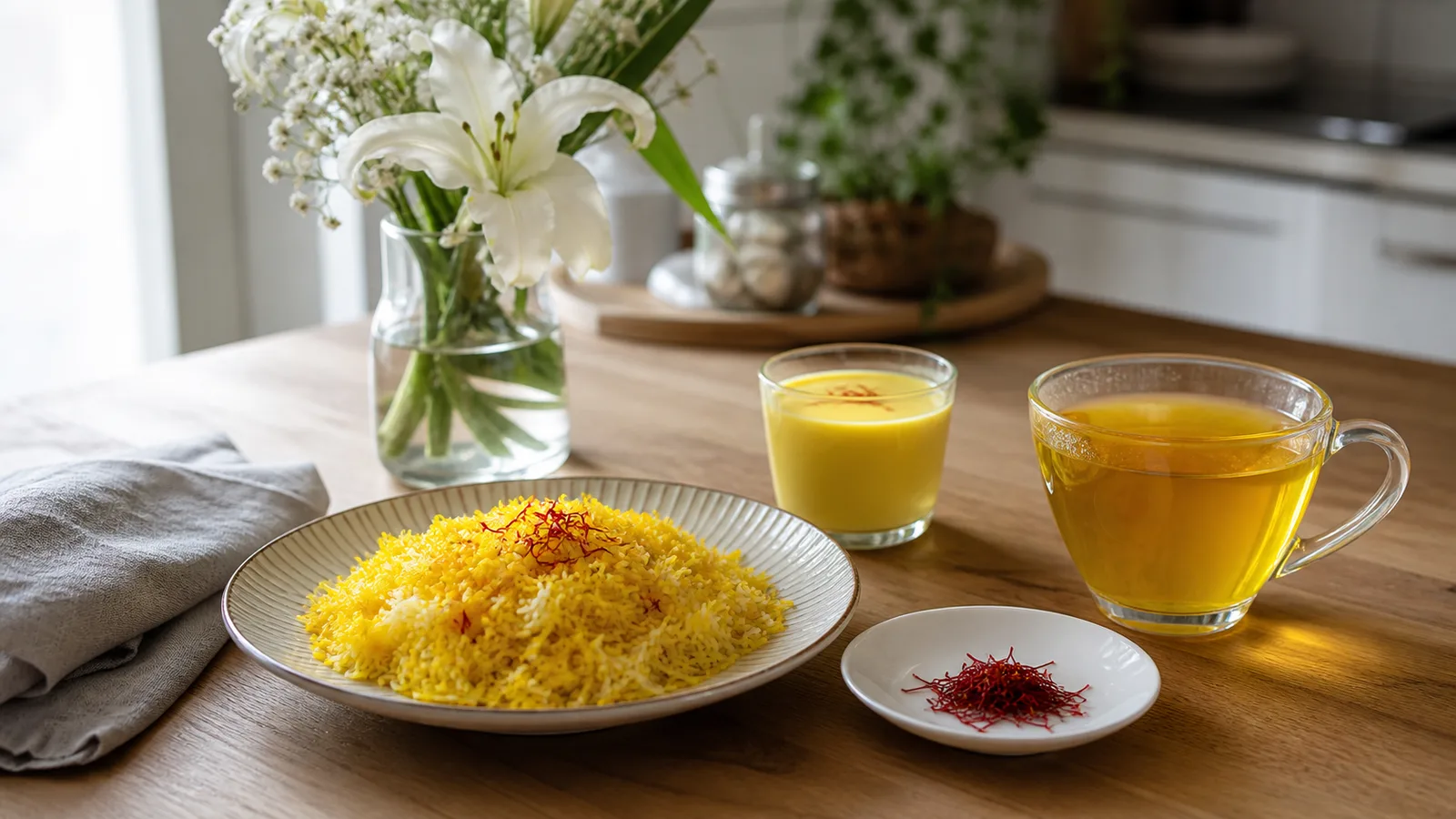
A practical starting point is 5–10 threads in about 250 ml of water. Cover and steep for 5–10 minutes. Genuine saffron should give the water a clear golden-yellow colour and a delicate aroma; making the liquid darker with a large handful is unnecessary.
The old preparation direction said to add “half a teaspoon of teaspoon teaspoon” to Iranian tea near the end. The missing ingredient and repeated unit make that sentence unreliable. Half a teaspoon of dry ground saffron would also be far more than a subtle single cup, so it should not be treated as a safe instruction.
For a controlled method, follow our saffron tea preparation guide: bloom a few counted threads separately, then add the golden liquid to water, black tea or green tea. Adding the saffron near the end preserves control over both taste and quantity.
What about rose and saffron tea?
Leila Sherbighi, identified in the old report as a traditional-medicine specialist, recommended a rose-and-saffron mixture. Food-grade rose petals or a very small amount of rose water can make a fragrant drink. That is a culinary variation, not evidence that the combination treats disease or prevents saffron side effects.
Use only ingredients sold for food preparation. Decorative flowers may have pesticide residues or may not be edible. Added herbs also make a reaction harder to trace, so test a simple drink before a complex blend.
Saffron tea benefits and side effects need the same dose context
Saffron has been studied for mood and several other outcomes, but most trials use a specified amount and a defined preparation over time. A home cup has no guaranteed concentration. It is therefore misleading to promise the benefits of a capsule study while dismissing side effects because the product is a tea.
The reverse is also true: warnings derived from very high doses should not be used to frighten people about a few culinary threads. Useful advice states the preparation, amount, frequency and person involved.
How to respond if saffron tea makes you feel unwell
- Stop drinking the tea and do not take another saffron product.
- Note how much saffron, black or green tea, sweetener and spice the drink contained.
- For mild symptoms that do not settle, contact a clinician or pharmacist and share that ingredient list.
- For breathing difficulty, fainting, severe swelling, chest pain or a sustained abnormal heartbeat, seek urgent medical help.
Saffron tea effects depend on what is actually in the cup. The safest approach is a genuine product, a small culinary amount, a simple recipe and no attempt to use an unmeasured drink as medicine.
Sources
- Adverse Events of Saffron: systematic review of current human evidence, 2026.
- Saffron and Pregnancy: cultural practices, beliefs and safety evidence, 2026.
- Effects of saffron supplementation on cardiovascular risk factors: systematic review and dose-response meta-analysis, 2022.
- US Food and Drug Administration: caffeine amounts and individual sensitivity.