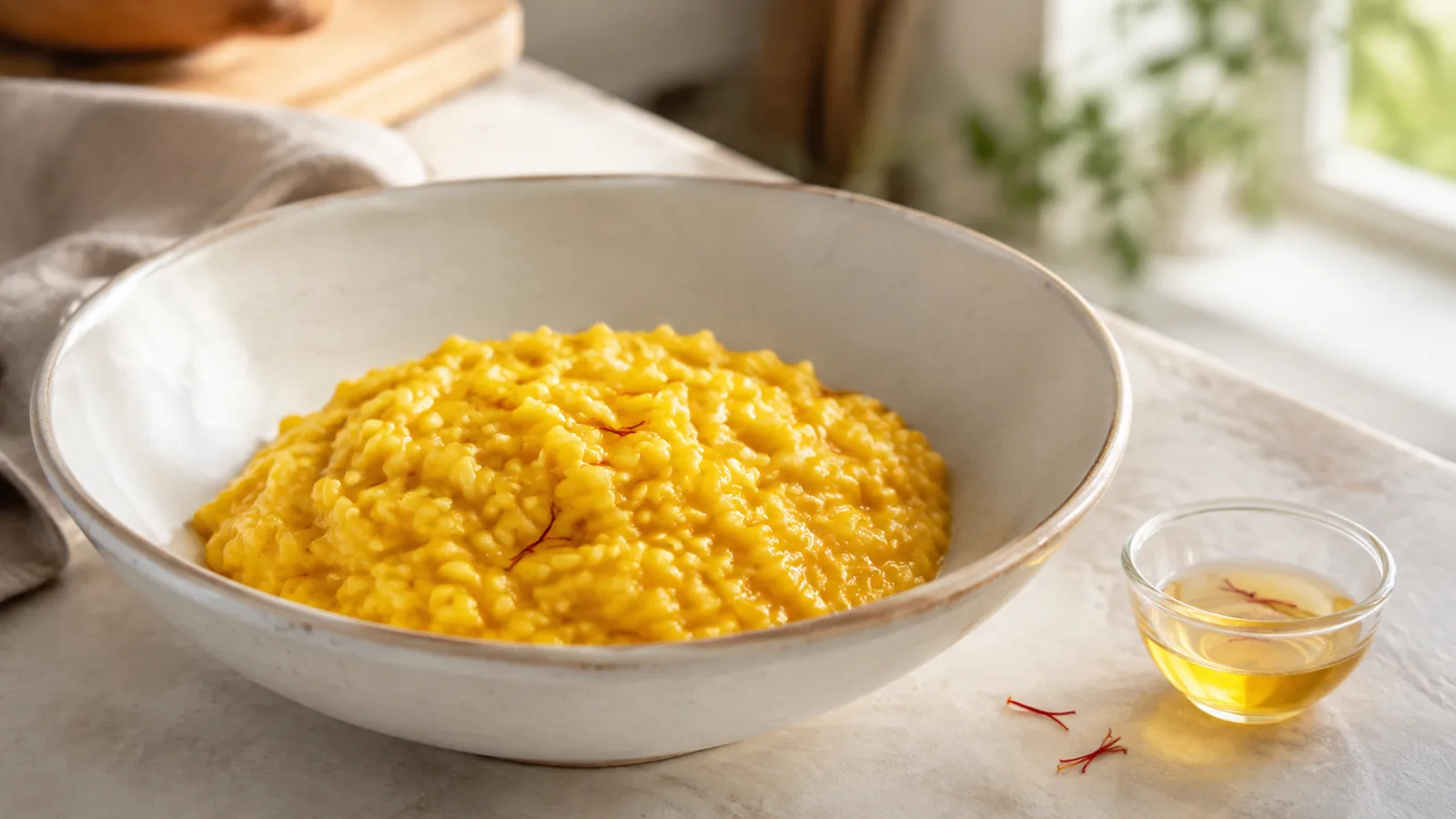
This saffron Halva recipe makes a traditional Persian flour halva with a smooth, spoonable texture, toasted aroma and clear saffron, rosewater and cardamom notes. The work is simple, but the order matters: prepare warm syrup, toast the flour evenly, then combine them slowly.
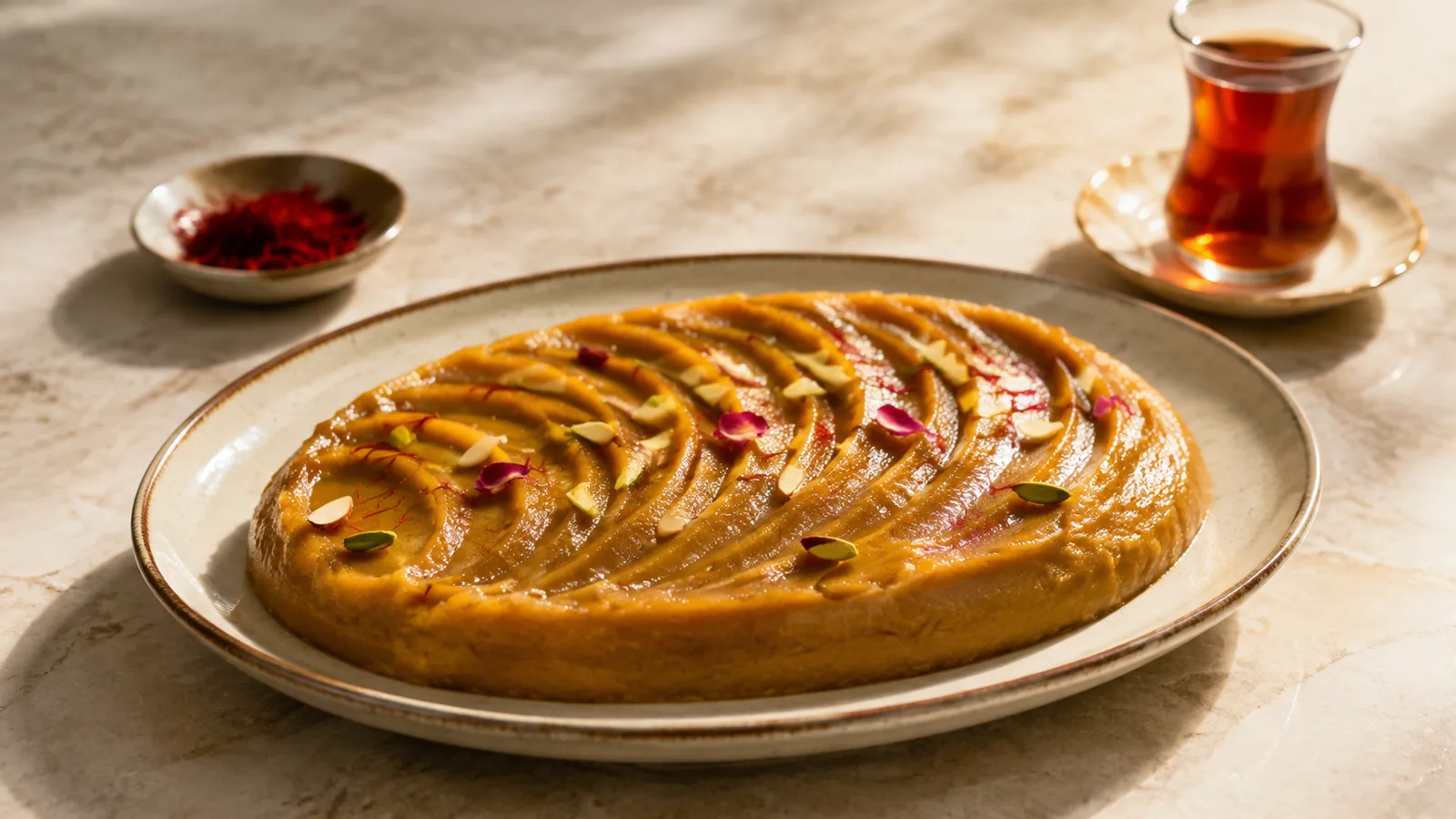
What is Persian saffron halva?
Persian halva is different from sesame tahini halva. Flour is toasted until nutty, blended with oil, then worked with a fragrant sugar syrup. It is commonly shaped on a platter or portioned into small dishes and decorated with nuts.
If you searched for an Iran halva, Irani halva recipe, Persian halva recipe or a recipe for Persian halva, this is the familiar wheat-flour version. Regional and household recipes vary in colour, fat and sweetness, so use the visual cues below rather than relying only on a clock.
Ingredients
- 2 cups plain white flour
- 1 cup neutral vegetable oil, added gradually
- 1 1/2 cups sugar
- 1 cup water
- 1/3 cup rosewater
- 1–3 teaspoons ground saffron, according to strength
- 1/2 teaspoon ground cardamom
- Pistachios, almonds or dried rose petals, optional for decoration
The older formula uses 3 teaspoons of ground saffron and a full cup of oil. Both are retained as upper amounts, but saffron strength and flour absorption differ. Begin with 1 teaspoon saffron and about three-quarters of the oil; add more only when the colour, aroma and texture call for it.
How to make Iranian saffron halva
1. Bloom the saffron
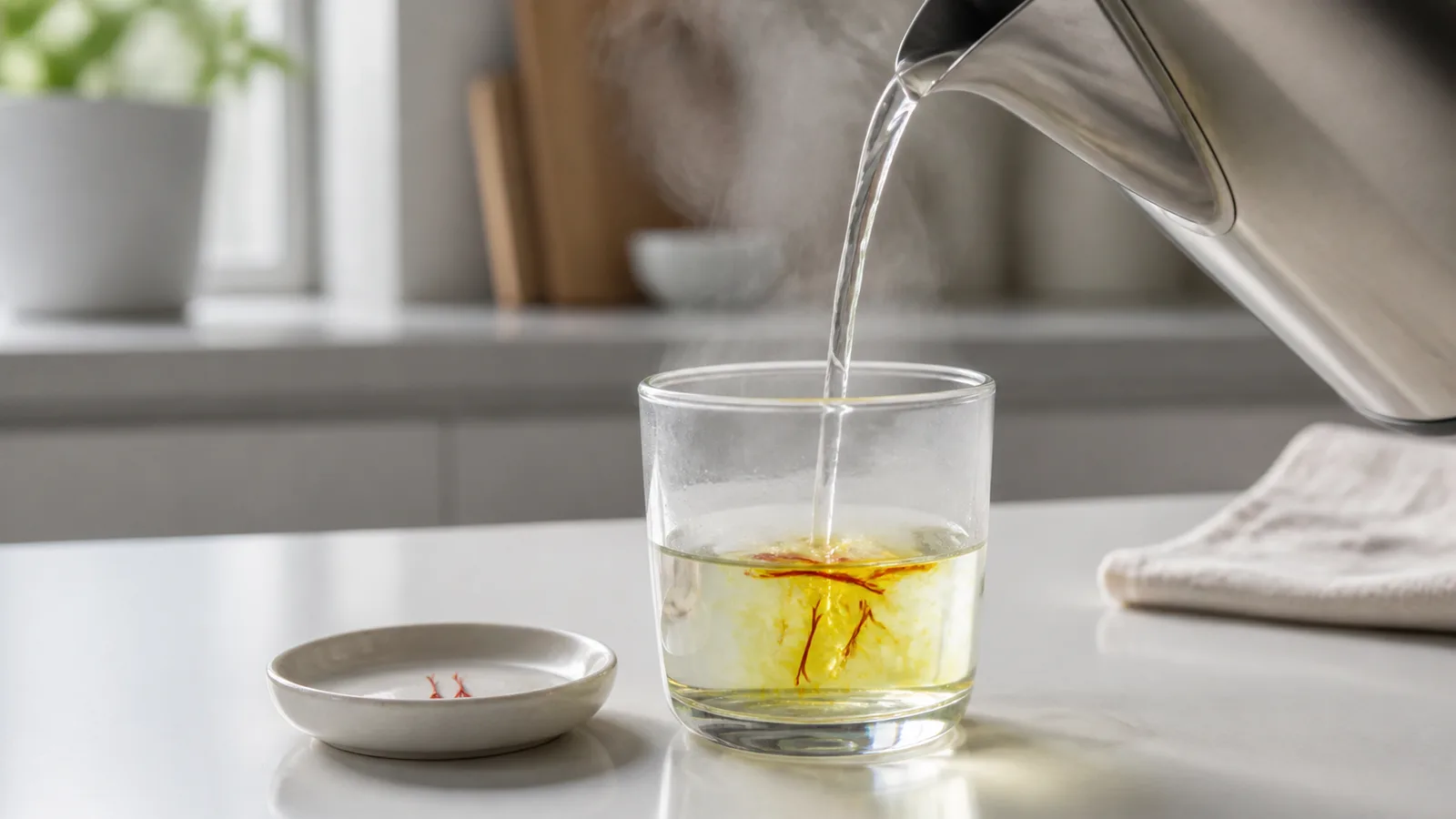
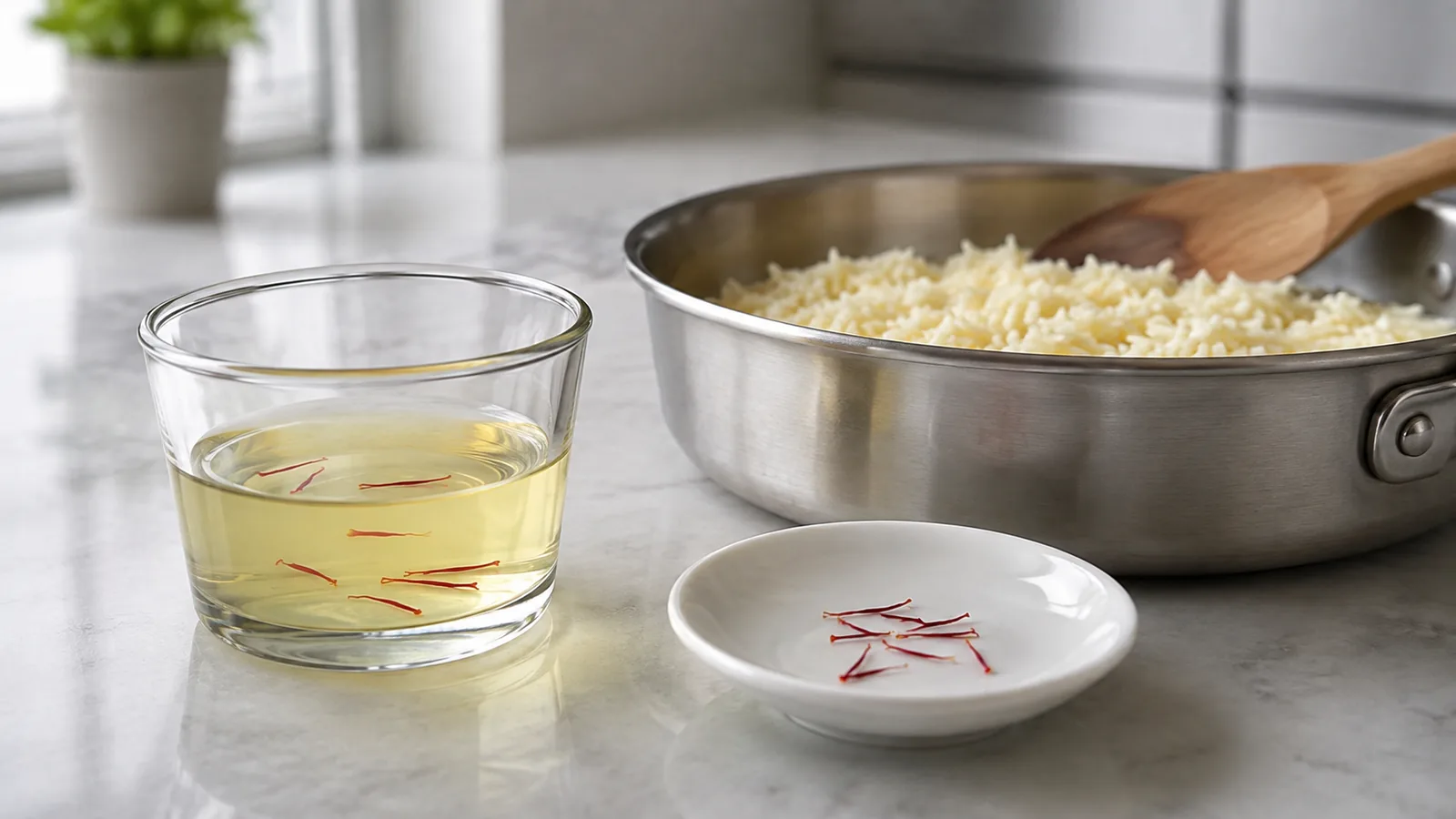
Put the ground saffron in a small cup, pour over 3 tablespoons of hot water and cover for 10 minutes. Blooming it separately distributes the colour evenly and prevents dry strands from becoming trapped in the halva.
2. Prepare the syrup
Combine the sugar and 1 cup water in a saucepan. Warm over medium heat, stirring only until the sugar dissolves. The mixture should not become a thick candy syrup.
Turn off the heat and add the saffron infusion, rosewater and cardamom. Cover and keep the syrup warm. A cold syrup can make the flour mixture tighten abruptly.
3. Toast the flour evenly
Sift the flour into a wide, heavy frying pan. Toast it dry over low to medium-low heat, stirring and turning it continuously with a wooden spoon. Break up every pale pocket and scrape the corners of the pan.
After 15–25 minutes, the flour should smell nutty and change from white to a warm beige. For darker halva, continue cautiously. The colour deepens further after oil is added, and burnt flour cannot be repaired.
4. Add the oil
Lower the heat. Add three-quarters of the oil in a slow stream while stirring. The mixture should become glossy and fluid enough to move as one mass, without a pool of oil around it. Add the remaining oil a tablespoon at a time only if it still looks dry and crumbly.
Cook the flour and oil together for 3–5 minutes. This removes the last raw flour taste and makes the mixture uniformly smooth.
5. Work in the saffron syrup
Remove the pan from direct heat. Add one ladle of warm syrup; it will hiss and steam. Stir until absorbed before adding the next ladle. Keep your hands clear of splashes.
When all the syrup is incorporated, return the pan to very low heat if the halva remains loose. Stir until it pulls from the sides and gathers around the spoon. It should be thick and glossy, not oily or dry.
6. Shape while warm
Transfer the halva to a serving platter before it cools. Smooth it with the back of an oiled spoon, pipe it while warm, or rock the pan gently from side to side until the mass forms a neat log. Add pistachio, almond or rose-petal decoration sparingly.
How to judge the right texture
Warm halva should hold a ridge when the spoon passes through it, yet remain soft enough to spread. A greasy ring means the flour cannot hold more fat; stir over very low heat and, if necessary, add a spoonful of toasted flour. A dry, cracking mass needs warm syrup or oil in teaspoon amounts.
Do not judge it only after cooling. Halva firms as it rests, so remove it from the heat while it is slightly softer than the final texture you want.
Persian variations
Milk-based saffron halva
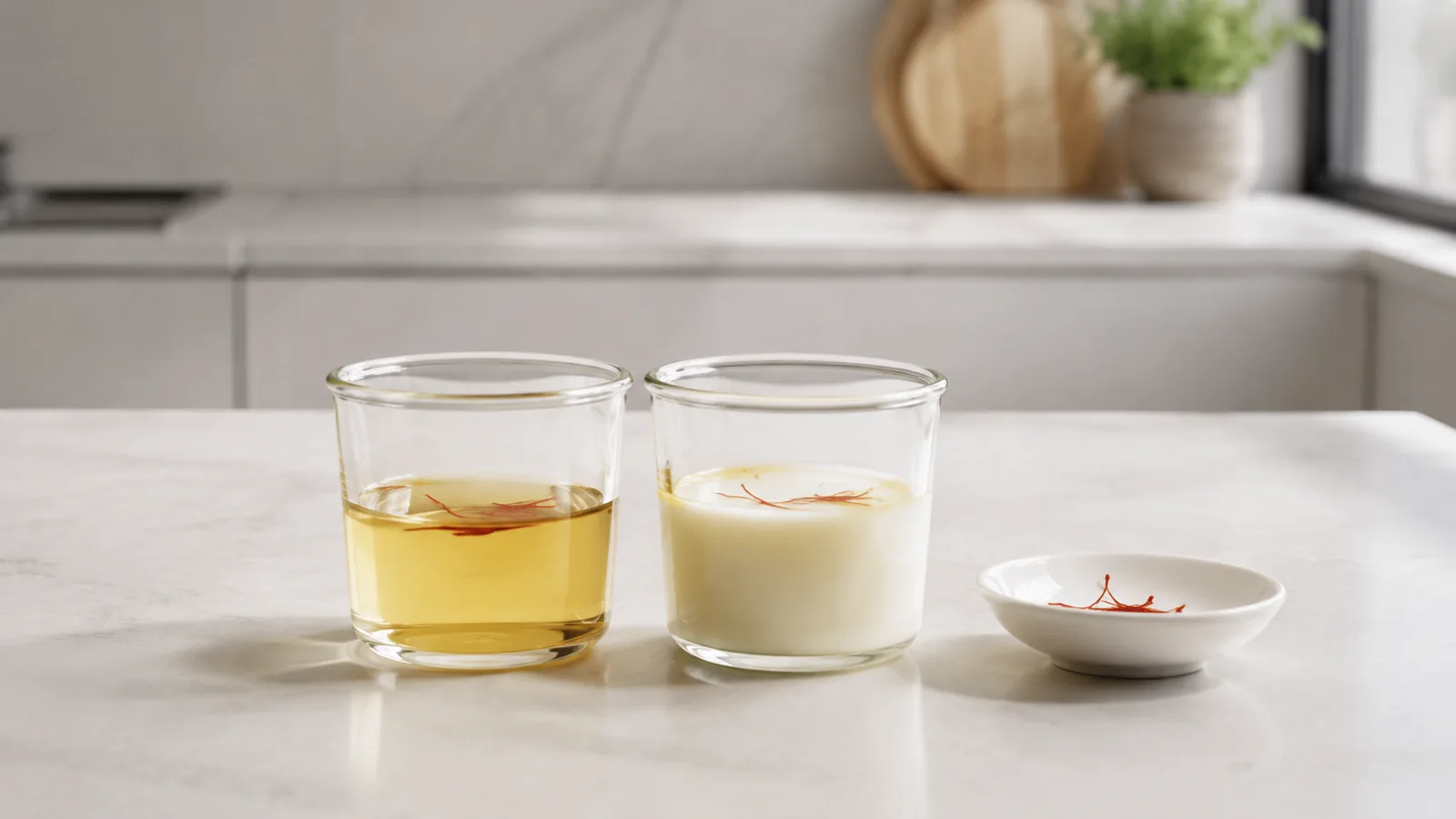
Replace the water with warm whole milk and reduce the rosewater to 2 tablespoons. Add milk syrup gradually and refrigerate leftovers promptly. The result is paler and creamier than classic halva.
Rosewater rice-flour halva
Replace wheat flour with rice flour for a finer texture and naturally gluten-free ingredient list, provided every packaged ingredient is certified for your needs. Rice flour colours more slowly, so rely on its toasted aroma rather than waiting for a dark shade.
Hamadan egg-based saffron halva
Egg-based regional formulas have a different custard-like structure and should not be improvised by stirring raw egg into this hot flour base. Use a tested regional recipe with explicit egg temperatures and quantities.
Carrot and date saffron halva
Cooked carrot purée or soft date paste can replace part of the sugar and liquid, but both add moisture. Fold them into the toasted flour-and-oil mixture before adding syrup, then add only as much syrup as the texture accepts.
Serving and storage
Serve saffron halva at room temperature with tea. Small portions suit its rich texture. It is often made for gatherings and commemorative occasions, though there is no reason it cannot be prepared as an occasional home dessert.
Keep it covered at cool room temperature for the day, or refrigerate for up to 4 days. Let chilled halva sit out briefly before serving so its aroma and soft texture return. Freeze well-wrapped portions for up to 1 month and thaw in the refrigerator.