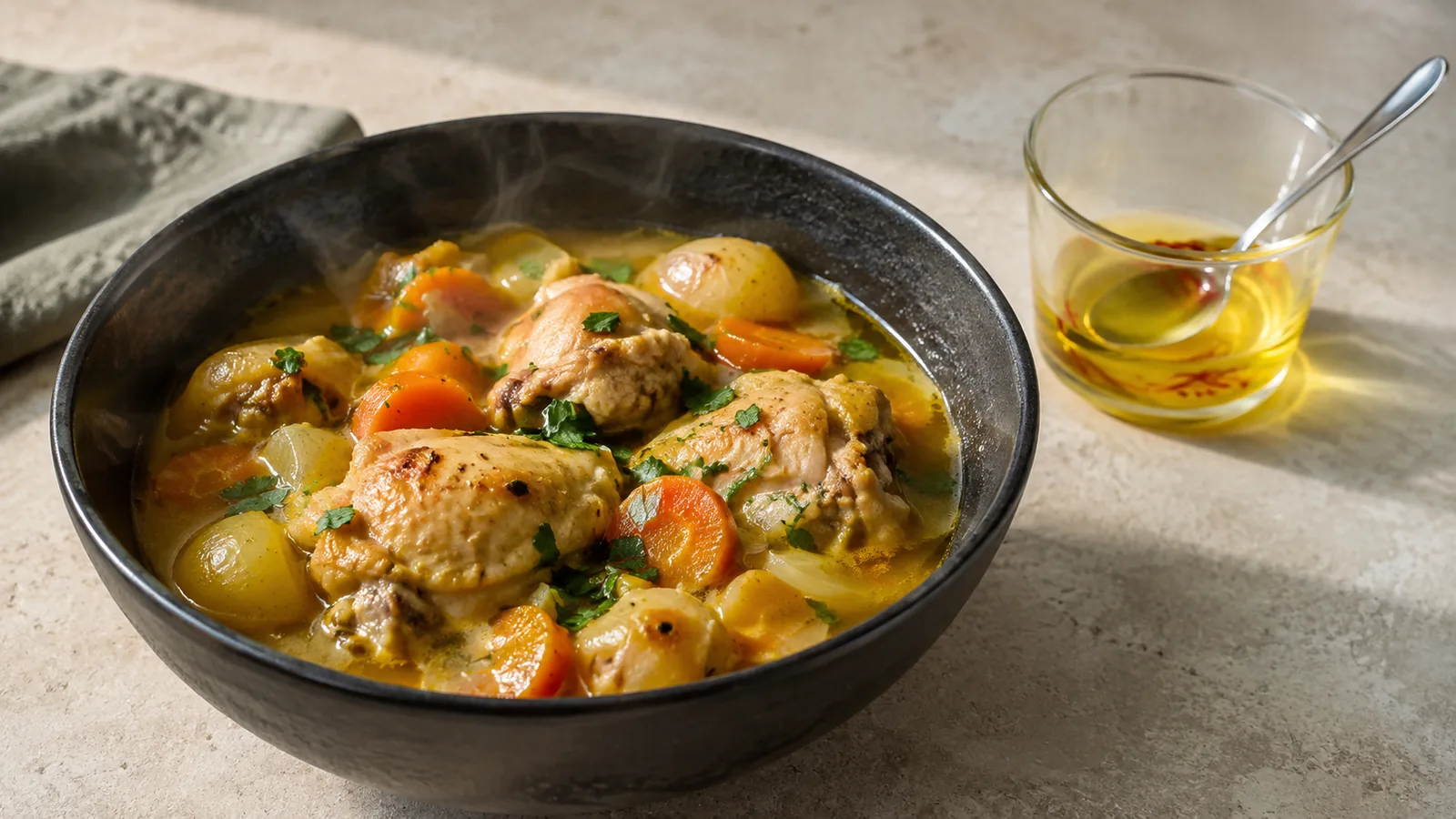
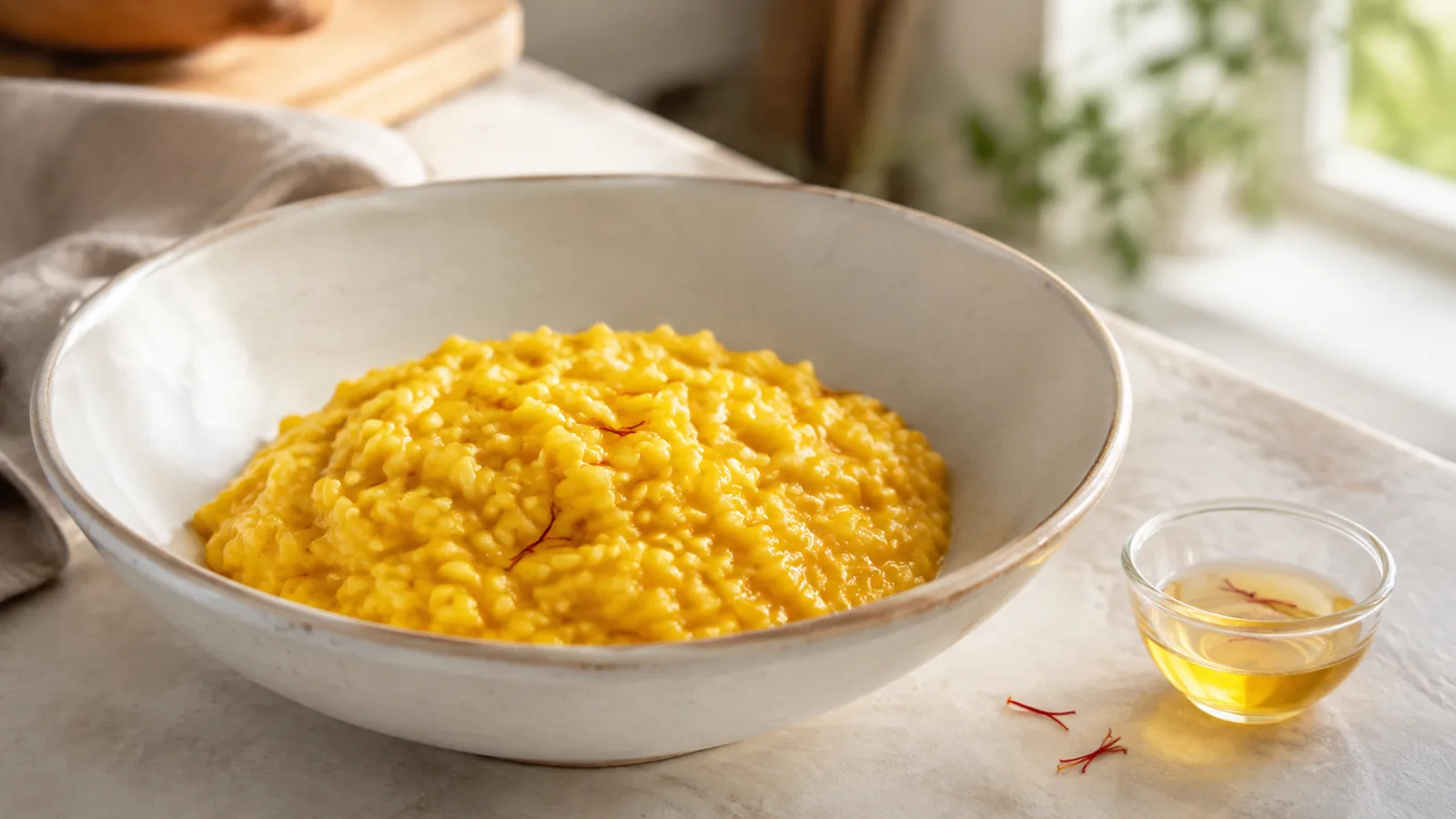
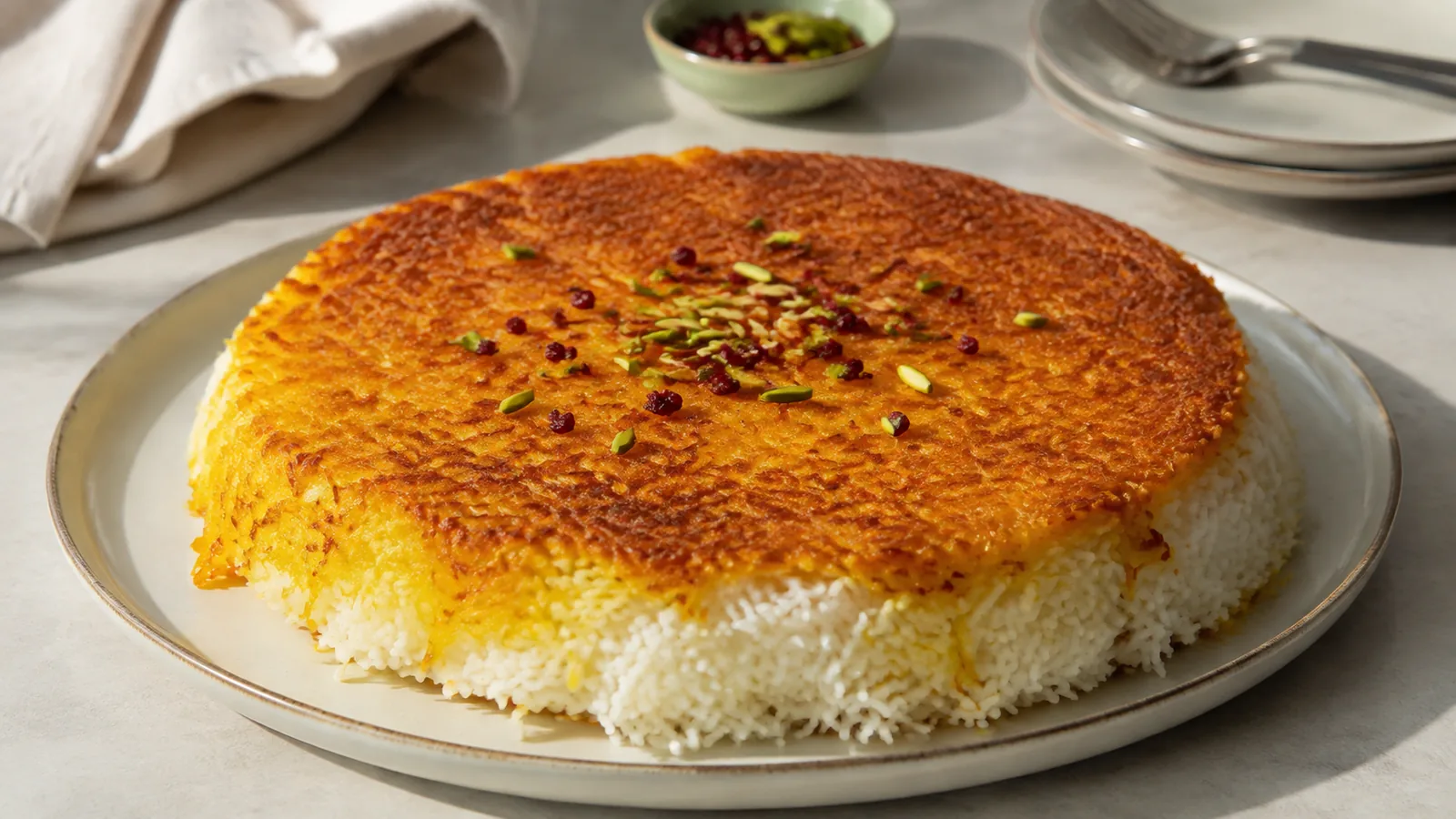
This Saffron Crispy Bottom Recipe makes a golden Persian rice crust with a tender centre and a clean saffron aroma. Known as saffron tahdig, it can be cooked as a simple rice-and-yogurt layer or adapted with potato, tomato, flatbread and other carefully chosen flavours.
What is saffron crispy bottom?
Tahdig means “bottom of the pot.” It is the crisp layer formed beneath steamed Persian rice. A basic tahdig may be plain rice, potato or flatbread; a saffron crispy bottom colours the base with bloomed saffron and often uses yogurt to help the grains bind into a neat crust.
This is not quite the same as tahchin. Tahchin contains a larger proportion of saffron, yogurt and egg and is usually built as a substantial rice cake, often with chicken. Saffron tahdig remains a relatively thin crust under a pot of fluffy rice.
Ingredients for saffron crispy bottom
This quantity serves four to six.
- 3 cups aged basmati rice
- 2 tablespoons strained yogurt (thick and plain)
- 3 tablespoons strongly bloomed saffron
- ⅓ cup neutral oil or a mixture of oil and melted butter
- Salt for soaking and parboiling
- Water as needed
For an optional garnish, use a small spoonful of barberries and a scattering of pistachio or almond slivers. Keep the garnish off the base while it cooks, because nuts and fruit can scorch before the rice crust is ready.
Prepare the rice and saffron
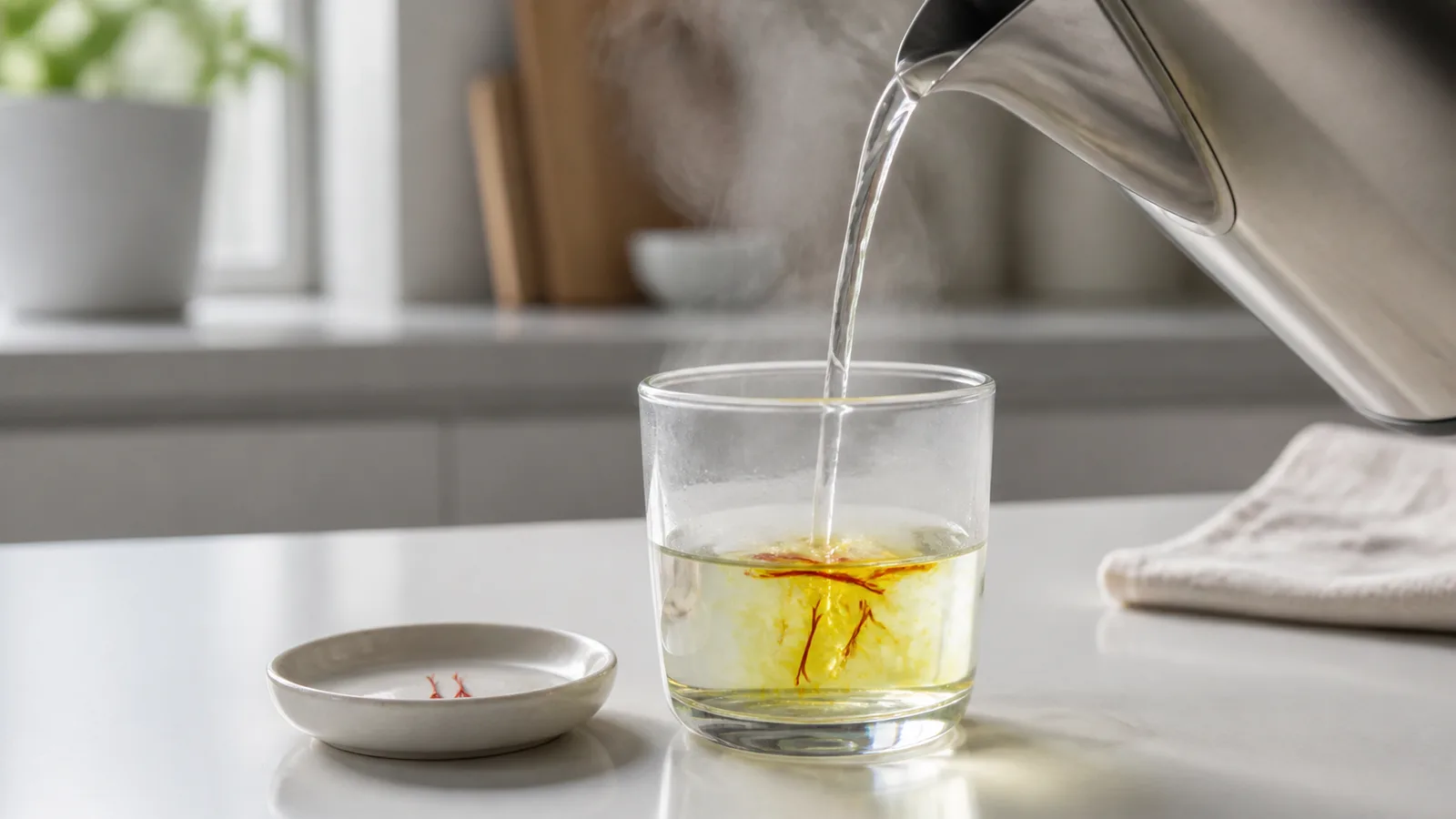
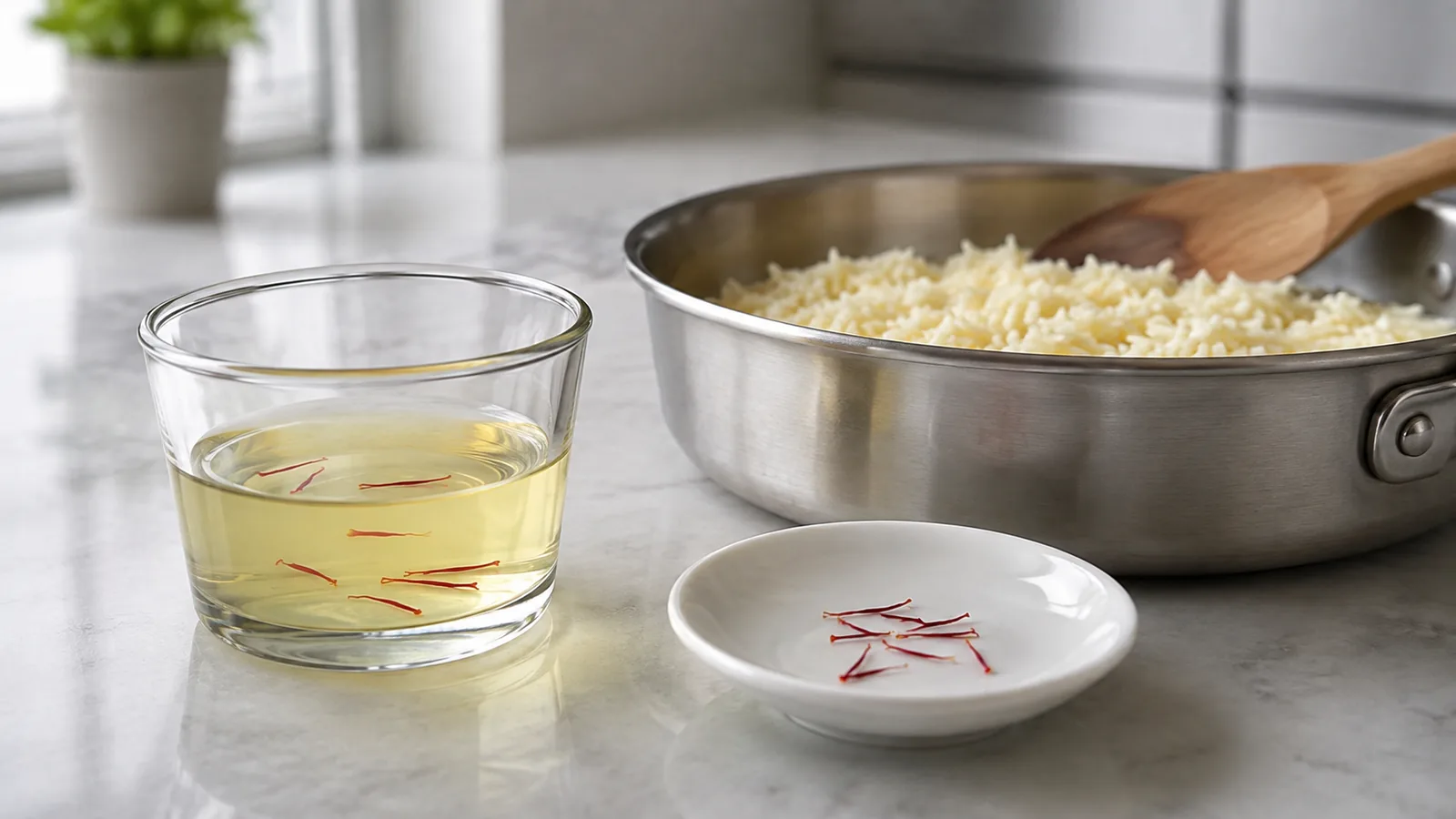
Rinse the rice with cool water until the runoff is much less cloudy, then soak it in salted water for one to two hours. Bloom the saffron separately. If you need the full grinding and infusion method, follow our guide to brewing saffron.
Bring a large pot of salted water to a boil and add the drained rice. Parboil for about five to seven minutes, testing early. The outside of a grain should be soft while a small firm point remains in the centre. Drain at once. For more detail on this stage, see our Persian saffron rice recipe.
How to make saffron tahdig
1. Mix the crust layer
Put about two cups of the parboiled rice in a bowl. Add the yogurt and bloomed saffron, then fold gently until the grains are evenly golden. The mixture should be lightly coated, not wet or soupy.
2. Heat the pot
Use a heavy, nonstick pot with a flat base. Add the oil and heat it over medium heat for a minute. The oil should shimmer gently but must not smoke. Swirl it so the base and lowest part of the sides are coated.
3. Build the saffron crispy bottom
Spread the saffron-yogurt rice in an even layer roughly 1 to 1½ centimetres deep. Press just enough to close large gaps; packing it hard creates a dense crust. Spoon the remaining white rice loosely on top and shape it into a mound without scraping the base.
Make three or four steam holes through the upper rice with the handle of a wooden spoon, stopping before you reach the crust.
4. Steam without burning
Wrap the lid in a clean tea towel, keeping the corners safely away from the burner. Cover the pot and cook over medium heat for five to eight minutes, until steam forms. Reduce the heat to low and continue for 35 to 45 minutes.
A gentle sizzling sound is normal. A sharp burnt smell means the heat is too high. Every stove and pot behaves differently, so treat time as a guide and note the setting that works in your kitchen.
5. Release and serve
Remove the pot from the heat and let it rest for five minutes. Run a flexible spatula around the edge. Place a platter over the pot, hold both firmly with oven gloves and invert in one confident movement. If you prefer less risk, spoon the white rice onto the platter first and lift the crust out in pieces.
Warm barberries briefly in a little butter, then scatter them with nuts over the rice after the tahdig has been turned out.
Why saffron tahdig sticks or breaks
- The rice was too wet: drain it thoroughly and keep the yogurt mixture lightly coated.
- The pot was scratched: damaged nonstick surfaces release unevenly and should be replaced.
- The oil was still cold: warm it before adding the crust mixture.
- The heat was too low at the start: the base did not set before steaming.
- The heat stayed too high: the underside burned while the upper layer cooked.
- The crust was too thick: a deep layer steams inside instead of becoming evenly crisp.
- It was inverted immediately: a short rest helps the crust release more cleanly.
Saffron potato crispy bottom
Use one large, firm potato for a three-cup pot of rice. Peel it if you wish and cut it into slices about 5 millimetres thick. Pat the slices dry. Heat ¼ cup oil, arrange the potato in one close layer and brush it with one to two tablespoons of bloomed saffron. Add the parboiled rice and steam as above.
For a warm spiced version, season the oil lightly with turmeric, chilli, curry powder, garlic powder and onion powder before laying down the potato. Keep powdered spices away from direct high heat; they burn quickly. Citric acid is unnecessary—a little lemon served with the meal gives a cleaner result.
Saffron and sesame potato tahdig
Sprinkle one to two teaspoons of sesame seeds into the warm oil, then arrange saffron-brushed potato slices over them. Add the rice and steam. More sesame is not always better: a thin scattering toasts, while a thick layer can loosen the potatoes and taste bitter.
Tomato saffron crispy bottom
For a rice crust rather than sliced tomato, combine two cups of parboiled rice with three tablespoons thick tomato purée, one tablespoon bloomed saffron, a pinch of turmeric and salt. The mixture should hold together without releasing liquid. Spread it over ¼ cup warm oil and top with the remaining rice.
Fresh chopped tomato carries more water and can prevent crisping. If that is all you have, cook it down first until thick, cool it slightly, then mix it with the rice.
Thin flatbread saffron tahdig
Cut lavash or another very thin, unsweetened flatbread to fit the pot. Brush the warm oil with a spoonful of bloomed saffron, place the bread flat on the base and mound the parboiled rice over it. Steam on low and begin checking earlier than you would for a rice crust because thin bread browns quickly.
The older recipe referred to “ice cream bread” or Mikado wafers. Sweet ice-cream wafers are not a dependable substitute: their sugar can burn. Use a thin savoury bread unless you are following a locally tested product and method.
Yogurt and rosewater saffron tahdig
For a softly aromatic variation, mix two cups parboiled rice with two tablespoons yogurt, one tablespoon bloomed saffron and no more than one teaspoon rosewater. Cook it as the main recipe. Three tablespoons of rosewater, as suggested in the older version, overwhelms the rice for many palates and adds unnecessary moisture.
Apple and quince variation
Apple and quince create a sweet-savory crust rather than a classic everyday tahdig. Slice the fruit thinly, then sauté it first until just flexible and surface-dry. Arrange a single layer in the oiled pot and cover with a thin saffron-yogurt rice mixture before adding the remaining rice.
Quince takes longer to soften than apple, so do not put thick raw slices under the rice and expect both fruits to finish together. Serve this variation with a dish that suits its fragrance rather than treating it as a universal accompaniment.
Can you use leftover cooked rice?
Freshly parboiled rice gives the most predictable crust. Chilled cooked rice can work in a small skillet version, but it must have been cooled promptly and kept refrigerated. Loosen the grains, combine them with a little bloomed saffron and yogurt, press into warm oil and cook covered on low until hot throughout and crisp underneath. Do not repeatedly cool and reheat rice.
Choosing the right saffron crispy bottom
Start with the saffron-yogurt rice version if you want an even, sliceable crust. Choose potato for distinct golden rounds, flatbread for a thin crackling layer, or tomato for a deeper savoury flavour. Whichever variation you make, dry ingredients, steady heat and a thin, even base matter more than adding extra oil.
Once you know how your pot releases and how low your burner runs, this Saffron Crispy Bottom Recipe becomes repeatable. Keep a note of the pot size, rice quantity, heat setting and cooking time; those practical details are the real route to reliable tahdig.