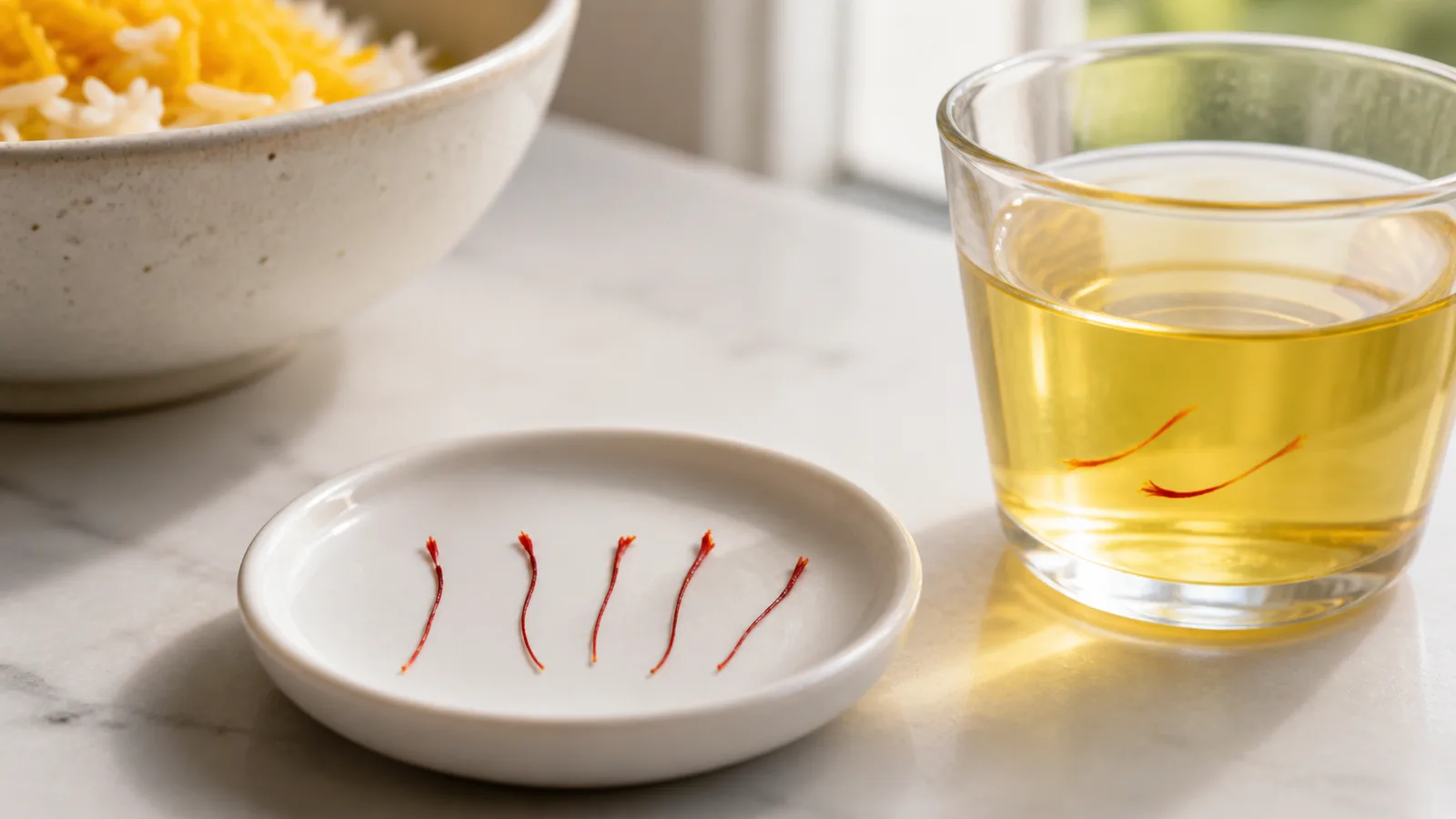


Yes, we can grow saffron indoors, provided the plant gets strong light, free drainage, and a real seasonal cycle. Saffron can be grown indoors successfully when Crocus sativus is treated as a dormant corm in a container, not as an evergreen houseplant that should stay warm and leafy all year.
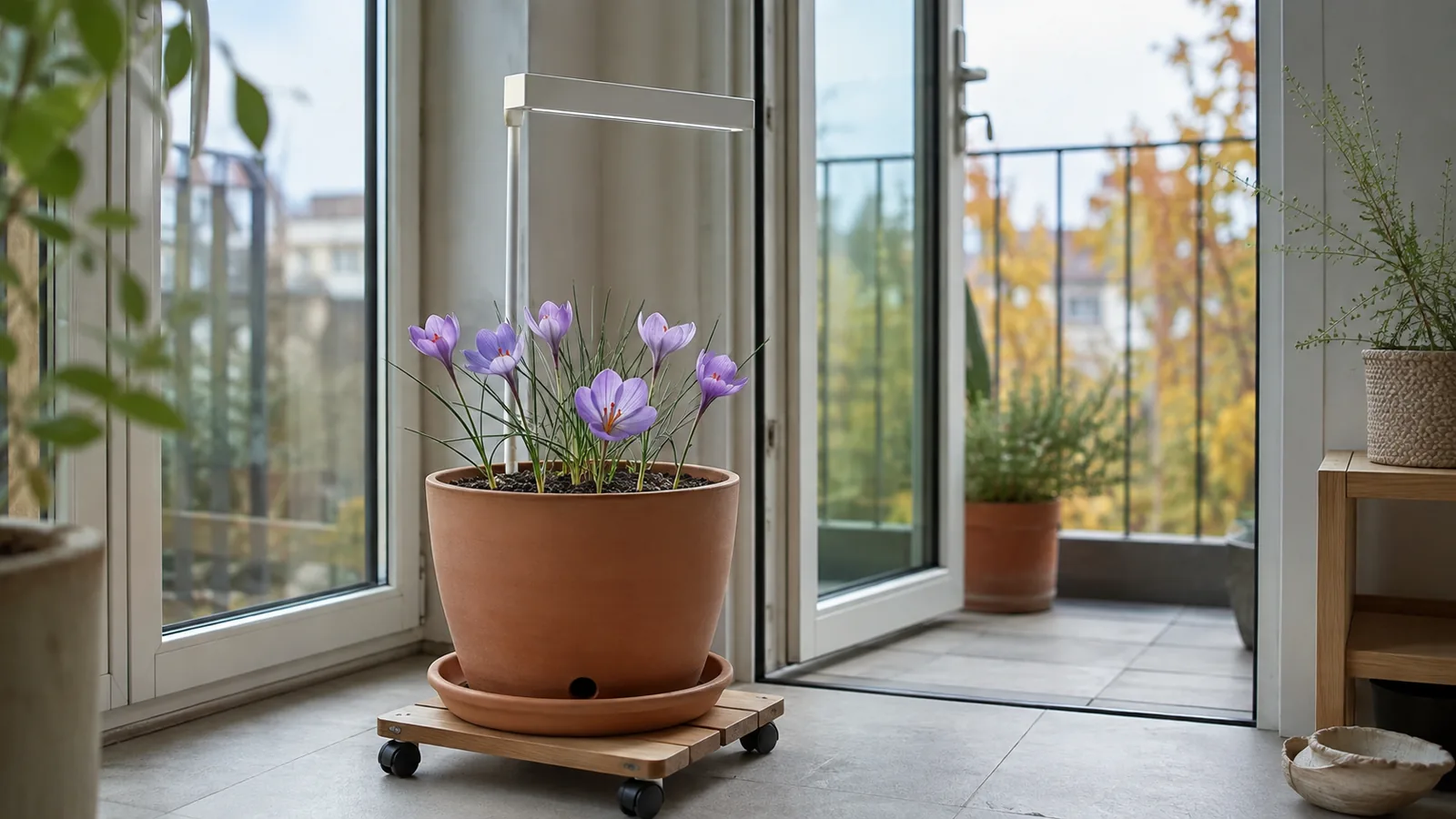
Can we grow saffron indoors all year?
The pot can remain under cover all year, but the plant will not look active all year. Saffron normally flowers in autumn, keeps narrow green leaves through its growing season, dies back in late spring, and rests in summer. That quiet period is normal; watering a dormant pot simply to make it look alive can cause trouble.
The old advice that saffron can be kept growing indoors “all year round” confuses the location of the pot with the growth of the plant. A successful indoor setup respects dormancy. It also provides a cool, bright growing period rather than the dim, steady warmth many ordinary rooms offer.
The Royal Horticultural Society lists saffron as a full-sun plant for neutral to alkaline, freely draining soil in its Crocus sativus profile. Those needs still apply behind glass.
Which kind of indoor space works best?
A bright conservatory, enclosed balcony, cool sunroom, or unheated greenhouse is usually easier to manage than a central living room. These spaces give the corms more sunlight and a stronger change of season. A very sunny window can also work for a small trial pot, especially if it is away from radiators and hot-air vents.
If window light is weak, use a horticultural grow light rather than a decorative lamp. Follow the maker’s distance guidance and watch the leaves: long, weak growth that leans hard toward the window is a sign that the plant needs more useful light.
Another practical option is to keep the container outdoors or in a protected cool structure for most of the cycle, then bring it inside while the flowers open. The RHS notes that container-grown specialist crocuses can be enjoyed in a well-lit, cool room during flowering in its specialist crocus guide. Return the pot to strong light afterwards so the leaves can continue feeding the replacement corms.
Check the room before buying corms
Growing saffron indoors is more likely to work when you can answer yes to these questions:
- Is there several hours of direct sun or a capable grow light?
- Can the plant stay away from constant household heat?
- Does the container have open drainage holes and somewhere for excess water to escape?
- Can the pot be kept relatively dry during summer dormancy?
- Can you leave healthy foliage in place until it yellows naturally?
A south-facing window is often useful in the Northern Hemisphere, but direction is only a clue. Trees, neighbouring buildings, roof overhangs, tinted glass, and short winter days can make a nominally sunny window too dark. Judge the actual light reaching the leaves.
Set up one small trial container
Start with true saffron crocus corms from a specialist supplier. They should feel firm, not soft, mouldy, or badly damaged. Gardeners often call them saffron bulbs, but they are corms—swollen underground stems that produce replacement corms and cormlets.
Choose a sturdy pot with holes in the base and fill it with a gritty, free-draining container mix. Plant in late summer with the pointed end facing upward. The RHS recommends a depth of about 10–15 cm (4–6 in) and spacing of about 10 cm (4 in) in its saffron growing guide. A broad pot is therefore more useful than packing many corms into a narrow decorative bowl.
Water after planting to settle the mix, then let surplus water leave the pot. During active growth, check the compost rather than watering on a fixed weekday. Water when it has begun to dry, and never leave the base standing in collected water. Reduce watering as the foliage yellows; dormant corms need much drier treatment.
For a detailed planting and care sequence, use our separate guide to growing saffron inside a house. This page focuses on choosing a workable indoor system before you plant.
What harvest can an indoor pot produce?
Expect a small personal harvest, not a jar of spice from one windowsill pot. Each saffron flower carries only three red stigma branches. The RHS estimates that about 150 flowers are needed for 1 g of dry saffron, so a few flowering corms may provide enough threads to observe, dry, and use in one small dish rather than a commercial quantity.
Larger, mature corms may flower in their first autumn, while smaller corms can take longer. Penn State Extension notes that saffron can grow in containers and that flowers may appear roughly six to eight weeks after autumn planting, but any individual pot can vary; its home saffron guide also stresses direct light and drainage.
When flowers open, remove the three long red stigmas with clean tweezers. Do not include the yellow stamens. Dry the threads fully and store them in an airtight container away from light and moisture.
Why indoor saffron produces leaves but no flowers
Leaves without blooms usually point to a condition that can be corrected. Common causes include immature or weak corms, inadequate light, excessive warmth, shallow planting, crowding, or persistently wet compost. Cutting green foliage early can also reduce the energy available for the following cycle.
Do not try to force a result by adding more water. First check drainage and light, then allow the leaves to finish naturally. If the corms have multiplied into a crowded cluster, divide them while dormant and replant them with proper spacing.
A simple indoor saffron calendar
- Late summer: plant firm corms in a drained container and water them in.
- Autumn: provide maximum light, watch for flowers, and harvest the red stigmas promptly.
- Winter to early spring: keep the leaves bright and cool; water only as the mix begins to dry.
- Late spring: let yellowing leaves die back without cutting them early.
- Summer: keep the dormant pot relatively dry and inspect the corms before the next cycle.
The University of Vermont’s home-gardener planting sheet is a useful reference for corm handling, site preparation, seasonal growth, and harvesting.
Make sure the plant is really saffron crocus
Buy Crocus sativus, not a plant sold loosely as “autumn crocus” or “meadow saffron.” Those names are also used for Colchicum, which is poisonous. Keep the supplier label with the pot, and never use an unidentified flower as a spice.
Is growing saffron indoors worth trying?
It is a good project if you have a bright, cool position and enjoy following a plant through the seasons. It is less suitable for a dark room, a sealed pot, or a gardener who wants continuous foliage. Begin with one manageable container, learn how quickly it dries in your home, and adjust from what the plant shows you.
If your aim is cooking rather than cultivation, you can compare ready-to-use threads in our saffron shop. For a question about an order or product format, use the contact page.