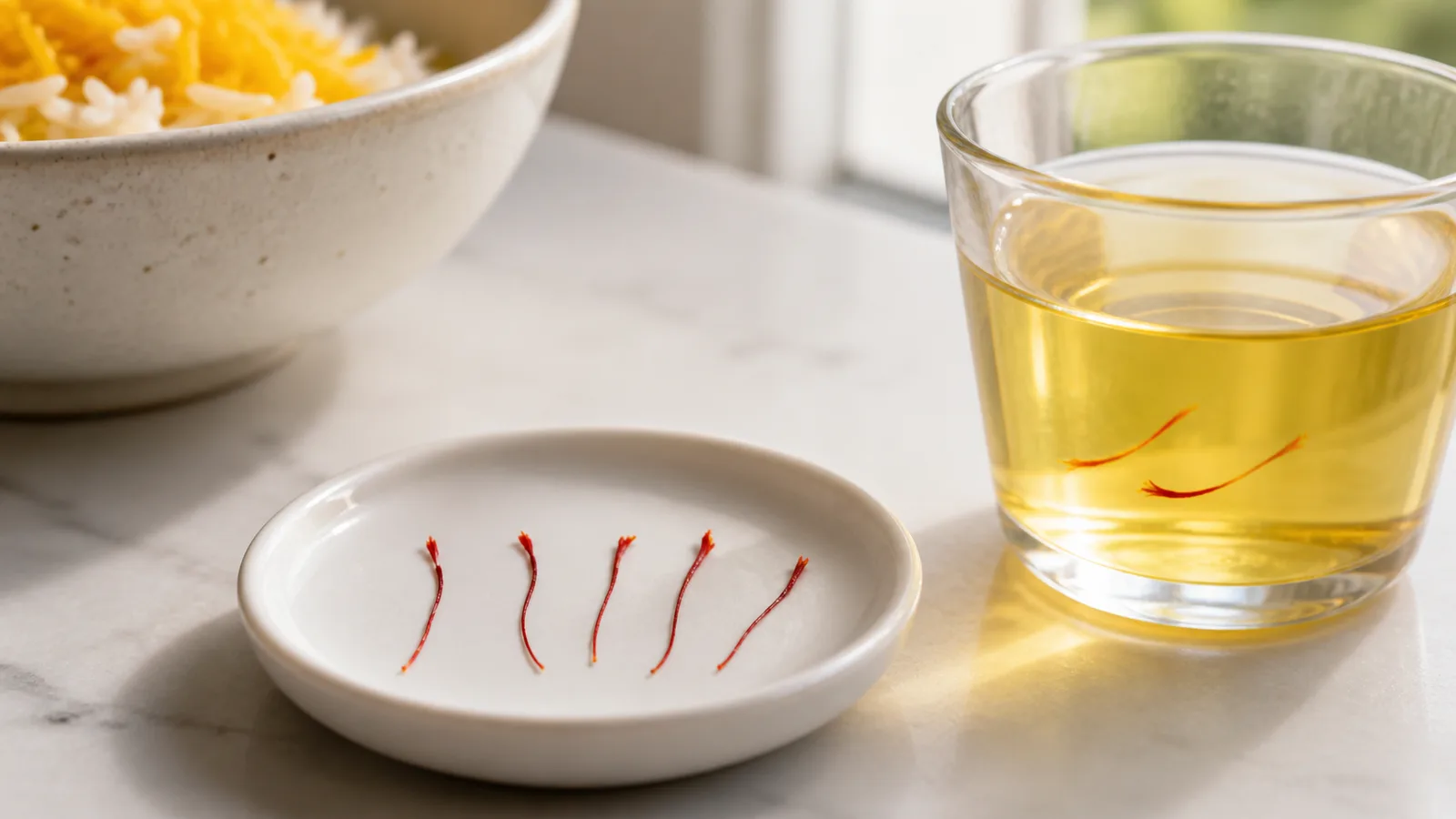
Yes, you can grow saffron inside, but it does best in a bright, cool place that still follows the seasons. A sunny conservatory, enclosed balcony, or unheated greenhouse is usually a better home than a warm room with weak window light.
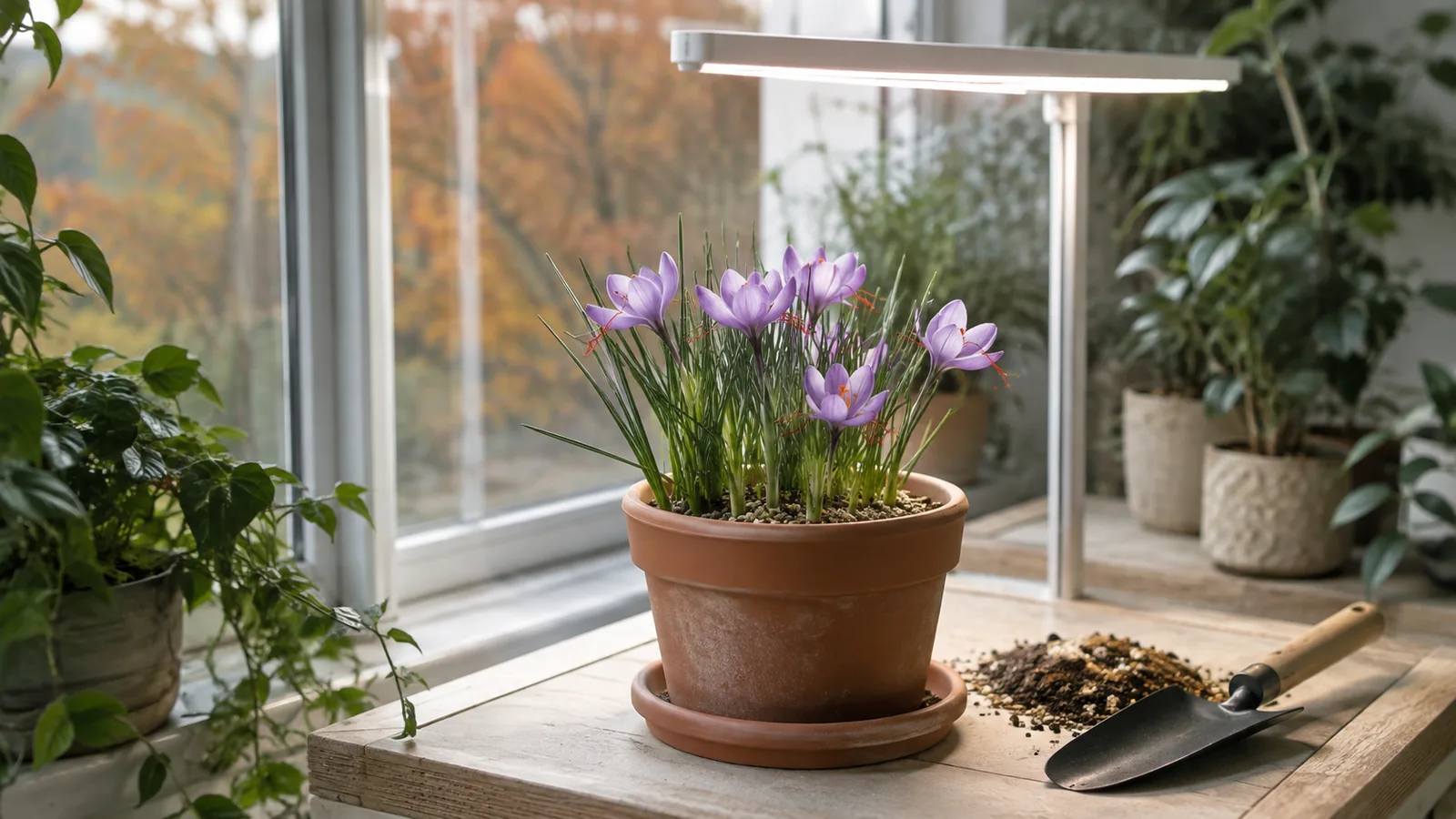
What growing saffron indoors really requires
Growing saffron indoors is container gardening rather than ordinary houseplant care. Crocus sativus grows from a corm, flowers in autumn, carries narrow leaves through its active season, and rests after the foliage dies back. It needs strong light, sharp drainage, and a comparatively dry summer dormancy.
That cycle explains why saffron inside a house can disappoint even when the pot looks tidy. A heated living room may be too warm and dim during the growing season, while a decorative pot without drainage keeps the corms wet. The plant may produce leaves but no flowers, or the corm may rot before it emerges.
The Royal Horticultural Society describes saffron as a full-sun plant for freely draining soil in its Crocus sativus plant profile. Those needs do not disappear when the container comes indoors.
Choose the right indoor location
Start with the brightest position available. An unobstructed south-facing window is often the best household option in the Northern Hemisphere; north-facing may be brighter in the Southern Hemisphere. Turn the pot every few days if the leaves lean strongly toward the glass.
Window direction alone is not a guarantee. Nearby buildings, roof overhangs, trees, short winter days, and tinted glass can all reduce useful light. If the plant cannot receive several hours of direct sun, a proper horticultural grow light is more dependable than a distant household lamp. Follow the light maker’s height and operating guidance, because intensity falls quickly as the fixture moves away from the leaves.
Keep the container away from radiators, hot-air vents, fireplaces, and steamy kitchens. A cool sunroom or porch offers light without the constant warmth of a living area. Good air movement helps the compost dry normally, but do not put the flowers in a hard draught.
Can the pot come inside only while it flowers?
Yes. For many homes, this is the easiest arrangement. Grow the container outdoors or in a cool protected structure, then bring it into a well-lit, cool room when buds are ready to open. The RHS notes that container-grown specialist crocuses can be enjoyed indoors while in flower in its guide to specialist crocuses.
Return the pot to strong light afterwards so the foliage can continue growing. Do not treat the plant as a bouquet and discard or cut off the leaves when the flowers finish.
Pick a pot and compost that drain freely
Use a sturdy container with unobstructed holes in its base. A pot about 20–25 cm (8–10 in) deep gives room for the planting depth and roots; a broader pot lets you plant a useful cluster without crowding. Set it on feet or a free-draining saucer arrangement so water can leave instead of pooling underneath.
A gritty, free-draining potting mix suits saffron better than dense garden soil. A quality peat-free container compost amended with horticultural grit or coarse mineral material is a practical starting point. The goal is a mix that holds enough moisture for active growth but releases excess water quickly.
A wide bowl without a hole may look attractive, but it is a poor choice. Adding stones at the bottom does not replace a drainage outlet. If you want to use a decorative cover pot, keep the saffron in a separate drained nursery pot inside it and empty any collected water.
How to plant saffron corms indoors
- Buy true Crocus sativus corms. Saffron crocus is not the poisonous Colchicum sometimes called autumn crocus or meadow saffron.
- Plant in late summer. The RHS saffron growing guide recommends late summer, with September still possible in its climate.
- Place the pointed end upwards. Plant corms roughly 10–15 cm (4–6 in) deep and about 10 cm (4 in) apart. A container may hold a cluster, but the corms should not touch.
- Water once to settle the mix. Let surplus water drain completely, then move the pot to its bright, cool position.
- Label the pot. Note the species and planting date. This prevents dormant saffron from being mistaken for an empty container.
Gardeners often call these structures saffron bulbs, but botanically they are corms: swollen underground stems. Healthy corms should feel firm. Reject any that are soft, mouldy, badly damaged, or foul-smelling.
How to water indoor saffron
Water according to the plant’s stage, not a fixed weekly schedule. After planting, keep the mix only lightly moist while roots and shoots develop. During active leaf growth, water when the upper layer begins to dry, then let the excess escape. Never leave the pot standing in water.
Reduce watering once the foliage yellows naturally in late spring. During summer dormancy, keep the corms on the dry side. Constant moisture at that stage raises the risk of rot. Resume carefully around the next growth cycle rather than soaking a dry pot all at once.
Indoor heating changes how quickly a container dries, so test the compost with a finger instead of judging by the calendar. A small terracotta pot may dry much faster than a large glazed one.
When will indoor saffron bloom?
Healthy mature corms planted in late summer may flower in the same autumn, often around October, although first-year flowers can arrive later. The exact date depends on the corm, planting time, temperature, and local conditions. No indoor method can guarantee a particular week.
Each flower bears three red stigmas—the saffron threads. The flower count is modest, especially in a new container. If the purpose is cooking rather than simply enjoying the blooms, plant several sound corms and expect a small first harvest.
Why are there leaves but no flowers?
Leaves without flowers are usually a cultivation clue, not proof that indoor saffron is impossible. Common causes include small immature corms, too little light, planting too shallowly, overcrowding, excessive moisture, constant indoor warmth, or corms that were weak when purchased. The first year can also be later or less productive than the next.
Keep healthy foliage in strong light and allow it to yellow on its own. It is feeding the replacement corms that support a later season. Moving the plant to a darker corner after flowering may weaken that process.
Harvesting saffron grown inside
Pick flowers when they have opened and are clean and dry. With clean fingers or tweezers, remove the three long red stigmas; do not confuse them with the shorter yellow-orange stamens. Dry the threads fully, then store them in a small airtight container away from light and moisture.
The North Carolina Extension saffron crocus profile confirms that the plant flowers in autumn, can be grown in containers, needs full sun and well-drained soil, and is vulnerable to rot in wet conditions. It also notes that corms multiply, which is why an uncrowded, well-kept pot can become fuller over time.
Indoor saffron care through the year
- Late summer: plant firm corms in fresh, gritty compost and water them in.
- Autumn: provide maximum light, watch for buds, and harvest red stigmas after flowers open.
- Winter and early spring: keep the leaves bright and cool; water only when the mix begins to dry.
- Late spring: let yellowing foliage die back naturally.
- Summer: keep dormant corms relatively dry and protect the pot from accidental watering.
Inspect the pot before the next season. If corms have multiplied into a tight mass, divide and replant them while dormant. Refresh compacted compost, clear blocked holes, and discard any rotten corms.
Is a window sill enough?
A very bright, cool window can be enough for a small pot, particularly if it receives direct sun and the room is not overheated. A dim window in the centre of the house is unlikely to provide the same result. Watch what the plant does: weak, stretched leaves leaning hard toward the glass signal that it needs more light.
The most reliable indoor setup combines a drained container, true saffron corms, direct light or a capable grow light, moderate watering during growth, and a dry summer rest. Meet those conditions and you can enjoy both autumn flowers and a small home harvest without pretending saffron behaves like an evergreen houseplant.
If you want to compare ready-to-use culinary saffron while your corms establish, visit our saffron shop.