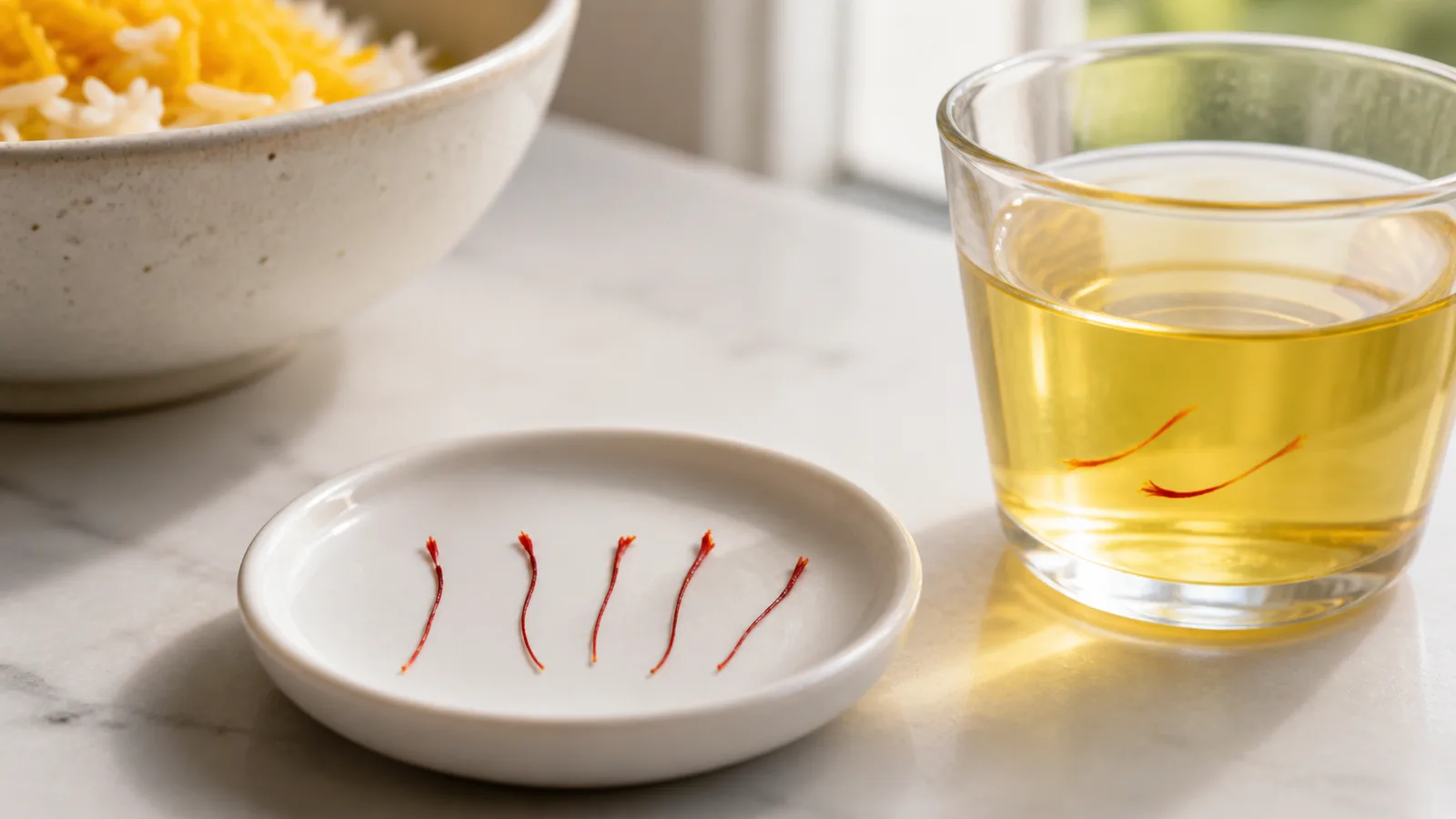


Yes, you can harvest your own saffron if you grow the true saffron crocus, Crocus sativus. The work is simple but time-sensitive: pick clean flowers as they begin to open, separate the three red stigmas, dry them promptly, and store the finished threads away from light and moisture.
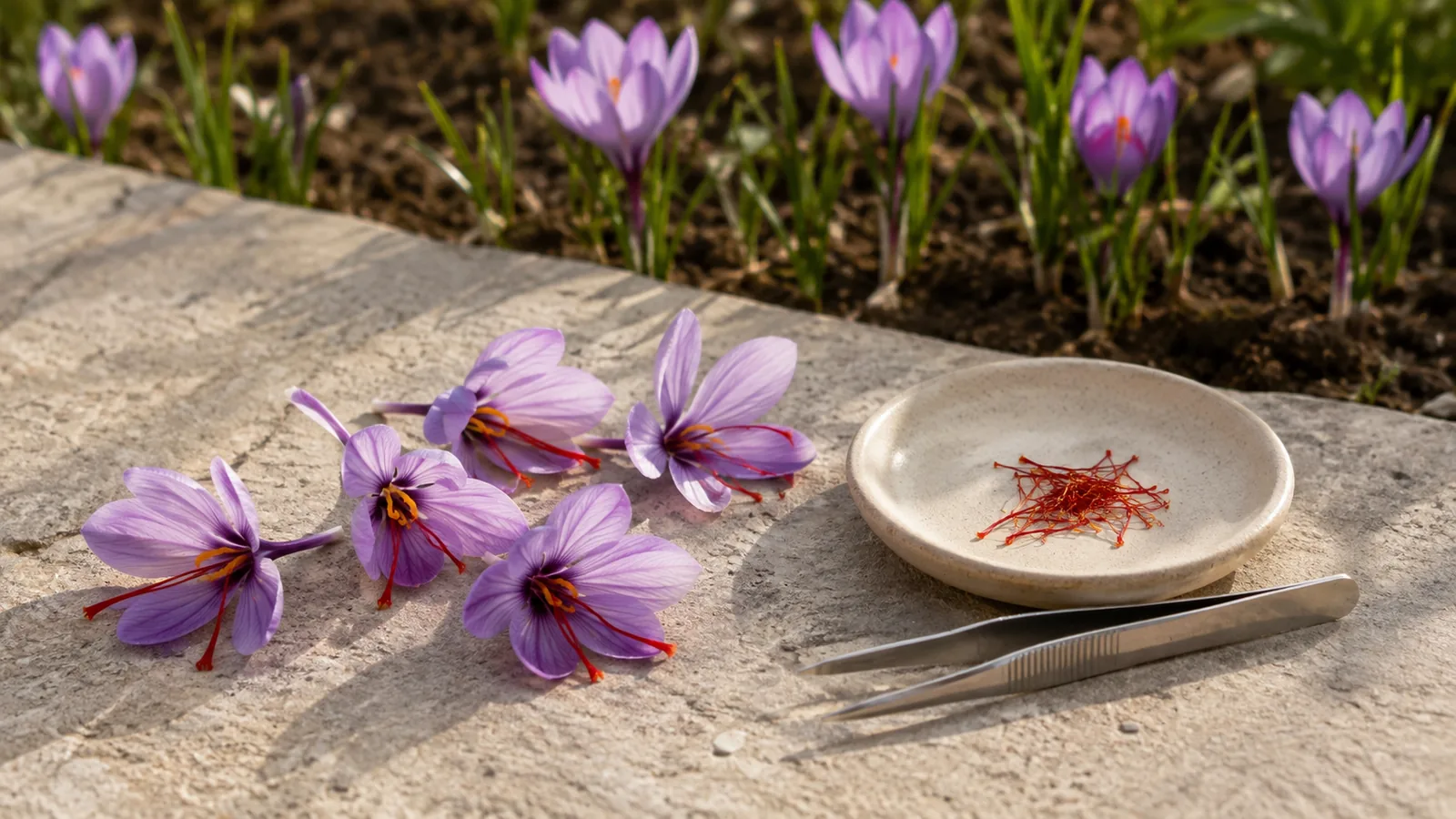
What you are harvesting from a saffron flower
The spice does not come from the petals or the whole flower. Each Crocus sativus bloom carries three red stigmas, and those stigmas become saffron after drying. The yellow stamens and purple petals are different flower parts; mixing them into the harvest dilutes the spice rather than increasing it.
This distinction matters because plants sold under similar common names are not always edible saffron. The North Carolina Extension plant profile for Crocus sativus identifies the saffron crocus by its lavender-purple flower and three protruding reddish-orange stigmas. Autumn crocus or meadow saffron in the genus Colchicum is a different, toxic plant. If the plant’s identity is uncertain, do not eat anything from it.
When to harvest saffron
Saffron flowers in autumn, though the exact weeks shift with climate and planting time. Check the bed every morning once the first purple buds appear. A flower that is fully elongated and just beginning to open is at a useful harvesting stage: the stigmas have developed, but the petals have not wilted or collected dirt.
The saffron time to harvest is therefore not one fixed calendar date. The flowers tell you when to begin, and a cool season may move that window later than a warm one.
The University of Vermont’s guide to harvesting saffron flowers recommends morning picking, after dew, rain, frost, or snow has dried. During the busiest part of the bloom, inspect the plants daily. A damp flower is awkward to separate and more vulnerable to quality loss, while a long delay leaves the stigma shrivelled or soiled.
Should you pick the threads or the whole flower?
For a few plants, you may open the flower gently and remove the red stigmas with clean fingers or tweezers. With a larger bed, it is usually more practical to pick the whole flower and do the delicate separation indoors. Either method can work. The important points are clean handling, minimal crushing, and quick processing.
Picking the flower does not mean cutting off the foliage. Leave the narrow green leaves in place after flowering; they continue feeding the corm during its growing season. Removing healthy leaves early can weaken next year’s growth.
How to harvest saffron at home, step by step
- Prepare clean equipment. Wash and dry your hands. Use a clean, dry collection tray and fine tweezers if you prefer them to your fingers.
- Choose dry, newly opening flowers. Harvest after surface moisture has gone, ideally before warm sun begins to wilt the petals.
- Carry flowers loosely. Do not press a large crop into a deep bowl or sealed bag. A shallow layer stays cooler and is less likely to trap condensation.
- Separate the red stigmas. Open each bloom over a clean surface and lift out the three red branches. Keep yellow stamens, petals, soil, and damaged material out of the spice.
- Dry the threads the same day. Spread them in a single loose layer and use a controlled drying method rather than leaving a damp pile on the counter.
- Cool before packing. Once the threads are dry, let them return to room temperature before closing the storage container, so residual warmth does not create condensation.
These steps describe both how saffron is harvested commercially and how to harvest saffron from crocus flowers in a home garden. The scale changes; the fragile material and the need for careful handling do not.
Drying home-grown saffron safely
Fresh stigmas contain a great deal of water. Drying is what makes them stable and helps develop the spice’s familiar aroma. Penn State Extension lists two accessible home methods in its guide to producing saffron: air-drying indoors on a clean paper towel for one to two days, or using a low oven for a controlled period.
If you use an oven, accuracy matters more than speed. University of Vermont trials compared several time-and-temperature combinations; their saffron drying methods fact sheet reports strong colour and aroma results at about 210°F (100°C) for seven to ten minutes. Home ovens cycle and their displays can be inaccurate, so use an oven thermometer, watch a tiny batch closely, and avoid scorching. The threads should finish dry, not blackened.
Air-drying is less demanding but depends on a dry indoor environment. Spread the stigmas rather than stacking them, protect them from dust, and allow extra time in humid weather. If they still feel flexible and damp, they are not ready for an airtight jar.
Clean handling is part of the harvest
Saffron is food. The University of Vermont’s post-harvest best-practice recommendations call for washed hands, sanitised work surfaces and containers, clean dry flowers, protection from heat and sunlight, and stigma separation within a few hours when possible. Discard flowers that are mouldy, heavily soiled, or have lain on wet ground.
How much saffron will a home harvest produce?
Expect a small harvest, especially in the first season. One flower gives only three saffron threads. Penn State estimates roughly 4,000 blossoms for one ounce of dried spice, so a handful of garden flowers yields a pinch, not a jarful. That is still enough to make the process satisfying and to season a modest dish.
Corm size, local weather, drainage, planting density, age of the bed, and plant health all influence flower count. Mature corms can multiply underground, and a settled bed may produce more flowers in later years. Avoid treating any fixed flowers-per-corm figure as a promise.
A useful harvest begins with the growing site. Plant healthy corms—often casually called saffron bulbs—in a sunny position with freely draining soil. Warm, relatively dry summers and a cooler growing season suit the plant better than constantly wet ground. Waterlogging can damage the corm before there is a flower to pick.
How to store saffron after harvesting
Place fully dried threads in a small airtight glass or metal container. Keep it in a cool, dry cupboard away from sunlight, steam, and strong odours. A small container is preferable to a large half-empty jar because it reduces the air exchanged each time you open it.
Label the harvest with its date. Check it during the first few days for fogging inside the container or threads that have softened; either sign suggests remaining moisture, and the saffron should be removed and dried further. Never store warm threads in a sealed jar.
Common mistakes when picking saffron
- Harvesting the wrong crocus: confirm Crocus sativus before using the stigmas as food.
- Waiting for flowers to wilt: begin saffron picking when blooms are just opening and inspect the bed often.
- Collecting wet flowers: allow dew, rain, frost, or snow to clear first.
- Piling flowers deeply: trapped heat and moisture make separation harder.
- Keeping yellow stamens with the red stigmas: only the stigmas are the culinary saffron.
- Guessing at oven temperature: an overheated tray can scorch a season’s entire harvest in minutes.
- Cutting back green leaves: the plant still needs them after the flowers are gone.
Is harvesting your own saffron worthwhile?
It is worthwhile if you enjoy growing unusual food plants and are comfortable with a small, hands-on harvest. It is not a shortcut to producing large amounts cheaply. Much of saffron’s value comes from the fact that every flower must be visited and each set of three stigmas handled individually.
Start with correctly identified, healthy corms and a manageable bed. On the first flowering morning, work with only a few blooms until you are confident separating and drying the stigmas. Once that routine feels easy, saffron harvesting becomes a brief autumn ritual rather than a complicated project.
If you want culinary saffron without waiting for a garden harvest, you can compare the formats available in our saffron shop.