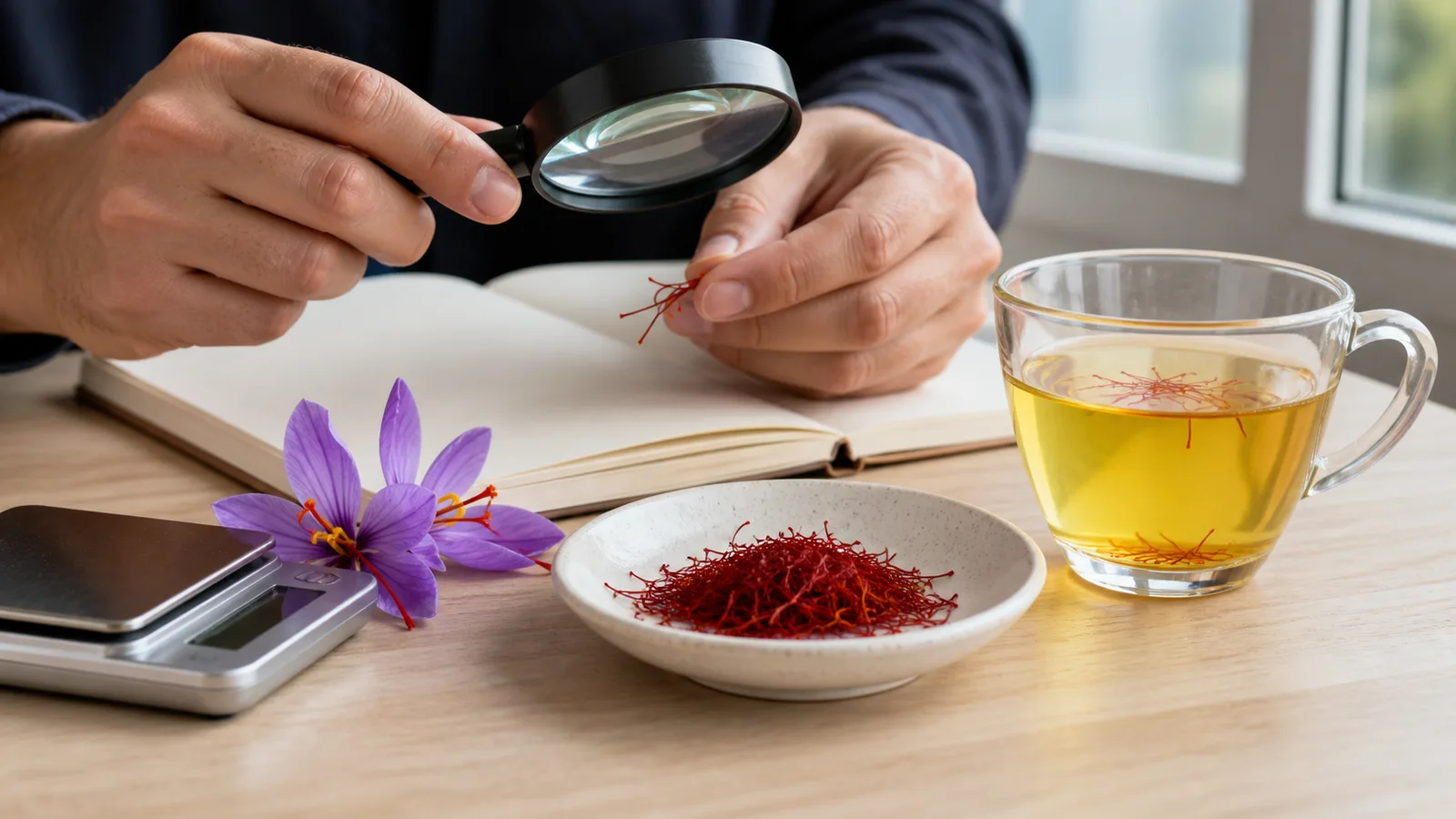
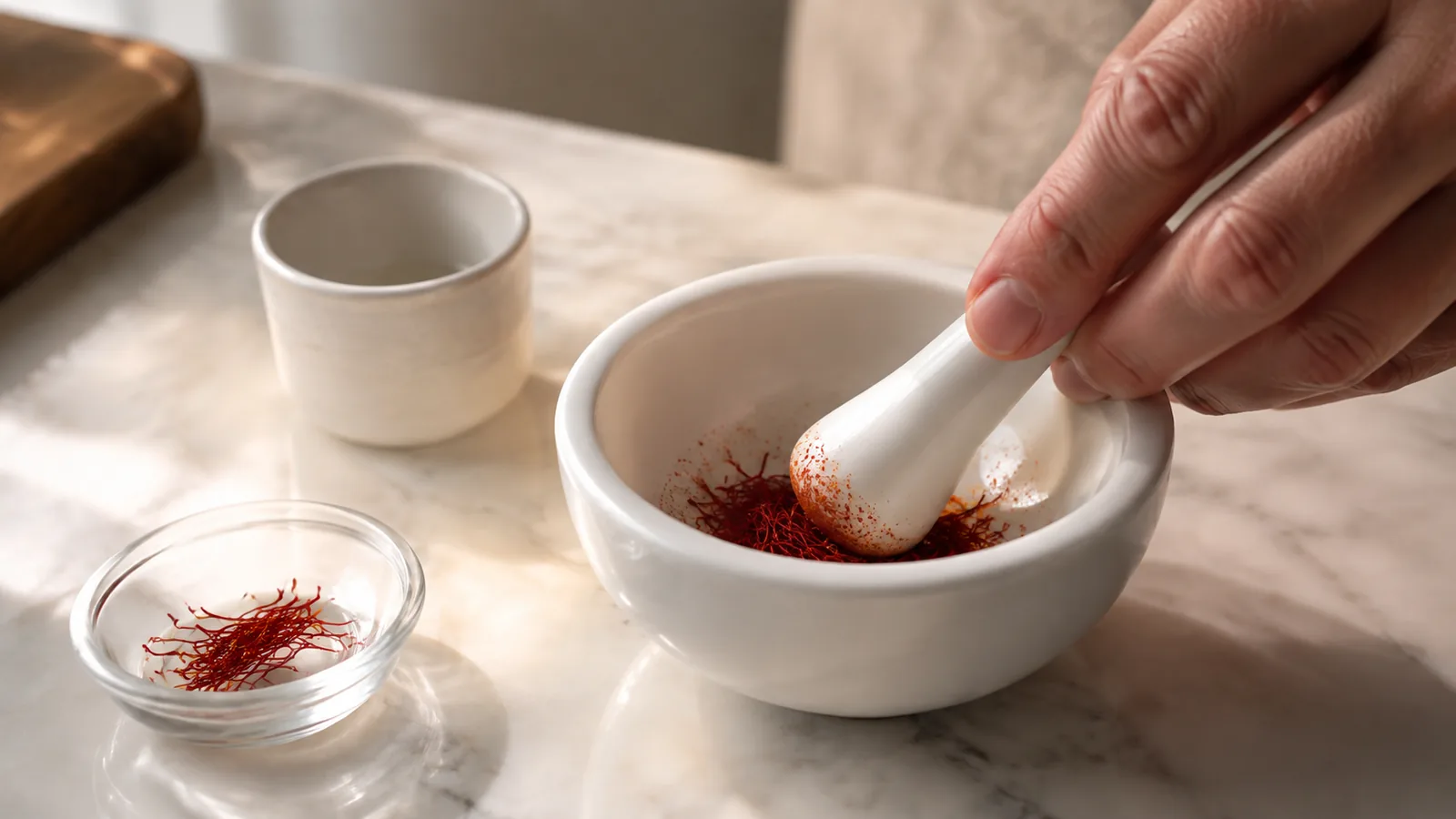
Saffron and ginger tea benefits begin with something simple: it is a fragrant, warming drink made from two different spices. Saffron contributes a floral aroma, golden colour and a slightly honeyed bitterness; fresh ginger adds heat and a clean citrus note. The combination can be enjoyable, but it should not be presented as a cure or a “powerful health tonic.”
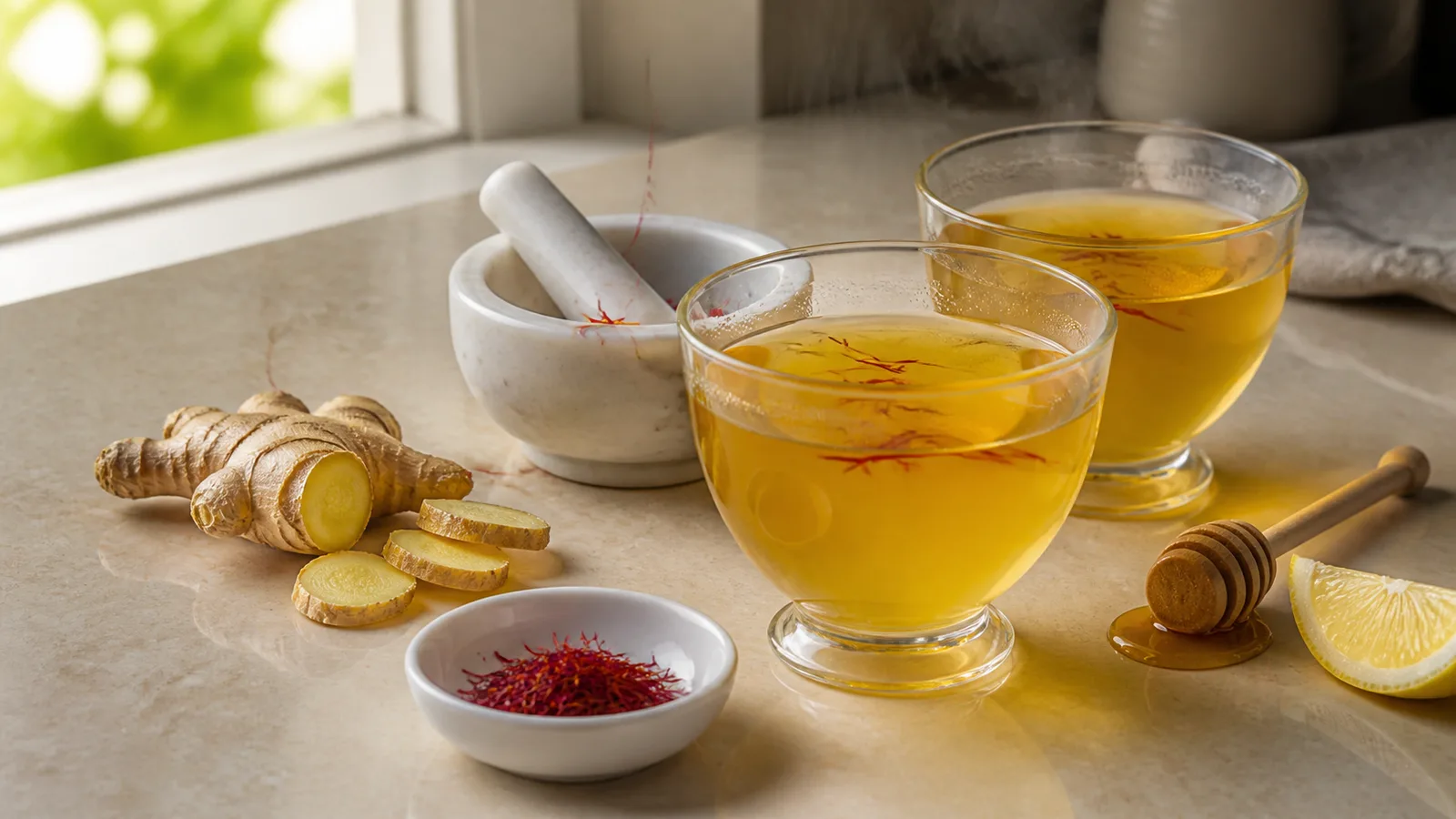
This saffron ginger tea recipe makes two cups. Simmer the ginger first, then add saffron away from hard boiling heat so its more delicate aroma stays in the cup. Honey, lemon, cardamom and rosewater are optional, not required.
How much saffron to use in tea: ingredients for two cups
For two cups, gather:
- 2 cups (about 500 ml) water;
- 8–12 saffron threads, lightly crushed;
- a 1-inch (2–3 cm) piece of fresh ginger, washed and thinly sliced; and
- honey or lemon to taste, if wanted.
This makes a mild everyday infusion rather than a concentrated supplement. Saffron varies in strength and ginger varies in heat, so the sensible first adjustment is flavour: use fewer ginger slices for a softer cup or steep a little longer for more bite. Adding a large amount of saffron does not turn tea into better medicine.
How to prepare saffron and ginger tea
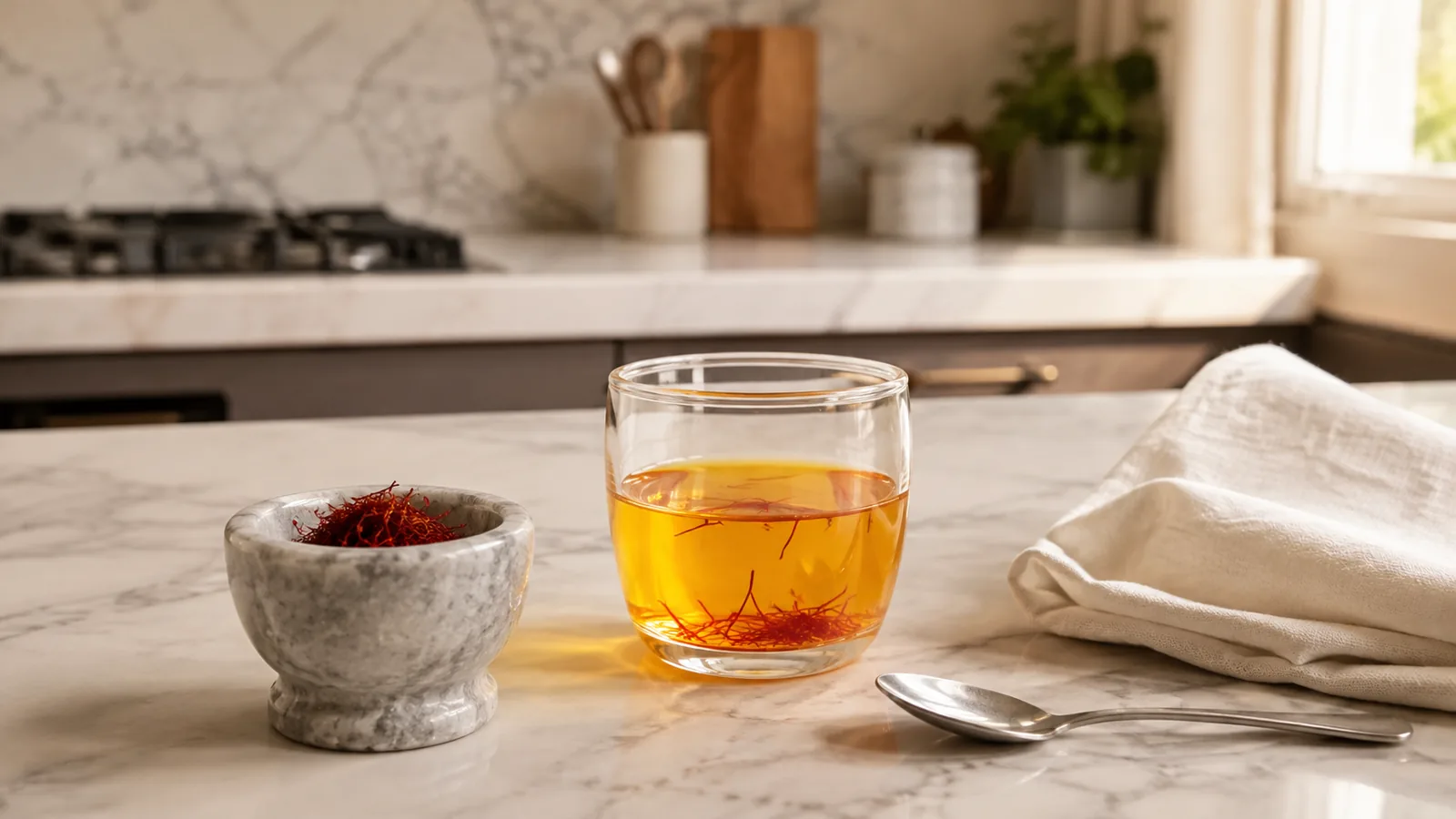
- Prepare the saffron. Rub the threads gently between clean fingers or crush them once with a small mortar and pestle. Put them in a cup with two tablespoons of warm—not boiling—water while the ginger cooks.
- Simmer the ginger. Bring 2 cups of water to a boil, add the sliced ginger, lower the heat and simmer gently for 5–8 minutes.
- Add the saffron. Take the pan off the heat. Pour in the saffron and its blooming water, cover and steep for another 5 minutes.
- Strain and taste. Divide between two cups. Add a little honey or lemon only after tasting the plain infusion.
Covering the pan keeps more aroma in the drink. Very finely ground ginger can leave sediment and become harsh, while powdered saffron is difficult to assess for purity. Whole saffron threads and sliced fresh ginger give better control over flavour and make the ingredients easy to strain.
How to make saffron, ginger and honey tea
Make the tea by the same method, then stir honey into each cup after straining. There is no need to boil the honey with the spices. Start with half a teaspoon per cup; more can hide saffron’s floral character. For a brighter drink, add a squeeze of lemon. For a Persian-style aromatic variation, steep one lightly crushed green cardamom pod with the ginger or add a few drops of food-grade rosewater at the end.
If you prefer an unsweetened cup, leave the honey out entirely. The ginger and saffron are still fully expressed, and you can judge whether either ingredient needs adjusting in the next brew.
Are saffron and ginger the same?
No. Saffron and ginger are different plants and different parts of a plant. Saffron is made from the dried red stigmas of the autumn-flowering Crocus sativus. Ginger is the edible rhizome, or underground stem, of Zingiber officinale. Their colours can also cause confusion in some languages: ginger is pale yellow inside, while true saffron threads are deep red and release a golden colour into water.
They are paired here because their flavours contrast well, not because one replaces the other. Turmeric is another separate rhizome and should not be confused with either ingredient.
What are the benefits of saffron and ginger tea?
When discussing ginger and saffron tea benefits, claims about saffron and ginger benefits need to be separated from what this particular cup can do. Its most defensible benefit is that it is a pleasant, low-sugar drink when served without much sweetener. Research has examined saffron and ginger separately, usually as standardized extracts, powders or supplements. That evidence cannot be transferred directly to a two-cup kitchen infusion, and it does not prove that combining the ingredients creates an extra therapeutic effect.
What research says about ginger
Ginger has been studied most consistently for nausea. The US National Center for Complementary and Integrative Health says ginger may help nausea and vomiting associated with pregnancy, while evidence for motion sickness, chemotherapy-related nausea and postoperative nausea is less certain. It also notes that most studies used dietary supplements rather than foods or tea.
That distinction matters. A few slices in a teapot are not equivalent to a trial’s measured ginger product, and tea should not replace prescribed anti-nausea treatment. Claims that this drink treats allergies, respiratory illness, neck pain, scars, hair loss or obesity are not supported by the recipe itself and have therefore not been carried forward.
What research says about saffron
Saffron contains crocins, picrocrocin and volatile compounds that contribute colour, taste and aroma. Clinical research has investigated standardized saffron products for mood and other outcomes. A systematic review of neurological and psychiatric trials reported encouraging results in several areas, while also drawing on products and doses that are not comparable to a few threads brewed as tea.
It is therefore reasonable to enjoy saffron’s sensory qualities and describe the research accurately. It is not reasonable to promise that one cup will boost mood on demand, act as a painkiller, relieve constipation or protect the heart, brain, liver, lungs, kidneys, skin and teeth. Anyone dealing with a diagnosed condition needs appropriate care rather than a stronger tea claim.
Can you use saffron in tea?
Yes. Whole threads can be bloomed and added to herbal tea, black tea or green tea. For the clearest saffron flavour, use a lightly flavoured base and avoid boiling the threads for a long time. If you want a plain version or need the basic steps for how to make saffron tea, follow our separate saffron tea guide.
Good threads should smell clean and distinctive, not damp or musty. They release colour gradually rather than instantly turning the cup an artificial red. Store saffron dry, sealed and away from light; keep fresh ginger refrigerated and cut away any spoiled portion before use.
Safety and sensible use
For most adults, the culinary quantities in this recipe are different from concentrated extracts. Even so, ginger can cause heartburn, abdominal discomfort, diarrhoea or mouth and throat irritation in some people. NCCIH also advises people who take medicines to discuss herbal products with a healthcare professional because interactions are possible.
Pregnancy, surgery, an ongoing medical condition or regular medication makes individualized advice more important. Do not use a blog recipe to set a therapeutic saffron or ginger dose, and do not stop prescribed treatment in favour of tea. Our broader guide to saffron side effects and precautions explains why food use and high-dose supplementation should not be treated as the same exposure.
Make the cup your own without losing the balance
For more ginger heat, extend its simmer by a minute or two before adding saffron. For a stronger saffron aroma, bloom the same culinary quantity a little longer rather than throwing a large pinch into boiling water. Cardamom suits a rounder, spiced cup; lemon makes it sharper; rosewater should be used by the drop because it can take over quickly.
Serve the tea freshly made. A covered leftover portion can be refrigerated and reheated gently within a day, but its aroma is best in the first cup. The recipe works because neither spice overwhelms the other: warm ginger first, delicate saffron second, and sweetness only where it helps.