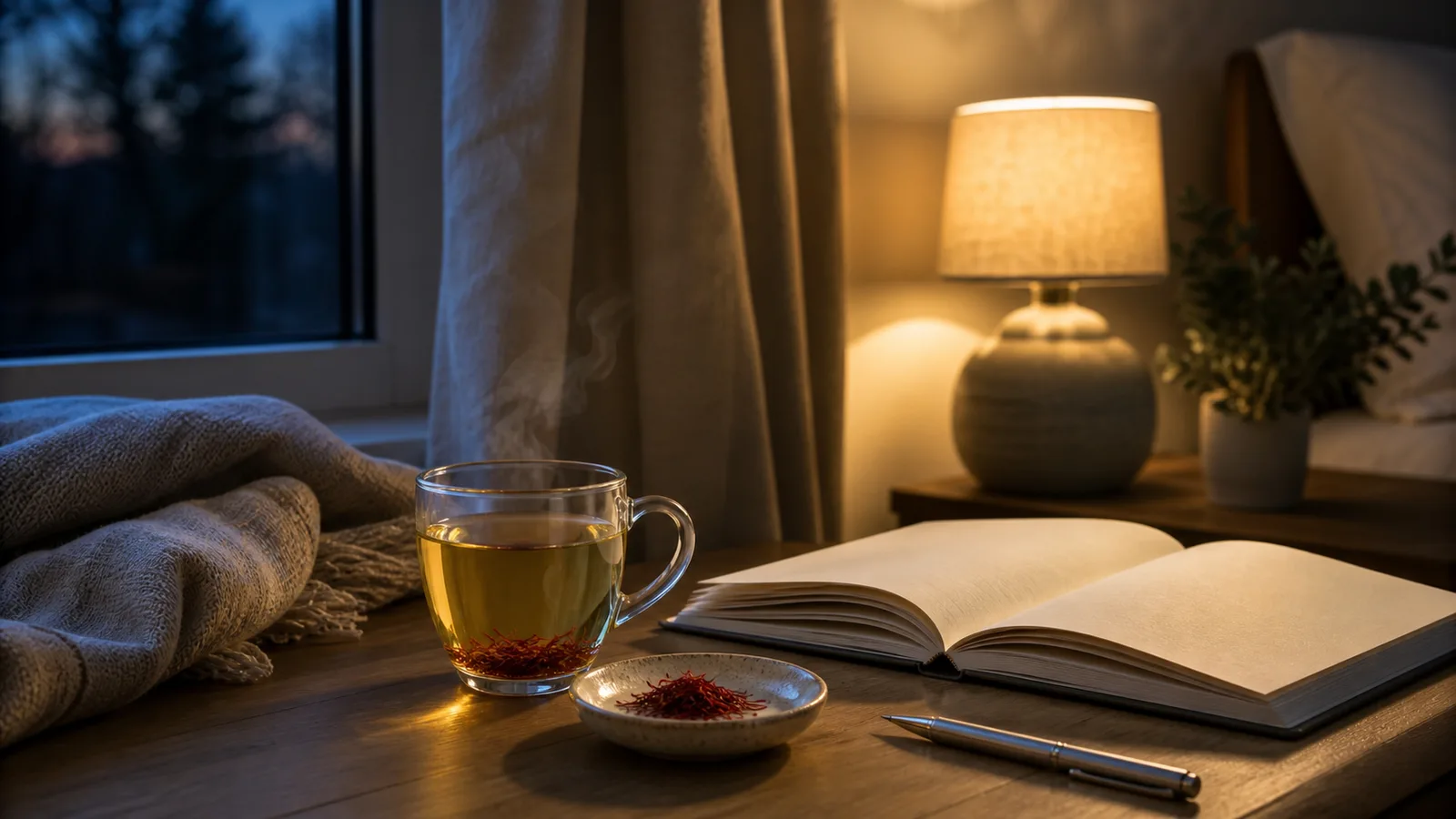
Several small randomized trials suggest that defined saffron extracts may improve some measures of sleep quality, but saffron is not a proven cure for insomnia. It does not reliably make everyone sleepy, and results from a standardized capsule cannot be transferred automatically to saffron tea, milk, or food.
Saffron and sleep is a promising research area, but saffron for insomnia is not an established treatment. Calling it a natural remedy “without chemical medications” creates a false choice: the practical decision depends on the sleep problem, the exact product, safety, and whether established behavioral or medical care is needed.
Does saffron make you sleepy?
Not in the way a fast-acting sedative can. Trial participants usually took a defined preparation daily for several weeks and then reported changes in sleep questionnaires. That is different from feeling drowsy immediately after one drink.
If saffron before bed seems relaxing, the warmth, familiar taste, dim light, and regular routine may contribute. A person may still have frequent waking or wake feeling unrefreshed even if it seems easier to fall asleep. Do not drive or operate machinery if any supplement makes you dizzy or drowsy.
Is saffron good for sleep?
A 2023 systematic review identified five randomized clinical trials with 379 participants in three countries. The authors found initial support for effects on sleep duration or quality, while the small and varied evidence base limited certainty.
A 2022 meta-analysis also reported favorable changes on the Pittsburgh Sleep Quality Index, Insomnia Severity Index, and Restorative Sleep Questionnaire. A newer 2025 randomized trial in adults reporting moderate insomnia examined a particular standardized extract for six weeks and found improvements on selected self-reported outcomes.
These findings are worth studying, but they do not answer every question:
- trials used different extracts, amounts, schedules, participants, and outcomes;
- most were short, so long-term effect and safety remain uncertain;
- some relied mainly on self-reported questionnaires rather than objective sleep measurement;
- poor sleep in a healthy volunteer is not the same as chronic insomnia, sleep apnea, or another diagnosed disorder;
- commercially funded work needs the same careful assessment as any other study; and
- one branded extract does not validate every saffron supplement.
What did the studies actually use?
Individual trials have used standardized saffron extracts, not a universal recipe. One 28-day study tested 14 mg and 28 mg of a named extract taken about an hour before bed; another six-week study tested 15.5 mg daily. A meta-analysis included trials with other regimens.
These numbers describe research protocols, not a personal dose recommendation. Extract strength and composition vary. Counting spice threads cannot reproduce a standardized product, and a higher amount is not necessarily more effective or safer.
Saffron, melatonin, and cortisol
The old article said saffron naturally boosts melatonin and regulates cortisol. That is too certain. One trial measured evening salivary melatonin and cortisol alongside sleep outcomes, but the broader evidence does not establish that saffron consistently raises melatonin, normalizes cortisol, or resets the sleep-wake cycle in people.
Melatonin helps signal biological night, while cortisol follows its own daily rhythm. Both are influenced by light, sleep timing, stress, illness, and other factors. A proposed pathway is not proof that saffron corrects a hormone problem.
Crocin, safranal, and possible mechanisms
Saffron contains crocin, crocetin, safranal, picrocrocin, and other compounds. Laboratory and animal studies examine antioxidant activity, inflammation, neurotransmitter systems, and sleep-related behavior. Researchers use those findings to form hypotheses.
These antioxidants do not prove that culinary saffron soothes the nervous system, combats stress, reduces inflammation or pain enough to improve sleep, or produces deeper, uninterrupted, restorative sleep. Human outcomes have to be demonstrated directly.
Anxiety, depression, and sleep
Anxiety and depression can disrupt sleep, and poor sleep can intensify sadness or emotional fatigue. Saffron preparations have also been studied for mood outcomes, but it is inaccurate to assume that an antidepressant or anti-anxiety effect explains every sleep result.
Persistent sadness, loss of interest, severe anxiety, panic, unusual energy with little need for sleep, or thoughts of self-harm needs appropriate care. A sleep supplement should not replace mental-health assessment or prescribed treatment.
How to use saffron for sleep
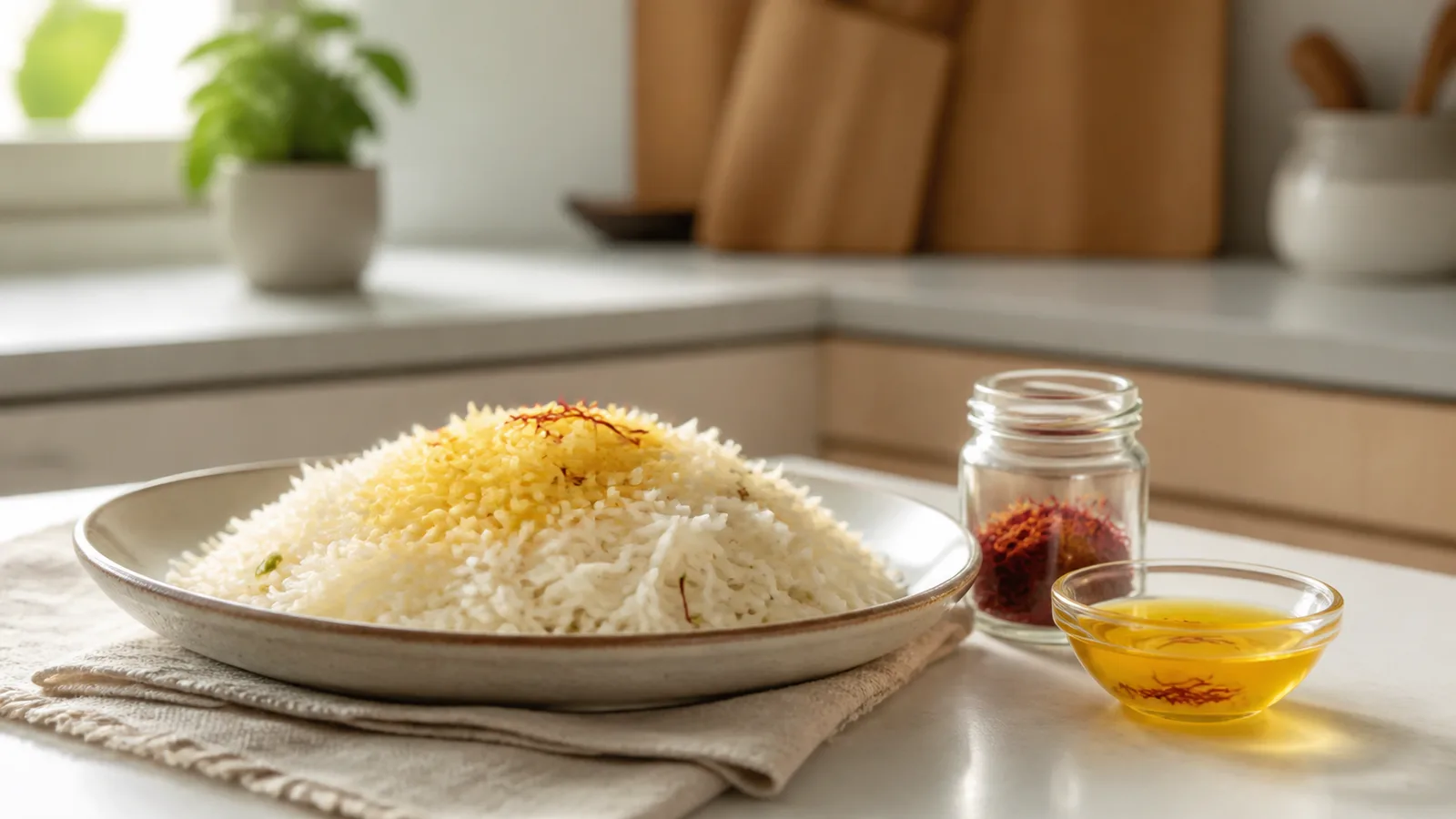
There is no proven culinary saffron-for-sleep recipe. If you enjoy saffron and can use it safely, a small food amount can be part of an evening routine:
- Gently crush 6 to 10 genuine threads.
- Bloom them in a tablespoon of warm water for 10 minutes.
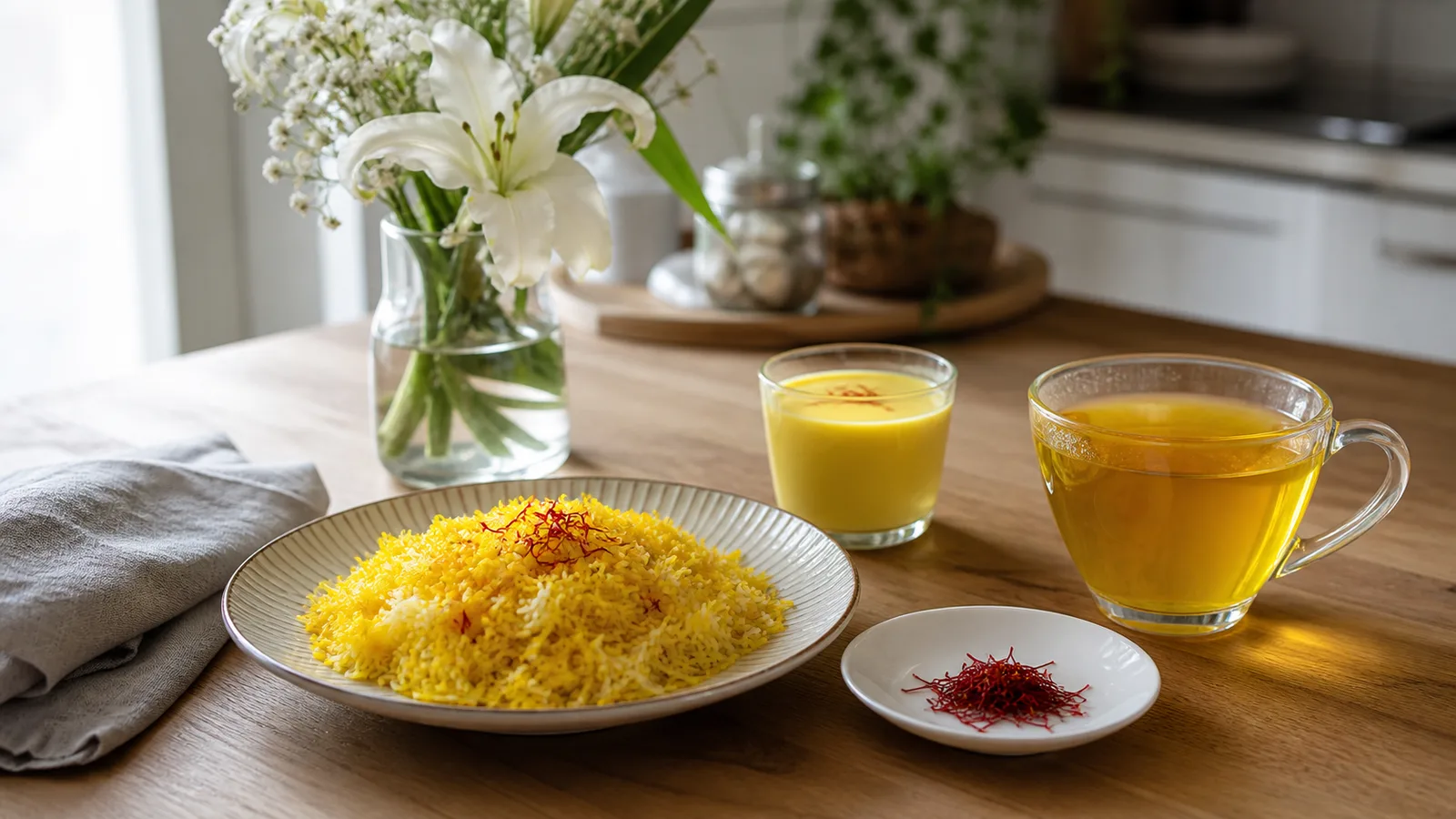
- Add the infusion to caffeine-free tea or a cup of warm milk.
- Keep added sugar modest and finish the drink early enough to avoid reflux or repeated bathroom trips.
- Use the same quiet wind-down time rather than increasing the saffron.
This is a culinary ritual, not the equivalent of a clinical extract. Our saffron milk recipe explains blooming, milk choices, and food safety.
Saffron tea before bedtime
Saffron tea contains a variable amount of the spice and has not been proven to treat insomnia. Avoid adding black or green tea late in the day if caffeine affects you. A caffeine-free infusion is a better fit for a wind-down routine.
Do not use the drink to chase an immediate sedative effect. If one cup does not make you sleepy, adding much more saffron is not the answer.
What improves sleep more reliably?
For chronic insomnia in adults, the American Academy of Sleep Medicine recommends cognitive behavioral therapy for insomnia (CBT-I) as first-line treatment. CBT-I is more than generic sleep hygiene; it uses structured methods tailored to the pattern of insomnia.
Everyday foundations still help:
- keep a consistent wake time, including after a poor night;
- get morning daylight and regular daytime movement;
- limit late caffeine, nicotine, alcohol, and heavy meals;
- make the room dark, quiet, and comfortably cool;
- use the bed for sleep rather than prolonged scrolling or work; and
- record bedtime, wake time, awakenings, naps, caffeine, and symptoms for two weeks.
A sleep diary can show whether the problem is falling asleep, staying asleep, waking too early, irregular timing, or unrefreshing sleep. That is more useful than describing every problem as “low melatonin.”
When poor sleep needs medical assessment
Ask a clinician about sleep that lasts for weeks, affects daytime safety or function, or persists despite a sensible routine. Assessment is especially important for:
- loud snoring, gasping, choking, or witnessed breathing pauses;
- an irresistible urge to move the legs at night;
- unusual movements, dream enactment, or sleepwalking;
- severe daytime sleepiness or drowsy driving;
- pain, reflux, menopause symptoms, medication effects, or frequent urination; and
- depression, anxiety, trauma, bipolar symptoms, or substance use affecting sleep.
Insomnia can be a disorder in its own right, but it can also point to another condition. Treating the cause is more important than adding a bedtime spice.
Safety and interactions
A 2026 systematic review found saffron was generally tolerated in clinical studies, but adverse effects occurred, most often gastrointestinal symptoms. Other reported concerns include headache, dizziness, dry mouth, allergy, and changes relevant to blood pressure or bleeding.
Ask a clinician or pharmacist before a concentrated product if you take sleep, mood, blood-pressure, blood-sugar, or blood-thinning medicine, or if you have bipolar disorder, low blood pressure, a bleeding disorder, kidney or liver disease, or planned surgery. Combining several “calming” products can increase uncertainty and drowsiness.
Pregnancy, breastfeeding, and children
Pregnant or breastfeeding people should not self-prescribe a saffron extract for sleep. Evidence is limited, and higher exposures have been associated with pregnancy concerns. A normal food amount is a different exposure, but individual advice still matters.
Do not give a saffron sleep supplement to a child unless the child’s clinician recommends the exact product. Sleep problems in children can relate to schedule, breathing, anxiety, development, medicine, or another cause that needs assessment.
How to evaluate a saffron sleep product
- Check the plant part, extract ratio, standardization, amount per serving, and complete ingredient list.
- Look for batch-level testing from a credible independent laboratory.
- Match any research claim to the exact product and population studied.
- Check whether the study measured sleep objectively or only by questionnaire.
- Review funding and conflicts of interest.
- Decide in advance how benefit and side effects will be tracked.
“Natural sleep aid,” “clinically proven,” and “boosts melatonin” are not enough. A useful label and a relevant trial need specific details.
The balanced conclusion
Saffron sleep benefits are plausible and supported by a small set of randomized trials, but the evidence is not yet strong enough to make saffron a standard insomnia treatment. Defined extracts, culinary tea, and milk are different products.
If you enjoy saffron before bed, keep the amount culinary and let it be one part of a steady wind-down routine. For ongoing insomnia or warning signs of another sleep disorder, use assessment and established care rather than increasing a supplement.
Sources
- Systematic review of randomized trials concerning saffron and sleep quality
- Meta-analysis of randomized trials of saffron supplementation and sleep quality
- 2025 randomized trial of a standardized saffron extract in adults with moderate insomnia
- Randomized trial measuring sleep, cortisol, and melatonin
- 2026 systematic review of saffron adverse events
- American Academy of Sleep Medicine: behavioral treatment guideline for chronic insomnia