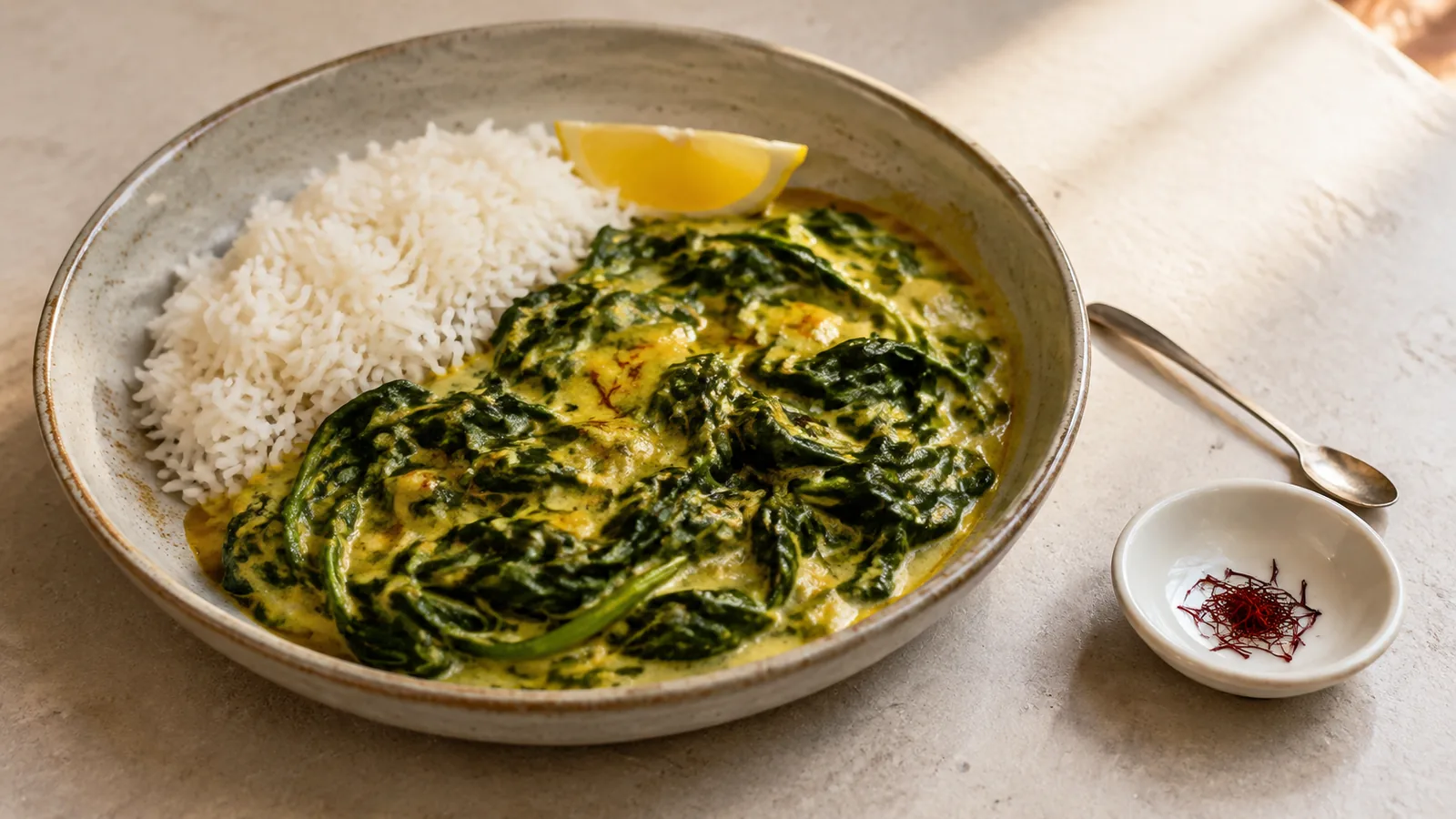
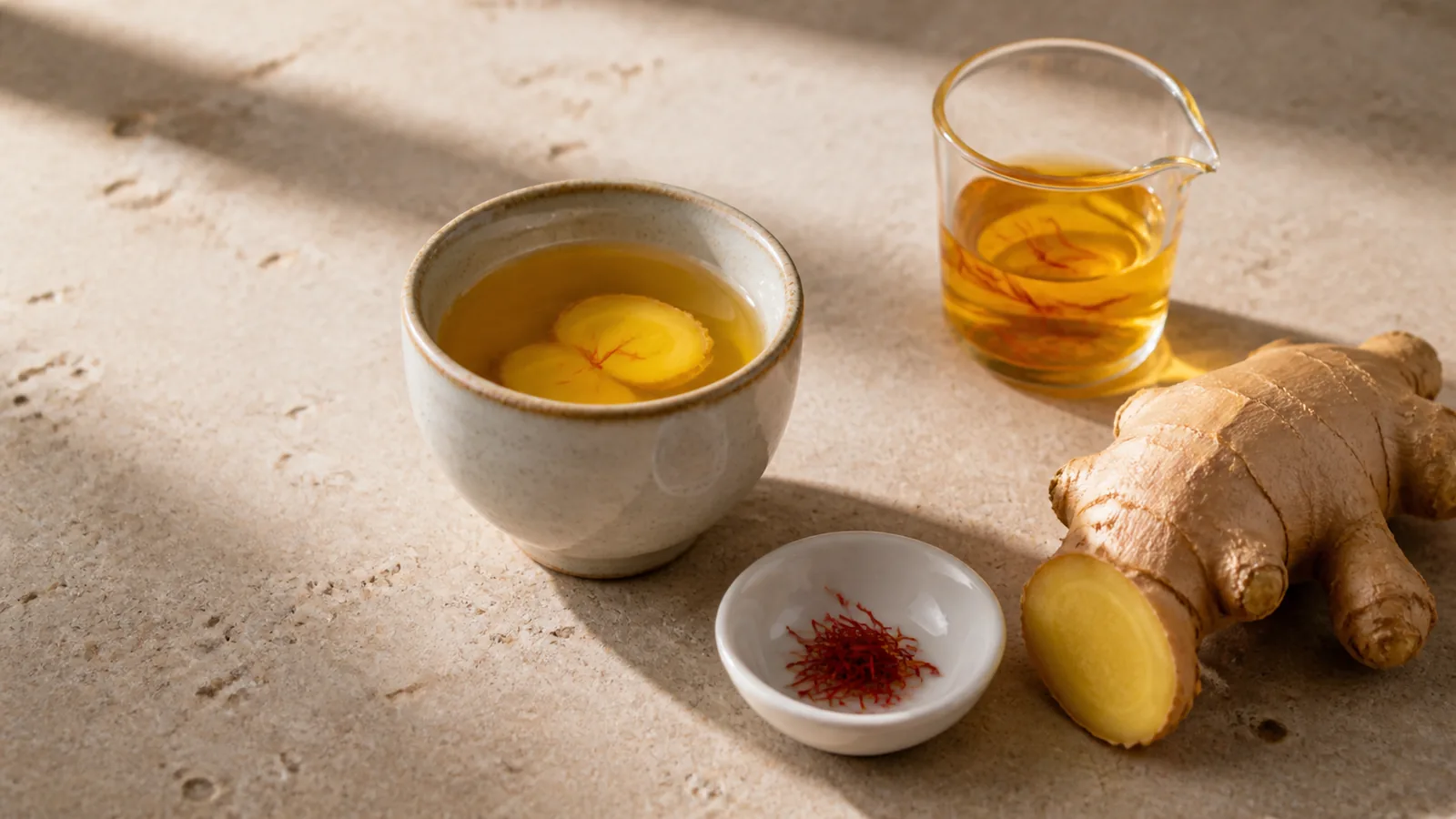
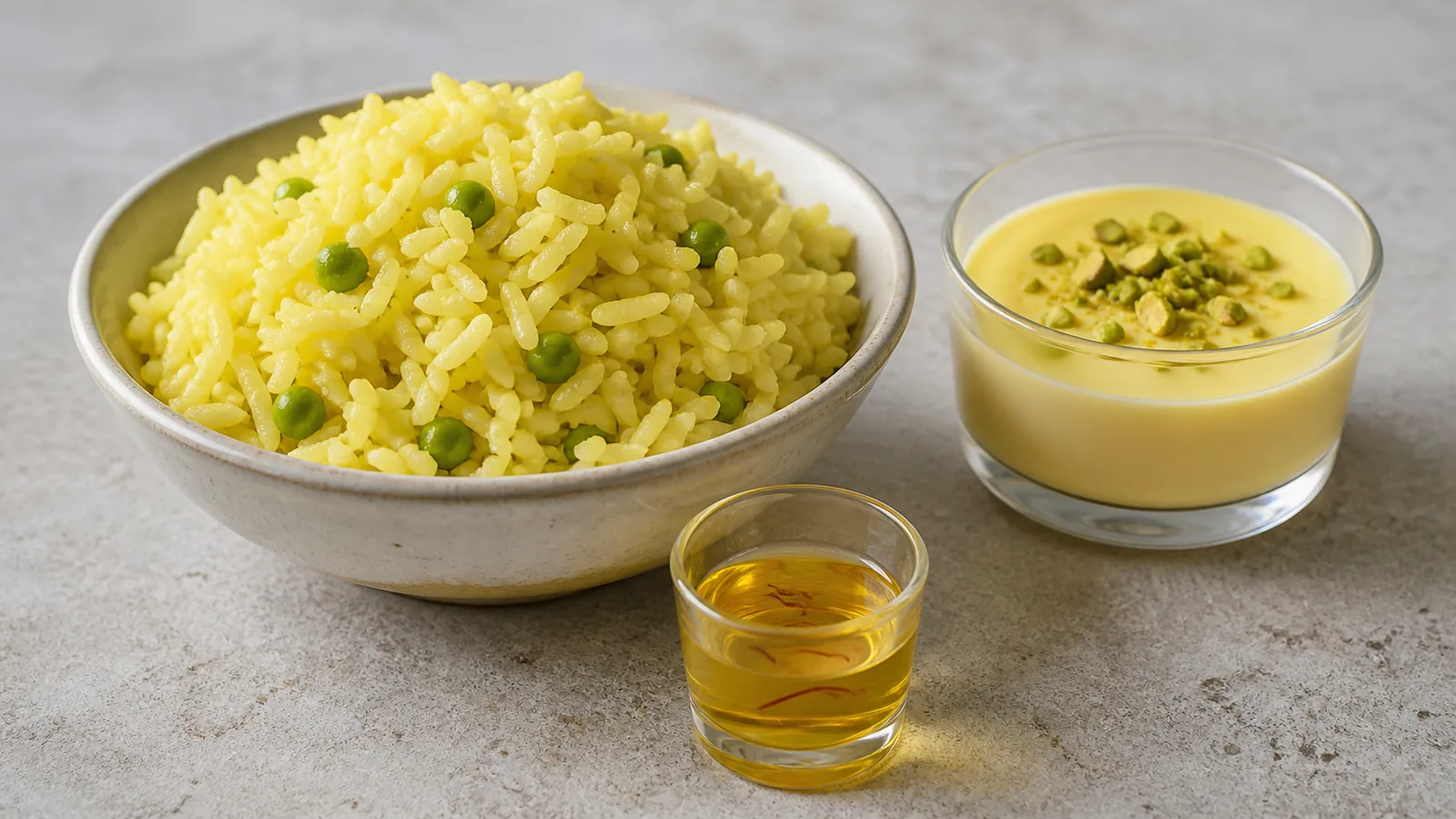
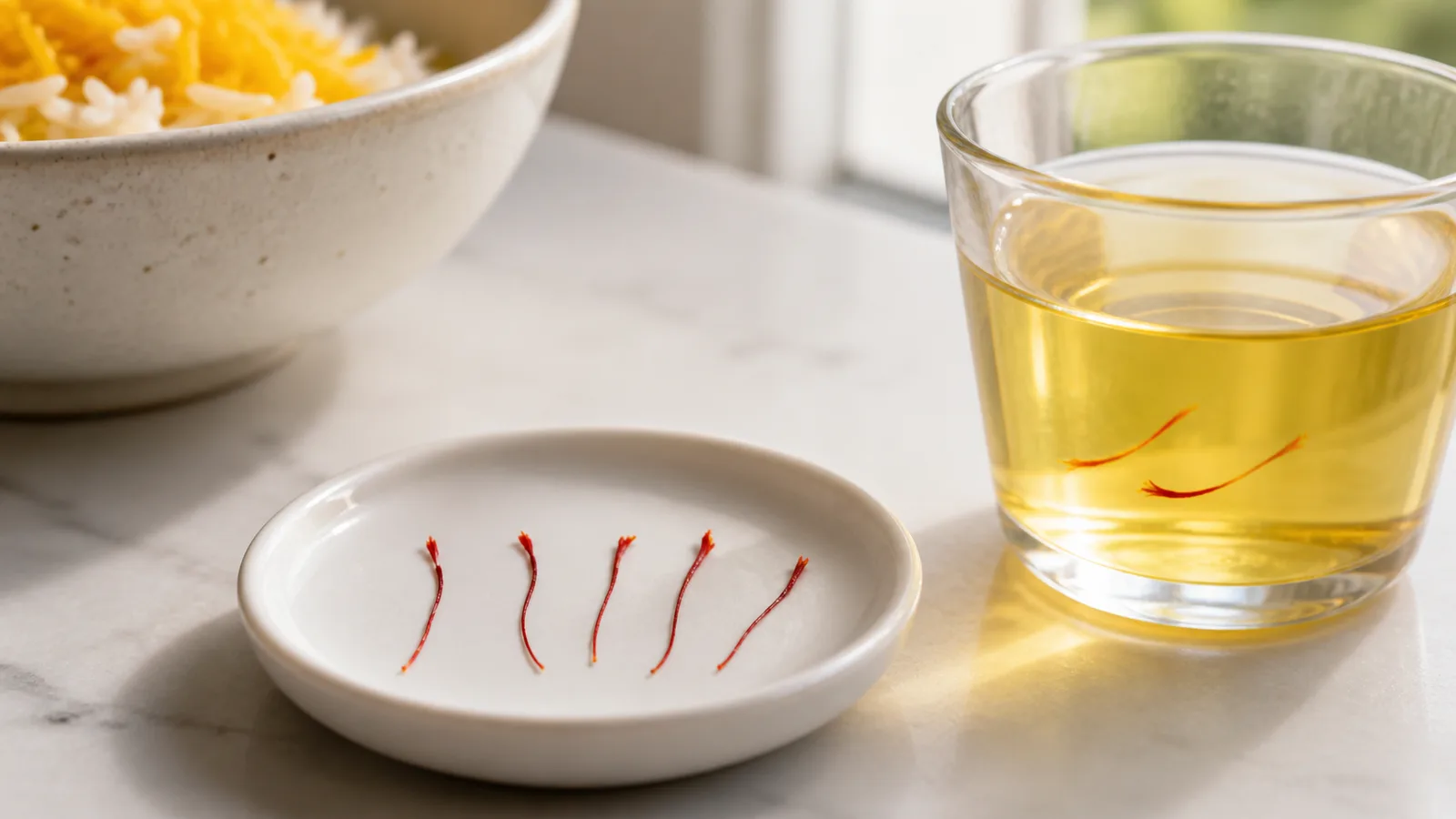
The foods that pair with saffron best are mild grains, seafood, chicken, lamb, gently flavoured vegetables and creamy dairy ingredients. Rice is the easiest starting point. Its neutral taste gives saffron room to contribute its floral aroma and earthy depth without being crowded by stronger seasonings. These complementary foods also leave space for saffron’s unique flavor and vibrant color.
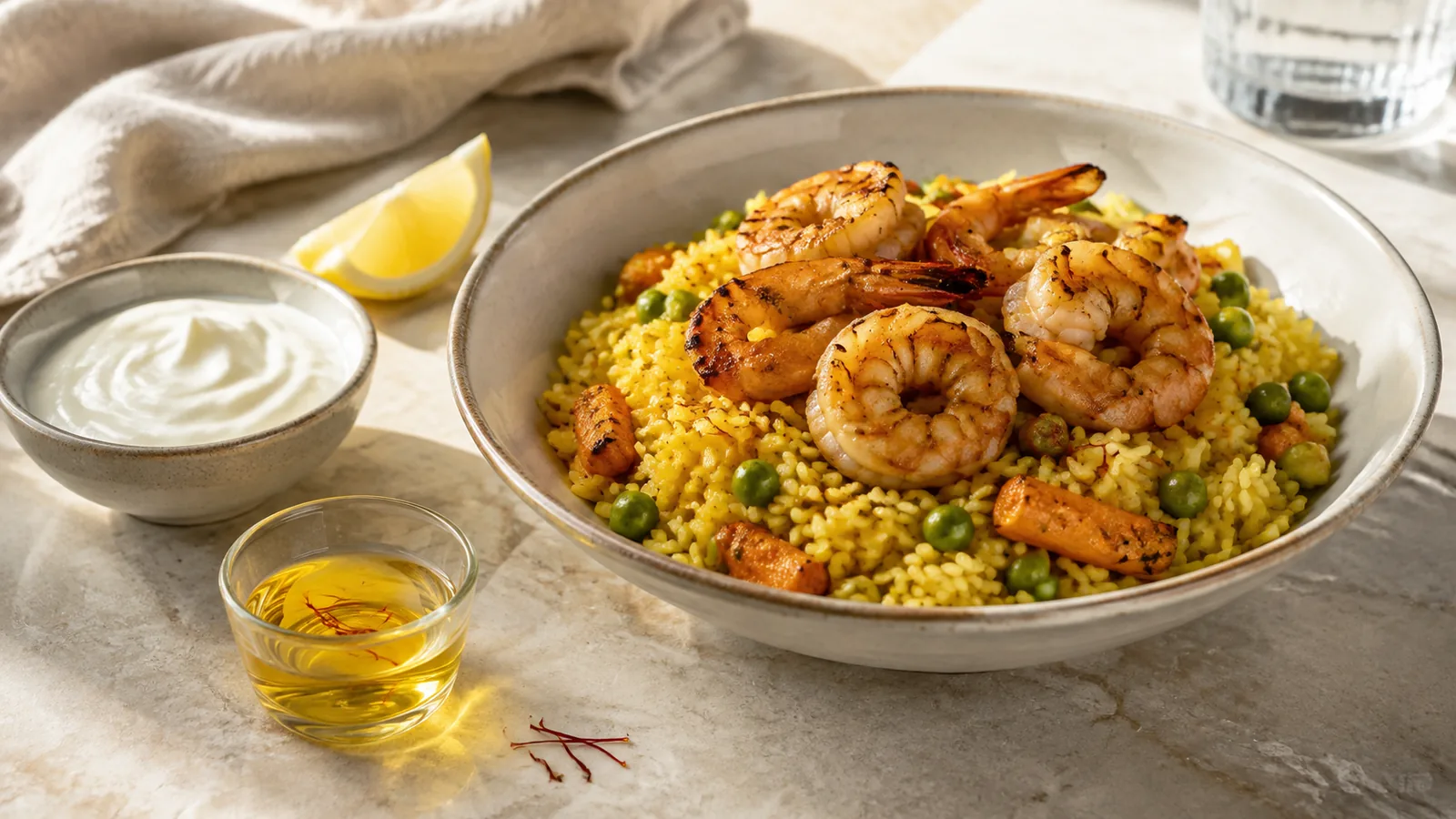
Why some saffron pairings work better than others
Saffron is powerful but not loud in the way chilli, garlic or smoked spices can be. Its unique flavour combines floral, hay-like and faintly honeyed notes with a controlled bitterness. Good saffron pairings either provide a calm background, carry the aroma through fat or liquid, or add sweetness and acidity in careful proportion.
This is also why more ingredients do not automatically create a better dish. A concentrated saffron infusion with rice, stock and butter can be more expressive than a complex sauce filled with competing spices.
Rice, quinoa, couscous and other grains
Rice and saffron are a classic combination in dishes such as paella, pilaf and risotto. Bloomed saffron disperses through the cooking liquid, giving the grains an aromatic and visually striking foundation. Its golden color adds visual appeal, while butter, olive oil or a measured spoonful of cream can round out the flavour.
Saffron quinoa works for the same reason. Cook the quinoa in lightly seasoned stock, then add a concentrated saffron bloom near the end. Peas, toasted almonds, roasted carrots or a little lemon can give the dish contrast without hiding the spice. Couscous, bulgur and other mild grains can be treated in a similar way. For quantities and timing, see our guide to using saffron in rice dishes.
Seafood and saffron
Shrimp, scallops, mussels and firm white fish pair exceptionally well with saffron. The spice’s floral character sits naturally beside the clean sweetness of seafood, while a broth or light cream sauce spreads the aroma through the dish.
Saffron-infused paella and seafood risotto are familiar examples, but a simple fish stew can work just as well. Fennel, leek, garlic and a modest amount of tomato or white wine are useful supporting flavours. Keep smoked or heavily spiced ingredients restrained if saffron is meant to remain noticeable.
Chicken, lamb and other meats
Chicken is one of the most forgiving choices because it absorbs a saffron marinade or sauce without overpowering it. Combine a bloom with yoghurt, lemon, onion or a mild stock for grilled, baked or braised dishes.
Lamb can also work beautifully, especially in slow-cooked rice dishes and stews. It needs a firmer supporting balance than chicken: onion, a little acidity and warm spices used in moderation. Saffron contributes aroma and golden colour, but it should not be expected to cover an excessively fatty or heavily seasoned preparation.
Vegetables that suit saffron
Carrots, bell peppers and peas bring gentle sweetness and colour. Potatoes, cauliflower, fennel, courgettes and leeks are quieter partners that absorb saffron-infused broth nicely. Roasting adds depth, while steaming or simmering keeps the overall flavour lighter.
A useful rule is to choose two or three vegetables with compatible cooking times rather than mixing everything available. Saffron should connect the ingredients, not become another flavour competing for attention.
Dairy, eggs and saffron
Cream, yogurt and mild cheese soften saffron’s bitterness, hold its aroma and bring forward its subtle sweetness. These combinations suit pasta sauces, soups, marinades, custards and rice desserts. Butter is particularly effective in risotto and grain dishes; it provides richness without adding a strong flavour of its own.
Eggs also make a gentle base. A small saffron bloom can be stirred into a frittata mixture or a soft sauce, especially with potatoes, spinach or mild cheese. Sharp, aged cheese can dominate, so use it sparingly.
Does saffron work with pasta?
Yes. Pasta works best with a simple sauce based on butter, cream, seafood or mild vegetables. Bloom the threads separately, add the infusion once the sauce is smooth, and use pasta water only as needed so the flavour is not diluted. Our saffron pasta method gives a practical sequence and a four-serving example.
Fruit, nuts and sweet flavours
Saffron pairs well with orange, lemon, pear and gently tart berries when the fruit is not excessively acidic. Almond, pistachio and cashew add texture and a soft richness. In desserts, vanilla, cardamom and rose can all work, but each should be measured carefully; using all of them heavily will obscure saffron’s delicate aroma.
Milk, cream, honey and restrained amounts of sugar help the spice’s slightly sweet impression come forward. They are useful in custards, ice cream, cakes and rice pudding.
What about saffron extract?
Food-grade saffron extract pairs well with many of the same ingredients, but extracts vary greatly in concentration and composition. Follow the product’s culinary directions rather than substituting it measure-for-measure for threads. For ordinary cooking, authentic whole threads offer better control over the bloom, strength and final colour.
Flavours that can overwhelm saffron
Heavy smoke, a large amount of chilli, strongly bitter greens and aggressive spice blends can make saffron difficult to detect. This does not mean they can never appear in the same recipe. It means the cook needs to decide which flavour should lead and adjust the others accordingly.
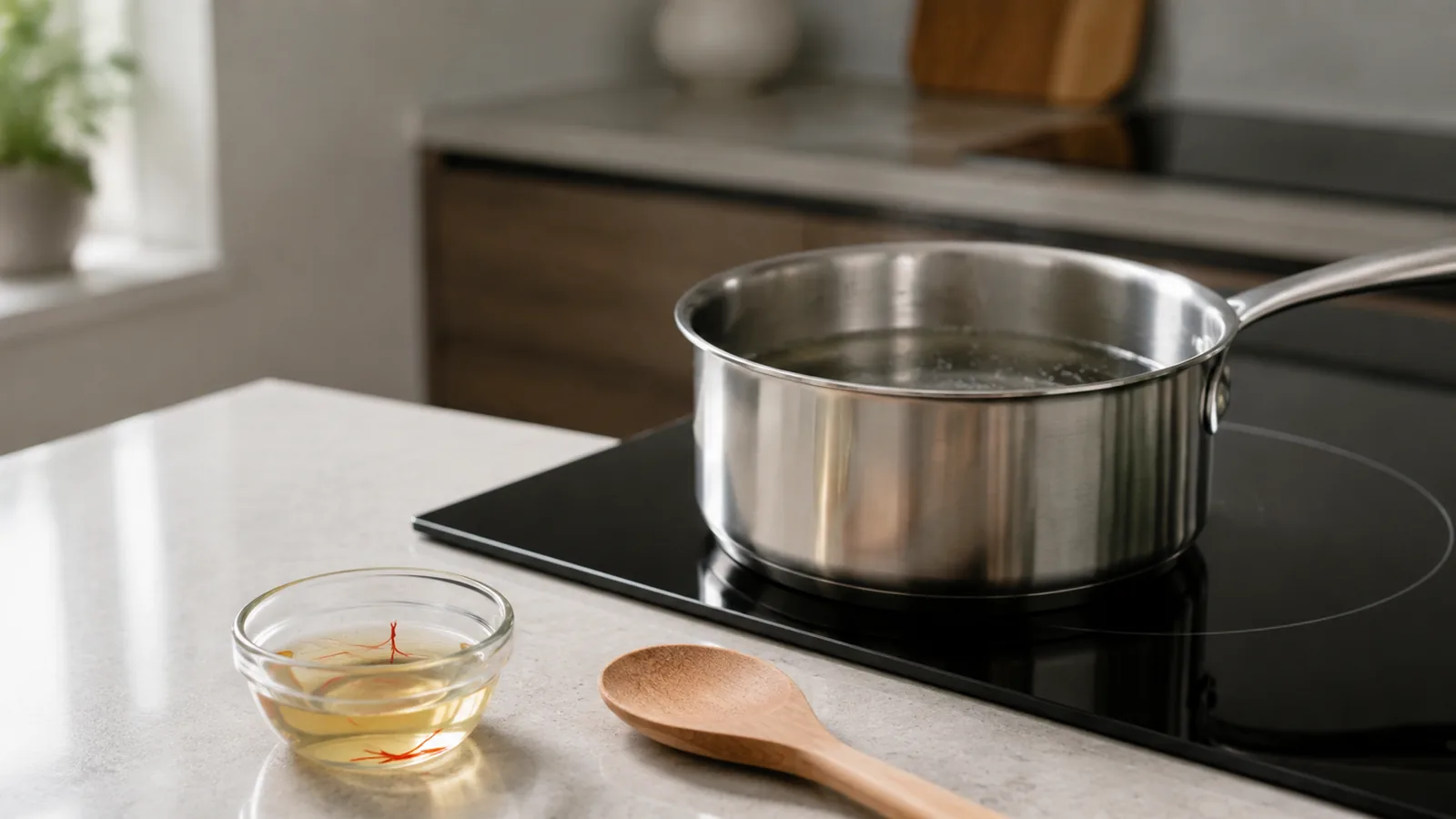
Likewise, adding too much saffron is not a solution. An excessive dose can taste bitter or medicinal. Start with a small pinch, bloom it in warm water or broth for 10 to 15 minutes, then add both the liquid and softened threads. Taste before increasing the amount.
What can you cook with saffron?
- Choose one mild base, such as rice, quinoa, couscous, pasta or potatoes.
- Add one main partner: seafood, chicken, lamb, vegetables or dairy.
- Use a small amount of fat or stock to carry the aroma.
- Add acidity, herbs and other spices with restraint.
- Use high-quality saffron threads, bloom them separately and judge the dish before adding more.
The practical answer to “what dishes do you use saffron in?” is to begin with rice, quinoa, pasta, seafood, poultry, vegetables or a milk-based dessert. More broadly, what is saffron used for in cooking? It contributes aroma, flavour and colour, provided it is bloomed and measured thoughtfully.
The best pairing depends on the meal, but the principle stays consistent. Give saffron enough space to be tasted. Seafood, poultry, grains, vegetables and dairy can all produce rich, aromatic and memorable food when their proportions support rather than overwhelm the spice.