Current genetic evidence points to ancient Greece, specifically Attica, as the place where the saffron crocus originated and was domesticated. Iran is a different part of the answer: it is the dominant producer today. A careful saffron origin country explanation therefore separates the plant’s ancient origin from modern production.
Where did saffron originally come from?
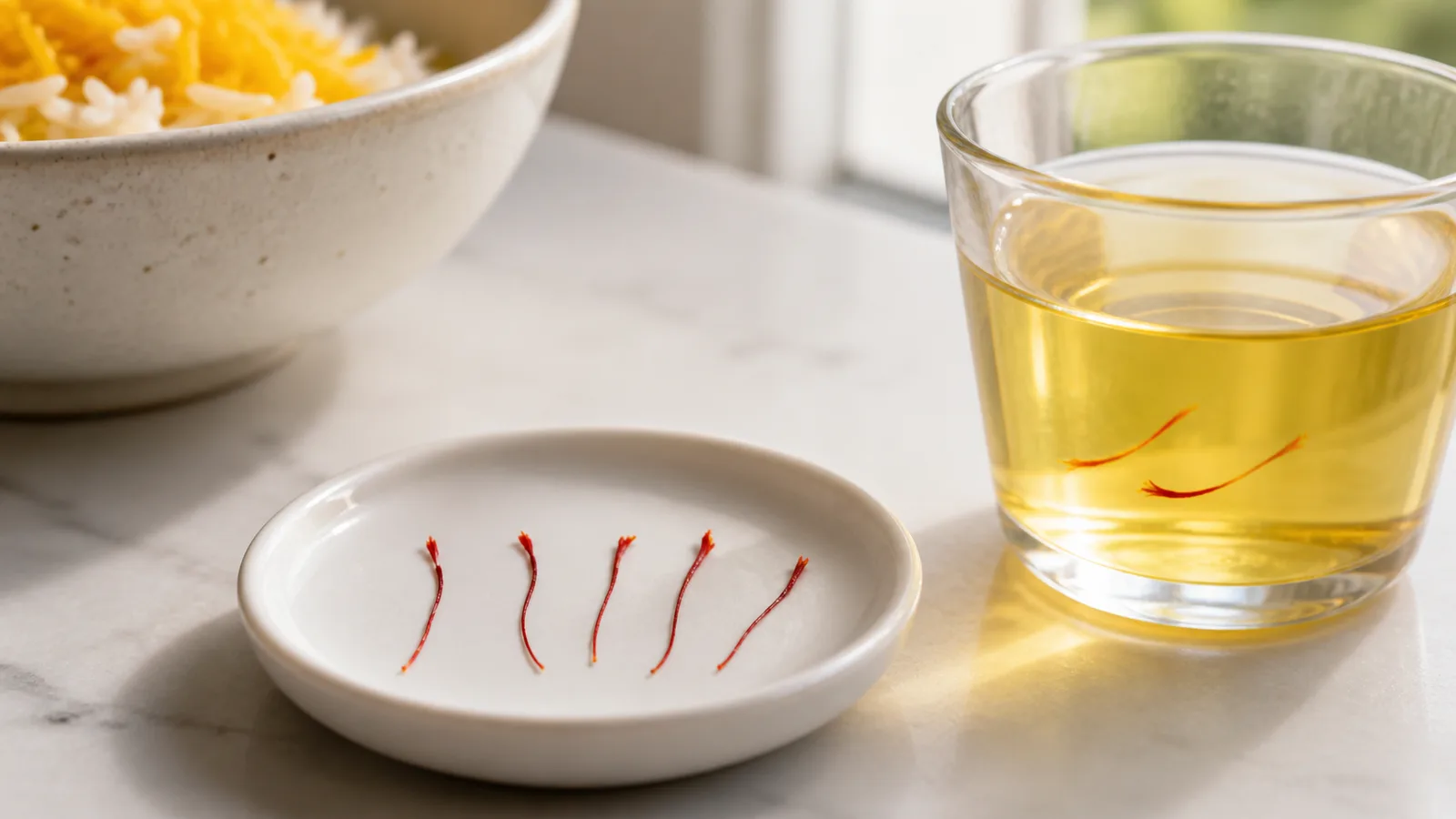
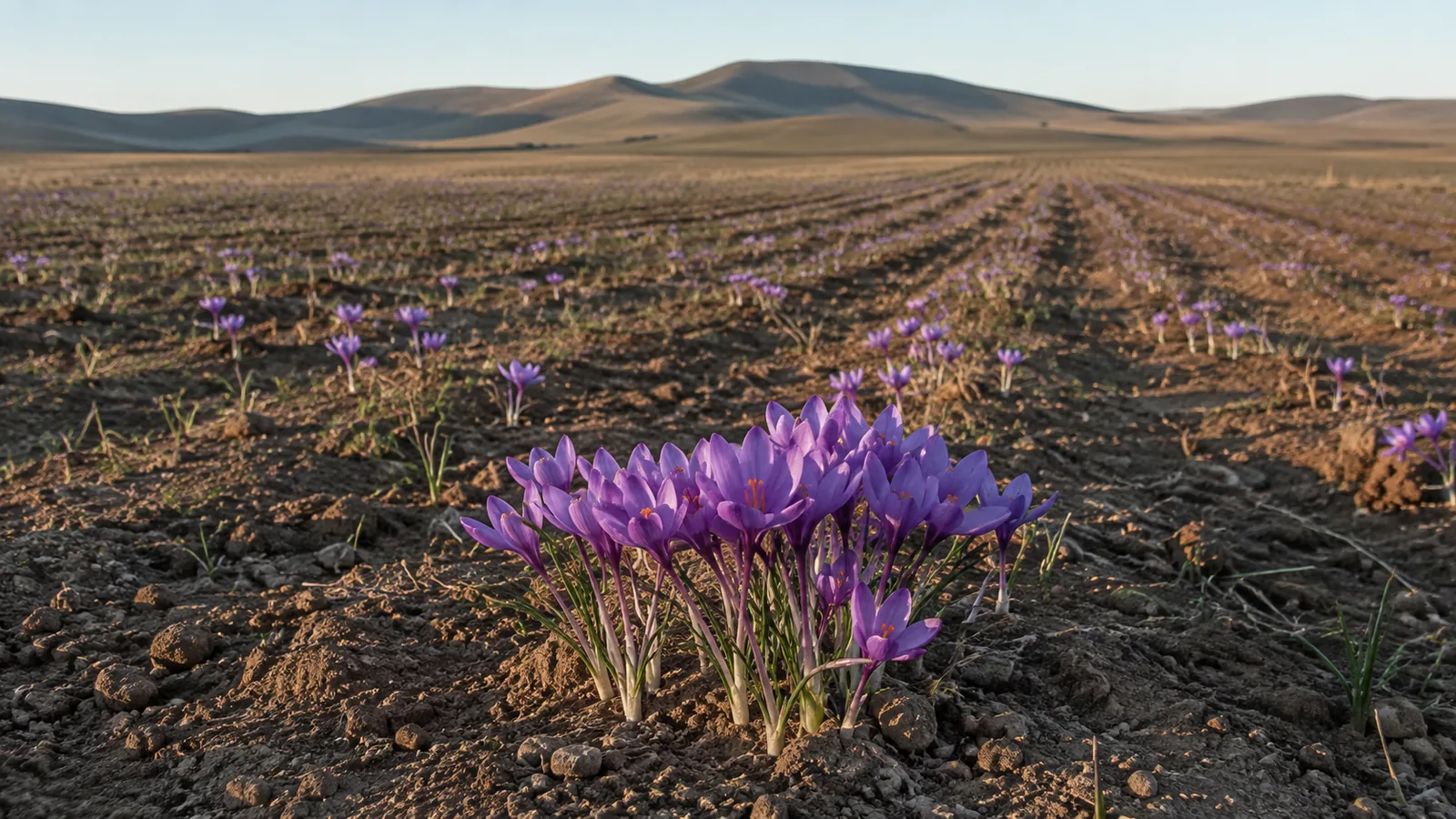
Saffron comes from the dried red stigmas of Crocus sativus. The cultivated plant does not have a known wild population of its own. It is a sterile triploid, which means it cannot reproduce normally from seed and has long been propagated by people through its underground corms.
A 2019 genome-wide study compared cultivated saffron with related crocuses and identified the wild Greek species Crocus cartwrightianus as its sole progenitor. The closest genetic match came from a population near Athens. The researchers concluded that the crop evolved in Attica from two different genotypes of that wild relative.
Archaeology and art support the same broad region. Bronze Age Aegean artworks depict crocus flowers and gathering, although artwork cannot by itself prove the exact location of domestication. A later scientific review brought the genetic and historical evidence together and found that both point most strongly to early Greece.
Why is saffron often said to come from Persia?
Persia, including modern Iran, has an exceptionally long and influential saffron history. The spice became deeply embedded in Persian food, trade, medicine, dyeing and language, then moved through wider commercial and cultural networks. That history explains why many summaries describe saffron as Persian.
“Ancient use” and “biological origin” are not identical questions, however. Greece, Persia and Mesopotamia all have early evidence connected with crocuses or saffron. Modern genetics gives the strongest current support to Attica for the crop’s evolutionary origin, while Iran’s centuries of cultivation explain its present scale and global identity.
Which country produces the most saffron now?
Iran is by far the largest modern producer. In September 2025, the UN Food and Agriculture Organization reported that the country produces more than 90% of the world’s saffron. Much of this production is associated with Razavi Khorasan and South Khorasan, where dry conditions, established farming knowledge and specialised post-harvest work support the crop.
That answer can change in degree from one harvest to another, but not in the basic ranking: Iran has a much larger production base than any other country. Our separate article on which country produces the most saffron covers production share and how those estimates should be read.
Where is saffron grown today?
India
India’s best-known saffron-growing area is Kashmir. Kashmir Saffron has a registered geographical indication, tying that name to a defined area in Jammu and Kashmir. Output is much smaller than Iran’s, but the origin has a strong reputation and a distinct regional identity.
Spain, Greece and Italy
Spain remains closely associated with saffron in European cooking and trade, particularly Castilla-La Mancha. Greece grows saffron around Kozani, and Italian production survives in several regional traditions. These are meaningful producing origins even though their volumes are far below Iran’s.
Afghanistan and Morocco
Afghanistan has developed commercial saffron production, especially around Herat. Morocco’s best-known growing area is around Taliouine. Both countries show that saffron cultivation now extends well beyond the place where the crop first evolved.
Other growing regions
Saffron is also cultivated on smaller scales in countries including Turkey, Azerbaijan, France, the United States, Australia and New Zealand. A country can grow genuine saffron without being a major producer. Climate, skilled labour and careful drying matter more than appearing on a short traditional list.
What climate does the saffron crocus need?
The crop is associated with dry or semi-dry regions that have a clear seasonal cycle. Corms remain dormant through part of the year, then send up autumn flowers. The plant needs suitable soil drainage because persistent waterlogging can damage corms. Local temperature, rainfall, altitude, irrigation and harvest timing all influence whether a site performs well.
Altitude alone does not make a location ideal, and saffron is not restricted to mountains. The successful regions of Iran, Greece, Spain, Kashmir and Morocco do not share one exact elevation. Their common advantage is a workable combination of seasonality, soil, water management and skilled handling during a very short harvest.
Does country of origin determine quality?
No country name guarantees quality. Genetics, cultivation, the moment of picking, separation of the stigma, drying, storage and age all affect the finished spice. Excellent and poor lots can come from the same country. A geographic indication can verify a defined origin, but it should not replace inspection and appropriate quality evidence.
Also distinguish where saffron was grown from where it was packed or sold. International trade means Iranian-grown saffron may be packaged in another country. For buyers, useful evidence includes a clear producer or packer, country-of-origin statement, lot identification, net weight, packing or harvest information and credible testing where the purchase warrants it.
The country can influence supply and price without deciding everything about the product. Our guide to where saffron is usually cheapest explains why origin, seller location and landed cost should be compared separately.
The short answer
If “from” means the crop’s most likely evolutionary and domestication origin, the strongest current evidence points to Attica in ancient Greece. If it means where most saffron comes from today, the answer is Iran. India, Spain, Greece, Afghanistan, Morocco, Italy and several smaller regions also produce genuine saffron.
Sources reviewed: the peer-reviewed synthesis of saffron genetics and ancient artworks and the FAO’s 2025 update on Iranian saffron production.