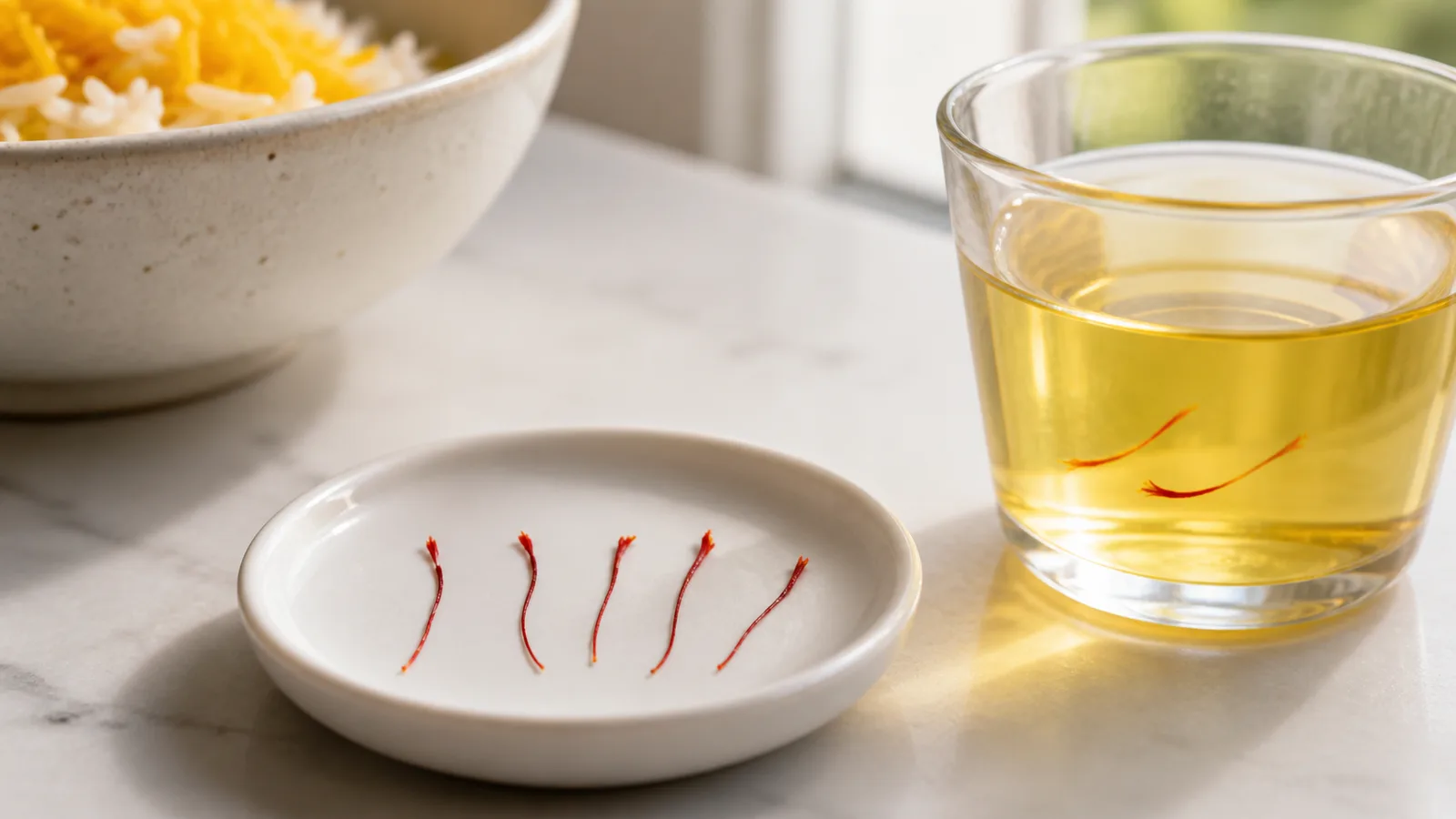
Iranian saffron is expensive because a very small amount of spice comes from each flower, the flowers arrive in a short harvest window, and the delicate stigmas still require extensive hand work. Careful separation, drying, testing, packaging and international trade add further costs. The Iranian saffron price you see abroad also includes a much longer value chain than the farm price.
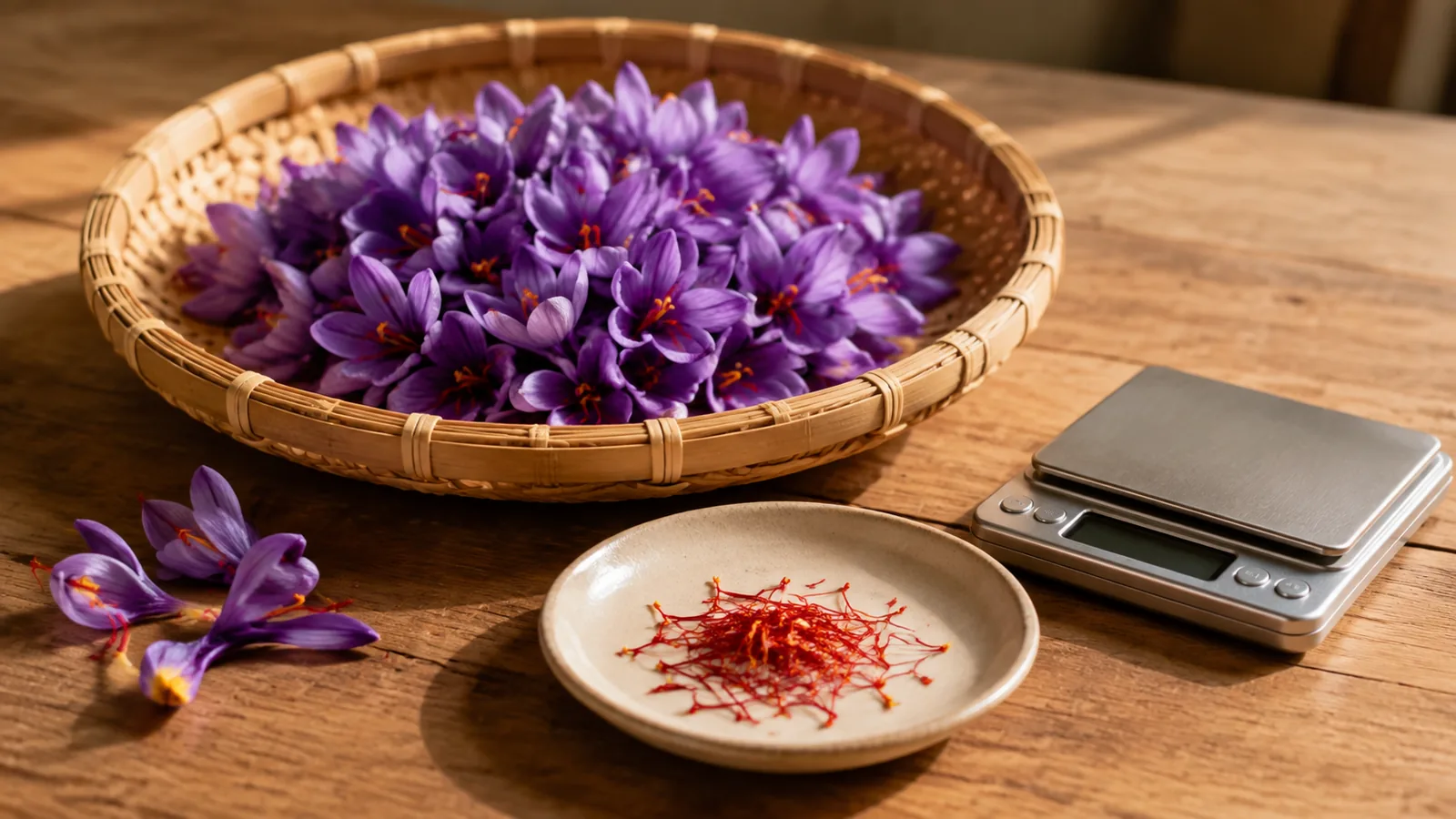
Each flower provides only three stigmas
Saffron is made from the dried red stigmas of Crocus sativus. Each flower carries three. Growers therefore need a large volume of fresh blossoms to produce a small weight of saleable spice, and the harvested material loses most of its weight during drying.
This low yield is built into the plant. It cannot be solved by grinding the spice more finely or making the package smaller; every gram still begins with many flowers, cultivated over land and tended through the season.
The harvest is short and labour-intensive
Flowers do not wait for a convenient production schedule. During the main bloom, fields may need to be picked day after day before the flowers deteriorate. The stigmas then have to be separated promptly and handled without contaminating or crushing them.
Modern research still describes saffron as costly because of labour-intensive manual harvesting. Mechanisation has been explored, but the combination of delicate flowers, short peaks and fine stigma separation remains difficult to automate at the quality buyers expect.
Drying determines what the crop is worth
Fresh stigmas are not finished saffron. They must be dried far enough for safe storage while retaining useful colour, aroma and flavour. Too much moisture raises weight temporarily but increases spoilage and quality risk. Excess heat or poor timing can damage the compounds responsible for the spice’s culinary character.
After drying, workers sort the threads, remove unwanted floral material and grade the product. Negin is selected for longer red stigma sections with little or no yellow style. Sargol contains separated red portions that may be shorter. Both require additional handling, and the cleanest visual selections command a premium even before laboratory performance is considered.
Why saffron in Iran remains valuable despite its scale
Iran is by far the largest producer, with much of its established production centred in Khorasan. The UN Food and Agriculture Organization’s profile of Gonabad describes Iran’s leading share and the qanat-based farming system used in a water-scarce region. Large output makes Iranian saffron widely available, but it does not remove the manual work or biological yield limit behind each kilogram.
Scale also does not make every lot identical. Weather, field conditions, picking time, drying, storage and the ratio of red stigma to pale style all affect value. A clean current-harvest Negin or Sargol batch can cost more than an older mixed-grade batch from the same province.
Testing and traceability add legitimate cost
Saffron’s high value creates an incentive to add dyes, other plants, excess style or moisture. That makes quality control more than a marketing extra. In 2025, FAO announced work with Ferdowsi University of Mashhad to advance saffron authenticity testing methods for the value chain.
Representative sampling, laboratory analysis, lot records and protective packaging all cost money. They also make it easier for a buyer to distinguish a documented product from an anonymous cheap powder. A certificate should identify the batch and test date; a generic badge does not prove the contents of every jar.
Farm price and retail price are different
The zafran price in Iran at farm or wholesale level is not the same as the shelf price in Europe, North America or elsewhere. Between those points may come cleaning, grading, testing, packaging, finance, transport, insurance, customs, importer and retailer costs. Currency movements, harvest size and demand can change the final number as well.
Small retail packs also have a higher cost per gram than bulk trade. The container, label, handling and fulfilment are spread across only one or two grams. For current market context, see the site’s saffron price information; a dated quote is more useful than treating any old figure as permanent.
Does a higher price guarantee better saffron?
No. Price can reflect real labour, grade and testing, but it can also reflect branding, packaging or an inefficient supply chain. Judge the evidence that comes with the product:
- clear country of harvest rather than only a packing address;
- whole, naturally irregular deep-red stigmas with an appropriate amount of yellow style for the stated cut;
- a sealed pack with net weight, lot number and responsible seller;
- batch-specific analysis when purity or analytical grade is claimed;
- a fresh complex aroma and gradual golden-yellow infusion after opening.
Our guide to the highest saffron grade explains why visual cut names and laboratory categories should not be confused.
How to get better value
Buy whole threads in a quantity you will use while the aroma remains fresh. Compare price per gram, but compare the same grade, origin evidence and level of testing. An unusually low price deserves questions; an unusually high one still needs proof.
Once opened, keep the spice airtight, dry and away from heat and light. Proper storage protects the expensive work already invested in the crop. The available saffron products should be assessed by these same batch and packaging checks.
Why the price can be justified
Iranian saffron combines a low biological yield with a concentrated harvest, skilled hand processing and quality-sensitive drying. Sorting, testing and export then carry a few grams through a complex chain. Those costs explain why genuine saffron remains expensive. They do not justify every price tag, so the best purchase is a traceable batch whose freshness, grade and evidence match what the supplier is charging.