The best saffron origin cannot be chosen from a country name alone. Iran has the world’s largest saffron-growing tradition and produces a remarkable range of excellent threads; Spain also has genuine, tightly specified saffron, particularly Azafrán de La Mancha PDO. For a buyer, the better comparison is the quality and traceability of the particular pack in front of you.
Iranian saffron vs Spanish saffron: the short answer
If two packs are equally fresh, pure and well processed, either can be very good. Iranian saffron offers broad choice, including familiar commercial cuts such as Negin and Sargol. Certified La Mancha saffron offers a protected Spanish origin and a defined regional production method. Neither label means that every pack from that country will outperform every pack from the other. When the choice is Spanish vs Iranian saffron, start with what each label proves. No honest answer to ‘which country has the best saffron?’ or ‘what is the best saffron in the world?’ can ignore the individual batch. An Iranian brand or Spanish brand still has to earn trust through traceability and product evidence.
Origin matters because climate, harvesting and drying shape a spice. It is still only one part of quality. Age, storage, the amount of yellow style left on the threads, moisture, adulteration and handling after harvest can make a larger difference than the country printed on the front.
What Iranian saffron is known for
Iran is the centre of world saffron production. The Food and Agriculture Organization’s work on Iranian saffron authenticity reports that the country produces more than 90 percent of the global supply. Khorasan is especially closely associated with cultivation and trade.
That scale gives buyers access to several cuts and price levels. Negin usually describes long, separated red stigmas with little or no pale style; Sargol is made from the red stigma tips and is generally shorter. These are useful trade descriptions, but they are not a guarantee of flavour, colouring strength or purity on their own. Our guide to the highest saffron grade explains why appearance and laboratory quality should be considered together.
Good Iranian saffron should have a clean, characteristic aroma, a pleasantly bitter taste when properly infused and strong colouring ability. Those properties depend on the batch. It is more accurate to describe them after inspection or testing than to assume that every Iranian sample is automatically intense.
What Spanish saffron is known for
Spain has a long culinary relationship with saffron, most visibly in rice dishes. The strongest origin assurance is the protected designation Azafrán de La Mancha. The Spanish Ministry of Agriculture’s official La Mancha PDO listing identifies the responsible authority, regulatory council and product specification.
The PDO applies to saffron grown and processed in the defined La Mancha area under its rules. Its specification covers thread form, purity, moisture, sensory qualities and production. Toasting is part of the regional method and can contribute a distinctive dried-grass or toasted character. That is a specific style, not evidence that Spanish saffron as a whole is weaker or stronger than Iranian saffron.
“Packed in Spain” and “grown in Spain” do not mean the same thing. Check the country-of-origin statement rather than inferring origin from a Spanish brand name, paella imagery or the address of the packer. A genuine PDO pack should carry the protected name and the required control identification.
Does one origin produce better colour, aroma or flavour?
There is no reliable rule that all Iranian saffron has stronger colour while all Spanish saffron has milder flavour. Colour comes chiefly from crocins, bitterness from picrocrocin and much of the characteristic aroma from safranal and other volatile compounds. Their balance changes with the plant material, drying, age and storage.
A fresh, carefully dried Spanish batch can outperform an old or poorly stored Iranian one. The reverse is equally possible. When comparing Persian saffron vs Spanish saffron, use information from the actual lots: harvest or packing date, traceable origin, whole-thread condition and credible test results where available.
How to compare the two before buying
You do not need a country contest to make a sound choice. Look for evidence that follows the product from its origin to the sealed pack.
- Read the origin statement. It should tell you where the saffron was cultivated, not merely where it was packaged or distributed.
- Prefer traceability. A harvest area, lot number and accountable producer or packer are more useful than an unsupported “world’s best” claim.
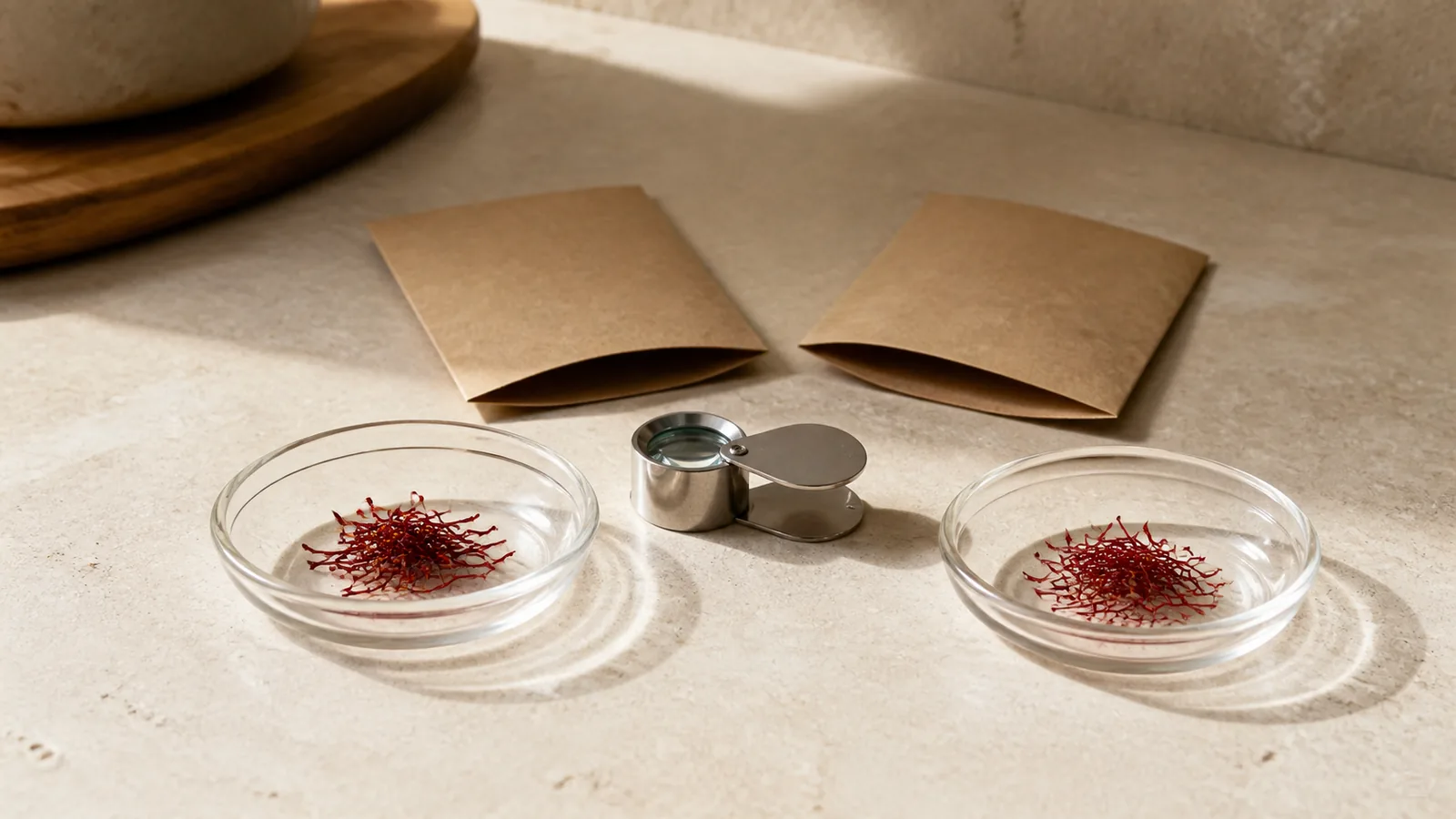
- Choose whole threads when possible. They are easier to inspect than powder. The pack should contain clean stigmas without obvious debris, dampness or artificial-looking colour.
- Check freshness and storage. Light, heat, air and moisture gradually reduce aroma and colouring performance. A small sealed pack often makes more sense than a large supply kept for years.
- Ask what a grade means. Negin and Sargol describe cuts used in Iranian trade; La Mancha PDO is a protected origin specification. They are not interchangeable ranking systems.
- Treat testing as stronger evidence than adjectives. If a supplier makes precise quality claims, current batch documentation is more persuasive than words such as premium, royal or superior.
Which is better for cooking?
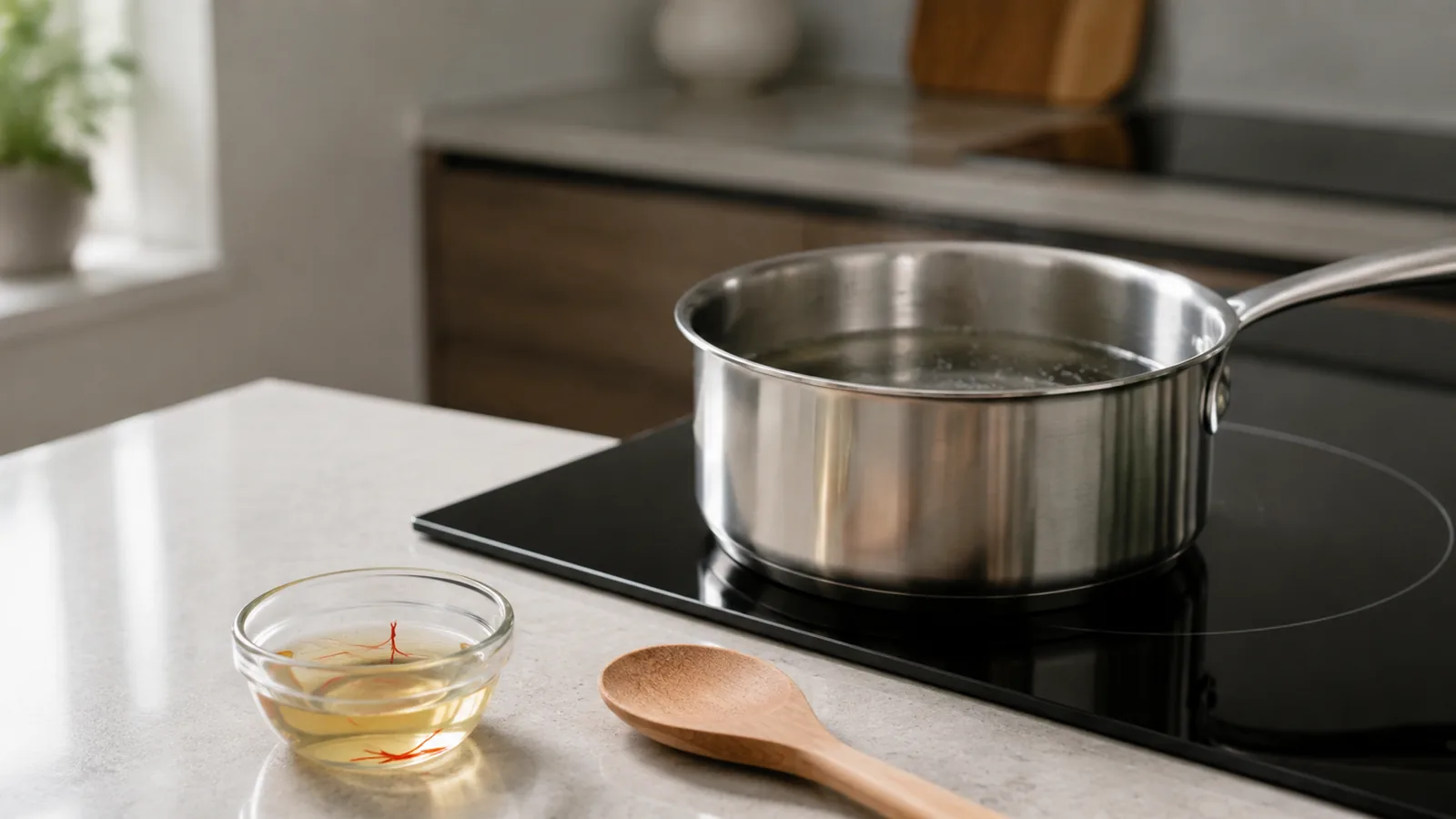
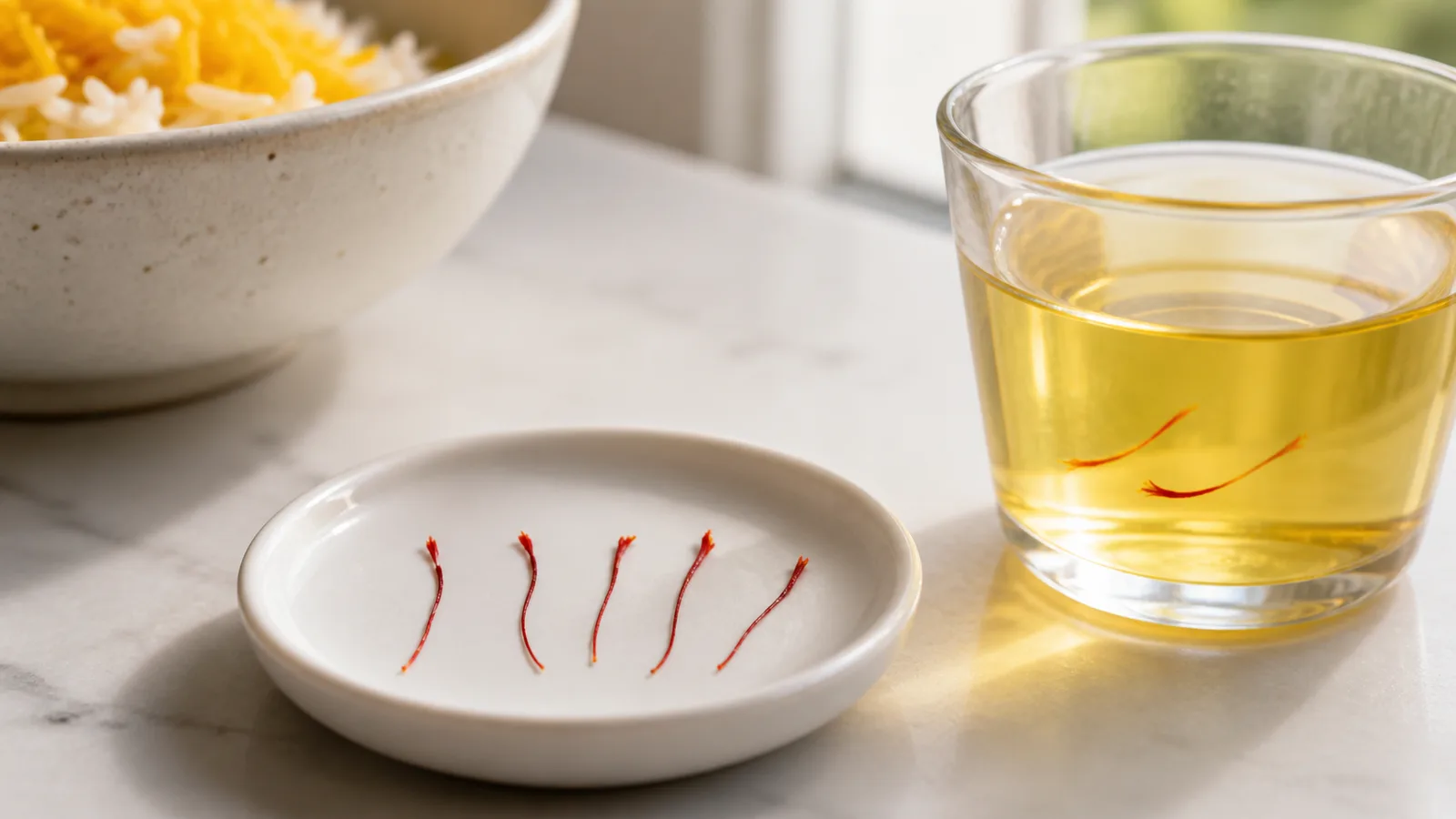
For most recipes, freshness and correct use matter more than nationality. Bloom a measured pinch of threads in warm water before adding it to rice, sauces or baking. This gives you a clearer sense of the batch’s aroma, taste and colouring power and distributes it more evenly through the dish.
If you want a traceable Persian product and a choice of red-thread cuts, a well-documented Iranian pack is a strong option. If you specifically want a protected regional Spanish product with the La Mancha production style, choose an authentic PDO pack. Buy according to the result you want, not the assumption that paella requires Spanish-grown saffron or Persian cooking requires a particular commercial cut.
What about Kashmiri, Indian and Greek saffron?
Kashmiri saffron and Greece’s Krokos Kozanis PDO are legitimate origins with their own traditions and specifications. Their existence is another reason not to call one country the universal winner. A comparison such as Kashmiri saffron vs Spanish saffron should use the same evidence: exact origin, freshness, purity, processing and the performance of the individual batch.
So where is the best saffron from?
There is no single best saffron origin for every customer. Iran is the leading source and can provide exceptional Negin and Sargol. Spain can provide excellent saffron with unusually clear regional assurance when it carries the La Mancha PDO. In both cases, buy from a supplier that names the origin precisely and can explain the product rather than relying on national reputation alone.
To understand the scale and cultivation behind the market, read which countries produce the most saffron. When you are ready to compare available formats, the saffron products page shows the current range without changing the basic test: judge the pack, its evidence and its freshness.