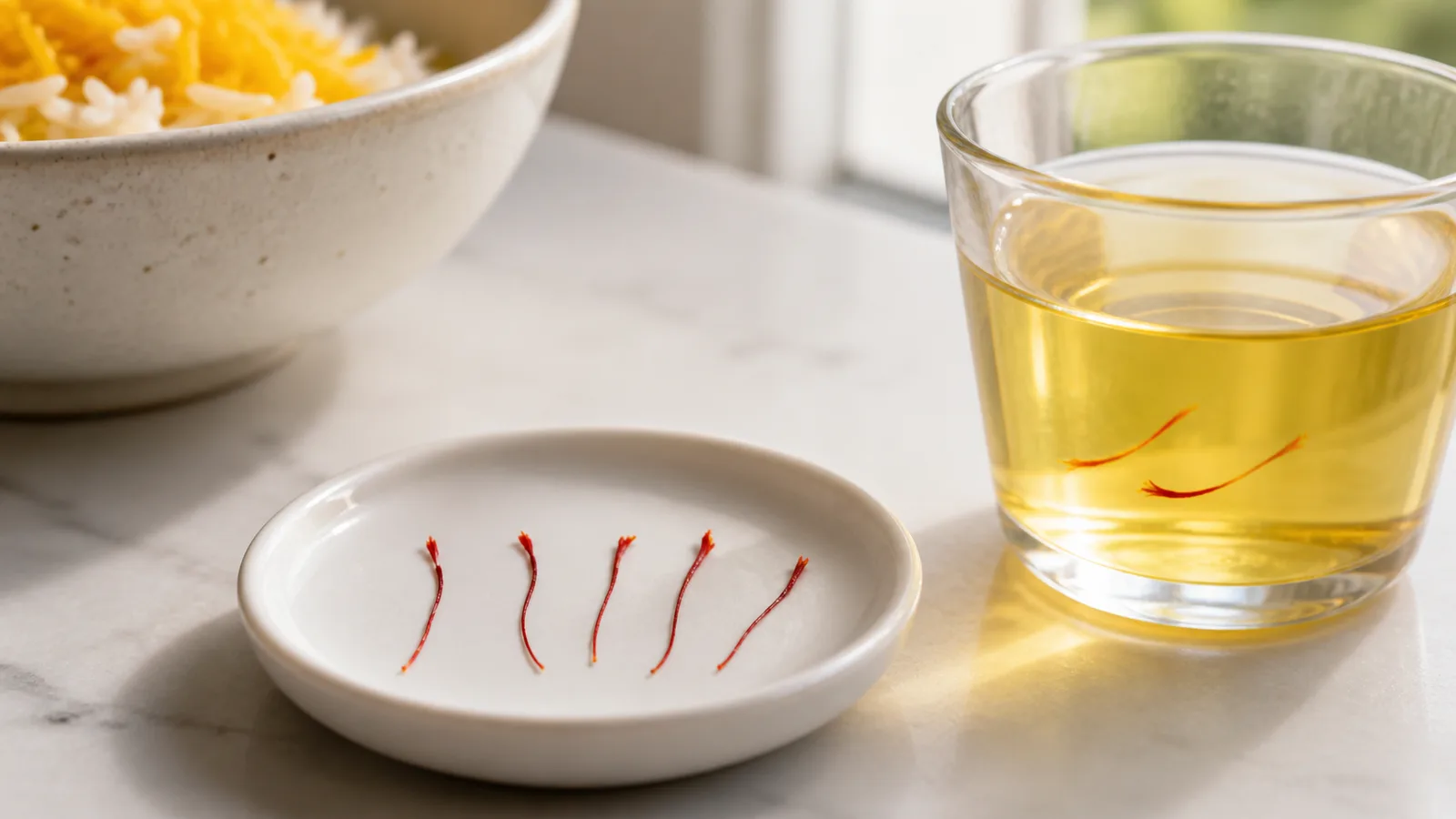
The edible part of saffron used as a spice is the dried red stigma of the Crocus sativus flower. A commercial saffron filament may also include a short piece of the attached style. Those red-to-orange strands are what cooks call saffron threads.
Which part of saffron is edible?
Is saffron edible? Yes—the food-grade threads sold for cooking are edible. Saffron is a spice, not a vegetable, even though it comes from part of a flower.
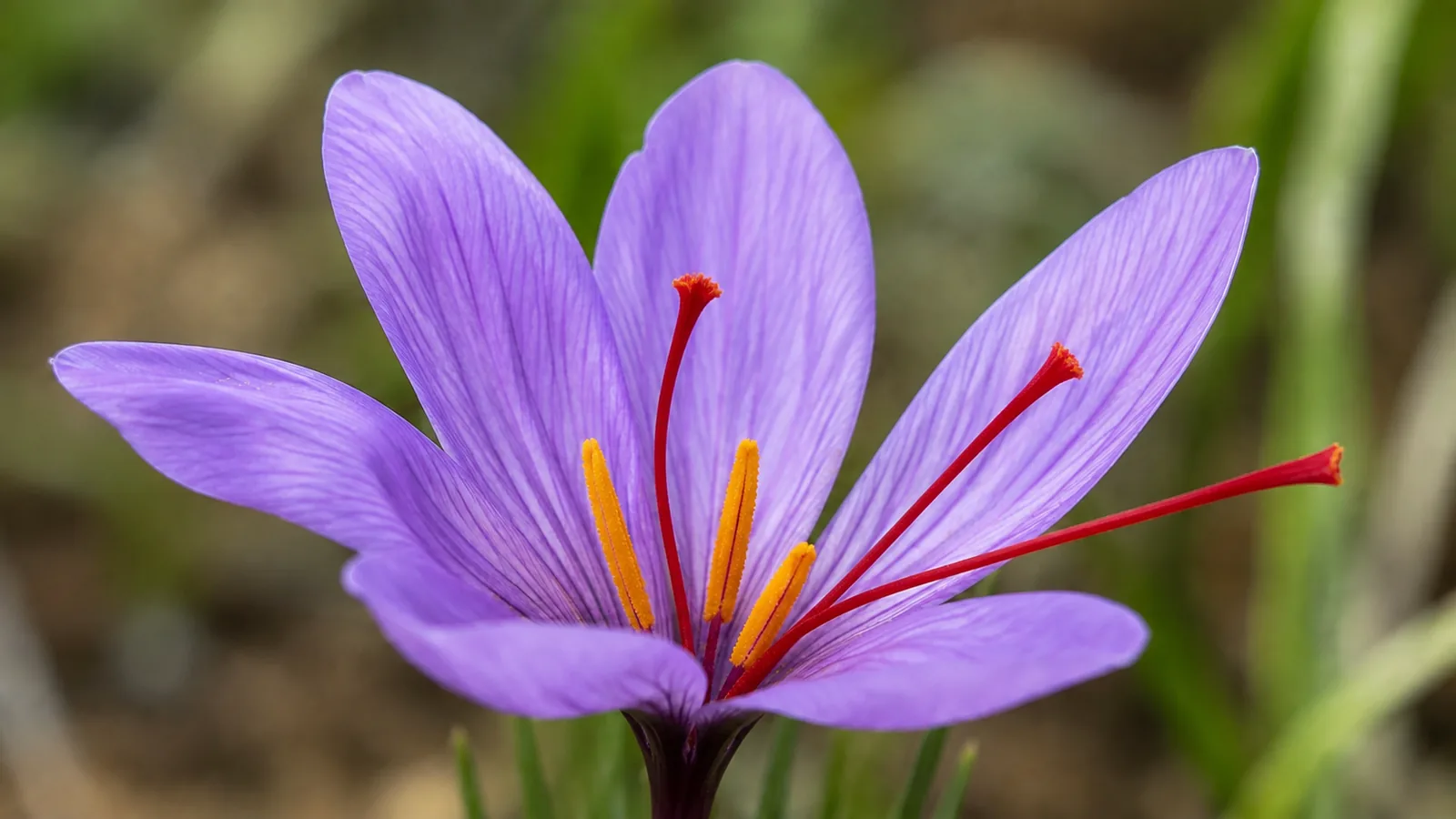
Look at the centre of a saffron crocus and you will see three long red stigma branches. They belong to the flower’s pistil, the female reproductive structure. After harvesting and drying, the stigmas become the familiar spice used for colour, aroma, and flavour.
The current Codex standard for dried saffron defines saffron as a portion of the pistil: the stigmas with part of the style. It distinguishes filaments, which can retain some style, from cut filaments, where the styles have been removed. That is why “only the pure red tip is edible” is too absolute.
Stigma, style, and stamen are different parts
The red stigma is the valuable culinary part
Most high-grade thread saffron is dominated by the red stigma. It carries the strongest colouring, aroma, and taste contribution. Crocins are associated with its colour, picrocrocin with bitterness, and safranal with its characteristic aroma. The exact profile varies with the crop and processing.
A short orange or yellow style may be attached
The style joins the stigmas to the ovary. A small piece may remain on a whole filament and still fall within the international food definition of saffron. More style generally means less red stigma for the same weight, so it affects grade and value; it does not automatically mean the strand is unsafe to eat.
The upright yellow stamens are not saffron threads
Stamens are the pollen-bearing parts of the flower. They are shorter and paler than the red stigmas and are not the spice sold as saffron. The Royal Horticultural Society’s saffron harvesting guide tells growers to collect the long red stigmas and avoid the upright stamens.
What about the petals, leaves, and corm?
They are not the commercial saffron spice. Petals may appear in separate food or research products, but a purple petal should never be passed off as a saffron thread. Leaves and the underground corm are not culinary saffron and should not be added to a dish.
Do not assume that any autumn flower called “crocus” or “saffron” is edible. The RHS warns that Crocus sativus must not be confused with highly poisonous Colchicum, sometimes called autumn crocus or meadow saffron. Only harvest from positively identified Crocus sativus plants intended for food use; ornamental flowers may also have been treated with products not intended for edible crops.
Can you eat raw saffron threads directly?
Can you eat saffron threads? Yes. Food-grade threads can be eaten, including the few strands that remain in rice, soup, sauce, or dessert after cooking. They can also be tasted raw in a small culinary amount. Direct chewing is not the best way to judge or use them, however: the threads are dry, the bitterness can seem concentrated, and much of the aroma and colour remains trapped.
Infusing the threads in warm water, milk, or broth distributes their character more evenly. Our guide to using saffron for eating explains when to crush, steep, and add the infusion. A culinary spice serving is not the same as a concentrated supplement or extract, so this article does not establish a medicinal dose.
Why are the red threads preferred?
The red stigmas give the strongest return for the small amount used in a recipe. A higher proportion of pale style dilutes colouring and sensory strength by weight. That does not make every yellow-tipped filament fake; it means the visible composition matters when comparing grades.
The tiny yield also helps explain the cost. Each flower supplies only three stigmas, and they must be separated and dried. The full production explanation is in why saffron is worth so much.
How to recognise the edible saffron in a package
Whole saffron should be sold as dry red or red-orange filaments, sometimes with a small lighter base. Avoid using unidentified garden material or decorative petals as a substitute. Colour alone is not proof of identity, and one home water test cannot establish purity.
If a package is questionable, compare the strand shape, aroma, colour release, label, and seller information together. Our guide to telling real saffron from fake saffron explains those checks and their limits. For a current example of food-grade red threads and pack sizes, see the Sargol saffron listing.
The short answer
The saffron edible part is the dried stigma, often sold with a little attached style. The red stigma provides most of the colour, flavour, and aroma; the stamen, petals, leaves, and corm are not the spice. Use correctly identified, food-grade Crocus sativus threads rather than harvesting an unfamiliar lookalike.