Is saffron easy to grow? Usually, yes, when it has full sun, free-draining soil, and the right seasonal rhythm. The plant itself is not especially demanding. The harder part is protecting the corms from wet soil and gathering a useful amount of spice from a brief autumn flowering.
Are saffron plants easy to grow?
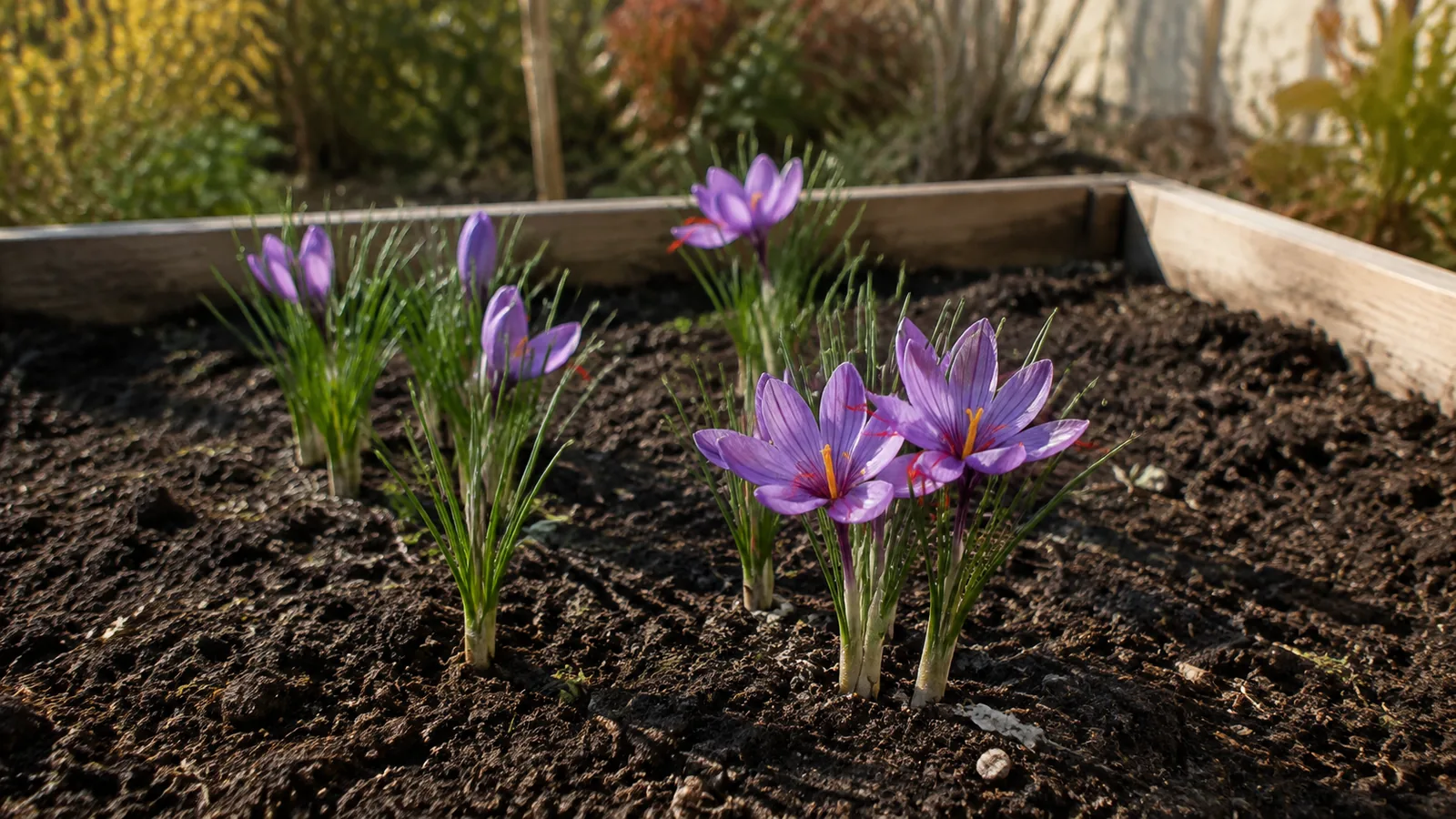
For a home gardener, the short answer is yes—with one important qualification. Crocus sativus dislikes sitting in water. A sunny bed that drains quickly, or a roomy container with open compost and drainage holes, gives the corms a far better chance than a damp, shaded corner.
Growing the flowers is also easier than producing a large harvest. Each purple bloom carries only three red stigma branches, and those delicate threads must be picked and dried by hand. That difference explains why saffron can be straightforward in the garden but still costly as a spice.
What is a saffron plant?
The saffron plant is the autumn-flowering crocus Crocus sativus. It is grown from corms rather than ordinary garden seed. Flowers are usually purple, while the valuable spice comes from the three long red stigmas in the centre of each flower.
Buy corms that are clearly labelled Crocus sativus. The name matters: the Royal Horticultural Society warns that true saffron crocus must not be confused with poisonous Colchicum, which is also called autumn crocus or meadow saffron. Our explanation of which part of saffron is edible shows the difference between the red stigma and the other flower parts.
The conditions for growing saffron
Plenty of direct sun
Choose the brightest practical position. Saffron performs best in full sun, and a warm open site helps the soil shed moisture. Avoid placing the corms beneath dense shrubs or in a bed that stays shaded for much of the day.
Soil that drains freely
Drainage is more important than chasing a precise soil label. A reasonably fertile loam is suitable if surplus water can escape. Heavy ground can be improved with an appropriate raised bed and drainage work; in a small garden, a container is often the simpler choice. Do not leave a pot standing in a saucer of water.
Where does saffron grow well?
Saffron suits places where the corms can remain relatively dry during summer dormancy and grow through the cooler part of the year. Where can saffron grow beyond its traditional dry-summer regions? Many temperate gardens can support it, but local rainfall, winter severity, and drainage all affect the result. The broader guide to where saffron can grow helps separate climate limits from conditions that a gardener can manage.
How to plant saffron corms
- Start with sound corms. Choose firm Crocus sativus corms without soft, mouldy, or badly damaged areas.
- Plant in late summer. The RHS notes that September is not too late. Planting much later may delay the first display.
- Give them enough depth and space. The RHS saffron growing guide recommends placing corms about 10–15 cm deep and roughly 10 cm apart in a bright, well-drained position.
- Water them in. Settle the soil after planting, then judge later watering by the weather and drainage. Constantly wet soil is not helpful.
- Keep the bed clear. Remove weeds carefully so the narrow leaves still receive light, and watch for local pests that may dig up or eat corms.
For a larger planting or a site that needs more preparation, see the complete saffron cultivation process. A domestic pot and a commercial field share the same biological needs, but their irrigation, soil testing, labour, and harvest planning are not interchangeable.
How long does saffron take to grow?
Corms planted in late summer may flower that autumn, sometimes within several weeks, but first-year flowering is not guaranteed. Late planting or small corms can mean a later or lighter first display. The flowers commonly appear during autumn; exact timing changes with the site and season.
After flowering, slender leaves continue growing through winter and spring. Leave them in place while they are green because they help replenish the underground corm. The foliage then dies back as the plant enters summer dormancy. New cormlets develop around the original corm, and the RHS notes that they may need two or three years before flowering.
So, when someone asks how much time saffron takes to grow, there are two answers: a flower may appear in the first autumn, while a fuller, multiplying patch develops over several seasons. Our dedicated guide to how long saffron takes to grow explains that timeline in more detail.
Harvesting the red saffron threads
Inspect the planting regularly once buds emerge because the flowering window is short. Pick an open flower while it is fresh, then separate the three long red stigmas. Avoid collecting the upright yellow-orange stamens: they are not the saffron spice.
Dry the stigmas gently and keep the finished threads in a clean, airtight container away from light and moisture. Small batches are easy to handle, but the work becomes labour-intensive quickly. A few flowers provide only a pinch, which is normal rather than a sign that the plants failed.
What usually makes saffron difficult?
- Waterlogged ground: poor drainage increases the chance of corm loss.
- The wrong plant: a loosely labelled “autumn crocus” is not enough; confirm Crocus sativus.
- Too little light: heavy shade weakens growth and flowering.
- Late or unsuitable planting: corms may not establish in time for a good first autumn.
- Unrealistic yield expectations: three stigmas per flower means even a healthy pot produces a modest quantity.
- Removing green leaves too soon: foliage needs time to feed the next season’s corms.
The plant is drought-tolerant during dormancy, but that does not mean it never needs water. Newly planted corms should be watered in, while plants in containers need occasional checks because pots dry differently from open ground. Use the soil and weather as your guide rather than following a rigid calendar.
Is it hard to grow saffron successfully?
How hard is it to grow saffron on a small scale? If you can provide sun and excellent drainage, it is usually manageable. Is saffron hard to grow in a wet, shaded bed? Yes, because those conditions work against the corm’s needs. The work that requires patience is harvesting, drying, and waiting for the planting to multiply. Begin with a manageable number of correctly identified corms, learn how your site behaves through one full season, and expand only after the plants have shown that the position suits them.
A successful first year does not have to mean a jar full of spice. Healthy foliage, surviving corms, and even a few clean autumn flowers are useful signs. With realistic expectations and a dry summer resting period, saffron can be an enjoyable perennial crop rather than a difficult novelty.