

A healthy saffron corm planted in late summer can flower that same autumn, often within roughly six to eight weeks. If you are asking how much time does saffron take to grow, it does not necessarily take two or three years to produce the first threads. The longer timeline describes a bed building toward a fuller yield as daughter corms multiply.
Saffron growing time at a glance
Saffron has an unusual calendar. It flowers in autumn, grows its narrow leaves through the cooler months, develops replacement corms in spring, then rests during summer. The exact saffron growth time shifts with climate and planting date, but the sequence is broadly consistent.
- Late summer to early autumn: plant dormant corms in a sunny, well-drained site.
- Several weeks later: shoots emerge; flowers may follow in the first autumn.
- Autumn: flowering and saffron harvest usually occur during a short concentrated period.
- Winter to spring: leaves remain active and feed developing daughter corms.
- Late spring to summer: foliage dies back and the corms become dormant.
- Years two and three: a healthy planting can produce more flowers as corm numbers increase.
That is the useful answer to “How long does it take to grow saffron?”: weeks to a possible first bloom, one seasonal cycle to establish the planting, and two to three growing seasons for a more substantial harvest.
The saffron cultivation time period should therefore be measured by the milestone a grower means. First flowers, one complete saffron life cycle and a mature productive bed are three different dates.
How long does saffron take to grow after planting?
Penn State Extension says leaves can emerge within a few weeks and flowers may appear about six to eight weeks after autumn planting. For someone asking how fast does saffron grow, that is a realistic first-flower estimate. A large, healthy flowering-size corm is more likely to bloom promptly than a small offset.
Timing is not a countdown that works identically everywhere. Soil temperature, rainfall, corm condition, planting depth and local autumn weather all influence emergence. A first-year bloom can also be later than the established bed’s normal flowering period.
If a new corm produces only leaves, that does not automatically mean it has failed. Keep the foliage in place while it is green, protect the bed from waterlogging and allow the plant to complete its cycle. A small daughter corm may need more time before it reaches flowering size.
Why people say saffron takes two to three years
The two-to-three-year figure is about yield development, not the first possible flower. In the first season, one corm may produce few blooms. During winter and spring, the original corm supports new daughter corms. More flowering-size corms can mean a larger display in later autumns.
The Royal Horticultural Society notes that new cormlets may take two or three years to flower. Penn State likewise reports that year-one flowering may be modest while years two and three can yield several flowers per corm under suitable conditions.
A grower should therefore separate three milestones:
- First flower: possible in the planting year.
- Established annual cycle: completed after the first winter, spring growth and summer dormancy.
- Stronger bed yield: often reached over the next two or three seasons as corms multiply and mature.
The saffron growth cycle through the year
Planting and sprouting
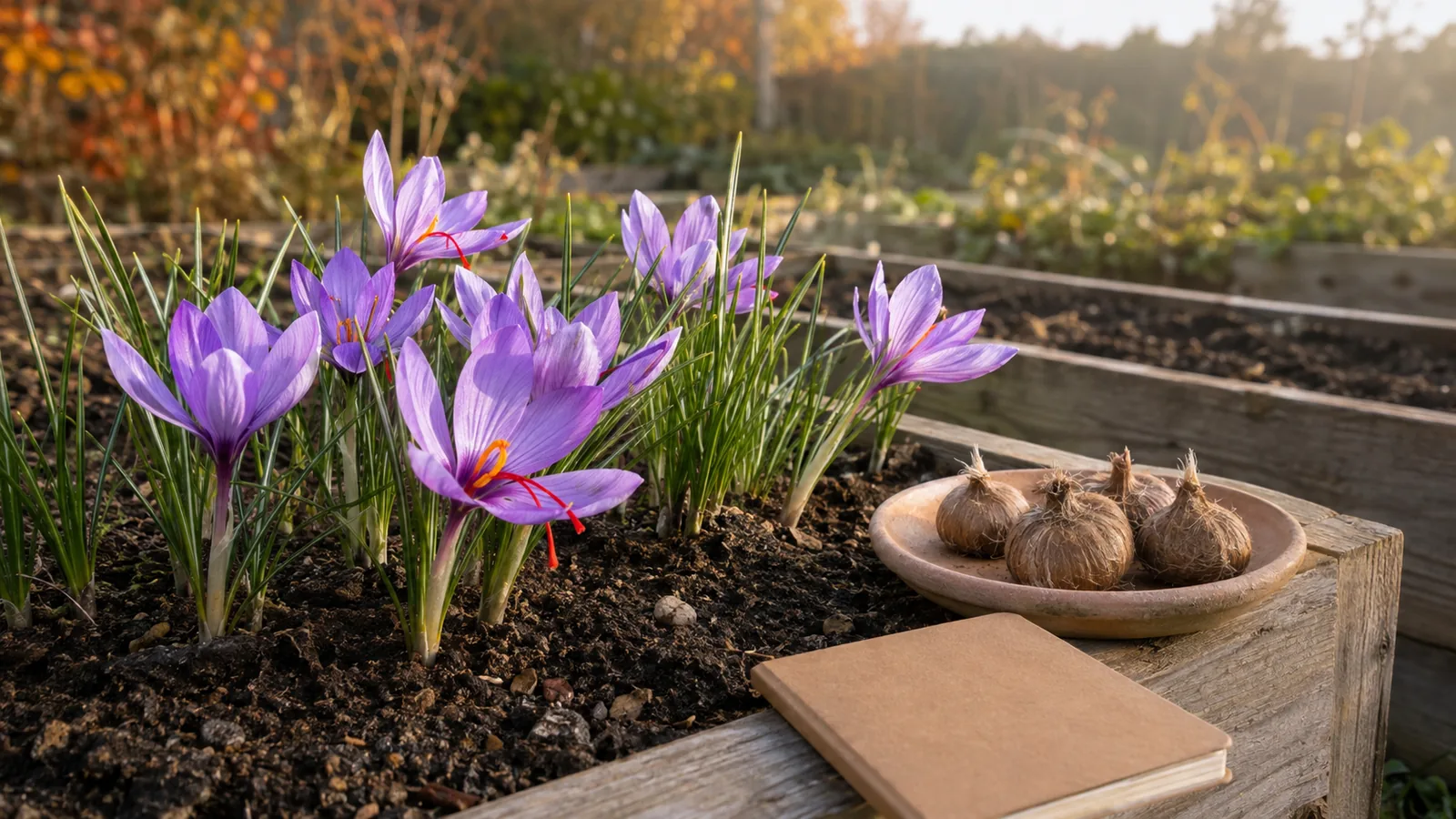
Plant flowering-size Crocus sativus corms in late summer or early autumn, timed for the local climate. They are corms, not true bulbs, and the plant is sterile; it is propagated vegetatively rather than from productive seed.
Set them in full sun and soil that drains freely. Raised beds or containers can help where native soil stays wet. Water at planting, then avoid keeping the bed constantly damp.
Flowering and harvest time
Flowers normally appear in autumn, commonly in October or November according to local climate and planting time. North Carolina Extension describes a one-to-two-week flowering period, while local conditions can stretch the edges of the season. A bed does not usually provide separate spring and autumn spice harvests.
Saffron harvest time is brief but labour-intensive. Pick open flowers in dry conditions, then remove the three red stigmas from each. During the main flush, check the bed every day because individual blooms do not remain fresh for long.
Leaf growth and daughter-corm development
Do not cut healthy green leaves after flowering. They continue photosynthesising through winter and spring, feeding the daughter corms that carry the next crop. Removing them early can weaken future flowering.
University of Vermont’s saffron production-cycle guide places vegetative growth in winter, corm development in spring and dormancy in summer. It advises leaving the parent area undisturbed after bloom because the next crop is developing below ground.
Summer dormancy
Leaves yellow and die back as the plant enters dormancy. This is normal, not evidence that the saffron has died. Reduce unnecessary water once the foliage is gone, especially where summers are humid or soil is heavy.
Dormancy is also the practical time to lift, inspect or divide crowded corms if the growing system requires it. Replant healthy flowering-size corms before the next autumn cycle.
Does saffron come back every year?
Yes. Saffron is grown as a perennial crop. The original corm completes its cycle while daughter corms replace it, so the bed can flower annually when conditions remain suitable. “The same bulb lives forever” is not quite accurate; the planting persists through vegetative renewal.
So, does saffron grow back every year? A healthy established bed normally does, but the new growth comes through replacement corms and can fail if rot, rodents, poor planting stock or overcrowding damage the cycle.
University of Vermont’s cultivation guidance says perennial beds can remain in place for several years, with flower yield often increasing as secondary corms multiply. Eventually, crowding creates too many small corms competing for space and resources. Division and replanting restore sensible spacing.
How often does saffron bloom and how many times can it be harvested?
Saffron usually blooms once a year, in autumn. The harvest is made repeatedly within that one short flowering window, not as several independent annual crops. A grower may pick new flowers each morning for a week or two, depending on the bed and weather.
How many times does saffron bloom in a year? Under ordinary outdoor conditions, once. How often does saffron bloom within that period depends on how the individual corms stagger their flowers across the short season.
How many times a year can you harvest saffron? In normal outdoor cultivation, think of one seasonal harvest period. Picking on multiple days is still one bloom season. Climate-controlled experiments may manipulate timing, but they should not be used to promise ordinary gardeners several field crops per year.
How much saffron comes from one plant?
How much saffron per plant can be harvested? Each flower provides three stigmas, while a corm may produce one or several flowers depending on its size, age and growing conditions. There is no reliable fixed gram yield per plant, and the threads lose substantial weight during drying.
The small output explains why a home patch gives modest quantities. It can still be worthwhile: a little saffron flavours a whole dish, and harvesting one’s own flowers makes origin and handling visible.
What controls saffron cultivation time and yield?
Corm size and health
Buy true Crocus sativus from a reputable source. Larger mature corms are more likely to flower in the first season. Softness, mould or physical damage can delay growth or cause failure.
Planting date
Late planting shortens the period before autumn flowering and may push a new bed behind its local schedule. Very early handling can expose dormant corms to poor storage conditions. Use regional guidance rather than a universal calendar date.
Drainage and moisture
Wet soil is a major risk. Saffron can tolerate winter cold in suitable sites, so “avoid all frost” is too broad. Persistent water around the corms is often more damaging than a normal cold season.
Light and competition
Full sun supports the leaves that build next year’s corms. Weeds compete for light and nutrients, while overcrowded saffron beds produce many small offsets that may not flower. Understanding how saffron grows makes those leaves part of the crop rather than garden debris.
Local climate
The saffron growing season shifts with temperature and rainfall. University of Vermont observed September planting followed by October flowering, but its researchers also caution that natural weather variation makes the exact life cycle impossible to predict to a day.
How to grow saffron at home on a realistic schedule
Choose a sunny bed or deep container with a drainage hole. A neutral to slightly alkaline, workable soil can suit the crop, but free drainage is more important than chasing one pH number. Plant healthy corms at the depth and spacing recommended for the local climate, keep the labels, and note the planting date. Expect shoots in weeks and hope for first-autumn flowers, but judge the saffron plantation over a full annual cycle rather than one month.
Harvest only the long red stigmas from correctly identified saffron crocus. Do not confuse Crocus sativus with poisonous Colchicum, which is also called meadow saffron or autumn crocus. If the plant identity is uncertain, do not eat any part.
After flowering, leave the foliage alone until it yellows naturally. Keep the dormant bed from becoming waterlogged in summer. Record flower numbers each year; that simple log shows whether corm multiplication and site management are improving the harvest.
From fresh flower to usable saffron
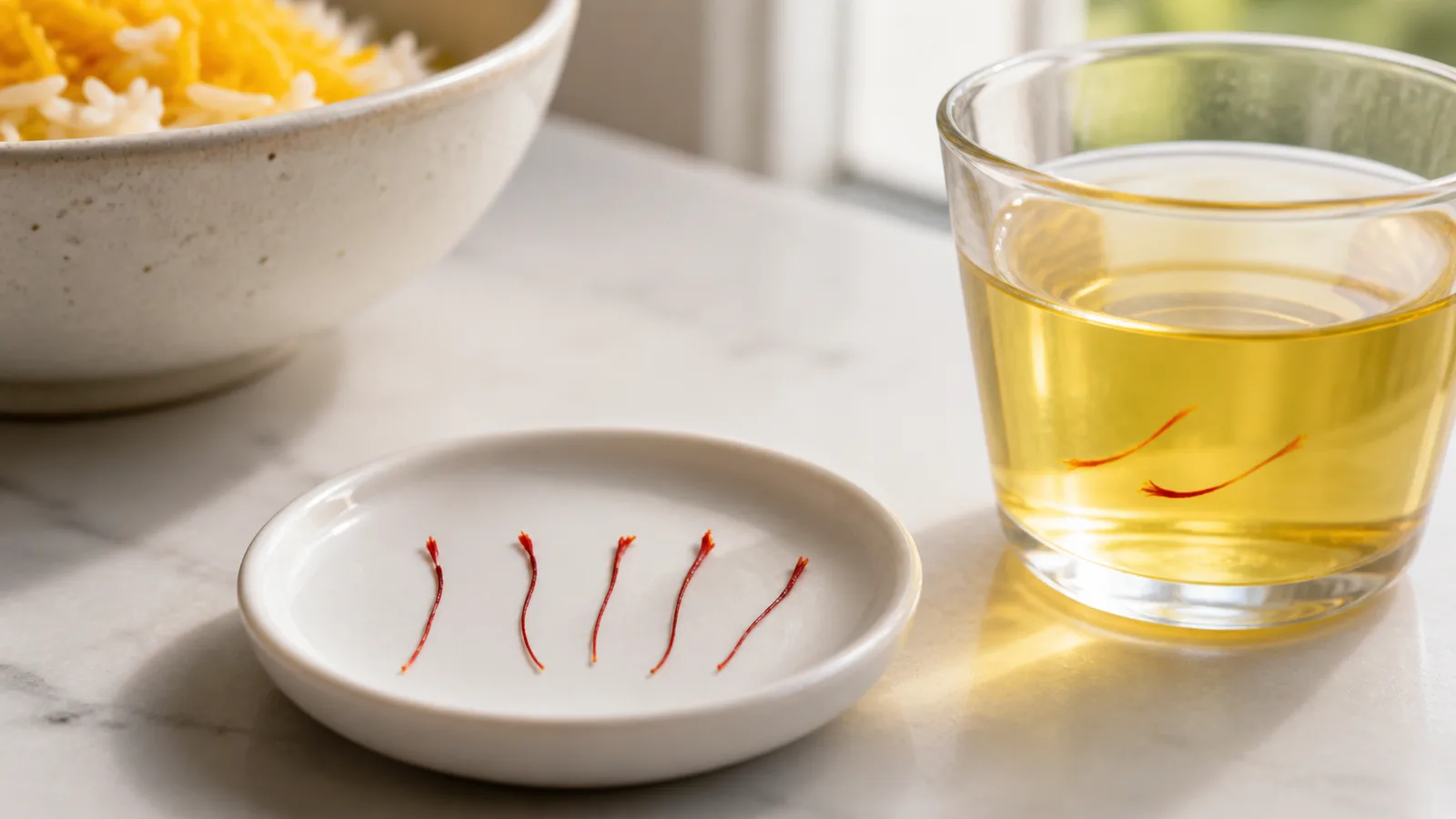
Growing time ends at harvest, but the spice is not finished when the flower is picked. Separate the red stigmas promptly, dry them gently and protect the dried threads from moisture and light. Poor drying can waste months of cultivation in a single afternoon.
A small first harvest is enough to learn the process. Gardeners interested in using saffron rather than establishing a bed can compare the site’s current saffron products while their own corms mature.
The practical timeline
Saffron can grow from a dormant corm to its first flowers in roughly six to eight weeks when planted at the right time and in good condition. The first harvest may be small. The plant then spends winter and spring building the corms that support future years.
Allow two to three seasons for the bed to show its fuller potential, and expect one concentrated autumn harvest each year. The quickest route is not extra water or fertiliser; it is healthy planting stock, timely planting, sun, drainage and patience through the whole growth cycle.