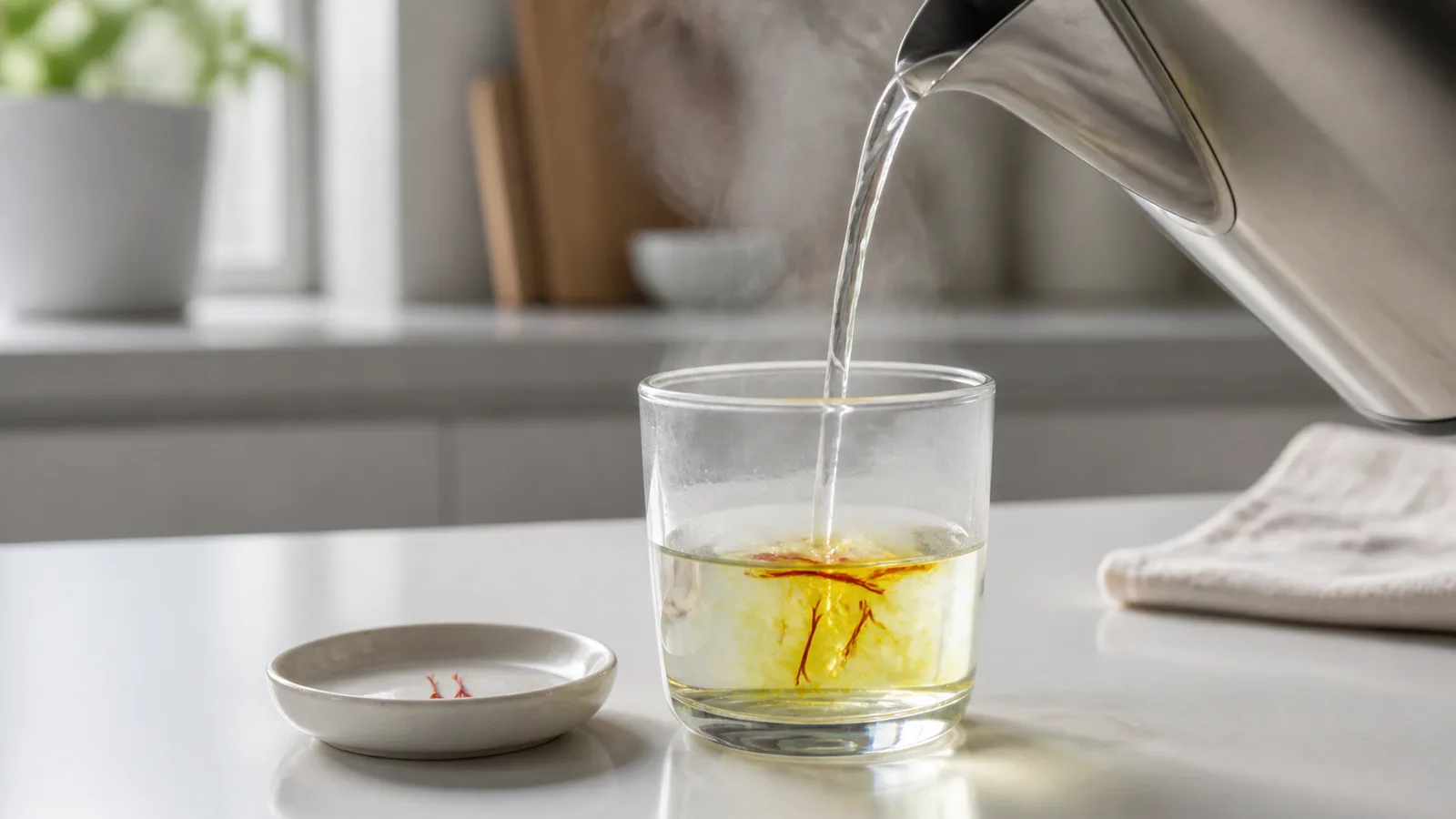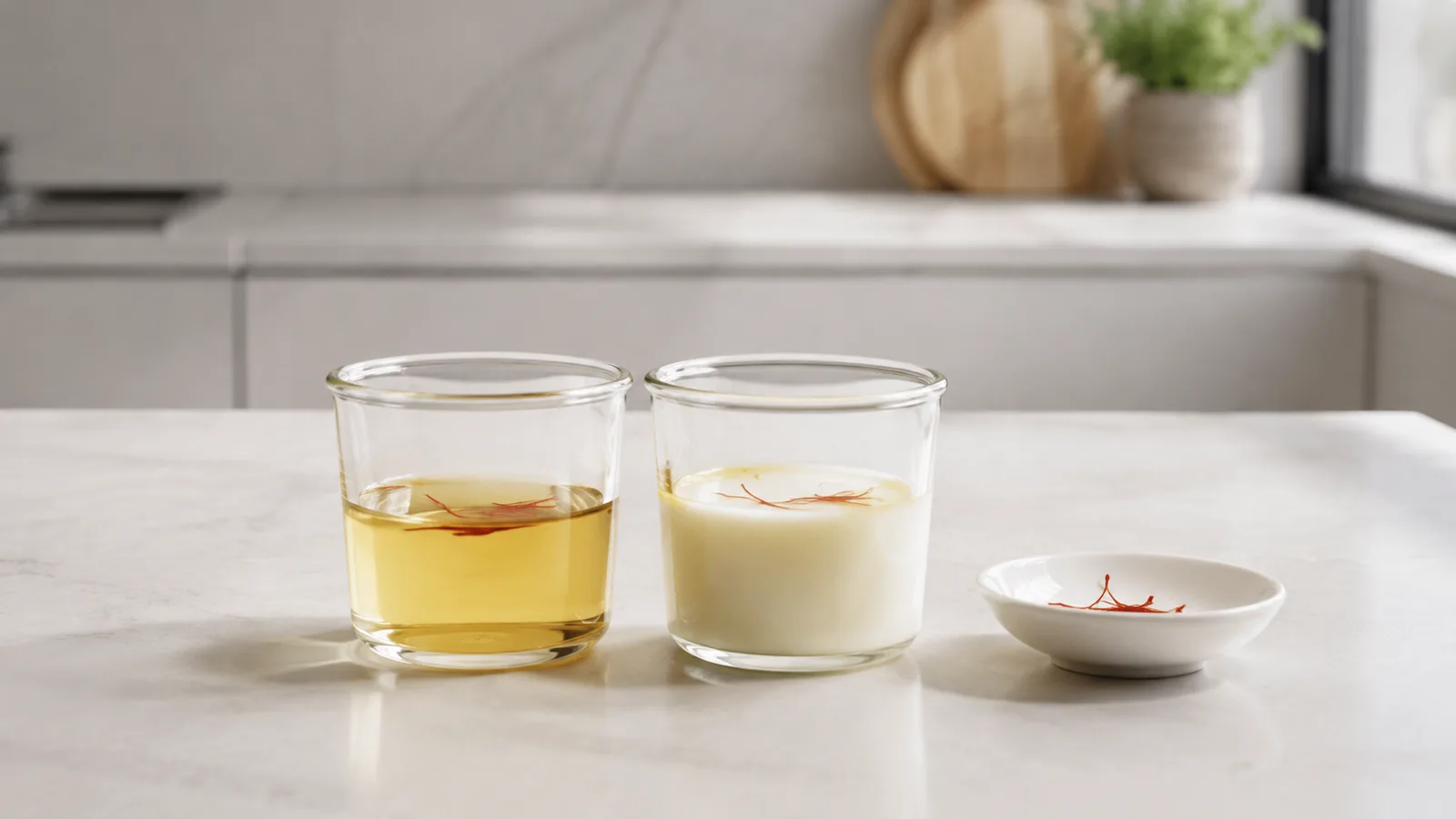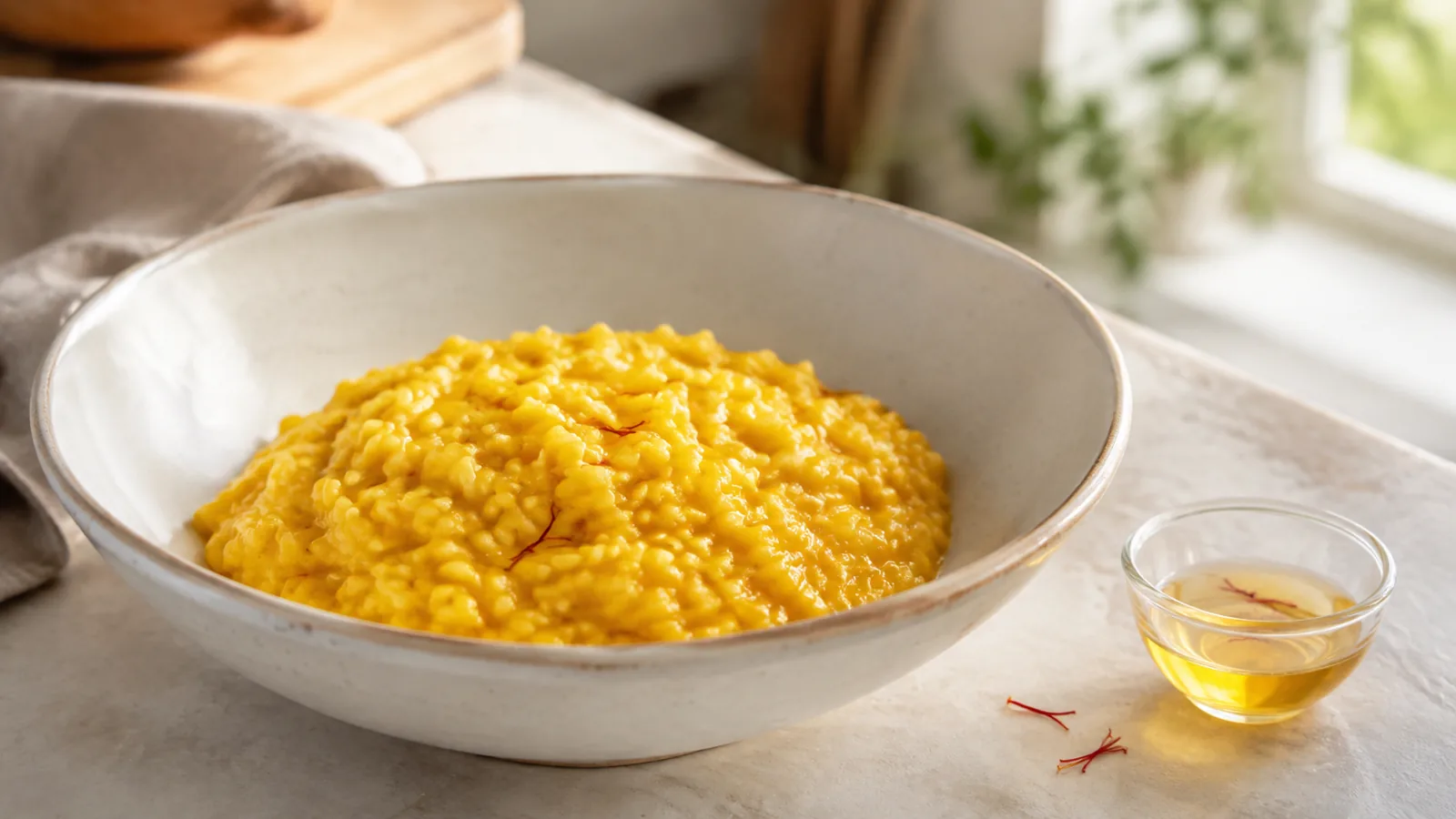


The easiest way to use saffron for eating is to crush a small amount, steep it in warm water, milk or stock for 10–15 minutes, then add both the liquid and softened threads to the food. This spreads the colour and aroma more evenly than scattering dry threads over a finished dish.
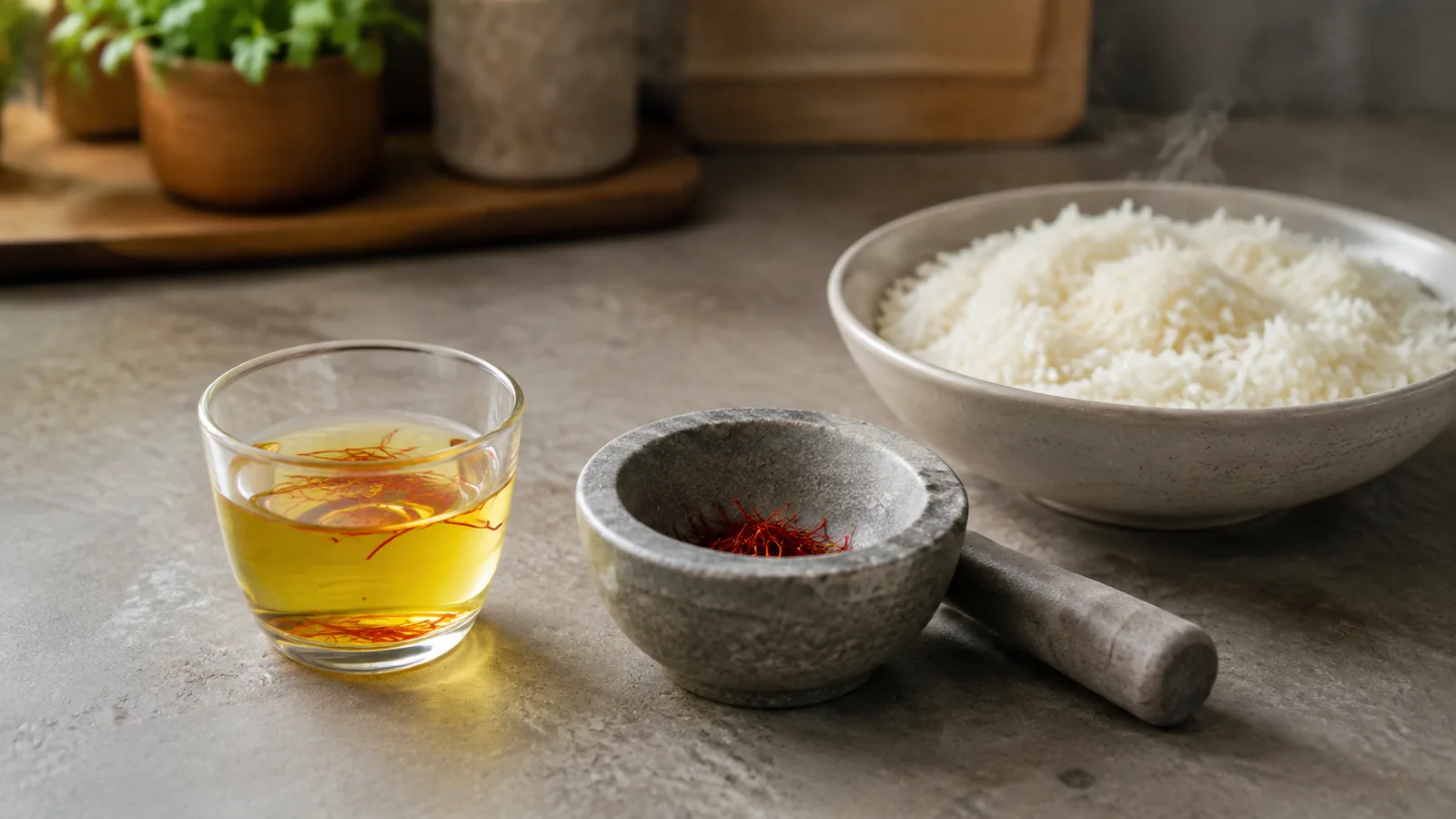
Using saffron in cooking starts with an infusion
Saffron is potent but delicate. A few dry threads dropped into a large pot may colour only the liquid around them, while a short infusion carries their flavour through the dish. Put the threads in a small heatproof cup, add two or three tablespoons of warm liquid, and soak them, covered, while you prepare the other ingredients.
Use water for rice and clear broths, milk for custards and drinks, or a little of the recipe’s stock for soups and stews. The liquid should be warm enough to extract the saffron without needing a hard boil. Add the softened threads too; they are edible.
If you want a more detailed preparation sequence, the guide to consuming culinary saffron compares several practical methods.
How much should you use?
Use saffron in moderation and start modestly. For a small home recipe serving two to four people, a pinch of roughly 10–20 visible threads is often enough to learn how that particular batch behaves. Thread length varies, so counting is only an approximation. A precise commercial recipe should use weight and repeated testing instead.
More saffron does not simply produce a better dish. Too much can make the flavour bitter or medicinal and can cover the ingredients you meant to support. If the result is faint, increase the amount slightly next time while keeping the liquid and cooking method consistent.
Should you grind saffron first?
Light crushing increases the surface area and helps an infusion develop. You can press the threads with the back of a clean spoon or use a small dry mortar. They do not need to become an invisible powder.
For very small amounts, a few grains of sugar or salt can give the mortar enough grip. Choose the one that belongs in the recipe, and remember to account for it in the final seasoning. Do not grind an entire jar in advance; intact threads are easier to inspect and expose less surface area during storage.
Use saffron in rice dishes
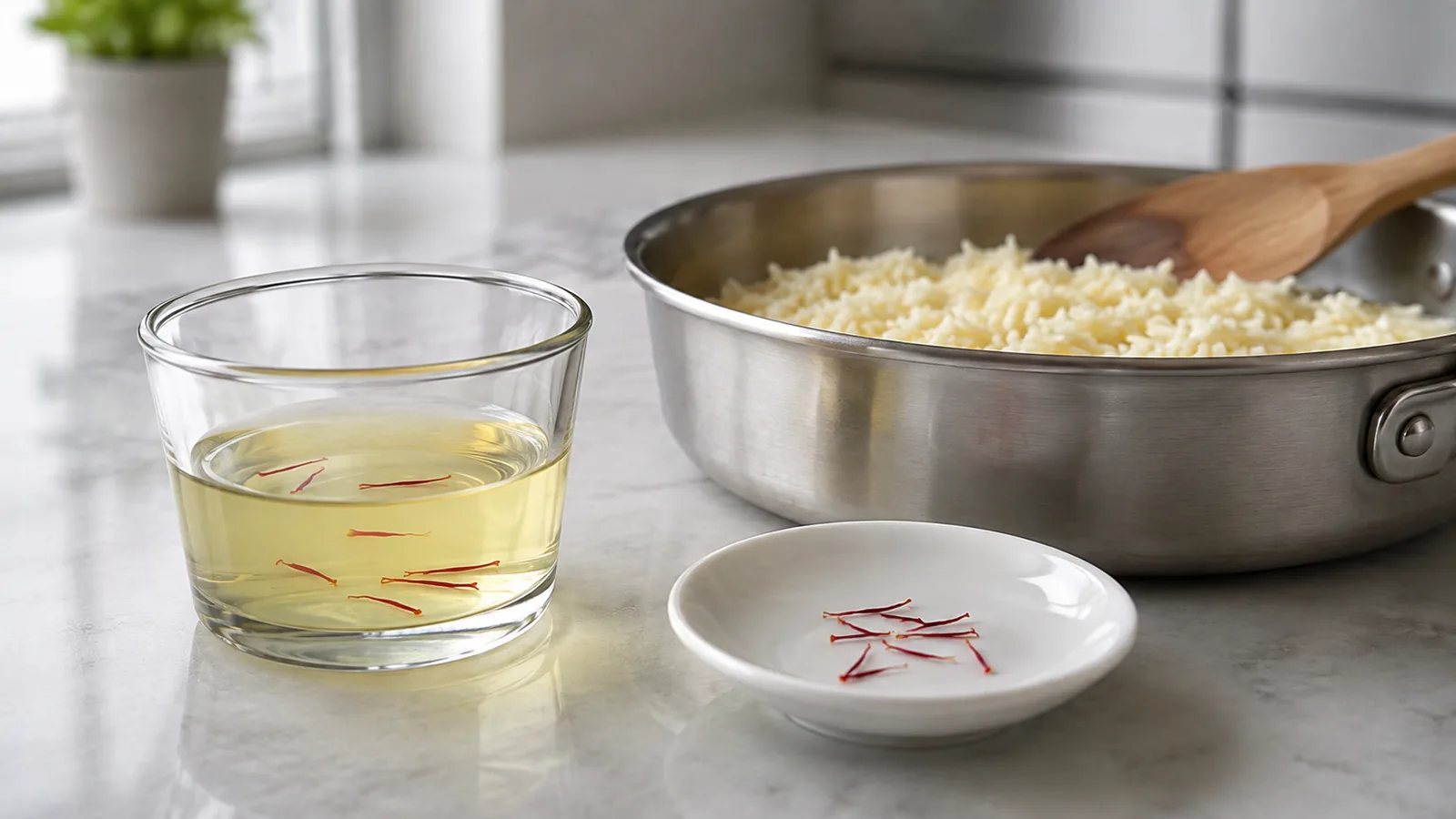
Rice gives saffron room to show both colour and aroma. Persian chelo, Indian biryani, Spanish paella and Italian risotto use it in different ways, but an even infusion is useful in each. Add the liquid where the recipe can distribute it rather than pouring it over one corner at the end.
For a plain pot, reserve a portion of cooked rice, colour it with the saffron infusion, then fold or spoon it over the rest. For paella or risotto, the infusion can join the cooking stock. Quantities change with the rice and method, so consult the more specific guide to how much saffron to use in rice.
Add it to soups, sauces and stews
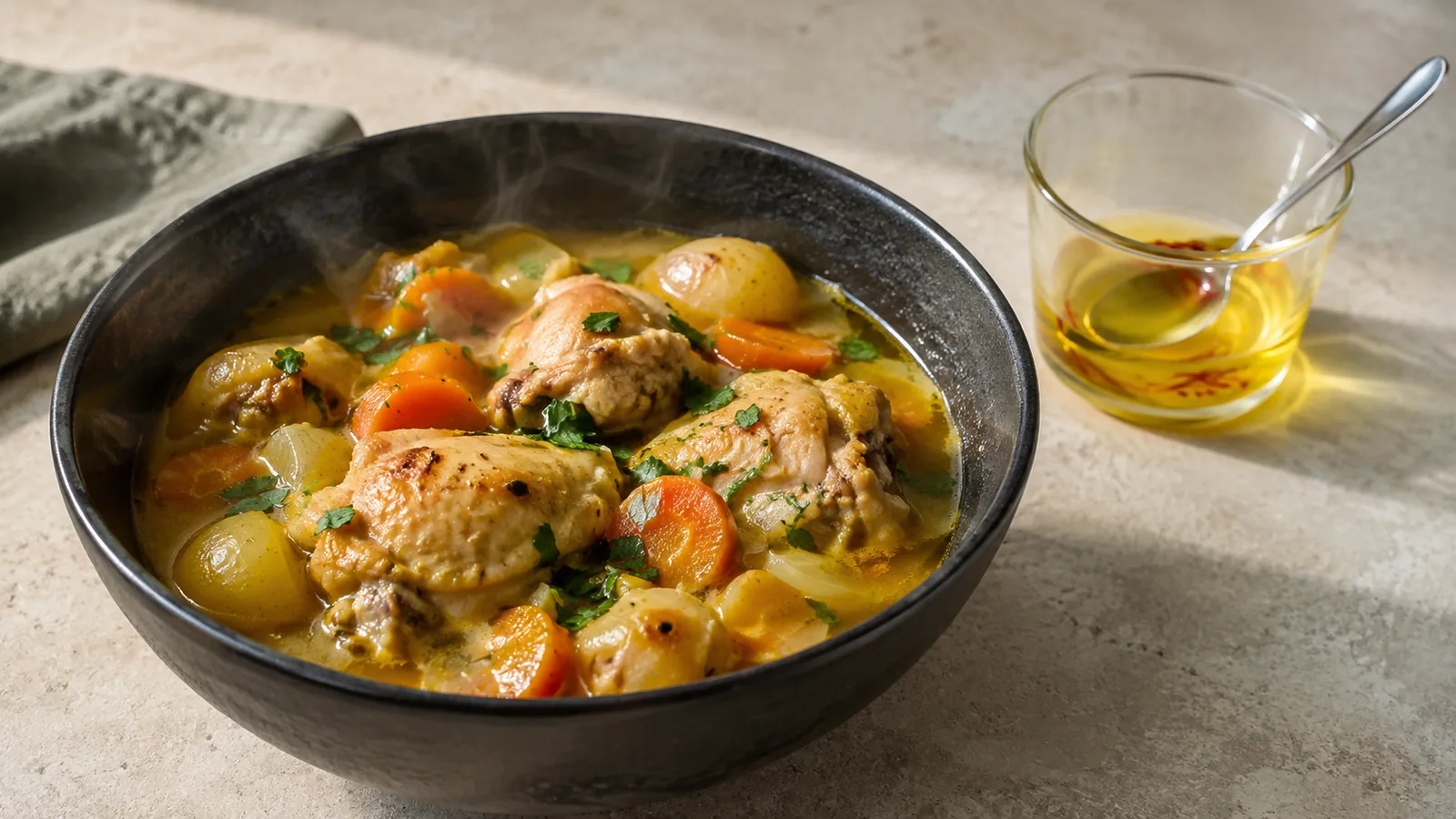
Saffron works well in broths, seafood soups, chicken dishes, lamb stews and vegetable preparations. Bloom it in some of the cooking liquid, then add it late enough to preserve its aroma but early enough to spread through the pot.
Strong smoke, a large amount of chilli or a heavily reduced sauce can hide it. In a forceful dish, let saffron flavour the rice, broth or lighter sauce served with the main ingredient instead of asking it to compete with everything at once.
Use warm milk for desserts
Milk and cream soften saffron’s bitter edge and carry its aroma through kheer, rice pudding, custard, ice cream and cake. Steep the threads in a small portion of warm milk, then stir that into the main mixture. This prevents a dry clump and gives you a chance to judge the colour before adding more.
Saffron also works with cardamom, pistachio, almond, honey and citrus. Pick one or two supporting flavours rather than crowding the dessert. It should taste composed, not like every aromatic ingredient in the cupboard.
Make saffron tea or milk
For tea, steep a few threads in warm water before adding them to the cup. Honey or lemon is optional. If you use black or green tea as the base, remember that the base contributes its own strength and, usually, caffeine. The dedicated guide to using saffron in tea covers cup size and brewing choices.
Saffron milk is simply milk flavoured with saffron and any chosen spices or sweetener. The name “golden milk” is also widely used for turmeric drinks, so describe the ingredients clearly rather than relying on the colour alone.
Can you eat saffron threads directly?
Culinary threads are edible, but chewing them dry is not the best way to experience the spice. A few threads can taste intensely bitter in one bite, and the aroma will not be distributed through the food. Infuse them or crush them into a recipe instead.
This article concerns saffron as a food ingredient. Extracts and capsules may have defined concentrations and instructions that are not equivalent to a kitchen pinch. The FDA saffron substance record lists its food roles, including flavour and colour; it does not turn a culinary method into medical dosing advice.
Common mistakes to avoid
- Adding many dry threads because the first minute shows little colour.
- Using boiling for a long time when a warm covered infusion would be enough.
- Relying on colour alone and forgetting that saffron should also contribute aroma and taste.
- Combining it with so many strong spices that none can be distinguished.
- Leaving the jar open beside heat, steam or direct sunlight.
- Treating a culinary pinch as though it were a supplement dose.
Store the rest carefully
Keep saffron dry in an airtight container away from heat and light. Use a clean, dry utensil and close the container promptly. Moisture from a steaming pot can damage what remains in the jar.
Plan the dish first, infuse only what it needs, and change one variable at a time. For ideas beyond rice, dessert and tea, see what to cook with saffron. If you need intact culinary threads, review the current Sargol saffron pack details.