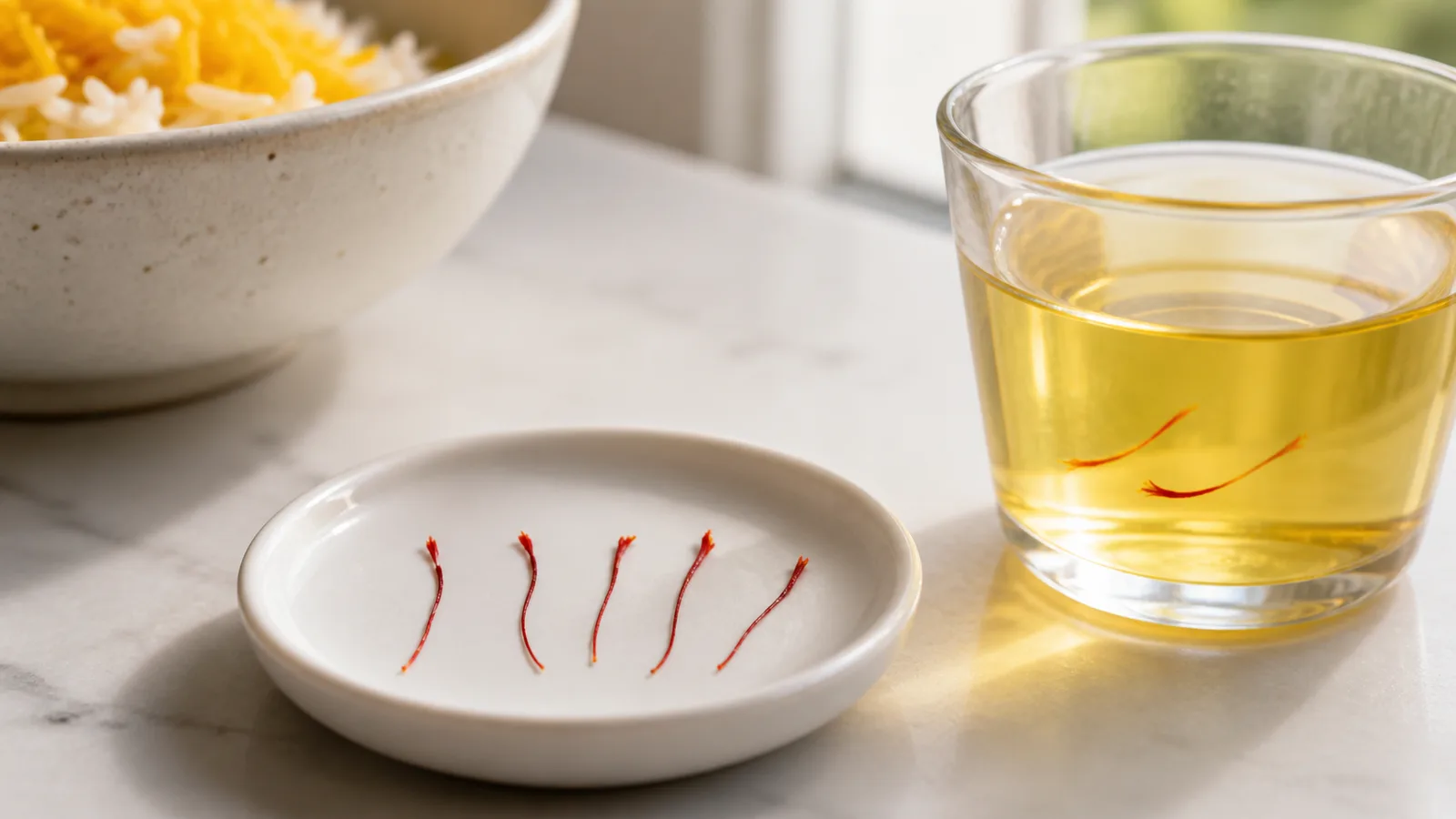
The easiest way to consume saffron is to steep a small measured pinch in warm water, milk or stock for 10 to 15 minutes, then add both the liquid and softened threads to food or a drink. This spreads the aroma and colour more evenly than scattering dry threads over a finished dish.
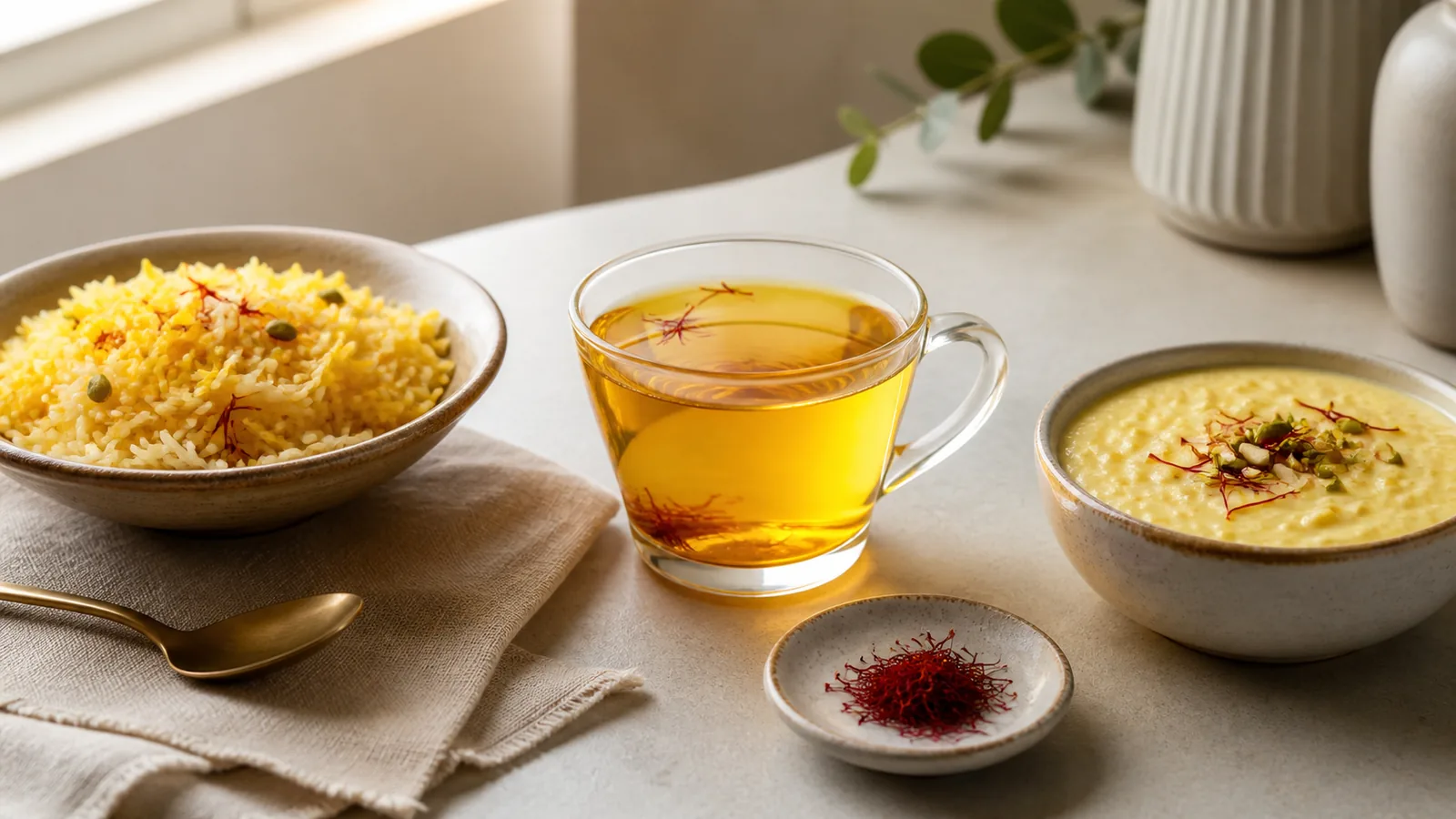
How to consume saffron
Saffron is a culinary spice, not something that has to be swallowed by itself. Infuse it first, then use that infusion in rice, soup, stew, sauce, tea, milk, dessert or another recipe with enough liquid to distribute it. The right amount depends on the dish, the number of servings and the strength of the batch.
A modest pinch is usually a better starting point than a large dose. Saffron has natural bitterness as well as aroma; too much can make food taste medicinal or astringent. If consistency matters, weigh the spice rather than counting strands, because one packet may contain full stigmas while another contains shorter pieces.
Start with a saffron infusion
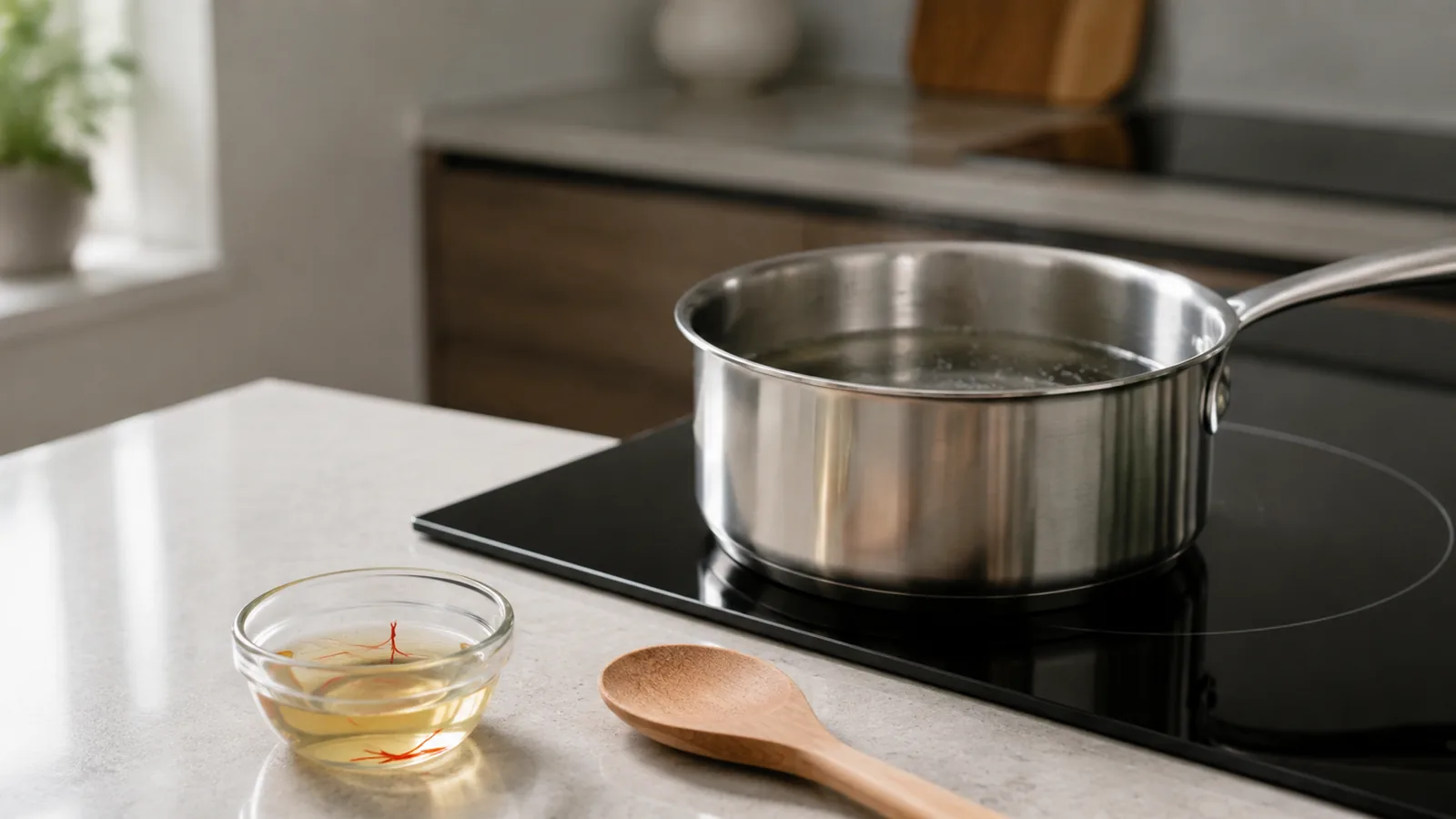
A simple warm-water method
- Lightly crush the amount of saffron called for in your recipe.
- Place it in a clean heatproof cup.
- Add a small amount of warm water and cover the cup.
- Leave it for 10 to 15 minutes.
- Add the golden liquid and softened threads to the dish.
Warm milk or stock can replace water when it suits the recipe. You do not need to boil the saffron aggressively. Covering the cup helps keep its aroma in the infusion, and using only a small volume avoids diluting the food.
For more detail on temperature, crushing and common mistakes, see the complete saffron-brewing guide.
Add saffron to meals
Rice and grains
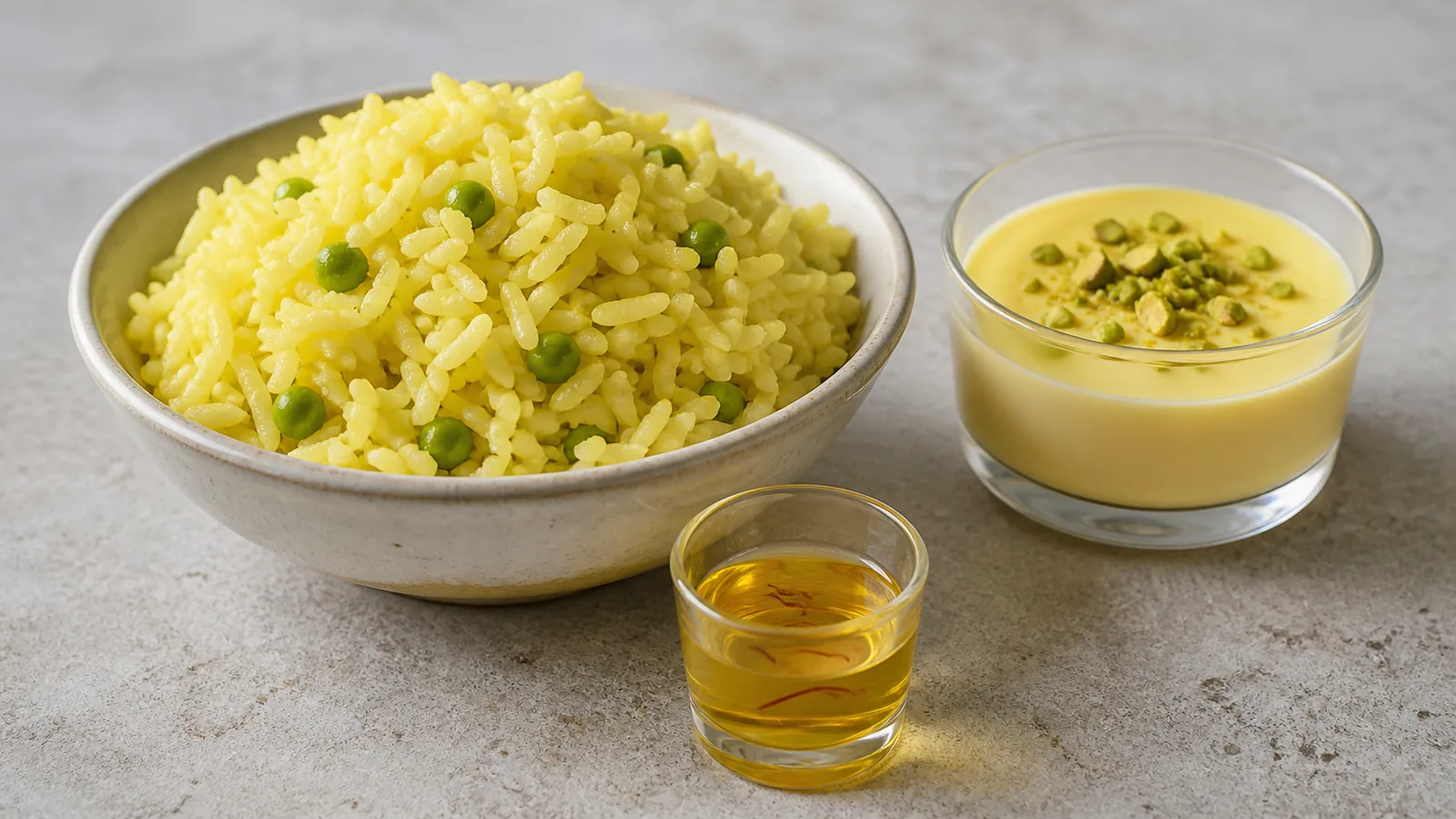
Rice is a forgiving place to learn how saffron behaves. Stir the infusion into the cooking liquid for even colour, or pour it over part of the cooked rice to create fragrant golden sections. The spice works in Persian rice, biryani, paella and risotto, but those dishes use it differently; follow the recipe rather than assuming one amount fits them all.
Our guide to using the right amount of saffron in rice provides a practical starting point by serving size.
Soups, stews and curries
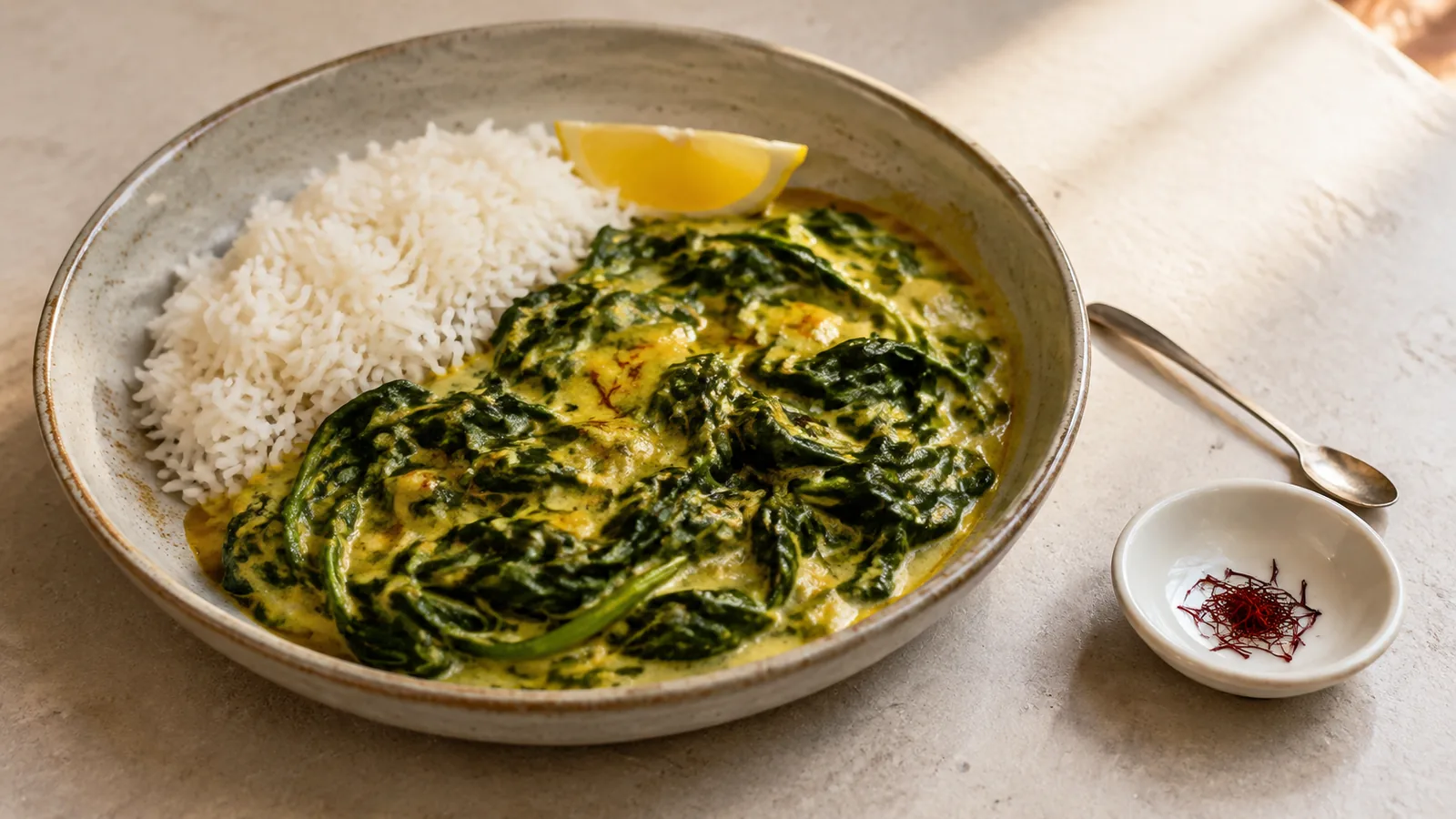
Add the prepared infusion when there is still time for it to spread through the pot but not so early that its fragrance spends hours over high heat. Saffron fits mild stocks, seafood soups, chicken dishes, vegetable stews and selected curries. Strong smoke, heavy chilli or a crowded spice mixture can hide it.
Sauces, seafood and meat
Saffron works well in sauces built on stock, tomato, butter, cream or olive oil. It can sit beside seafood, chicken or lamb without becoming the only flavour. Taste the sauce before adding more: its colour can become vivid before the aroma reaches the balance you want.
Drink saffron as tea or milk
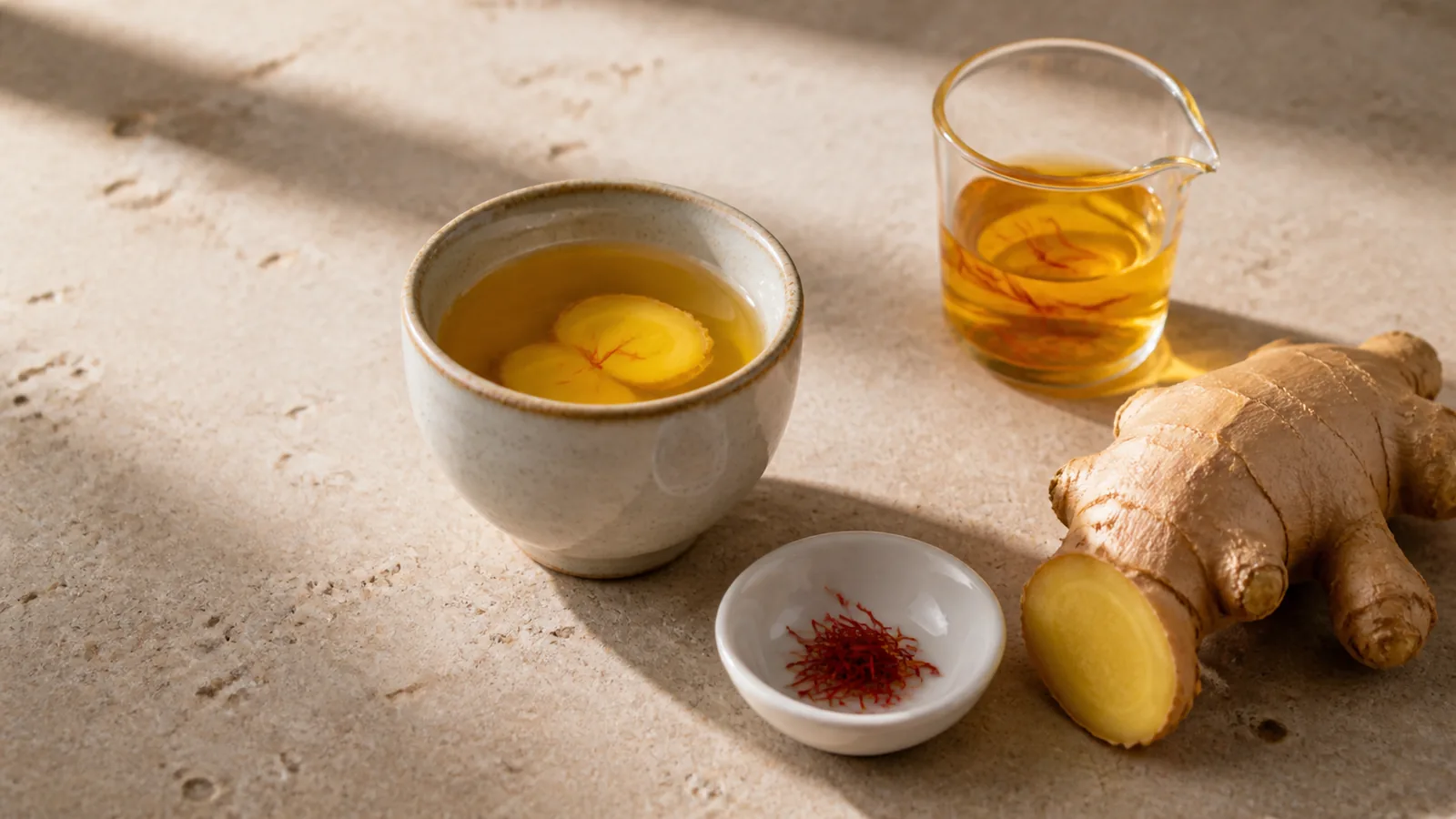
For a plain saffron tea, steep a small pinch in one cup of hot water for 10 to 15 minutes. Drink the infusion with the softened threads or strain it. Honey, lemon, cardamom, ginger or cinnamon can be added in restrained amounts.
Saffron can also be mixed with black or green tea. Prepare it separately, brew the tea leaves according to their own timing, and combine the two. This prevents over-steeped tea leaves from making the cup unnecessarily bitter. The dedicated saffron tea recipe covers quantities, steeping and green-tea variations.
Warm milk gives saffron a softer, rounder setting. Infuse it in a little warm milk first, then add the rest. Sweeten to taste rather than assuming saffron itself is sweet; the honey-like quality people describe is mainly an aroma.
Use saffron in desserts and baking
Saffron can flavour rice pudding, custard, ice cream, milk drinks, cakes and pastries. Infusing it in the recipe’s liquid gives more even results than adding dry threads to flour. Pistachio, almond, citrus, cardamom, pear, vanilla and rose can work alongside it, though several strong aromatics at once can make the finished flavour indistinct.
Baked recipes often mute delicate aromas. Keep the saffron in the wet ingredients, use the tested recipe amount and avoid trying to compensate with a large handful of threads.
Can saffron go in a smoothie?
Yes, but first steep it in a spoonful or two of warm water. Let the infusion cool before blending it with mango, pineapple, banana, yoghurt or milk. Adding the threads dry to a cold smoothie extracts them unevenly and can leave fibrous pieces in the drink.
Saffron changes aroma and colour; it does not automatically “boost” the nutritional value of a smoothie in a clinically meaningful way. Fruit, dairy, sugar and portion size still determine most of the drink’s nutritional profile.
How often and how much?
For cooking, use the amount a reliable recipe gives for its yield and adjust future batches by taste. There is no trustworthy universal daily thread count. Thread sizes differ, and concentrated extracts or capsules cannot be compared with a pinch dispersed through a family meal.
If you plan to consume saffron every day for a health purpose, that is no longer simply a cooking question. Discuss the product, amount and reason with a qualified clinician or pharmacist, especially if you are pregnant or breastfeeding, take regular medicine, have a medical condition or have reacted to saffron before.
Food saffron and supplements are not the same
A capsule or extract may contain a standardised ingredient and a dose very different from a culinary infusion. Do not open a supplement into food unless its label and a qualified professional say that use is appropriate. Follow the product directions and do not assume that more produces a better result.
The US National Institutes of Health explains in its consumer backgrounder on botanical supplements that safety depends on factors including the preparation and amount, and that “natural” does not automatically mean safe. A current systematic review of saffron adverse events likewise advises attention to higher-dose or longer-term medicinal use.
What about saffron’s health benefits?
Saffron has been studied in people, but the evidence does not turn every serving of saffron rice or tea into a treatment. Trials often use a defined extract or fixed milligram amount for a selected population and limited period. Their result may not apply to a homemade drink, a different product or an individual medical condition.
Use saffron in meals because you value its flavour, aroma and colour. Do not describe a calming drink as proven to reduce stress, promote relaxation or treat anxiety unless a clinician is discussing evidence relevant to you. Food can be enjoyable without carrying a medical promise.
Store and inspect it carefully
Keep saffron dry, tightly closed and away from light, heat and strong odours. Use a clean dry utensil. Whole threads are easier to inspect than anonymous powder, but appearance and colour-release tricks do not prove authenticity or grade.
Look for an intact package, clear product identity, origin and lot information, and a seller who can answer a batch-specific question. If the spice is damp, mouldy, infested, in damaged packaging or has a strong foreign odour, do not taste it merely to investigate.
If you need threads for cooking, check the current Sargol saffron pack details before ordering. Choose the size for the recipes you expect to make so the remaining saffron does not sit open for longer than necessary.
A useful first plan
Start with one simple recipe: make a warm infusion, use it in plain rice, tea or milk, and note the amount and result. These saffron usage tips become easier to adapt once you recognise the spice’s gentle bitterness and floral, hay-like aroma in soups, curries, desserts and more complex dishes. That is a safer and more useful way to learn how to consume saffron than treating the spice as a supplement by default.