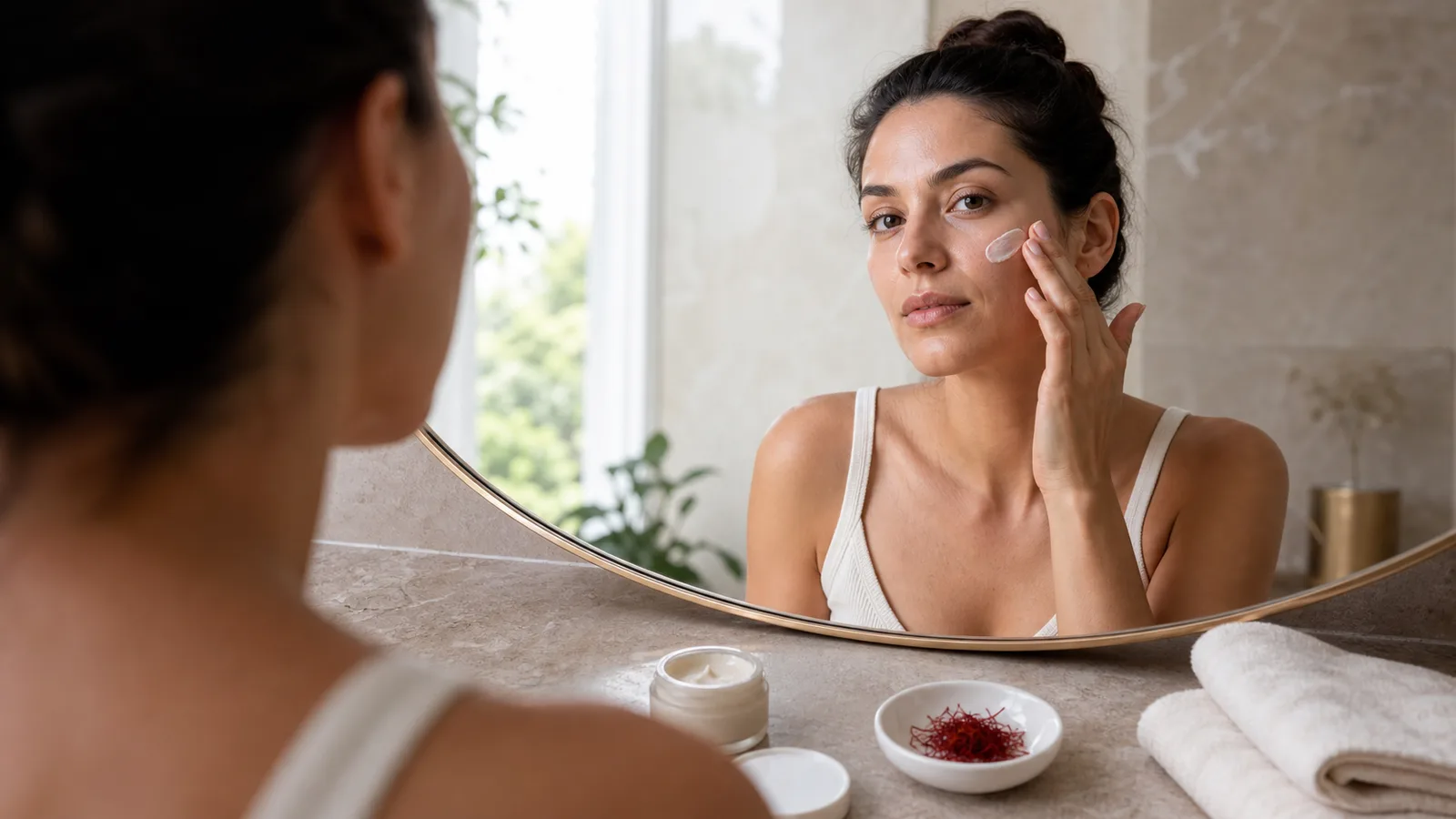
Is saffron good for skin? Saffron contains pigments and aromatic compounds that are interesting to cosmetic researchers, but evidence for applying the spice at home is limited. It has not been shown to erase dark spots, cure acne, rebuild collagen, or replace sunscreen. A well-formulated product may be reasonable to try if your skin tolerates it; raw kitchen mixtures are less predictable.
That distinction matters because “saffron benefits for skin” can refer to several different things: laboratory work on isolated compounds, a finished cosmetic containing a standardised extract, or threads soaked in milk or water. Results from one do not automatically apply to the others.
Saffron Benefits for Skin: What the Evidence Supports
Saffron supplies crocins, crocetin, safranal and other plant compounds. A review of saffron’s dermoprotective research describes antioxidant, antimicrobial, depigmenting and repair-related findings. Much of that evidence comes from cells, laboratory models or early formulation studies rather than large, long-term clinical trials on ordinary skincare users.
In practical terms, saffron is a potential cosmetic ingredient, not a complete skin routine. The formulation, concentration, stability, packaging and other ingredients help determine whether a product is useful or irritating.
1. Brightening and Glowing Skin
Most searches for saffron beauty benefits are really asking about an even-looking complexion. Pigment-related effects have been explored in early research, but there is not enough strong human evidence to promise that saffron will fade melasma, post-acne marks or another cause of discolouration.
A coloured infusion can also leave a temporary yellow cast on pale fabric or skin. That is staining, not proof of lasting brightening. For persistent patches, a dermatologist can identify the cause and discuss treatments with better-established dosing and safety.
2. Anti-Aging Effects
Crocin and related compounds can behave as antioxidants in experimental systems. That makes them scientifically interesting, but it does not prove that a homemade saffron mask stimulates collagen, restores elasticity or reverses wrinkles in people. Claims that saffron “fights ageing” compress laboratory findings into a result the research has not demonstrated.
Daily sun protection, a gentle cleanser and a moisturiser suited to your skin have a clearer role in maintaining the skin barrier. The US Food and Drug Administration’s sunscreen guidance explains that tested broad-spectrum products protect against UVA as well as UVB. Saffron water, oil or a face mask has no labelled SPF and should never take that place.
3. Treating Acne and Blemishes
Antimicrobial or anti-inflammatory activity in a laboratory does not make saffron an acne treatment. Acne involves blocked follicles, sebum, inflammation and microorganisms, and it varies from a few comedones to painful nodules that can scar. There is no good basis for promising that saffron threads, saffron oil or a DIY paste will prevent breakouts.
Oils, fragrances, milk, honey and abrasive powders in homemade masks may themselves trigger irritation or worsen some skin types. Seek clinical advice for painful, persistent or scarring acne instead of delaying effective care.
4. Hydrating and Soothing Skin
Saffron does not function like a proven moisturising base on its own. In one small formulation study, saffron lotions did not produce a significant moisture difference from the control base during seven hours of observation. If a saffron cream feels hydrating, emollients, humectants and occlusives elsewhere in the formula may be doing much of the work.
Botanical does not mean non-irritating. The American Academy of Dermatology’s product-testing advice recommends trying a new product on a small test area twice daily for seven to ten days before wider use. Stop if redness, itching, swelling or burning develops.
5. Sun Protection
An in-vitro test of specially prepared saffron lotions reported ultraviolet absorption, but that is not a licence to use culinary saffron as sunscreen. Sun-protection products need controlled formulation and validated testing. A homemade mixture has no reliable SPF, may spread unevenly and offers no assurance of broad-spectrum performance or water resistance.
Use a labelled broad-spectrum sunscreen as directed, along with shade and protective clothing. A cosmetic that happens to contain saffron remains an optional extra unless its own label carries tested sun-protection claims.
How to Use Saffron in a Skin Routine Safely
Choose a finished product from a manufacturer that provides a full ingredient list, use instructions and batch information. Check whether the saffron ingredient is an extract, fragrance or colourant, and do not assume a higher concentration is better. Patch-test the complete product, not a separate saffron thread, because the whole formula touches your skin.
Avoid applying unsterile mixtures to broken skin, around the eyes or immediately after procedures. Anyone with eczema, contact allergies, very reactive skin or an active skin condition should ask a dermatologist before experimenting. If you do use culinary threads in a rinse-off preparation, staining and irritation remain possible, and the result should not be treated as medical care.
So, what are the realistic saffron uses for skin? It may be included in thoughtfully made cosmetics, and its compounds justify further research. The current evidence is not strong enough to guarantee clearer, lighter, younger or acne-free skin. Judge a product by its complete formula, tolerate it cautiously, and keep proven basics in place.
Our saffron collection is sold as a culinary spice. For product-origin or storage questions, contact us; for a persistent skin concern, consult a qualified dermatologist.