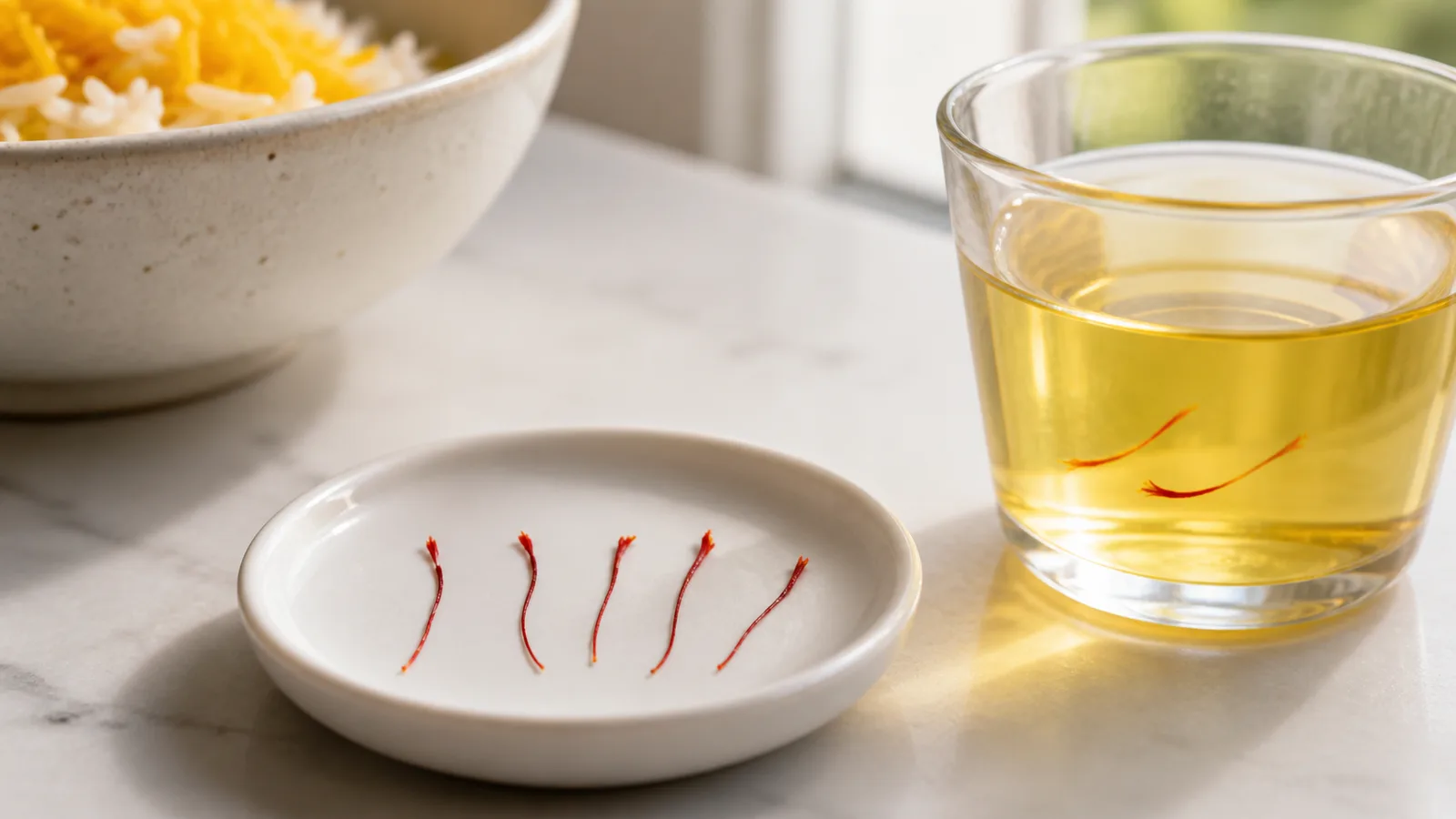
To tell real saffron from fake saffron, examine the threads, aroma, taste, packaging and seller together. A warm-water steep can reveal suspicious dye behaviour, but no single home test proves authenticity. Reliable confirmation requires traceability and, when the stakes justify it, laboratory testing.
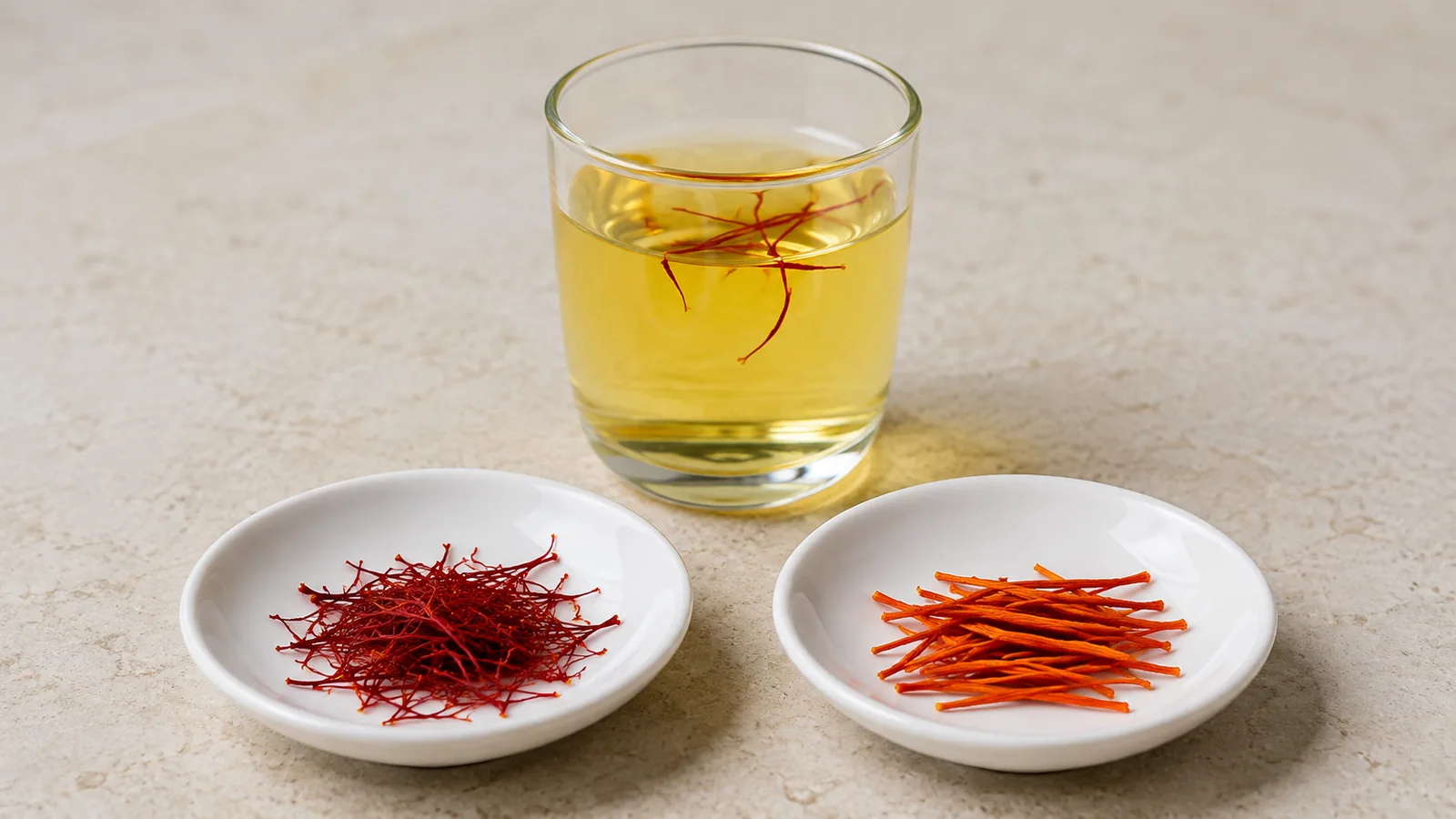
The difference between real and fake saffron is sometimes obvious, but imitation saffron can be convincing. If you are comparing real saffron vs fake saffron, or asking how to know if saffron is real, look for a pattern of evidence rather than one dramatic sign.
Real vs fake saffron: what is the difference?
Real saffron is the dried stigma of Crocus sativus. The current ISO 3632-1:2025 specification covers dried saffron sold as filaments, cut filaments or powder. Fake, adulterated or counterfeit saffron may replace those stigmas, dilute them with other plant material, add colour, or misrepresent a lower-quality mixture as pure saffron.
This is a genuine food-fraud problem, not merely a difference between premium and ordinary grades. In the European Commission’s coordinated herbs-and-spices survey, 11% of the tested saffron samples were considered at risk of adulteration. The official survey report also makes an important point: authorities used analytical methods, not one trick performed in a kitchen.
Start with the shape and colour of the threads
Genuine saffron filaments are not manufactured to look perfectly identical. Look for slender red stigmas with natural variation in length, thickness and curvature. Many intact pieces widen slightly at one end. Some yellow or orange style material can occur, particularly in less carefully trimmed grades; its presence alone does not prove that the packet is fake.
Be more cautious when every piece is the same width, the colour looks painted on, or the packet contains flat petals, coarse fibres, stems or unfamiliar plant fragments. Safflower, other flower parts and dyed material can resemble saffron at a glance. A visual check is more useful when you can compare several threads under bright, neutral light.
Colour is not a stand-alone verdict. Genuine lots vary, and storage can darken or fade them. A bright red packet can still be adulterated, while a slightly uneven natural colour is not necessarily a defect.
Check the aroma without expecting perfume
Fresh saffron has a distinctive aroma that people often describe as warm, hay-like, honeyed or floral. It should smell like a spice, not sugar syrup, cooking oil or synthetic fragrance. A strong chemical note is a warning sign.
A faint aroma does not automatically mean imitation saffron. Age, heat, moisture, light and an open container can all reduce fragrance. Smell is therefore one piece of evidence, not a certification test.
Taste a tiny thread, not a spoonful
A genuine thread is typically bitter and mildly astringent rather than sweet. If a tiny piece tastes distinctly sugary, a coating or added sweetener may be present. A neutral sample may be old, weak or adulterated, but taste alone cannot tell you which.
Do not use a large tasting quantity and do not taste a product that smells spoiled, appears mouldy or has an unknown source. The aim is to compare a trace of flavour, not to consume a test dose.
Use the water test as a screen, not proof
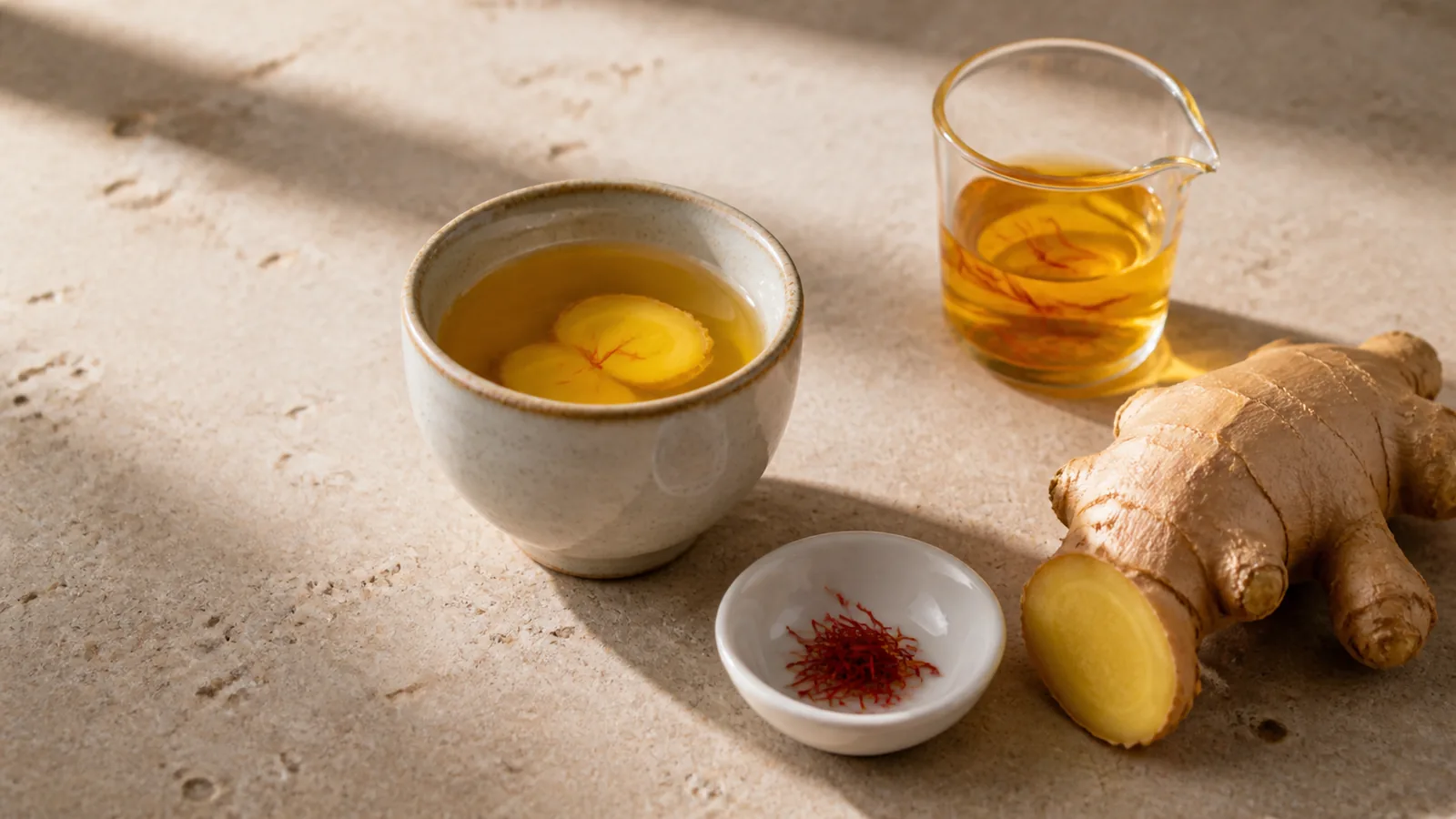
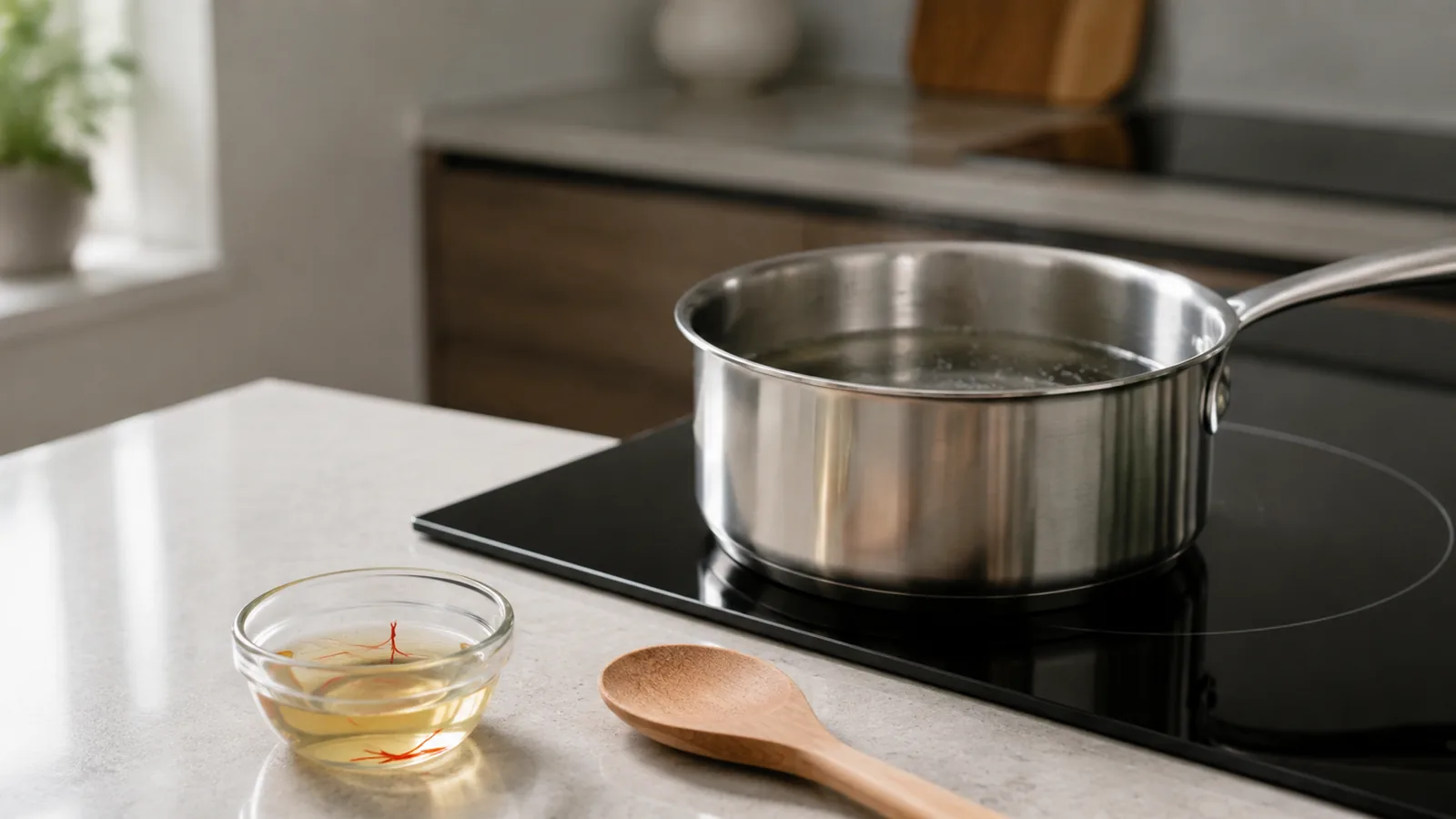
Place a few threads in clear warm water and watch them for 10–15 minutes. Saffron normally colours the water yellow to golden while the threads remain visible. An intense red cloud that leaves the threads suddenly pale can suggest added dye. Natural release is usually more gradual.
The same caution applies when learning how to tell if saffron is real at home: a dyed mixture can be designed to look persuasive for the first few minutes.
The old shortcut “red water means real saffron” is wrong. Crocin, one of saffron’s natural colour compounds, produces a yellow-golden infusion; a fast red plume deserves suspicion. At the same time, weak colour does not by itself prove fraud. Old saffron, a tiny sample or cool water can all produce a subdued result.
A clever adulterated product may still pass this home screen. The test cannot identify another plant reliably, measure moisture, establish geographical origin or show whether an undeclared dye is safe.
Texture can reveal obvious coating
Well-dried saffron is light and can be fragile, especially after handling. Threads should not feel greasy, wet, sticky or unusually heavy. A coating that transfers to the fingers or paper is a reason to stop and question the sample.
Flexibility is not decisive. Humidity and storage affect texture, while brittle dyed fibres can imitate dryness. Avoid rubbing the whole purchase to dust; preserve a few intact threads and the packaging in case the seller or a laboratory needs to inspect them.
Powder is harder to assess at home
Once saffron has been ground, the shape clues disappear and other powders are easier to blend into it. ISO’s saffron specification includes powder, but proper conformance depends on defined requirements and test methods. Colour in a cup cannot establish purity.
If authenticity matters and you do not know the supplier, filaments are easier for a buyer to inspect than powder. Buy powder in sealed, traceable packaging and be cautious with an unlabelled scoop from an open container.
Read the packet and assess the seller
A credible packet should identify the product clearly and provide the net weight, batch or lot information, responsible business details and any origin statement the seller is making. Keep the invoice and photograph the lot code when the purchase is significant.
Ask what a claim such as “ISO tested” means. A useful answer identifies the current standard, the tested batch, the laboratory and the actual result. A logo or the phrase “Grade 1” without traceable evidence is not the same as a batch report.
Price is another clue, though not proof. Saffron is labour-intensive, so a dramatically cheap offer deserves scrutiny. High price alone does not establish purity; an adulterated product can also be sold expensively.
Why home checks have limits
The US Food and Drug Administration describes spice fraud as economically motivated adulteration and specifically gives the example of saffron bulked with cheaper plant material. Its food-fraud guidance explains why analytical chemistry matters in identifying added material.
A 2024 market study tested 104 saffron samples using morphology, HPLC, HPTLC and DNA barcoding. The published authentication study found that morphology detected fewer adulterated samples than DNA barcoding. That does not make appearance useless; it shows why a consumer observation cannot replace a laboratory result.
A practical buying checklist
- Prefer intact filaments when you want to inspect shape and natural variation.
- Compare colour, aroma, taste and texture; never rely on one sign.
- Use warm water only as a quick screen for suspicious colour release.
- Check the batch, seller identity, packaging and evidence behind quality claims.
- Keep the packet and receipt if you may need to question the product.
- Use accredited laboratory testing when authenticity has commercial, regulatory or safety consequences.
If you want an intact-thread format rather than an anonymous powder, review the current Sargol saffron pack details. Product information and traceability are more useful than trusting a single dramatic home-test video.