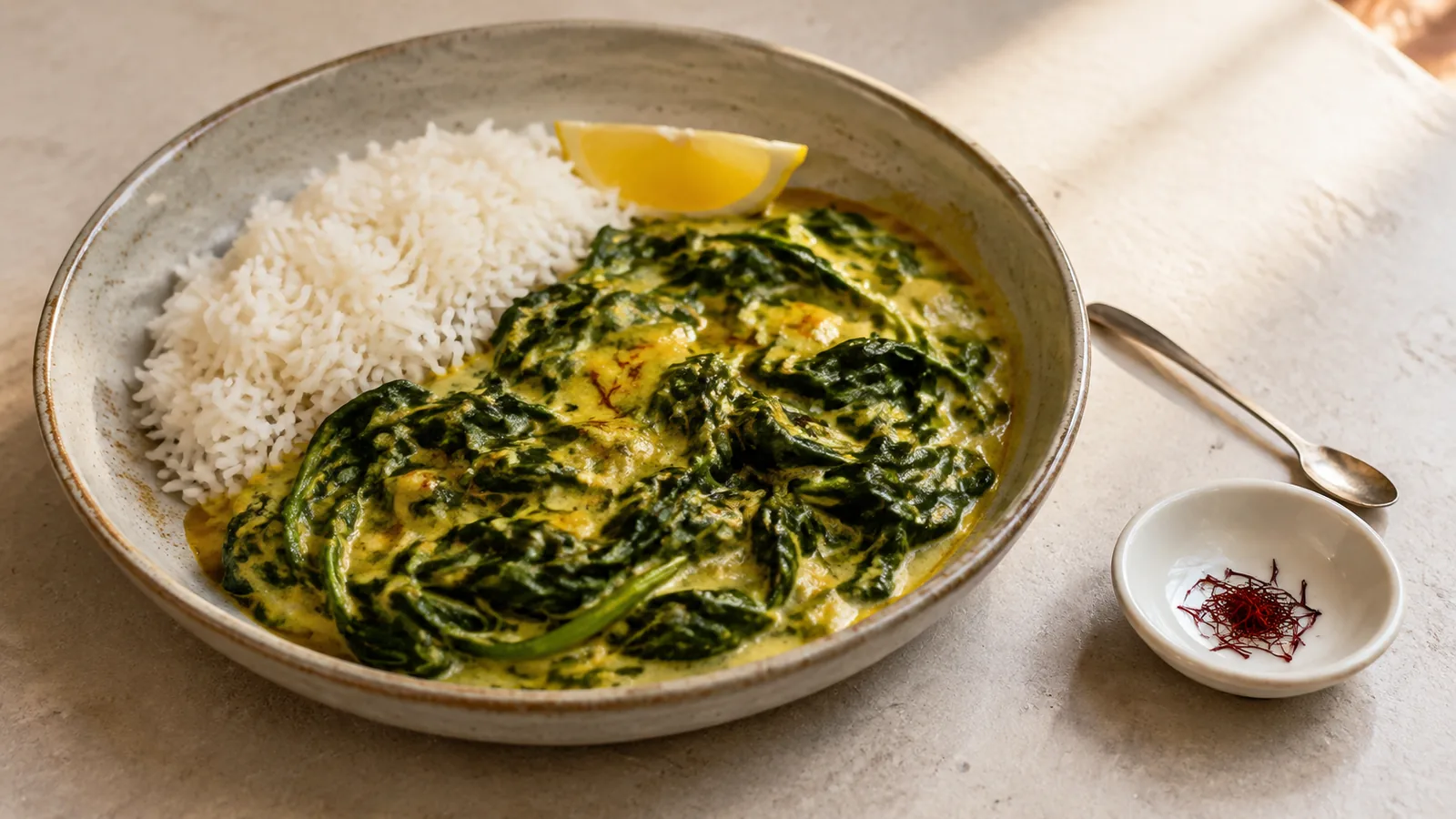
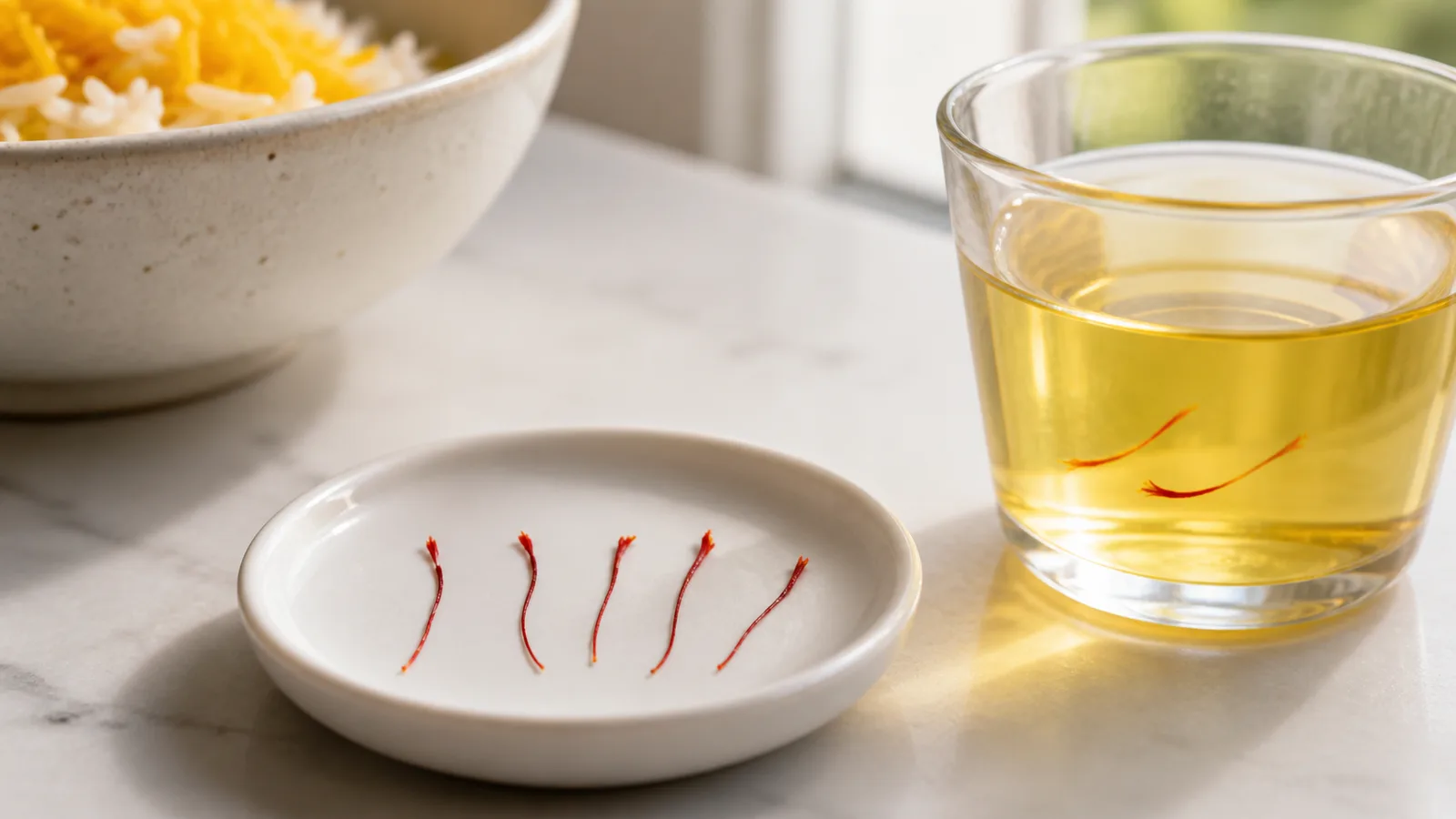
The correct way to use saffron is to measure a small amount, crush the threads lightly, steep them in warm water, stock or milk for 10 to 15 minutes, then add the entire infusion at a point where it can spread through the dish without hours of hard boiling.
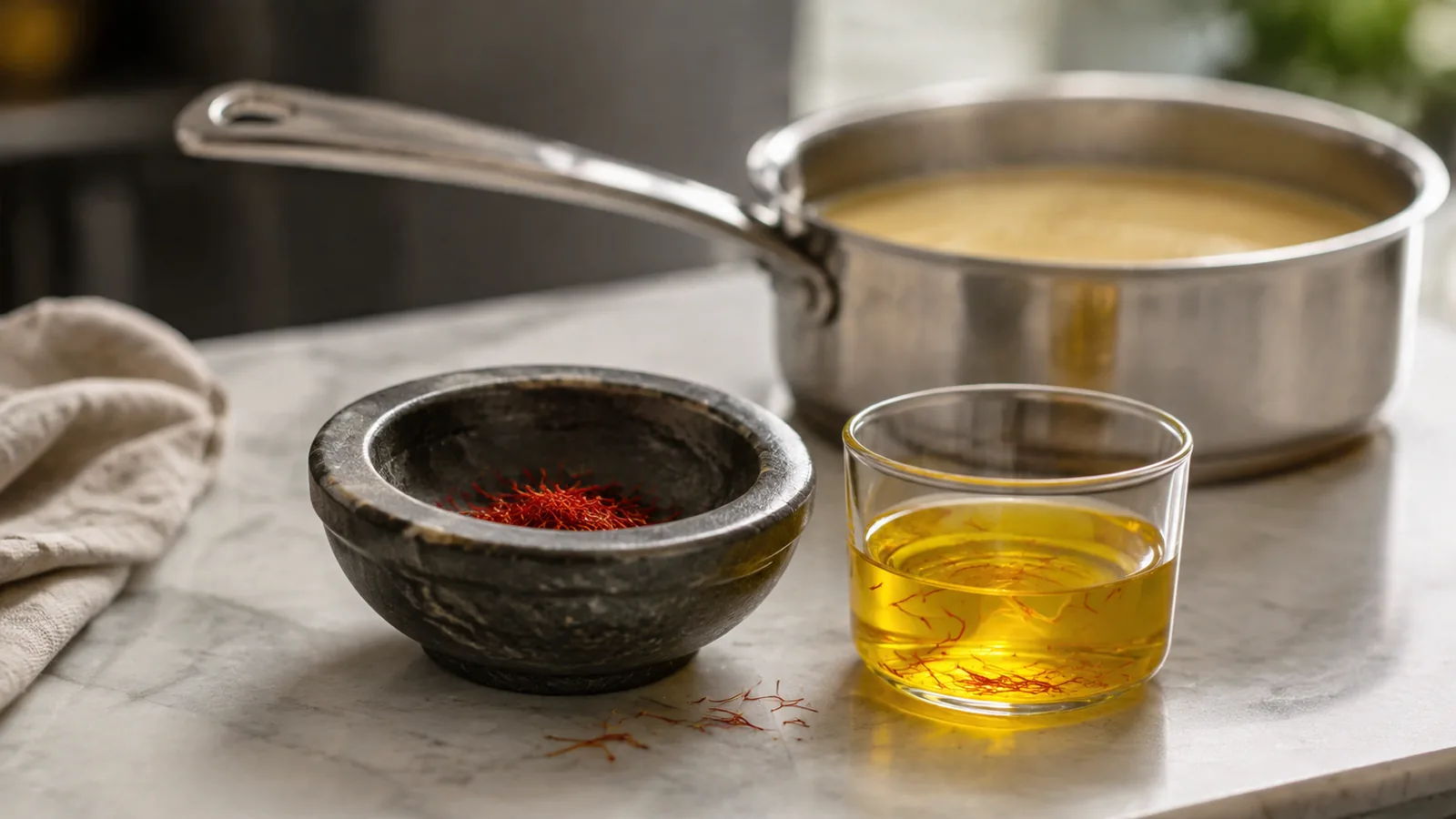
Correct Way to Use Saffron
Saffron brings three related qualities to food: aroma, flavour and colour. Using it well is less about a complicated ritual than giving a very small quantity enough moisture and contact time to season the whole dish.
The basic method works for rice, soup, sauce, milk, dessert and baking, but the best liquid and timing change with the recipe.
1. Check the Threads Before Measuring
Whole saffron should consist mainly of dry red stigmas with a strong, clean aroma. A small amount of orange or yellow style may be present depending on the grade, but excessive pale plant material reduces the concentration.
Keep the threads dry until you are ready to cook. Moisture in the storage jar encourages deterioration, while light, heat and air gradually weaken the aroma.
2. Measure a Modest Amount: Do Not Overuse Saffron
For four servings, start with about 0.05–0.1 gram. If you do not have a scale that reads to 0.01 gram, use a modest pinch, often around 15 to 30 threads. Thread counts vary with length and thickness, so weight is more repeatable.
Choose the lower end for a delicate milk dessert or light sauce and the upper end when saffron defines a rice dish. More is not automatically better; an excessive dose can taste bitter, metallic or medicinal.
3. Crush the Saffron Lightly
Press the measured threads with a small mortar and pestle or rub them gently between clean fingers. Breaking them into shorter pieces increases contact with liquid. Fine powder is unnecessary and easier to overmeasure.
Crush only what you need for the recipe. A jar of pre-ground saffron exposes more surface to air and makes quality harder to inspect.
4. Why Steeping Saffron in Warm Liquid Is Important
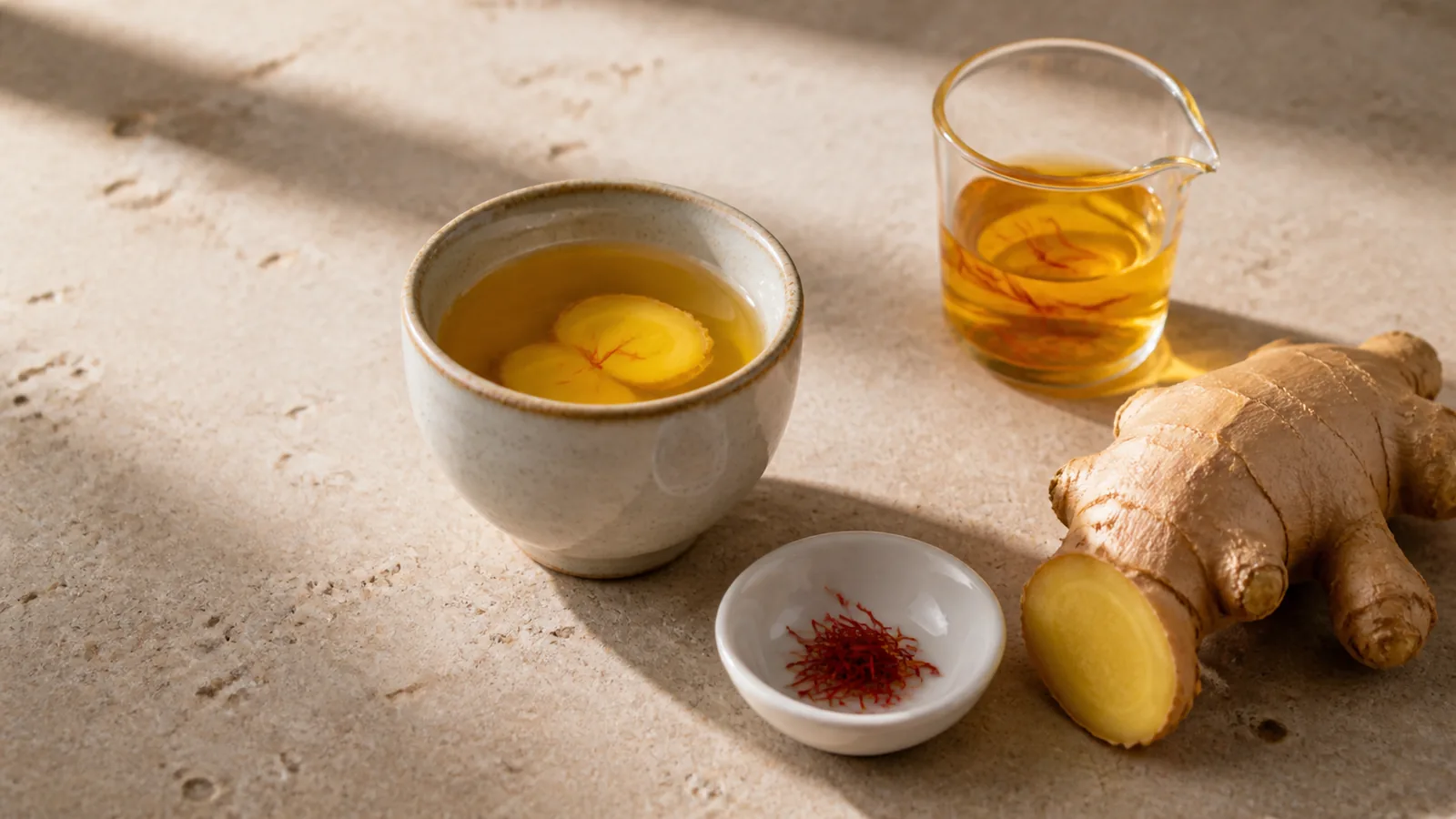
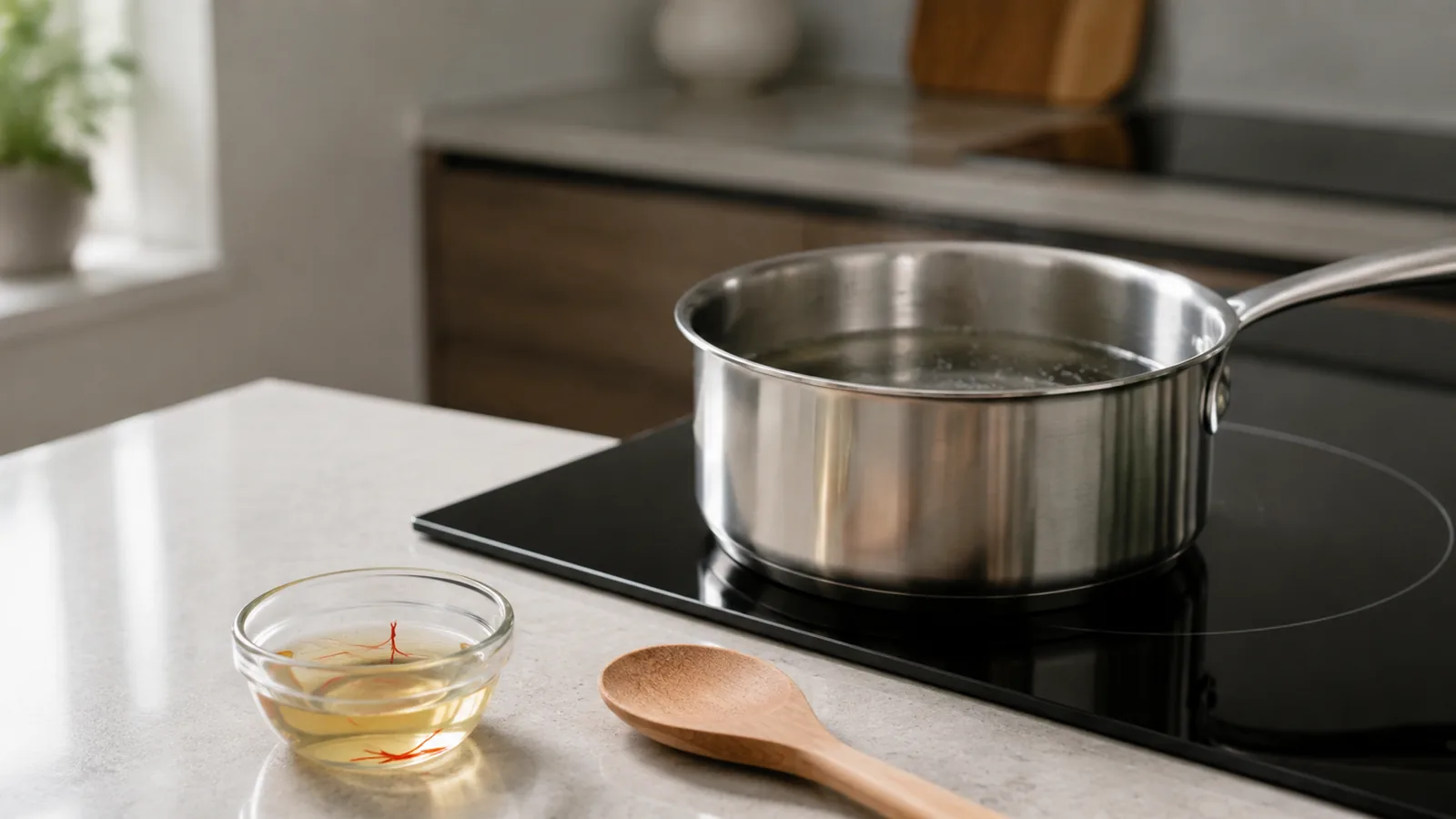
Place the crushed saffron in a small cup and add two to four tablespoons of warm water, stock or milk. Cover the cup and leave it for 10 to 15 minutes. Use the coloured liquid and the threads together.
The liquid should be warm enough to encourage extraction, not necessarily boiling. A covered rest allows colour and aroma to move into the liquid while making the final dose easy to distribute.
Choose Water, Stock or Milk
- Water: neutral and easy to measure for rice, baking and drinks.
- Stock: convenient for risotto, soup, paella and savoury sauce.
- Milk: useful when dairy already belongs in custard, pudding, ice cream or a drink.
The correct choice is the liquid that fits the recipe. Do not add unmeasured extra liquid to a precise rice, dough or custard formula; count the infusion within the total.
5. Use Saffron-Infused Liquid at the Right Time
For absorption-method rice, mix the infusion into the measured cooking liquid. For paella, add it with the stock before the rice settles into its uncovered simmer. For drained rice or biryani, reserve it for layering or the covered finishing stage rather than pouring it into water that will be discarded.
In soup, stew or braise, add most after the initial frying stage and while enough liquid remains to carry it. For a long cook, reserve a smaller portion for the final 10 to 15 minutes.
In milk drinks and chilled desserts, stir the infusion into the warm base before cooling. In bread or cake, allow it to reach the temperature required by the recipe before combining it with dough or batter.
6. Distribute Without Damaging the Dish
Even distribution does not always require vigorous stirring. Mix the infusion through stock before it reaches delicate rice, drizzle it in several narrow streaks across biryani layers, or fold it into a custard base before the mixture sets.
The method should protect the food’s texture. Broken long-grain rice or overmixed batter is not a worthwhile price for perfectly uniform colour.
How to Use Saffron in Common Dishes
Rice and Pilaf
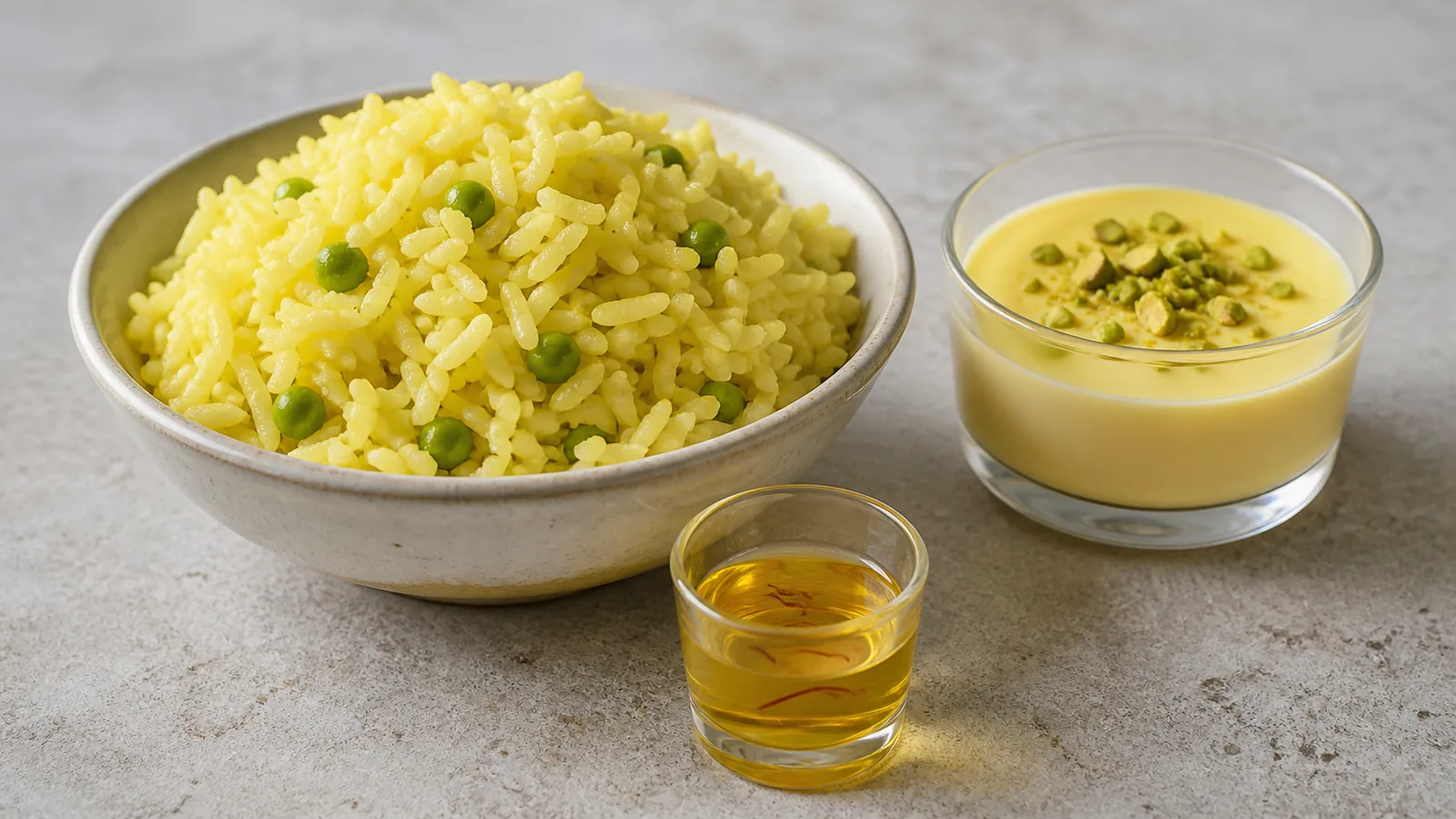
Use 0.05–0.1 gram for four servings and bloom it in water or stock. Add it to all the cooking liquid for even gold, or colour only a portion of cooked rice for a white-and-gold presentation.
Risotto
Bloom saffron in stock and add it during the middle or later stock additions. The rice should still be loose enough to distribute it. Saffron supplies colour and aroma; starch and stirring create the creamy texture.
Soup, Stew and Sauce
Add the infusion after the broth or sauce is present, not to smoking-hot oil. A split addition works well in a long braise. Taste before increasing the dose, especially when tomato, chilli or smoke competes with the spice.
Milk and Desserts
Steep saffron in a small portion of warm milk, then combine it with the rest of the base. For custard, add it before setting; for ice cream, before chilling and churning. Scatter dry threads only as a restrained visual finish, not as the main seasoning.
Bread and Cake
Prepare the infusion first and include it within the recipe liquid. Let hot milk cool before it touches yeast, and avoid changing a batter’s temperature or hydration simply to accommodate saffron.
Should You Toast Saffron?
Dry heat is not required. Gentle warming may make brittle threads easier to crush, but direct heat can burn a small dose quickly. Blooming in warm liquid is more forgiving and easier to repeat.
Do not fry saffron threads in smoking-hot oil. If a recipe uses fat, add the prepared infusion after the intense searing or frying stage.
Common Mistakes
- Using too much: harshness replaces the delicate aroma.
- Scattering dry threads over finished food: they release unevenly and create concentrated bites.
- Boiling the whole dose for hours: colour may remain while aroma fades.
- Adding infusion to liquid that will be drained: much of the saffron leaves with it.
- Judging only by colour: a brighter dish is not proof of better saffron flavour.
- Combining too many strong spices: saffron becomes expensive colouring instead of a recognisable ingredient.
How to Adjust After Tasting
If the saffron is too faint, prepare a second small infusion rather than adding dry threads. Give it time to integrate. If the dish is too strong, dilute it with more unsaffroned rice, stock, milk or sauce, then rebalance salt and acidity.
Make a note of the weight, liquid and timing that worked. Saffron strength varies, and a repeatable record is more useful than chasing a universal thread count.
The Reliable Method
Measure, crush, bloom, then add according to the dish. Use enough moisture for distribution, avoid prolonged aggressive heat, and adjust from a modest starting dose. That is the correct way to use saffron without wasting it or overwhelming the food.
Our guide to how much saffron to use provides dish-by-dish ranges. See the best way to brew saffron for infusion detail and when to add saffron during cooking for timing. Current thread grades are listed in the saffron shop.