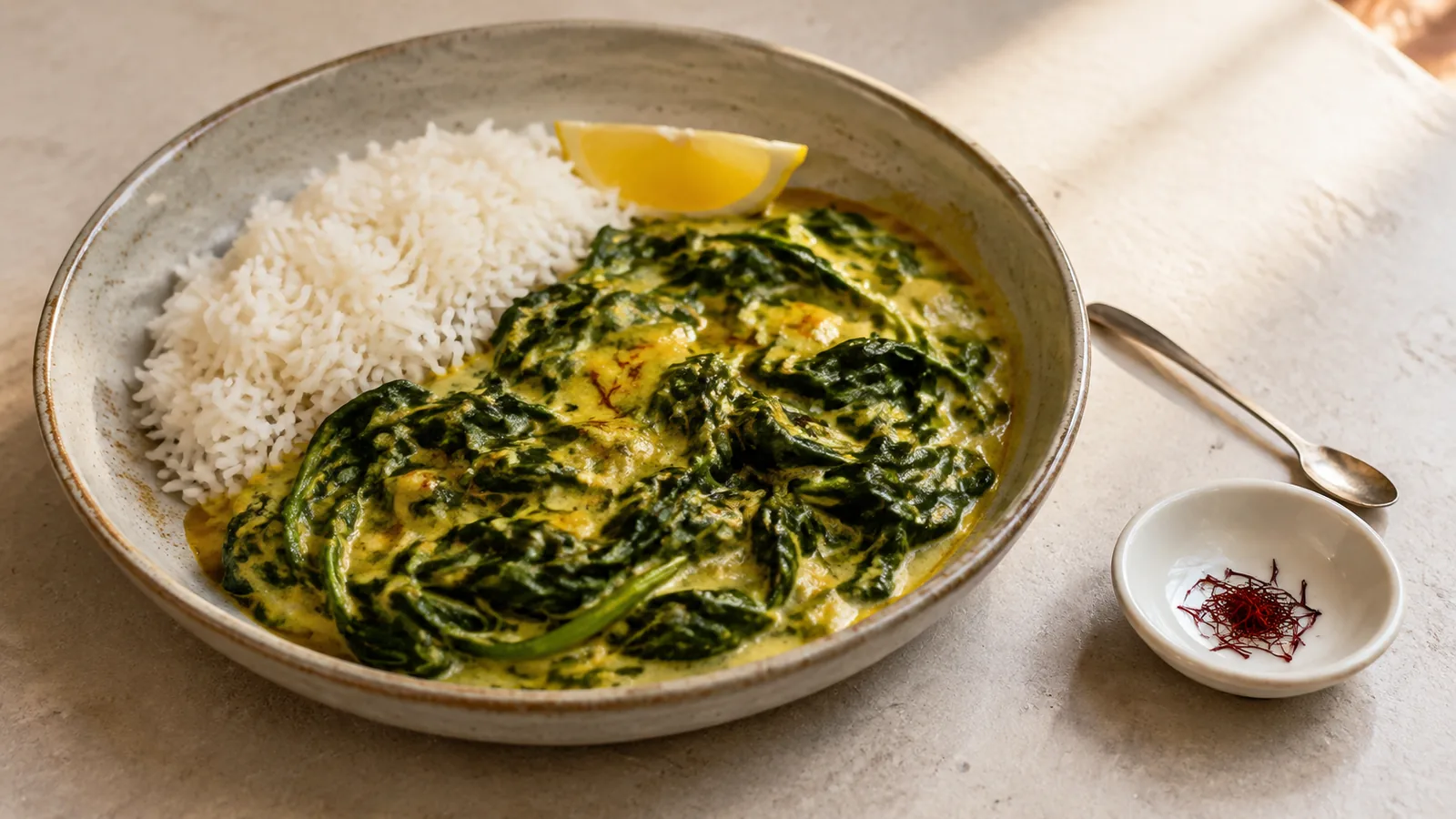
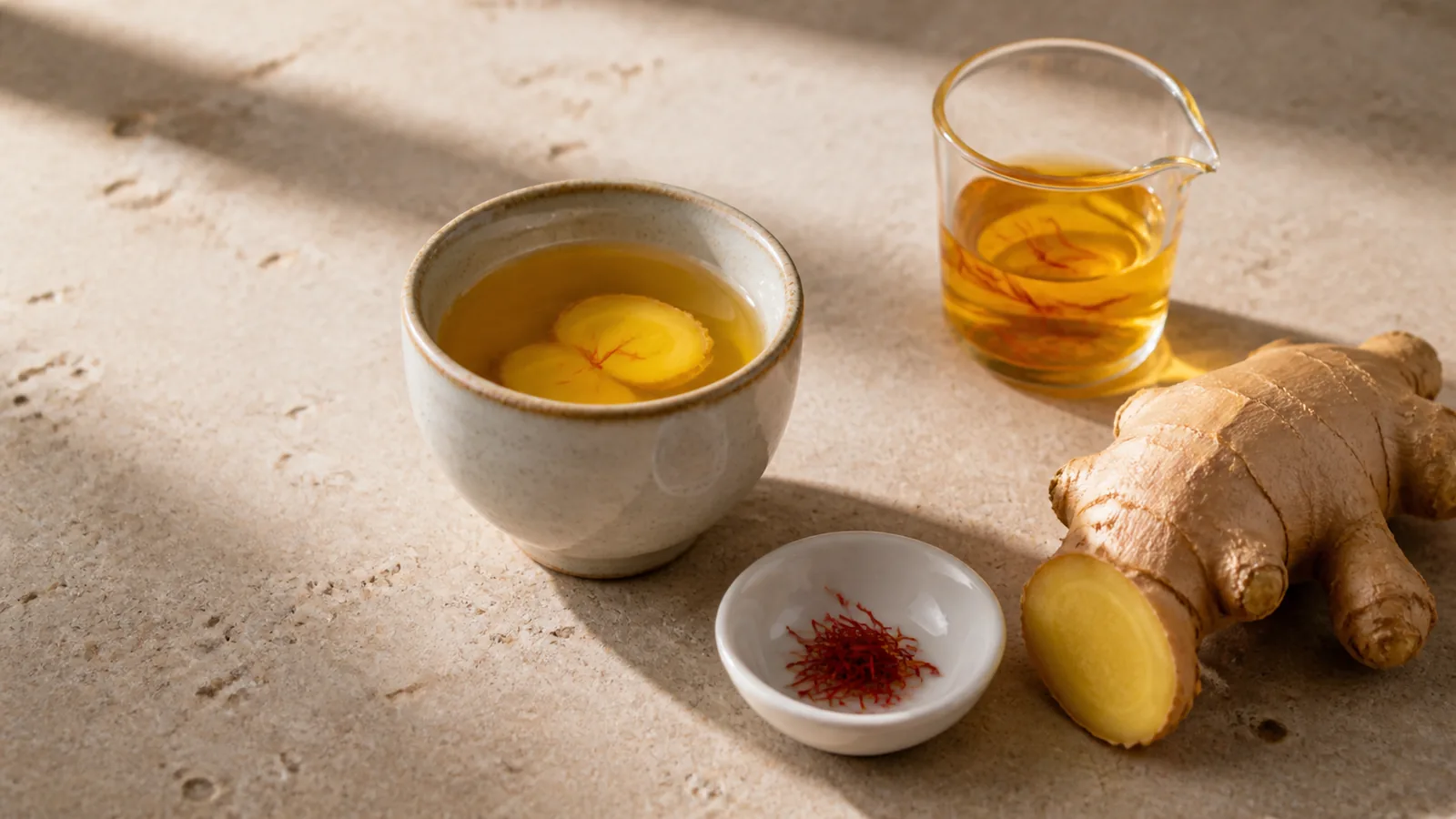
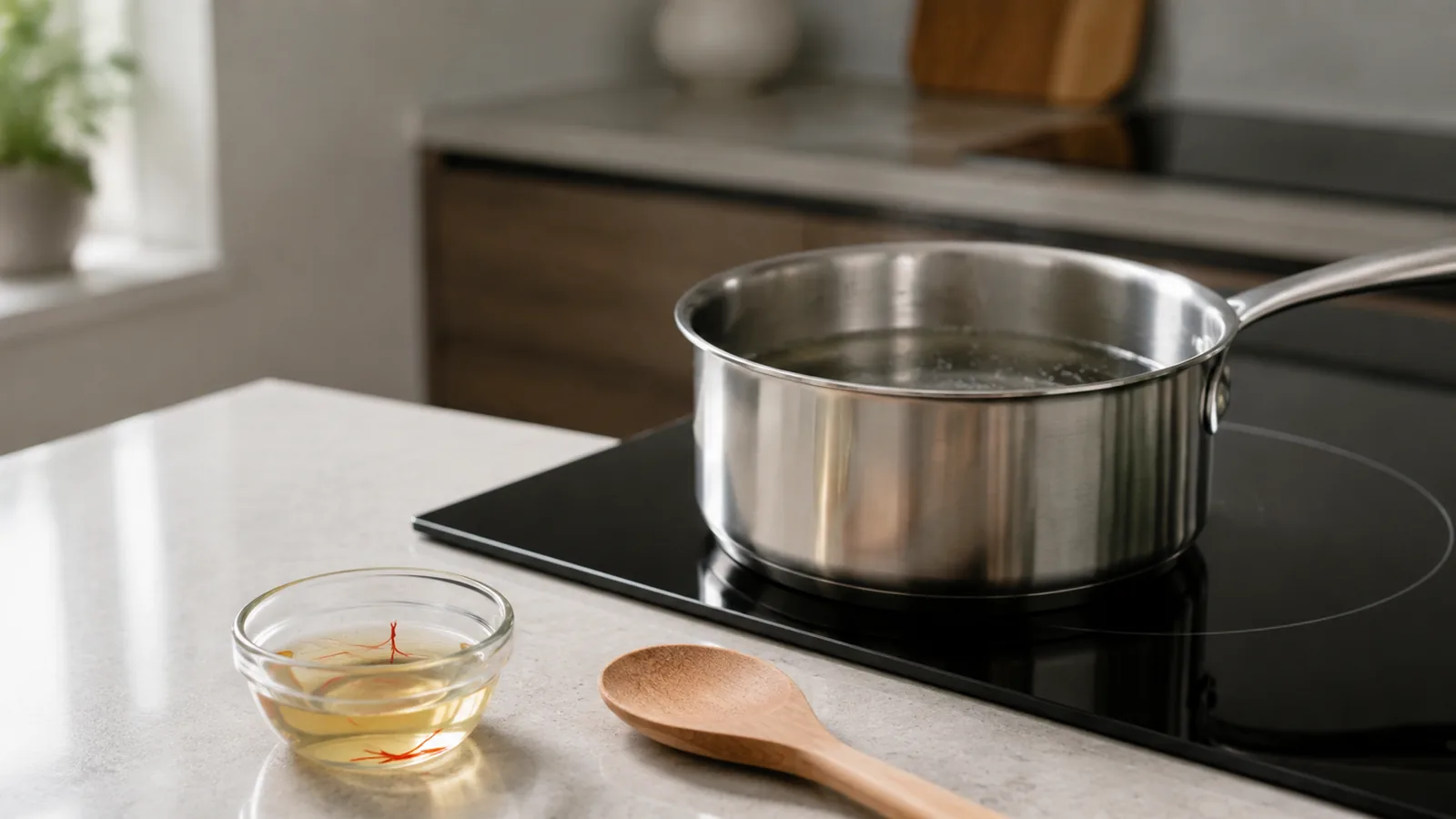
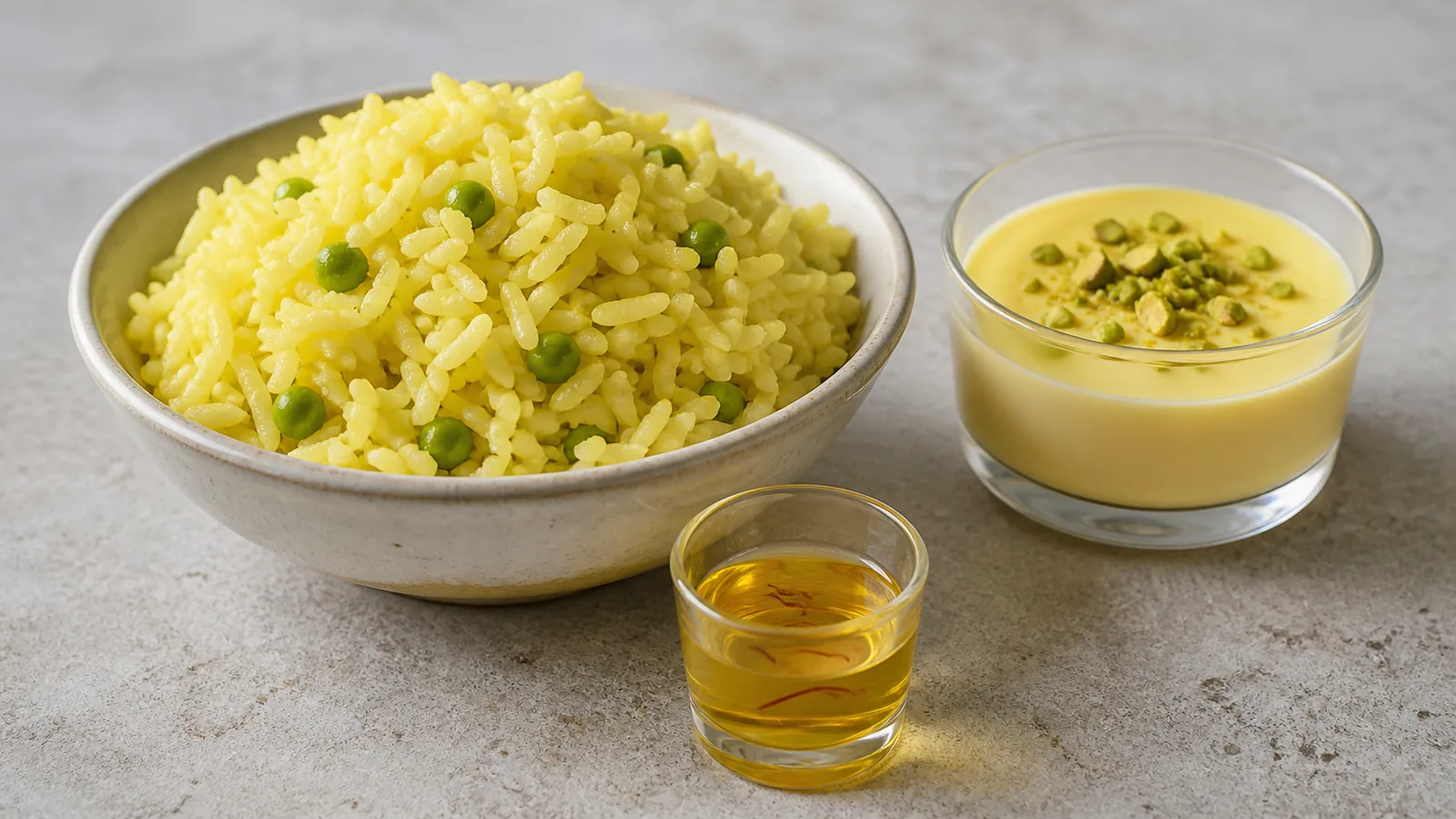
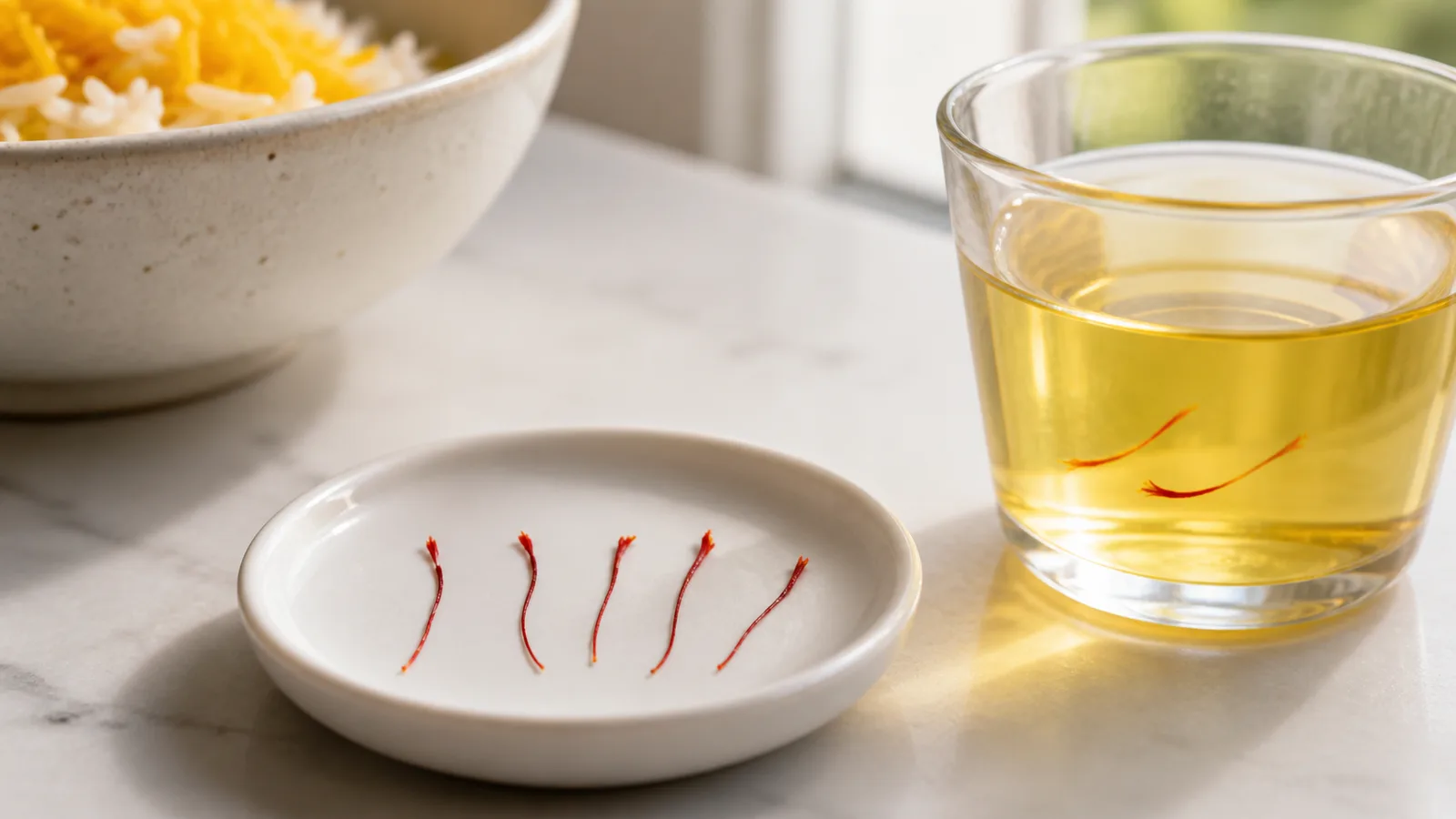
The amount of saffron to use in a dish is usually 0.05–0.1 gram for four servings. Start near the lower end for a delicate milk dessert or light sauce and near the upper end for rice, risotto or a robust stew. Thread counts are only estimates because threads vary in size.
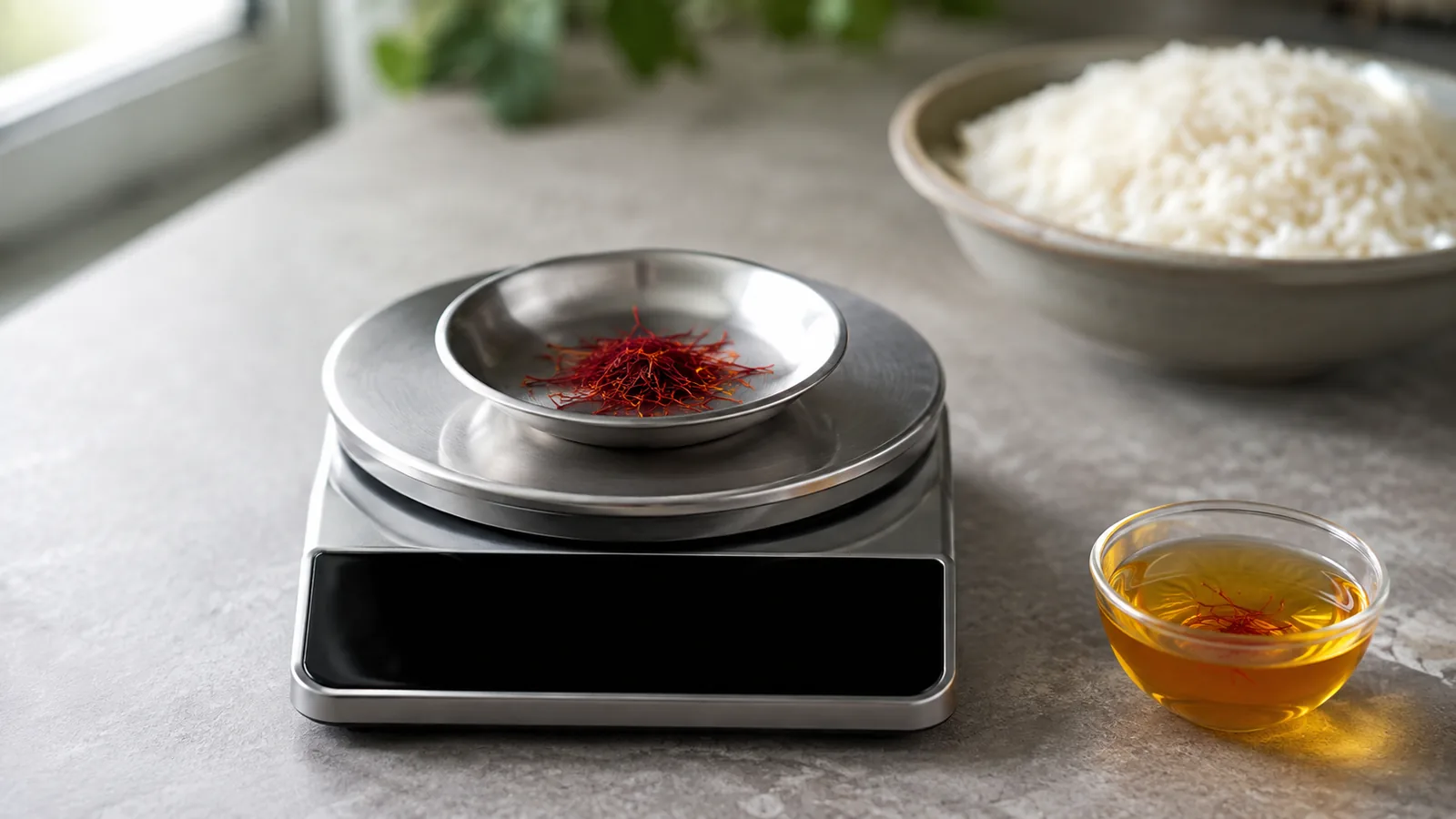
How Much Saffron to Use
For everyday cooking, think in fractions of a gram rather than spoonfuls. Saffron is light, and a small measured amount can season an entire pan. A practical starting range is:
- Two servings: about 0.025–0.05 gram
- Four servings: about 0.05–0.1 gram
- Six to eight servings: about 0.1–0.15 gram
These are starting points, not fixed recipe laws. Grade, freshness, storage, other seasonings and the amount of liquid all influence how strongly the spice appears. Use less when saffron should be a background note and more cautiously when it is meant to define the dish.
How Much Is a Pinch of Saffron?
A pinch is the amount of threads you can pick up comfortably between thumb and forefinger, often around 15 to 30 threads. It is not a standard measurement. Long, thick stigmas weigh more than short fragments, and two cooks can take very different pinches.
If consistency matters, weigh the saffron with a scale that reads to 0.01 gram. For an occasional home recipe, a modest pinch is a sensible starting point; make a note of the result so you can adjust the next batch.
Amount for Rice and Risotto
For two cups of uncooked rice, use about 0.05–0.1 gram. Bloom it in warm water or stock, then add the infusion to the cooking liquid or use it to create deliberate golden sections in the finished rice.
For risotto serving four, the same 0.05–0.1-gram range is normally enough. Risotto alla Milanese puts saffron near the centre of the flavour, so you may prefer the upper part of the range. Add the prepared infusion while the rice is still fluid enough to distribute it.
More threads will not make the rice creamier or better cooked. The rice variety, starch release, stock additions and heat create the texture; saffron contributes aroma, flavour and colour.
Amount for Soup, Stew and Braised Dishes
For a pot serving six to eight, begin with 0.1 gram. A clear fish soup or light chicken broth may need less because the aroma has little competition. A tomato-rich stew or strongly spiced braise can support more, but increasing saffron is not always the best way to compete with chilli, smoke or heavy spice.
Bloom the threads in warm broth and add most of the infusion during the middle-to-late cooking stage. In a long braise, reserve a little for the final 10 to 15 minutes if you want a fresher aroma at serving.
Amount for Milk, Custard and Desserts
For four portions of milk pudding, custard, ice cream or a milk drink, 0.03–0.05 gram often gives a clear but gentle presence. Dairy and sweetness can make saffron’s floral side easier to notice, so a large dose is rarely necessary.
Steep the threads in a few spoonfuls of warm milk for 10 to 15 minutes, then mix the infusion through the full batch. Cardamom, rosewater, vanilla and nuts can all accompany saffron, but several strong additions at once may hide it.
Amount for Baking
For a loaf, cake or batch of buns serving eight to twelve, begin with 0.05–0.1 gram. Bloom it in part of the recipe’s milk or water, allow the liquid to cool as needed, and count that liquid within the recipe total.
Dough and batter distribute an infusion more evenly than dry threads. If the bake contains strong citrus, spice or dark chocolate, decide whether saffron will remain recognisable before increasing the amount simply for colour.
Whole Threads Versus Ground Saffron
Use the same weight whether the saffron is whole or ground. A teaspoon comparison is unreliable because whole threads contain much more air than powder. Ground saffron also compacts differently from one container to another.
Whole threads are easier to inspect for quality and easier to dose gradually. If you grind them yourself, crush only the measured portion. Avoid preparing a large jar of powder that will lose aroma more quickly through greater surface exposure.
How to Get More from a Small Amount
- Measure the saffron before you begin cooking.
- Crush it lightly to increase contact with the liquid.
- Cover with a few tablespoons of warm water, stock or milk.
- Leave for 10 to 15 minutes.
- Add both liquid and threads at a point that gives them time to distribute without hours of hard boiling.
Good blooming makes a modest dose work more evenly. It does not multiply the saffron or guarantee a particular colour, but it prevents much of the waste caused by dry clumps and poor distribution.
Signs You Have Used Too Much
A well-balanced dish smells clearly of saffron without becoming harsh. An excessive amount can taste bitter, metallic or medicinal and may dominate the stock, dairy or rice rather than supporting it.
If that happens, dilute the dish with more of its unsaffroned base: add plain rice, stock, milk or sauce as appropriate. Correct salt and acidity after dilution. Adding sugar blindly may cover one edge while making the overall dish less balanced.
Why the Right Amount Changes
Fresh, well-stored saffron can be more aromatic than old threads. A delicate custard reveals a small dose more readily than a smoky stew. The size and shape of the pan affect distribution, while the cooking time changes how much aroma remains at serving.
Colour is also an imperfect measure of strength. Some saffron releases deep colour without an equally strong aroma, and a bright yellow dish may contain another colouring ingredient. Taste and smell the infusion instead of dosing by appearance alone.
A Reliable Starting Rule
Use 0.05–0.1 gram for four servings, bloom it properly, and adjust only after tasting the complete dish. For a subtle dessert, start lower. For saffron rice or risotto, the upper end may be appropriate. Record what worked with your saffron so the next result is repeatable.
See the best way to brew saffron for the infusion method, and use our guide to when saffron should be added to match timing to the dish. Dishes where saffron is central or optional provide more recipe context. Current thread grades are listed in the saffron shop.