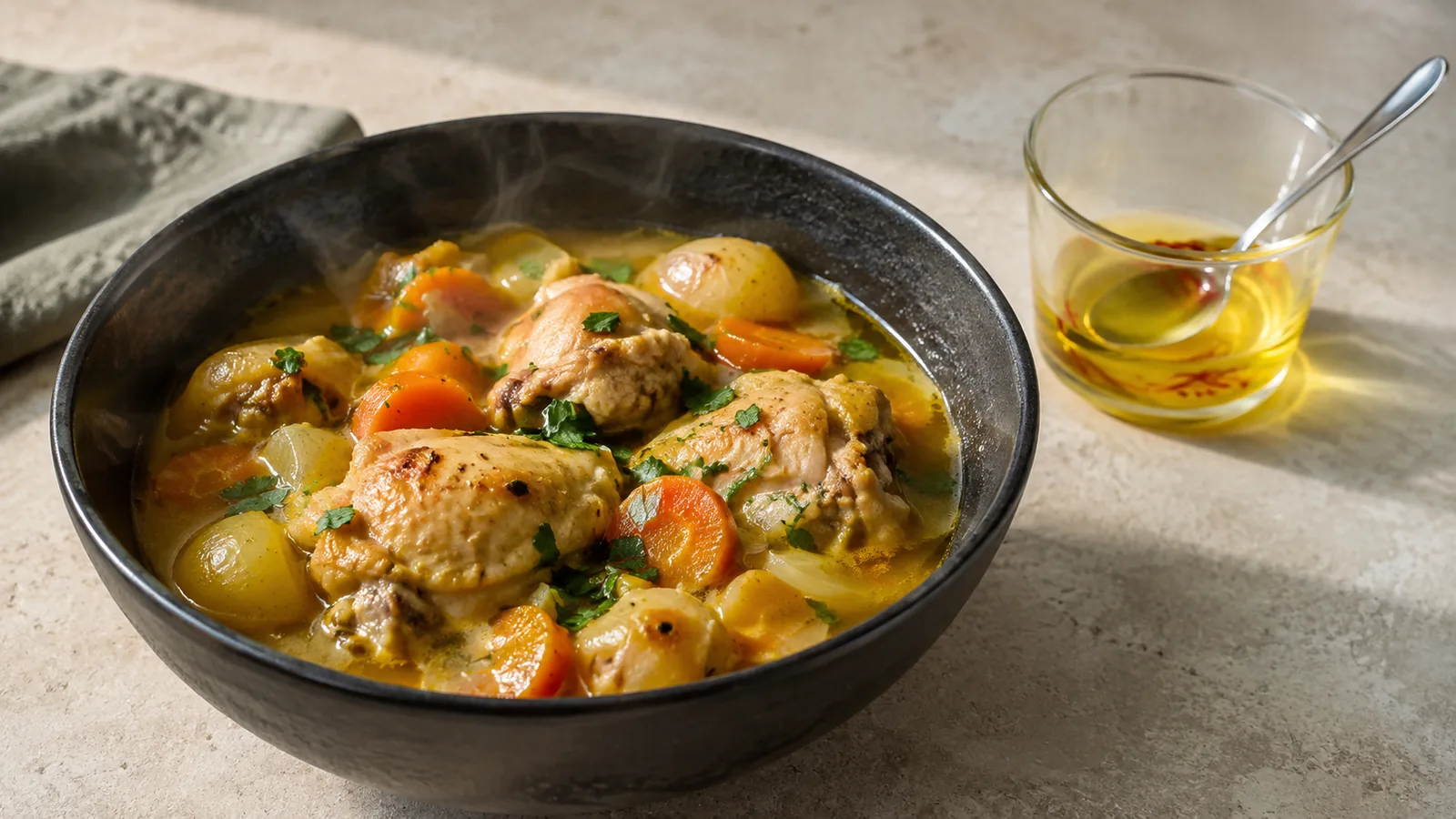
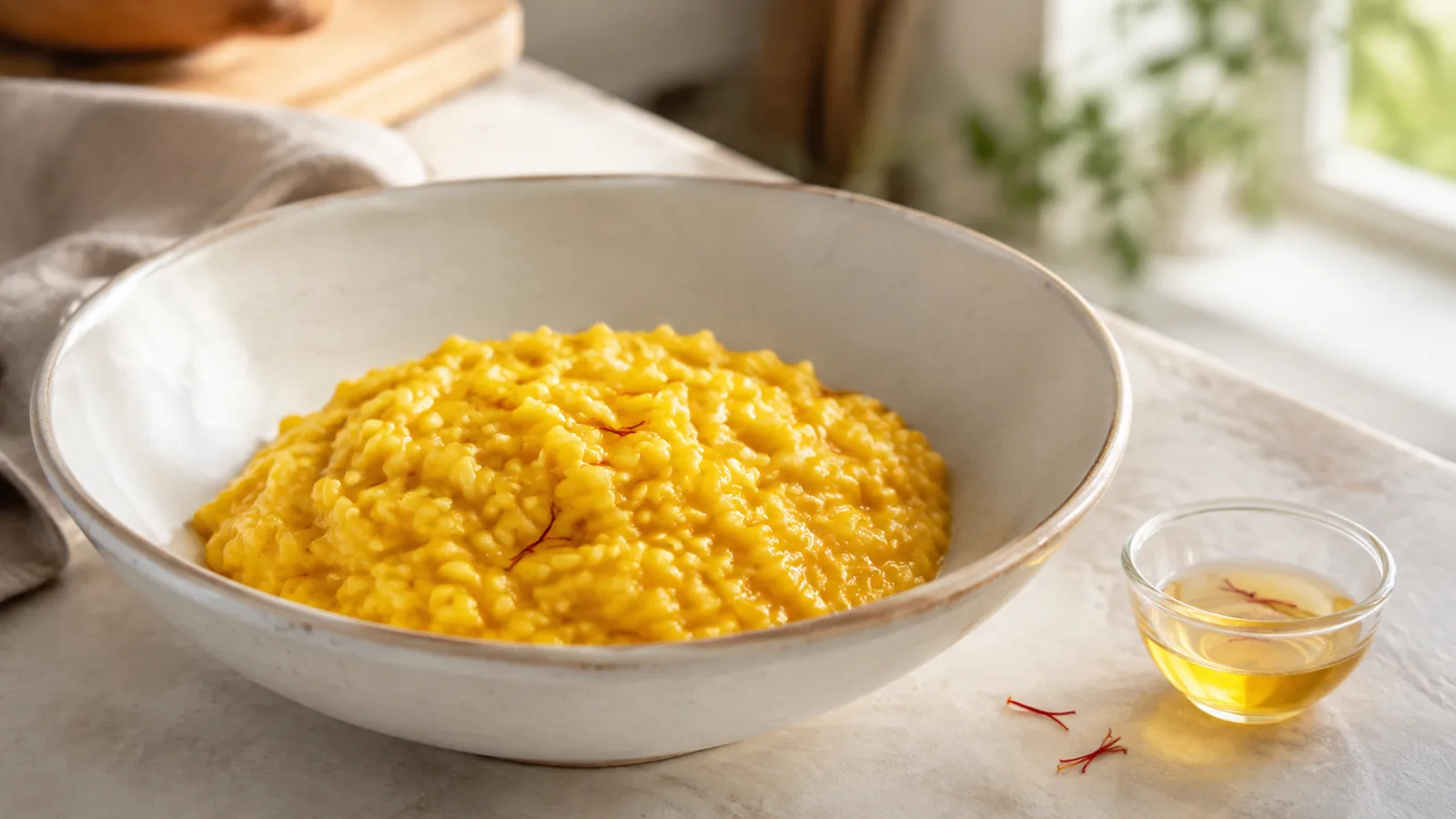
The best time to add saffron to paella is with the measured cooking liquid, before the rice settles into its uncovered simmer. Bloom the threads in a little warm stock or water first, then mix that infusion through the remaining stock so the colour and aroma reach the whole pan.
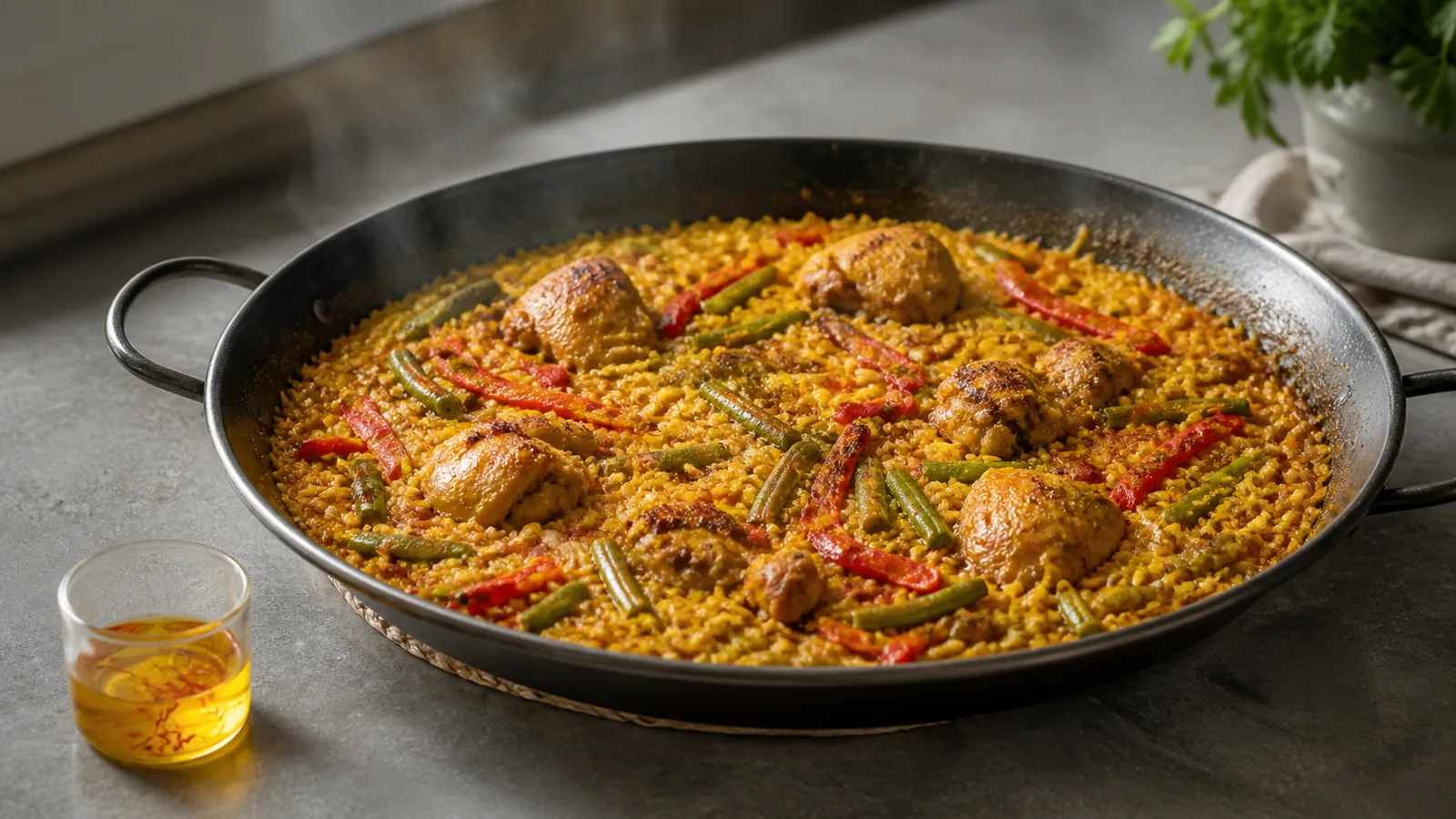
When to Add Saffron to Paella
Add saffron after the base ingredients have developed their flavour and before the rice absorbs most of its liquid. Depending on the recipe, that may mean adding saffron-infused stock to briefly toasted rice or adding the infusion to the pan just before the rice. Both sequences can work.
The important point is that saffron enters with enough liquid and cooking time to spread. It should not be scattered dry over a nearly finished paella or exposed to smoking-hot oil at the start.
How to Use Saffron in Paella
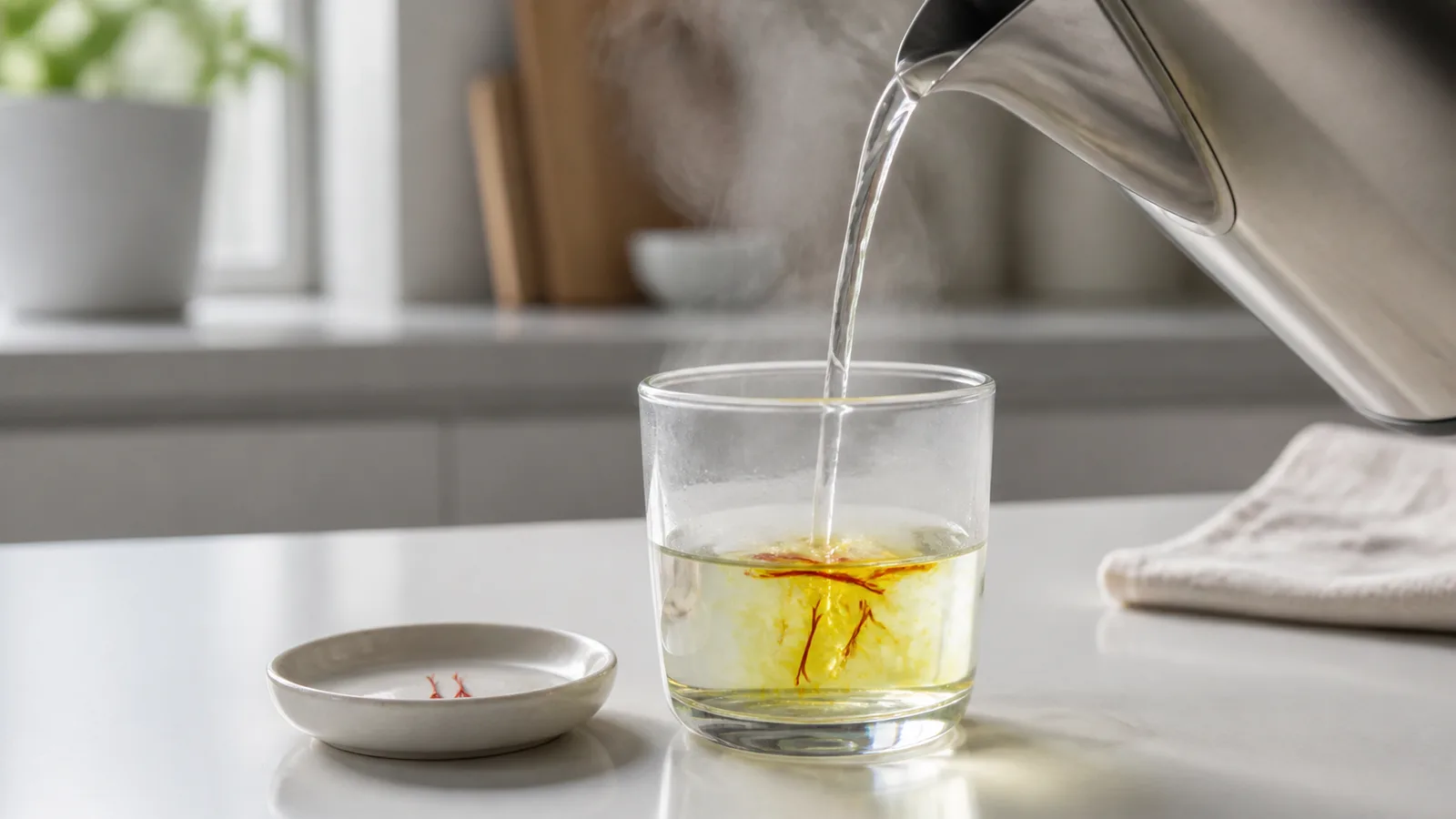
- Lightly crush a modest pinch of saffron threads.
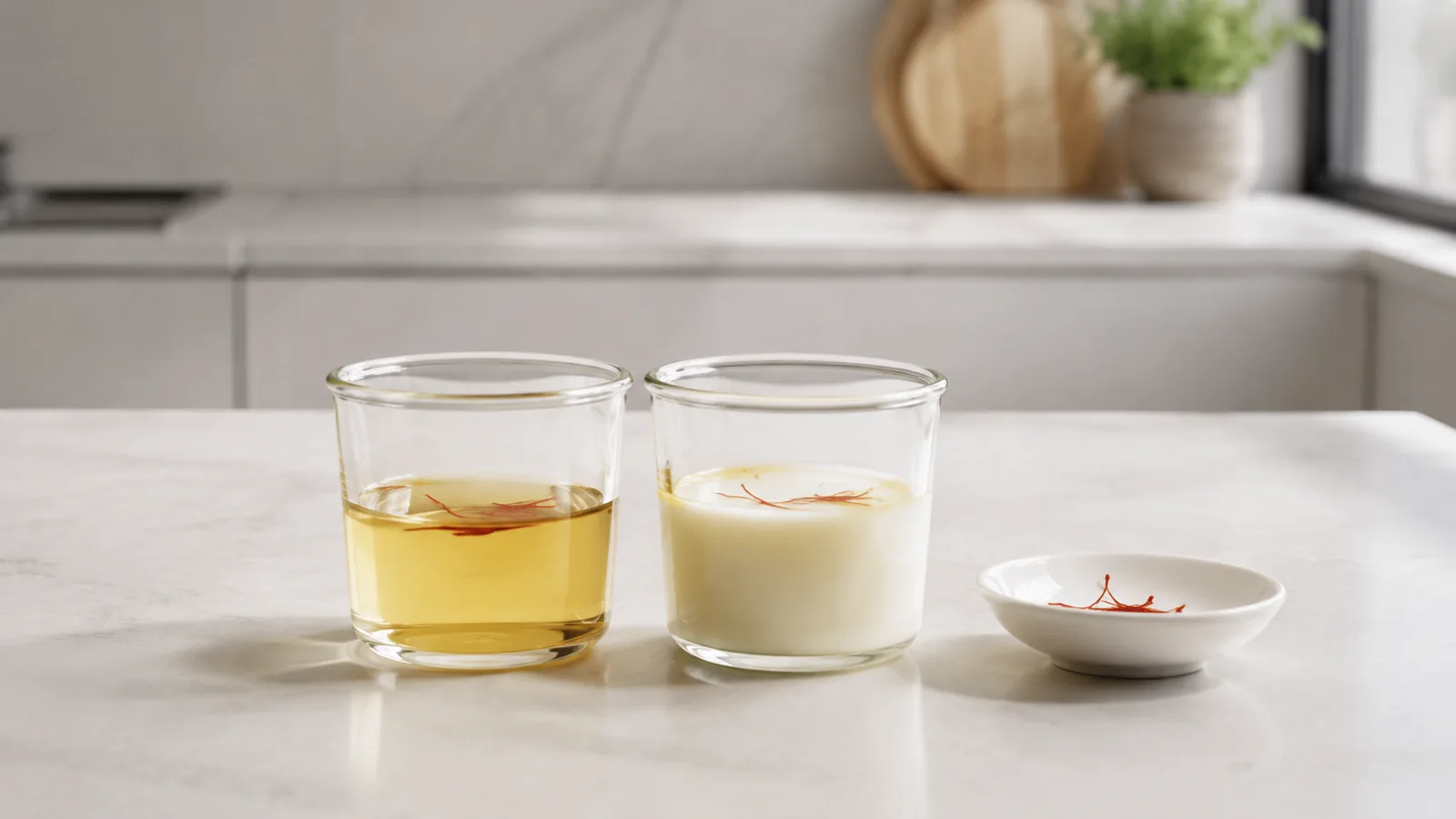
- Cover them with a few tablespoons of warm stock or water.
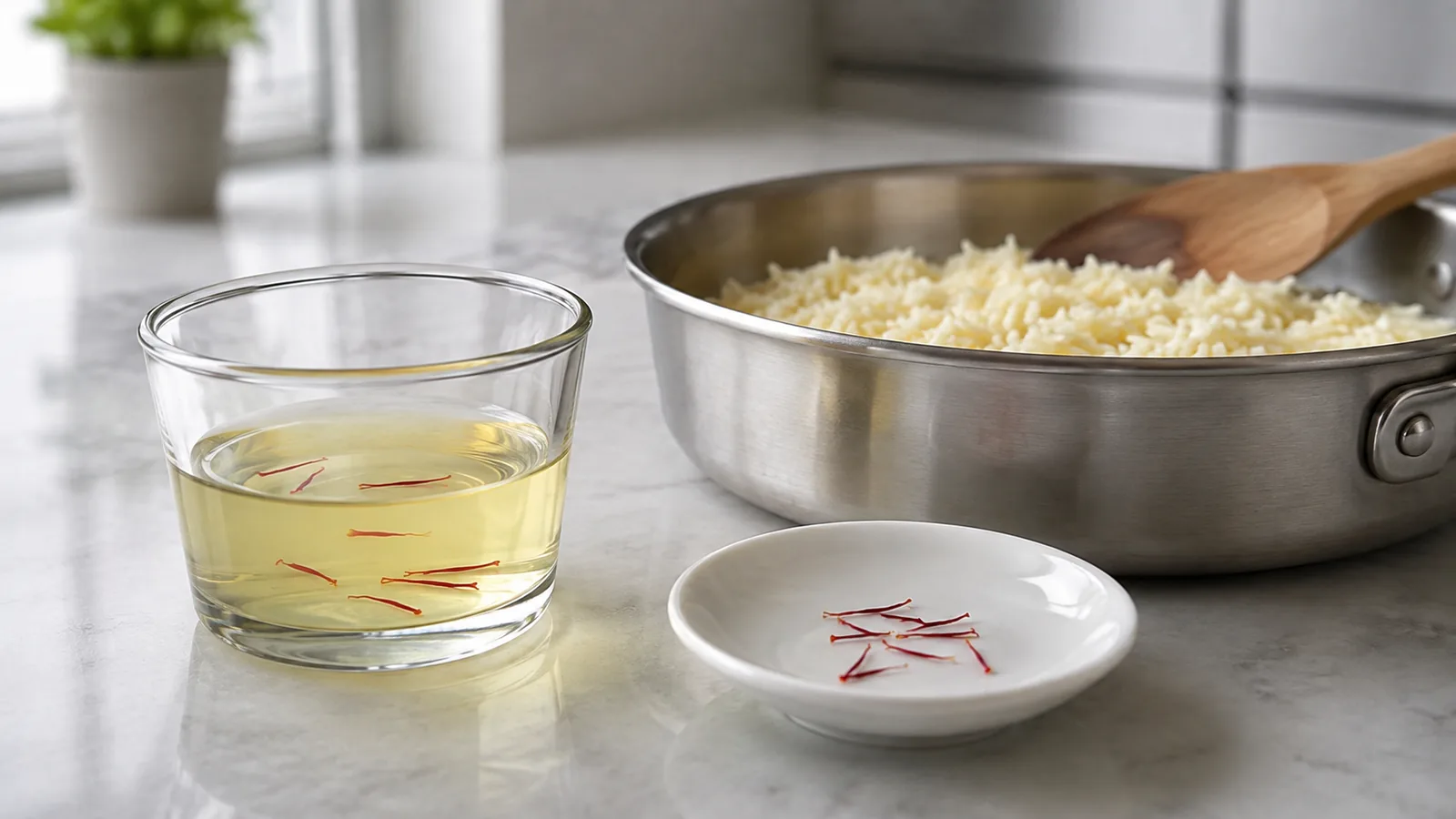
- Leave the infusion for 10 to 15 minutes while you prepare the pan.
- Stir the infusion, including the threads, into the measured cooking stock.
- Add that liquid at the stage directed by your paella recipe, then distribute the rice evenly.
- Once the rice has settled, avoid unnecessary stirring.
Blooming is especially useful in a wide pan because a small quantity of spice has to reach many grains. Mixing the concentrate into the stock provides more even distribution than trying to drizzle it over the surface.
How Much Saffron for Paella?
For a paella serving four to six people, begin with a good pinch of threads—roughly 20 to 30, depending on their size and strength. Saffron varies by grade, age and storage, so an exact thread count is less useful than tasting and learning from one batch.
Use enough for a clear aroma and warm golden colour, not so much that the rice becomes bitter or medicinal. Strong stock, smoked paprika, rosemary or seafood can change how much saffron you perceive; balance the complete pan rather than chasing colour alone.
Add It with the Stock, Not the Sofrito
Sofrito is cooked in oil and may include tomato, garlic, pepper or other aromatics according to the paella style. It is not the ideal place for wet saffron infusion. The pan is relatively hot at that stage, and a few spoonfuls of liquid can evaporate before they have a chance to season the rice.
Finish the sofrito or other base ingredients first. Add the saffron with the main stock, where moisture and time can carry it through the rice. If your recipe adds rice before stock, let the grains coat briefly, then pour in the infused liquid.
Do Not Treat Paella Like Biryani
Paella and biryani use saffron differently. Biryani commonly receives a streaked saffron infusion during layering before a covered dum. Paella normally cooks in a single shallow layer and is not stirred after the rice is evenly placed.
The saffron therefore belongs in the stock rather than in a finishing drizzle. Its colour should travel through the cooking liquid, while the pan develops its own pattern from the rice, ingredients and heat.
What Happens During Cooking
At first, the liquid moves freely across the pan and distributes the saffron. As the rice absorbs stock, the colour becomes visible in the grains. Keep the heat and timing specified by the recipe; saffron itself does not decide how long the rice needs.
Many paellas begin with a more active simmer and finish more gently as the liquid reduces. This is uncovered cooking, not a separate steaming stage. If the pan needs a final rest, remove it from the heat and leave it undisturbed for several minutes.
Saffron and Socarrat
Socarrat is the toasted rice layer that can form at the bottom of the pan. It develops through heat control near the end, after most liquid has been absorbed. Adding saffron at that point will not create socarrat and risks concentrating the spice in one place.
Use your recipe’s heat cues and listen for the change from simmering to a faint crackle. If you are new to the technique, a properly cooked pan without a burned bottom is a better result than forcing a crust with excessive heat.
Whole Threads, Ground Saffron and Colouring
Whole saffron threads are easy to inspect and bloom. Light crushing increases their contact with liquid without turning them into dust. Ground saffron disperses quickly, but it is easier to overmeasure and harder to judge for purity.
Yellow “paella colouring” or colorante can make rice bright, but it is not the same ingredient and does not provide saffron’s aroma. If a recipe uses both, understand that the colouring handles appearance while the saffron is present for flavour and fragrance.
Common Mistakes
- Adding threads to very hot oil: they may scorch before their flavour reaches the stock.
- Pouring the infusion into one spot: mix it with the stock for even coverage.
- Adding saffron after the rice is cooked: dry threads and concentrated liquid will not integrate well.
- Stirring repeatedly: this disrupts the settled rice and moves the dish toward a creamy risotto texture.
- Using colour as the only guide: a darker pan is not automatically a better-tasting one.
Does Every Paella Need Saffron?
Saffron is characteristic of many paellas, but recipes and regional practices vary. It contributes a distinctive aroma and natural golden tone; it does not determine whether every rice dish in a paella pan is authentic.
If you omit it, make the choice honestly rather than replacing it with an unrelated spice and calling the flavour identical. Good stock, careful rice cooking and balanced ingredients still matter more than prestige.
The Simple Paella Timing Rule
Bloom the saffron while preparing the base, combine it with the measured stock, and add that stock before the rice settles into its main cook. Then leave the grains undisturbed and finish the paella according to the recipe.
The saffron brewing guide explains the infusion step, while how heat affects saffron provides temperature context. See dishes where saffron is central or optional for a broader culinary view. Current thread grades are listed in the saffron shop.