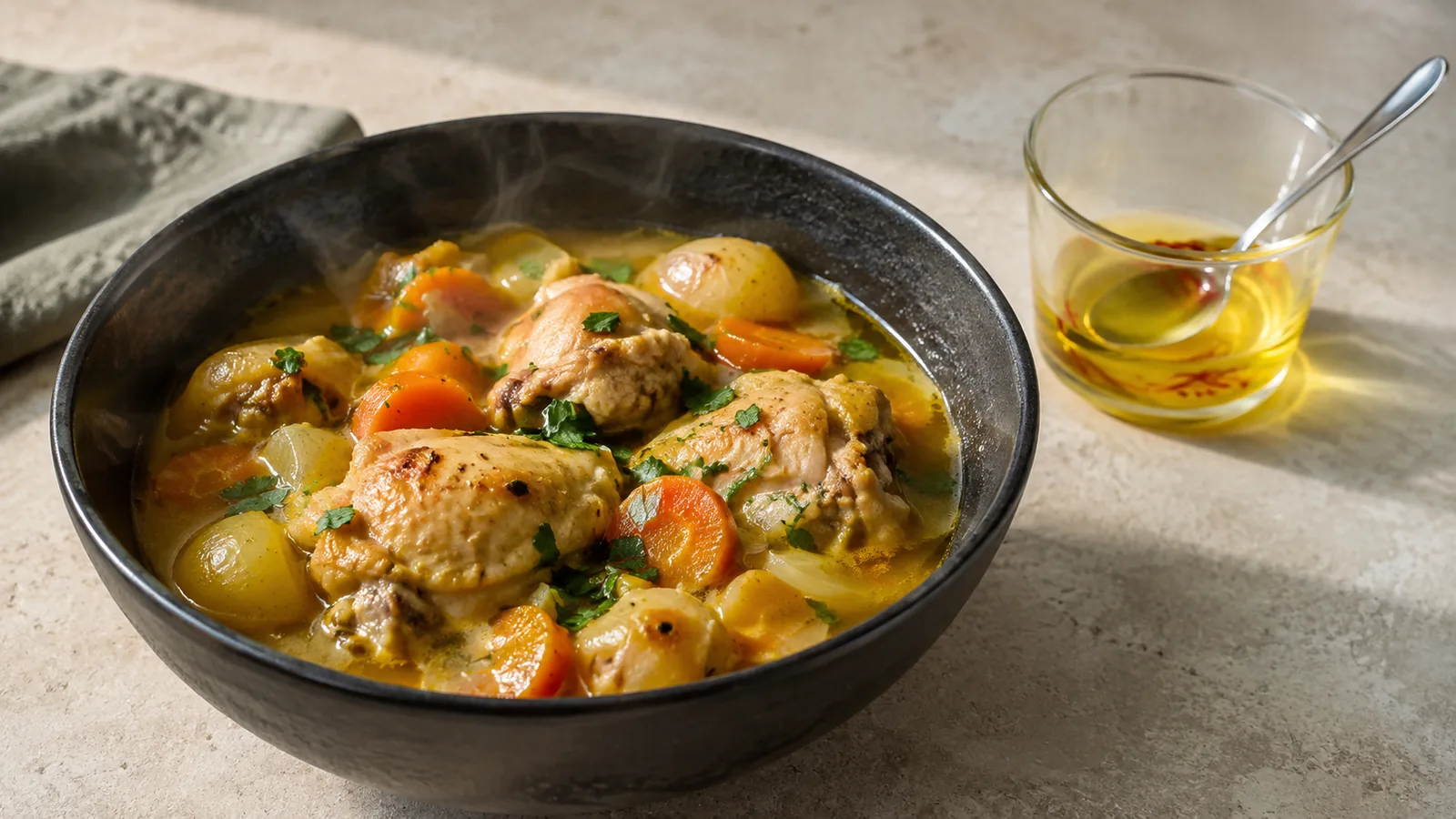
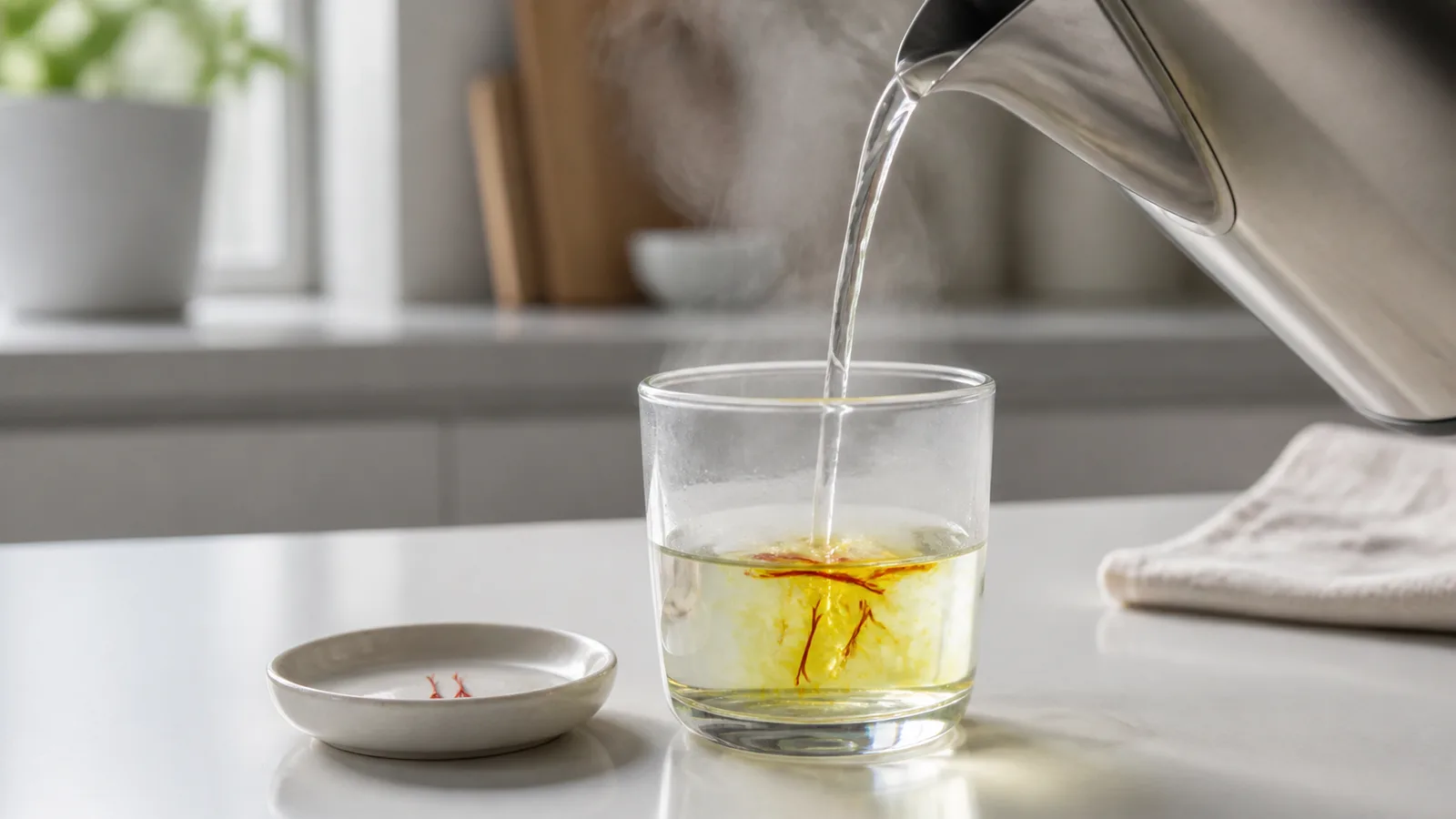
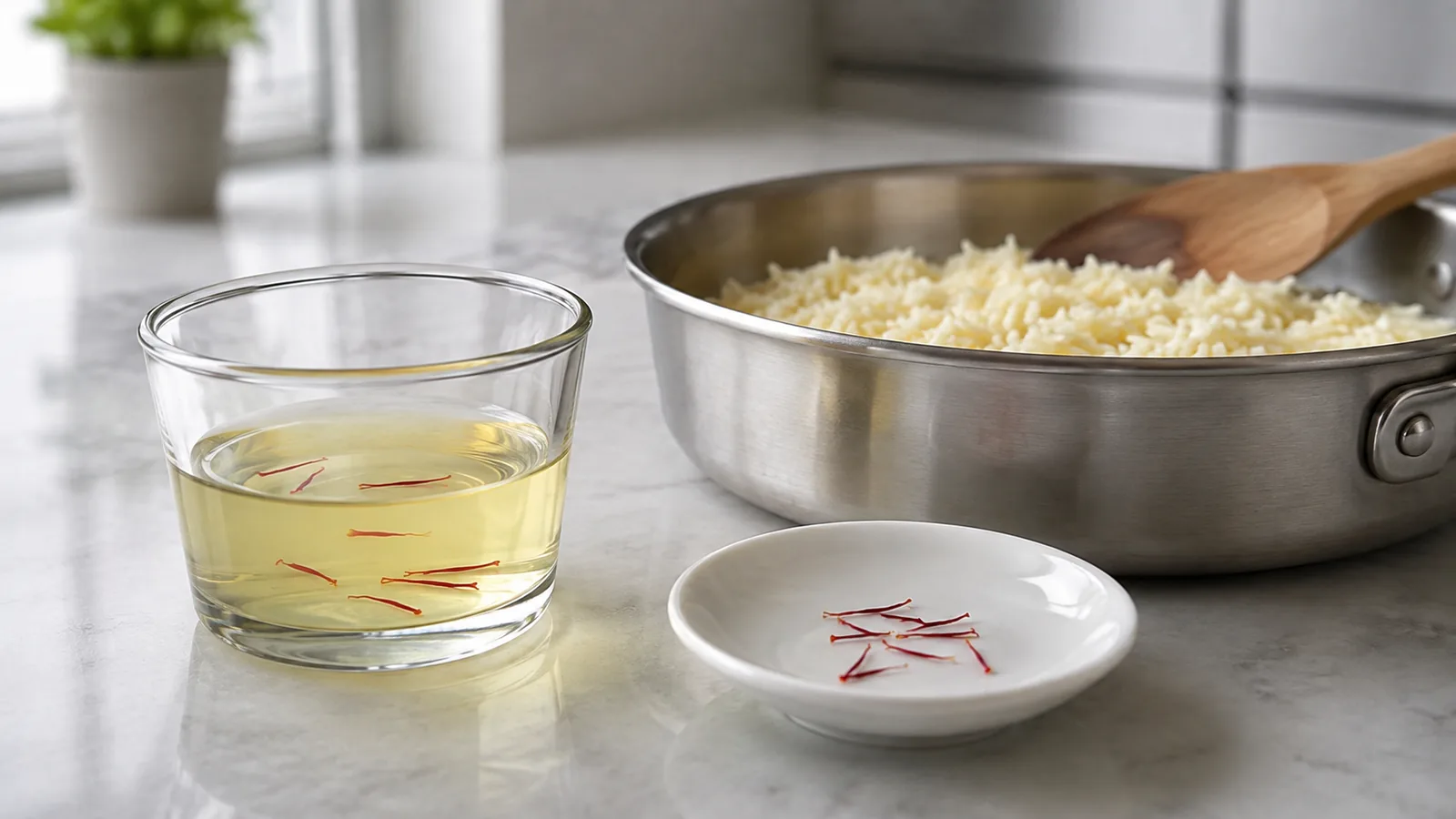
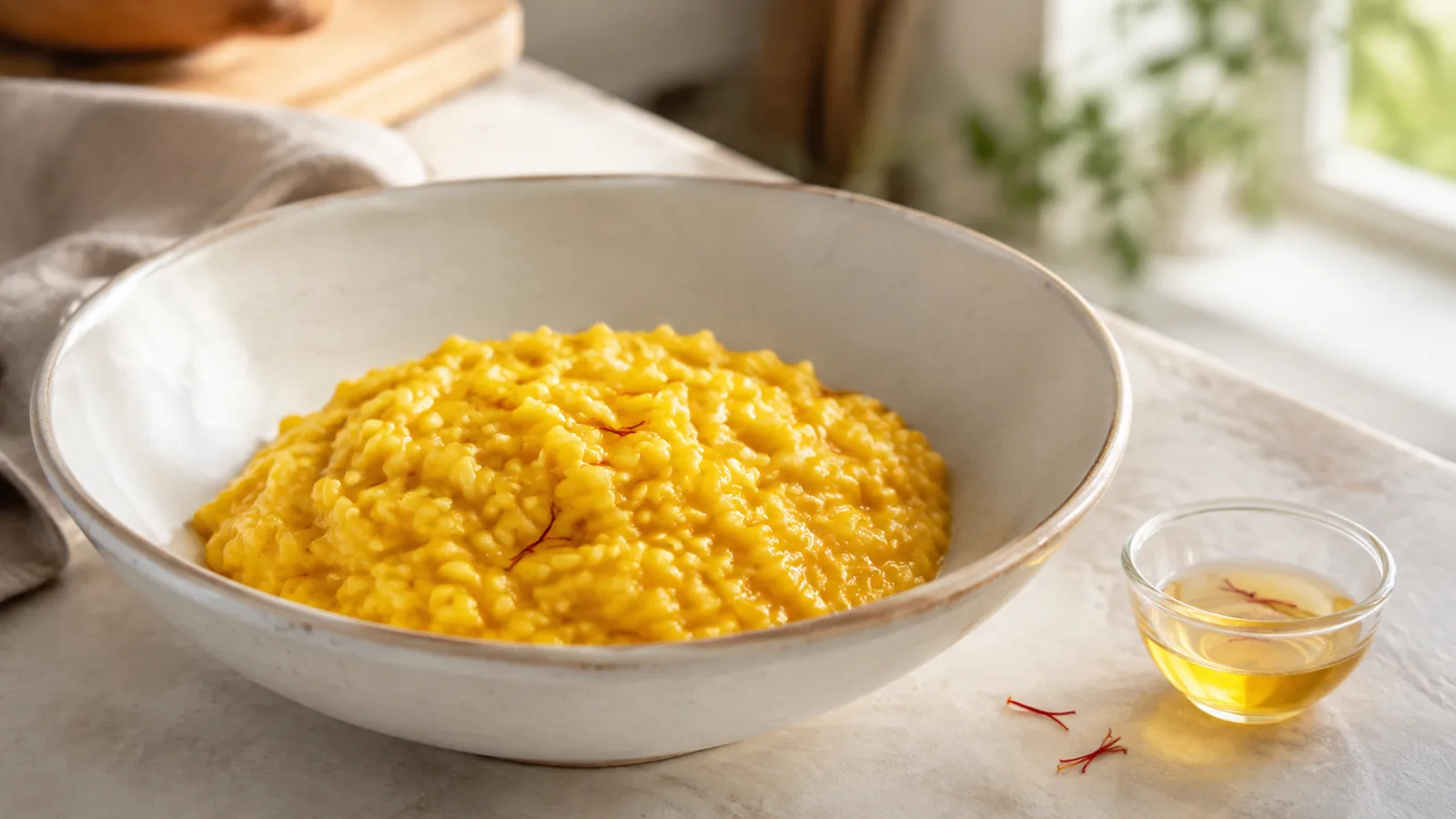
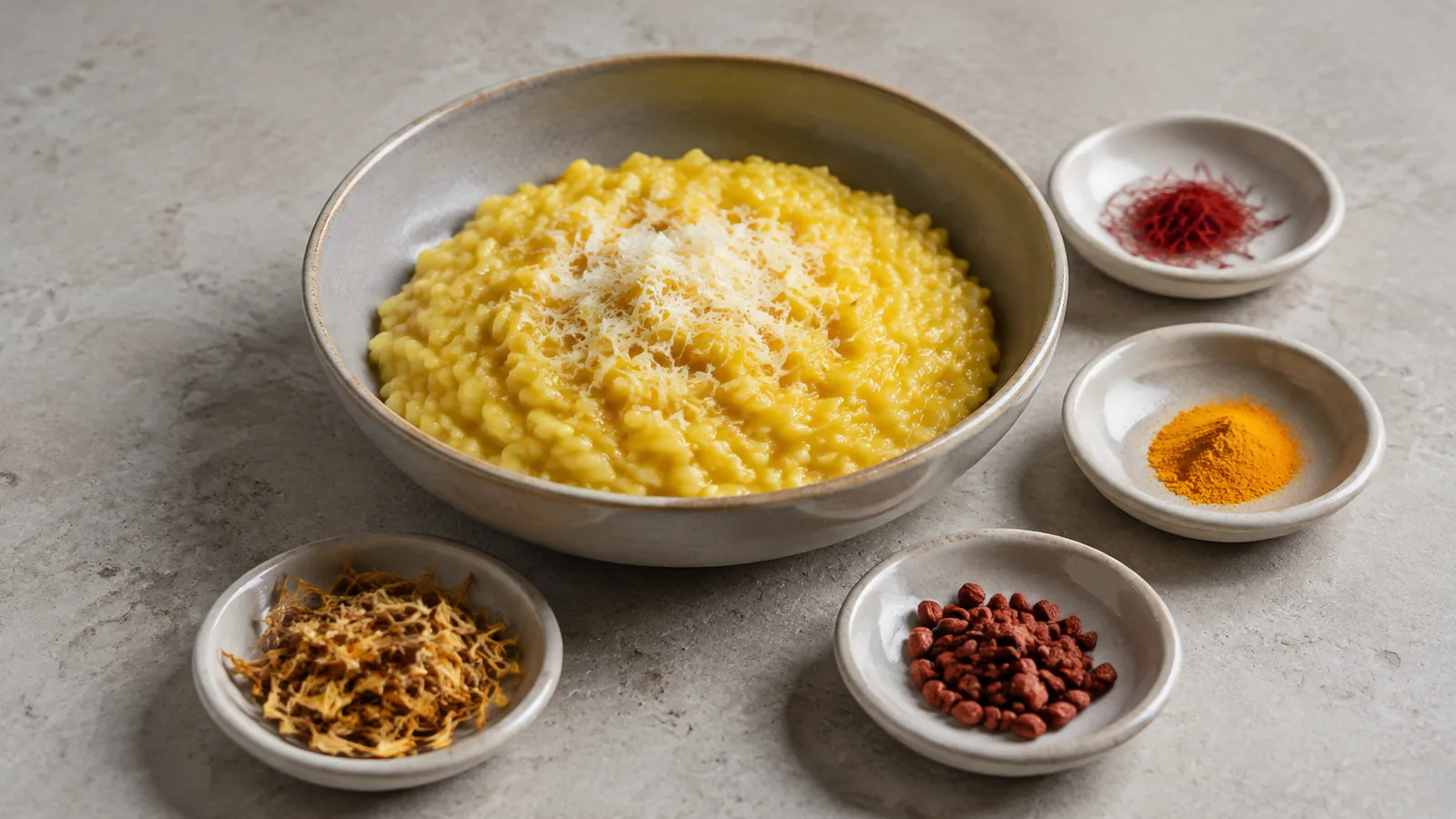
The best saffron substitute for risotto is a very small amount of turmeric when golden colour matters most. It will not reproduce saffron’s aroma. Annatto can also colour the stock, while food-grade calendula petals give a gentler yellow tone; none is a true flavour replacement.
Saffron Alternatives for Risotto: Choose by Purpose
Saffron performs more than one job in risotto. It gives risotto alla Milanese its golden colour, dry floral aroma and faint earthy bitterness. A substitute may cover one of those qualities, but no common spice copies all three.
Before choosing a saffron alternative, decide what the dish needs:
- For colour, use a trace of turmeric or annatto-infused stock.
- For a mild floral impression, use food-grade calendula petals, understanding that the flavour is different.
- For the identity of risotto alla Milanese, wait for saffron or make a different risotto deliberately.
- For a good dinner without saffron, rely on excellent stock, careful rice cooking and a coherent alternative flavour.
Turmeric: The Most Practical Saffron Substitute
Turmeric is the easiest saffron replacement for colour. A small pinch turns pale stock and rice yellow, and it is widely available. Its flavour, however, is earthier and more direct than saffron’s; too much can make a delicate risotto taste dusty or bitter.
For four servings, begin with no more than about one-eighth teaspoon of ground turmeric in the warm stock. Let the colour disperse, then judge it before adding more. The finished rice should look softly golden rather than bright orange.
Add turmeric to the stock instead of sprinkling it over finished rice. This prevents yellow pockets and lets you control the strength across the whole pan. If the recipe includes saffron solely for colour, this is usually the most practical substitution.
Annatto: Useful for Colour, Not Saffron Flavour
Annatto comes from achiote seeds and produces a yellow-to-orange colour. It can work when turmeric’s flavour would be unwelcome, but it still does not taste like saffron. Its colour can also move toward orange if the infusion is strong.
Infuse a small amount in warm stock or oil according to the product directions, strain if necessary, and add it gradually. Annatto vs saffron is not a like-for-like comparison: one is mainly a colour solution here, while saffron contributes the defining aroma of the classic dish.
Food-Grade Calendula Petals
Calendula, sometimes called pot marigold, can give liquid and rice a warm yellow tone. Its flavour is mild and herbal rather than saffron-like. Use petals sold specifically as a culinary ingredient; do not collect unidentified ornamental “marigolds” from a garden and assume they are interchangeable or pesticide-free.
Steep a small spoonful of dried food-grade petals in warm stock, then strain before cooking the rice. This produces a softer result than turmeric. It is a colour-led saffron alternative, not a way to recreate risotto alla Milanese exactly.
Can Paprika Replace Saffron?
Paprika changes the direction of the dish. Sweet paprika adds red-orange colour and a mild pepper note; smoked paprika makes the risotto distinctly smoky. Either can be enjoyable in a recipe designed around mushrooms, sausage, peppers or tomato, but neither is a close saffron substitute.
Use paprika when you are happy to make a different risotto, not when you want diners to believe the original spice is present. Add it briefly with the aromatics before the stock so it disperses without scorching.
Why Golden Milk Powder Is a Poor Fit
Golden milk powders often contain turmeric alongside cinnamon, ginger, sweetener or other ingredients. That blend may suit a drink, but it gives a savoury risotto several flavours the recipe did not ask for. Plain turmeric is easier to dose and far more predictable.
Check any blended product’s label before it enters the pan. A powder designed for a sweet latte should not be treated as a neutral saffron substitute in cooking.
What Spice Is Similar to Saffron?
No single spice is genuinely similar to saffron in flavour. There is no exact saffron flavor substitute: turmeric resembles its cooked colour, annatto can supply another golden-orange hue, and calendula petals offer a gentle botanical note. Their aromas and tastes remain distinct.
If you are asking “What can I use instead of saffron?”, begin with the role you need to replace. For the flavour itself, the honest answer is that there is no equivalent saffron thread substitute. Use less real saffron, choose a smaller dish, or make a risotto that celebrates another ingredient instead of building a false imitation.
Better Flavour Directions for Saffron-Free Risotto
A successful risotto does not need to be yellow. Rather than asking one replacement to impersonate saffron, choose a clear flavour direction:
- Lemon and herb: finish with lemon zest and a restrained amount of parsley, chive or tarragon.
- Mushroom: build depth with well-browned mushrooms and mushroom stock.
- Squash: use roasted squash for colour, sweetness and body.
- Tomato and pepper: accept a redder risotto and season it as its own dish.
- Parmesan and black pepper: keep the rice pale and focus on stock, cheese and texture.
These are alternatives to a saffron risotto, not substitutes that recreate it. Naming that difference sets the right expectation and usually produces a more coherent meal.
How to Use a Substitute in Risotto
- Prepare the stock and dissolve or infuse the chosen colouring ingredient in part of it.
- Cook the onion and rice according to the recipe, taking care not to burn powdered spices.
- Add the coloured stock gradually so you can watch both hue and flavour develop.
- Stop adding substitute once the colour is sufficient; more does not make it taste more like saffron.
- Finish the risotto with its normal fat and cheese, then taste for salt and balance.
If you use turmeric or paprika, remember that the powder remains in the dish. With annatto or calendula, a strained infusion gives a smoother result. In every case, the rice should still cook to the texture intended by the recipe.
Substitutes for Saffron in Rice, Biryani and Other Cooking
A saffron substitute for rice follows the same principle: turmeric is useful for colour, annatto works in compatible dishes, and neither reproduces the aroma. A substitute for saffron in biryani needs extra care because turmeric may already belong elsewhere in the masala; adding more to imitate saffron can flatten the visual contrast and disturb the spice balance.
In soup, sauce or seafood, the surrounding ingredients matter even more. A saffron substitute in cooking should suit the finished recipe, not merely share a colour. Paprika may make sense in a robust tomato-and-pepper dish but not in a delicate cream sauce.
What Not to Use
- Do not use artificial yellow dye and call the result saffron risotto; it supplies colour without flavour or transparency.
- Do not use unidentified garden petals as food.
- Do not add a large spoonful of turmeric to chase a darker shade.
- Do not expect paprika, curry powder or a sweet beverage mix to remain neutral.
- Do not describe a coloured substitute as equivalent to saffron threads.
The Best Answer for Risotto
Use a tiny amount of turmeric when you mainly need gold colour. Choose annatto for a colour-led alternative with a different flavour, or culinary calendula for a softer hue. If the floral aroma and identity of risotto alla Milanese matter, there is no full replacement for saffron.
Our guide to saffron’s flavour explains what substitutes cannot copy. See why saffron is expensive for the harvesting context, and review dishes where saffron is central or optional before deciding whether replacement is appropriate. Current thread grades are listed in the saffron shop.