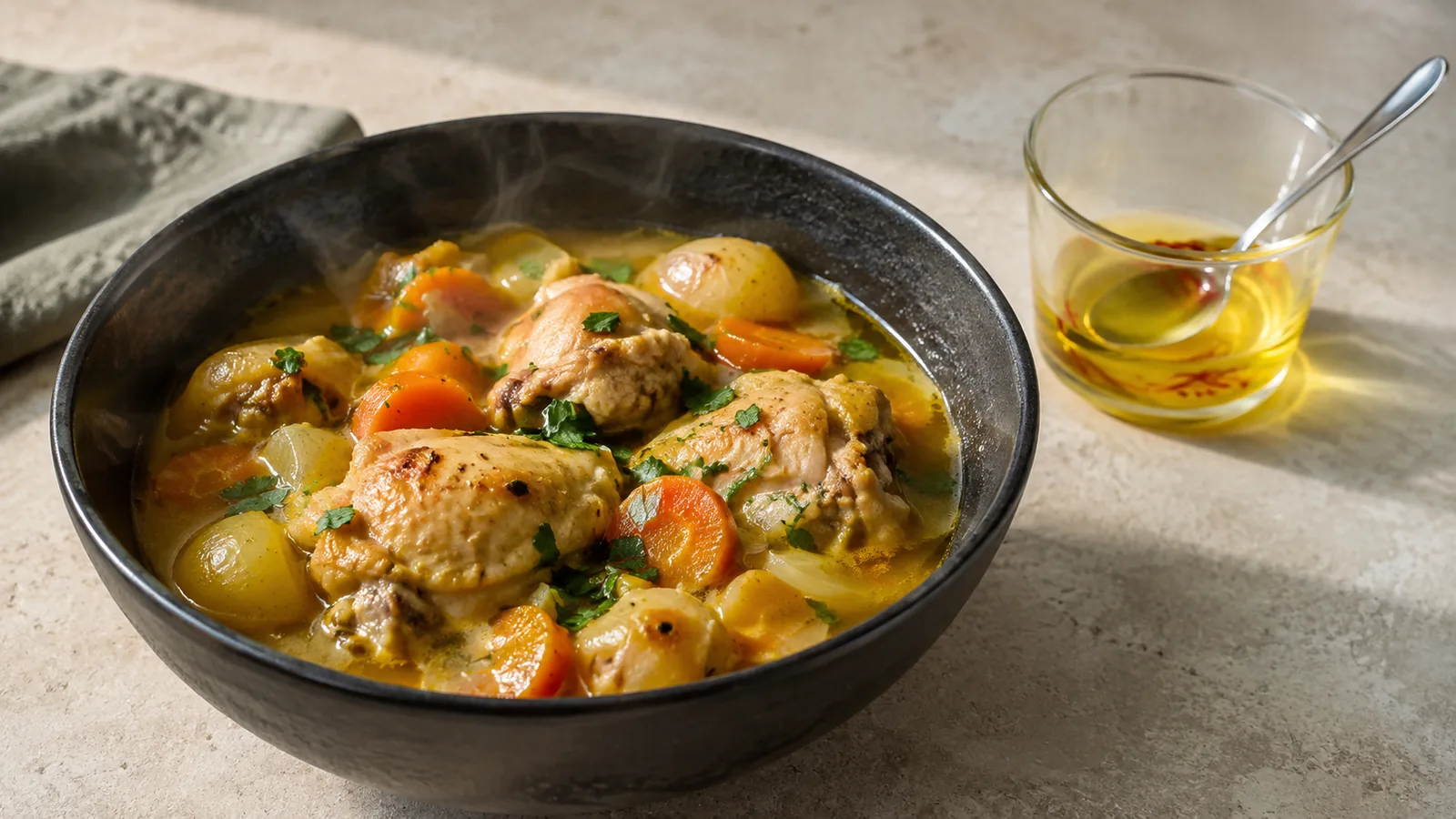
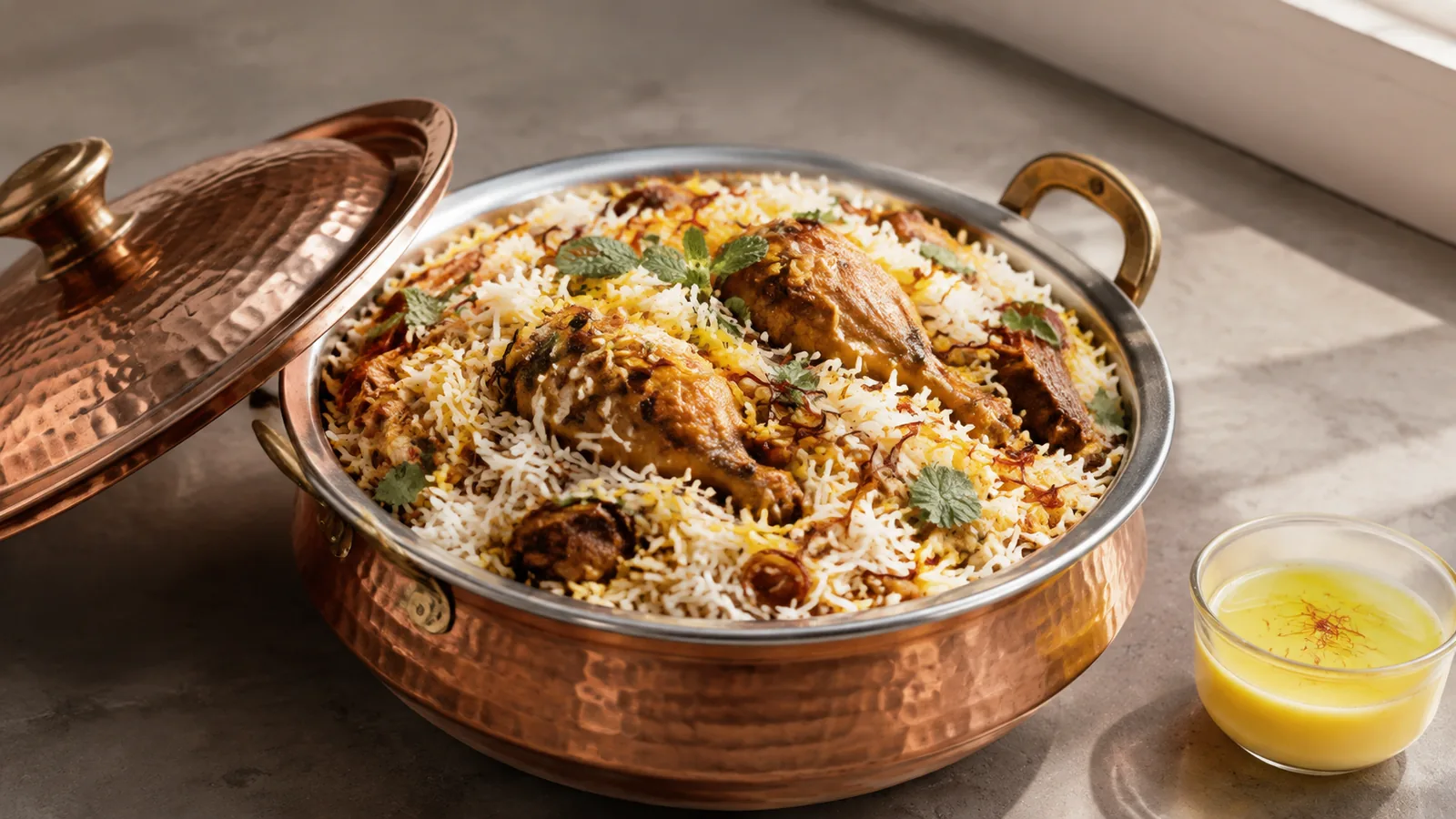
The best time to add saffron to biryani is during layering, just before the final covered steam or dum. Bloom the threads in warm milk or water first, then drizzle the infusion over selected areas of the rice rather than stirring it through the entire pot.
When to Add Saffron to Biryani
Add saffron after the rice and meat or vegetables are cooked to the stage required by your recipe and while you are building the final layers. The gentle steam that follows gives the infusion time to travel through the rice without subjecting it to prolonged boiling.
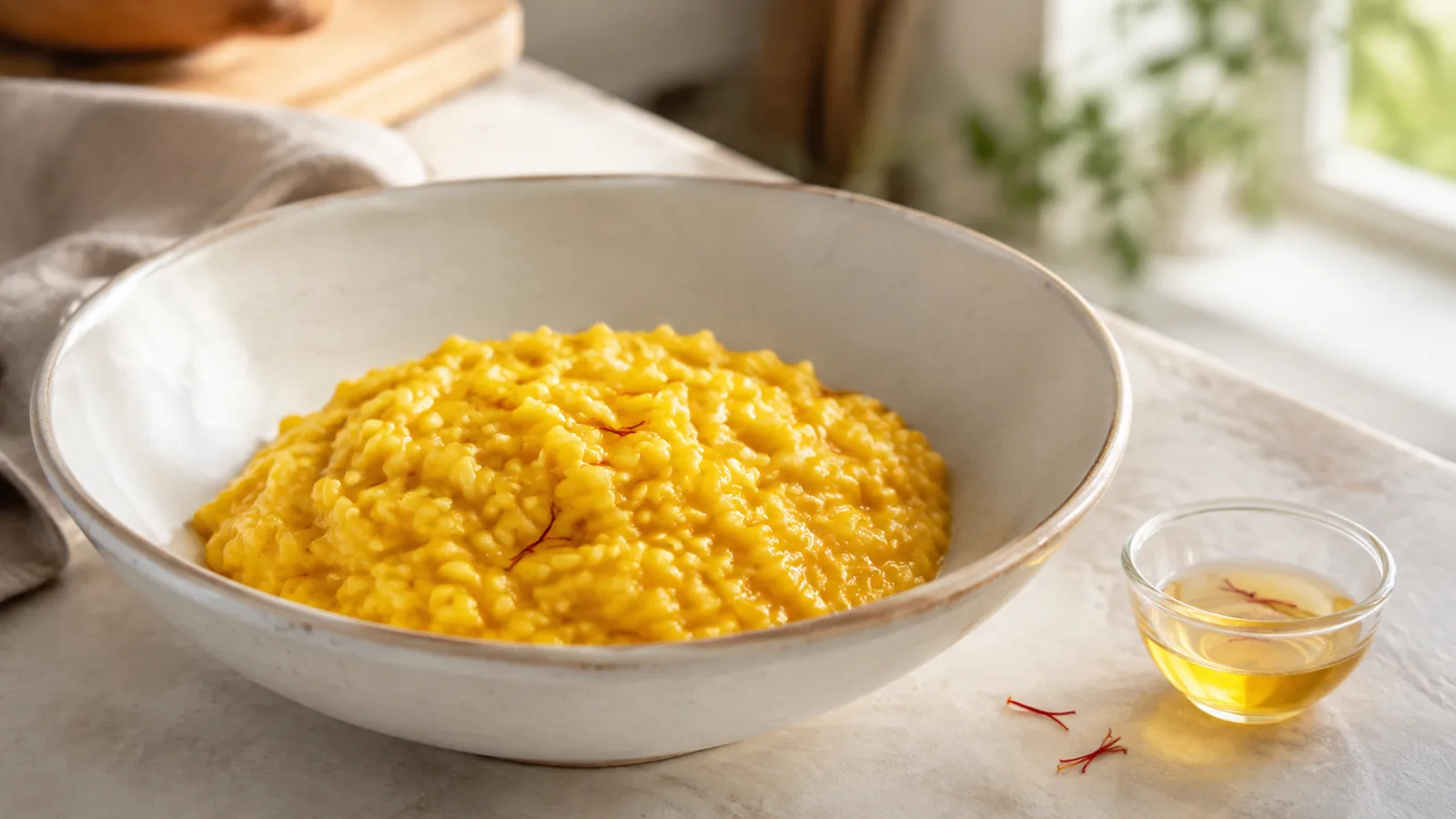
This timing also creates the white-and-gold pattern associated with many biryanis. Some grains absorb the saffron milk; others keep the colour and aroma of the seasoned rice, stock and browned onions underneath.
Make the Saffron Infusion First
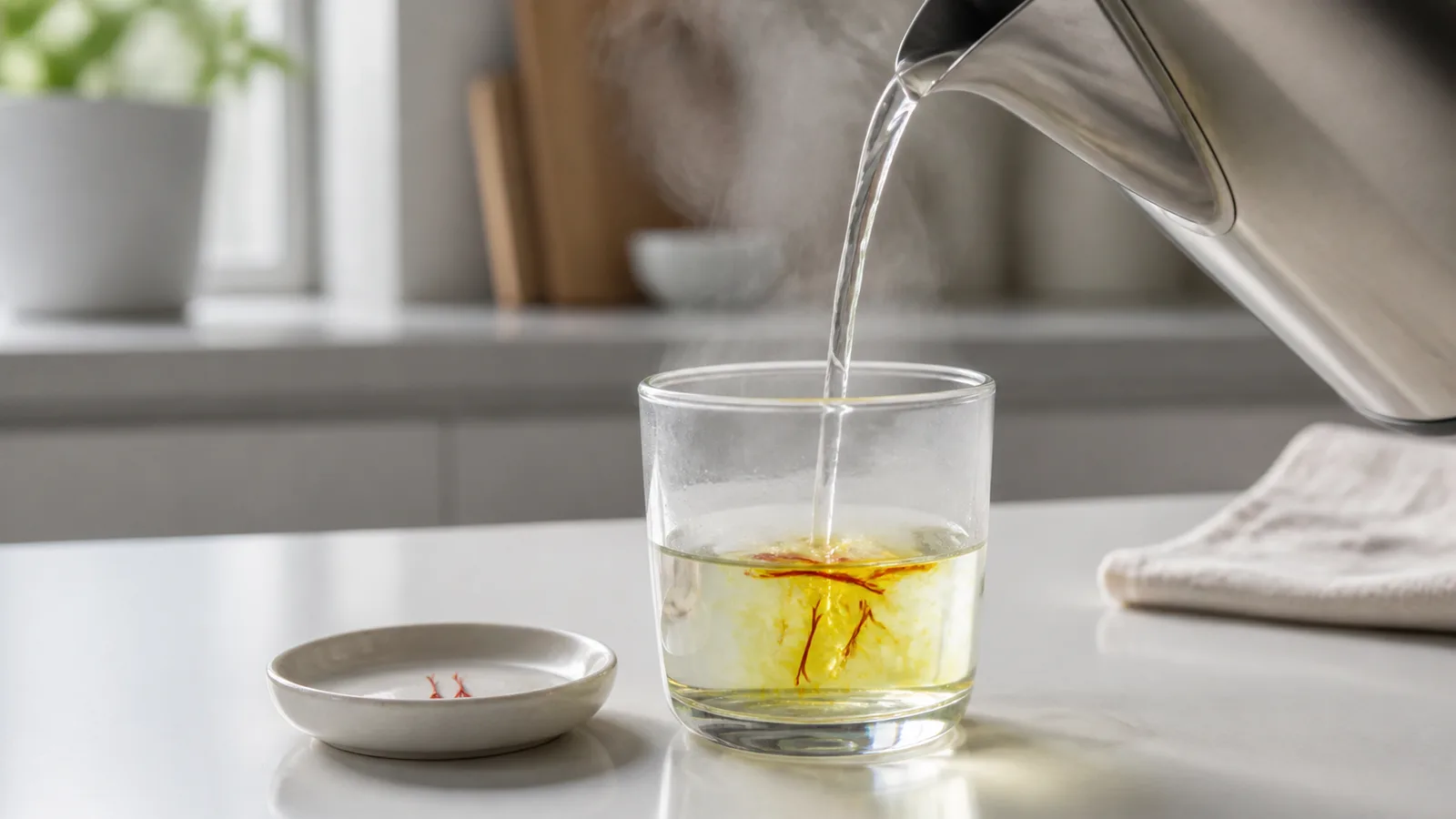
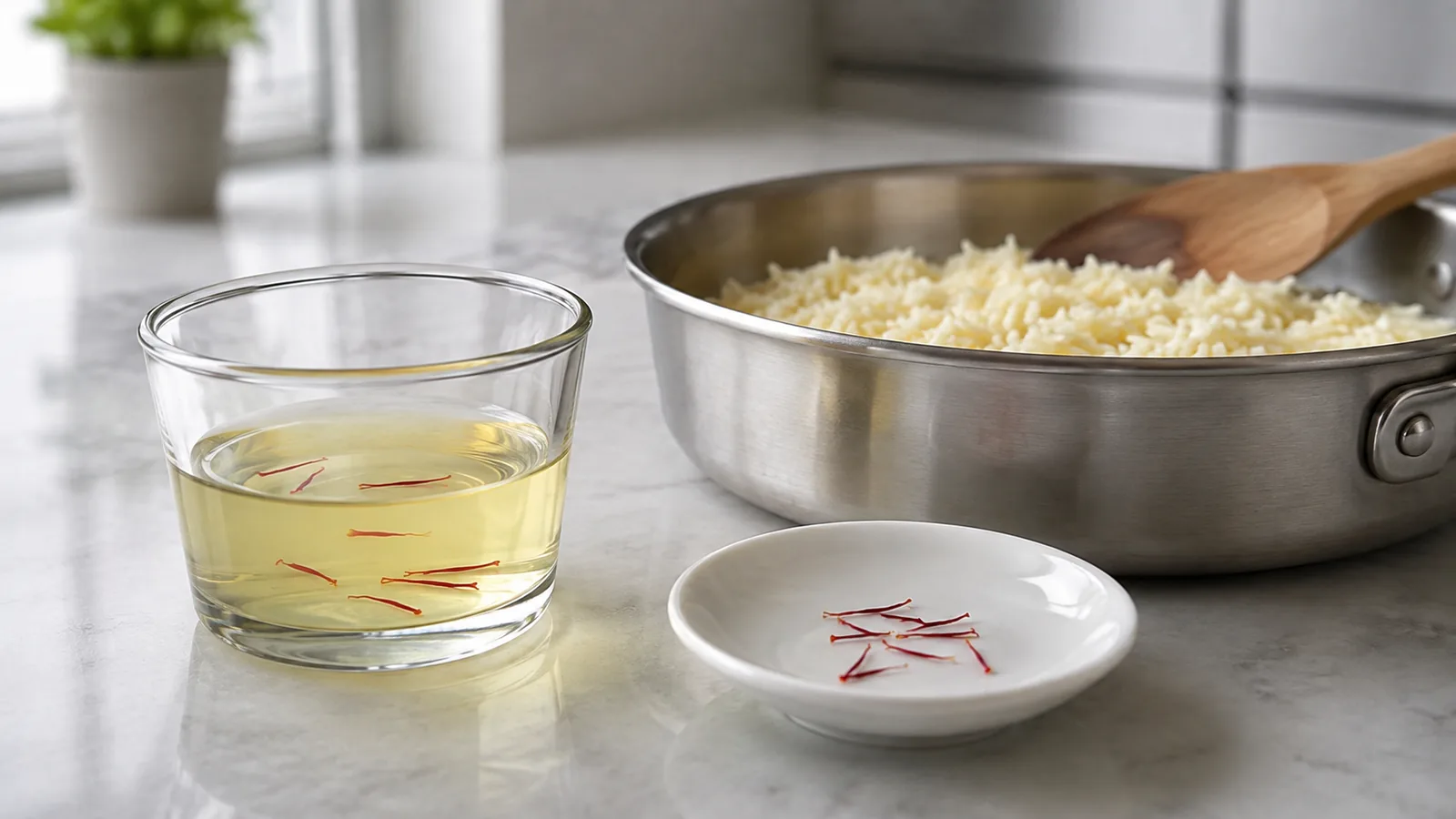
Lightly crush a small pinch of saffron threads. Put them in two to four tablespoons of warm milk or water, cover, and leave for 10 to 15 minutes. The liquid should be warm rather than boiling.
Use the liquid and the threads. A small concentrated infusion is easier to distribute than dry saffron and does not add enough moisture to make the rice soggy. For a family-size pot, begin with a modest pinch and adjust in future batches according to the saffron’s strength and the other seasonings.
Saffron Milk for Biryani
Saffron milk suits a rich biryani and spreads easily over the top rice layer. Whole milk is common, but the quantity is small; its purpose is to carry the spice, not turn the dish creamy. Warm a few spoonfuls, steep the threads, then let the infusion cool slightly before layering.
Saffron Water for Biryani
Water is equally useful when you want a lighter result or avoid dairy. It produces a clean infusion and gives you precise control over the added liquid. Choose milk or water to suit the recipe rather than treating one as universally correct.
How to Layer Saffron in Biryani
- Place the first portion of partially or fully cooked rice over the prepared meat, vegetables or sauce, as your recipe directs.
- Add the remaining rice in an even, loose layer. Do not press it down.
- Drizzle the saffron infusion in several narrow streaks across the top and, for a deep pot, between one of the middle layers.
- Add the recipe’s other finishing elements, such as browned onions, herbs, ghee or rosewater, in restrained amounts.
- Cover tightly and complete the low-heat steam or dum.
Avoid pouring all the saffron in one central puddle. Several small streaks create better distribution while preserving colour contrast. They also reduce the chance that one serving receives most of the spice.
How Long to Steam After Adding Saffron
Follow the rice and protein in your biryani recipe; saffron does not set the cooking time. Many layered biryanis finish with roughly 20 to 30 minutes of low, covered heat, but a pot built with fully cooked components may need less while raw-marinated meat can require a different method and longer time.
The important point is gentle, trapped steam. A tight lid helps the grains finish and carries the aroma through the pot. High heat risks scorching the bottom before the centre is ready. If the recipe uses a sealed dough rim or a diffuser beneath the pot, keep that technique.
Should Saffron Go in the Rice Water?
You can add a small amount to rice water, but it is not the best main use for saffron in biryani. Much of the aromatic liquid may be drained away in recipes that parboil rice. Colouring all the grains also removes the deliberate contrast created by layering.
If you want a stronger saffron presence, divide the infusion instead: use a little in the cooking liquid only when it will be absorbed, then reserve most for the final layers. More saffron is not a substitute for proper blooming and distribution.
What Saffron Does in Biryani
Saffron for biryani contributes a dry floral aroma, a gentle earthy bitterness and golden colour. It does not provide the dish’s whole spice profile. Cardamom, cinnamon, clove, cumin, browned onion, herbs and the seasoned meat or vegetables still build the main savoury structure.
The aim is recognition, not domination. If saffron is the only thing you smell, the dose may be too high. If it disappears completely, check its freshness, blooming time and placement before simply adding more.
Common Mistakes
- Adding dry threads at the end: they remain concentrated and have little time to release into the rice.
- Boiling the whole dose with the rice: aroma and colour may leave with drained water.
- Using too much infusion: excess liquid can soften carefully cooked grains.
- Stirring after layering: this can break grains and erase the white-and-gold pattern.
- Relying on high heat: dum is a gentle finishing stage, not a second hard boil.
Adjust the Timing to the Biryani Style
In a pakki-style biryani, where the main components are cooked before layering, add saffron as the pot is assembled and let it integrate during the final steam. In a kacchi-style method, the raw-marinated protein and rice finish together; use the saffron during layering but rely on a tested recipe for the longer cooking and food-safety requirements.
For a one-pot or pressure-cooker version, you may not have a separate dum stage. In that case, reserve the infusion until the rice is nearly cooked, add it gently over the surface, and give the pot a short covered rest. Do not stir aggressively.
The Simple Biryani Timing Rule
Bloom the saffron, drizzle it while layering, then finish the biryani with gentle covered heat. This keeps the aroma close to serving time, spreads the spice through the upper and middle rice, and preserves the contrast that makes saffron in biryani easy to see and taste.
Read our comparison of saffron in milk or water if you are choosing an infusion liquid. The saffron brewing guide covers preparation in more detail, while how saffron changes rice explains its sensory role. Current thread grades are listed in the saffron shop.