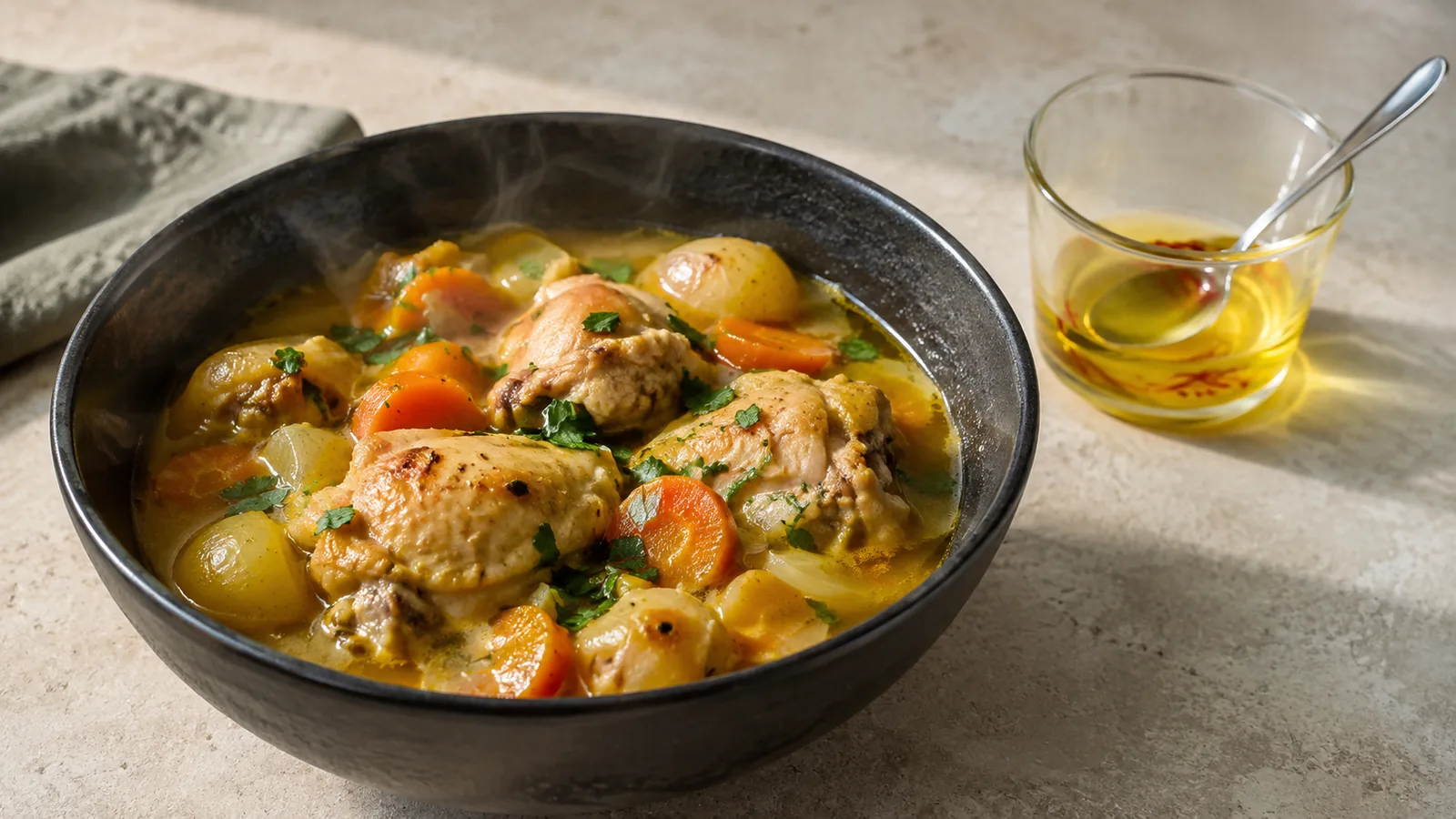
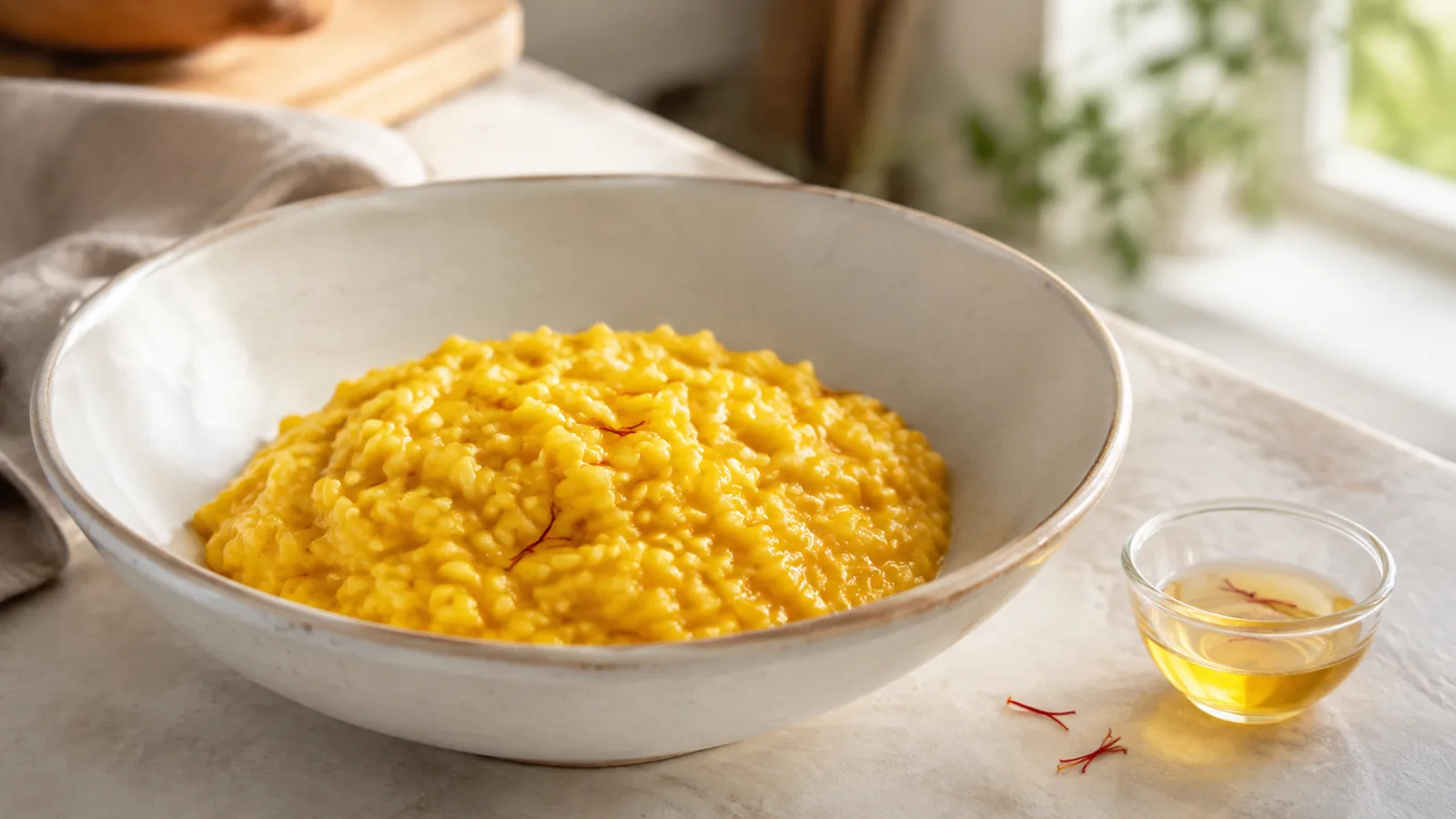
Yes, you can add saffron directly to rice, but “directly” should usually mean adding a prepared saffron infusion to the pot. Dry threads dropped onto rice release unevenly; blooming them in warm water or stock first gives better colour, aroma and distribution.
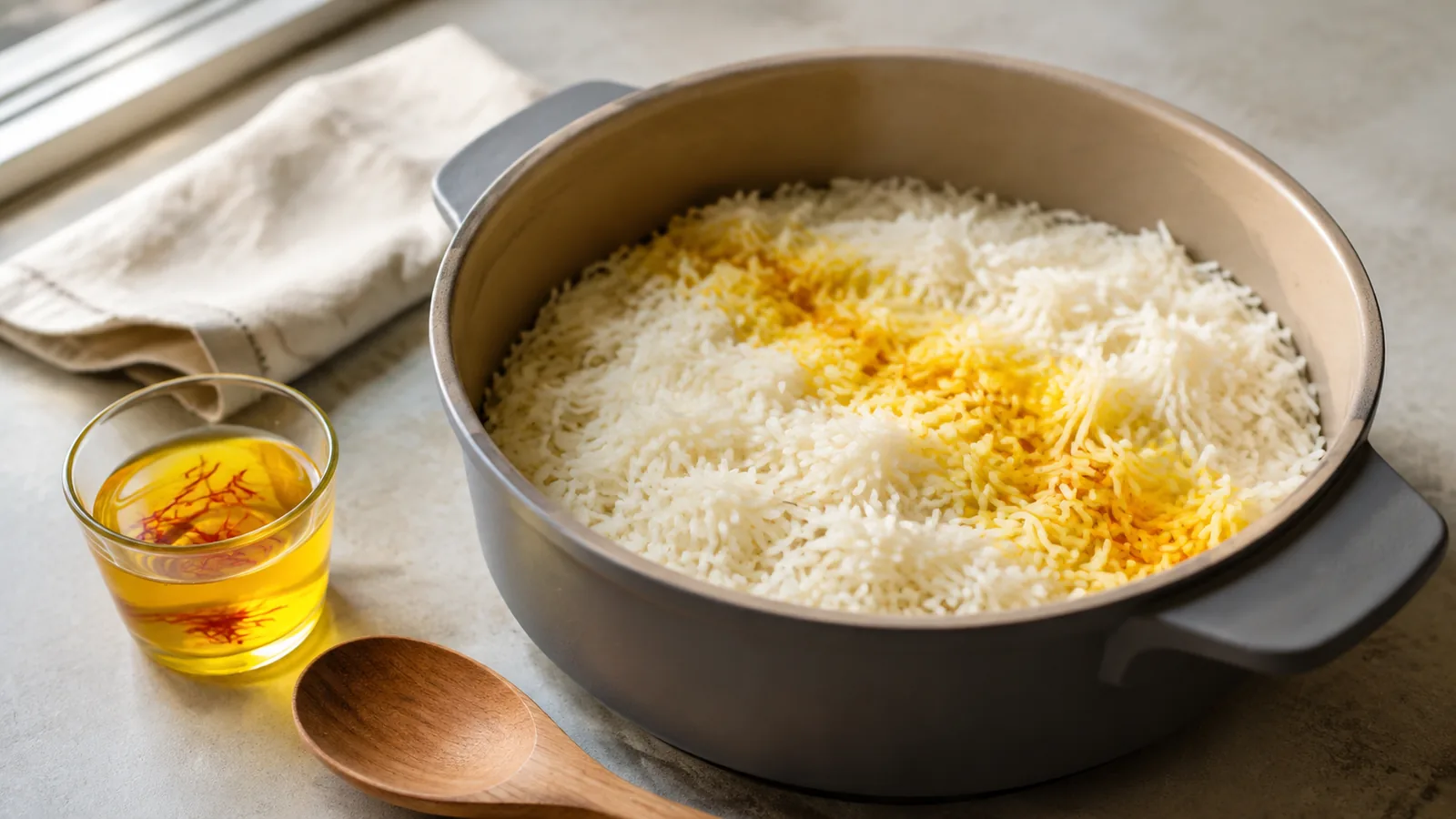
Adding Saffron Directly to Rice
Saffron usage in rice dishes depends on the result you want. Mix the infusion with all the cooking liquid for evenly golden rice, add it later for softer streaks, or combine saffron with only a portion of cooked rice to create a white-and-gold presentation.
All three methods are direct uses of saffron in rice. The difference is distribution, not whether the spice is authentic or effective.
Why Bloom Saffron First?
A small amount of saffron has to season many grains. Warm liquid spreads its colour and aroma before it enters the pot, reducing the chance that one serving receives several dry threads while another receives none.
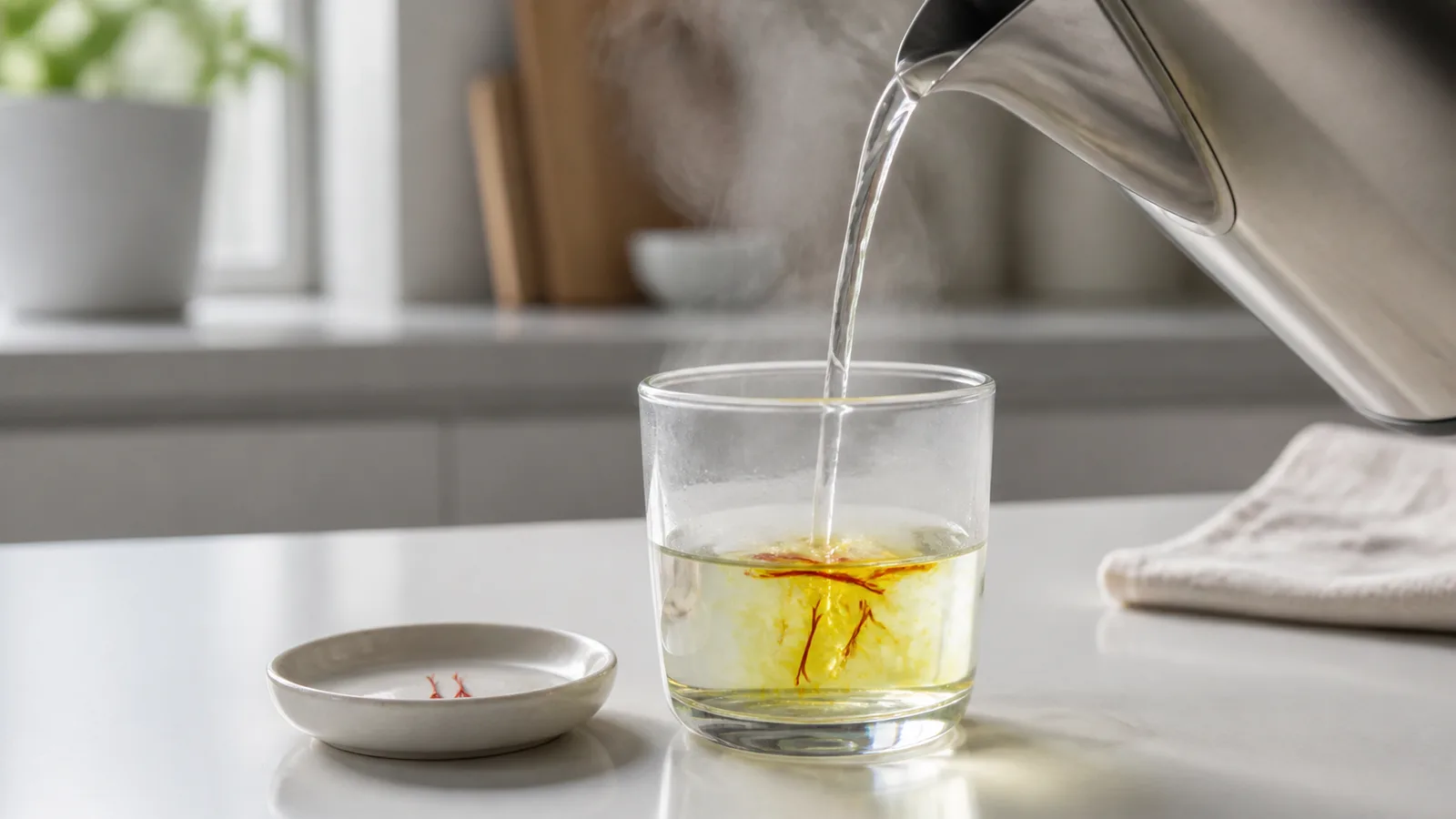
Lightly crush a modest pinch, cover it with two to four tablespoons of warm water or stock, and leave it for 10 to 15 minutes. Use both the liquid and the threads. The water should be warm rather than at a violent boil.
Blooming does not mean saffron can never touch rice in thread form. A few visible threads may remain in the finished dish; the key is that most of their flavour has a liquid route through the grains.
For Absorption-Method Rice
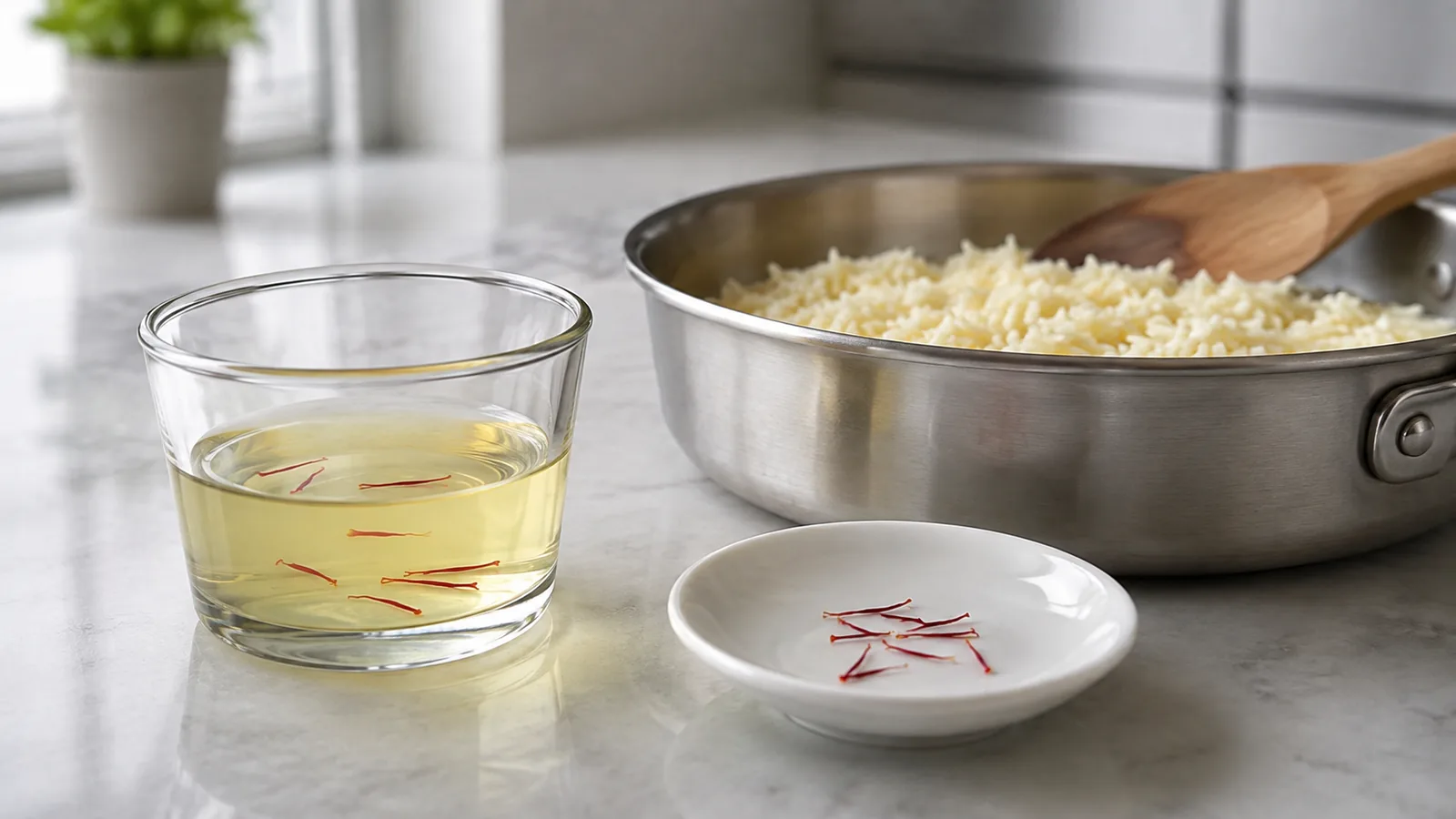
If the rice cooks by absorbing a measured quantity of water or stock, stir the saffron infusion into that liquid before cooking. This creates the most even colour and requires no extra stirring once the grains begin to soften.
- Rinse or prepare the rice as the recipe directs.
- Bloom the saffron separately.
- Combine the infusion with the measured cooking liquid.
- Add the liquid to the rice and cook with the recipe’s normal heat and timing.
- Rest the covered rice, then fluff gently.
Count the infusion within the recipe’s total liquid. A few tablespoons rarely cause a problem, but precise rice methods work best when extra liquid is not added casually.
For Drained or Persian-Style Rice
When rice is parboiled and drained, putting saffron in the boiling water wastes much of the infusion down the sink. Instead, add it during the steaming or finishing stage.
For an even result, drizzle the infusion over the rice before the final covered cook. For a traditional contrast, mix the infusion with a smaller bowl of cooked rice and spoon that golden portion over the white grains at serving. This also gives you control over the strength.
Adding Saffron to Rice During Cooking
You can add the infusion after cooking has begun, but choose the moment according to the method. In an absorption pot, add it while enough free liquid remains to circulate. Pouring it over nearly dry rice can produce concentrated patches.
Avoid stirring long-grain rice thoroughly once the grains are fragile. Gentle distribution before or early in cooking protects texture better than a late vigorous mix.
Can You Add Dry Saffron Threads?
You can, but the result is less predictable. Dry threads may look attractive on top while contributing little to the surrounding rice. If they land in hot fat or against the base of the pot, they can also scorch.
If time is short, crush the threads directly into the hot—not violently boiling—cooking liquid and give them a few minutes before adding the rice. That is still better than scattering whole dry threads over the finished grains.
Saffron in a Rice Cooker
Bloom the saffron while rinsing the rice, then add the infusion with the measured water before starting the machine. This gives an even gold colour. For visible streaks, reserve part of the infusion, drizzle it over the cooked rice and let the closed cooker rest briefly without an aggressive stir.
Follow the rice cooker’s liquid ratio. Saffron does not require a separate programme or a longer cook, and more heat will not compensate for poor infusion.
Saffron in Risotto
For risotto, bloom saffron in warm stock and add it while the rice is still loose enough to accept more liquid. Many cooks add it during the middle or later stock additions so its aroma remains clear at serving.
Saffron supplies colour and fragrance, not creaminess. Stirring, starch release and gradual stock addition create the risotto’s texture.
Saffron in Biryani
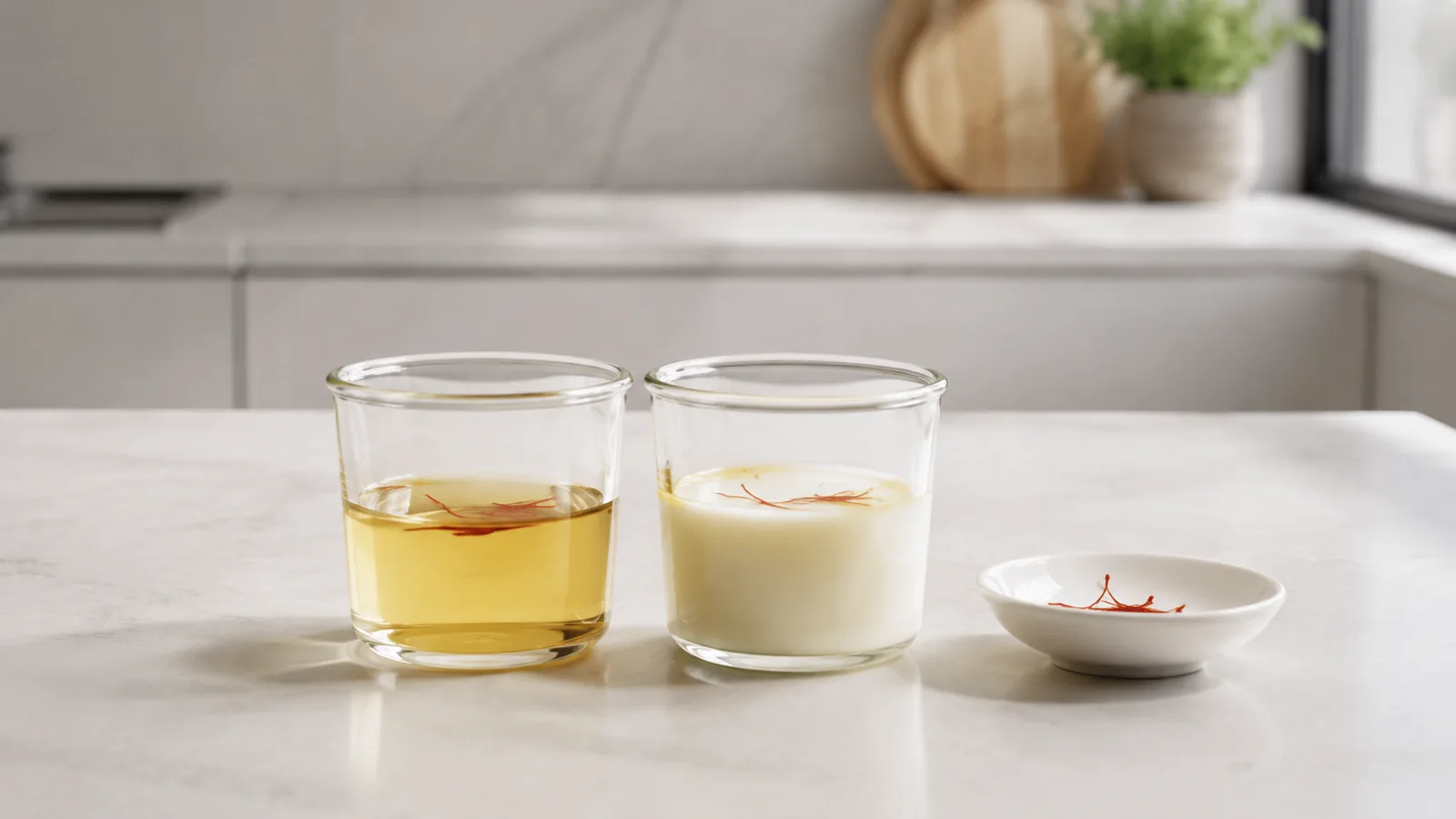
Biryani usually benefits from a more selective approach. Bloom the threads in warm milk or water, then drizzle the infusion in narrow streaks while layering the rice. The final covered dum distributes aroma while preserving white and golden sections.
Mixing saffron through every grain is possible, but it removes the visual contrast and can flatten the layered character of the dish.
How Much to Add
For four servings of rice, start with about 0.05–0.1 gram of saffron. A modest pinch may be sufficient, but thread counts vary with length and thickness. A scale that reads to 0.01 gram gives more repeatable results.
Use the lower end for a subtle side dish and the upper end when saffron defines the rice. Taste and aroma matter more than forcing the grains to a particular shade.
Common Mistakes
- Dropping dry threads into hot oil: they can scorch before their flavour disperses.
- Adding infusion after all liquid is absorbed: the rice develops wet golden patches.
- Overstirring delicate grains: even colour is not worth a broken, sticky texture.
- Ignoring the added liquid: precise rice ratios should include the infusion.
- Using more saffron only for colour: excess can taste harsh without improving the dish.
The Practical Answer
Add saffron directly to rice as an infusion. Put it in the main cooking liquid for even colour, add it during the finishing steam for drained rice, or mix it with a smaller portion for deliberate golden accents. The best method is the one that matches the rice technique and the presentation you want.
See how to colour rice with saffron for presentation options and using saffron in a rice cooker for appliance-specific detail. Our guide to adding saffron to biryani covers layering. Current thread grades are listed in the saffron shop.