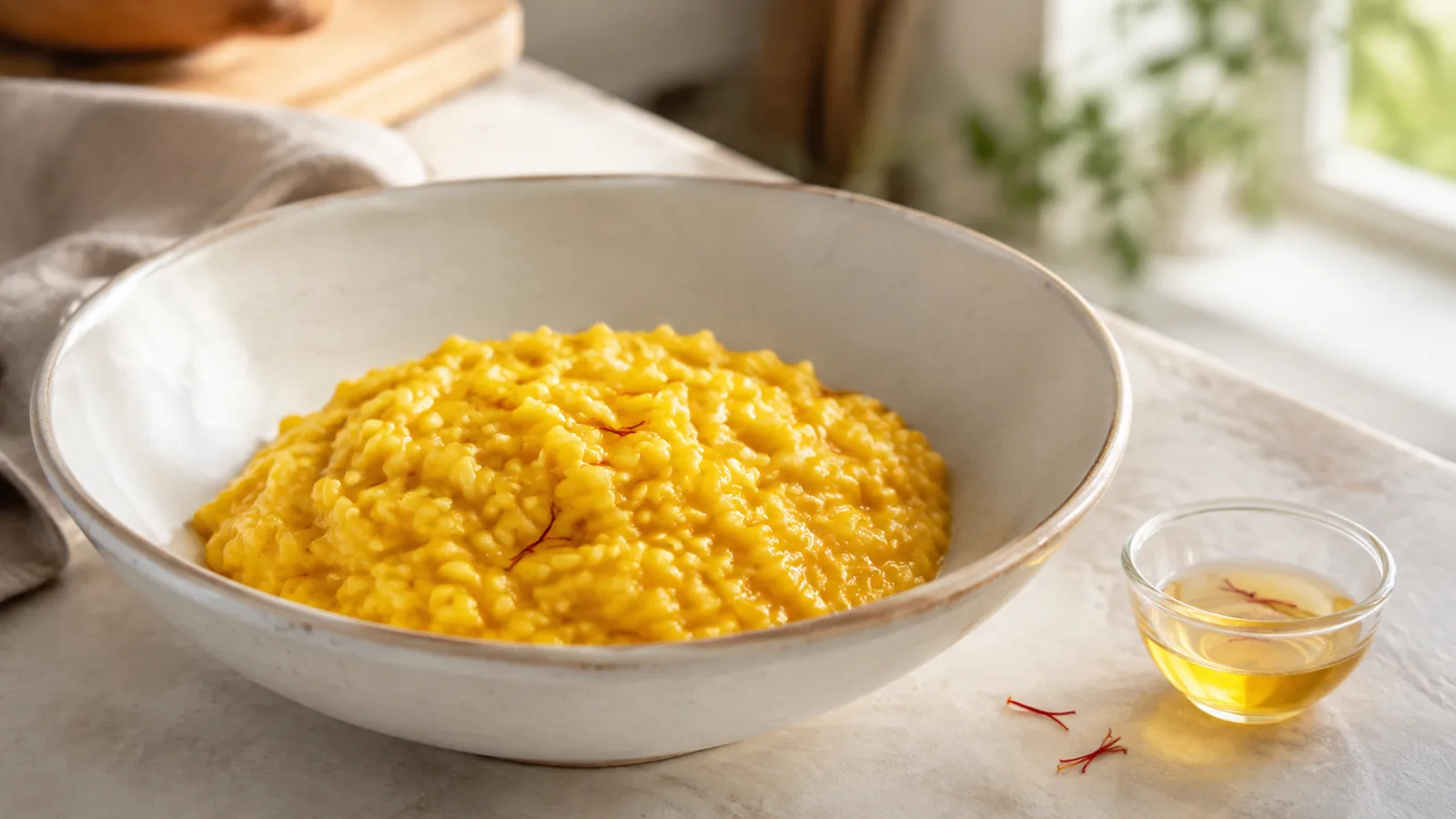
Add saffron before or during cooking when it needs to spread through rice, stock or sauce. Add a smaller portion near the end when you want a fresher aroma. In most dishes, the best method is to bloom the threads first rather than choosing a rigid “before” or “after” rule.
When Do You Add Saffron?
Saffron timing in cooking depends on moisture, heat and the structure of the recipe. The spice needs liquid and contact time to distribute, but hours of hard boiling can flatten its most delicate aroma.
A useful starting rule is:
- Before or early in cooking: when an infusion must be absorbed by rice or mixed through dough.
- During cooking: for soup, stew, braise, risotto and sauce.
- Near the end: for a final aromatic lift in a long-cooked dish.
- After cooking: only when the prepared infusion can still mix fully, as in a drink, chilled base or finished sauce.
Bloom the Saffron Before Timing the Dish
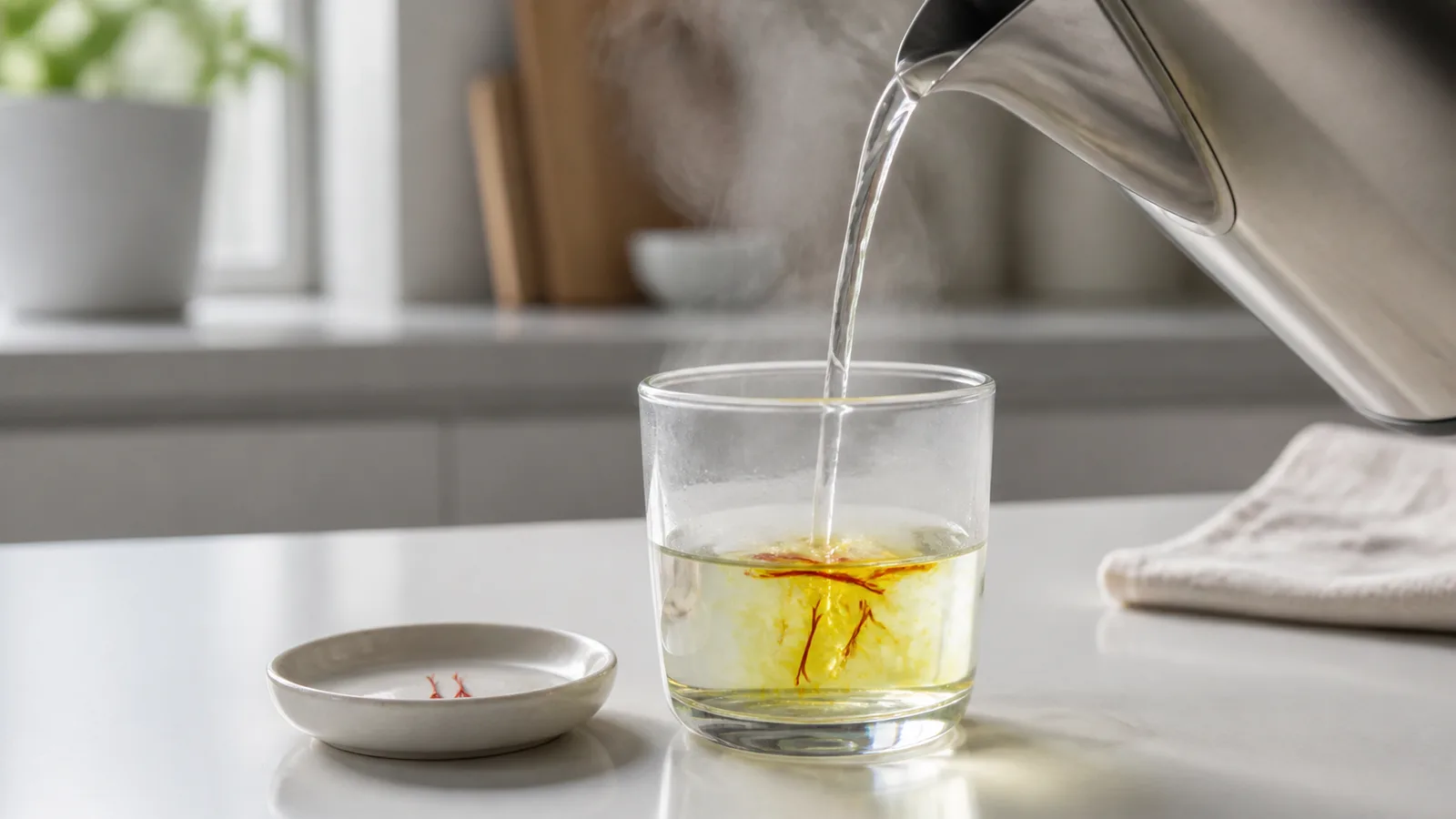
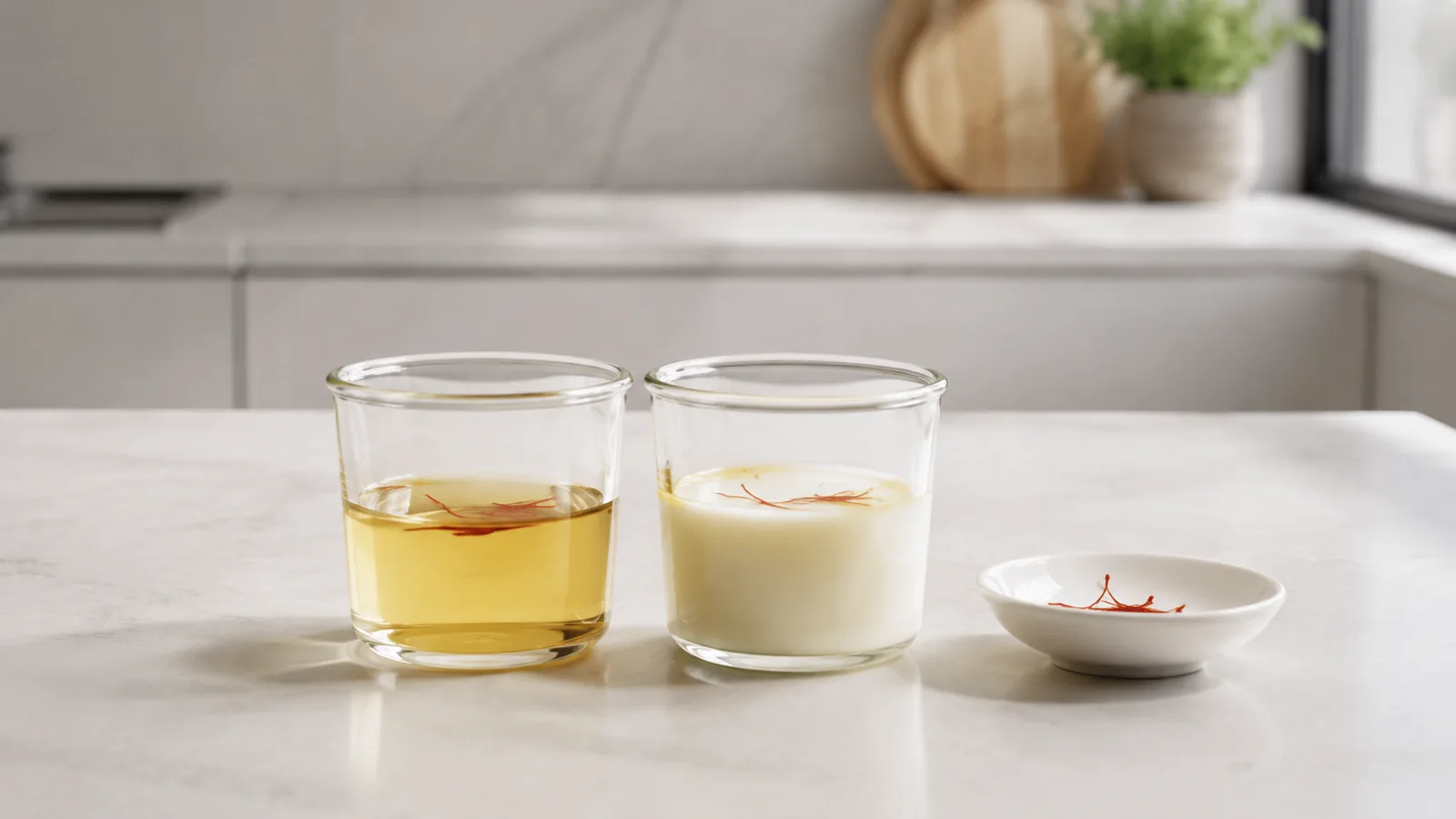
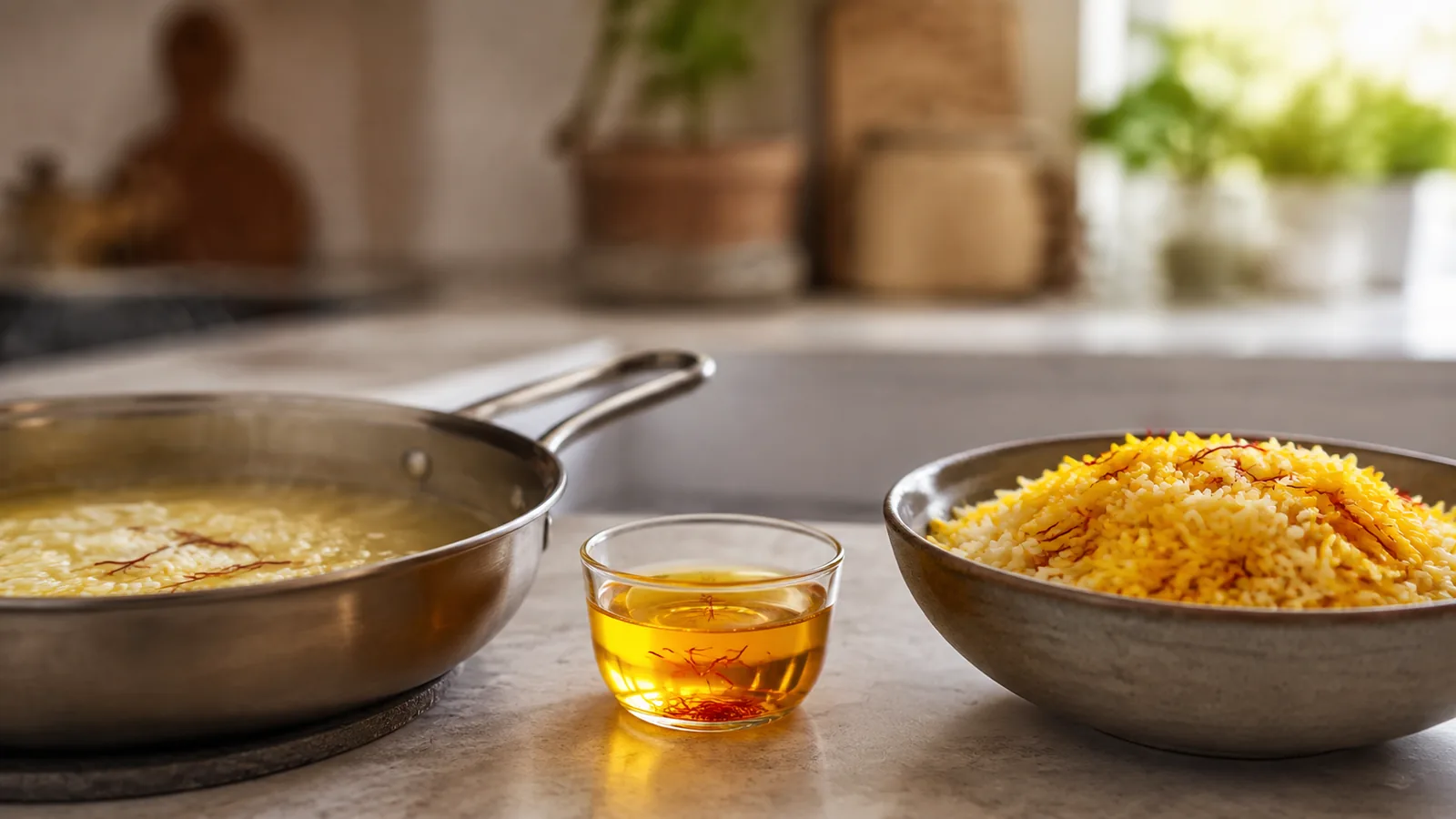
Lightly crush a modest pinch of threads and cover them with a few tablespoons of warm water, stock or milk. Leave the cup covered for 10 to 15 minutes, then use the liquid and threads together.
Blooming separates extraction from the main cooking heat. It also makes a small amount easier to distribute, whether you add it before the rice cooks or at the end of a sauce.
Adding Saffron Before Cooking
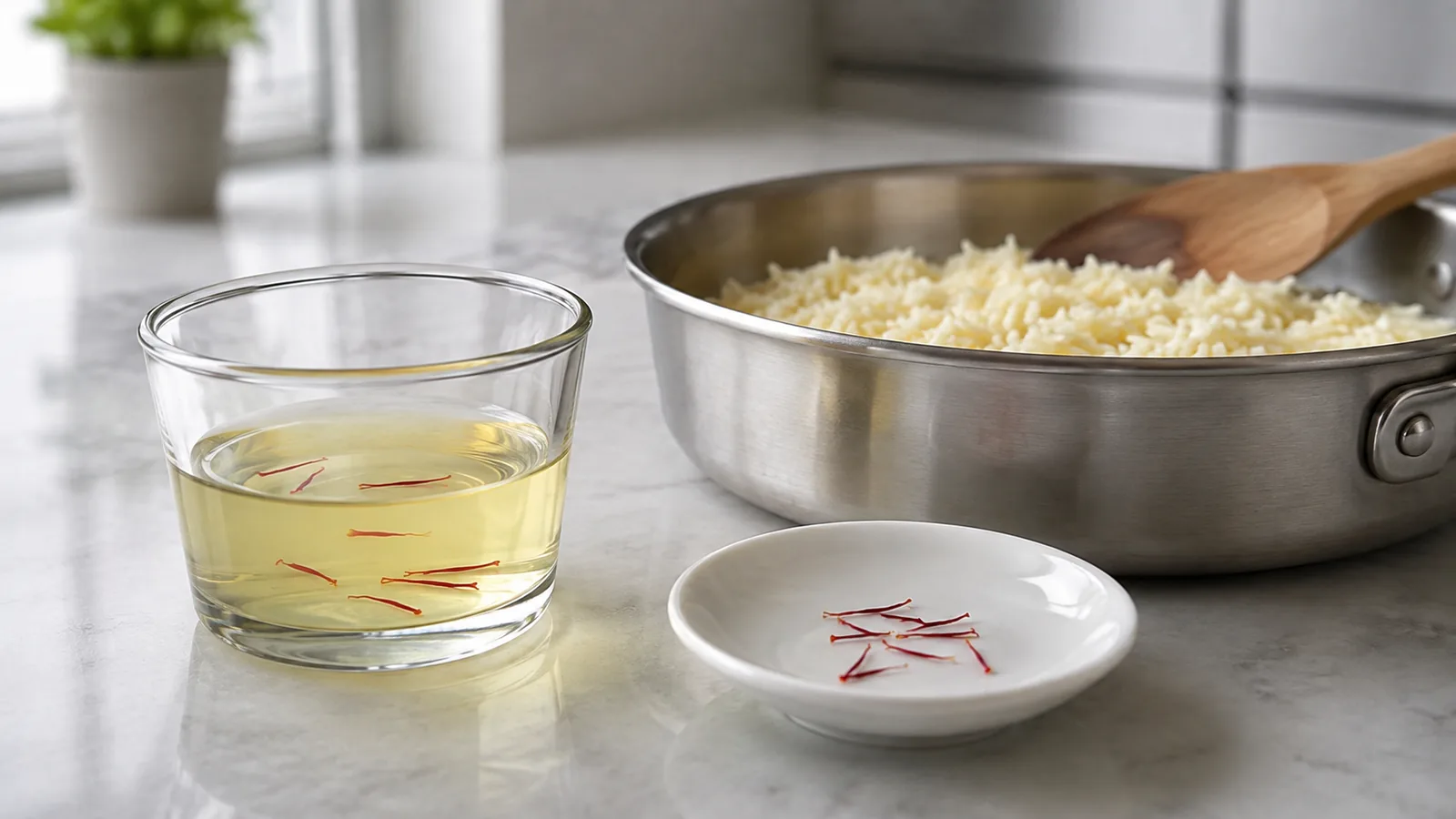
Add saffron before cooking when the recipe absorbs a measured liquid. For absorption-method rice, combine the infusion with the water or stock before the pot begins. For bread or cake, mix a cooled infusion with the recipe liquid before forming the dough or batter.
This timing produces even colour. It is less suitable when the liquid will be drained away or when the dish cooks for hours, because part of the saffron may be discarded or its aroma may fade.
Rice, Pilaf and Paella
For a uniformly golden rice or pilaf, put the infusion in the measured cooking liquid. In paella, add saffron with the stock before the rice settles into its uncovered simmer. Once long-grain rice is fragile or paella rice is evenly placed, avoid unnecessary stirring merely to spread colour.
For drained rice, do not pour the main dose into parboiling water that will go down the sink. Reserve it for the covered finishing cook or mix it with a smaller portion of cooked rice.
Bread, Cake and Pastry
Bloom saffron in part of the recipe’s milk or water, then let the infusion cool to the temperature required by the dough or batter. Count it within the total liquid. Saffron does not justify adding unmeasured extra moisture or exposing yeast to overly hot milk.
Adding Saffron During Cooking
For many savoury dishes, the middle of cooking offers the best balance. The harsh initial frying stage has passed, yet enough liquid and time remain for the infusion to integrate.
Soup, Stew and Braise
Add most of the infusion after the aromatics are cooked and the broth or sauce is in the pot. In a long braise, reserve a small amount for the final 10 to 15 minutes. The first addition builds continuity; the second restores a clearer fragrance.
Risotto
Stir saffron-infused stock into risotto during the middle or later stock additions, while the rice is still loose enough to distribute it. The spice adds colour and aroma; gradual stock addition and released starch create the creamy texture.
Chicken and Other Marinades
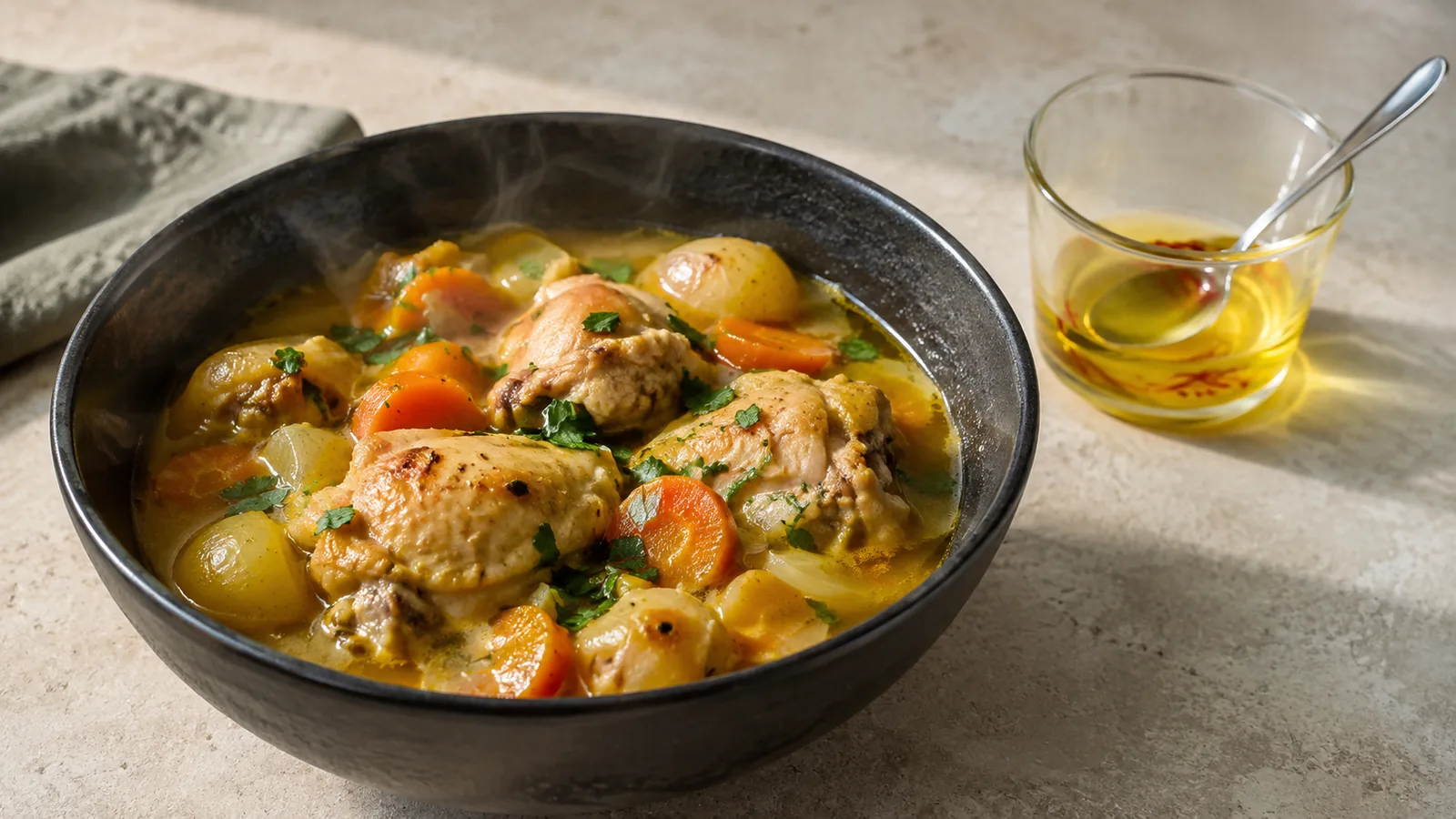
For grilled or roasted chicken, adding the cooled infusion to the marinade before cooking can work well. Reserve any portion intended for finishing before it contacts raw meat. Saffron supplies flavour and colour, not tenderisation.
When to Add Saffron After Cooking
“After cooking” works when the dish is still fluid enough to accept the infusion or will rest before serving. For desserts and drinks, stir prepared saffron into warm milk after it leaves direct heat, add it to an ice-cream base before chilling, or whisk it into a finished sauce while the sauce is still warm.
Dry threads scattered over a plated dish are decoration more than seasoning. They have little liquid or time to release and may create harsh, concentrated bites.
Milk, Custard and Ice Cream
For saffron milk, bloom the threads in a small portion of warm milk and recombine it with the rest. For custard, add the infusion while preparing the warm dairy so it distributes before the mixture sets. For ice cream, include it in the base before chilling and churning, not on the frozen dessert as an afterthought.
Finishing a Sauce or Drink
A prepared infusion can enter a warm sauce shortly before serving. Give it several minutes to integrate and taste again for salt and acidity. In tea, lemonade or another drink, stir thoroughly and allow a brief rest; a vivid streak at the bottom of the glass is not even seasoning.
Use a Split Addition for Long Cooking
Dividing the infusion is often more effective than choosing one moment. Add two-thirds while liquid remains in the dish and the final third near the end. This protects distribution and preserves a fresher top note.
The method is particularly useful for stew, braised chicken and rich sauce. It is less useful for baked goods, where the ingredients must be mixed before the structure sets.
When Not to Add Saffron
- Do not add it to smoking-hot oil: the threads can scorch before they disperse.
- Do not put the main dose in water you will drain: colour and aroma leave with it.
- Do not wait until a dry dish is plated: the infusion will form wet patches and dry threads will not integrate.
- Do not boil every drop for hours: reserve some infusion for later if the recipe allows.
- Do not add more solely for a brighter colour: taste and aroma are better guides.
Why Timing Matters
Ask three questions. Will the dish still contain enough liquid to carry the infusion? Will enough time remain for even distribution? Will the saffron face prolonged, aggressive heat? The best point is where the first two answers are yes and the third is no.
That may be before cooking for absorbed rice, during cooking for soup, or just after direct heat for milk. The method matters more than an arbitrary clock time.
The Practical Before-or-After Answer
Bloom saffron first. Add it before cooking when a measured liquid will be absorbed, during cooking when a sauce or broth still has time to carry it, and near or after the end when a fluid dish needs a fresher aroma. For long cooks, split the dose between the middle and finish.
For a broader timing guide, see when saffron should be added. Our articles on adding saffron directly to rice and timing saffron in chicken apply the rule to specific dishes. Current thread grades are listed in the saffron shop.