Neither Iranian nor Kashmiri saffron is automatically better. Both are the dried stigmas of Crocus sativus. In an Iranian vs Kashmiri saffron comparison, origin tells you where the spice comes from; it does not, by itself, reveal how a particular batch was harvested, dried, stored or tested. The better choice is the genuine, fresh and traceable batch that suits your cooking and budget.
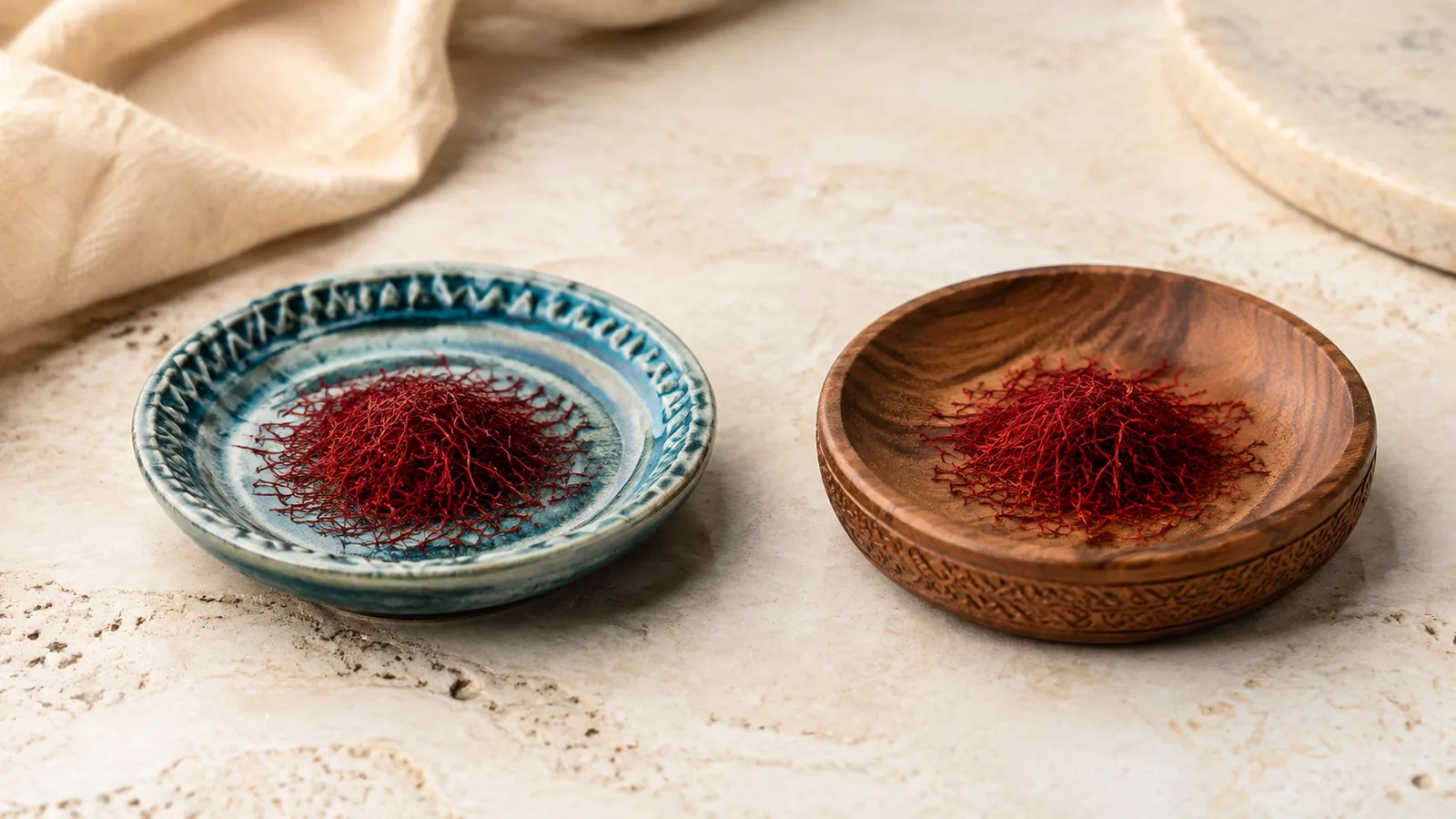
The difference between Iranian saffron and Kashmiri saffron
The clearest differences concern production region, market availability and the way each origin is identified and sold. Claims that every Iranian lot is stronger, or every Kashmiri lot is sweeter, go beyond what a country name can establish.
- Origin: Iranian saffron comes from Iran, with important production in the Khorasan provinces and other growing areas. Kashmir saffron is associated with the recognised growing region in Jammu and Kashmir, India.
- Supply: Iran produces saffron on a much larger scale, so Iranian lots are generally easier to find across international markets. Genuine Kashmir-origin saffron has a smaller supply.
- Regional protection: Kashmir Saffron is a registered Indian geographical indication. That designation identifies origin; it should not be confused with a laboratory grade.
- Trade descriptions: Sellers may use names such as Negin or Sargol for Iranian selections and Mongra for Kashmir saffron. These names come from different commercial traditions and should not be treated as a single universal grading ladder.
- Price: scarcity, form, grade, harvest, testing, packaging and seller margins all matter. A higher price is not proof of stronger colour, aroma or purity.
Both begin with the same saffron crocus
Iranian and Kashmiri saffron are not two different spice species. Both should come from Crocus sativus. The plants grow under different local conditions and pass through different farming and processing systems, so samples can have distinct chemical profiles. Even so, variation within one origin can be substantial.
A multi-country metabolomic study of saffron from Iran, India, Kashmir and other origins found geographical differences in the samples it examined. That is useful for origin research, but it does not prove that every sample from one region tastes better than every sample from another.
What “better” should mean
Before choosing a winner, decide what you need the saffron to do. For most cooks, quality involves several things at once:
- genuine botanical identity and no undeclared material;
- good colouring strength for the amount used;
- a clean, characteristic saffron aroma;
- the expected slightly bitter taste, without mustiness or off-odours;
- sensible moisture, careful drying and protective storage;
- traceable origin and honest labelling.
Crocin compounds are associated with colour, picrocrocin with bitterness and safranal with much of saffron’s aroma. A current scientific review explains how those constituents and factors such as water content contribute to saffron quality control. None of them can be judged reliably from nationality alone.
How saffron quality is tested
The international reference is ISO 3632. The current ISO 3632-1:2025 saffron specification applies to dried saffron in filament, cut-filament and powder forms. Its companion test methods cover characteristics used to assess the product under controlled conditions.
This is a better basis for comparing two commercial lots than photographs, marketing adjectives or country rankings. If a supplier provides recent, batch-specific results, check what was tested, which standard and method were used, and whether the report can be tied to the product being offered. “Lab tested” without those details is only a claim.
What Kashmir’s geographical indication tells you
India’s official registry lists Kashmir Saffron as registered geographical indication 635, with the Agriculture Production Department of Jammu and Kashmir as the registered proprietor. This matters when a buyer specifically wants saffron from that region.
The GI and a quality grade answer different questions. The first concerns protected geographical identity. The second concerns the condition and measured characteristics of a batch. A product can have meaningful regional provenance and still need suitable packaging, storage and quality evidence.
Colour, flavour and aroma: avoid national stereotypes
The familiar claim is that Iranian saffron is always darker and stronger while Kashmiri saffron is always milder or sweeter. Real batches are not that tidy. Thread selection, the amount of yellow style retained, drying temperature, age, exposure to air and light, and storage conditions can all affect what reaches your kitchen.
Deep-red threads can be attractive, but colour alone does not prove purity. Likewise, an intense smell from an open packet does not provide a calibrated measure of aroma quality. Home observations can help you notice a poor product, but they cannot replace traceability or appropriate testing. Our guide to checking whether saffron is pure explains those limits.
Iranian saffron vs Kashmiri saffron in cooking
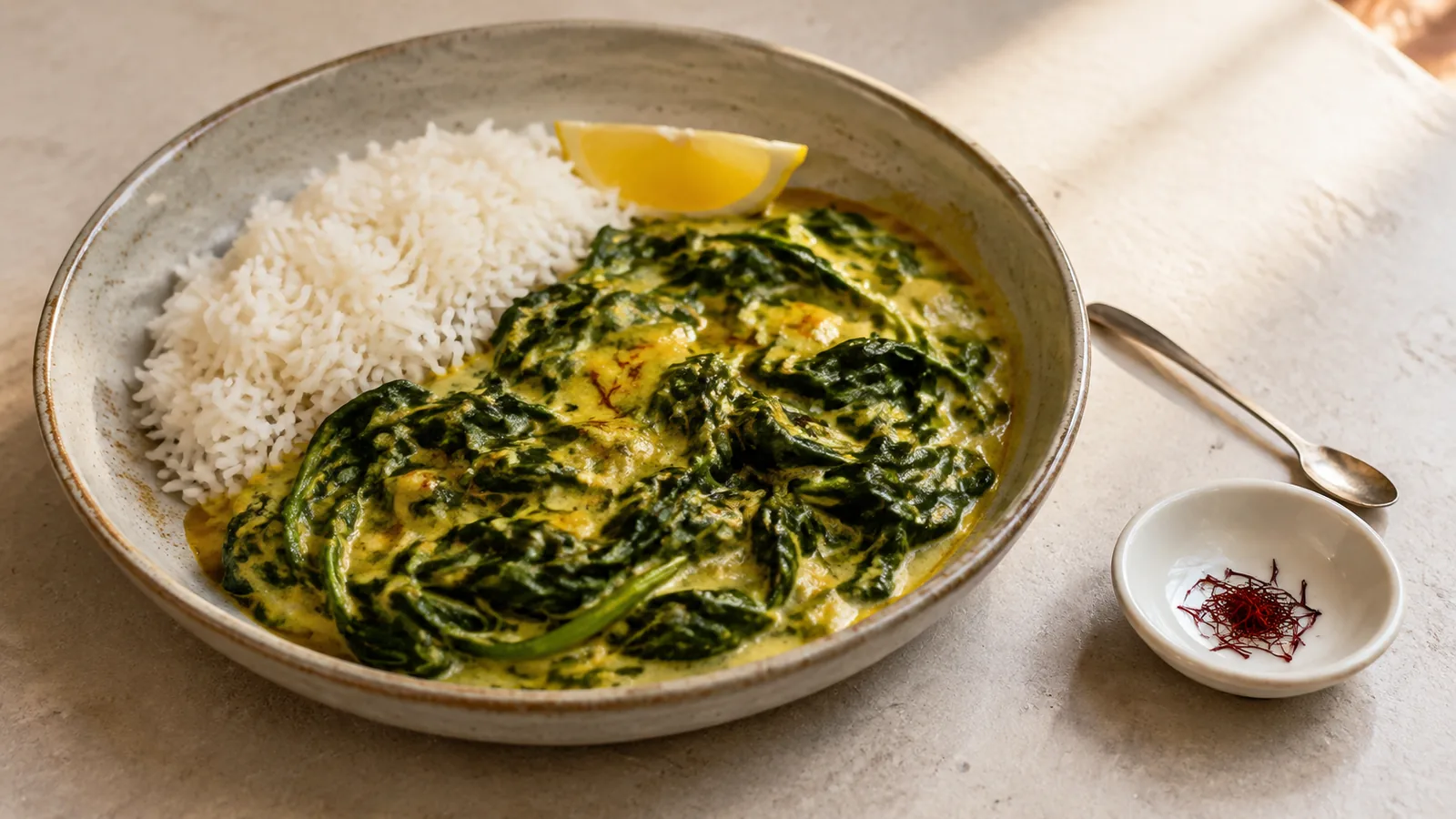
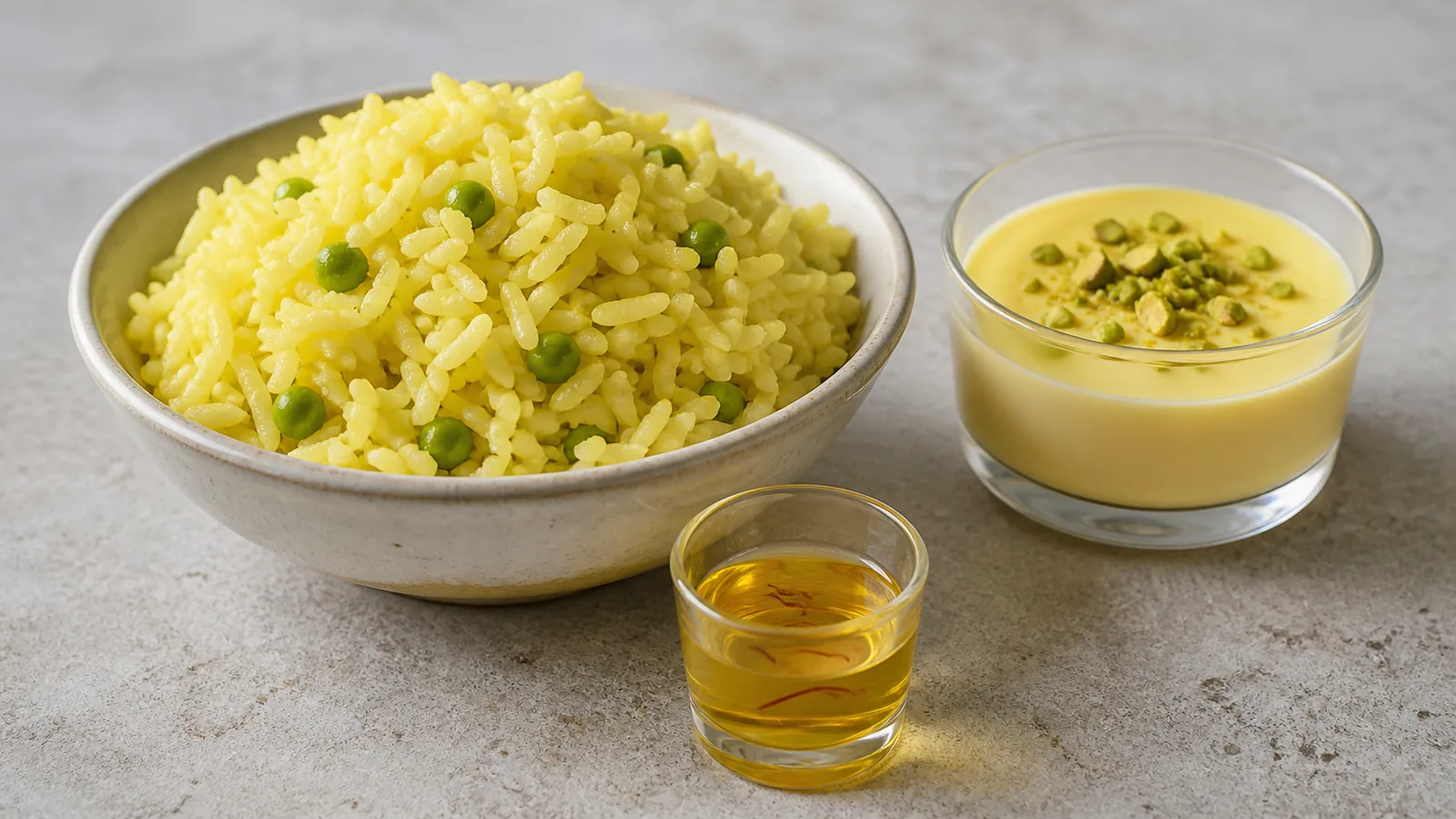
Either origin can work beautifully in rice, desserts, drinks, sauces and savoury dishes. A good batch should release golden colour gradually and contribute saffron’s characteristic aroma and slight bitterness without an artificial perfume or dye-like burst.
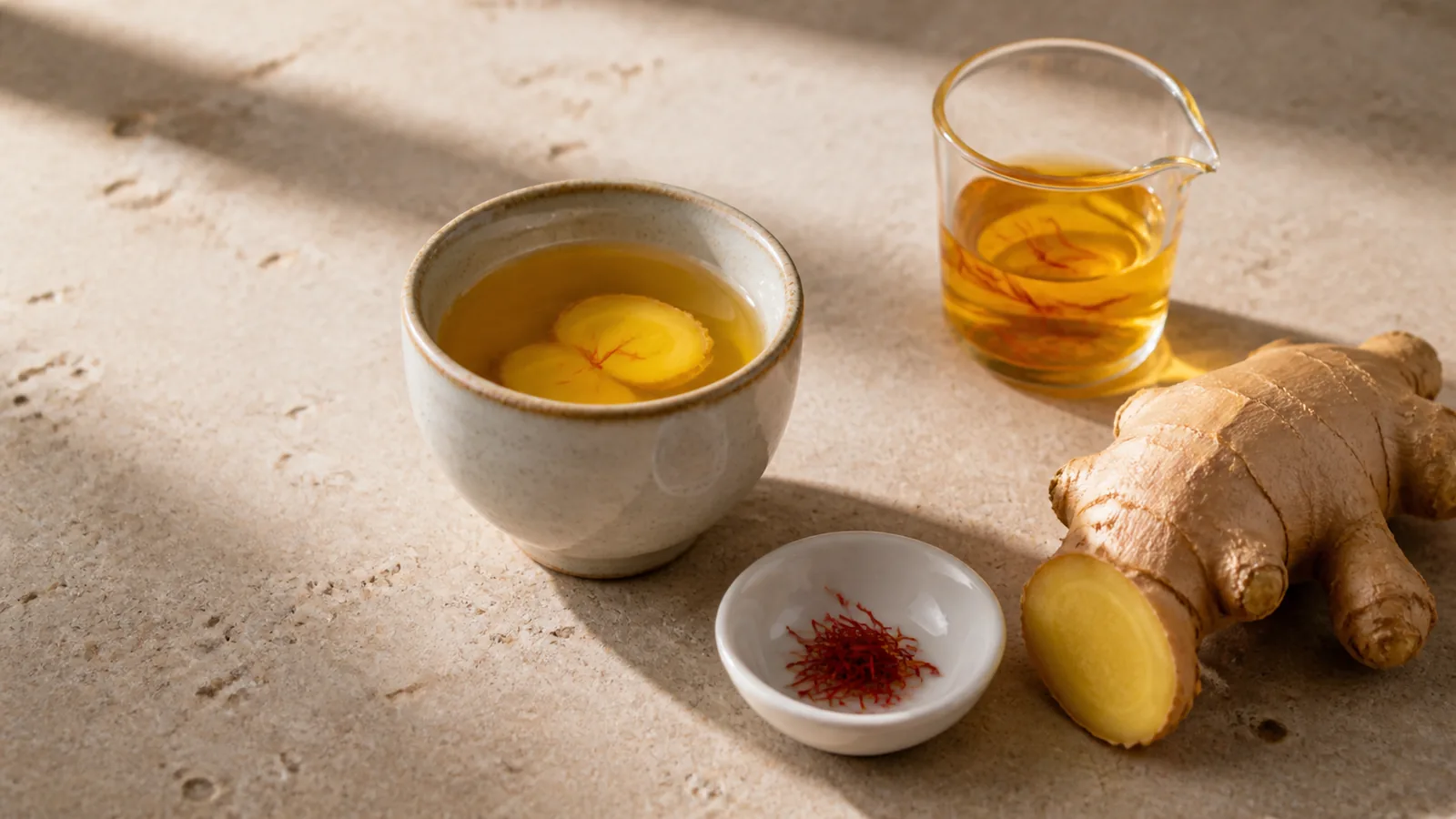
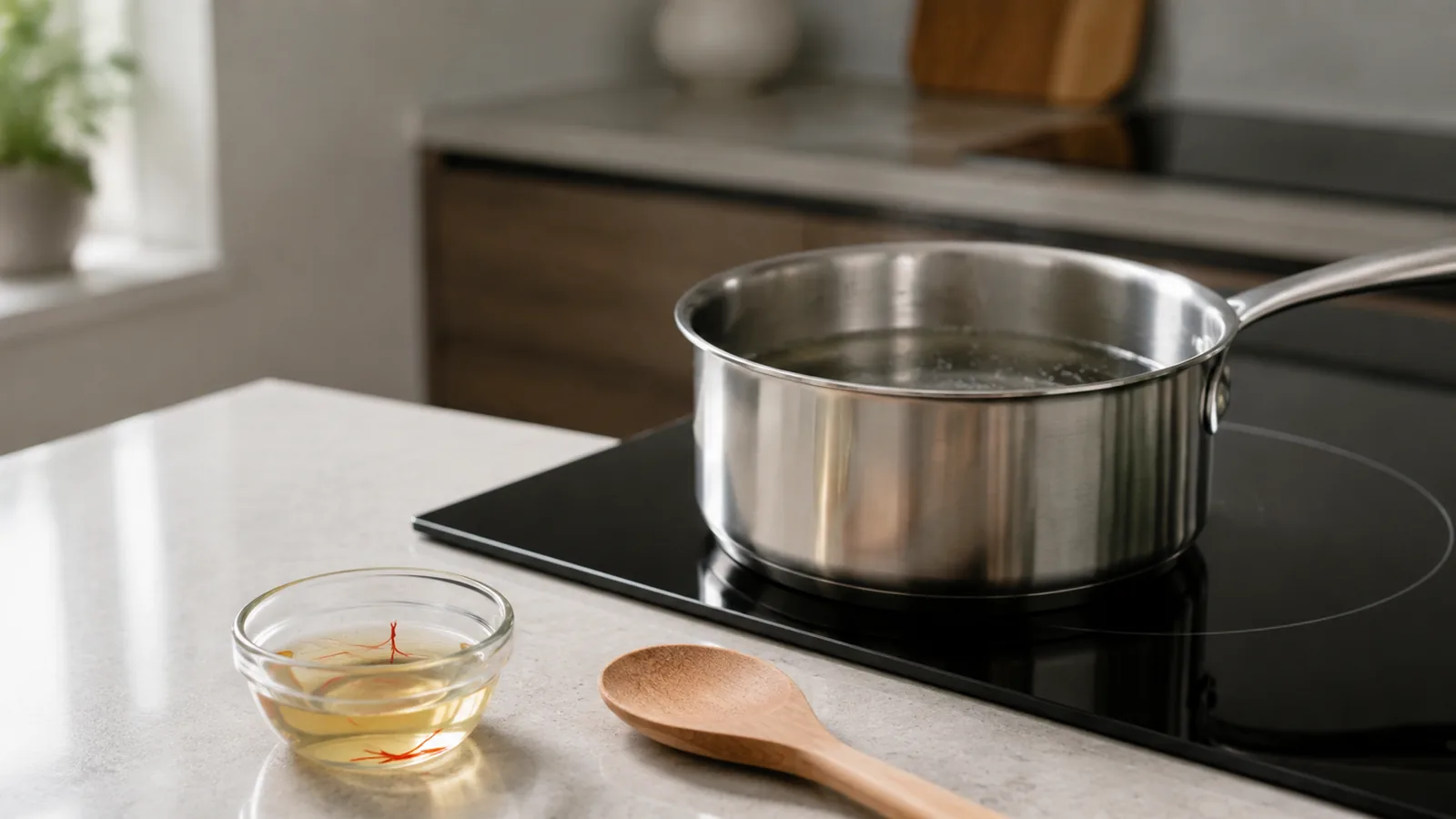
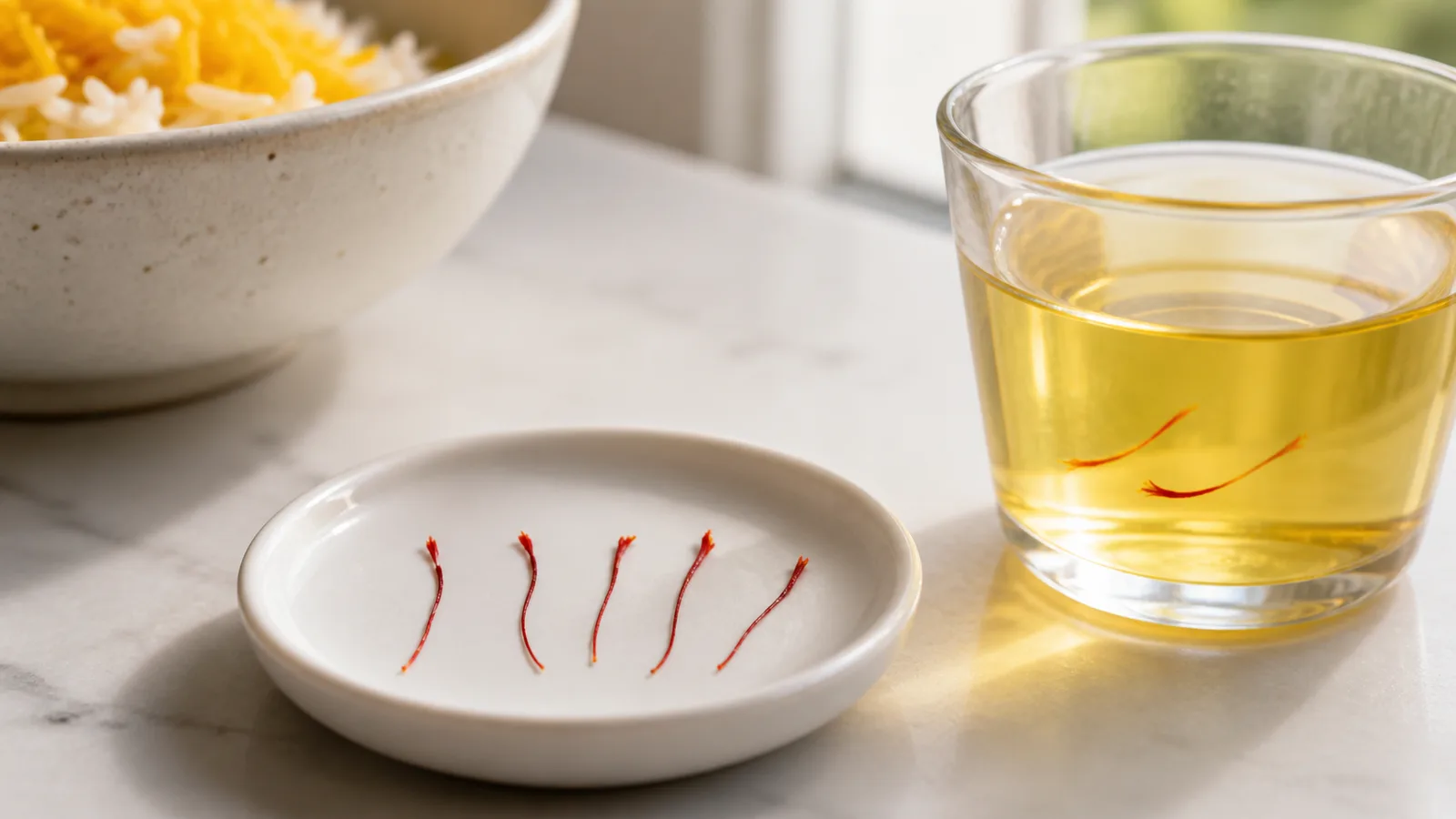
For biryani, pulao, kheer or Persian rice, the preparation often affects the result more than the passport on the package. Measure a modest amount, gently crush the threads when useful, and bloom them in warm liquid before distributing that infusion through the dish. Comparing two origins fairly means using the same weight and the same brewing method.
If you want a pronounced saffron presence, ask for a stigma-rich, well-stored batch with relevant test information. If provenance is the priority, choose a product whose origin can be verified. There is no sound reason to assume that Kashmir saffron belongs only in Indian recipes or that Iranian saffron belongs only in Persian food.
Why Iranian and Kashmiri saffron prices differ
Price changes with each harvest and market, so a fixed per-kilogram figure would quickly become stale. Kashmir saffron may command a premium because supply is limited and protected origin has value. Iranian saffron spans a wide market, from modest retail packs to carefully selected and tested lots.
Compare like with like: the same net weight, filament or powder form, comparable style content, declared origin, harvest or packing information, testing, packaging and delivery terms. A low unit price can hide old stock or an unclear grade; a luxury box can make ordinary saffron expensive without improving the spice inside.
How to choose between two actual products
- Confirm identity and origin. Look for Crocus sativus, a clear country or region statement and seller traceability.
- Compare the product form. Whole threads are easier to inspect than powder. If you compare thread selections, note how much stigma and yellow style each contains.
- Ask for batch evidence. Prefer recent information linked to the lot over a generic certificate displayed on every product page.
- Check freshness and protection. Packaging should limit moisture, air and light, close properly and carry useful dates.
- Ignore absolute superlatives. “The world’s best,” “strongest” and “purest” need evidence, not a flag or a story about altitude.
- Buy a small amount first. Evaluate it with a consistent recipe before committing to a larger purchase.
For a fuller buying checklist, see how to buy high-quality saffron. The broader guide to saffron quality by country also explains why origin and batch quality should be judged separately.
Common comparison questions
Is Iranian saffron better than Kashmiri saffron?
Not as a blanket rule. Iranian saffron offers broad availability and many product selections; genuine Kashmir saffron offers a specific protected regional identity and limited supply. The better purchase is the stronger documented batch for your purpose.
Is Kashmiri saffron better than Iranian saffron?
The reverse claim is no safer. For a Kashmiri saffron vs Iranian saffron choice, compare freshness, traceability, form and test evidence. Kashmiri origin can be valuable and distinctive without guaranteeing that every packet will outperform every Iranian one.
Does “Irani kesar vs Kashmiri kesar” mean a different comparison?
No. Kesar is a widely used name for saffron. “Iran saffron vs Kashmiri saffron” and “Irani kesar vs Kashmiri kesar” are common ways of phrasing the same origin comparison.
What is Kashmiri Mongra saffron?
Mongra is a trade description used for a stigma-rich Kashmir saffron selection. Do not compare that name directly with an Iranian label unless the two sellers explain their specifications; the naming systems are not identical.
Which origin gives stronger colour?
A country name cannot answer that for two unopened packs. Batch-specific colouring-strength data are more informative. If no report is available, use traceability and condition as buying evidence and treat visual colour as only one clue.
The practical answer
Choose Iranian saffron when a traceable Iranian batch offers the form, freshness and evidence you want at a sensible price. Choose Kashmir saffron when verified regional provenance matters and the particular product is well handled. Do not pay for a national stereotype. Compare the saffron in front of you.
You can review our available saffron products or ask about a specific batch before ordering.