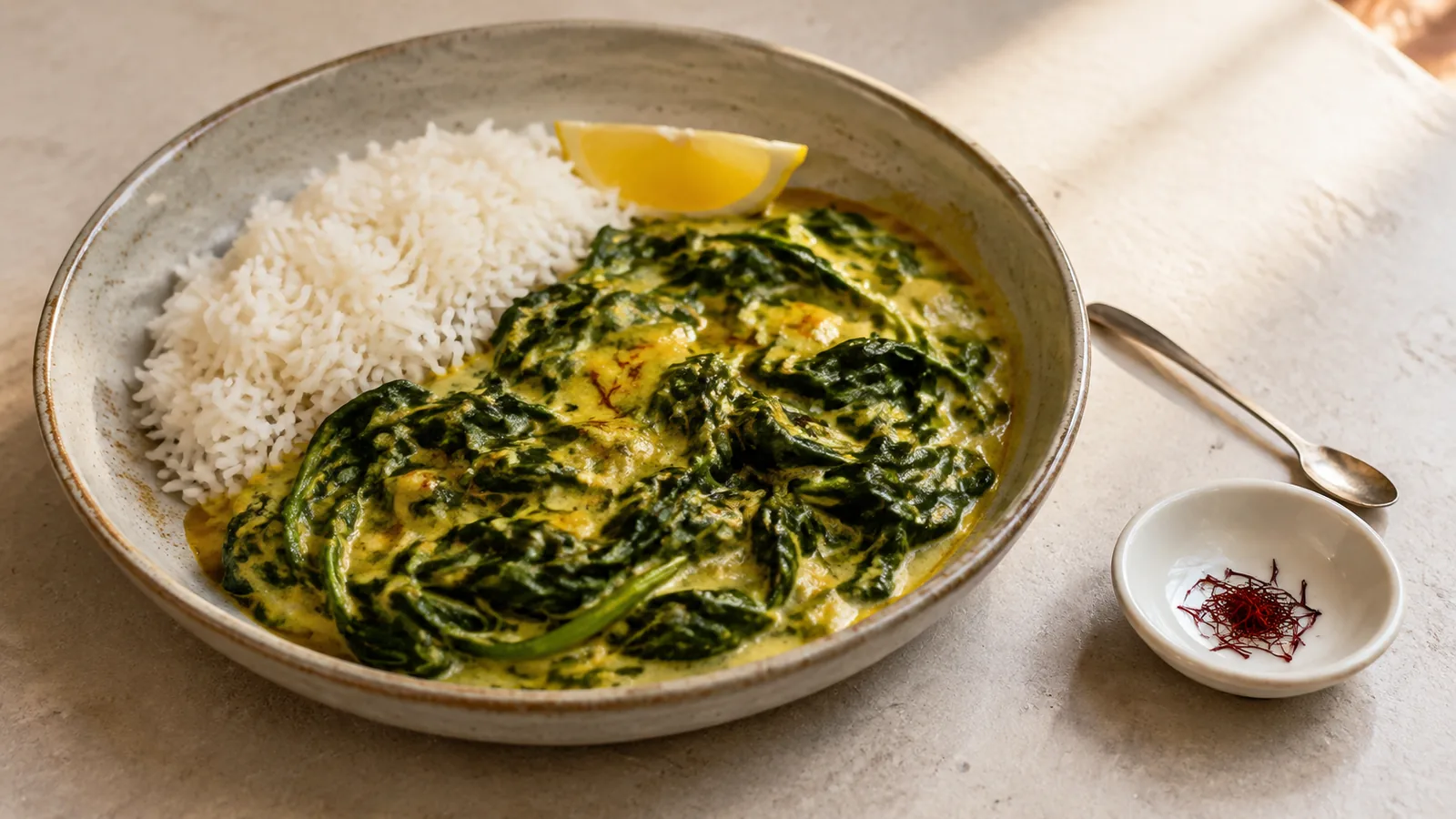
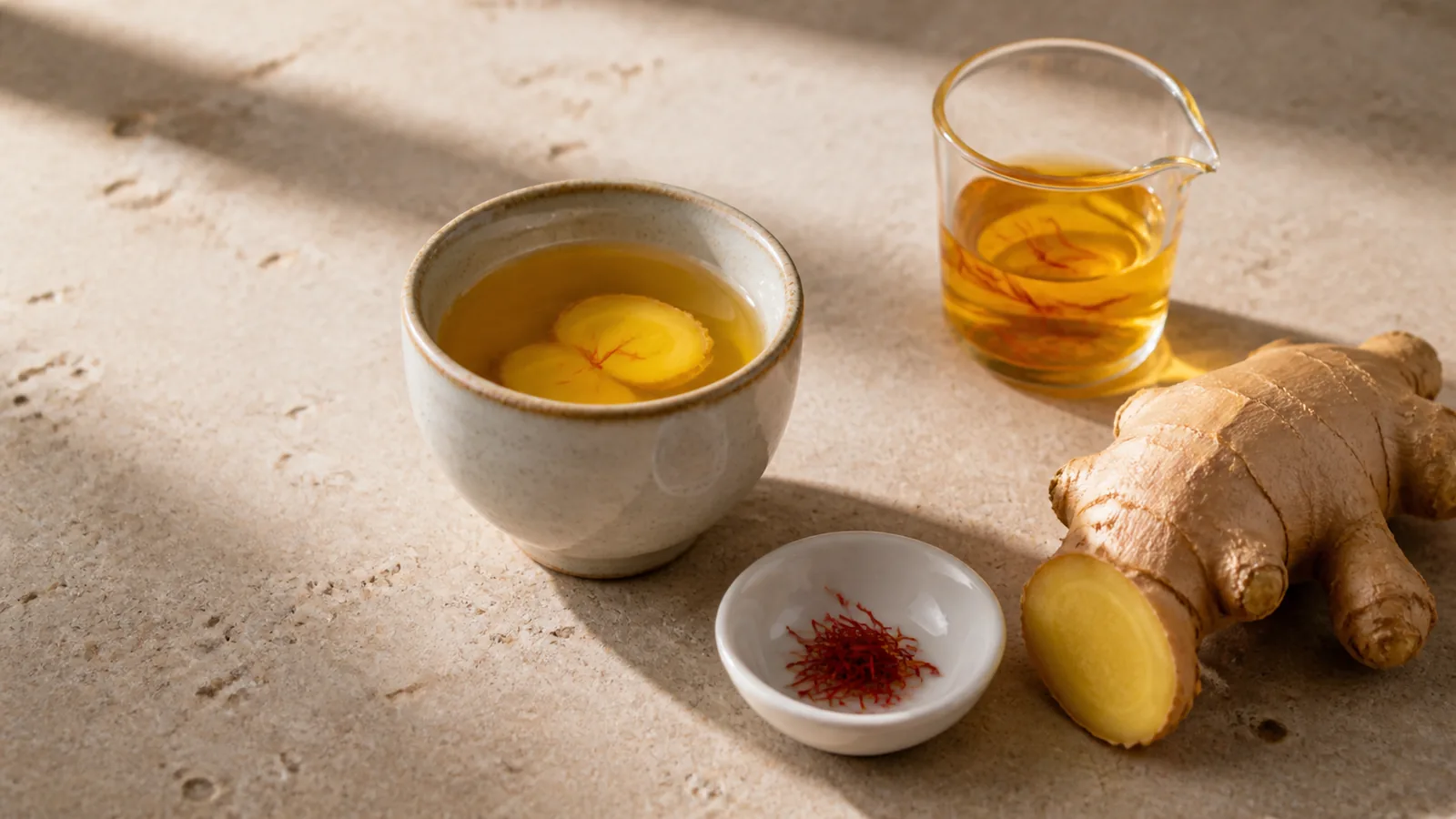
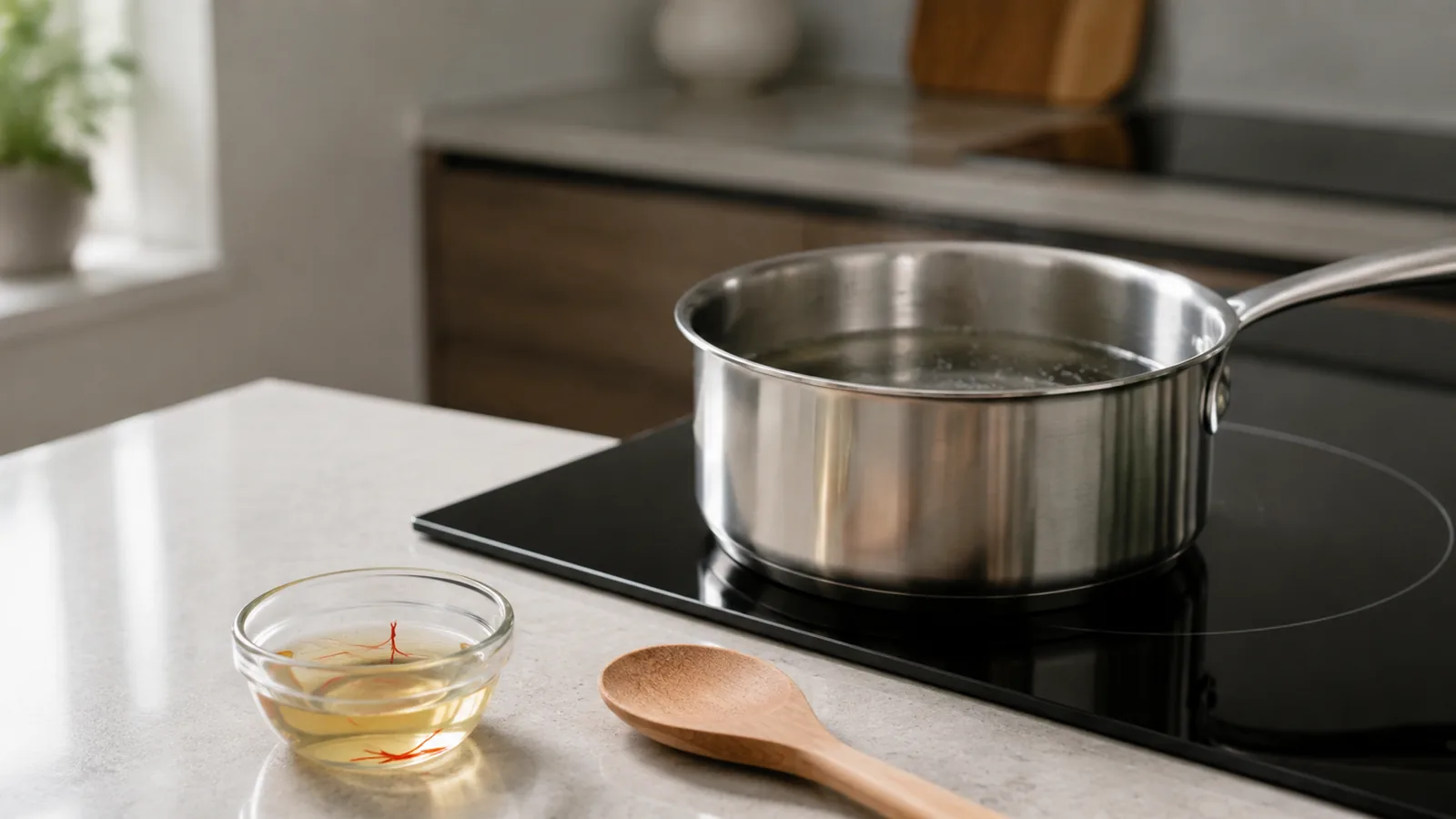
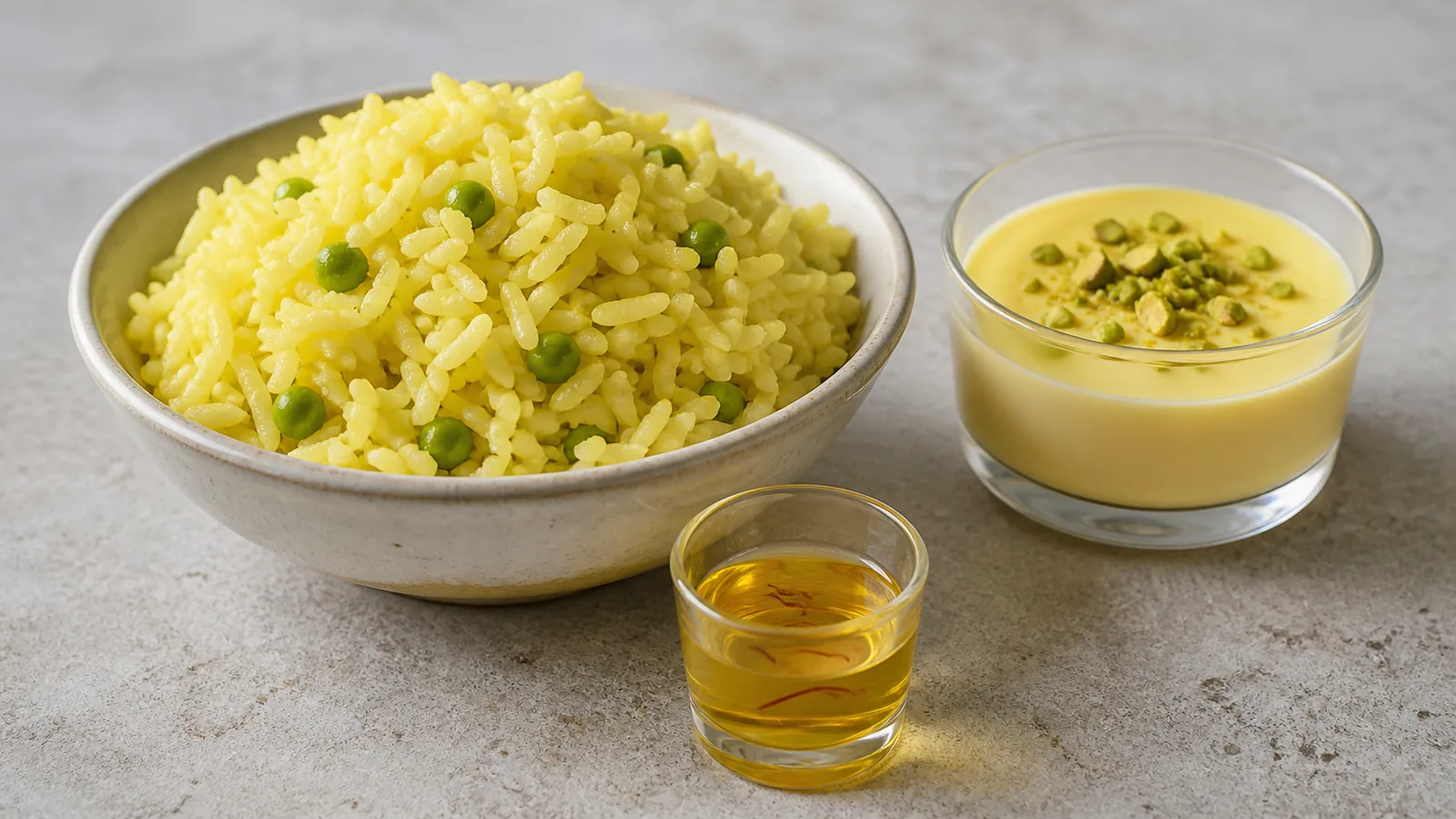
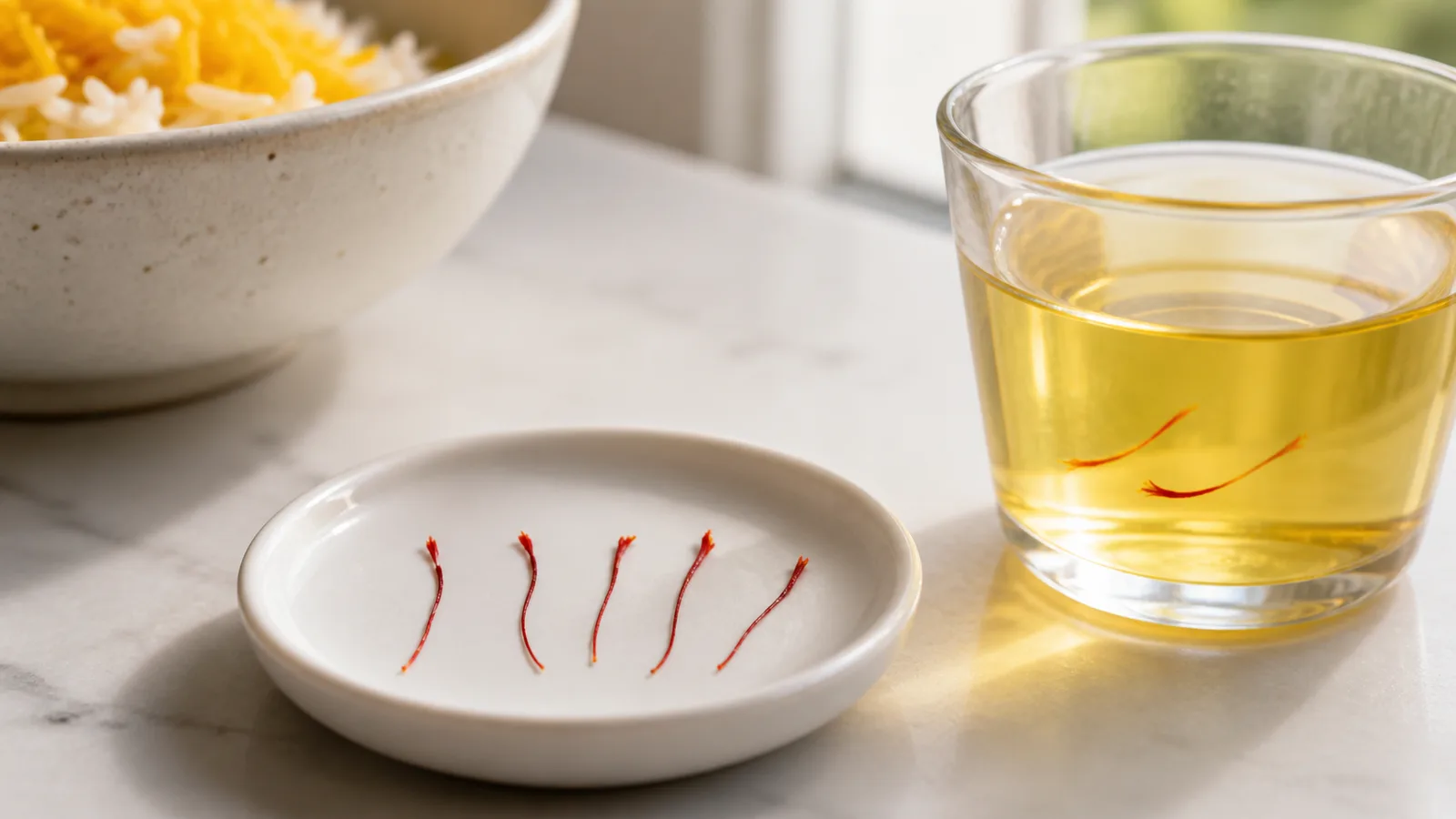
Saffron is red in the jar and yellow-gold in the dish. For red saffron vs yellow saffron, the key distinction is what those terms describe. The spice is made mainly from dried red stigmas of Crocus sativus; a small attached yellowish style can also be genuine. In water or food, compounds from those red threads create the familiar golden yellow-orange colour. “Yellow saffron” is therefore not a separate premium saffron variety.
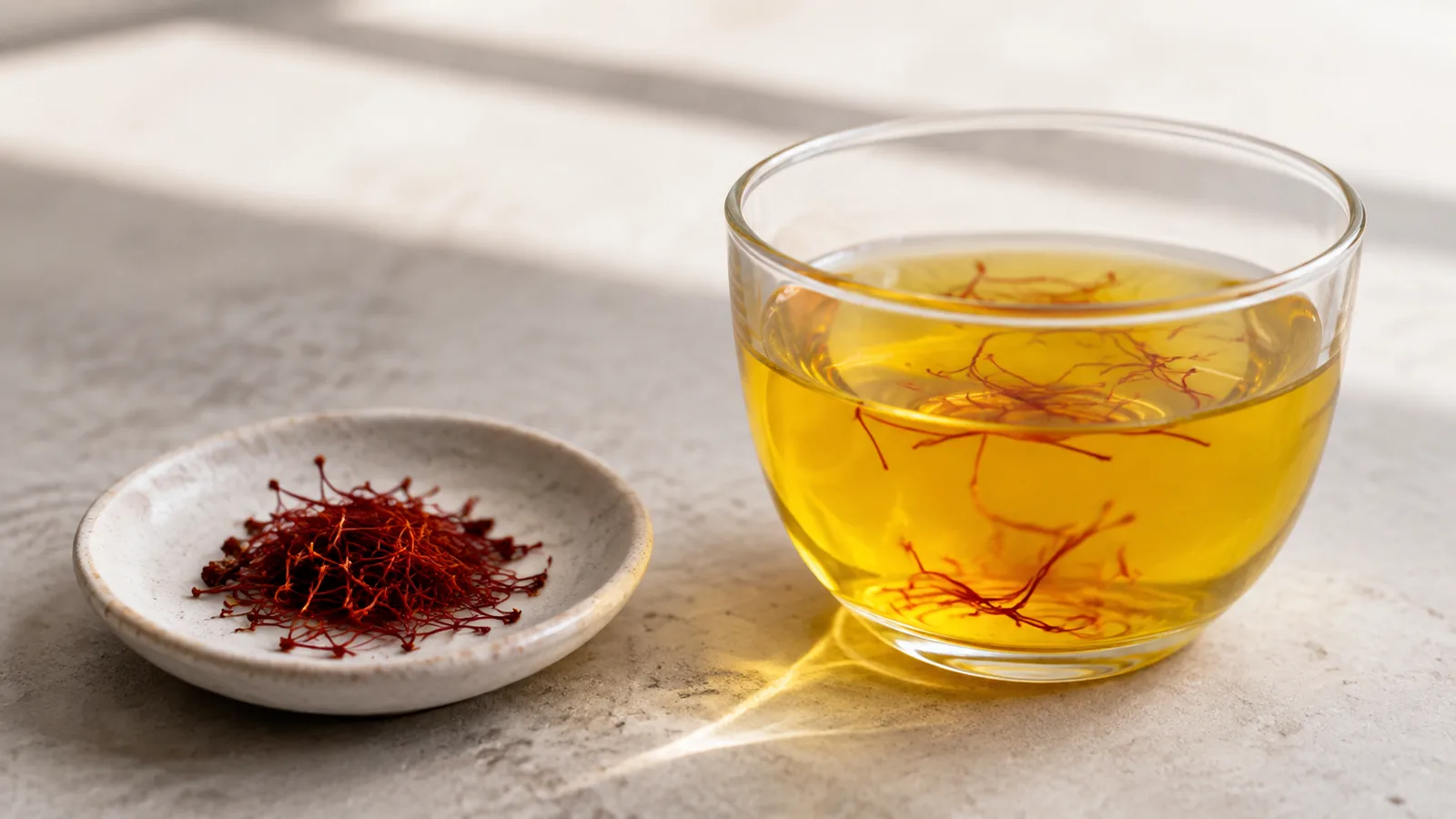
Red and yellow can describe three different things
Confusion starts because people use the word saffron for the dried spice, the colour it releases and a colour name used in clothing, paint or design.
- Red saffron threads: the dried stigma tissue used as the spice.
- Yellow or orange tissue on a thread: usually part of the style below the red stigma, when it genuinely comes from the saffron flower.
- Saffron colour: an everyday name for a golden yellow to yellow-orange hue inspired by saffron’s infusion or dye.
These meanings are related, but they should not be treated as interchangeable products.
What red saffron is
Commercial saffron is primarily the dried red to reddish-brown stigma. A botanical review describes it as red stigma with a small portion of yellowish style sometimes attached. The stigmas branch into three naturally irregular, trumpet-tipped lobes.
The red portion contains the compounds valued for saffron’s colouring ability, bitter taste and characteristic aroma. All-red selections can be concentrated because much of the less colourful style has been removed. Still, a vivid red appearance alone does not establish purity, freshness or laboratory quality.
What sellers may call yellow saffron
The phrase “yellow saffron” is used inconsistently. It may refer to separated yellowish style material, to saffron threads with more style attached, to the colour produced by saffron, or to another plant sold under a loose market name.
Yellow style tissue from Crocus sativus is real flower material, but it is not equivalent to an all-red stigma selection. A blend with a larger proportion of style normally contains less red stigma per gram. That is a grading and value issue, not automatic proof that a foreign substance was added.
If a packet contains only yellow petals, stamens, fibres or powder, do not assume it is culinary saffron. Check the botanical identity and ingredient statement. Genuine powdered saffron made from stigma is not supposed to look like a jar of bright yellow seasoning.
Is saffron red or yellow?
If you are wondering, “Is saffron yellow or red?”, both answers can be correct, depending on what you are looking at:
- The dry culinary threads are mainly deep red to orange-red.
- The attached lower style may be yellowish or orange-yellow.
- The liquid released during brewing is yellow to golden yellow-orange.
- A finished rice dish or dessert usually looks golden rather than red.
This is why a red spice can be famous as a yellow colouring ingredient.
Why red saffron turns water yellow
Crocin compounds in saffron are water-soluble pigments. When the threads are soaked, those pigments disperse through the liquid and produce a bright yellow-orange solution. A scientific review identifies α-crocin as a major contributor to saffron’s yellow-orange colour in water.
The precise shade and release rate vary with dose, temperature, thread size, age and storage. A stronger orange cast is not automatically better, and no fixed brewing time can prove authenticity.
Difference between orange and saffron colour
As colour words, orange and saffron overlap. In an orange vs saffron comparison, orange usually names a broad, recognisable hue between red and yellow. The color of saffron usually suggests a warm golden yellow or yellow-orange associated with brewed saffron, robes, textiles or food.
The difference between orange and saffron colour is therefore contextual rather than a universal border. In many palettes, “saffron” appears lighter, more golden or more yellow than a conventional orange. Another paint, fabric or screen manufacturer may use the name for a deeper orange. Without a named colour system and reference value, the label alone is not exact.
The same caution applies when someone asks for the difference between saffron and orange colour. Compare the actual samples or their specified colour values under similar lighting; do not rely on names from two different brands.
Does more red always mean better saffron?
A high proportion of red stigma can be desirable, but colour is only one part of commercial quality. Freshness, aroma, moisture, foreign material, storage and the measured characteristics of the lot also matter. The Codex CXS 351-2022 and ISO 3632 frameworks evaluate defined product requirements rather than awarding quality from a photograph.
Some genuine yellowish style on a thread is not evidence of fraud. At the same time, unrelated yellow plant material can be used as filler. Naked-eye checks have limits: a peer-reviewed study of saffron look-alikes found that dyed plant and paper materials can imitate aspects of real filaments.
How red and yellow portions affect cooking
For a recipe where saffron aroma and colouring strength matter, a well-documented product rich in stigma is usually the practical choice. Use a modest measured amount, crush or grind it only when the recipe calls for that, and bloom it in warm liquid.
A style-rich product may require more material to reach a similar effect because each gram contains less of the red stigma. It should not be sold as an equal all-red grade without clear description. Buying it solely because it is cheaper can be poor value if you need much more.
Do not use a bright yellow product of uncertain botanical identity as a saffron substitute merely because it colours food. Colour alone will not reproduce saffron’s aroma or characteristic bitterness.
How to choose between products
- Look for Crocus sativus, net weight, origin, lot and date information.
- Check whether the seller describes the form and amount of attached style honestly.
- Prefer traceable material over a vague claim such as “super red” or “yellow saffron.”
- Use aroma and appearance as warning-sign checks, not proof.
- Read any laboratory report to see whether it names the same lot and methods.
- Store the purchase sealed away from light, heat, air and moisture.
For a broader pre-purchase process, follow the guide to buying high-quality saffron. If the product is already open, the article on how to tell whether saffron is pure explains what home checks can and cannot establish.
Common colour questions
Can saffron be yellow?
The flower contains yellow parts, and genuine threads can carry a small yellowish style portion. The spice also makes food yellow-gold. A packet marketed as yellow saffron still needs a clear botanical and ingredient description.
Is saffron orange?
Dry stigmas can appear red-orange, and a strong infusion can move from yellow-gold toward orange. “Saffron” is also used as a yellow-orange colour name, so context matters.
What color is saffron?
The shortest accurate answer is: red threads, sometimes with yellowish style attached, producing a golden yellow-orange infusion.
Is yellow saffron cheaper?
Style-rich material may sell for less than an all-red stigma selection, but prices also reflect origin, harvest, testing, packaging and the seller. A yellow product from another plant is not a cheaper grade of culinary saffron.
The practical difference
Red saffron refers to the stigma-rich spice cooks value for colour, aroma and flavour. Yellow saffron usually refers to attached or separated style material, the golden colour released by the spice, or an imprecise trade name. Check which meaning the seller intends before comparing quality or price.
You can review the current saffron products by form and pack details, or ask the team about a specific product before ordering.