High-quality saffron is identified by several pieces of evidence working together: recognizable Crocus sativus stigmas, a clean complex aroma, a clear golden infusion, good storage and credible traceability. No single home test can confirm purity or prove that a batch is premium.
High Quality Saffron Tips: Start With the Label
Before inspecting the threads, read what the seller is claiming. The package should identify saffron as Crocus sativus stigma, state a net weight and give useful producer, packer or batch information. A regional or grade name should be specific enough to verify rather than a loose phrase such as “royal quality.”
Check how the spice is protected. Light, air, heat and moisture weaken saffron during storage. A small sealed container that blocks or limits light is more convincing than an open display or a decorative package with no batch details.
Examine the Thread Structure
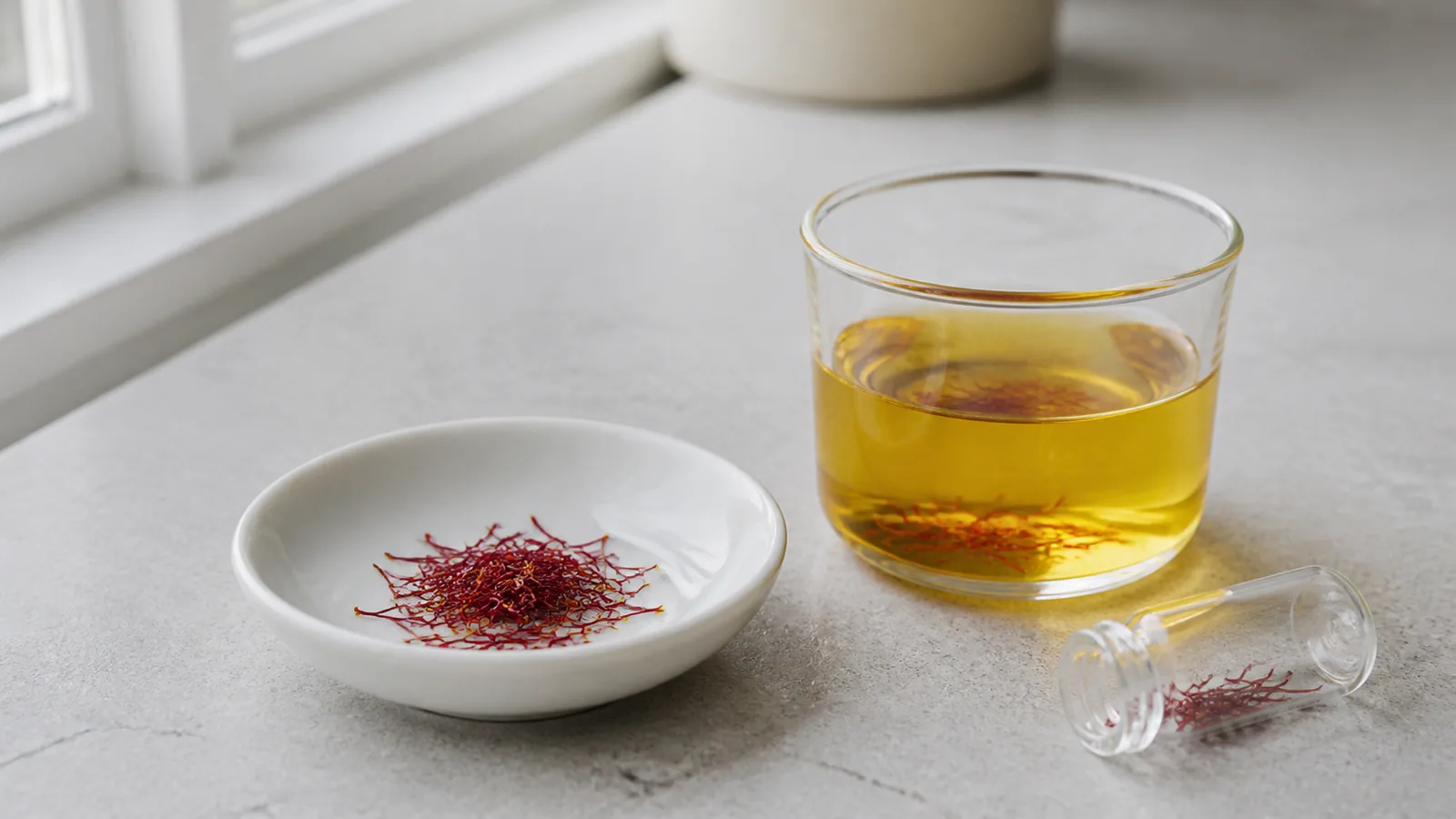
A saffron stigma is not a straight, uniformly cut fiber. Whole stigmas usually have a slender red body and a widened or flared end. Natural threads vary slightly in length and curve. Perfectly identical strands, fuzzy dyed fibers or unexplained flat petals deserve caution.
Long, intact threads make visual inspection easier, but broken saffron is not automatically poor. Handling can break genuine stigmas. Powder can also be authentic, although it removes the structure a buyer would otherwise inspect and makes adulteration harder to notice.
Understand Red Threads and Yellow Style
All-red grades contain a high proportion of the red stigma. Pushal and Bunch presentations intentionally retain some orange or yellow style. Pale style contributes less of the material associated with saffron’s characteristic color, aroma and taste, so a package with more style may deliver less red stigma per gram. It is still a real part of the flower, not proof of fraud.
Judge the contents against the grade that was promised. The saffron grades guide explains why Sargol, Negin, Pushal and Bunch should not be compared as though their thread composition were identical. Buyers seeking a high red-stigma proportion can also review the all-red saffron collection.
Color Is Useful, but Redder Is Not Always Better
Good dried saffron often appears deep crimson to red, but photography, lighting and screen settings can exaggerate it. A vivid package photo cannot show freshness or chemical quality. Unnaturally even coloring may be as concerning as dull, badly stored threads.
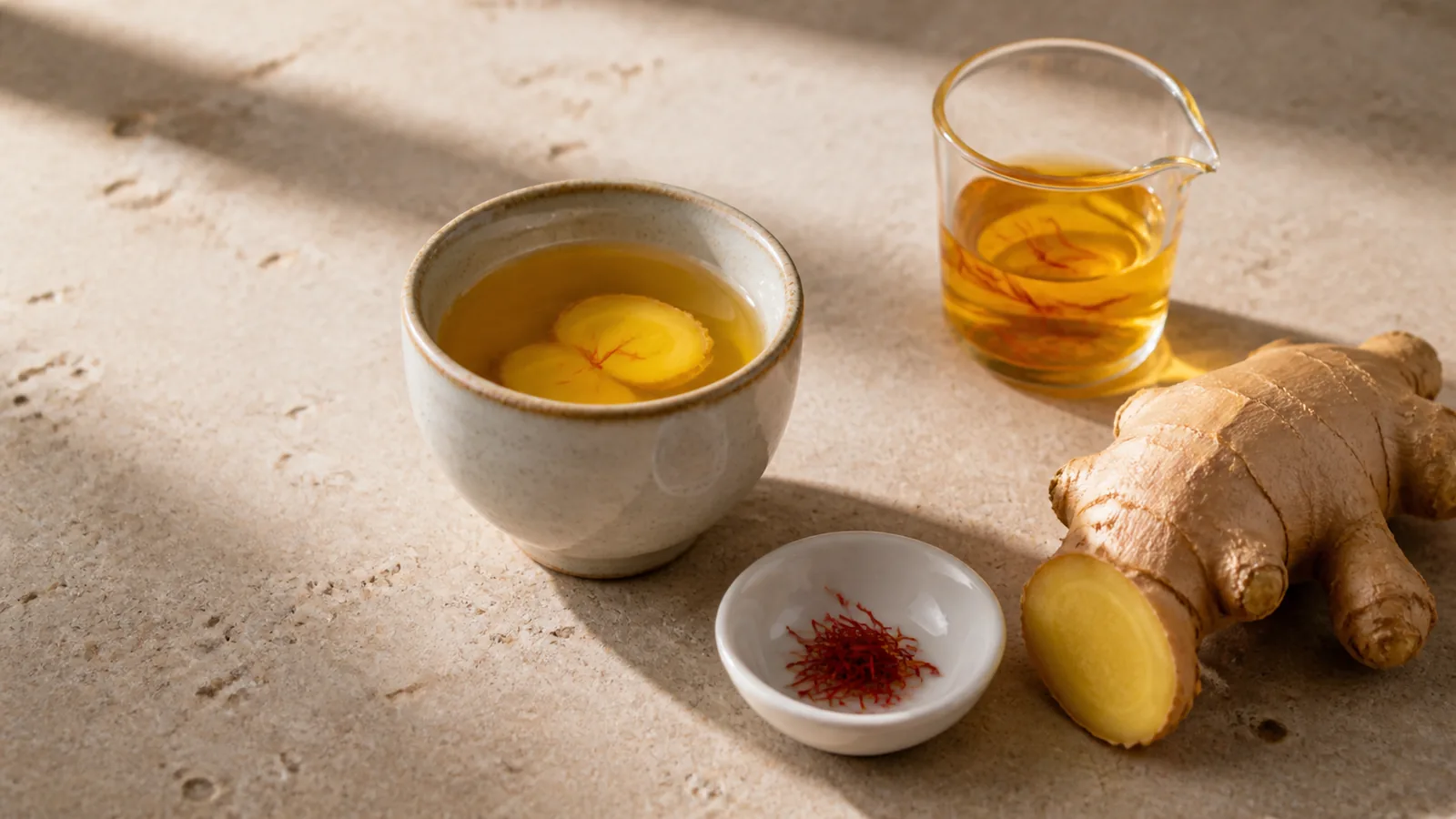
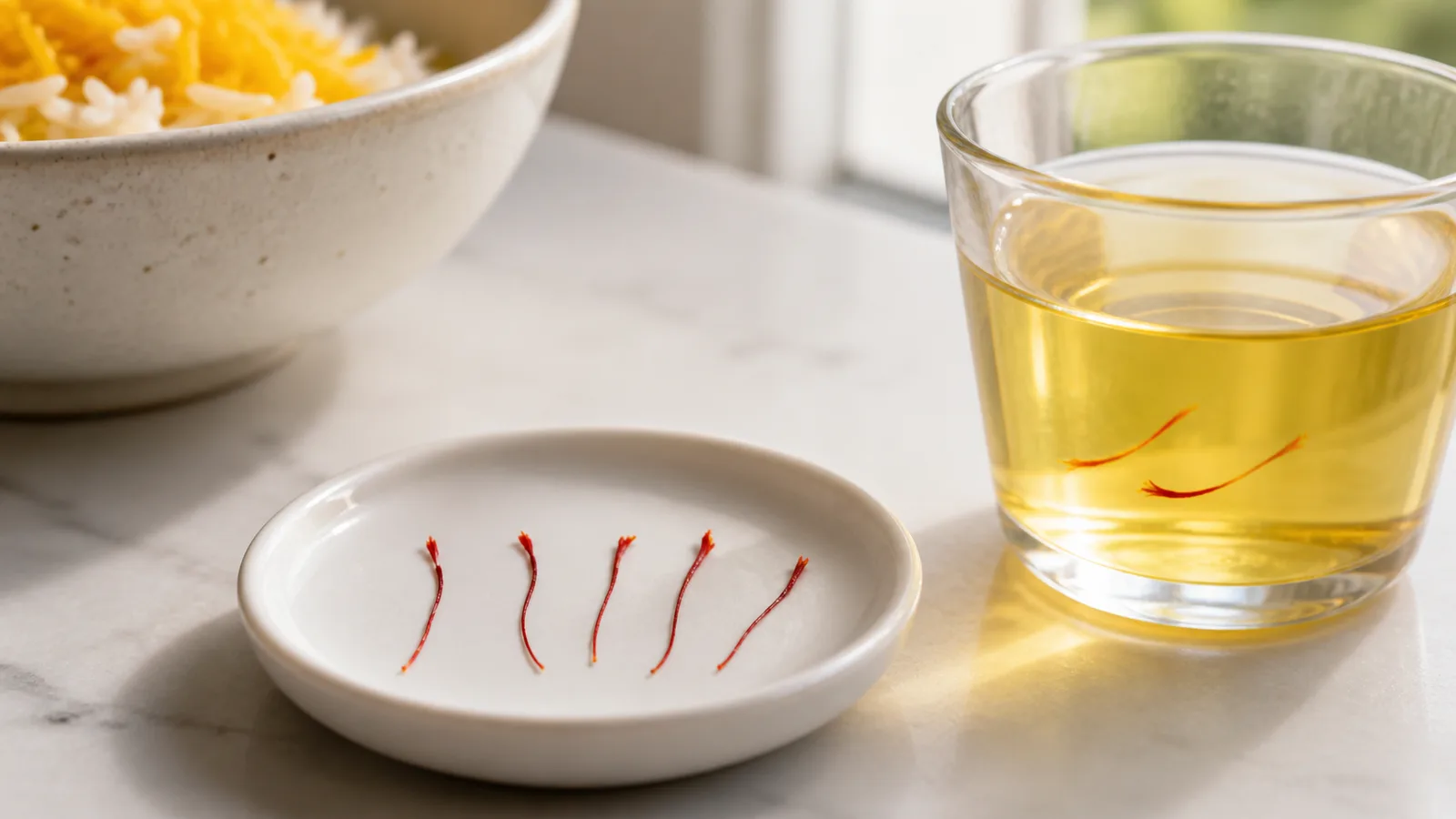
When infused in warm water, genuine saffron normally releases a clear yellow-to-golden color rather than an opaque red cloud. The process is gradual, especially when whole threads have not been crushed. Added colorants can imitate part of this behavior, so the water test is an observation, not a certificate.
Check Aroma and Flavor Carefully
Saffron’s aroma is complex: people may describe it as floral, hay-like, honeyed, earthy or slightly metallic. It should smell clean and distinctive rather than musty, damp or perfumed with a simple added fragrance. A weak aroma may reflect age or poor storage, although a sealed cold sample can open up after warming gently.
The taste is characteristically bitter in a restrained way. Sweetness is not a purity test, and saffron should not need to taste sugary. Do not eat a large dry pinch to judge it; prepare a small measured infusion and compare batches at the same dose.
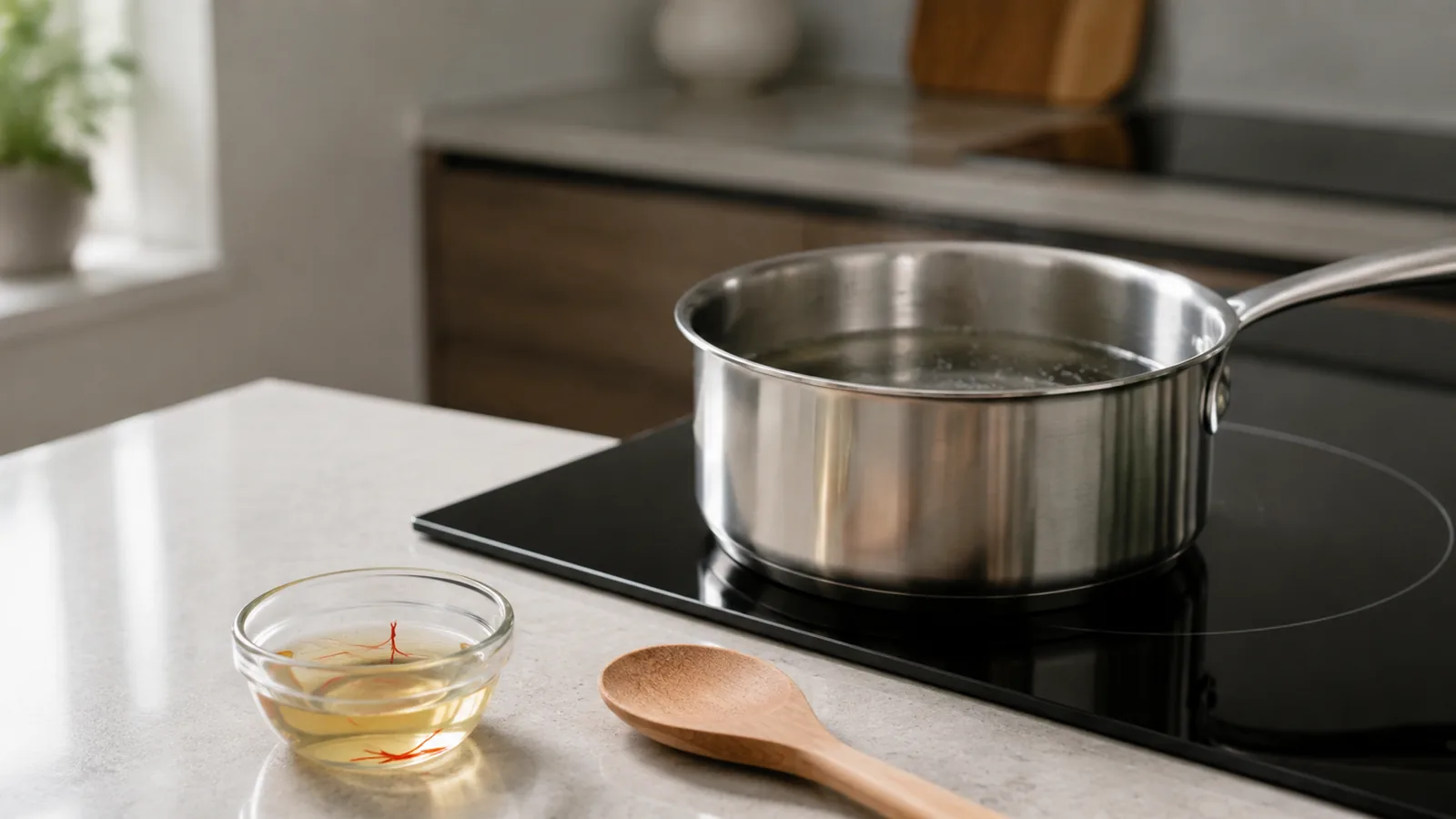
A Better Home Infusion Check
- Place a few threads in a clean clear glass.
- Add warm water, not violently boiling water.
- Watch the liquid develop a transparent golden-yellow color over several minutes.
- Note whether the aroma becomes more complex as the threads hydrate.
- Keep the thread sample and package if you need to question the seller.
This check can reveal obvious problems, but it cannot confirm geographical origin, grade or the absence of every adulterant. The fuller guide to identifying pure saffron explains the limits of common water, rubbing and visual tests.
What Laboratory Quality Testing Adds
Professional assessment goes beyond color by eye. A peer-reviewed review of saffron quality assessment describes measurements related to crocins, picrocrocin, safranal, moisture and other characteristics. Together, these help evaluate coloring strength, bitterness, aroma and condition.
A test result is most useful when it belongs to the batch being sold and comes from a credible laboratory. An undated certificate for a different lot should not be treated as proof. Likewise, a high analytical category does not repair poor storage after testing.
Origin Does Not Settle Quality
Iranian, Kashmiri, Spanish, Greek, Afghan and Moroccan saffron can all be genuine. Soil, climate, altitude and local skill affect production, while harvesting, drying and storage shape the final batch. Origin provides context; it does not guarantee that one jar is superior.
The comparison of Spanish and Iranian saffron shows how protected origin, processing and batch quality differ. It is more useful than relying on a blanket national ranking.
Signs That Need More Scrutiny
- A price far below the normal market range for the stated weight and grade.
- No origin, batch, packer or ingredient information.
- Threads that look identical, fuzzy, flat, oily or unnaturally bright.
- A simple sweet or perfumed smell without saffron’s characteristic complexity.
- Immediate opaque red dye in water.
- Claims that one quick kitchen trick “guarantees” purity.
- Health or cure promises used as proof of product quality.
How to Choose With Confidence
Use the high quality saffron tips as a sequence rather than a scorecard. Confirm identity and traceability first, examine the threads, smell the sample, prepare a controlled infusion and compare it with the grade promised. If the purchase is important, ask for current batch testing instead of relying on a dramatic color photo.
High-quality saffron combines purity, freshness, proper processing and honest documentation. Deep-red intact threads can be a positive sign, but they are not enough on their own. The safest conclusion comes from consistent evidence, not a single test or premium label.