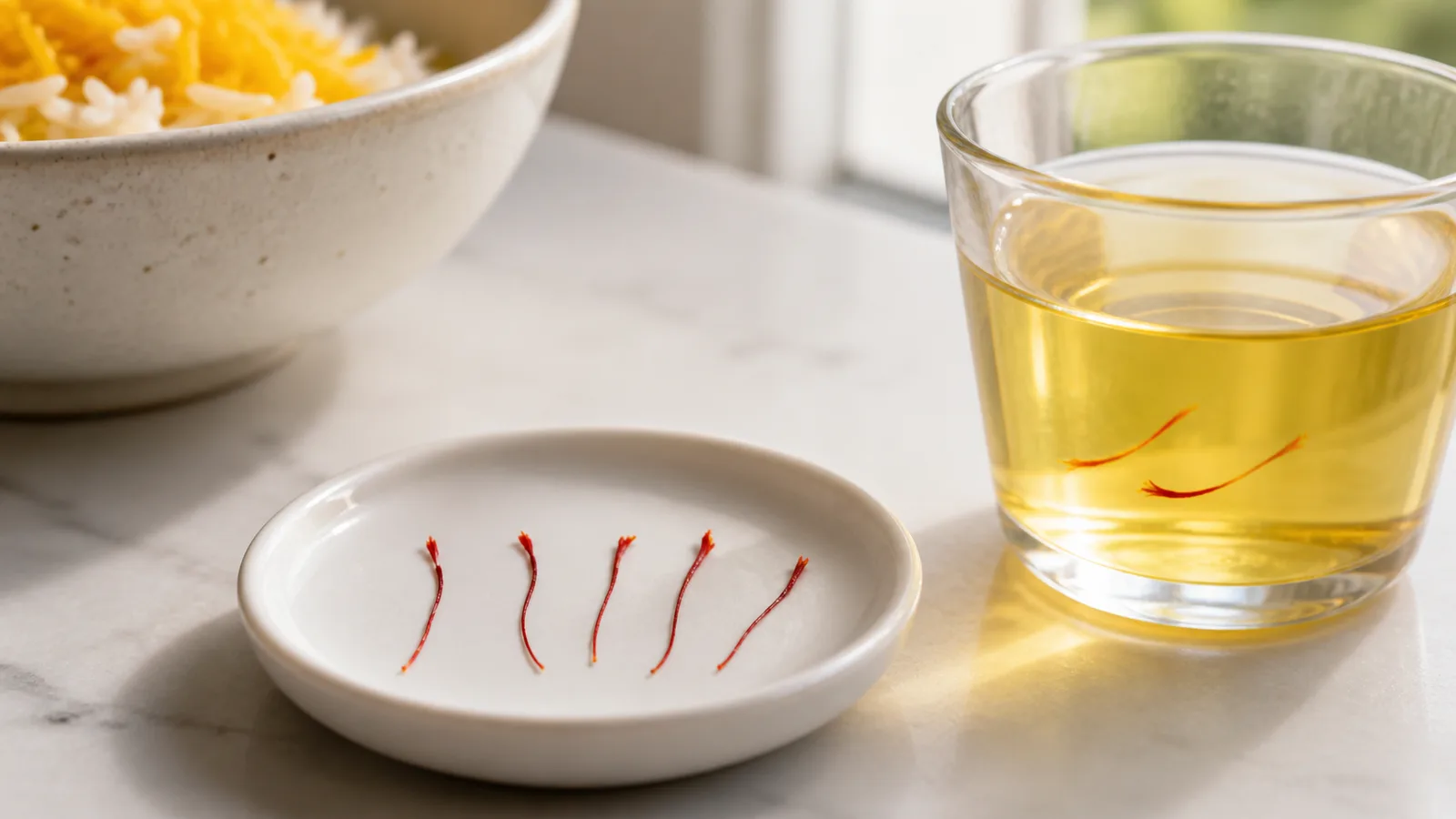
Spanish saffron is not automatically better than Iranian saffron, and Iranian saffron is not automatically stronger. Both come from Crocus sativus. The better choice is the fresh, genuine, well-handled batch that suits the dish; country of origin provides context, not a final quality score.
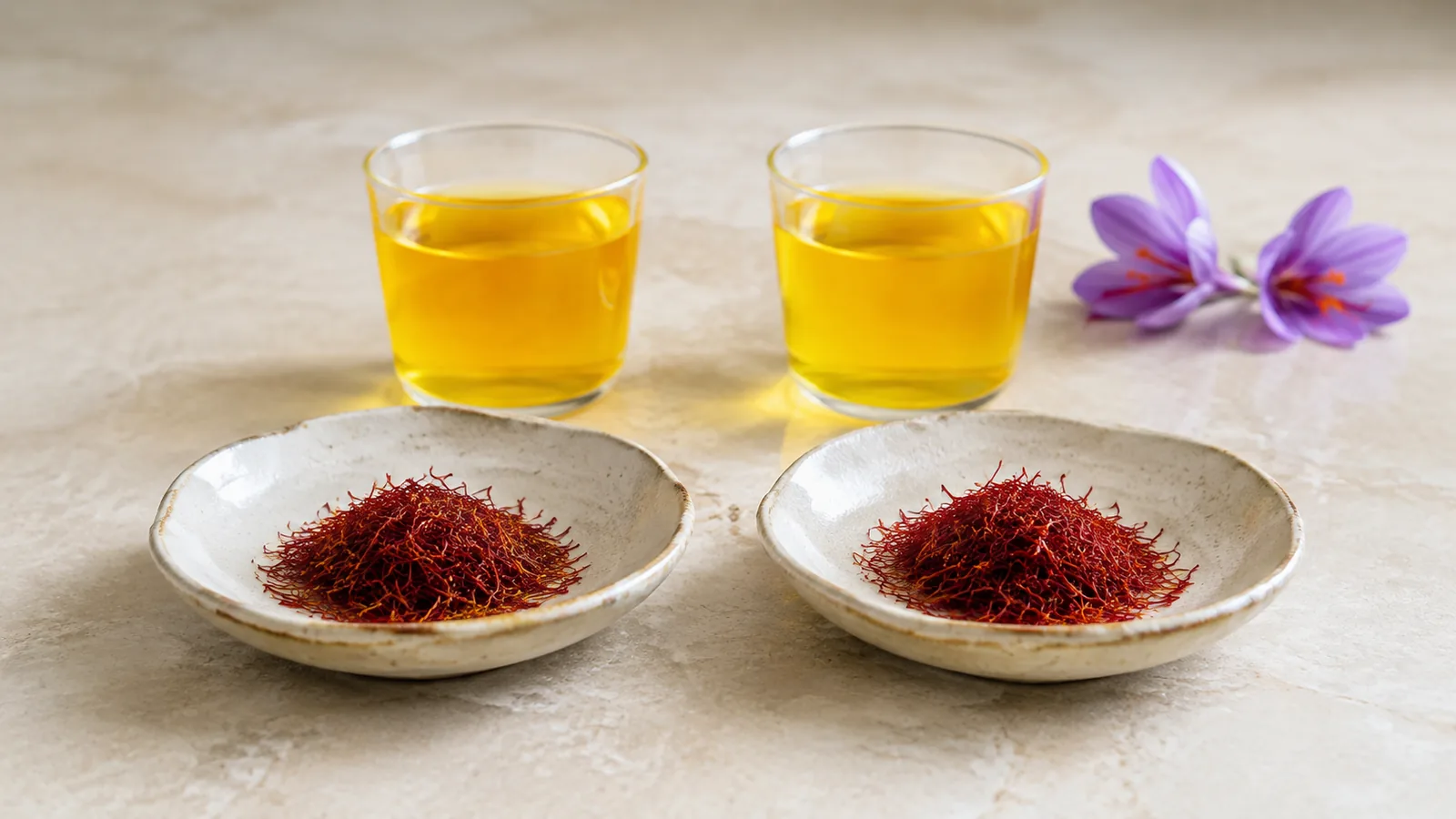
Saffron Quality Comparison: Spanish Saffron vs Iranian Saffron
A useful saffron quality comparison starts with the product in the package. Purity, harvest condition, drying, storage, thread content and age can create a larger difference than the border between two countries. A traceable Spanish batch can outperform a tired Iranian one, and a carefully produced Iranian batch can outperform an ordinary Spanish one.
Iran has the advantage of scale and a very long production tradition. The Food and Agriculture Organization’s account of Iran’s qanat-based saffron system identifies the country as the world’s largest producer and explains how cultivation developed under dry conditions with managed irrigation.
Spain has its own established saffron culture. Azafrán de La Mancha is a protected designation of origin with an official European Union product specification. That protected name refers to saffron produced and processed under defined regional requirements; it should not be confused with every jar carrying a Spanish brand or Spanish-language label.
Is Spanish Saffron the Same as Saffron?
Yes. Genuine Spanish saffron is the same spice species as genuine Iranian or Persian saffron: dried stigmas of Crocus sativus. “Spanish saffron” describes origin or a commercial presentation, not a separate plant.
The phrase can still be ambiguous on a shop shelf. Saffron may be grown, packed, traded and sold in different places, so read the explicit country-of-origin statement rather than inferring origin from the brand name or package design.
Iranian Saffron
Iranian saffron is available in several thread presentations, from all-red material to styles that retain more of the yellow-orange portion. Grade terms used by sellers can describe appearance and sorting, but the name alone does not prove freshness, purity or a laboratory result.
Good Iranian saffron can deliver strong coloring power, a complex floral and hay-like aroma, gentle bitterness and a long finish. Those traits make it versatile in rice, stews, desserts, drinks and baked dishes. They are qualities of a good batch, however, not a promise attached to every Iranian package.
Is Spanish Saffron Good?
Spanish saffron is closely tied to dishes such as paella and other rice preparations. In La Mancha’s protected tradition, drying includes a roasting stage. Handling and drying influence the final aroma, so a regional processing method can give a product a recognizable style.
Descriptions such as “milder,” “sweeter” or “more roasted” may be useful tasting notes for a particular jar, but they should not be treated as laws of Spanish saffron. Product age, dose and storage can easily change what a cook perceives.
Flavor and Aroma Differences
Iranian saffron versus Spanish saffron is often presented as a simple strong-versus-delicate choice. Real tasting is less tidy. Saffron aroma depends on its chemistry, and that chemistry changes with growing conditions, drying and time in storage.
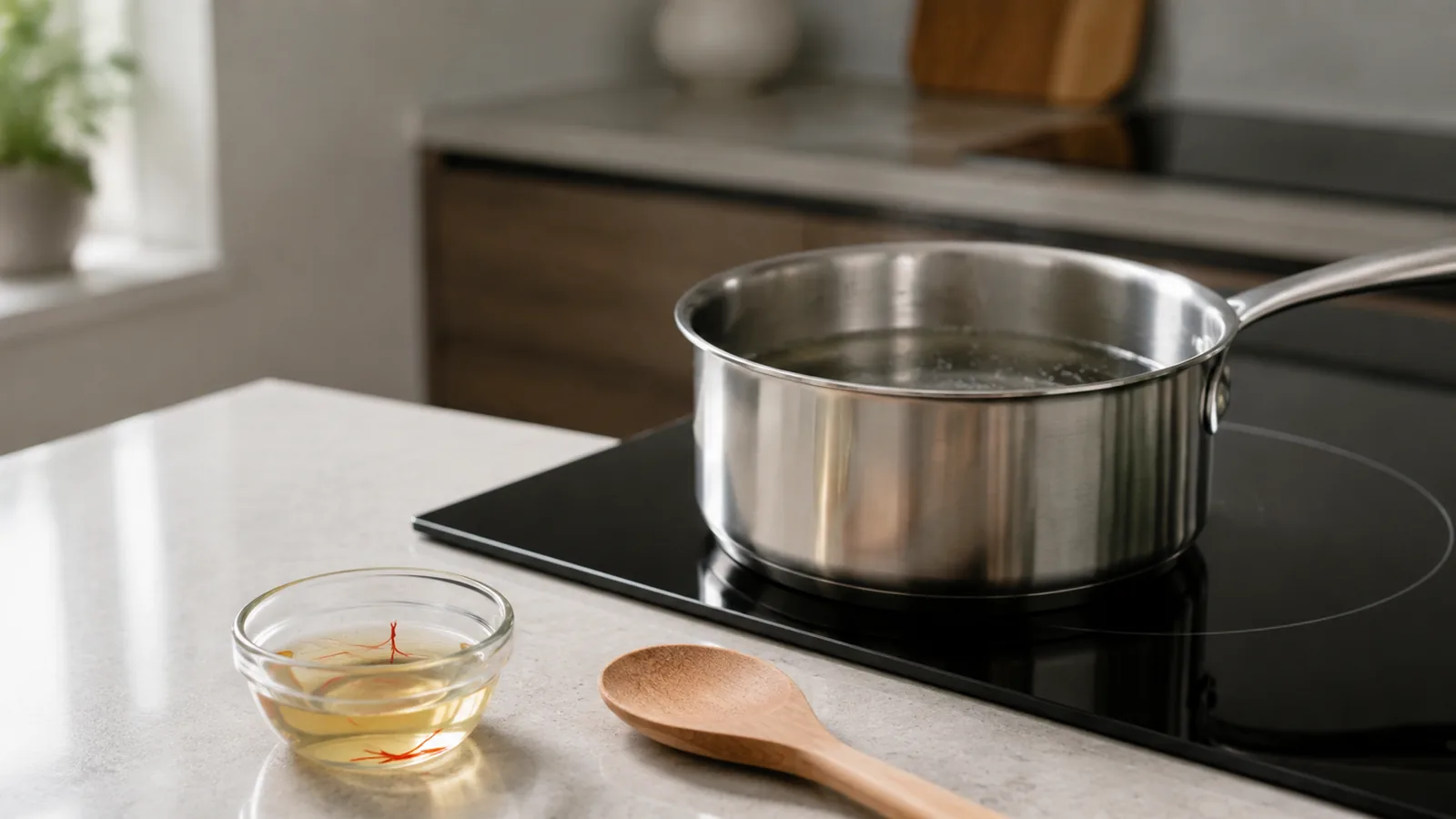
Compare two samples at the same weight and prepare them the same way. Bloom each in an equal amount of warm water for the same length of time, then smell and taste the infusions before adding them to food. If one sample is used at twice the dose, the result says little about origin.
Color Strength and Thread Appearance
High-quality saffron should release a clear golden-yellow infusion rather than an instant opaque red cloud. The exact speed and intensity depend on dose, grinding, water temperature and the batch itself. It is unsafe to claim that Spanish saffron always releases color faster or that Iranian saffron is always darker.
Whole threads allow a basic visual check. Look for recognizable stigma shapes and a product that is dry rather than damp or musty. All-red threads may be desirable, but appearance cannot establish purity on its own. Dyed fibers and other plant material can be made to look convincing, which is why traceability and credible testing matter.
Spanish Saffron Versus Persian Saffron for Cooking
Persian saffron is another common name for Iranian saffron. Choose between it and Spanish saffron according to the particular product and recipe:
- For a traditional regional recipe, an ingredient from the same culinary tradition can provide useful authenticity.
- For everyday rice, either origin can work well when the saffron is genuine and dosed correctly.
- For a delicate custard or drink, test a small infusion first so the aroma does not dominate.
- For a strongly seasoned stew, use a measured dose and add the infusion where its aroma will not be cooked away unnecessarily.
The preparation method often matters more than the country choice. Crush a measured portion, bloom it gently and add both liquid and threads to the dish.
What About Kashmiri, Indian and Mexican Saffron?
Kashmiri saffron is genuine Crocus sativus associated with the Kashmir region of India. It deserves evaluation on its own origin, traceability and batch condition, not as a halfway point in a Spanish-versus-Iranian contest.
“Indian saffron” may refer to Kashmiri saffron, but the wording is broad; check the region and product details. “Mexican saffron” often refers to safflower, a different plant used for color. Safflower can be a legitimate ingredient when clearly named, but it is not a national variety of genuine saffron.
How to Compare Two Packages
- Confirm that the ingredient is saffron or Crocus sativus.
- Read the actual origin statement, not only the brand story.
- Check net weight, batch information, packing date where supplied and storage instructions.
- Prefer packaging that protects threads from light, moisture and air.
- Be cautious with extreme superlatives and prices that make no sense for hand-harvested saffron.
- Compare equal weights with the same infusion method.
The guide to identifying pure saffron explains useful home observations and their limits. No single glass-of-water trick can replace provenance or a proper laboratory analysis.
Which Is Better to Buy?
Buy the batch with the clearest identity, sensible storage, credible seller and flavor you prefer. A protected La Mancha product can be an excellent choice for a buyer seeking that regional tradition. A fresh, traceable Iranian product can offer excellent performance and broader availability.
The saffron shop shows the formats currently offered. Judge them by the same standards you would apply to any origin: authenticity, condition, traceability and fit for the intended recipe.
Is Spanish Saffron Better Than Iranian Saffron?
No country wins automatically. Spanish and Iranian saffron can both be excellent, and both can be disappointing when a package is old, adulterated or poorly stored. Spanish saffron may appeal for a documented regional tradition and particular processing style; Iranian saffron offers deep expertise, scale and many strong-quality options.
Use origin to understand what you are buying, then let the evidence in the jar settle the comparison. Equal-dose tasting, clear provenance and the condition of the threads provide a more honest answer than a blanket national ranking.