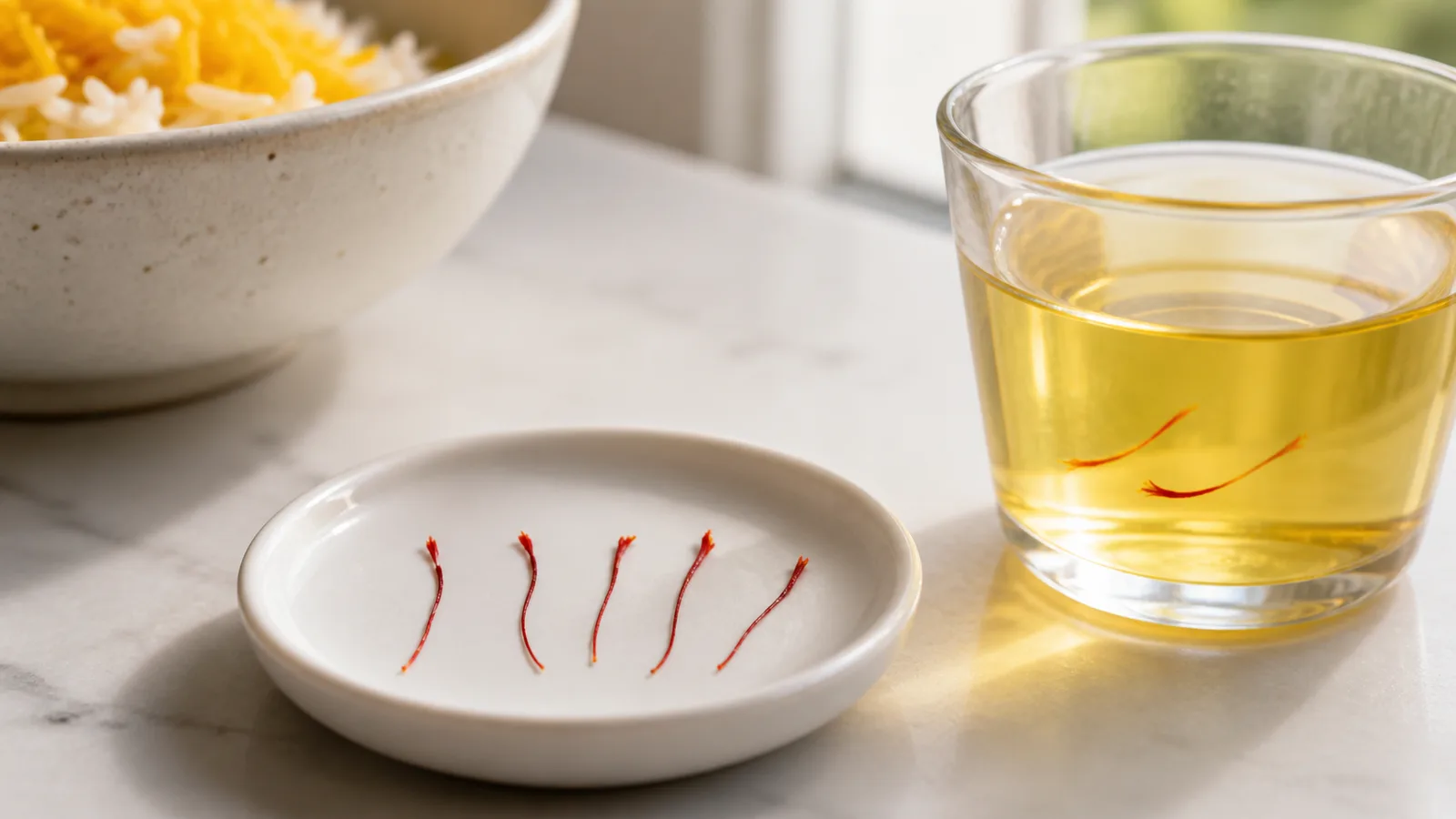
Plant saffron in the sunniest well-drained spot you can provide. A raised bed, sloping border or deep container can all work, provided rainwater drains away quickly and the corms are not shaded during their winter leaf growth.
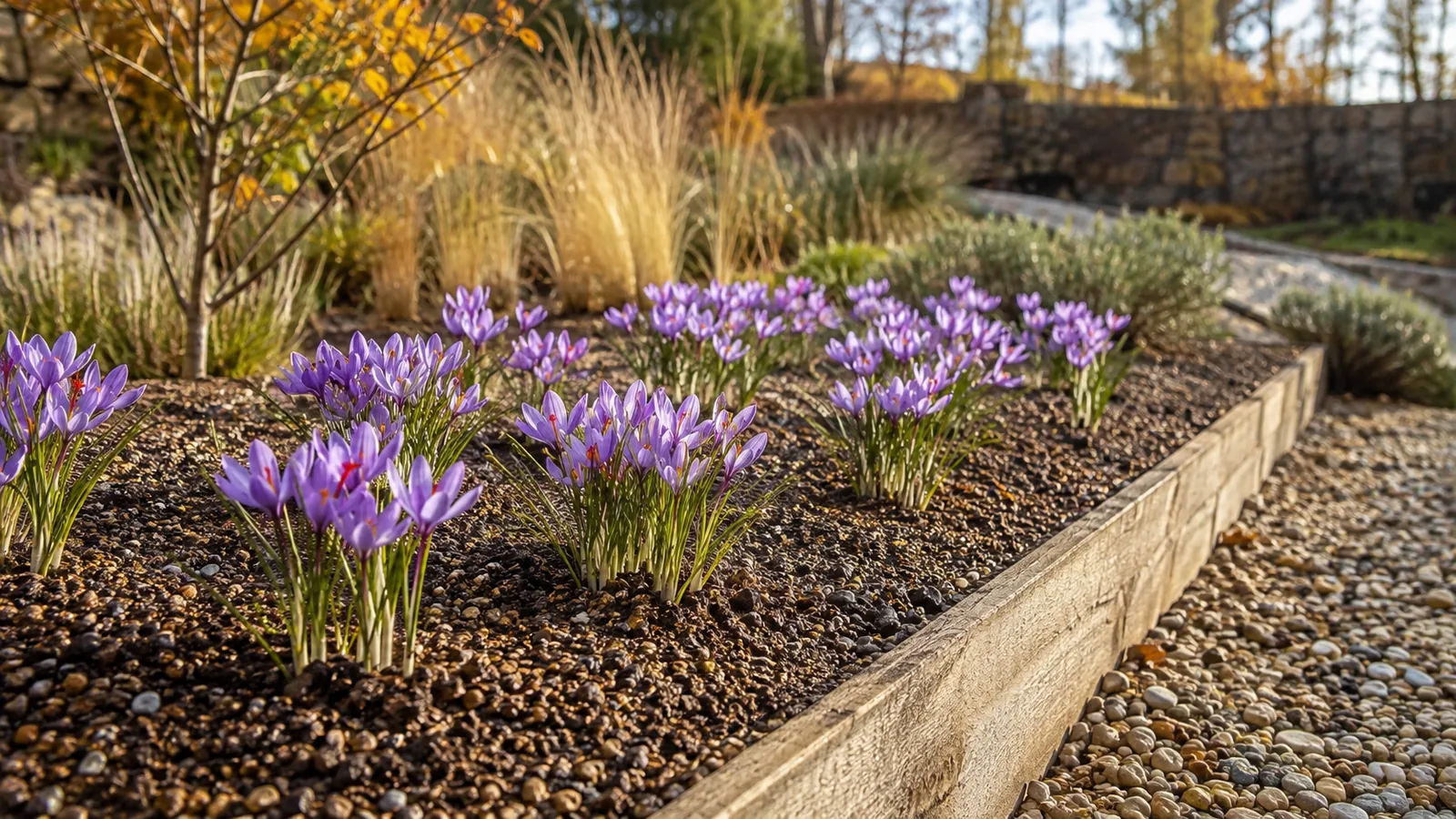
Where to Grow Saffron
The best place to grow saffron is an open site with full sun and loose soil. Crocus sativus follows an unusual rhythm: it flowers in autumn, carries narrow green leaves through the cooler months and becomes dormant in summer. The site must suit the whole cycle, not only the flowering week.
A south- or west-facing bed often provides useful warmth and light in cooler regions. In a wet garden, choose a raised area rather than a hollow where water collects. In a hot, dry climate, good drainage remains essential, although occasional irrigation may be needed while roots and leaves are active.
Saffron Planting Guide: Choosing the Site
Sunlight
Choose a position that receives direct sun for most of the day. Strong light supports the leaves as they replenish the underground corm after flowering. Avoid placing saffron beneath dense evergreen shrubs, beside a wall that keeps the bed in permanent shade, or where taller crops will cover it through winter and spring.
Drainage
Drainage is the first practical test. Water should soak through the bed rather than sit around the corms. If a hole remains wet long after rain, improve the structure, raise the planting area or choose a container. Simply adding a little sand to heavy clay may not be enough to change how the whole root zone drains.
Air Movement and Access
Gentle air movement helps flowers and foliage dry after rain. The site should also be easy to reach every day during bloom, because new flowers need prompt picking. A narrow bed or accessible row is easier to harvest than corms scattered through a crowded ornamental border.
What Soil Is Best for Saffron?
A fertile sandy loam or loam with a crumbly structure is a good starting point. The soil should hold enough moisture for active growth without staying saturated. Extremely compacted ground restricts roots and increases the chance that water will remain around the corm.
Saffron tolerates a range of mineral soils, so drainage and structure deserve more attention than chasing an exact pH number. If you are planning a larger planting, a soil test can identify a serious pH or nutrient problem before corms go into the ground. Avoid excessive fresh manure or heavy feeding that encourages soft growth.
Climate and Saffron Growing Regions
Traditional saffron growing regions commonly have warm, relatively dry summers and a cooler autumn that triggers growth and flowering. Winter leaves need light, while the dormant corm benefits from conditions that are not persistently wet. Those seasonal patterns matter more than a country name.
The Royal Horticultural Society’s growing guide recommends a sunny, well-drained site and late-summer planting, with flowers usually appearing in October in its temperate reference climate. Local dates will move with latitude, elevation and seasonal weather.
Gardeners outside famous saffron regions can still succeed by recreating the essentials. Raised beds help in rainy climates. Containers can keep corms out of wet winter ground. In very cold areas, a sheltered site and appropriate planting depth reduce exposure; in very warm areas, flowering may be less reliable if seasonal cooling is limited.
Raised Bed, Open Ground or Container?
Open Ground
Open ground suits a naturally free-draining garden where corms can remain undisturbed for several years. Mark the area while the plants are visible so it is not accidentally dug during summer dormancy.
Raised Bed
A raised bed is often the safest choice for heavy or wet soil. It gives the grower control over the root-zone mix, drainage and spacing, and it brings the autumn flowers within easy reach at harvest.
Container
Use a deep container with generous drainage holes and a stable, free-draining potting mix. A pot is useful on a sunny patio or where garden soil remains wet, but it needs closer attention because it can dry rapidly, freeze more severely or become waterlogged if the holes are blocked. Do not leave the container standing in a saucer of rainwater.
How Deep and Far Apart Should Saffron Be Planted?
The Crocus sativus corm is commonly planted in late summer. Guidance varies with climate and soil, but a depth of roughly 10–15 cm and spacing around 10 cm apart give a practical home-garden starting point. Plant with the pointed growing end upward and the flatter basal plate below.
Allow room for corms to multiply. A very tight display may look efficient in its first season but becomes crowded sooner. For a production bed, straight rows make weeding, monitoring and harvest easier. The University of Vermont’s saffron best-practices guide provides more detailed planning for growers.
Watering the Planting Site
Water newly planted corms if the soil is dry enough to prevent establishment, then let conditions guide the schedule. Saffron is not helped by constant watering. During active root and leaf growth, the soil can be lightly moist, but it should never remain sodden.
Natural rainfall may be sufficient in many gardens. During summer dormancy, avoid routine irrigation over the bed unless the local growing system specifically requires it. If saffron shares a border with plants that need frequent summer watering, their needs may conflict.
Places Where Saffron Should Not Be Planted
- a low point where rain or irrigation water collects;
- dense shade that limits winter and spring leaf growth;
- compacted soil with no practical drainage improvement;
- a frequently dug vegetable bed where dormant corms will be disturbed;
- beside thirsty plants that require heavy summer watering;
- a container without open drainage holes.
What to Expect After Planting
Healthy mature corms planted at the right time may flower that autumn, sometimes only several weeks later. First-year bloom can be late or sparse. Fine leaves continue after harvest and should remain until they yellow naturally, because they help form replacement corms for the following season.
The detailed timeline in how quickly saffron grows explains autumn bloom, winter foliage, spring dieback and summer dormancy.
Where to Plant Saffron for the Best Chance of Success
Choose full sun, reliable drainage and a position you can reach during the short harvest. Improve a difficult site with a raised bed or use a deep, free-draining container rather than asking saffron corms to survive waterlogged ground.
Once the location is right, plant healthy Crocus sativus corms in late summer, give them room to multiply and leave their foliage to finish its cycle. The right place does more for a lasting saffron bed than extra fertilizer or an aggressive watering schedule.