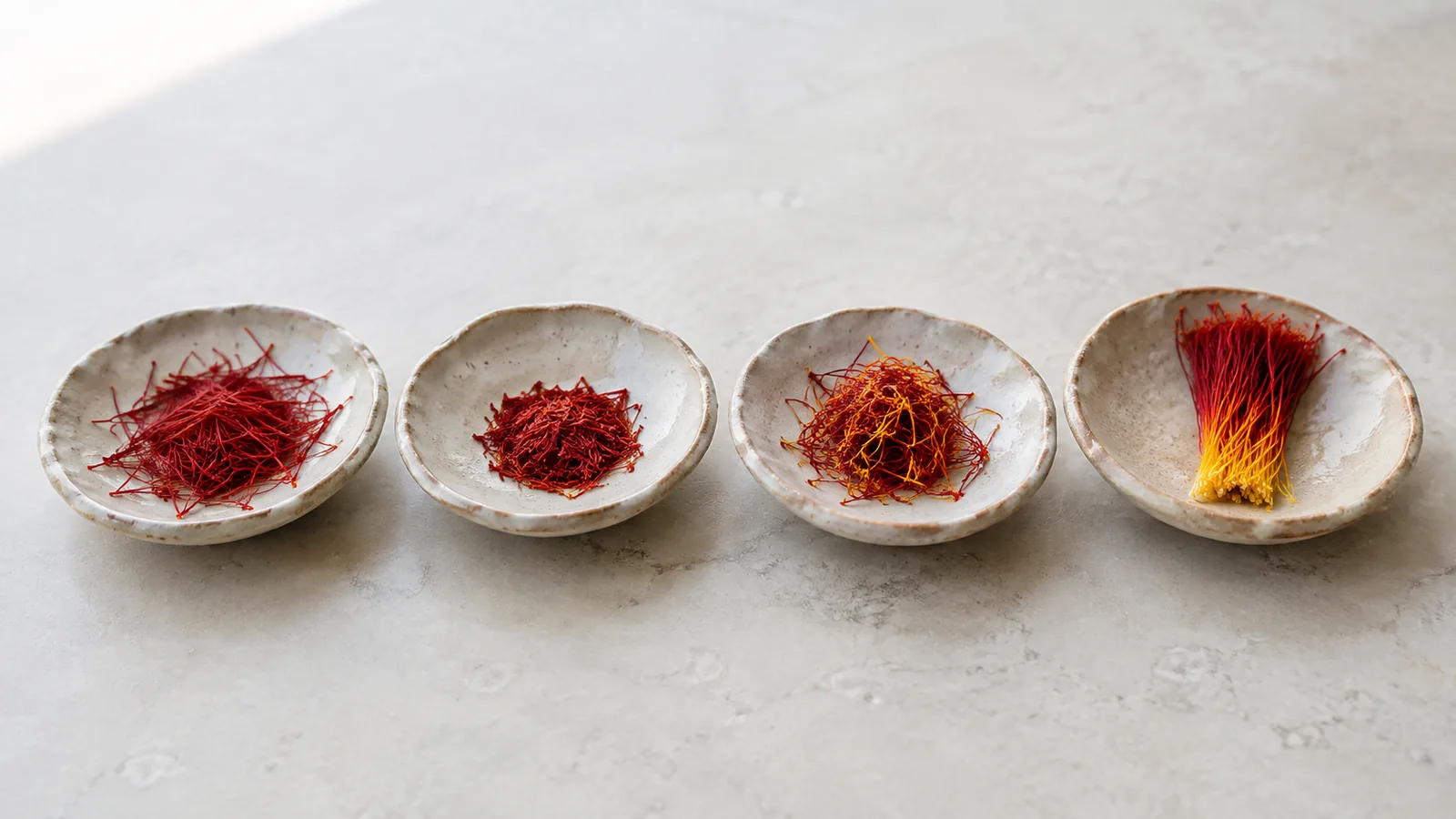
The four names most often used for Iranian saffron thread grades are Negin, Sargol, Pushal and Dasteh, also called Bunch saffron. They describe how much of the red stigma and yellow-orange style remains and how the threads are arranged. They are trade presentations, not a universal laboratory ranking used identically in every country.
Saffron Quality Grades: First Understand the Two Systems
Saffron quality grades can refer to two different things. A seller may be describing the visible cut—long all-red stigmas, separated red tips, threads with some style attached, or complete bundled strands. A laboratory classification instead measures properties related to coloring strength, bitterness, aroma and condition.
The distinction matters. A beautiful all-red presentation may be old or poorly stored, while a less visually refined sample may be fresh and authentic. These visible saffron qualities help a buyer understand what is in the package; they do not replace analytical evidence.
What Are the Four Grades of Saffron?
1. Negin
Negin is an all-red presentation made from long stigma sections selected to look substantial and relatively uniform. The threads are separated rather than tied in a bunch, with little or no pale style visible. Sellers may use further labels such as “Super Negin,” but those additions are not a single worldwide standard.
Negin is often chosen as a premium whole-thread product because the shape is attractive and easy to inspect. It can provide strong color and aroma when the batch is fresh, but the word Negin alone does not prove chemical strength or purity.
2. Sargol
Sargol consists of separated red stigma tips. The threads are all or almost all red, generally shorter than a carefully selected Negin presentation and sometimes more broken because the red portion has been separated from the style.
The common explanation of Sargol meaning “top of the flower” points to that red upper portion. It is widely used in cooking and infusion. As with any grade name, compare the actual threads, packing information and batch condition rather than assuming every seller sorts it in exactly the same way.
3. Pushal
Pushal keeps the red stigma attached to a small amount of the yellow or orange style. It is not simply defective Sargol. The connected structure can make the flower origin easier to recognize and may suit buyers who prefer less processing and a more economical thread presentation.
Pushal normally contains a lower proportion of the prized red portion by total weight than an all-red grade. That affects value per gram, but a fresh genuine batch can still perform well in everyday cooking.
4. Dasteh or Bunch Saffron
Dasteh preserves much more of the complete stigma-and-style structure and is traditionally arranged in a small bundle. It contains red tips together with orange and yellow portions. The bundle can show how the strands connect, although the pale material contributes less of the coloring compounds associated with the red stigma.
Bunch saffron is sometimes sold for traditional presentation or for buyers who value visible wholeness. Because more of each gram is pale style, compare price and intended use rather than ranking it by appearance alone.
Where Do Konj and “White Saffron” Fit?
Konj, Konge or white saffron refers mainly to the pale style remaining after red stigma sections are separated. Some four-grade lists count this as their fourth category and omit Negin; others treat it as a by-product outside the four principal thread presentations. That is why two sellers can publish different answers to the same question.
Konj should not be marketed as an equal replacement for red saffron threads. It may retain some aroma, but it contains much less of the red material prized for color and flavor. A transparent label should make its composition clear.
Different Grades of Saffron Are Not Universal
Iranian trade names are useful, but they are not a global language with perfectly fixed boundaries. Spain, Kashmir, Greece and other origins may use protected regional specifications, national rules or different commercial terms. Even within one market, sorting tolerances can vary.
When a product is sold as a protected regional name, the relevant specification matters more than an imported grade vocabulary. For example, the official Azafrán de La Mancha product specification defines the form and production requirements for that Spanish designation.
How Laboratory Quality Differs From Thread Grade
Laboratory assessment can evaluate characteristics connected with crocin pigments, picrocrocin and volatile aroma compounds, along with moisture and other quality indicators. These tests examine how the saffron performs and whether it meets a defined specification rather than judging only the length or redness of the threads.
A peer-reviewed review of quality assessment in Italian saffron explains the role of standardized chemical and sensory methods and why origin, processing and storage complicate a simple visual ranking. For an ordinary buyer, a credible current batch report is more useful than an unexplained claim that a package is “Grade 1.”
Does More Red Always Mean Better Saffron?
A higher red-stigma proportion generally gives the buyer more of the part valued for coloring and flavor per gram. It still does not answer every quality question. Old all-red saffron can be weak, and dyed fibers can look intensely red.
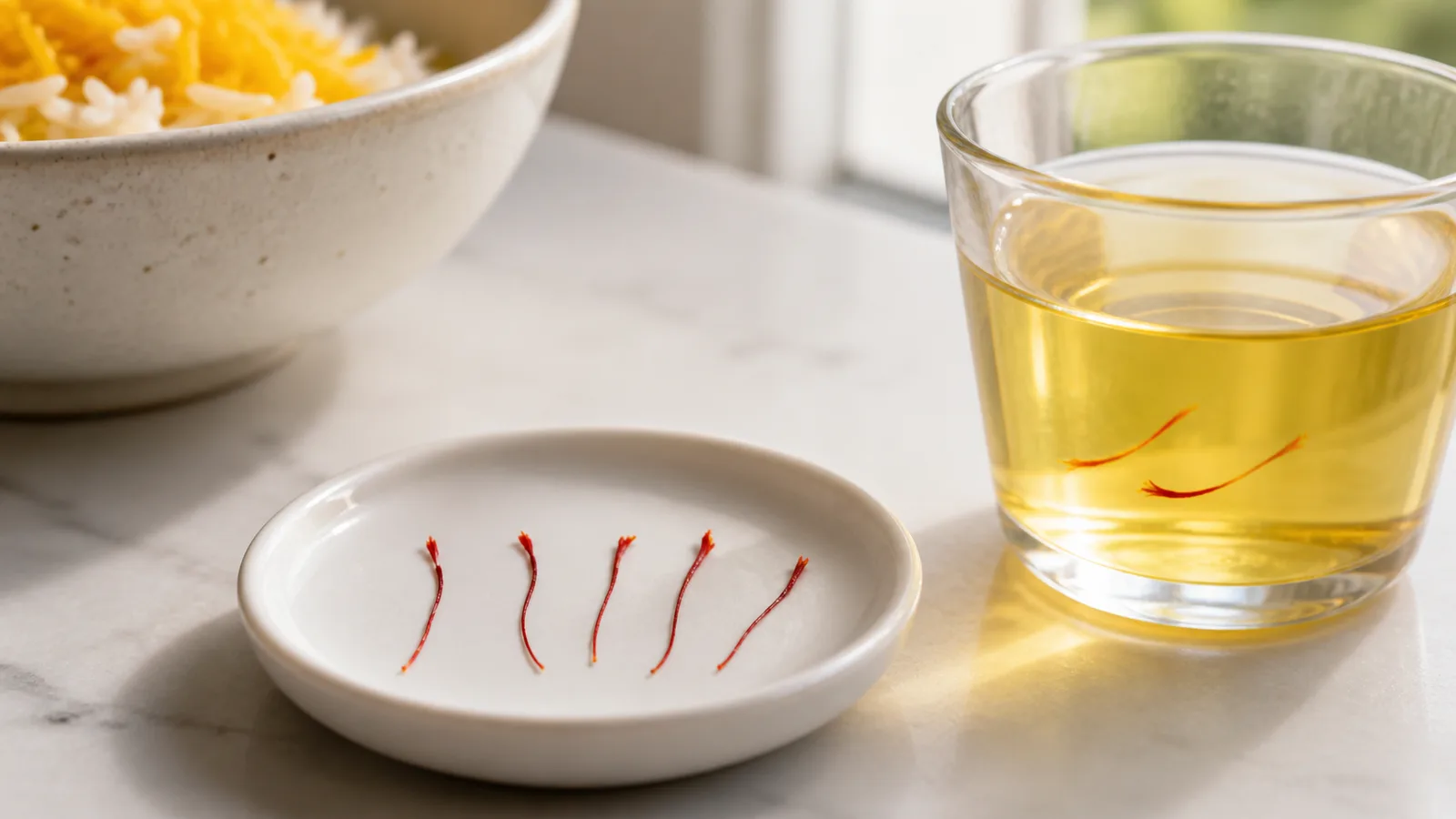
Check aroma, dryness, storage, traceability and credible testing alongside color. Genuine threads usually release a golden-yellow infusion progressively rather than bleeding an instant artificial red. The guide to identifying pure saffron explains what home observations can and cannot establish.
How to Choose a Grade for Cooking
- Negin: useful when long, attractive all-red threads and presentation are priorities.
- Sargol: a practical all-red option for measured cooking, grinding and infusion.
- Pushal: suitable for everyday use when a little attached style and a lower price fit the buyer’s needs.
- Dasteh or Bunch: chosen for traditional whole-strand presentation and visible structure.
- Konj: understand that this is mostly pale style, not an equivalent dose of red stigma.
For most recipes, freshness and a reliable seller matter more than buying the most expensive name. A cook can use a small measured amount of good saffron, bloom it carefully and achieve better results than with a larger quantity of tired premium-labelled threads.
Questions to Ask Before Buying
- Which physical parts of the flower are included?
- Is the grade name a trade cut, a protected specification or a laboratory category?
- Where was the saffron grown and where was it packed?
- Is there a batch, harvest or packing reference?
- How was it protected from light, air and moisture?
- If testing is claimed, can the seller identify the method and batch?
The all-red saffron collection shows a current thread presentation, while the package description remains the place to check its origin, weight and specific grade information.
What Are the Four Main Saffron Grades?
Negin, Sargol, Pushal and Dasteh are the clearest four-part description of common Iranian thread presentations. Some lists substitute Konj for Negin, so always read the definition instead of relying on the number alone.
Use the trade grade to understand thread composition and appearance. Use freshness, traceability, sensory performance and credible testing to judge saffron quality. Those two decisions overlap, but they are not the same.