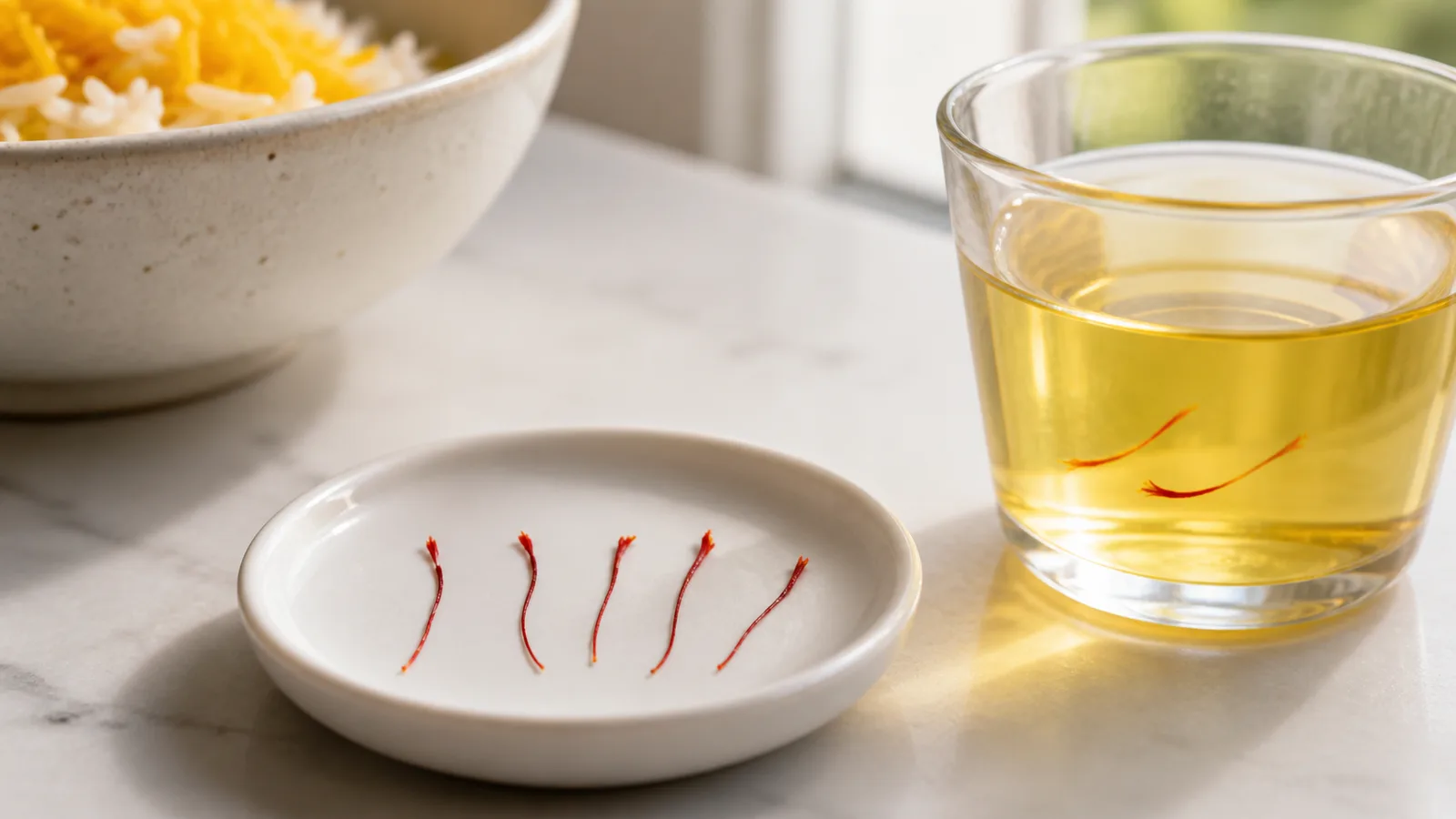
Red saffron is the dried red stigma of Crocus sativus, the part richest in the compounds prized for color, aroma and flavor. “Yellow saffron” usually means the pale yellow-orange style attached below that stigma, or it may describe the golden color produced when red saffron is infused. It is not a separate yellow variety of the spice.
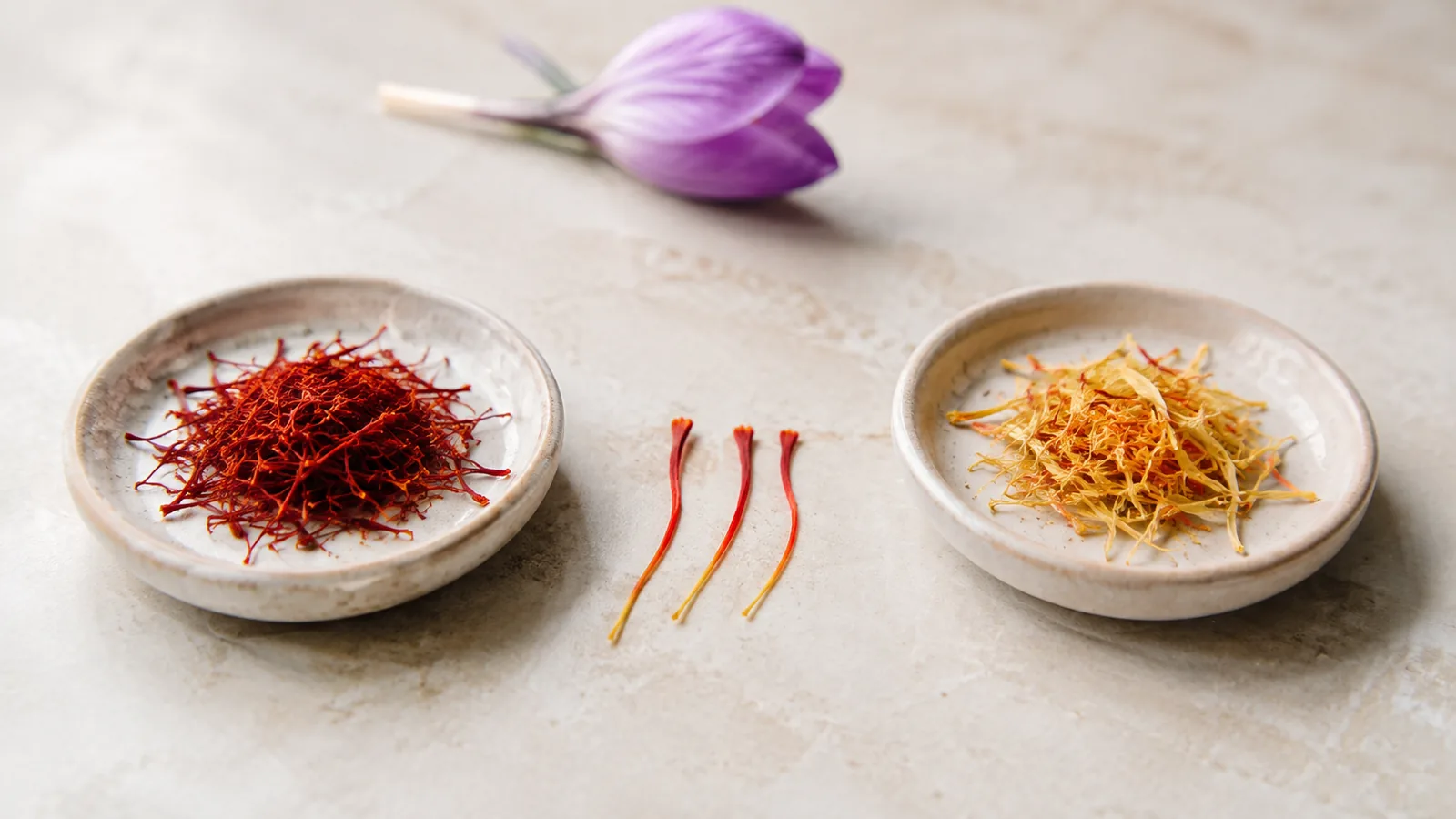
Red vs Yellow Saffron
The difference between red and yellow saffron begins inside the flower. Each saffron crocus has three red stigma branches. Below them is a paler style that connects those stigmas to the rest of the flower. Harvesters may dry the connected structure intact or separate the most valuable red sections.
That sorting creates products with different proportions of red and pale material. An all-red presentation gives the buyer more stigma per gram. Pushal retains a small amount of style, while Dasteh or bunch saffron preserves much more of the complete red-to-yellow strand.
Is Saffron Red or Yellow?
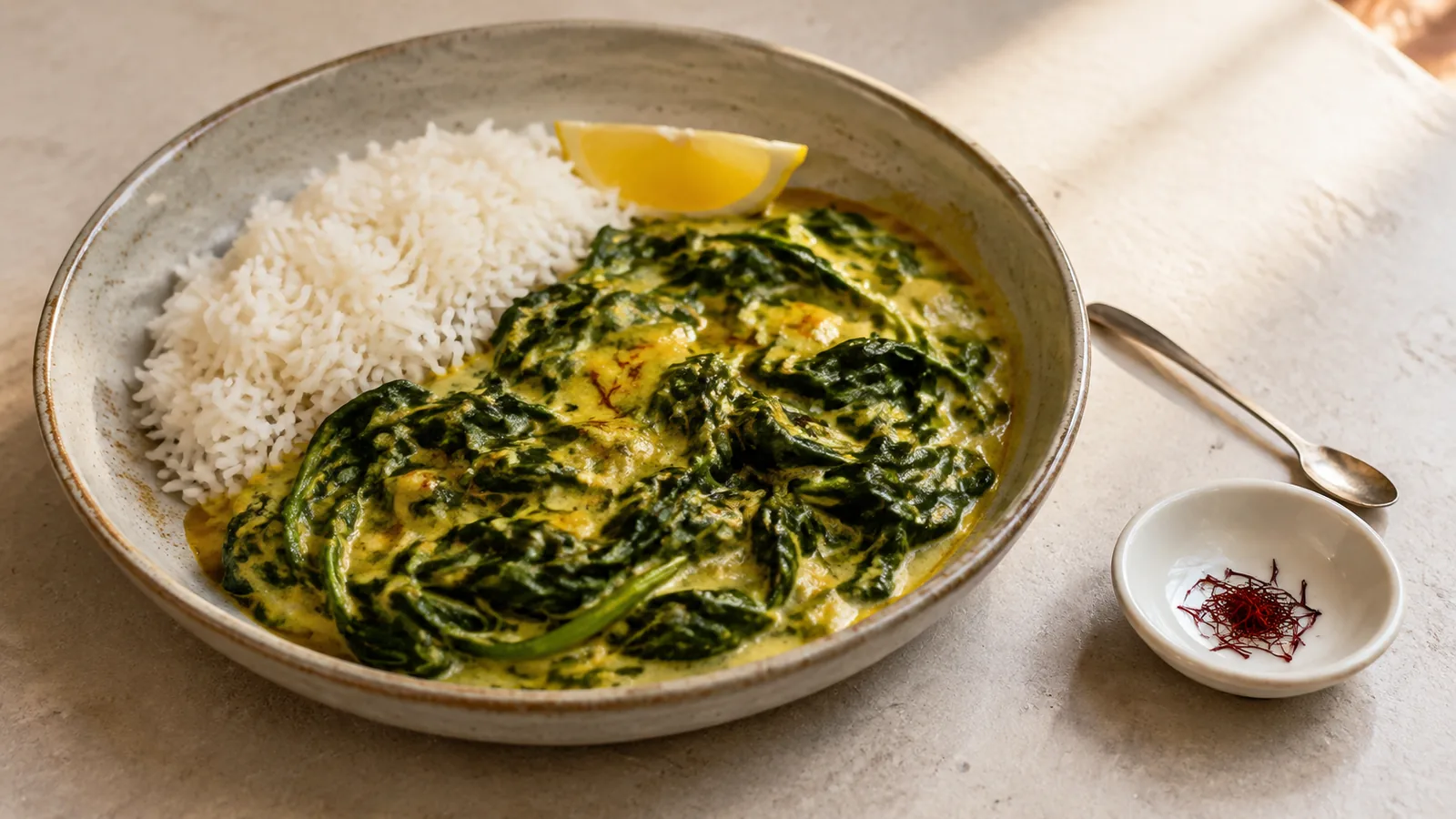
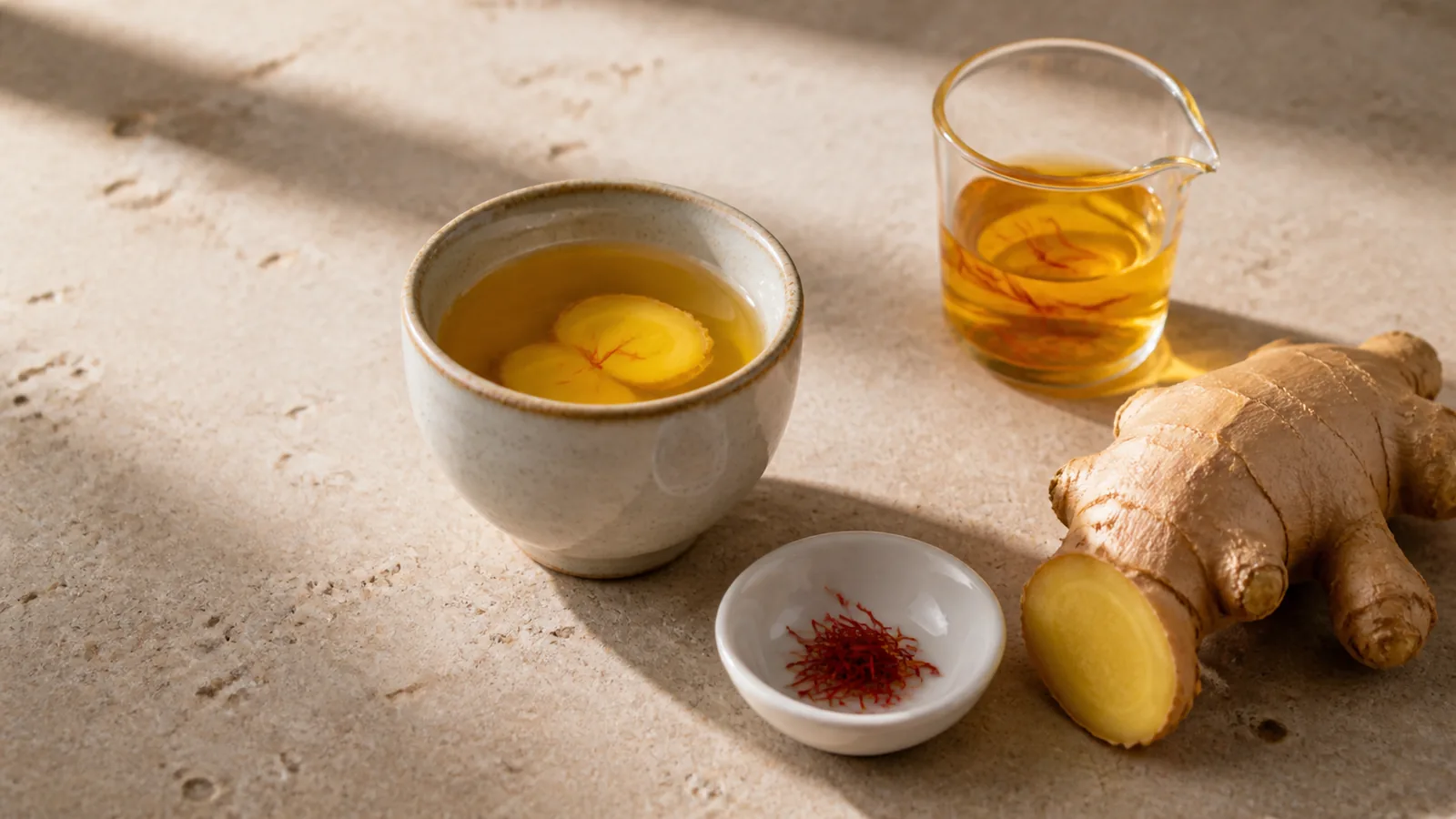
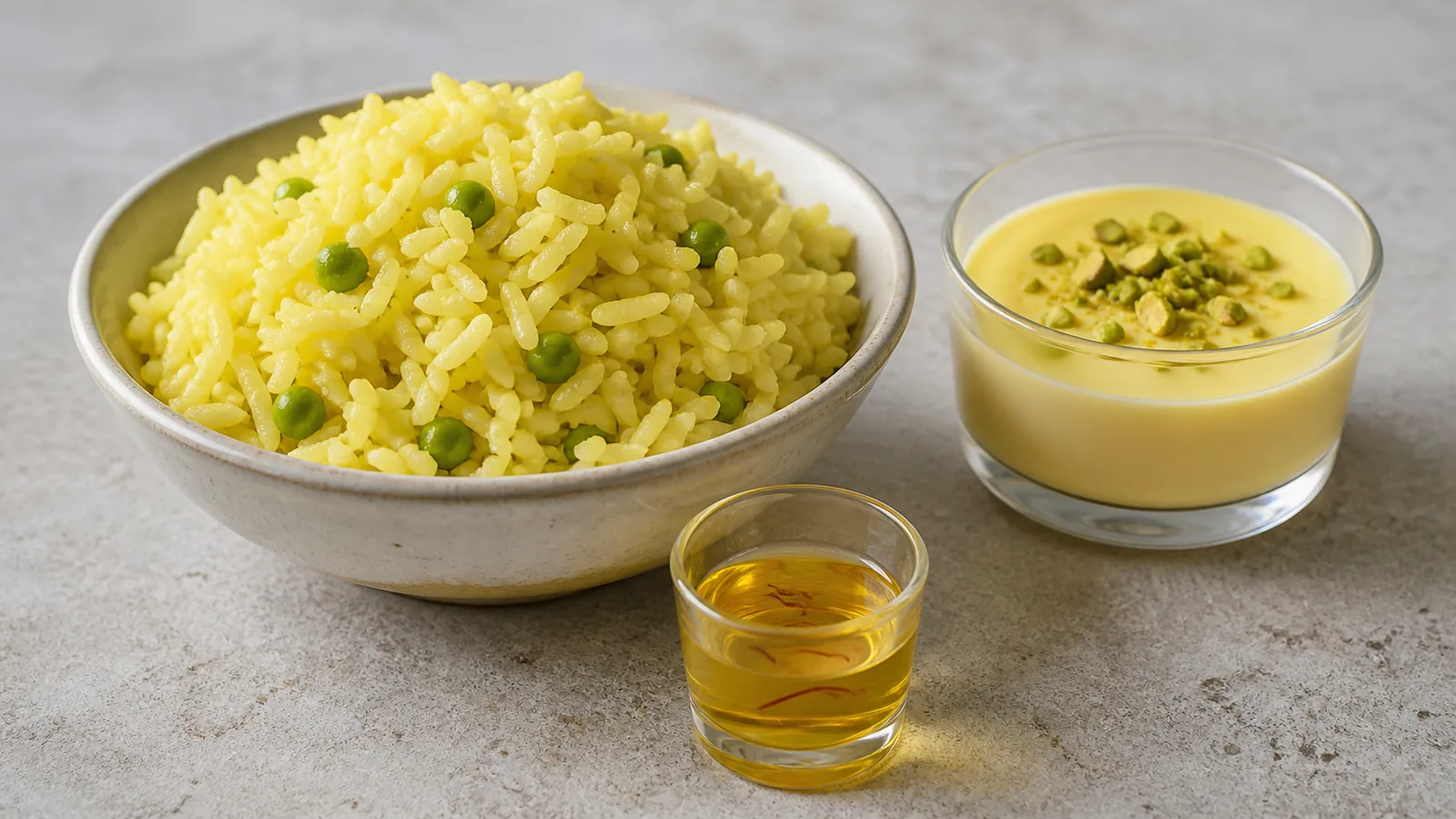
Is saffron yellow or red? The threads are red, but a properly prepared saffron infusion is yellow to golden. Both observations are true. The spice should not make food look like a pile of red threads once its soluble pigments have dispersed; those red stigmas color water, rice or sauce a clear golden hue.
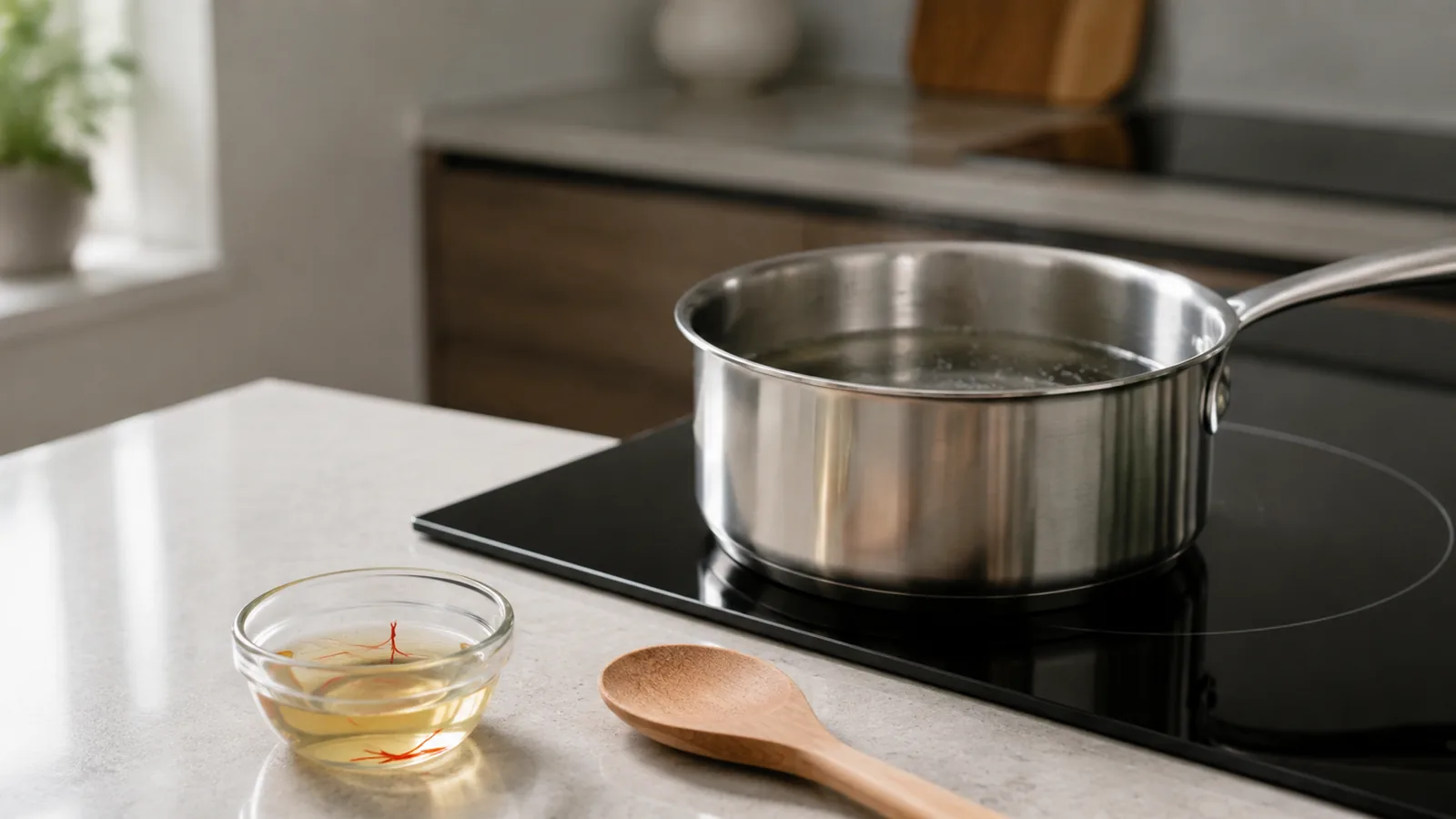
This is also why an instant red cloud in water is not a desirable sign. Added dye can bleed dramatically, while genuine saffron normally releases color progressively. The exact speed depends on whether the threads are whole or ground, the dose, water temperature and time.
What Is Yellow Saffron?
When a seller uses “yellow saffron” for a physical product, it often refers to Konj, Konge or white saffron—the pale style left after red stigma tips are separated. The names can be confusing because the material ranges from cream to orange-yellow rather than pure white.
The pale style may retain some saffron aroma, but it contains much less of the red stigma material sought for strong coloring and flavor. It should be labelled honestly and priced according to its composition, not sold as an equal dose of all-red saffron.
Does Yellow Saffron Add More Color?
No. The yellow appearance of the style does not mean it is the best part for coloring food. Red stigmas contain the pigments associated with saffron’s golden infusion. A package with a high proportion of pale style generally gives the buyer less coloring material per gram than an all-red package of similar freshness.
Color alone still does not prove overall quality. Storage, moisture, age, purity and processing influence performance. A peer-reviewed review of saffron quality assessment explains how standardized chemical and sensory methods go beyond a visual judgment.
Aroma and Flavor Differences
Most of the culinary value is associated with the stigma. A fresh all-red product typically delivers more characteristic aroma, gentle bitterness and flavor per gram than material dominated by pale style. The difference is one of concentration, not a rule that every red-looking package is excellent.
Red threads can be old, poorly stored or adulterated. Yellow style can be a legitimate part of a clearly described whole-strand product. What matters is whether the package tells the buyer what it contains and whether the price reflects that composition.
How Red and Yellow Portions Relate to Saffron Grades
- Negin: long, selected all-red stigma sections with little or no pale style.
- Sargol: separated red stigma tips, generally shorter and sometimes more broken.
- Pushal: red stigma attached to a small yellow-orange style portion.
- Dasteh or Bunch: a traditional bundle showing much more of the complete strand.
- Konj or Konge: mainly the pale style remaining after red sections are removed.
These are common trade presentations rather than one universal global scale. The guide to the four saffron grades explains why some lists count Negin while others count Konj as the fourth category.
Red, Yellow and Orange Saffron Color
“What color is saffron yellow?” is a question about a color name as well as the spice. “Saffron” is also the name of a color. In textiles, paint and design, saffron color is usually a warm yellow-orange. Orange vs saffron therefore describes two neighboring colors, not necessarily two food ingredients.
A product description can use saffron yellow color even when no spice is present. Clothing, candles and decorative objects may be called saffron because of their shade. In food, check the ingredient list rather than assuming the color name proves genuine saffron.
How to Compare a Red and Yellow Package
- Read whether the product contains stigmas, attached styles or mainly pale style.
- Compare net price with the proportion of red material, not only the package weight.
- Look for recognizable thread structure rather than a uniformly dyed fiber.
- Check origin, batch or packing details and storage protection.
- Do not treat “Grade 1,” “premium” or a vivid photograph as proof without a definition.
A basic water test can show how a sample behaves, but it cannot prove origin or detect every adulterant. Use the guide to identifying pure saffron for sensible observations and their limits.
Which Type Is Better for Cooking?
All-red saffron is usually the more efficient choice when aroma, flavor and coloring strength per gram matter. Pushal can be a good everyday option when it is fresh and fairly priced. Bunch saffron suits buyers who value a traditional complete-strand presentation.
Material dominated by pale yellow style should not be expected to perform like red stigma at the same weight. If it is being used for aroma or tradition, dose it according to the actual product rather than following a recipe written for all-red threads.
Where to Buy Red and Yellow Saffron
The red and yellow saffron collection shows a current mixed-thread presentation. Check its product description for the balance of red stigma and attached style, then compare that composition with the intended recipe and price.
What Is the Difference Between Yellow and Red Saffron?
Red saffron is the prized stigma that supplies most of the spice’s coloring, aroma and flavor. Yellow saffron usually means the paler style below it, which contributes less of those qualities per gram. Red threads nevertheless produce a yellow-gold infusion, so the color of the dry spice and the color it gives food should not be confused.
Choose by composition, freshness, traceability and honest labelling. A little attached style is normal in several traditional grades; a package dominated by pale material is a different value proposition from all-red saffron.