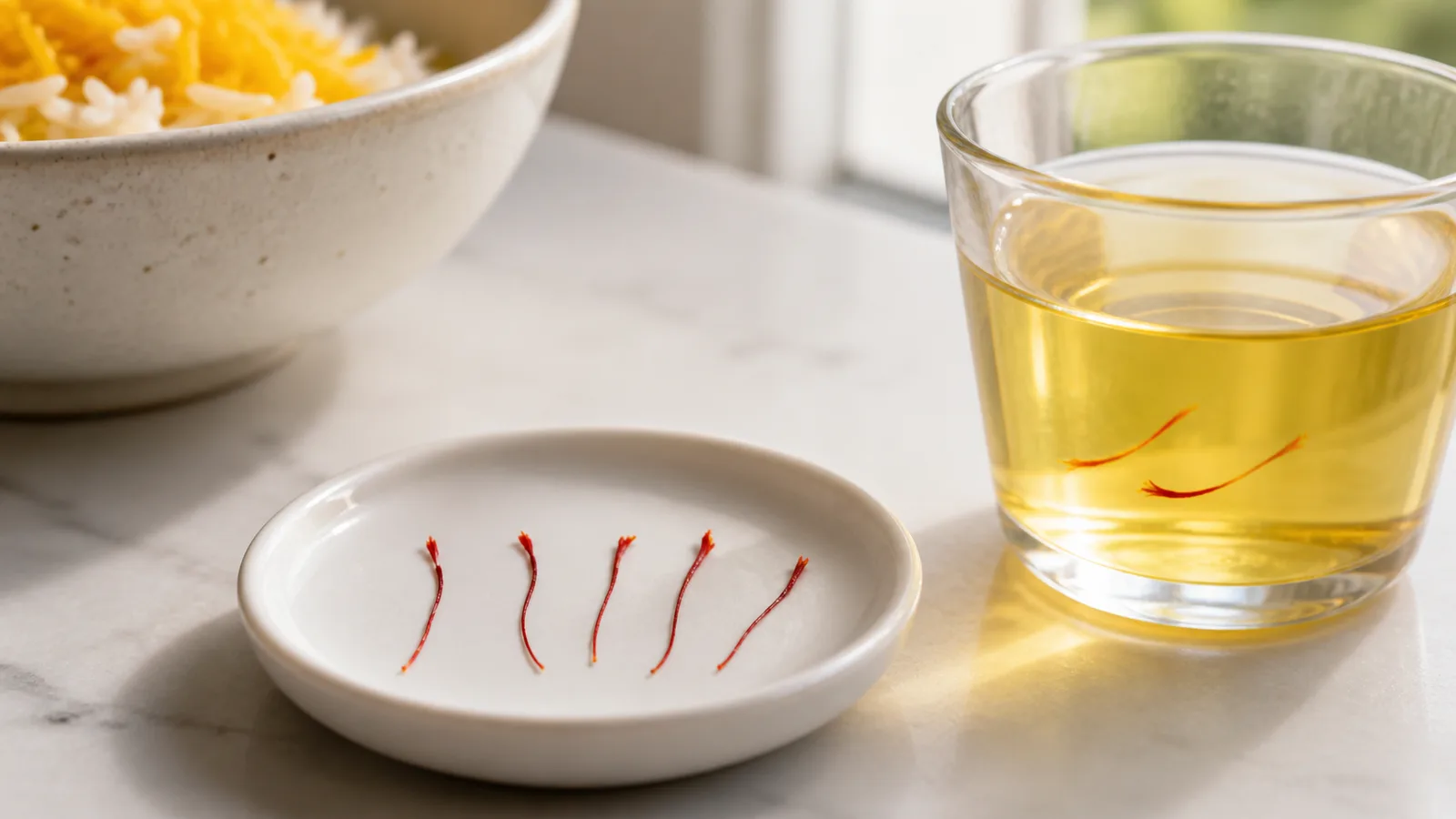
There is no single correct number of saffron types. Culinary saffron comes from one plant species, Crocus sativus, but sellers use “type” for regional origins, thread cuts and commercial grades. A useful saffron varieties guide must keep those categories separate.
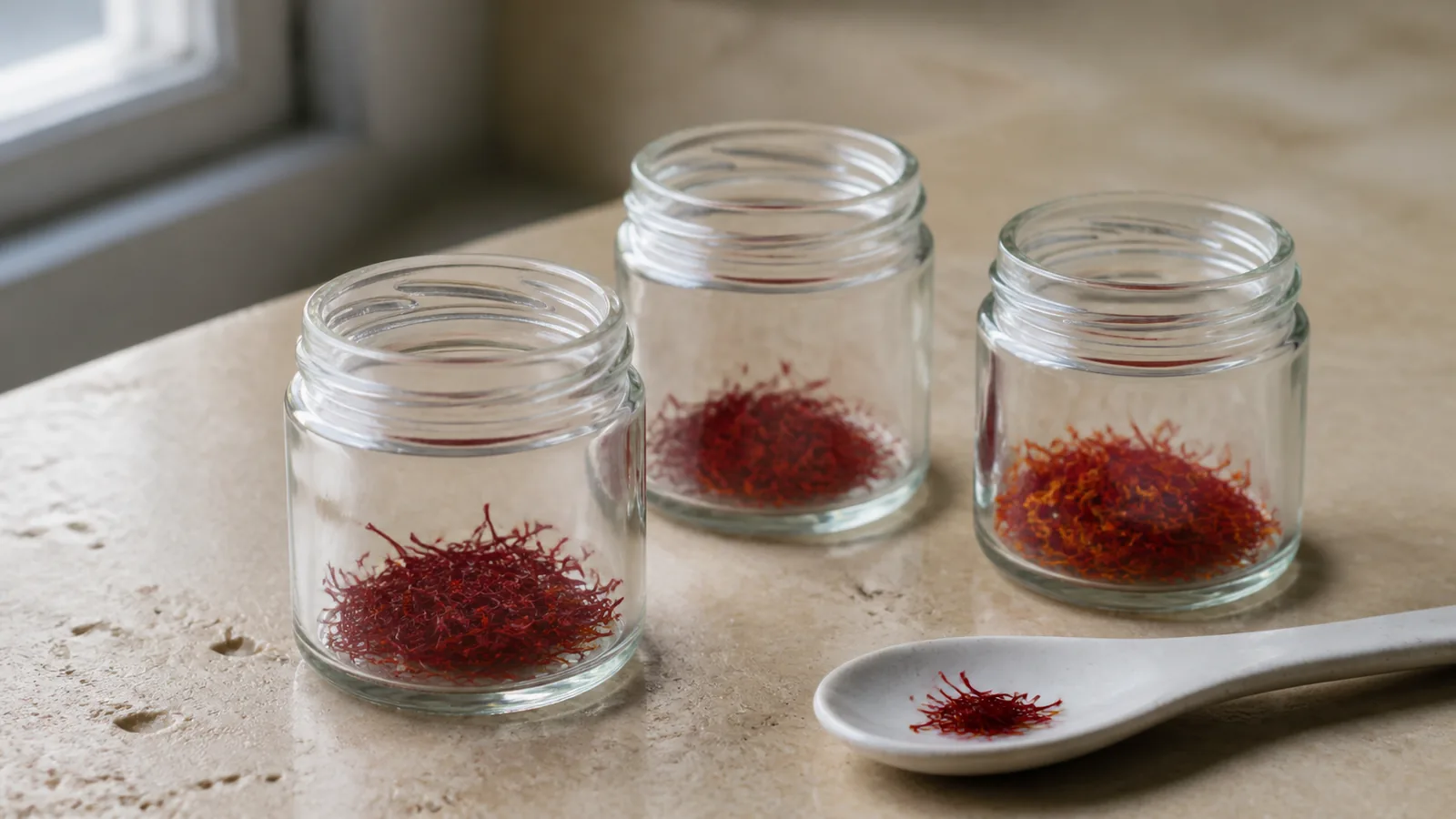
How Many Types of Saffron Are There?
The short answer depends on what you are counting:
- Plant species: genuine culinary saffron is the dried stigma of Crocus sativus.
- Thread presentations: Iranian trade commonly distinguishes Negin, Sargol, Pushal, Dasteh or Bunch, and Konge or Style.
- Regional origins: Iran, Kashmir, Afghanistan, Greece, Spain and Morocco are among the names buyers encounter.
- Quality classes: laboratory and sensory measurements describe performance, but they are not the same as a thread cut or country.
This is why one source may say there are four types of saffron while another lists five or organizes them by country. They are often answering different questions.
Types of Saffron Plant
When people search for types of saffron plant, the most important distinction is between true saffron and other plants that share the name. The culinary spice comes from Crocus sativus. “Safflower,” “meadow saffron” and autumn crocuses sold under other botanical names are not interchangeable with it.
Growers may select local planting material for vigor, flowering or adaptation, but that does not turn every regional crop into a separate culinary saffron species. A peer-reviewed review of saffron quality and identity describes the spice as Crocus sativus stigma and explains why chemical and sensory assessment is needed beyond a name or appearance.
Saffron Types by Thread Cut
Trade names often describe how much of the stigma and style remains after separation. These names are useful, but practices differ between sellers and markets. They should not be treated as a universal quality ladder.
Negin
Negin is an all-red presentation with long, well-formed stigma branches and little or no pale style. Suppliers may apply additional terms to appearance or selection. Length and neatness can affect price, but they do not prove aroma or coloring strength by themselves.
Sargol
Sargol consists of separated red stigma pieces without the yellow style. It is compact and convenient to measure. Good Sargol can deliver strong color, aroma and flavor, although a dark red appearance alone is not evidence of freshness or purity.
Pushal
Pushal retains red stigma with a small part of the orange or yellow style attached. The visible transition can help a buyer recognize the structure of the flower. Its strength still depends on the batch, not simply on the presence of a short pale section.
Dasteh or Bunch Saffron
Dasteh, also called Bunch saffron, keeps the stigma and a longer portion of the style together, traditionally arranged as a bundle. It shows more of the original flower structure and includes a lower proportion of red stigma by weight than a fully separated red grade.
Konge or Style Saffron
Konge is mainly the pale style left after the red stigma has been separated. It is a real part of the flower, but it should not be presented as equivalent to an all-red grade. It generally contributes less of the compounds associated with saffron’s characteristic color, aroma and taste.
Some simple lists call Sargol, Pushal, Bunch and Konge the four main types and discuss Negin as a premium red selection. Other lists count Negin separately. The guide to the main saffron grades explains this naming problem in more detail.
Saffron Varieties by Origin
Origin names identify where saffron was grown or processed; they do not describe a different spice species. Climate, soil, local practice, drying and storage can create meaningful differences between batches, but broad country stereotypes are unreliable.
Iranian Saffron
Iran produces saffron at a scale unmatched by other origins and supplies a wide range of thread presentations. The Food and Agriculture Organization’s account of Iran’s qanat-based saffron farming system documents the crop’s long connection with an arid agricultural landscape. Iranian saffron may be sold as Negin, Sargol, Pushal or Dasteh, so the country name alone does not identify the cut.
Kashmir Saffron
Kashmir Saffron has a protected geographical identity in India. The official Geographical Indications Registry entry records that regional designation. Its limited supply and reputation can influence price, but a Kashmir claim still needs credible traceability.
Spanish, Greek and Other Regional Saffron
European protected-origin saffron includes products with specific regional rules. An official European Union publication for Azafrán de La Mancha, for example, defines a regional product rather than a new plant species. Afghanistan and Morocco also produce genuine Crocus sativus saffron. In every case, examine the actual origin statement and batch rather than relying on a country-themed label.
Do Color, Aroma and Flavor Define a Type?
They help describe quality, not taxonomy. Saffron’s color, bitterness and aroma relate to groups of compounds that change with harvest and storage. Two packages carrying the same grade name may therefore perform differently in an equal-dose infusion.
Compare like with like: weigh the same amount, bloom it for the same time in the same volume of warm water, and note the aroma and clear golden color. Avoid assuming that the reddest photograph or strongest marketing phrase identifies the best product.
How to Choose the Right Type of Kesar
Kesar is another name for saffron, so “types of kesar” raises the same distinctions. Choose according to use and evidence:
- For a recipe where maximum red-stigma content matters, compare genuine all-red presentations such as Negin or Sargol.
- For visible whole-thread structure, Pushal or a traditional Bunch presentation may be useful.
- For a regional recipe, a traceable protected origin can add cultural context.
- For any purchase, prioritize purity, freshness, storage and batch information over a grand grade name.
The comparison of Kashmiri and Iranian saffron shows how to assess two origins without declaring one universally superior. If a package looks doubtful, use the practical checks in the guide to identifying pure saffron.
A Clearer Answer Than a Fixed Number
Genuine culinary saffron comes from one plant species, so the biological answer is one type of saffron. The number grows only when people begin counting commercial cuts, grades and regional origins. Four familiar categories—Sargol, Pushal, Bunch and Konge—preserve the structure of many traditional explanations, while Negin is also commonly named as a distinct all-red presentation. Ask which system a seller is using before comparing “types.”