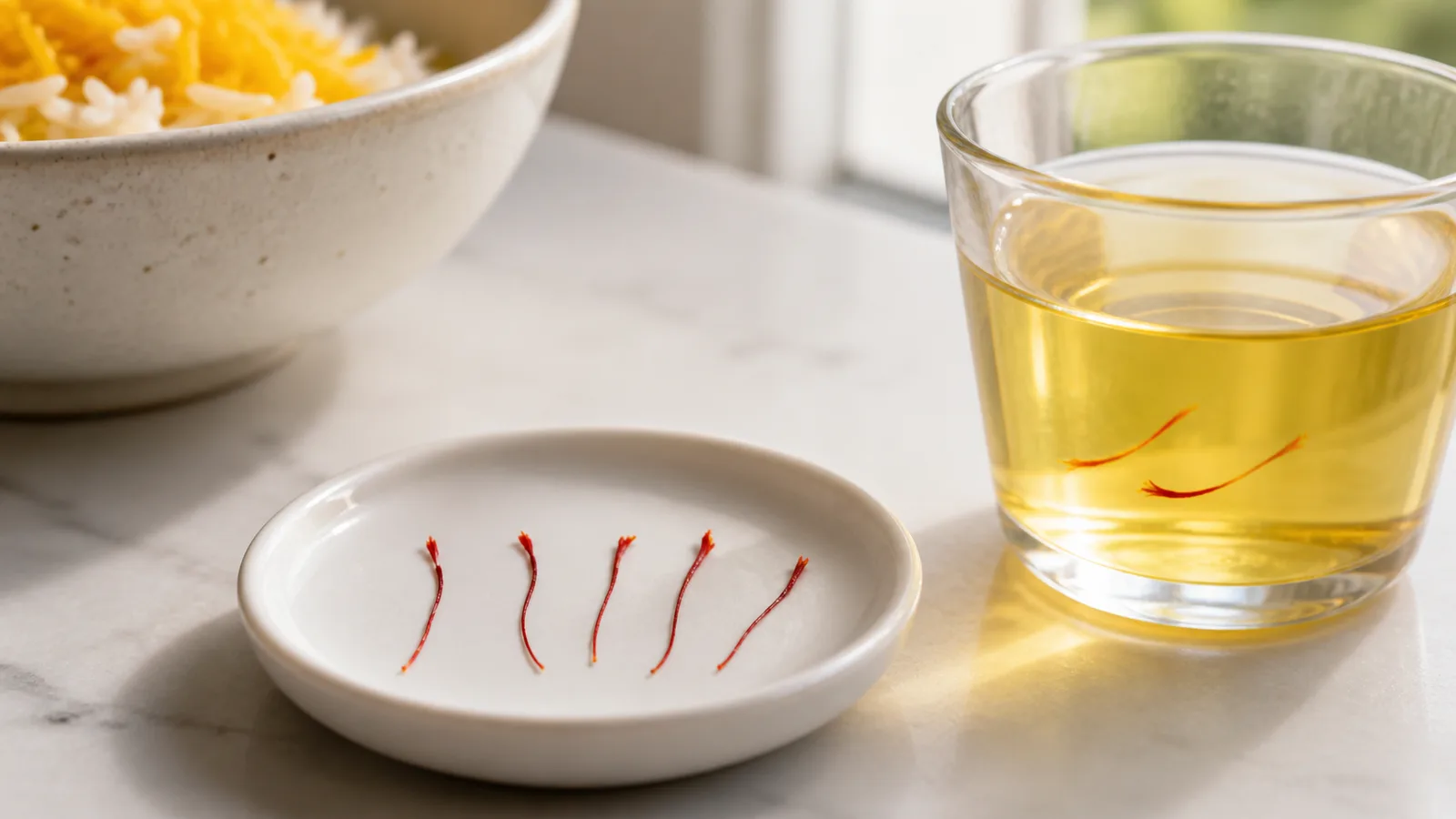
Kashmiri saffron is expensive because a small regional crop depends on careful field work, hand picking and fast processing during a short autumn harvest. The Kashmiri saffron price also reflects limited authentic supply and strong demand for a well-known origin. That premium can be reasonable, but the name alone does not prove the quality of every jar.
Kashmiri Saffron Price: What Are You Paying For?
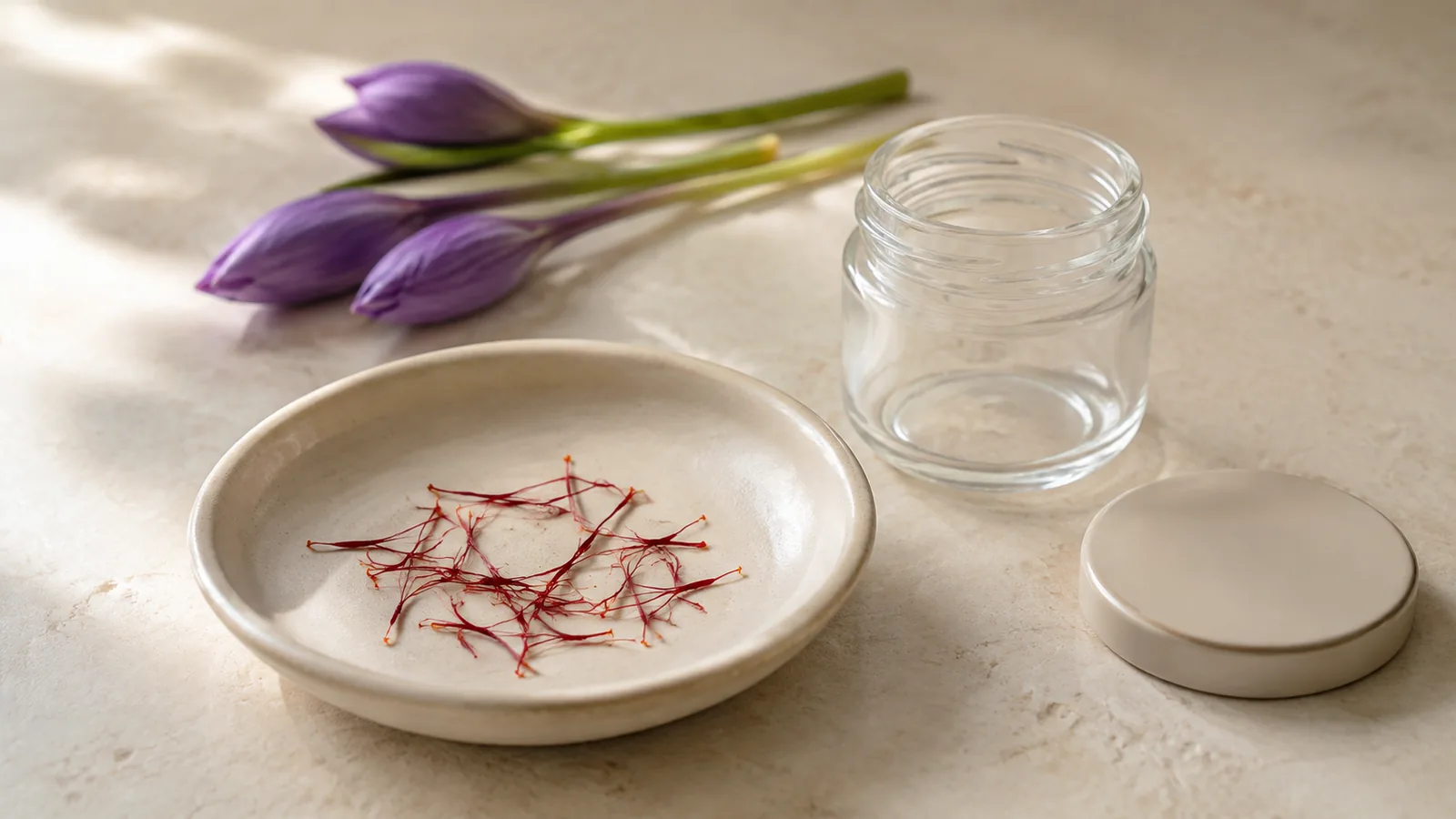
The price covers more than the finished red threads. Saffron comes from the stigmas of Crocus sativus. Each flower has only three, so growers must handle many delicate flowers to produce a modest amount of dried spice. The crop then loses substantial weight as moisture leaves during drying.
There is no single permanent Kashmiri saffron price. Harvest size, grade, freshness, packaging, traceability, seller costs and the country where it is sold can all change the amount a buyer pays. A current quote is therefore more useful than a price copied from an old article.
A Short, Labor-Intensive Harvest
Saffron flowers do not wait for a convenient production schedule. During flowering, they need to be collected promptly and handled gently. Separating the red stigmas from the rest of each flower is detailed manual work, and careless handling can introduce unwanted plant material or damage the threads.
Drying is equally important. Too much heat can flatten the aroma; insufficient drying can leave the spice vulnerable to deterioration. The University of Vermont’s saffron harvesting and processing guidance describes the sequence from picking through stigma separation, drying and storage. These steps help explain why genuine saffron cannot be produced like an inexpensive bulk seasoning.
Limited Production in a Recognized Region
Kashmir Saffron is registered in India as a geographical indication. The official Geographical Indications Registry entry connects the protected name with its place of production and documented product identity.
A geographically limited crop cannot expand as easily as an ordinary commodity. Suitable land, local growing conditions and the annual flowering cycle constrain supply. Weather and field conditions can also affect the size and timing of a particular harvest. When demand for authentic regional saffron is stronger than the available crop, scarcity adds to the price.
Sorting, Grade and Red-Stigma Content
Not every package contains the same parts of the flower. Some products consist mainly of separated red stigma; others retain more of the yellow or orange style. More cleaning and sorting requires more work and may reduce the final saleable weight, so a carefully selected red-thread grade often costs more.
Grade vocabulary can be confusing because the terms used for Kashmiri saffron do not always match Iranian trade grades. The comparison of Kashmiri and Iranian saffron explains why origin, thread presentation and laboratory quality should be considered separately.
Quality, Aroma and Culinary Value
Good saffron should contribute a complex aroma, a characteristic flavor and a clear golden color when it is prepared correctly. Because the spice is used in small measured amounts, a fresh and potent batch may provide better value per dish than a cheaper but tired product.
However, “Kashmiri” should not be treated as an automatic quality score. Harvest timing, drying, storage, age and purity all influence the contents of an individual package. A peer-reviewed review of saffron quality assessment discusses the chemical and sensory measures used to evaluate color, bitterness and aroma. Those measures are more informative than reputation or thread color on its own.
Traceability and the Cost of Authenticity
A credible seller needs a supply chain that preserves identity from producer to package. Batch records, suitable containers and protection from moisture, light and air all add cost. They also give buyers something more useful than a vague premium label.
Scarcity creates an incentive to misuse famous regional names. It also encourages adulteration, substitution and misleading grades. Buyers may therefore pay more for documentation and dependable sourcing. The guide to identifying pure saffron explains practical warning signs, while also making clear that a home test cannot certify geographical origin.
Is More Expensive Saffron Always Better?
No. A high price may reflect a small crop, costly transport, elaborate packaging or a seller’s positioning rather than a stronger batch. At the other extreme, a price far below the normal market range deserves scrutiny because harvesting genuine saffron requires unavoidable manual work.
Compare products by net weight, not package size. Check whether the jar contains whole recognizable threads, whether the region of origin is stated clearly, and whether the seller provides a batch or packing trail. Freshness and storage matter as much as a prestigious origin.
How to Buy Kashmiri Saffron With Confidence
- Look for a specific origin statement rather than a brand name that merely sounds regional.
- Check that the ingredient is saffron stigma from Crocus sativus.
- Ask what the stated grade means and which parts of the stigma are included.
- Prefer a sealed, light-protective package with identifiable batch or packing information.
- Compare the price per gram at the same grade and level of traceability.
- Be cautious with absolute claims such as “best in the world” when no batch evidence is supplied.
If you are comparing options, the saffron products page shows the available formats and package information. Use the same checks regardless of the seller: origin is valuable context, but purity, freshness and traceability determine what is actually in the jar.
Why Is Kashmiri Saffron So Expensive?
The concise answer is labor, scarcity and provenance. Three stigmas must be separated from each flower, the harvest window is brief, drying and sorting require care, and authentic output comes from a limited recognized region. Those factors support a premium Kashmiri saffron price. The fairest purchase still comes from judging the individual batch rather than assuming that every expensive package is exceptional.