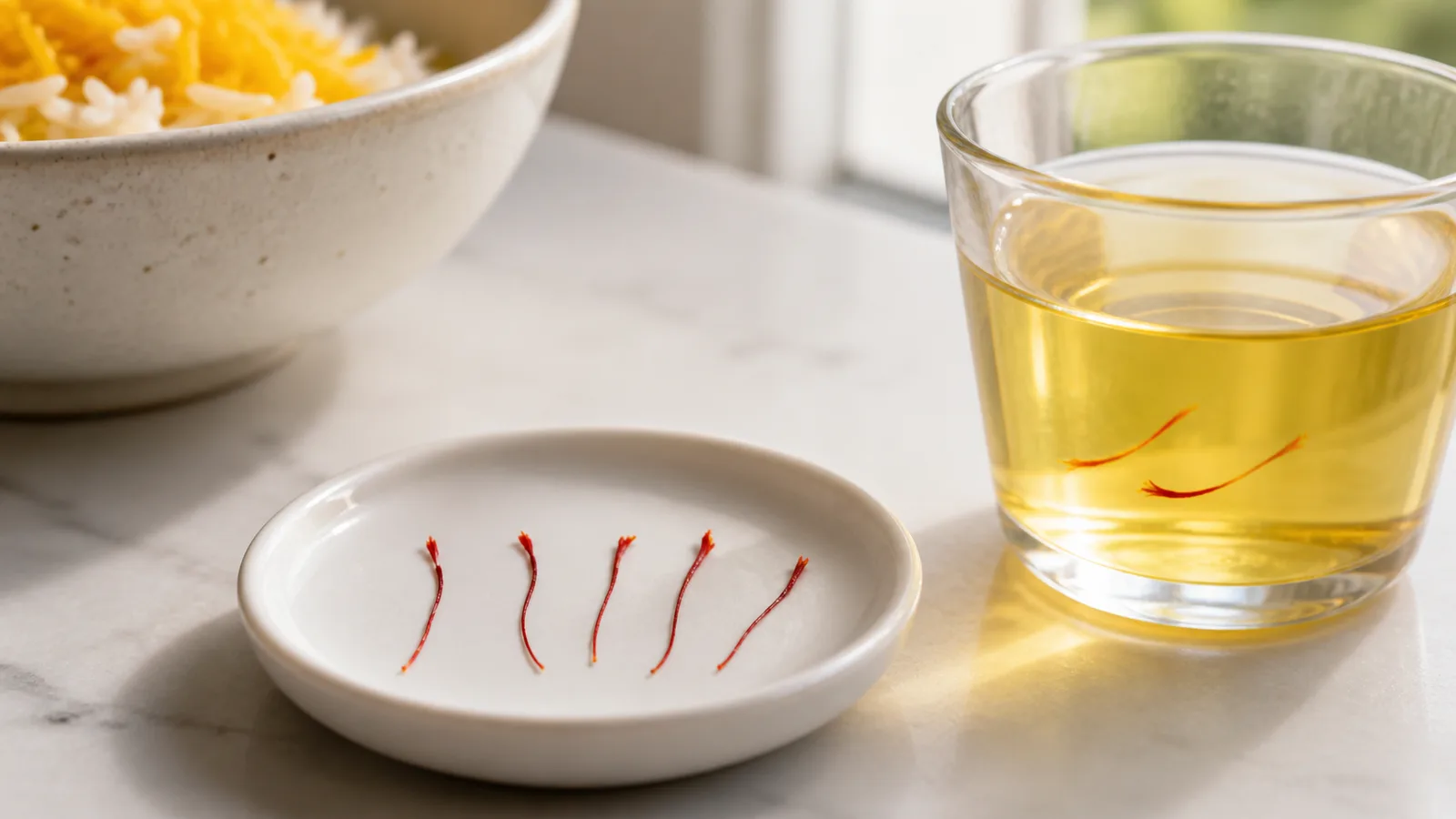
To add saffron to a dish, measure a small amount, crush the threads lightly, and steep them in a few tablespoons of warm water, milk or stock for 10 to 15 minutes. Add the entire infusion at a gentle stage of cooking, choosing the liquid and timing to suit the recipe.
Adding Saffron to Dishes: Tips for Perfect Flavor
Adding saffron to dishes is easier when you separate preparation from cooking. The first step extracts the spice into a small, controlled amount of liquid. The second distributes that infusion through the food without unnecessary high heat.
This method works for rice, sauce, soup, meat, desserts and drinks. What changes is the liquid you choose and the moment it enters the recipe.
Preparing Saffron Before Adding
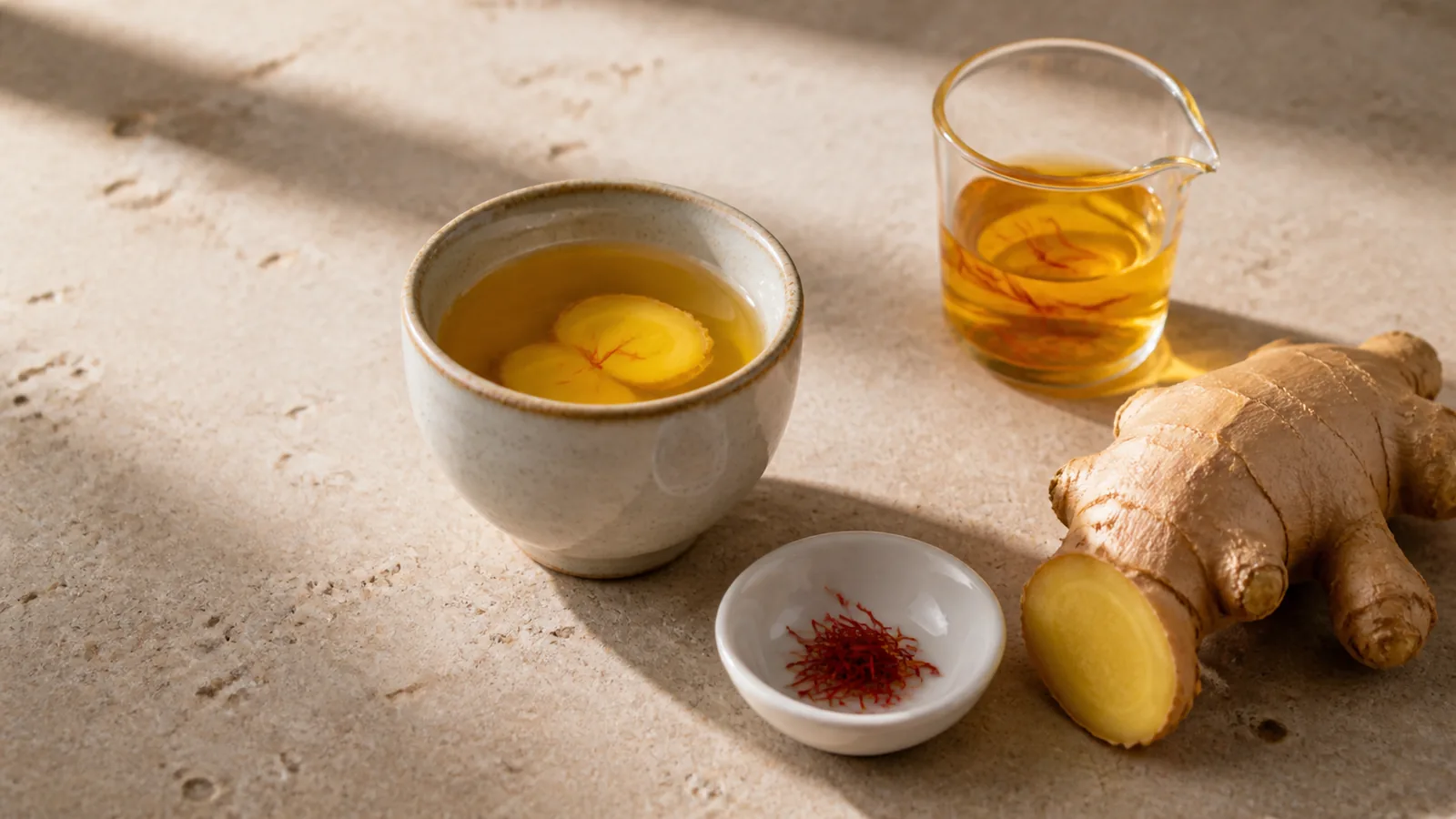
- Measure the saffron. For four servings, 0.05 to 0.1 gram is a practical range to test.
- Crush the threads lightly in a dry mortar or between clean fingertips.
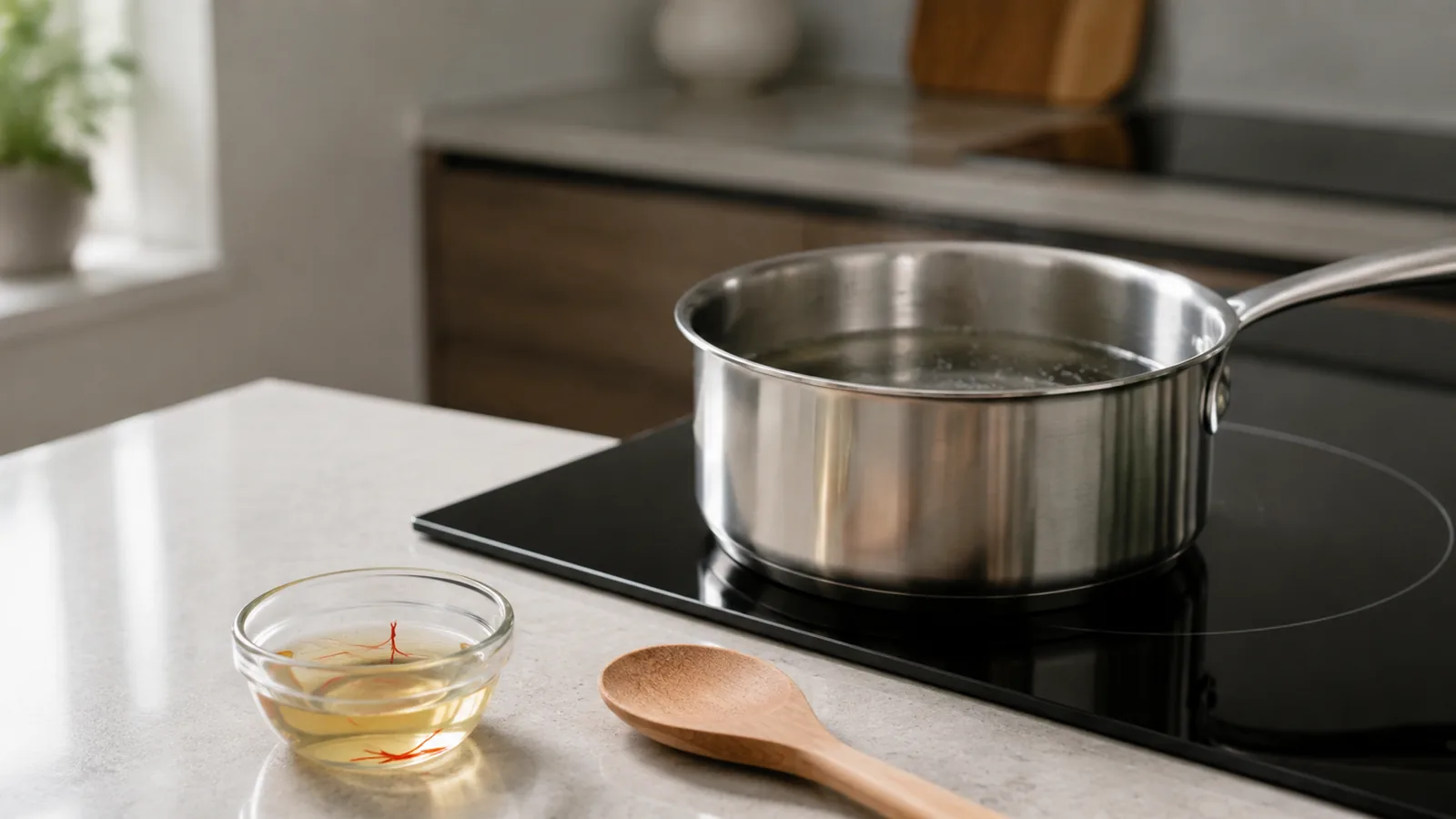
- Add two or three tablespoons of warm liquid.
- Cover the cup and steep for 10 to 15 minutes.
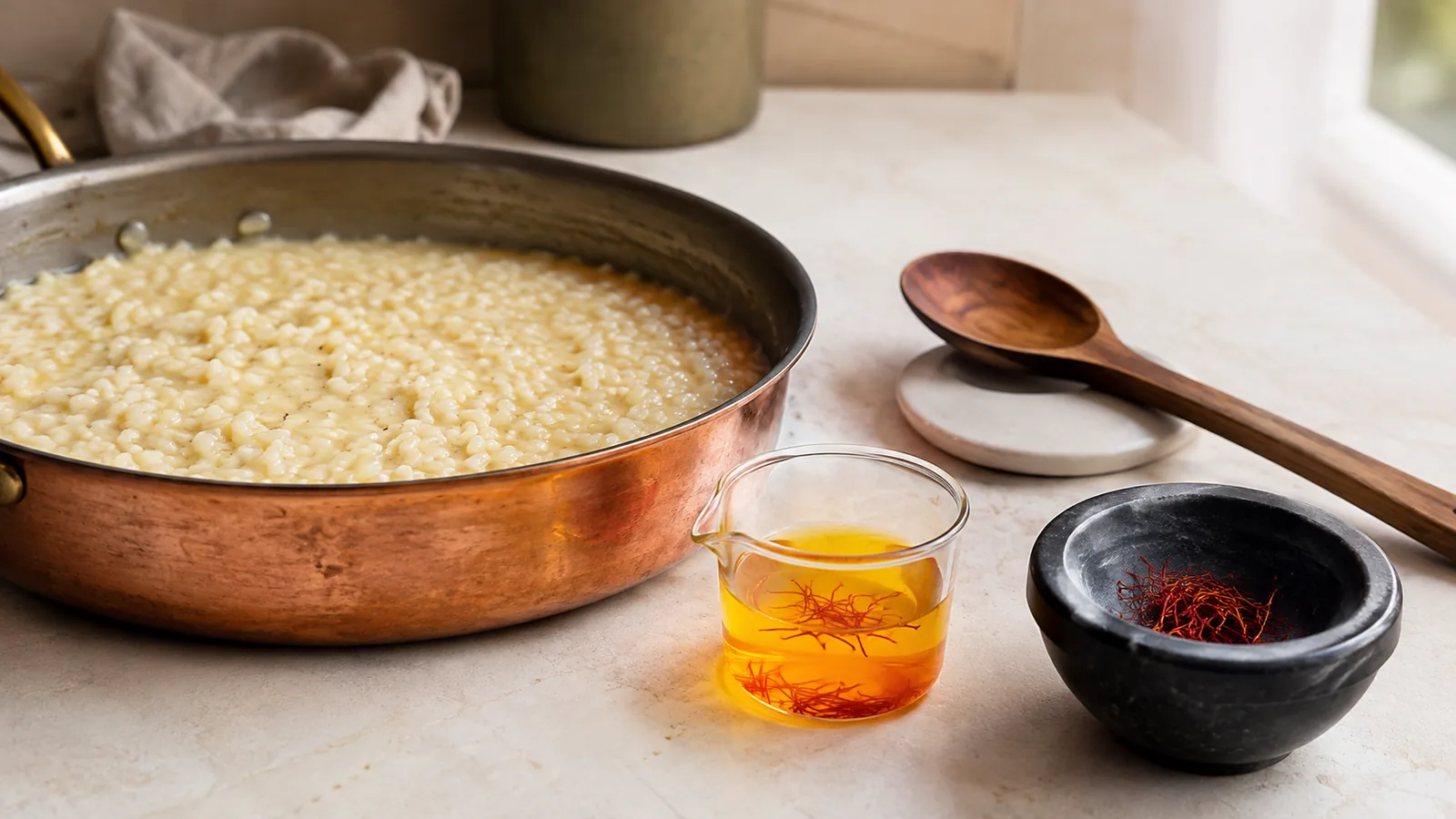
- Use both the coloured liquid and the softened thread pieces.
Light crushing exposes more surface to the liquid, helping colour, aroma and flavour extract evenly. It does not “release natural oils” in the simple way often claimed. The useful result is a concentrated infusion that can be distributed through a larger dish.
Choose the Right Infusion Liquid
- Warm water: neutral and suitable for rice, tea and many savoury foods.
- Unsalted stock: useful in risotto, soup, sauce and meat dishes.
- Warm milk: a natural fit for kheer, custard, ice cream and saffron milk.
- Recipe liquid: often the safest choice when added water would change a precise dough or custard.
The liquid should be warm, not at a vigorous boil. If you want to compare methods, read our guide to brewing saffron.
Adding Saffron to Savory Dishes
Biryani and Pilaf
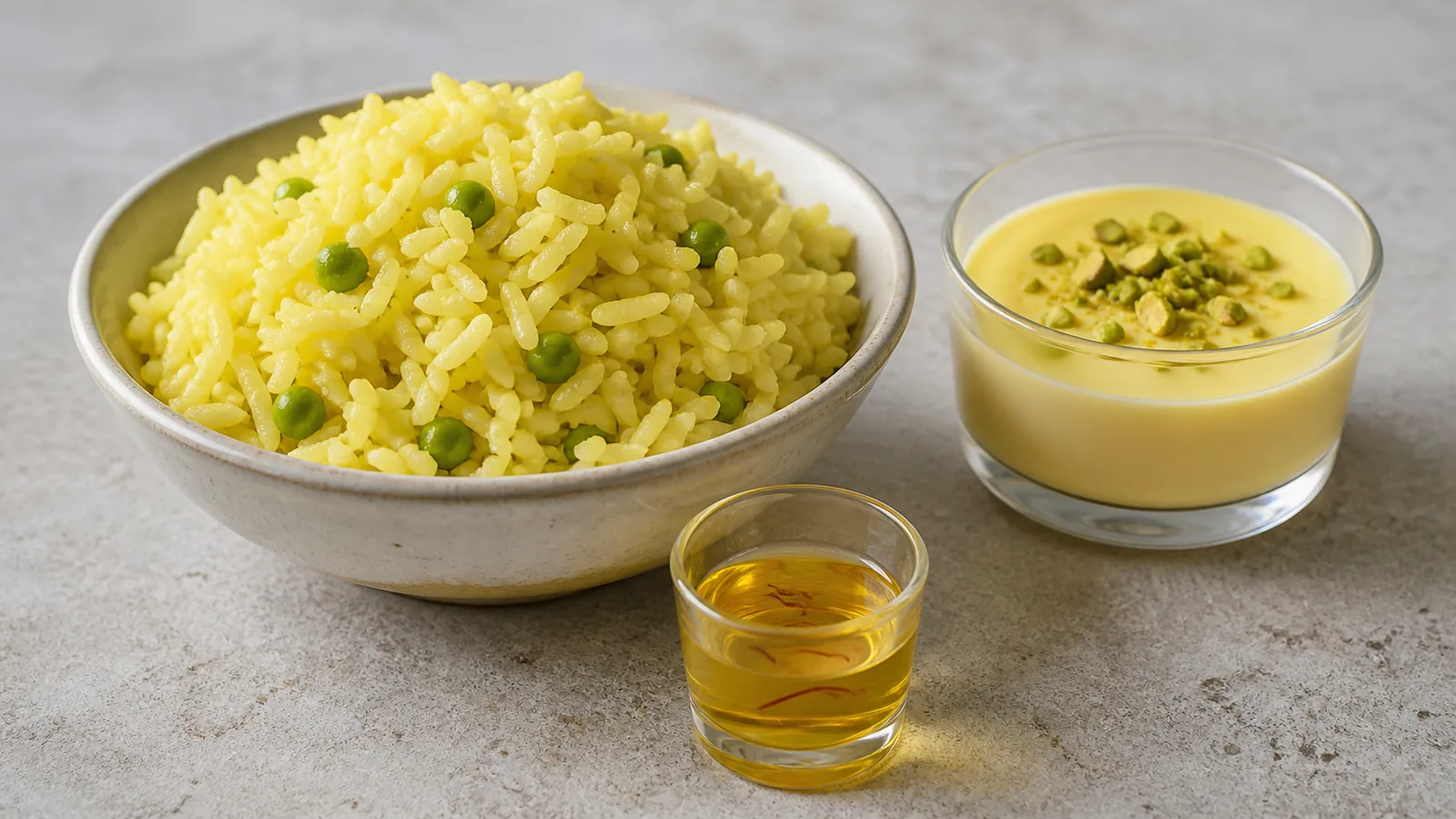
For layered rice, drizzle the infusion over selected areas before the final covered cooking stage. For even colour, mix it into part or all of the measured cooking liquid. The choice depends on whether you want a vibrant golden hue throughout or contrasting white and golden grains. Its aroma is often described as subtly sweet and floral, although saffron itself does not add sugar.
Paella
Mix the saffron with warm stock, then add the stock at the point the recipe specifies. Avoid stirring it in after the surface and rice structure have set.
Risotto
Add the prepared infusion with a middle or later stock addition. The rice has time to absorb it without exposing the aroma to the entire cooking period.
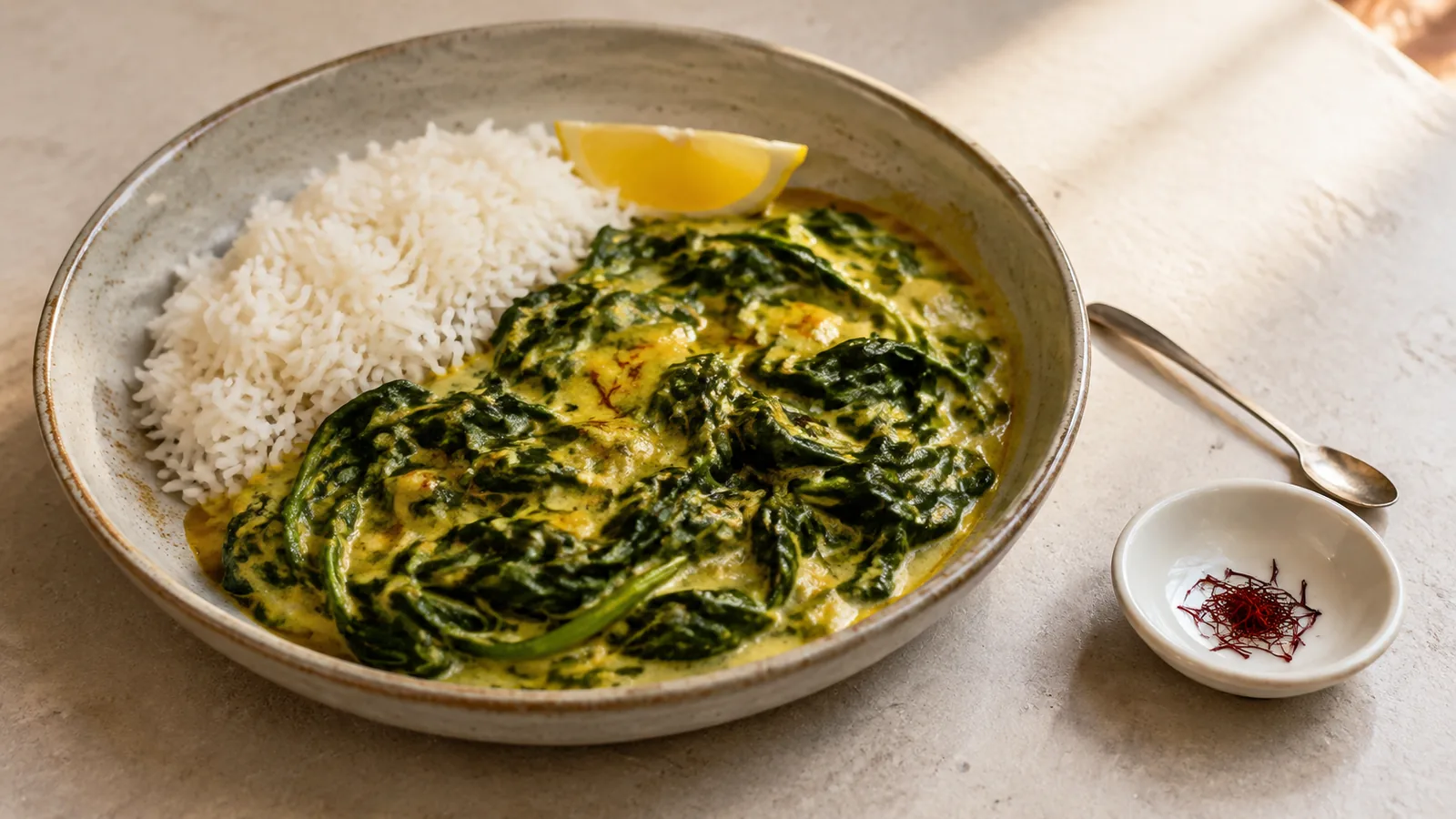
Chicken Curry, Sauce and Stew
Stir the infusion into the liquid during a gentle simmer, usually after the sauce has formed. Do not fry the threads with dry spices or add them to a nearly dry pan.
Using Saffron in Desserts and Drinks
For custard, kheer or ice cream, steep saffron in part of the milk and add that milk during the recipe’s normal liquid stage. Account for the infusion volume when the balance of liquid matters.
For saffron-infused milk, add the warm infusion while the main milk is heating gently. For saffron tea, warm water can serve as both the infusion and the finished drink. Cold recipes work best when a warm infusion is cooled before being mixed in.
When Should the Infusion Go In?
Add it early enough to distribute, but avoid a long hard boil. Rice methods decide the moment by texture: paella stock goes in before the rice sets, while biryani often receives saffron during layering. A sauce or stew can take it during the later simmer. Baking mixes it into a liquid before the batter or dough is cooked.
There is no rule that saffron must always go near the end. The right timing depends on moisture, heat and whether the dish can be stirred. Our detailed guide explains when to add saffron during cooking.
How Much Saffron to Add
A small measured dose is more useful than a vague large pinch. Begin near 0.05 gram for four servings when saffron supports other ingredients, and test up to 0.1 gram when it should lead. Thread counts vary too much to be a precise measure.
Let the first dose settle into the food before adding more. Too much can turn bitter or medicinal. For scaling, see our saffron quantity guide.
Tips for Best Results
- Measure before crushing: tiny pieces are harder to weigh and transfer.
- Cover the infusion: this helps retain aroma while it rests.
- Rinse the mortar: use part of the recipe liquid so no saffron is left behind.
- Control the heat: gentle cooking is enough once the infusion enters the dish.
- Taste after waiting: colour often appears before the full flavour is apparent.
- Record a successful batch: note the weight, liquid and timing for consistent results.
Can You Add Whole Threads Directly?
Yes. Whole threads can look attractive and will infuse during long, moist cooking. They are slower and may create uneven pockets of flavour or colour, so they are less reliable when you need consistency.
A good compromise is to crush most of the measured saffron for the infusion and reserve a few softened threads for appearance. Avoid a large dry garnish, which wastes the spice and gives diners concentrated bites.
Common Mistakes
- Dropping dry threads into hot oil or onto bare metal.
- Using boiling liquid and then boiling the infusion again for a long time.
- Adding a large second dose before the first has developed.
- Using extra water in a recipe whose texture depends on precise hydration.
- Expecting colour alone to reveal quality or the final taste.
Conclusion
The most reliable way to add saffron is to crush it lightly, make a short warm infusion, and introduce that liquid at the recipe’s last useful moist stage. Match water, milk or stock to the dish, keep the heat controlled, and measure rather than guessing. Clean intact threads are available in our saffron shop.