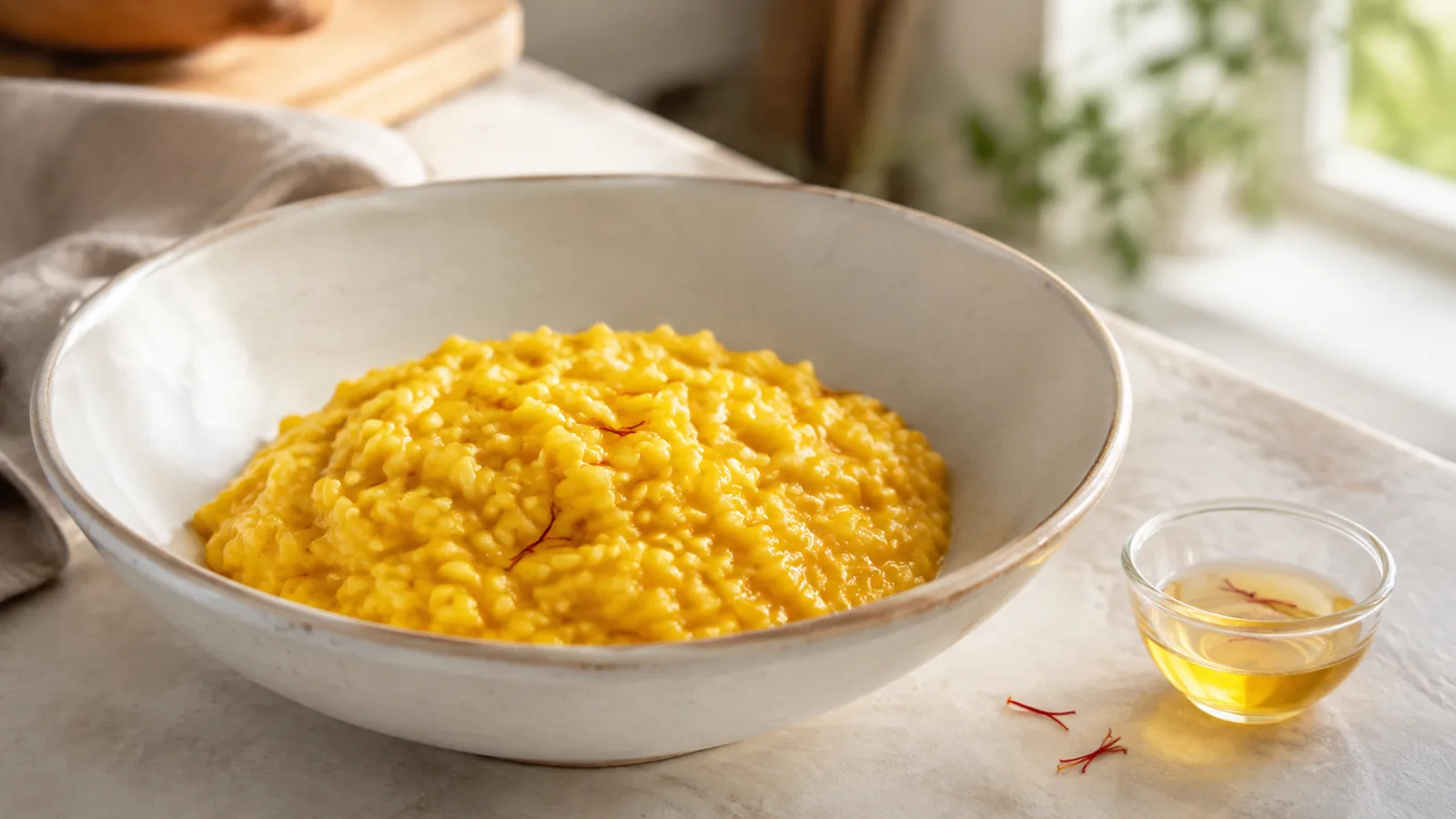
The saffron taste combines a delicate floral, honeyed and hay-like aroma with an earthy note and faint, pleasant bitterness. It is not simply sweet, and it should not make food taste strongly perfumed. Used well, it gives a dish a warm, distinctive background that is difficult to replace with another spice.
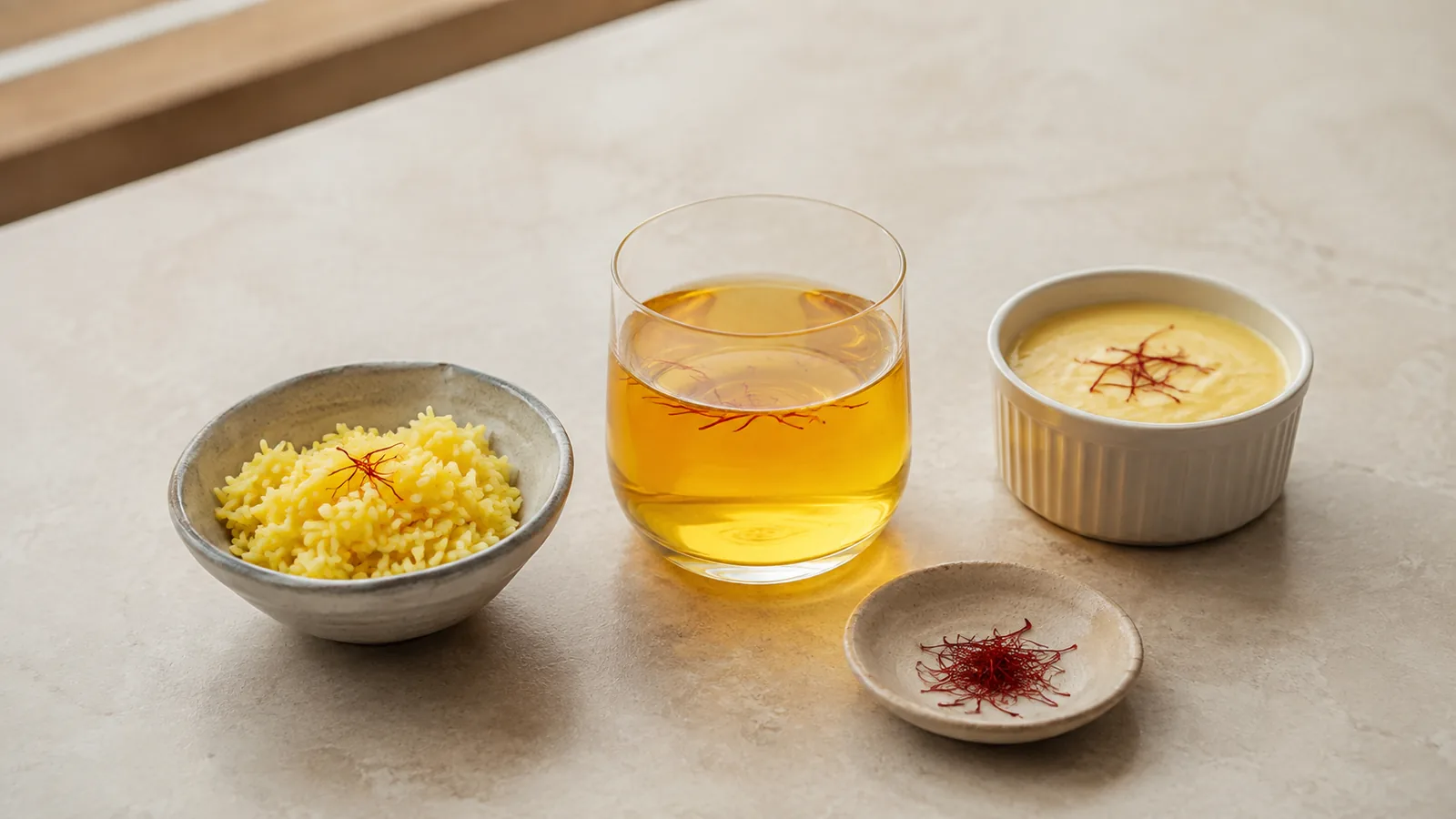
Saffron Flavor Profile: What Taste Does Saffron Add to Dishes?
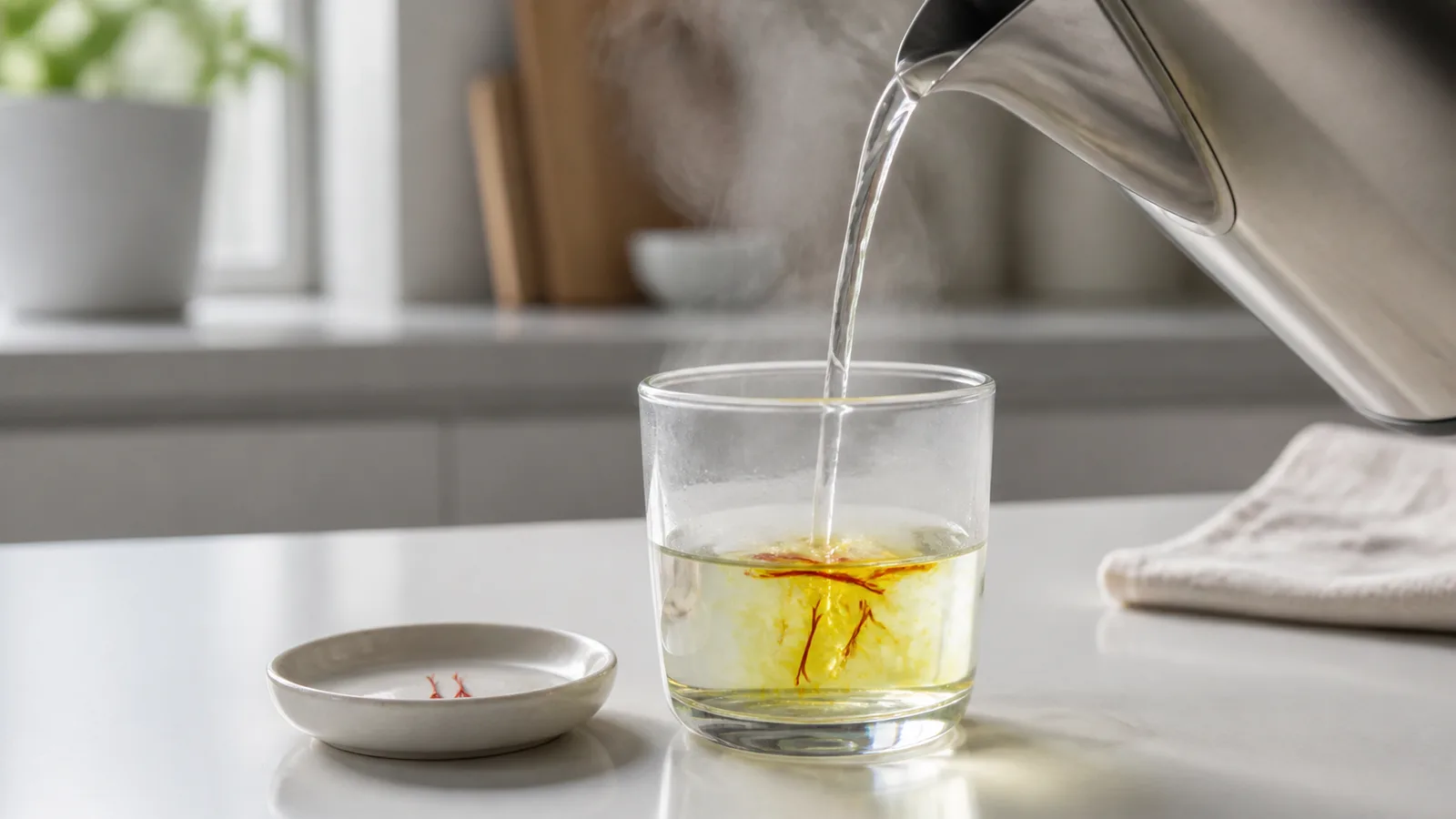
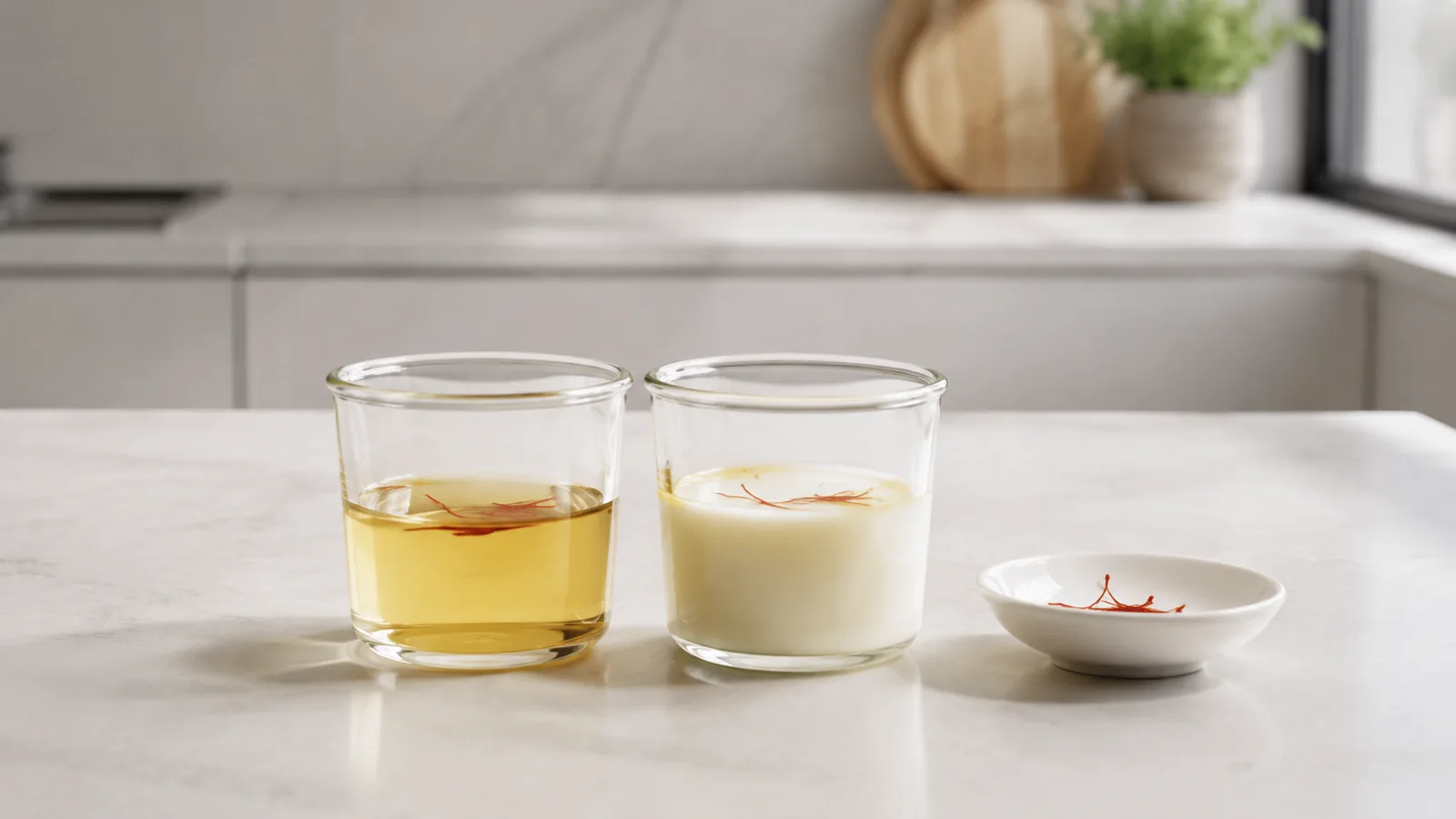
The saffron flavor profile changes with the dose, the cooking liquid and the ingredients around it. Warm water reveals a clear, direct character. Milk softens the bitter edge and makes the aroma feel rounder. Stock carries it into savoury food, while sugar can make its honey-like associations seem more obvious.
Colour is separate from taste. A dish may turn gold before the saffron flavour is fully developed, so do not add more threads only because the shade looks pale at first.
The Distinctive Taste of Saffron
People often reach for several comparisons because saffron does not taste like a single familiar ingredient. Floral, grassy, earthy, honey-like and hay-like are all useful descriptions. A mild bitter note gives it structure. Some tasters describe it as slightly sweet, but saffron itself is not sugar and will not sweeten a recipe.
Fresh, clean saffron should smell vivid even before it is steeped. The taste is gentle but distinctive rather than hot or spicy. If it dominates the entire mouthful or tastes medicinal, the dose may be too high.
What Flavor Is Saffron Most Like?
No single comparison captures it. Honey and dried grass describe part of the aroma; flowers suggest another part; and the mild earthy bitterness keeps the flavour from seeming sugary. The combination, rather than any one comparison, is what makes saffron recognisable.
Is Saffron a Strong Flavor?
Saffron is concentrated, but a well-measured amount is not loud in the way chilli, raw garlic or clove can be. It works through aroma and a lingering savoury-bitter character. That is why a small quantity can change a whole pan without announcing itself in every bite.
Its apparent strength also depends on competition. A delicate rice or milk dish exposes saffron clearly. Heavy smoke, very hot chilli or a large mixture of spices can hide it. Adding more saffron is not always the answer; simplifying the surrounding flavours may work better.
Saffron in Savory Dishes
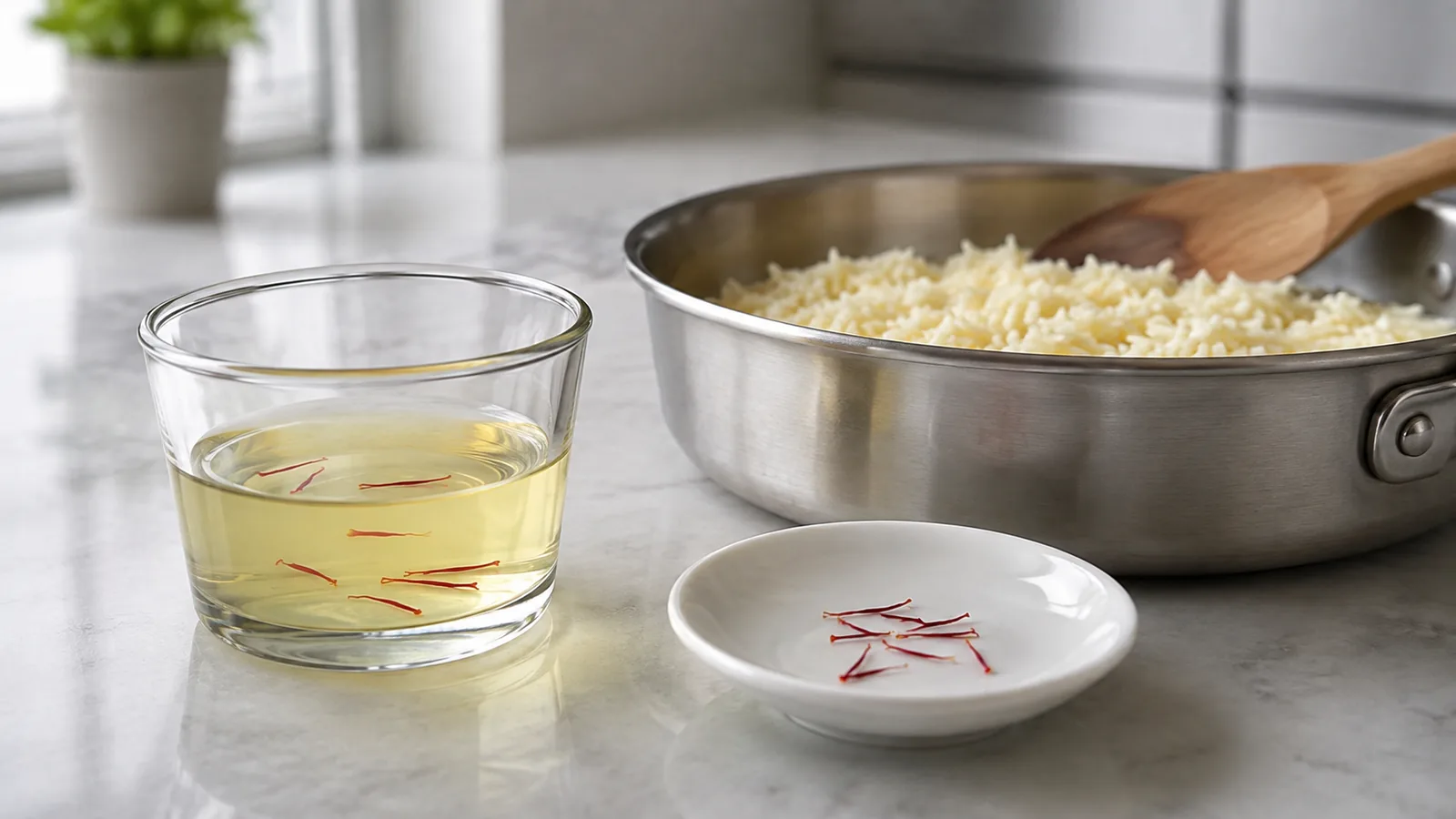
In biryani, pilaf, paella and risotto, saffron gives rice a warm aroma and an earthy, gently bitter depth. The flavour links naturally with stock, onion, butter or olive oil without tasting like any one of them. It also brings a natural golden colour, whether distributed evenly or left in deliberate streaks.
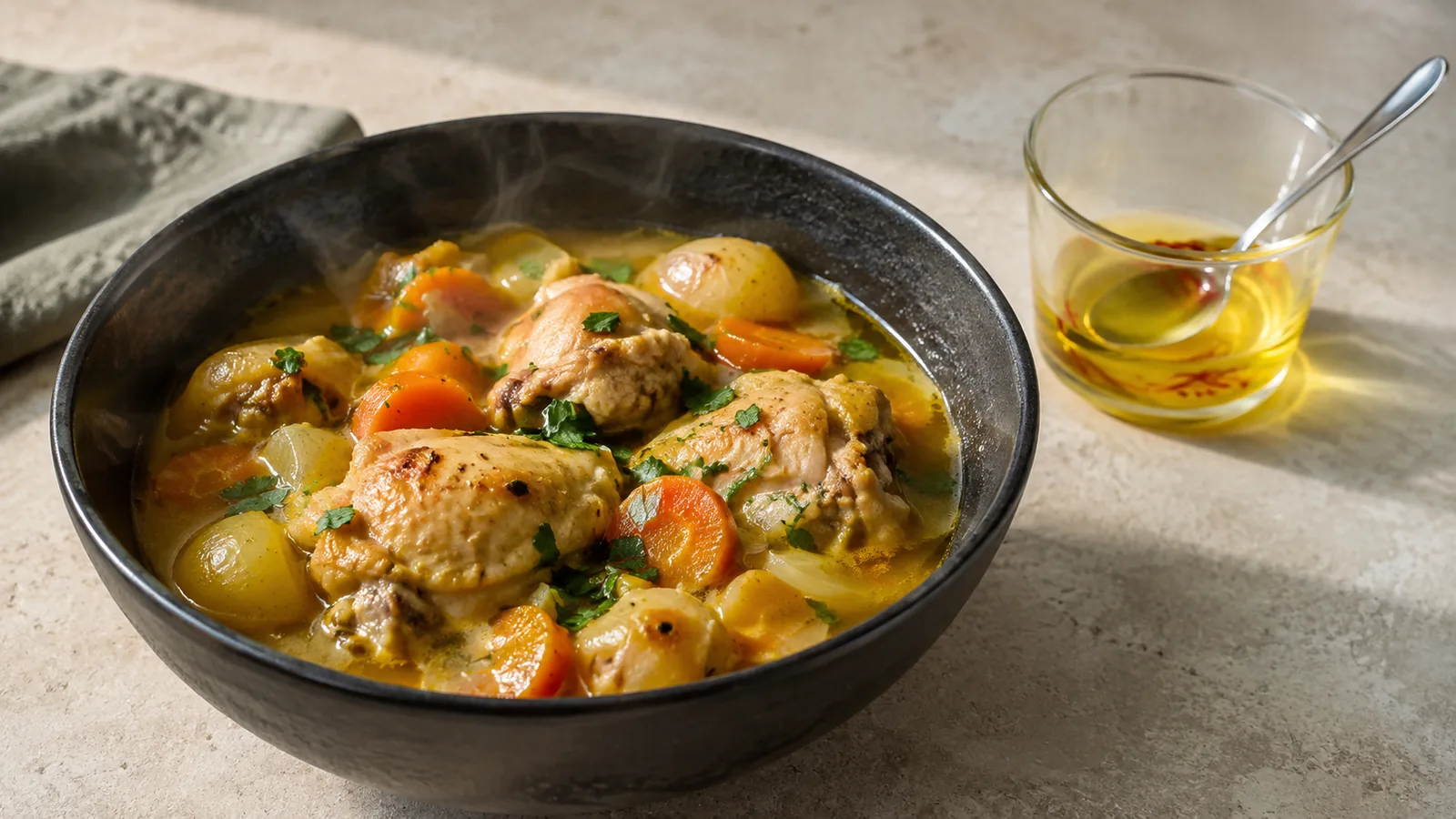
Chicken curry, seafood, soup and sauce can use the same profile. Saffron is most noticeable when it enters as an infusion during gentle cooking. A prolonged hard boil or direct frying can leave the aroma flatter.
Saffron in Desserts and Beverages
Milk, cream, rice and nuts soften saffron’s bitter edge, which is why it suits kheer, custard, kulfi and saffron milk. The result should feel warm and aromatic, not sugary because of the saffron itself. Rose, cardamom, pistachio and almond can complement it when used with restraint.
In saffron tea, the threads produce a light aromatic drink with an earthy finish. Steep it gently and taste before adding sweetener. Too much sugar can cover the very flavour you are trying to notice.
Why Saffron’s Flavor Matters
Saffron offers a combination of taste, fragrance and colour rather than a single bold note. That combination can connect rich and fresh elements in the same dish: butter and lemon in a sauce, stock and herbs in rice, or milk and nuts in a dessert.
Its subtlety is also the reason preparation matters. Whole threads added at the last second may colour only part of the food. Lightly crushed threads steeped in warm liquid distribute their character more evenly. Our guide to brewing saffron covers that method.
How to Taste Saffron on Its Own
- Measure a very small pinch and crush the threads lightly.
- Cover them with a few tablespoons of warm water.
- Leave the cup covered for 10 to 15 minutes.
- Smell the infusion before tasting a small sip.
- Notice the aroma first, then the earthy and mildly bitter finish.
Do not judge saffron by chewing a dry thread. The flavour is concentrated and the texture distracts from how the spice behaves in food. An infusion is closer to real cooking use.
How Much Saffron Gives a Balanced Taste?
For four servings, 0.05 to 0.1 gram is a practical range to test. Use the lower end when saffron supports other flavours and the upper end when it should lead. Thread counts are unreliable because threads vary in length and thickness.
Wait after adding the infusion. Aroma and taste continue to settle into the dish, and an immediate second dose can become too strong later. Our saffron quantity guide explains scaling in more detail.
What Changes the Taste?
- Freshness: old or poorly sealed saffron may smell flat before cooking.
- Heat: gentle warmth helps extraction, while unnecessary high heat can reduce delicate aroma.
- Liquid: water tastes clear, milk feels rounder, and stock integrates the spice into savoury food.
- Dose: too little disappears; too much becomes bitter or medicinal.
- Competing seasoning: smoke, chilli and strong spice blends can mask saffron.
- Storage: light, air and moisture gradually weaken aroma and colour.
What Saffron Should Not Taste Like
A chemical, plastic or musty character is not part of a desirable saffron profile. Neither is plain sweetness with no aroma. If an infusion produces intense colour immediately but little fragrance or flavour, inspect the product rather than assuming stronger colour means better saffron.
Bitterness alone is also a warning about technique or dose. Genuine saffron can be mildly bitter, but that note should sit inside a broader floral, earthy and honey-like aroma.
Pairing Saffron Without Hiding It
Rice, dairy, mild stock, butter, olive oil, citrus, almond and pistachio all give saffron space. Cardamom and rose can work beautifully in desserts, though both should remain measured. In savoury food, onion, seafood and gentle herbs provide support without copying the flavour.
Build the dish around one clear lead. If the recipe already depends on smoke, aggressive chilli and many strong spices, saffron may be more useful in a simple rice accompaniment.
Conclusion
Saffron adds a floral, honey-like, earthy and hay-like character with a mild bitter edge. Its flavour is concentrated yet subtle, so preparation and dose matter more than sheer quantity. Steep the threads, add them with gentle heat, and leave enough room in the recipe to taste what they contribute. Our saffron shop lists clean intact threads for cooking.