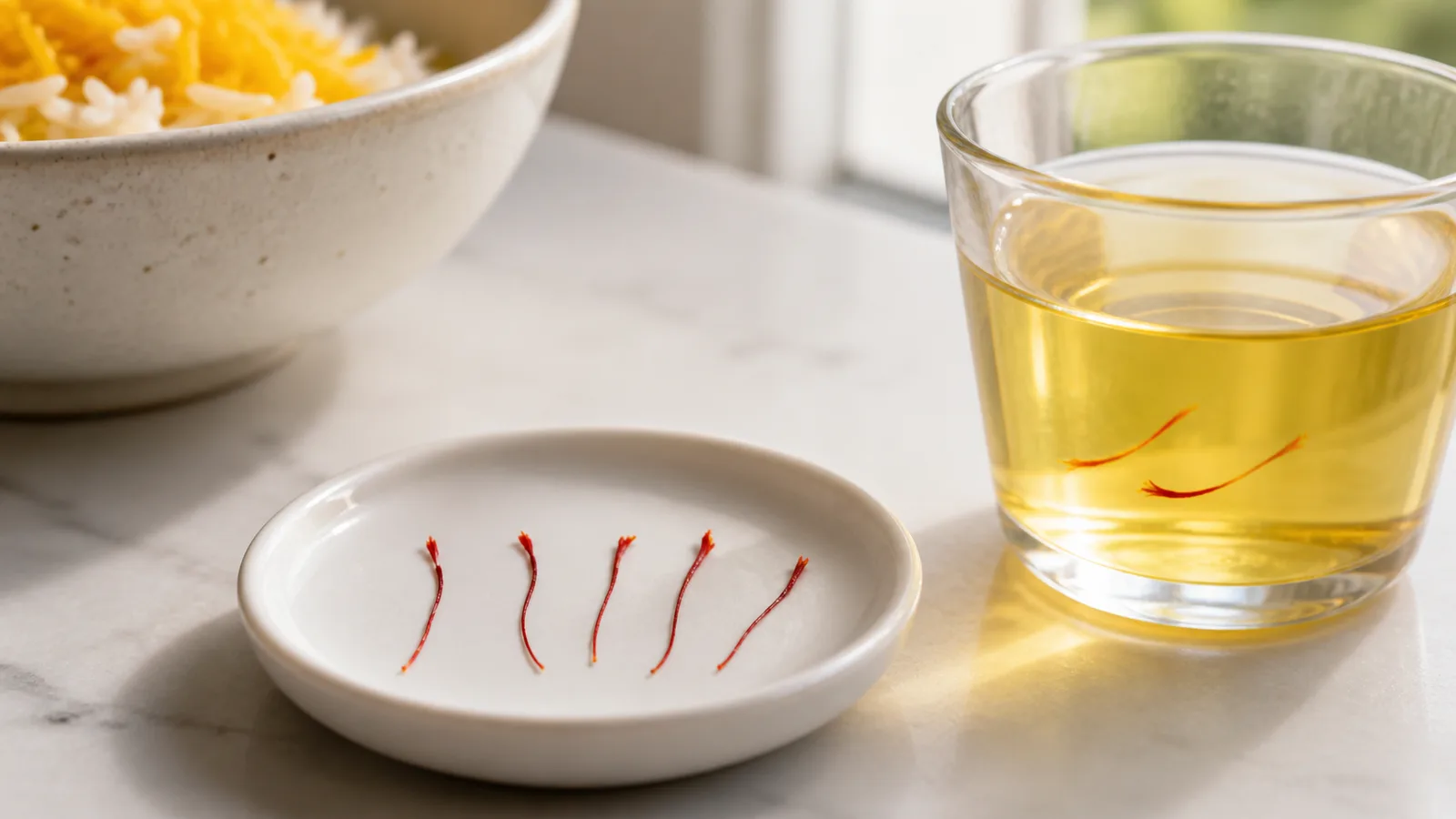
You do not have to crush saffron, but lightly breaking the threads before steeping makes extraction faster and more even. The goal is not to pulverise them into dusty powder. A few gentle strokes in a dry mortar are enough for most cooking.
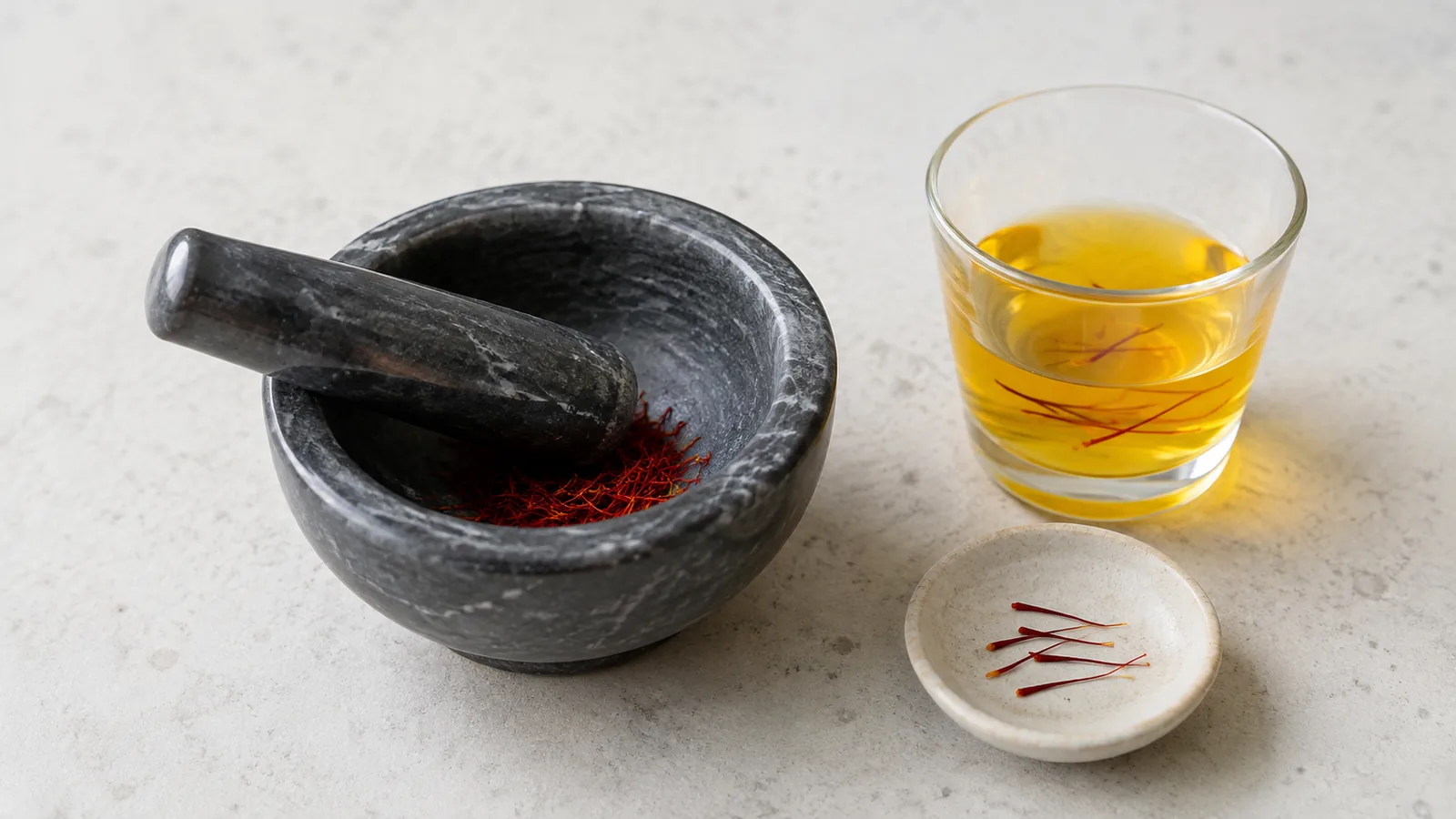
Preparing Saffron for Cooking: Should You Crush It?
Preparing saffron for cooking involves three separate choices: how much to measure, whether to crush it, and what liquid to use for the infusion. Crushing is helpful because it exposes more of each thread to the liquid. Whole threads still work, but generally need more contact time and may colour a dish less evenly.
Keep a few threads whole when their appearance matters, such as on a finished rice dish or dessert. Use the lightly crushed saffron for the main infusion, then reserve the intact threads as a restrained garnish.
Why Crushing Saffron Helps
A saffron thread is a dried stigma. Breaking it into shorter pieces increases the surface area touching warm water, milk or stock, helping its colour, aroma and flavour move into the liquid. This is extraction rather than the “release of essential oils” sometimes claimed in brief cooking advice.
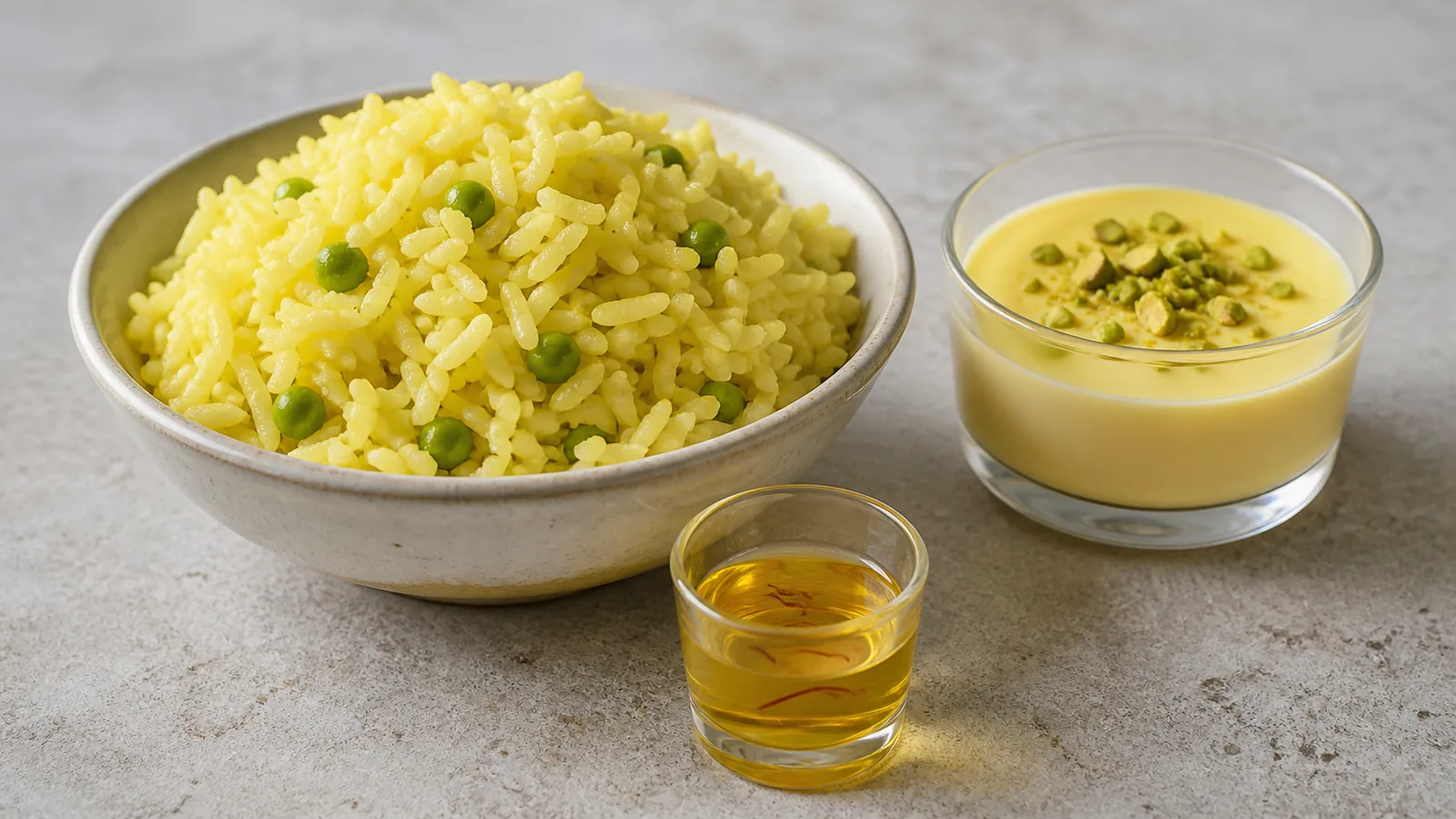
Crushed saffron also disperses more easily. This is especially useful in rice dishes, sauces and desserts, where a prepared infusion reaches more of the food than several whole threads dropped into one spot.
How to Crush Saffron
- Measure the amount your recipe needs before grinding.
- Place the dry threads in a small mortar.
- Press and turn the pestle gently until the threads break into short pieces.
- Stop before they become an ultra-fine powder that is difficult to inspect or transfer.
- Add the pieces to a small amount of warm liquid and rinse any saffron left in the mortar into the cup.
If you do not own a mortar and pestle, fold the threads in a small piece of baking paper and press them gently with the back of a spoon. Clean, dry fingertips also work for a small quantity.
How Fine Should Crushed Saffron Be?
For an everyday infusion, aim for visibly broken pieces rather than powder. This gives the liquid more contact area while keeping the ingredient recognisable. A finer grind can be useful when saffron needs to disappear into a smooth custard or dough, but it is not required for rice, broth or sauce.
Avoid using a large electric spice grinder for a tiny portion. Much of the saffron can cling to the container, and the heat and friction are unnecessary. A small mortar gives better control and wastes less.
Steep the Saffron After Crushing
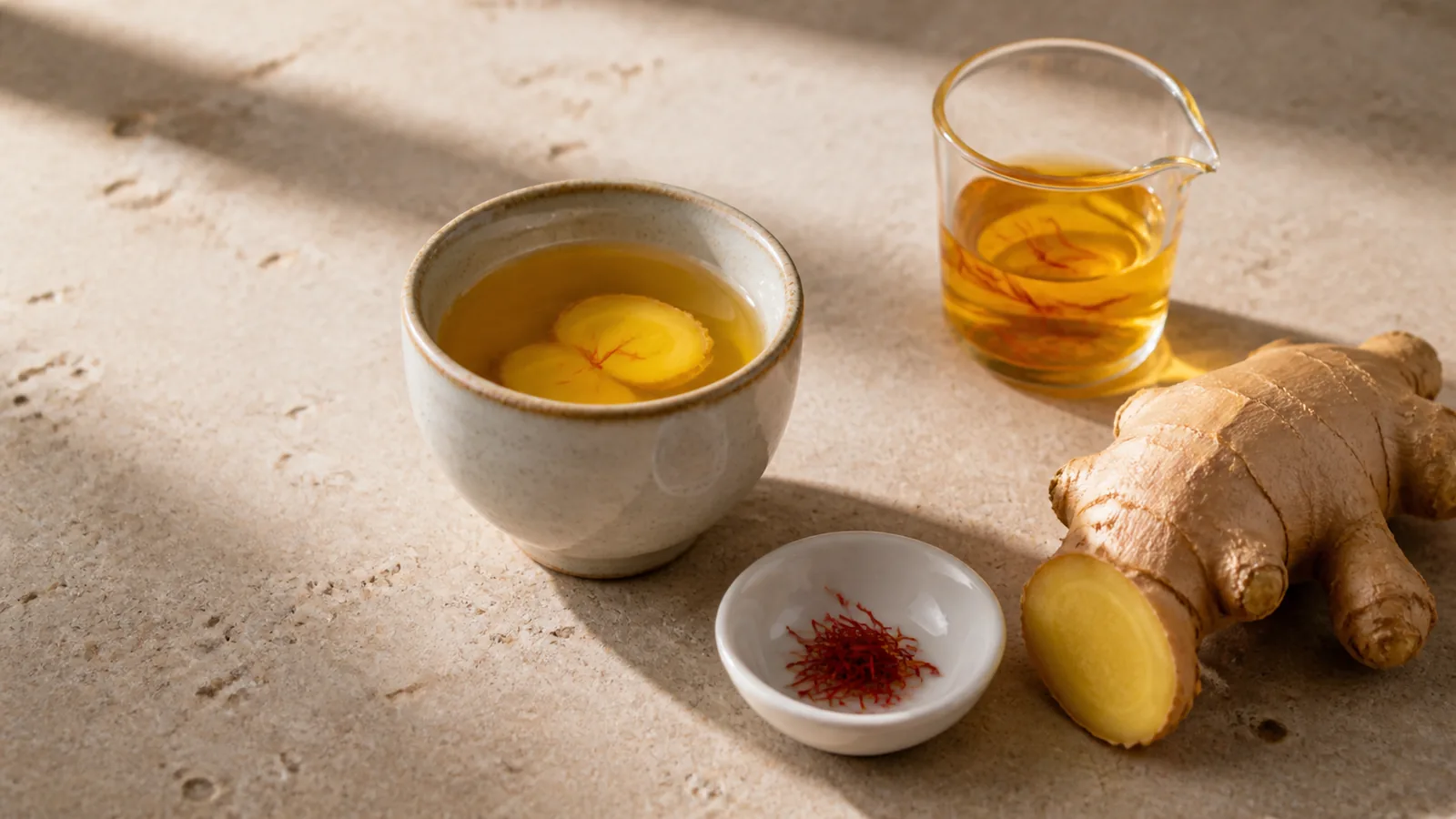
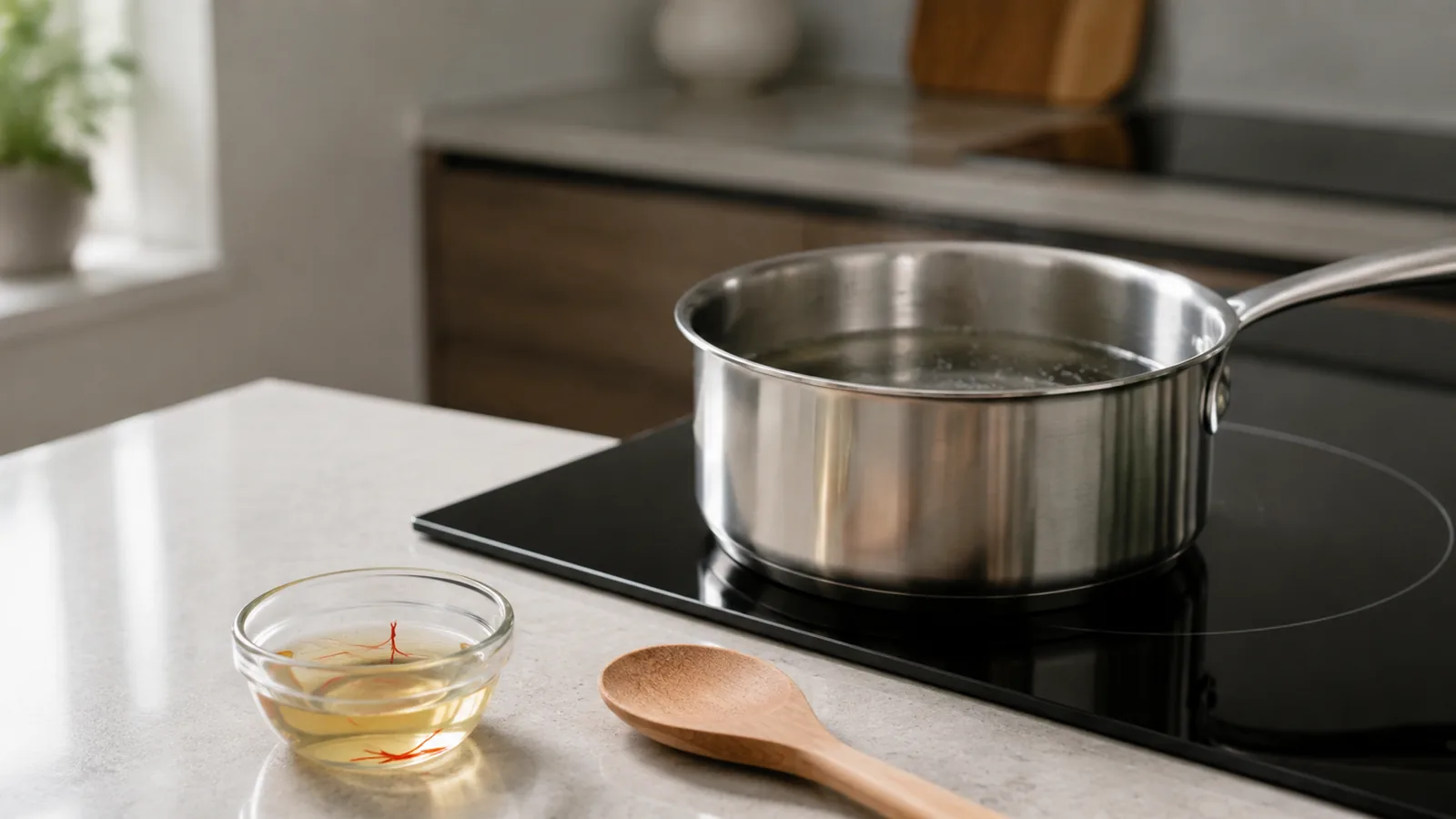
Cover the broken threads with two or three tablespoons of warm water, milk or unsalted stock. Leave the cup covered for 10 to 15 minutes, then add both the infusion and the softened pieces to the recipe.
The liquid should be warm, not vigorously boiling. Choose one that fits the dish: water or stock for most savoury recipes, milk for dairy desserts and drinks. Our guide to brewing saffron compares common infusion methods.
Alternative Methods
Whole threads can be steeped directly in warm liquid. Allow more time, cover the vessel, and stir before judging the strength. This method is useful when you want the threads to remain visible in the finished food.
You can also place whole threads in the measured cooking liquid before it enters a rice dish or soup. The result may be attractive but less uniform. Adding dry threads to hot oil or a dry pan is not a useful alternative; direct heat can scorch them before they disperse.
Should You Add Sugar or Salt While Grinding?
Some cooks add a small pinch of sugar or coarse salt to give the pestle more grip. It can work, but only when that ingredient already belongs in the recipe and the amount is counted. Plain crushing avoids changing the dish and makes the saffron easier to assess.
Never use an unknown abrasive simply to make grinding easier. A clean mortar, dry threads and light pressure are sufficient.
How Much Saffron to Crush
Crush only what the current recipe needs. For four servings, 0.05 to 0.1 gram is a practical range to test, depending on how prominent the saffron should be. A scale that reads hundredths of a gram is more dependable than an exact thread count.
Too much saffron can taste bitter or medicinal. Crushing improves extraction, so do not use a larger dose simply because the pieces look small. Our saffron quantity guide explains how to scale by serving and recipe type.
When Whole Threads Are Better
- Visual garnish: a few intact strands can identify the ingredient on rice, custard or a drink.
- Long, gentle infusion: whole threads can work when they have enough time in warm liquid.
- Quality inspection: intact threads are easier to examine before purchase and use than pre-ground saffron.
- Controlled contrast: whole threads and a partial infusion can create varied colour in layered rice.
Even in these cases, it is often sensible to crush most of the measured saffron and reserve only a few threads whole.
Common Mistakes
- Grinding before measuring: fine saffron is harder to transfer without loss.
- Using a wet mortar: moisture can make threads cling before you add the intended infusion liquid.
- Turning every thread into dust: a light crush is usually enough.
- Leaving residue behind: rinse the mortar with part of the recipe liquid.
- Assuming darker means stronger: allow the infusion time and assess aroma as well as colour.
Conclusion
Crushing saffron is optional, but a light crush followed by a warm infusion is the most reliable method for even flavour, aroma and colour. Keep the process gentle, measure first, and reserve whole threads only when they serve a clear visual purpose. Clean intact threads are listed in our saffron shop.