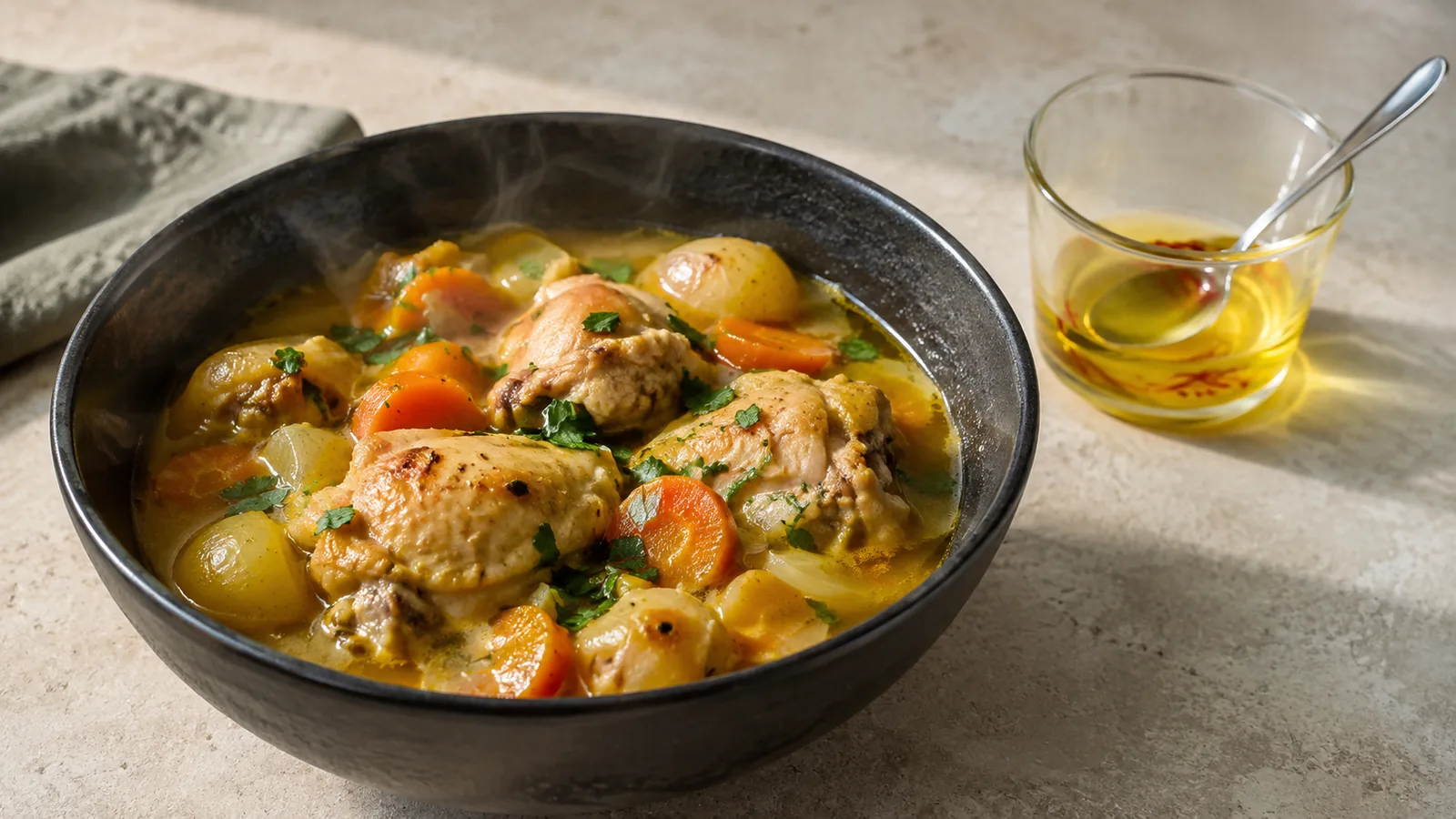
Yes, you can put saffron in chicken curry. It works best in a gently spiced sauce where its aroma will remain noticeable. Steep the threads first, then add the infusion while the chicken and sauce are simmering rather than frying the saffron with the dry spices.
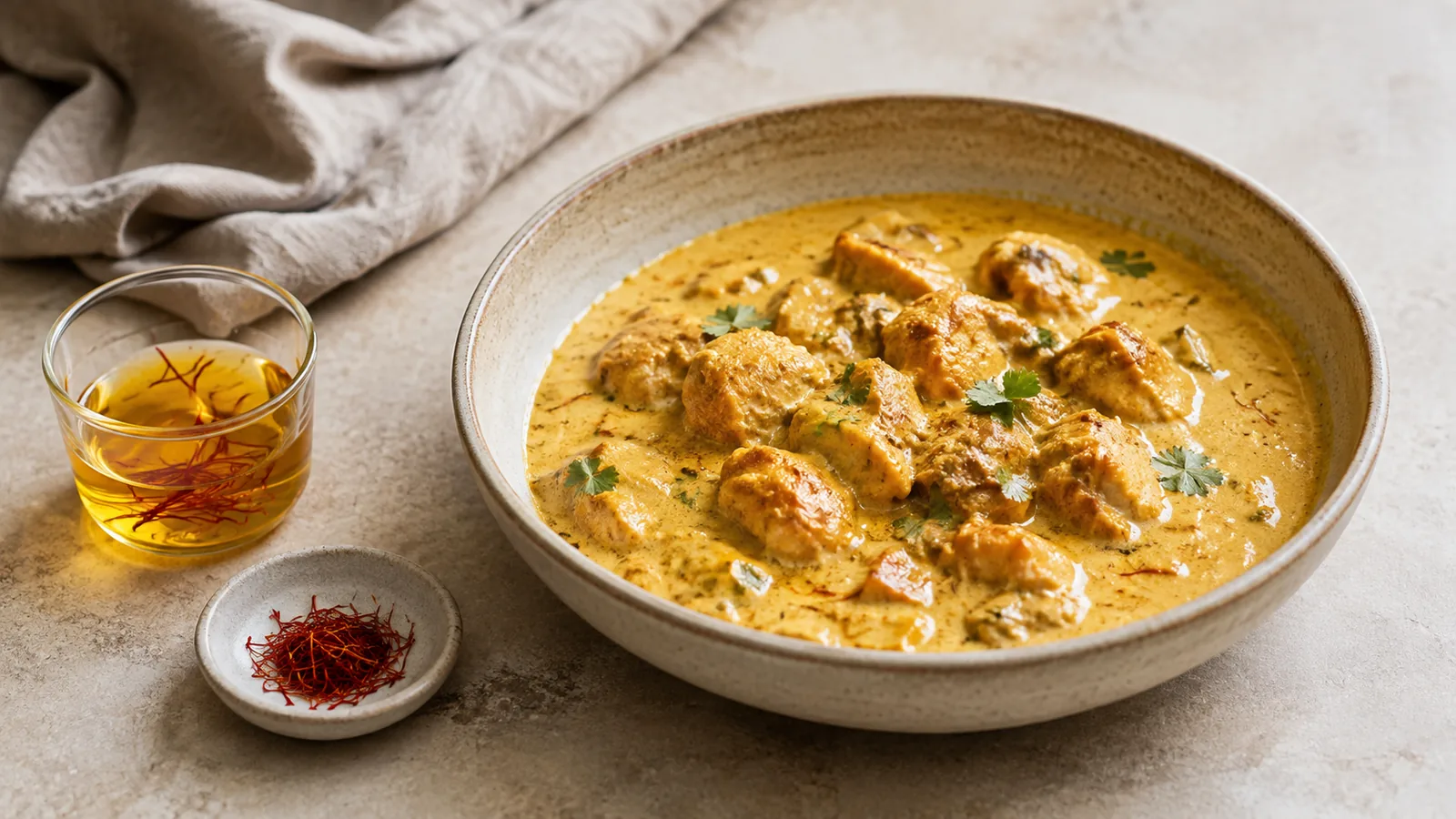
Saffron in Chicken Curry: How to Add for Flavor and Color
Saffron in chicken curry contributes a warm aroma, a restrained floral note and a natural golden colour. It is optional, not a requirement for every curry. The dish needs enough liquid to distribute it and a spice balance that leaves room for its quieter character.
Rich sauces made with yoghurt, cream, milk, stock, onion or ground nuts can carry a saffron infusion particularly well. Tomato-heavy or very hot chilli sauces may overwhelm it, although a small amount can still add complexity if the recipe is designed around it.
Steeping Saffron Before Adding
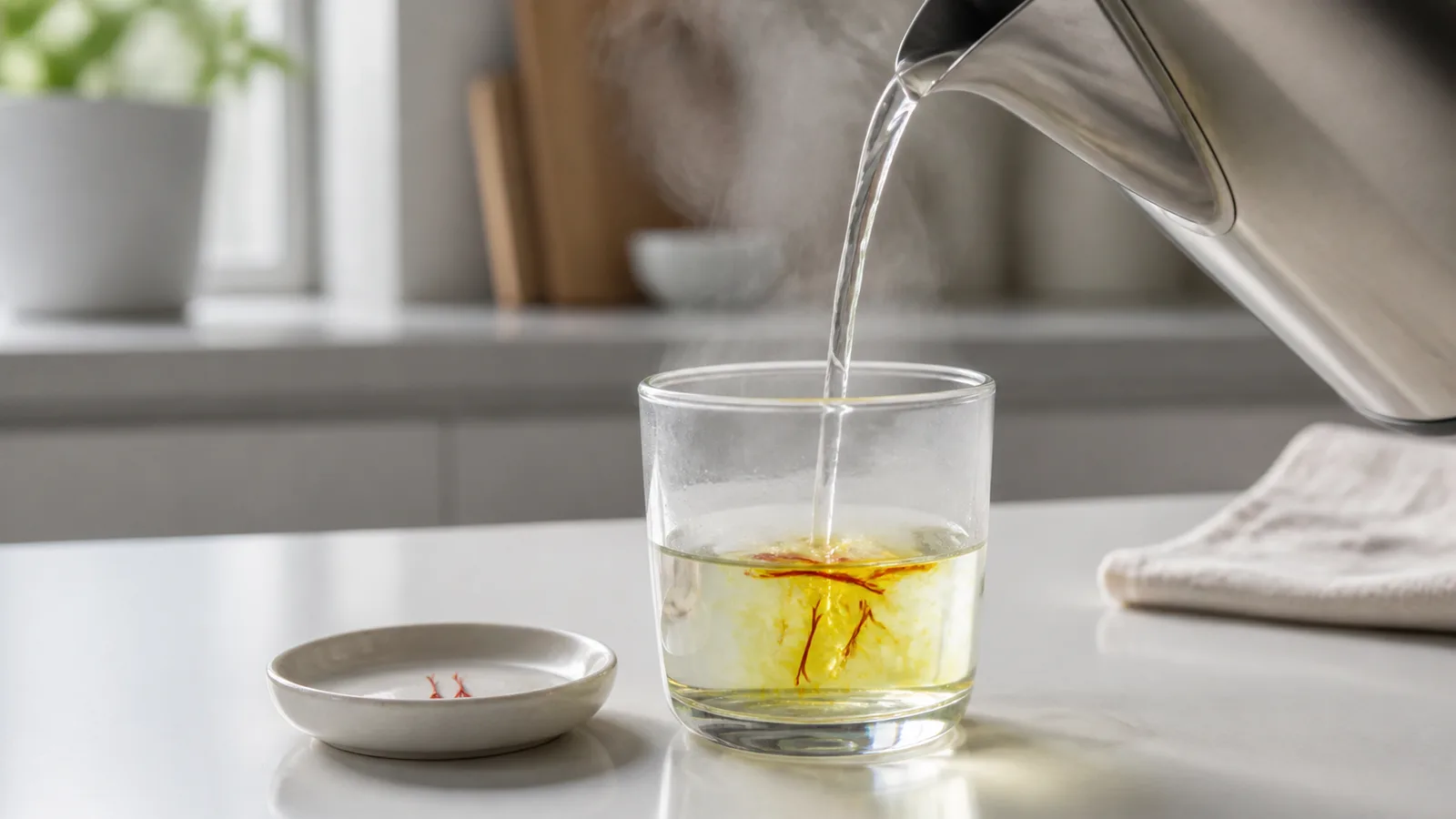
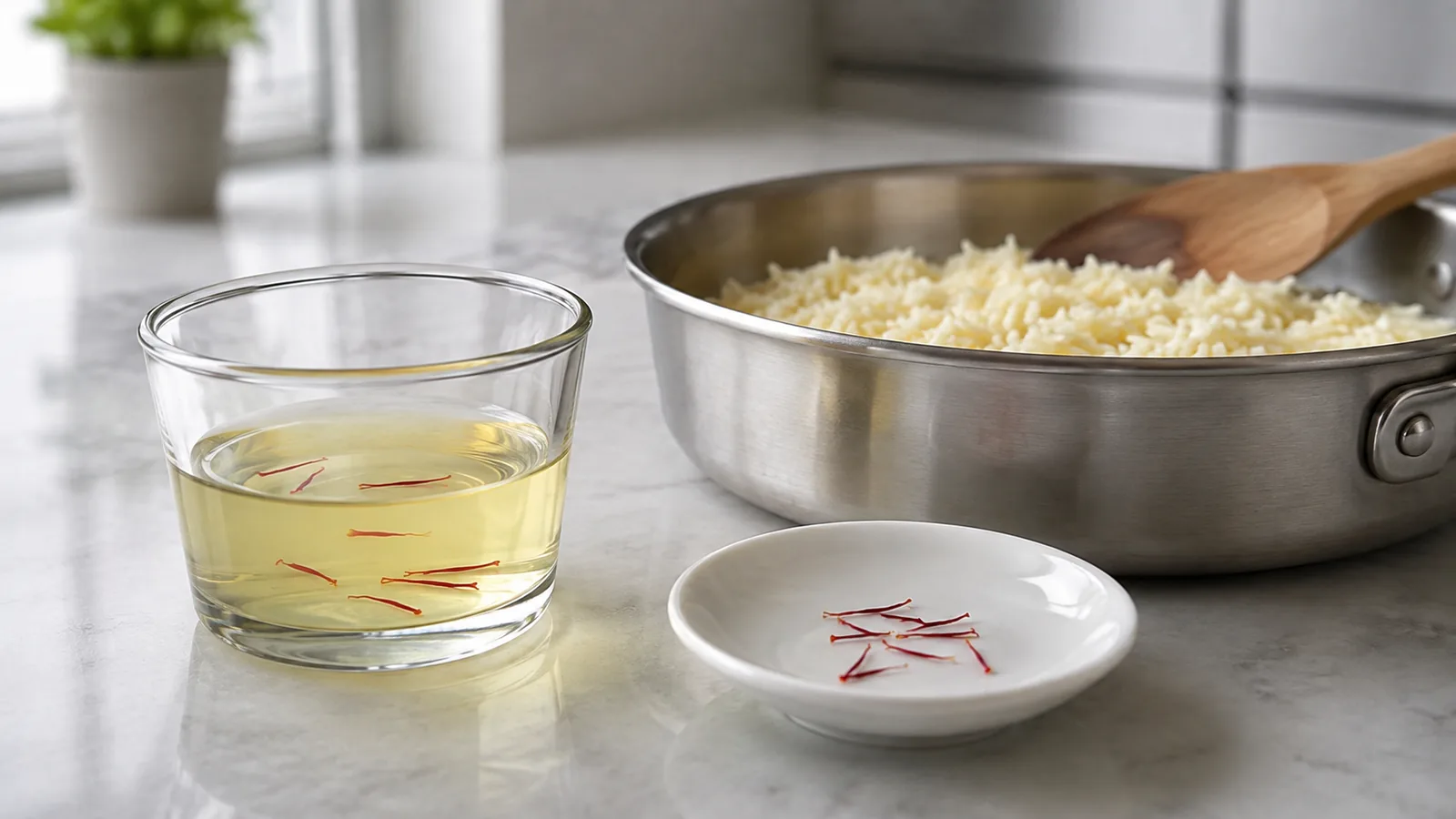
Measure the threads, crush them lightly, and cover them with two or three tablespoons of warm water, milk or unsalted broth. Leave the cup covered for 10 to 15 minutes. Add both the liquid and the softened threads to the curry.
Choose the infusion liquid to match the sauce. Milk suits a creamy curry; broth or water avoids adding dairy to a recipe that does not need it. The liquid should be warm, not at a rolling boil. This short steep extracts colour and flavour before the saffron enters a larger pan.
When to Add Saffron
Add the saffron infusion during the simmering stage, once the sauce has formed and the chicken is mostly cooked. Stir gently, keep the heat low, and allow roughly five to 10 minutes for it to blend before tasting.
That timing protects the established method on this page while giving a clearer test: the pan should contain enough sauce to distribute the infusion, and the chicken must still have enough cooking time left to finish safely. Follow the full recipe for chicken doneness rather than treating saffron timing as a cooking-time guide.
For chicken prepared without a curry sauce, see our separate guide to when to add saffron to chicken.
Why Saffron Works in Curry
Saffron can bridge savoury and gently sweet elements in a sauce. Its aroma sits comfortably beside basmati rice, onion, yoghurt, cream, almonds and mild warm spices. A small infusion can also give a pale sauce a vibrant golden hue without artificial colouring.
That profile explains its place in selected Indian and Middle Eastern curries. Saffron is sometimes described as subtle floral and slightly sweet, although the threads contain no sugar and should not make the curry taste sugary. Balance matters: cardamom, cinnamon and cumin can support saffron in measured amounts. Heavy chilli, smoked seasoning or an overly large garam masala dose may make it difficult to detect. If the curry is intentionally intense, it may be better to save the saffron for the rice served alongside it.
How Much Saffron to Use
For a curry serving four people, start with 0.05 to 0.1 gram. Use the lower end when several other spices lead the dish. The upper end may suit a pale, saffron-forward sauce, but taste before adding more.
Thread counts are imprecise because threads differ in size. A small scale is more reliable. If the flavour becomes bitter or medicinal, dilute the sauce and rebalance the salt and other seasoning; adding sweetness rarely fixes an excessive saffron dose.
A Simple Method for Saffron Chicken Curry
- Measure and lightly crush the saffron.
- Steep it in a few tablespoons of warm liquid for 10 to 15 minutes.
- Build the curry sauce and cook the chicken according to the recipe.
- When the chicken is mostly cooked and the sauce is at a gentle simmer, stir in the infusion.
- Cook gently for another five to 10 minutes, or as long as the chicken still requires.
- Taste the sauce before adjusting saffron, salt or acidity.
If the recipe needs reducing, do most of that work before the saffron goes in. A long uncovered reduction after the addition can leave the aroma less distinct.
Building a Sauce That Lets Saffron Show
Start with a clear purpose for the curry. A creamy korma-style sauce might use onion, yoghurt or ground almonds with gentle spices. A broth-based curry can remain lighter. In either case, cook raw aromatics and spices properly before adding the saffron infusion; saffron should not be asked to cover an unfinished sauce.
Acidity can sharpen a rich curry, but add lemon or another acidic ingredient carefully near the end. Taste after each adjustment. Too much acid can make the floral side of saffron seem thin.
Serving the Curry
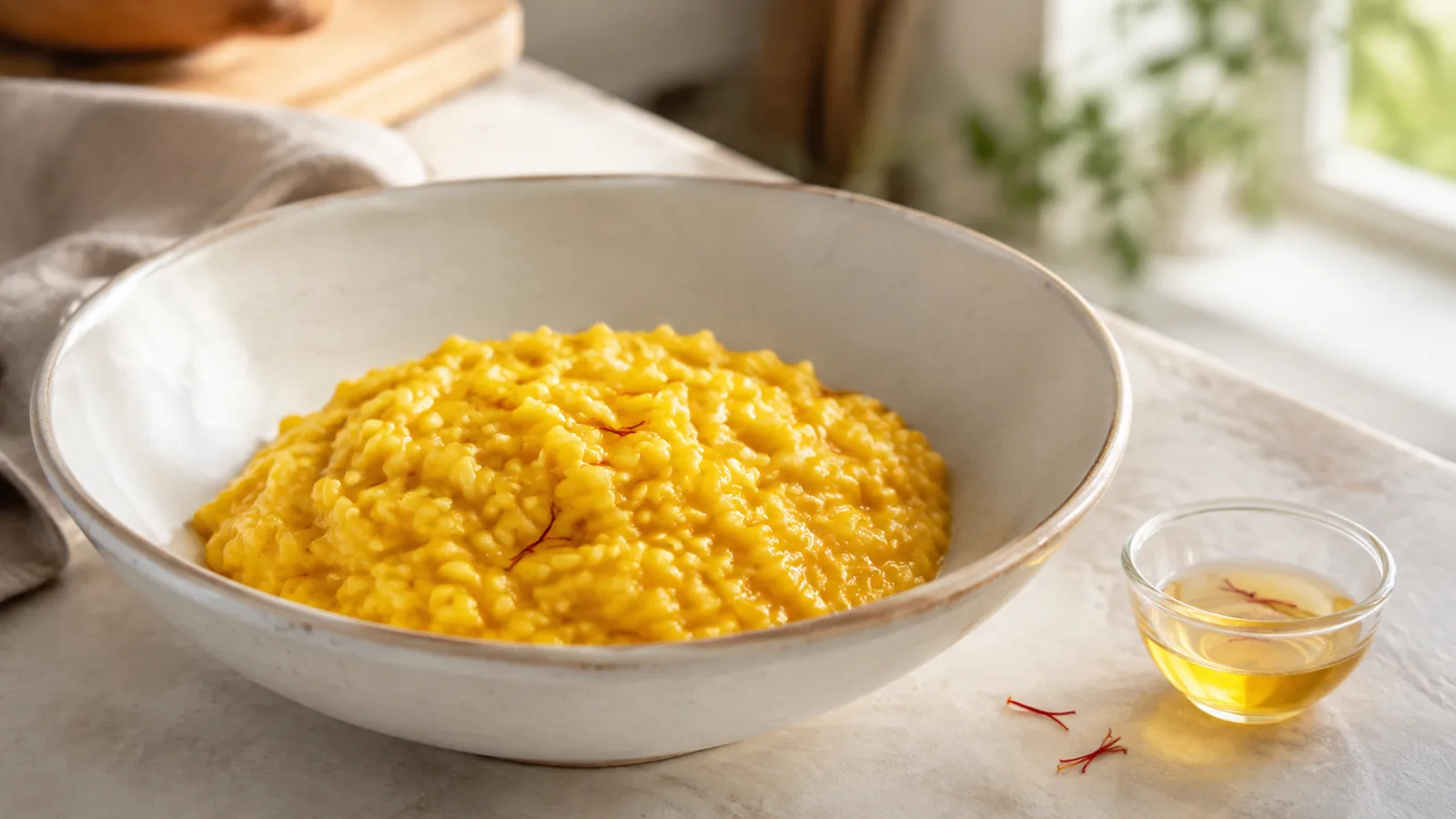
Plain basmati rice gives a saffron chicken curry room to lead. If saffron also appears in the rice, keep one of the two preparations subtle so the meal does not become repetitive. Flatbread, a fresh herb garnish or a restrained yoghurt accompaniment can provide contrast.
Visible threads are optional. A few softened strands in the sauce show the ingredient, but a large dry garnish is wasteful and gives diners uneven bites.
Tips for Using Saffron
- Do not fry the threads with dry spices: direct high heat can scorch them before they disperse.
- Use a measured infusion: it spreads more evenly than dry threads dropped into a full pan.
- Keep the final simmer gentle: prolonged boiling can flatten the delicate aroma.
- Taste the curry as a whole: strong spices may need restraint rather than a larger saffron dose.
- Record what worked: note the saffron weight, liquid and timing for the next batch.
For a broader timing framework, read when to add saffron during cooking.
Common Problems
The Curry Is Bright but Has Little Saffron Aroma
The sauce may contain artificial colour, the saffron may be old, or the aroma may be hidden by stronger spices. Check the threads before use and simplify the seasoning rather than automatically adding more.
The Sauce Tastes Bitter
Too much saffron, scorched spices or an over-reduced sauce can all contribute. Dilute with the appropriate stock or dairy ingredient and reassess before seasoning again.
The Colour Is Uneven
Stir the prepared infusion through the sauce before it thickens completely. Whole dry threads added at the finish do not have enough contact time to colour the pan evenly.
Conclusion
Saffron can be an excellent addition to chicken curry when the sauce is gentle enough to carry it. Steep the threads first, add the infusion during the simmering stage, and avoid prolonged hard boiling. A measured dose brings flavour, aroma and rich golden colour without pushing the curry out of balance. Clean threads are available in our saffron shop.