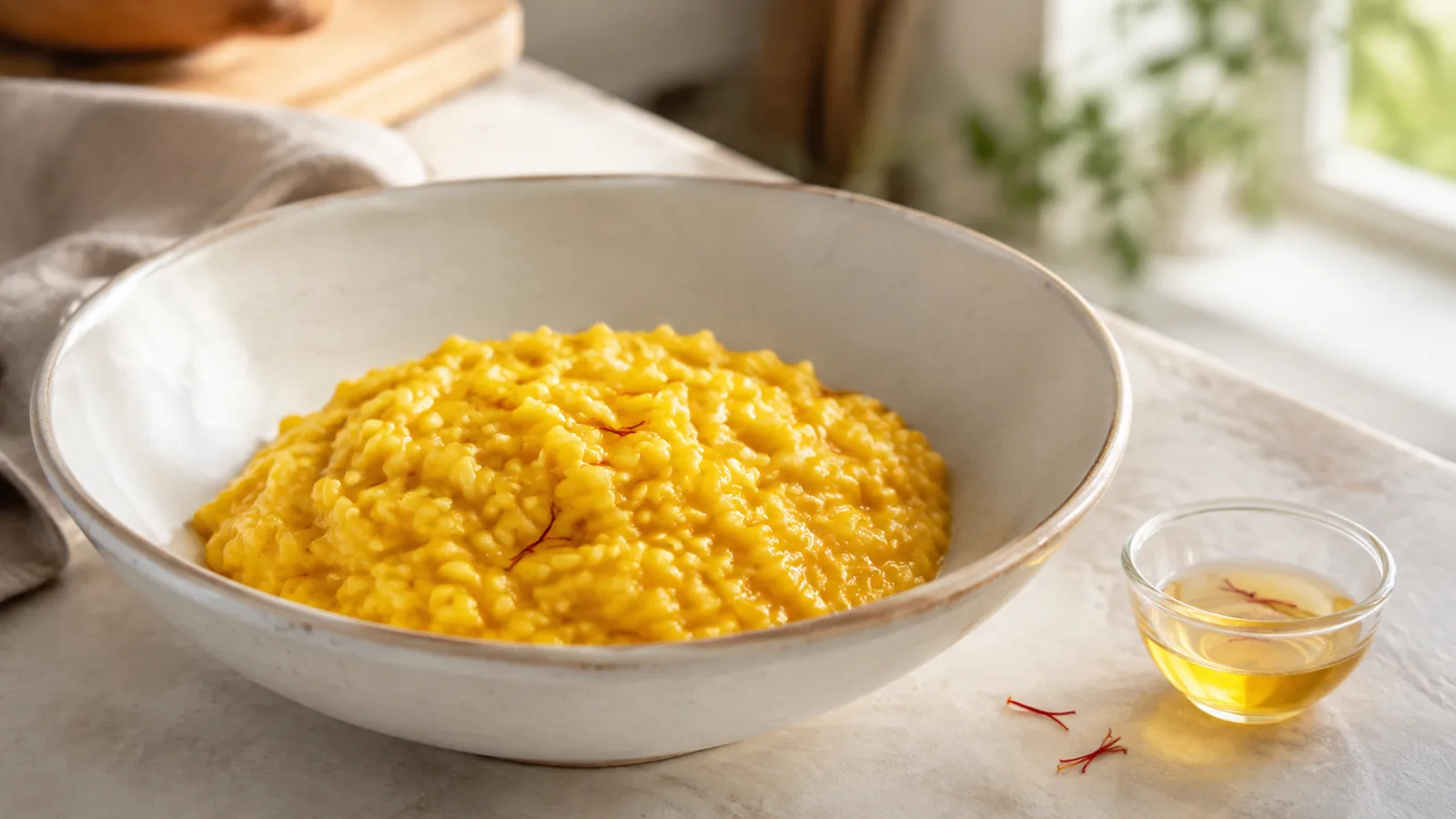
Add saffron after it has infused in a small amount of warm liquid, then choose the moment according to the dish. Rice usually needs the infusion during cooking or layering; sauces and stews take it during a gentle simmer; baking mixes it into a liquid ingredient before the batter goes into the oven. Avoid a long, hard boil.
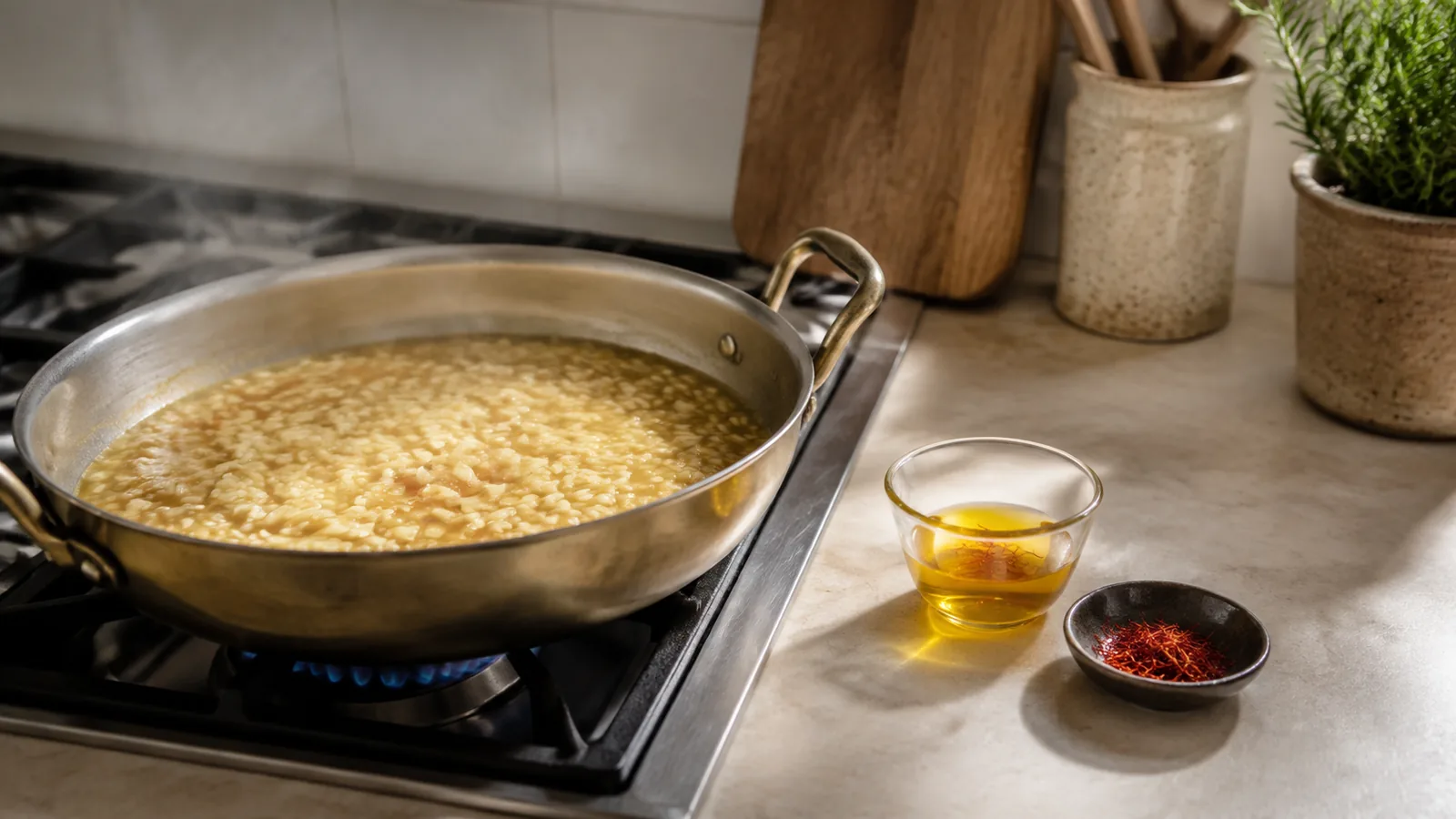
Using Saffron in Cooking: Best Time to Add for Flavor and Color
Using saffron in cooking is less about one universal minute and more about giving the spice enough moisture, moderate heat and contact time. The infusion should enter early enough to spread, but not so early that its aroma spends an hour escaping from an uncovered pan.
A useful rule is to look at the remaining cooking time. Ten to 20 minutes of gentle, moist cooking is often enough for a prepared infusion to blend. Dry baking, layered rice and cold recipes need different handling, so use the recipe-specific guidance below.
Steeping Saffron Before Cooking
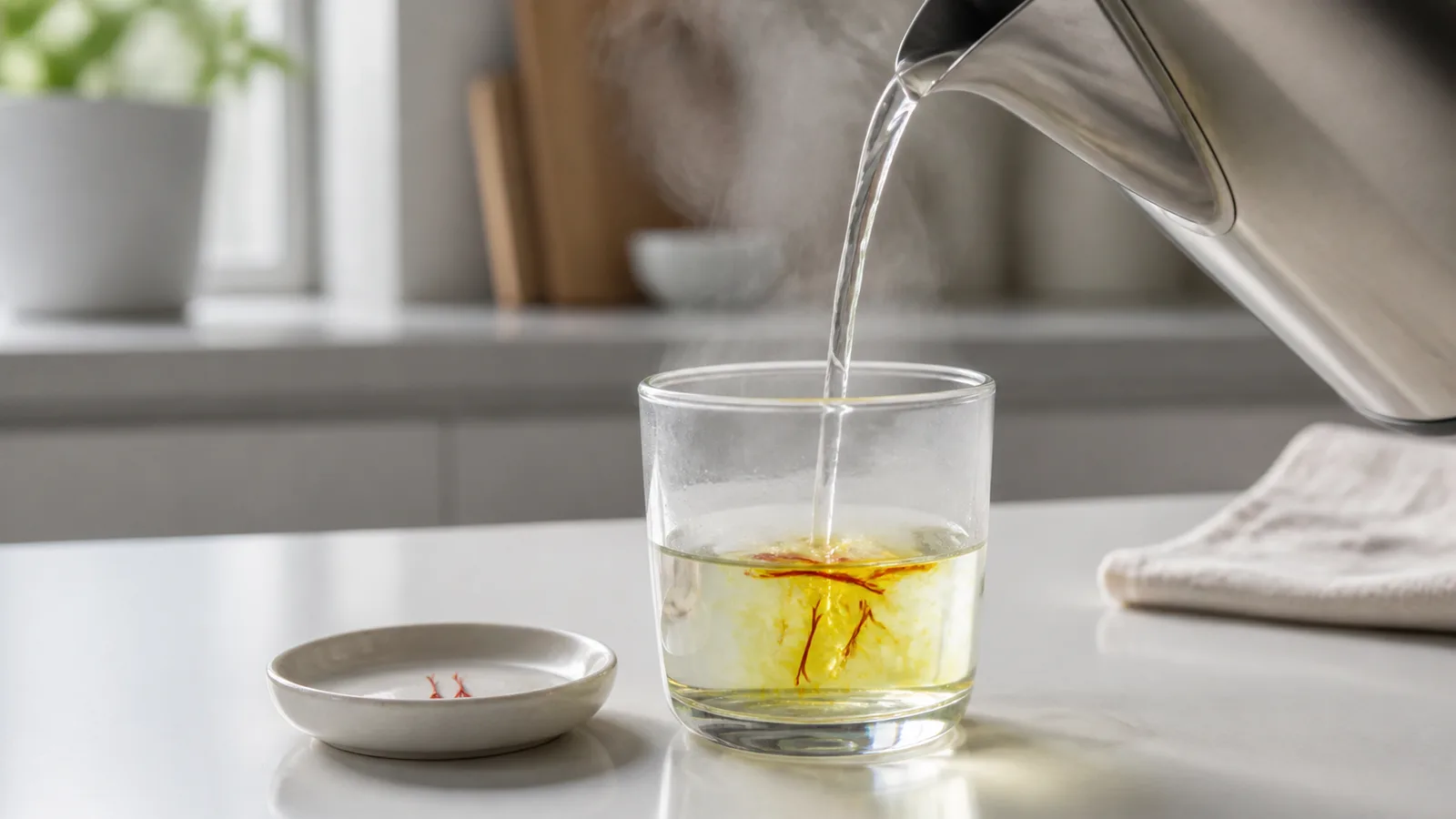
Measure the threads before you begin, then crush them lightly in a dry mortar or between clean fingertips. Cover them with two or three tablespoons of warm water, milk or stock and leave the cup covered for 10 to 15 minutes. Use both the coloured liquid and the softened threads.
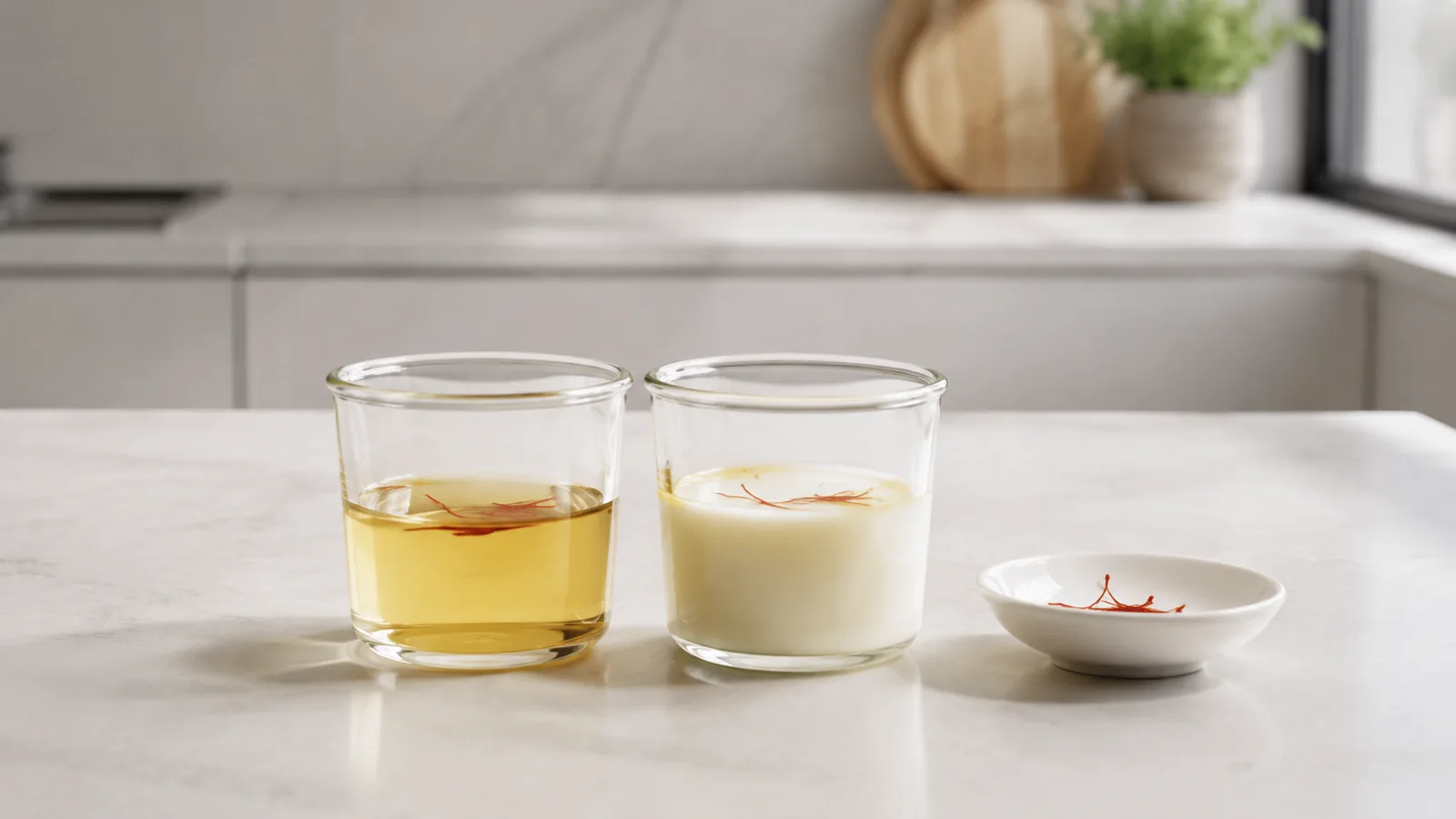
Choose a liquid that already belongs in the recipe. Water or stock suits most savoury dishes. Milk is a natural choice for custard, rice pudding and other dairy-based foods. Our guide to brewing saffron explains the extraction step in detail.
Adding Saffron to Rice Dishes
Pilaf
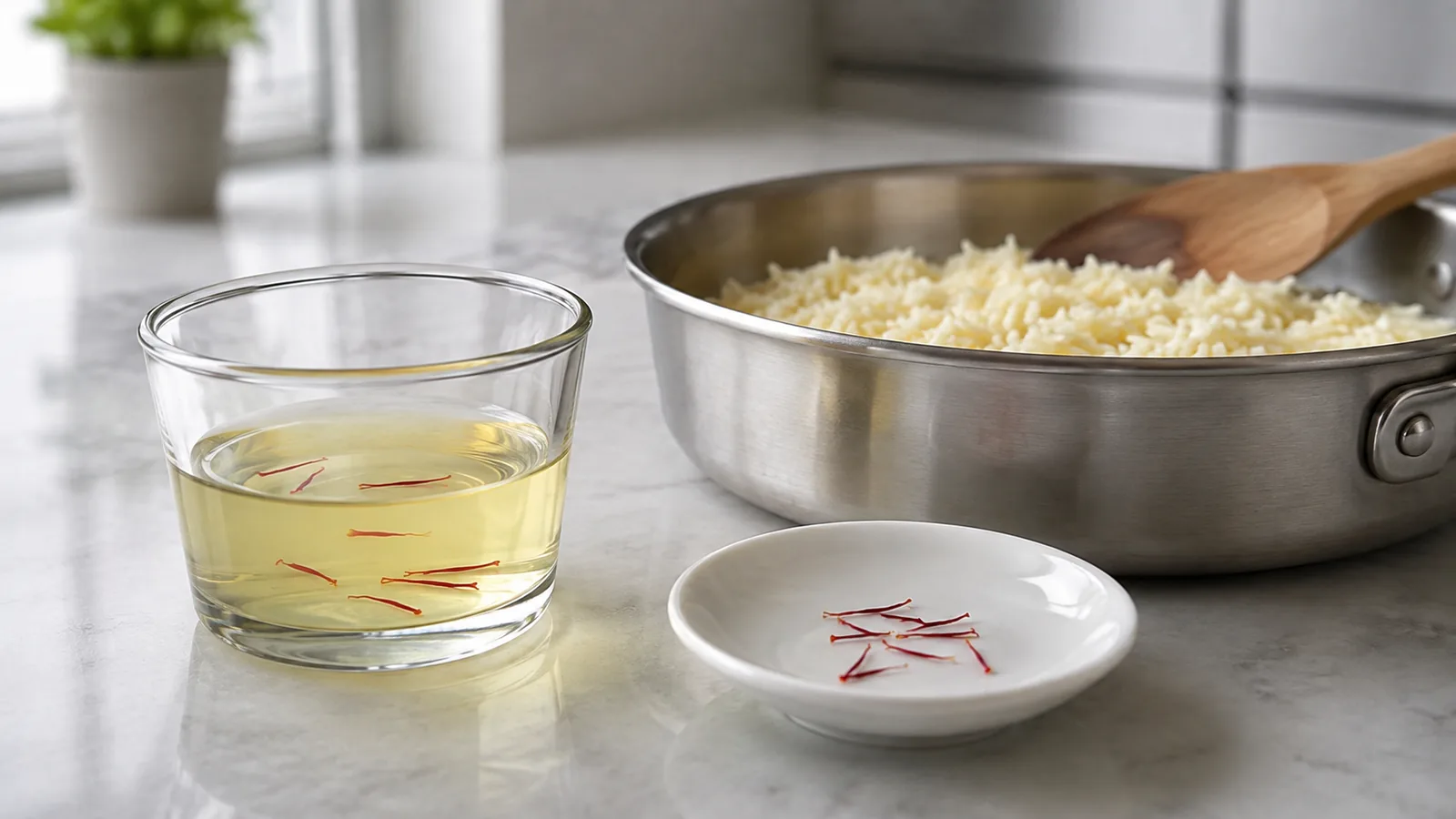
For evenly coloured pilaf, add the infusion to the measured cooking liquid before the rice finishes absorbing it. If you want white and golden grains together, hold back part of the rice or spoon the infusion over selected areas near the end.
Biryani
Drizzle the infusion across the layers before the final covered cooking stage. This lets the colour travel through some of the rice while preserving the dish’s characteristic variation.
Paella
Add the saffron to the warm stock so it is distributed when the stock enters the pan. Do not wait until the surface has set, because stirring late can damage the rice texture.
Risotto
Bloom the saffron first, then add the infusion with a middle or later stock addition. The rice still has time to take on the colour, while the aroma does not endure the entire cooking period.
Adding dry saffron directly to boiling rice is less predictable. It may still work, but an infusion distributes more evenly and is easier to dose.
Using Saffron in Meat, Sauces, and Curries
For a braise, curry or long-cooked meat dish, add the saffron during the later gentle simmer rather than during hard searing. The infusion needs liquid to spread; it gains nothing from direct contact with very hot oil or dry metal.
In a quick pan sauce, stir it in after deglazing and allow several minutes of low heat. Cream sauces should remain below a vigorous boil. For grilled or roasted meat, put the infusion into a marinade, basting liquid or finishing sauce rather than scattering dry threads onto the hottest surface.
When to Add Saffron to Soup and Stew
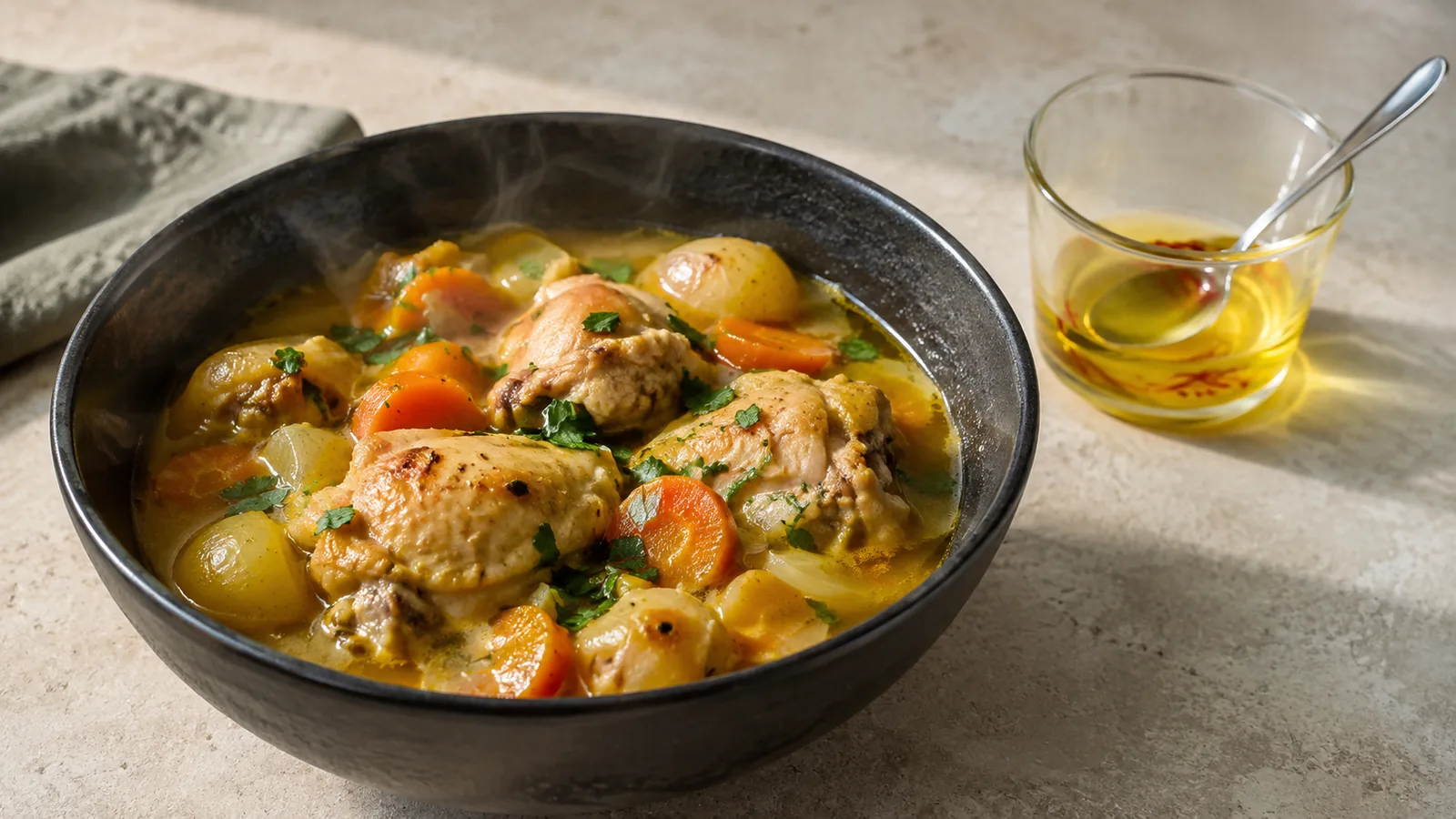
A soup or stew can take saffron once the main ingredients have started cooking and there is enough liquid to distribute it. For a long stew, the final 15 to 30 minutes is a practical starting point. For a brief soup, add it with the stock.
Taste before serving. If the dish still seems weak, give the existing dose a few minutes to settle before adding more. Salt, acidity and strong spices can change how noticeable saffron seems.
When to Add Saffron to Milk and Desserts
Infuse saffron in warm milk for kheer, custard, kulfi or a warm drink. Add the infusion to the milk base during gentle heating, or to a cooked base before it is chilled. Keep dairy from scorching and do not rely on prolonged boiling to extract the spice.
For a cold preparation, make and cool the warm infusion first. If no heat is available, crushed threads can steep in the covered mixture for several hours in the refrigerator.
When to Add Saffron in Baking
Mix the infusion into a liquid ingredient so it reaches the dough or batter evenly. In bread, cool a warm infusion to the temperature required by the yeast before mixing. In cake, custard filling or enriched dough, account for the infusion liquid so the recipe’s balance does not change.
Adding threads on top just before baking is mainly decorative and can leave them dry. If you want visible threads, keep most of the saffron in the batter and reserve only a few for the surface.
Why Timing Matters
Saffron contributes aroma, flavour and colour through compounds that dissolve and disperse under different conditions. Moisture helps them move into the dish, while moderate warmth speeds extraction. Excessive uncovered heat can flatten aroma, and adding saffron at the final second may leave both colour and taste uneven.
Timing also affects texture. Late stirring is unwelcome in paella, while an early addition may be entirely appropriate in a liquid custard base. The right moment respects both the spice and the food around it.
How Much Saffron to Add
For four servings, 0.05 to 0.1 gram is a sensible range to test. The upper end suits a saffron-led dish; the lower end may be enough when the spice plays a supporting role. Thread counts are unreliable because the threads vary in length and thickness.
More is not automatically richer. Too much can taste bitter or medicinal. See our saffron quantity guide when scaling a recipe.
Common Timing Mistakes
- Frying dry threads: direct high heat can scorch them before they disperse.
- Boiling for the entire recipe: long exposure may leave the aroma less distinct.
- Adding intact threads at the last moment: there may be too little time for even extraction.
- Using the wrong infusion liquid: extra water can loosen a precise custard or dough.
- Adding more before tasting: give the first measured dose time to develop.
A Practical Decision Rule
- Prepare a small warm infusion.
- Identify the last gentle, moist stage of the recipe.
- Add the infusion early enough to distribute without unnecessary boiling.
- Avoid stirring if the dish’s texture depends on remaining undisturbed.
- Taste near the end and record the weight and timing that worked.
If you are deciding specifically between an early and late addition, read whether to add saffron before or after cooking. Clean, aromatic threads are available through our saffron shop.
Conclusion
The best time to add saffron is after a short warm infusion and during a stage that offers gentle heat and enough moisture to spread it. For rice, match the moment to the cooking method; for meat, sauces and curries, use the simmer; for dairy and baking, blend it into a suitable liquid. Good timing preserves the vibrant colour and distinctive aromatic flavour that make saffron worth using.