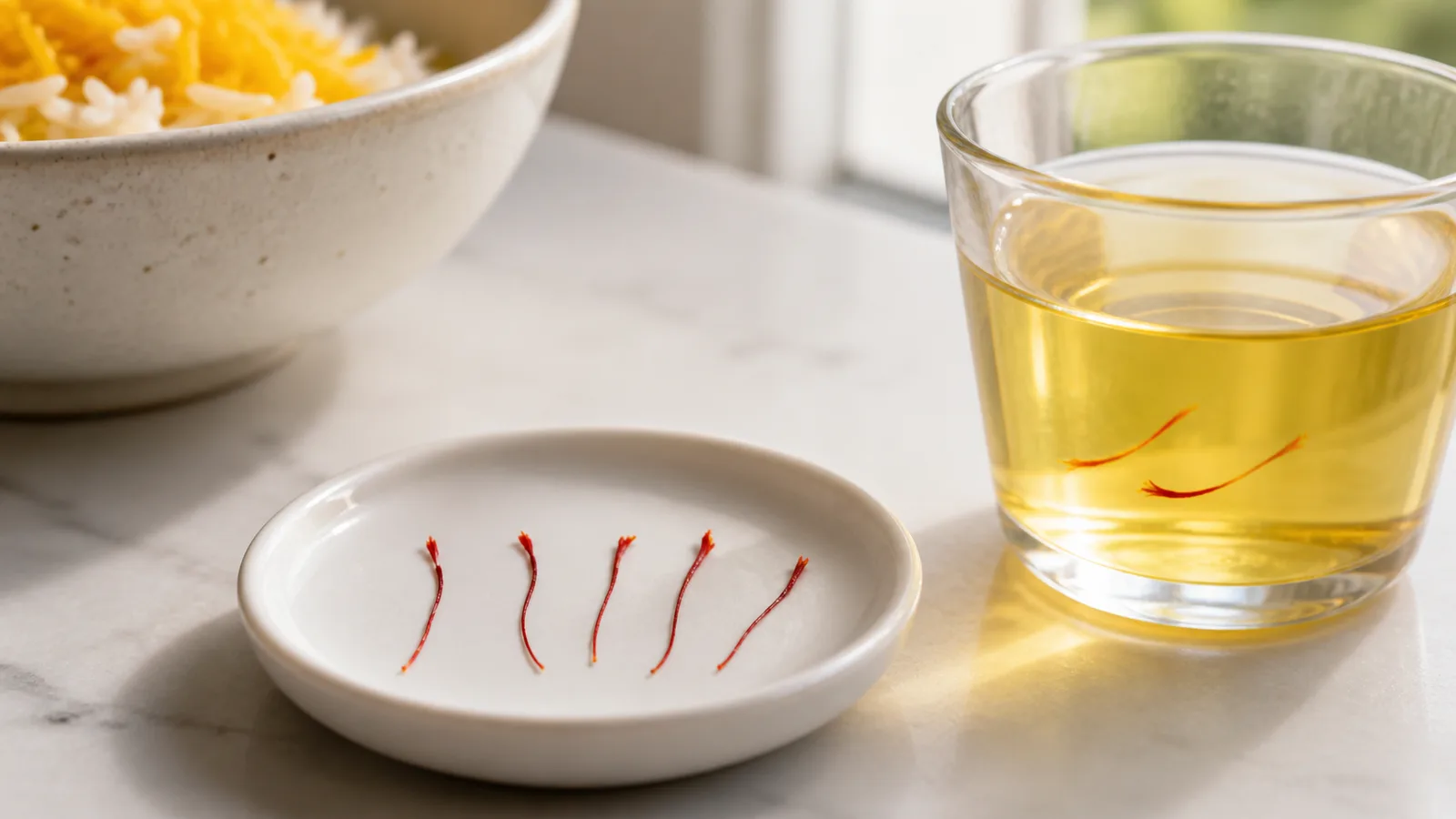
For everyday use, lightly crush a small pinch of saffron, steep it in a little warm water or milk for 10–15 minutes, then add the liquid and threads to your food or drink. Using saffron effectively is mostly about modest quantities, even distribution and choosing the right moment in the recipe.
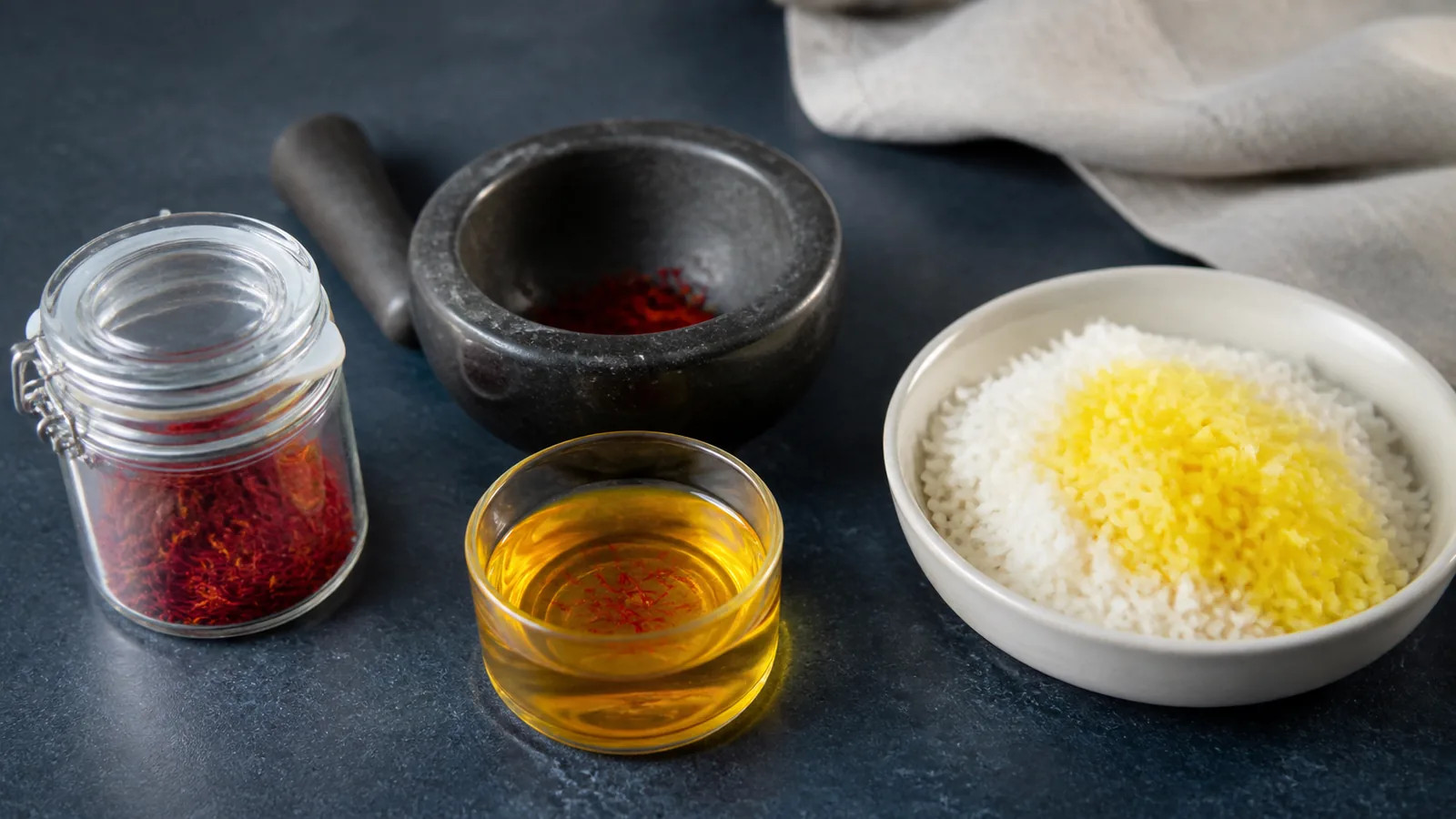
How to Use Saffron: A Complete Guide for Beginners
- Measure a small amount. Follow a tested recipe when you have one. Otherwise, start conservatively; too much saffron can make a dish bitter.
- Crush the threads lightly. A clean, dry mortar and pestle exposes more surface area. Stop before the saffron becomes an unrecognisable powder.
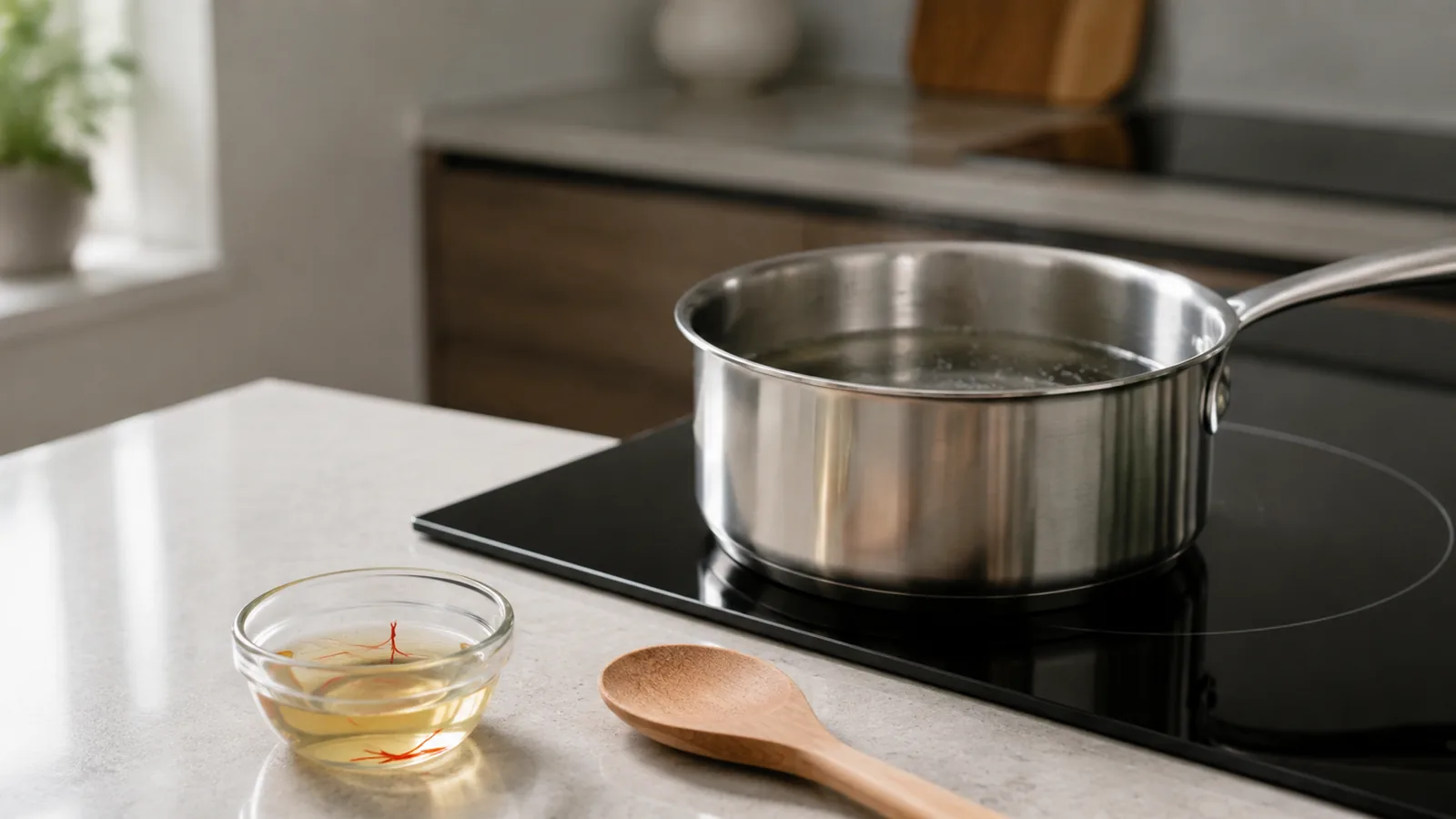
- Add warm liquid. Use a few spoonfuls of water, milk or broth that suits the recipe.
- Cover and wait 10–15 minutes. The liquid should become golden and fragrant. The red fibres do not have to disappear.
- Use the whole infusion. Add the liquid and softened threads, then stir or distribute them through the dish.
This separate bloom is helpful, not compulsory. Saffron can also release directly into warm, moist food. The infusion simply makes a tiny quantity easier to spread and gives you a chance to judge it before it enters the whole recipe.
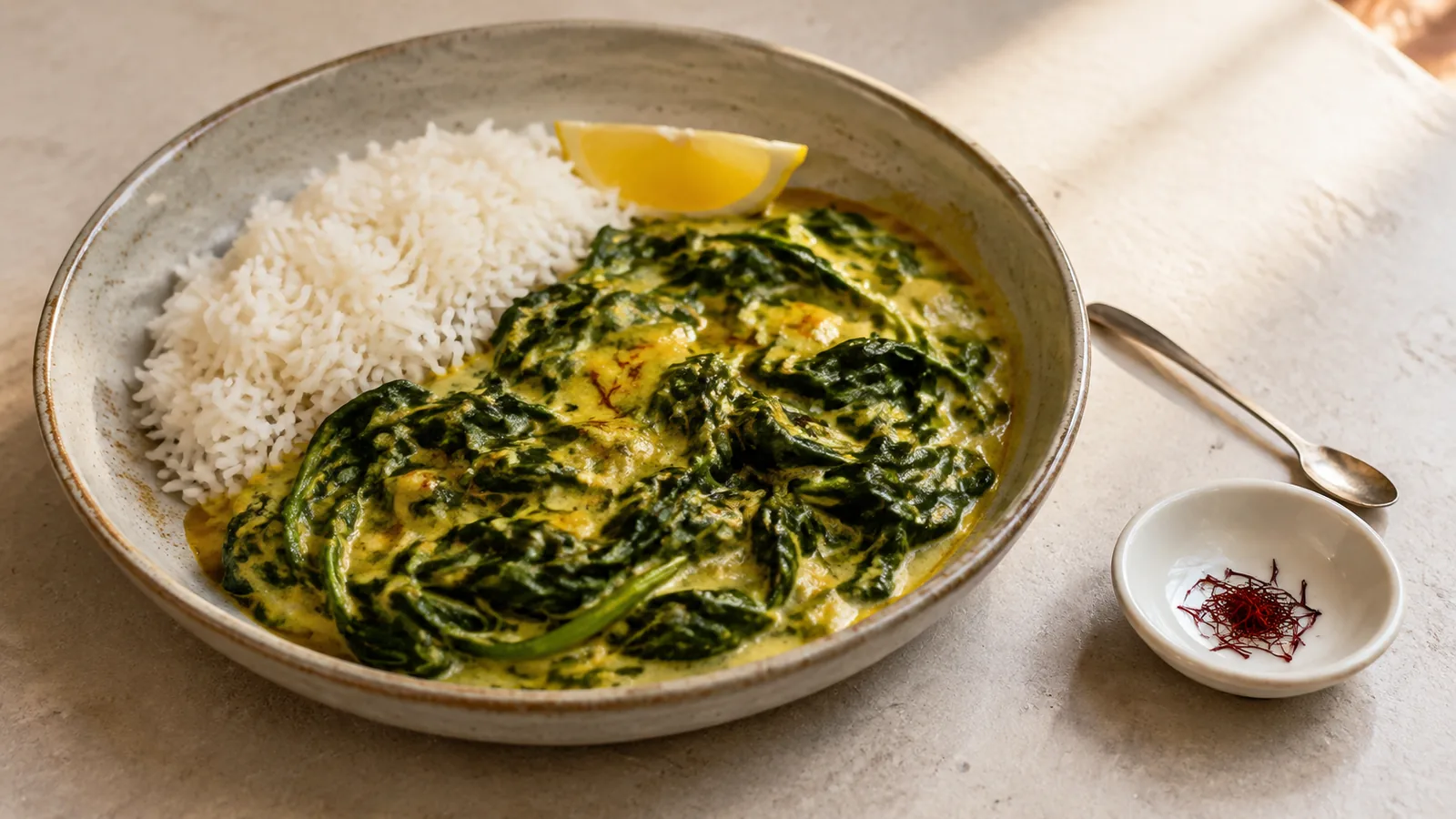
Using saffron in cooking
Saffron works in both savoury and sweet food. Its golden colour, gentle bitterness and distinctive aroma are easiest to notice when the surrounding flavours are not fighting for attention.
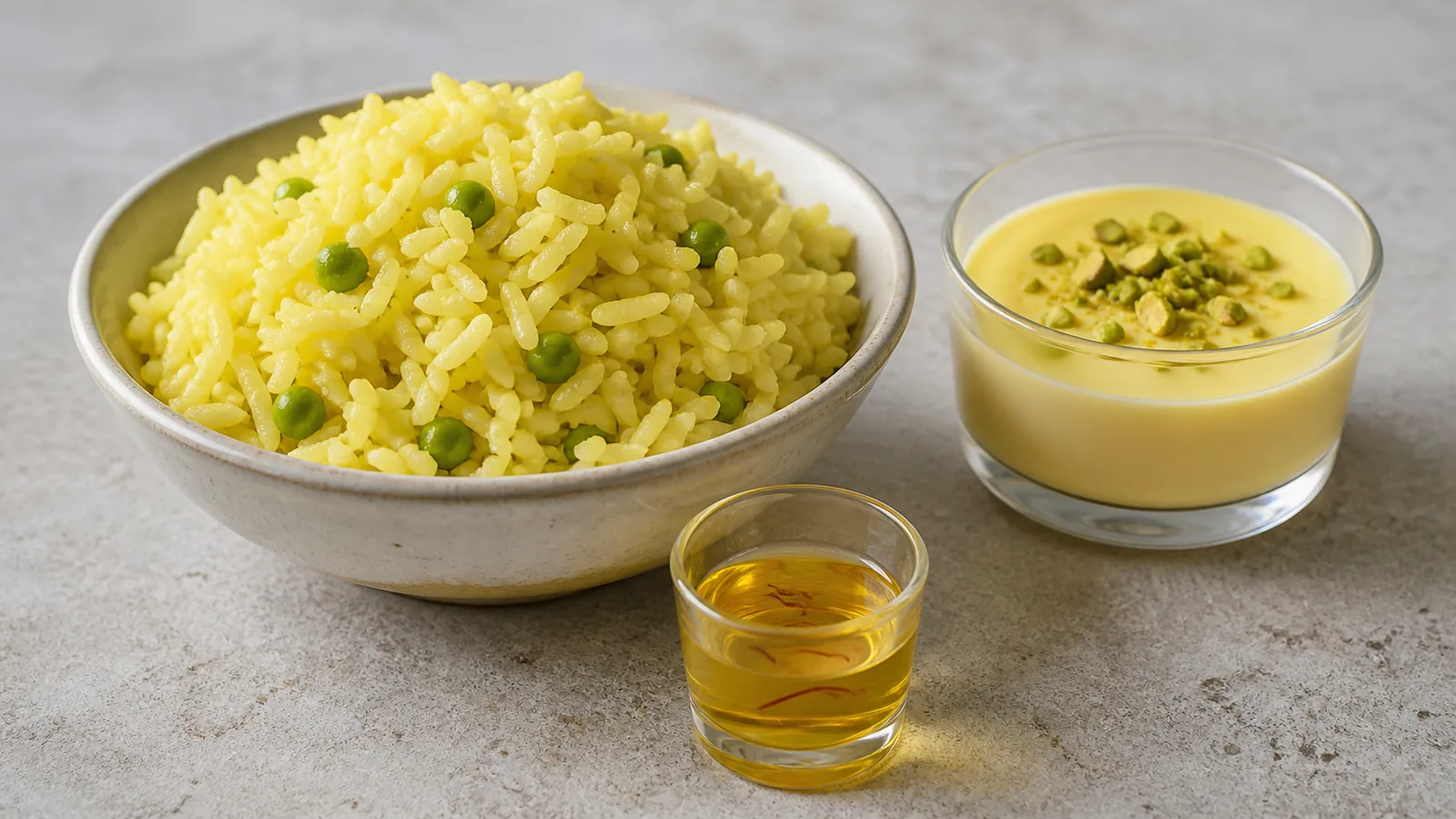
- Rice: add the infusion with the measured cooking liquid for even colour, or mix it into part of the cooked rice for a separate golden layer.
- Soups and stews: add it during the later stage of a long simmer so it has time to spread without spending the entire cook over heat.
- Sauces: stir the infusion into the liquid base and taste after it has integrated.
- Seafood and chicken: use saffron in a broth, sauce, marinade component or rice accompaniment rather than scattering a dense clump over the finished food.
- Custards and puddings: infuse part of the recipe’s milk before following its thickening or egg-tempering steps.
- Baking: make a concentrated infusion and count it as part of the recipe’s liquid.
Our complete guide to using pure saffron in cooking explains timing and dish-specific choices in detail.
Should you use water, milk or broth?
Warm water is the neutral choice and fits almost any recipe. Milk suits drinks, custards, rice pudding and ice cream. Broth belongs in savoury dishes where its salt and flavour already make sense.
Use a small amount of liquid for the initial bloom. A full mug can dilute the same pinch and alter the recipe. Warm liquid works conveniently; prolonged rolling boiling is unnecessary.
The guide to the best way to brew saffron compares water-based preparation methods.
How to use saffron in rice
For an evenly coloured pot, add a concentrated infusion at the point specified by the rice recipe. Do not pour in an unmeasured extra cup of water; respect the grain’s intended liquid ratio.
For Persian-style presentation, mix part of the cooked rice with saffron infusion and arrange that golden portion over or through the plain rice. In paella, biryani or risotto, follow the established sequence for that dish rather than assuming every rice method is interchangeable.
How to use saffron in tea and other drinks
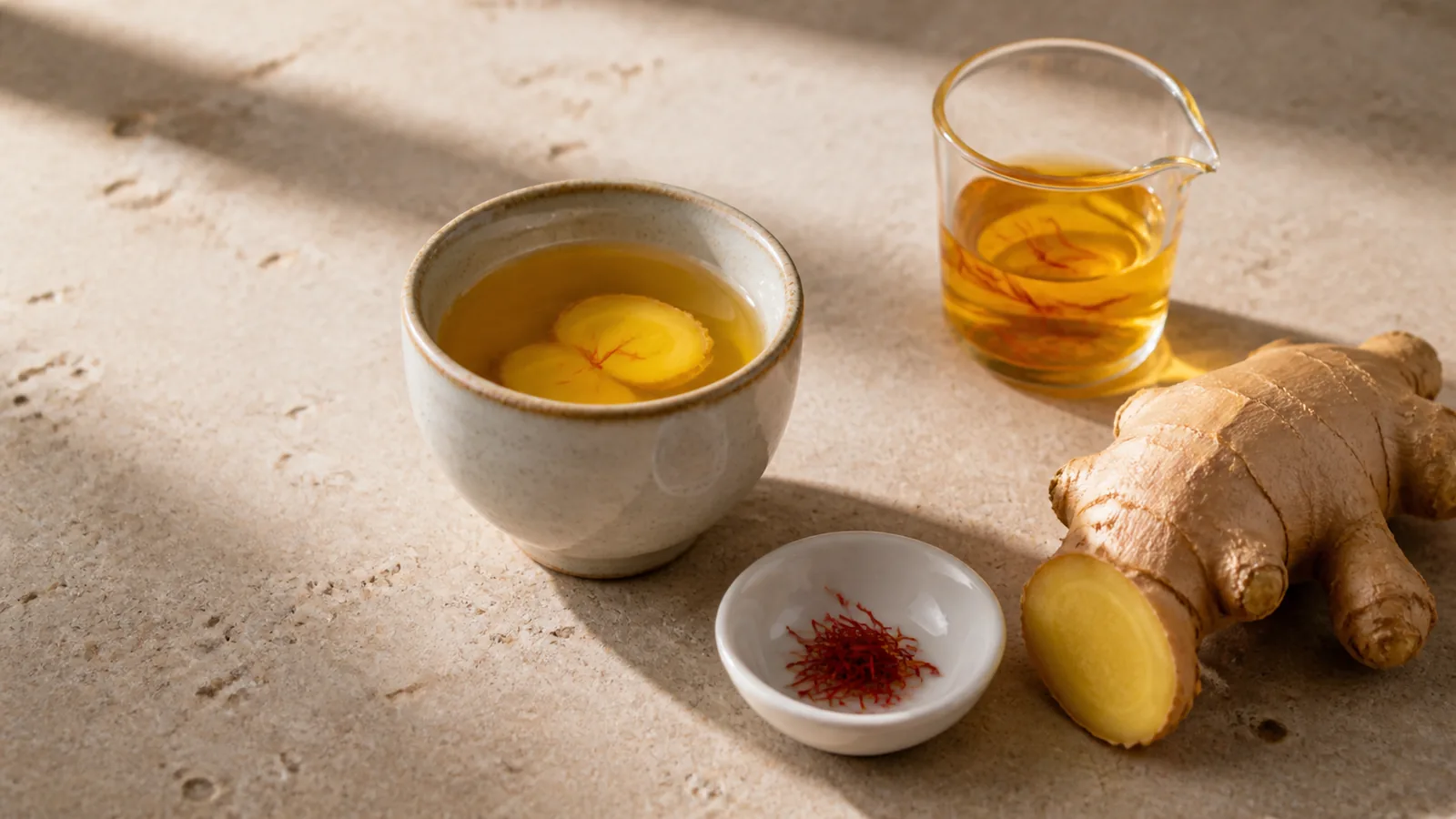
For a simple saffron drink, steep a modest culinary amount in hot water for several minutes. You can combine it with tea, citrus, honey or another flavour that belongs in the recipe, but taste before adding several strong ingredients.
Saffron threads do not need to dissolve completely. Their soluble compounds disperse into the water while softened plant material remains. You may drink the infusion with the threads or strain it for texture.
For a measured method, see how to use saffron in tea. A tea is still a food or drink, not proof that saffron will boost mood, improve digestion or treat a condition.
Can saffron be used in skincare?
Saffron appears in commercial cosmetics and traditional homemade mixtures, but that does not establish that a milk, honey and saffron face mask will brighten skin or even pigmentation. The original version of this article made those promises without adequate evidence; they should not guide a skincare decision.
Food-grade saffron is not automatically a tested cosmetic formulation. Homemade mixtures can introduce allergens, irritation or contamination, especially near the eyes or on damaged skin. The FDA’s advice on using cosmetics safely is to read labels, follow directions and not assume that “natural” means safer.
If you choose a saffron-containing cosmetic, use a properly labelled product from a responsible manufacturer and follow its instructions. Stop if you develop redness, burning, swelling or a rash. The FDA notes that cosmetics can provoke allergic reactions; persistent or severe symptoms need professional care.
What about saffron for hair?
Claims that saffron oil strengthens hair, stimulates growth or adds shine should not be presented as established simply because the ingredient is botanical. Soaking threads in olive or coconut oil for several days does not create a standardised or proven treatment.
For cosmetic use, choose a labelled hair product with directions and an ingredient list. Avoid applying an improvised mixture to an irritated scalp, and stop if it causes discomfort. Hair loss or a persistent scalp problem deserves assessment rather than a spice-based remedy.
Using saffron supplements is a different decision
A capsule or concentrated extract is not equivalent to seasoning food with a small pinch. Its amount, formulation and intended effect are different, so cooking guidance cannot be used as a supplement dose.
The FDA’s current dietary supplement guidance advises talking with a healthcare professional before use because supplements can have risks and may interact with medicines, tests or surgery. This is particularly important during pregnancy or breastfeeding, for children, with health conditions, or when taking medication.
Do not replace prescribed care with saffron, and do not assume that “natural” means risk-free. Follow the product label and seek help if an adverse reaction occurs.
Whole threads or powdered saffron?
Whole threads are easier to inspect and crush to the texture you need. Powder disperses quickly but conceals the structure of the spice, making provenance and adulteration harder to judge visually.
Either form can work when the product is genuine and well stored. Buy from a source that gives clear origin, lot and contact information. Bright colour alone is not proof of purity, and an instant fluorescent release into water is not a reliable quality guarantee.
How much saffron should a beginner use?
Use the recipe’s quantity whenever it is available. A “pinch” varies by hand, thread length and saffron style, so there is no honest universal count for every dish. Start with less in an unfamiliar recipe and record what worked.
More is not automatically better. Saffron can become markedly bitter, and the cost rises before the result necessarily improves. Better crushing, blooming and distribution often achieve more than adding another heap.
How to store saffron
Keep saffron tightly closed, dry and protected from light and heat. A cupboard away from the stove is better than a clear jar beside a sunny window. Use a clean, dry utensil so steam and moisture do not enter the container.
Do not prepare a large water or milk infusion merely for indefinite storage. Make what the recipe needs. If an infusion must be prepared ahead, cover and refrigerate it promptly, then use it soon.
Common beginner mistakes
- Using too much: bitterness can dominate the food.
- Skipping even distribution: one clump gives inconsistent colour and flavour.
- Dry-frying threads: direct contact with a very hot pan can scorch them quickly.
- Boiling to force colour: heat is not a substitute for a light crush and adequate time.
- Adding extra infusion water without adjusting the recipe: this can change the texture of rice, dough or custard.
- Treating a food article as medical advice: culinary use, skincare, supplements and treatment are different decisions.
- Leaving the jar open: light, moisture and kitchen heat work against long-term quality.
Questions from first-time saffron users
Can I add saffron directly to food?
Yes, particularly in a warm, moist dish with time for it to release. A separate bloom usually gives more even distribution and control.
Do I eat the saffron threads?
Yes. The softened threads are edible in ordinary culinary use. Strain them only when a perfectly smooth texture is important.
Can I use saffron every day?
Using a modest recipe amount and taking a concentrated supplement are not the same. This article does not set an individual daily dose. If daily use is intended for a health effect, discuss it with a qualified healthcare professional.
Where can I compare saffron prices?
Prices vary with origin, grade, testing, package size and seller. Our saffron price page provides the site’s current buying context; check the product and quantity behind any comparison.
Your first use
Choose a familiar dish, crush a small pinch, bloom it in a few spoonfuls of warm liquid for 10–15 minutes and add it where it can spread. That simple routine will teach you more about saffron’s color, flavor and aroma than using a large amount or chasing unproven wellness claims.
You can browse our saffron products or ask about using saffron in a particular recipe.