Is Saffron Tea Good for You?
Saffron tea can be a pleasant way to enjoy the spice, but the benefits of saffron tea should not be confused with results from concentrated-extract trials. Plain tea made from a few Crocus sativus threads is generally low in calories and naturally caffeine-free. It provides flavour, aroma and fluid; it has not been shown to prevent disease, boost immunity or treat depression.
The benefits of drinking saffron tea depend partly on what “good for you” means. Replacing a heavily sweetened drink with an unsweetened golden beverage may be useful. Expecting the cup to deliver a clinical supplement dose or guaranteed saffron tea effects is not supported.
What is in saffron tea?
Real saffron contains crocins, picrocrocin and safranal. Crocins contribute colour, picrocrocin is associated with the characteristic taste, and safranal is important to aroma. Steeping threads in hot water extracts some water-soluble compounds, but the amount varies with the threads, water, time and temperature.
Calling these compounds antioxidants describes chemical activity related to oxidative stress. It does not mean a cup “neutralizes free radicals” throughout the body, prevents chronic disease or slows premature ageing. Laboratory antioxidant measurements and human health outcomes are different forms of evidence.
What research says about mood and stress
Several studies have examined standardised saffron extracts for mood symptoms. A 2025 trial in 202 adults with low mood tested 28 mg of a named extract for 12 weeks. It found a modest improvement in one depression score, while most secondary outcomes showed no between-group difference.
That trial did not test drinking saffron tea. A few threads steeped at home cannot be assumed to deliver the same composition, dose or effect. Tea may support relaxation because it is warm, aromatic and part of a quiet break; that experience should not be presented as proven treatment for depression, anxiety or stress. Persistent low mood or anxiety needs appropriate support.
Does saffron tea improve sleep?
Sleep research has also used measured extracts rather than ordinary tea. A 2025 randomised trial in adults with moderate insomnia reported small improvements in insomnia symptoms and sleep quality after four weeks with 20 or 30 mg of a standardised extract. It called for longer research and did not establish that tea works as a sleep remedy.
A caffeine-free saffron infusion may suit an evening routine if it does not cause reflux or wake you for the bathroom. Avoiding caffeine late in the day and keeping a regular sleep schedule have clearer practical roles. Do not add saffron to a drink and assume it will counter insomnia caused by illness, medicine or another sleep disorder.
Digestion claims are mostly traditional
Saffron has a history of traditional use for bloating, indigestion and digestive discomfort. Good human evidence has not shown that saffron tea stimulates gastric juices or improves digestion. For some people, any warm unsweetened drink after a meal feels soothing; others may notice nausea or stomach discomfort.
Ongoing pain, vomiting, difficulty swallowing, blood in stool, black stool or unexplained weight loss should not be managed with tea. Those symptoms need medical assessment.
Does saffron tea boost immunity?
No clinical evidence shows that regular saffron tea strengthens the immune system or helps the body fight infections. Crocin and related compounds are studied in cells and animals, but those experiments do not make a beverage an immune treatment.
During a cold, a warm drink can provide fluid and comfort. It does not replace vaccination, prescribed treatment or medical care when symptoms are severe.
American saffron tea is a different drink
“American saffron” has historically been used as a name for safflower, Carthamus tinctorius. The US Food and Drug Administration’s color-additive record explicitly identifies safflower as American saffron. It is not the same plant as true saffron, Crocus sativus, so evidence and safety information cannot be transferred between the two.
If a packet says American saffron, safflower or Carthamus tinctorius, research that ingredient. For Crocus saffron tea, the label should identify Crocus sativus and the material should be red stigmas rather than orange or yellow flower petals.
How to make saffron tea
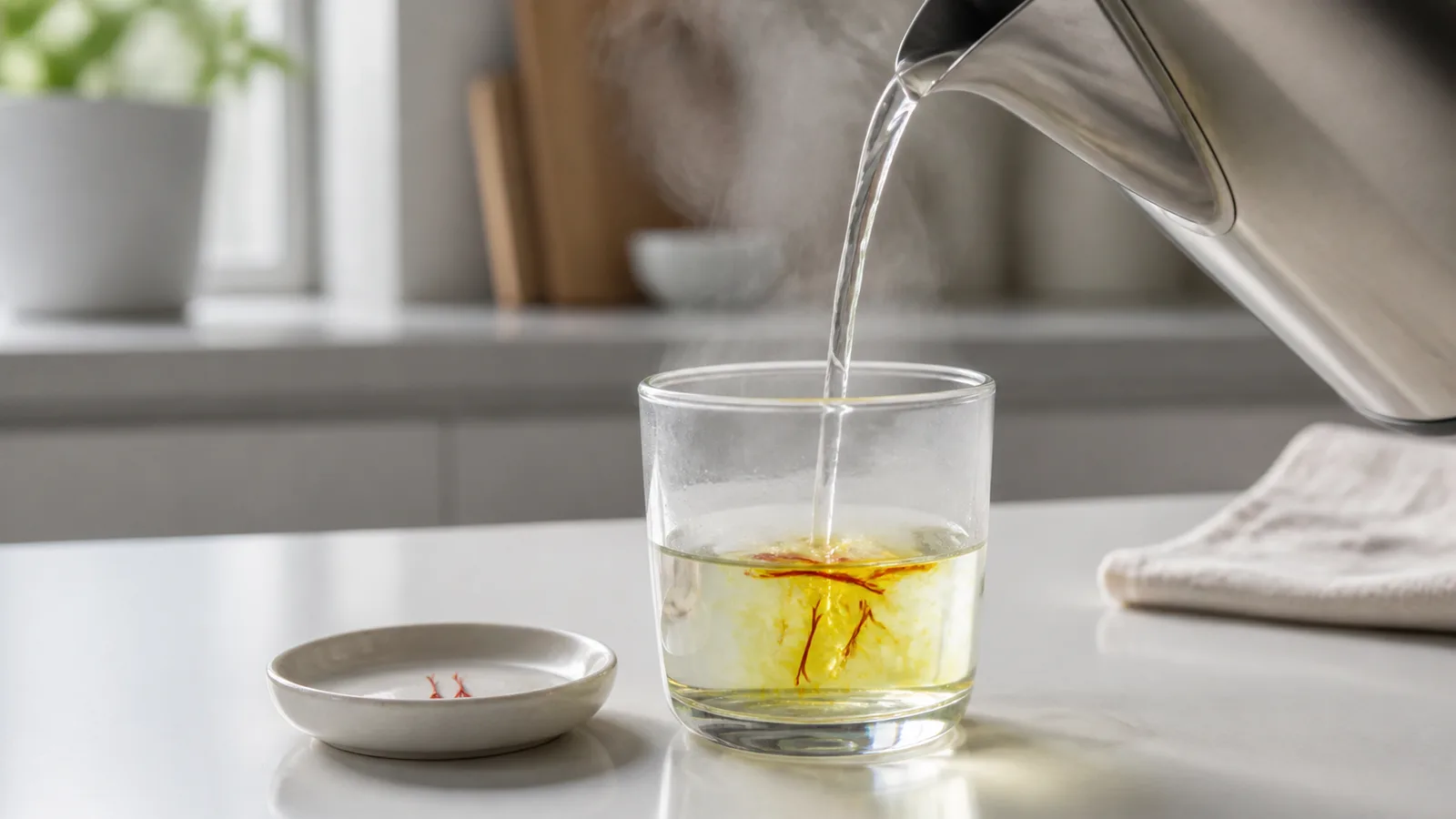
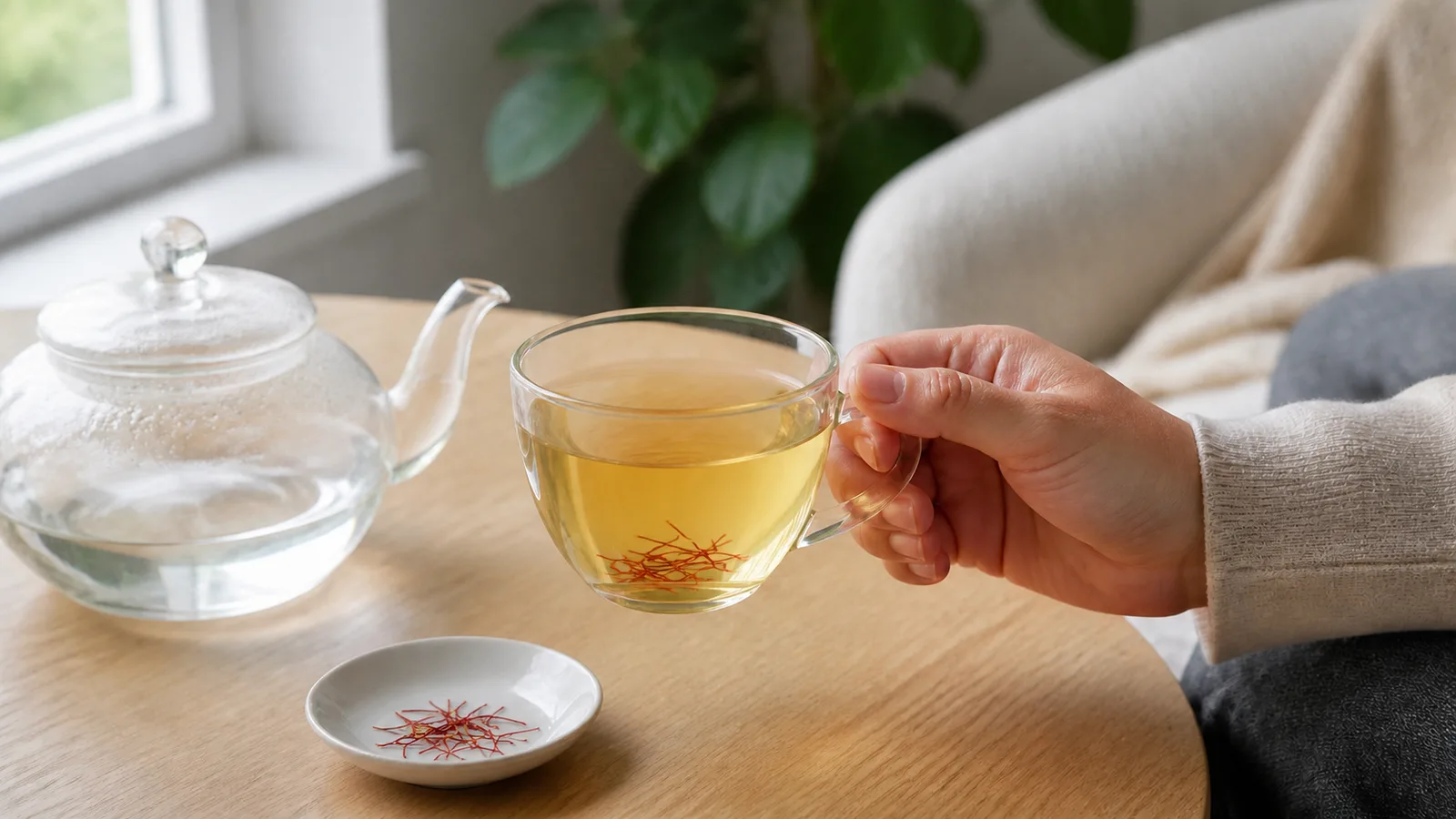
- Place roughly 6–10 genuine saffron threads in a cup.
- Add about 250 ml of hot water.
- Steep for 5–10 minutes, until the water becomes pale gold and aromatic.
- Taste it before adding anything. If desired, add lemon, ginger or a small amount of honey.
The colour should develop gradually; more threads are not necessary for a better drink. Sweeteners can change the nutritional profile more than the saffron does. For verified Crocus sativus options, our saffron product page explains the available forms.
Safety and moderation
A light culinary infusion is different from a daily supplement. Possible side effects include nausea, headache, dizziness, rash or another reaction; stop drinking it if a problem begins. Ask a healthcare provider before medicinal or supplement-strength use if you are pregnant or breastfeeding, have low blood pressure or a chronic condition, or take regular medicines.
Do not use saffron tea to replace antidepressants, sleep treatment, antibiotics or any prescribed care. If a health effect is the goal, discuss the symptom rather than treating “wellness” as one measurable condition.
The practical answer
Is saffron tea good for you? As a modest, unsweetened drink made from real saffron, it can be an enjoyable part of a varied diet. The best-supported benefit is the experience of the tea itself: aroma, flavour and a warm caffeine-free drink. Saffron-extract research is interesting, but it does not prove that drinking saffron tea improves mood, sleep, digestion, immunity or longevity.