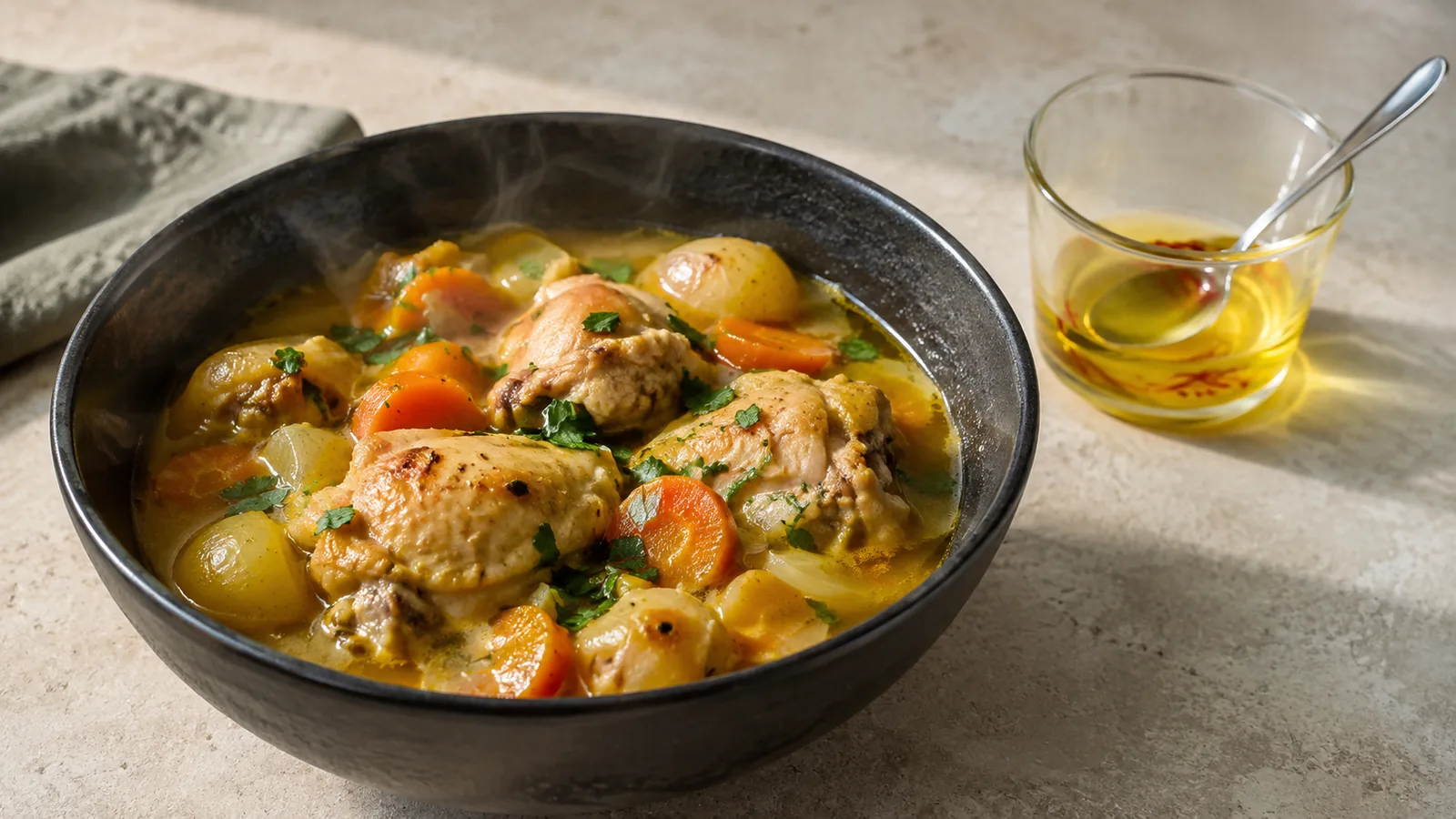
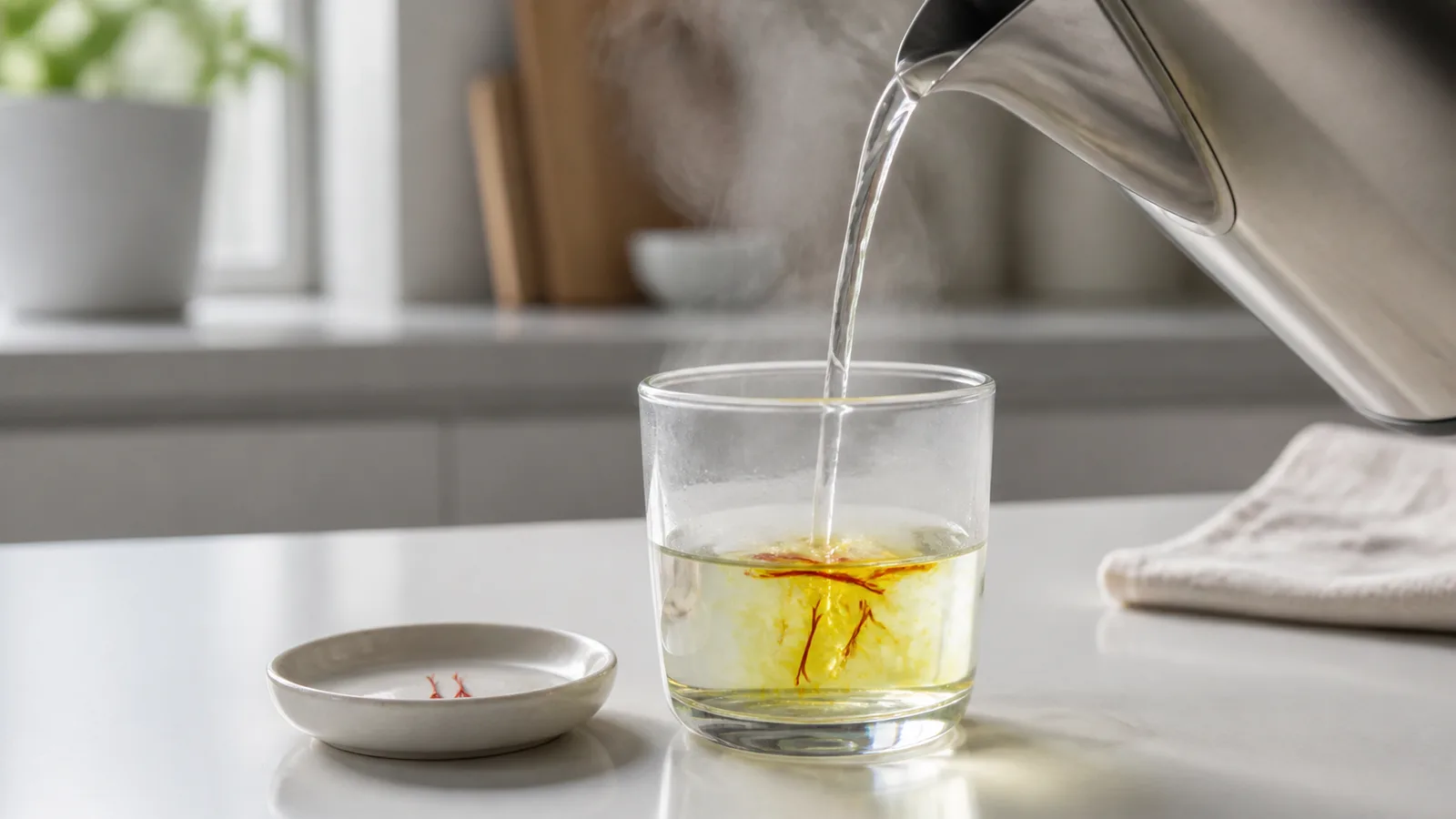
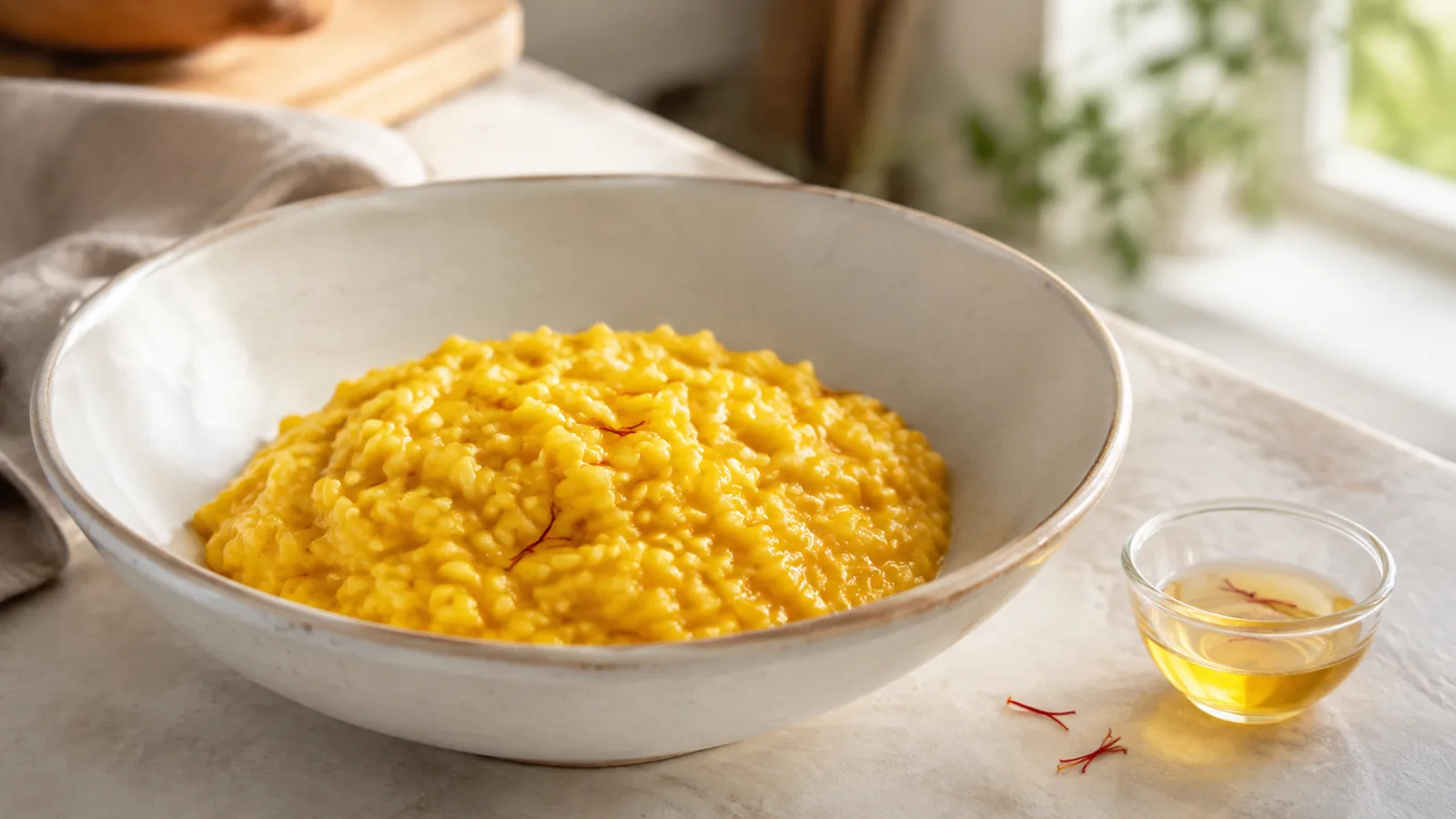
The simplest way to use pure saffron in cooking is to crush a small pinch, steep it in a little warm liquid for 10–15 minutes, then add the entire infusion to the dish. This spreads its color, flavor and aroma more evenly than dropping dry threads into one corner of a large pan.
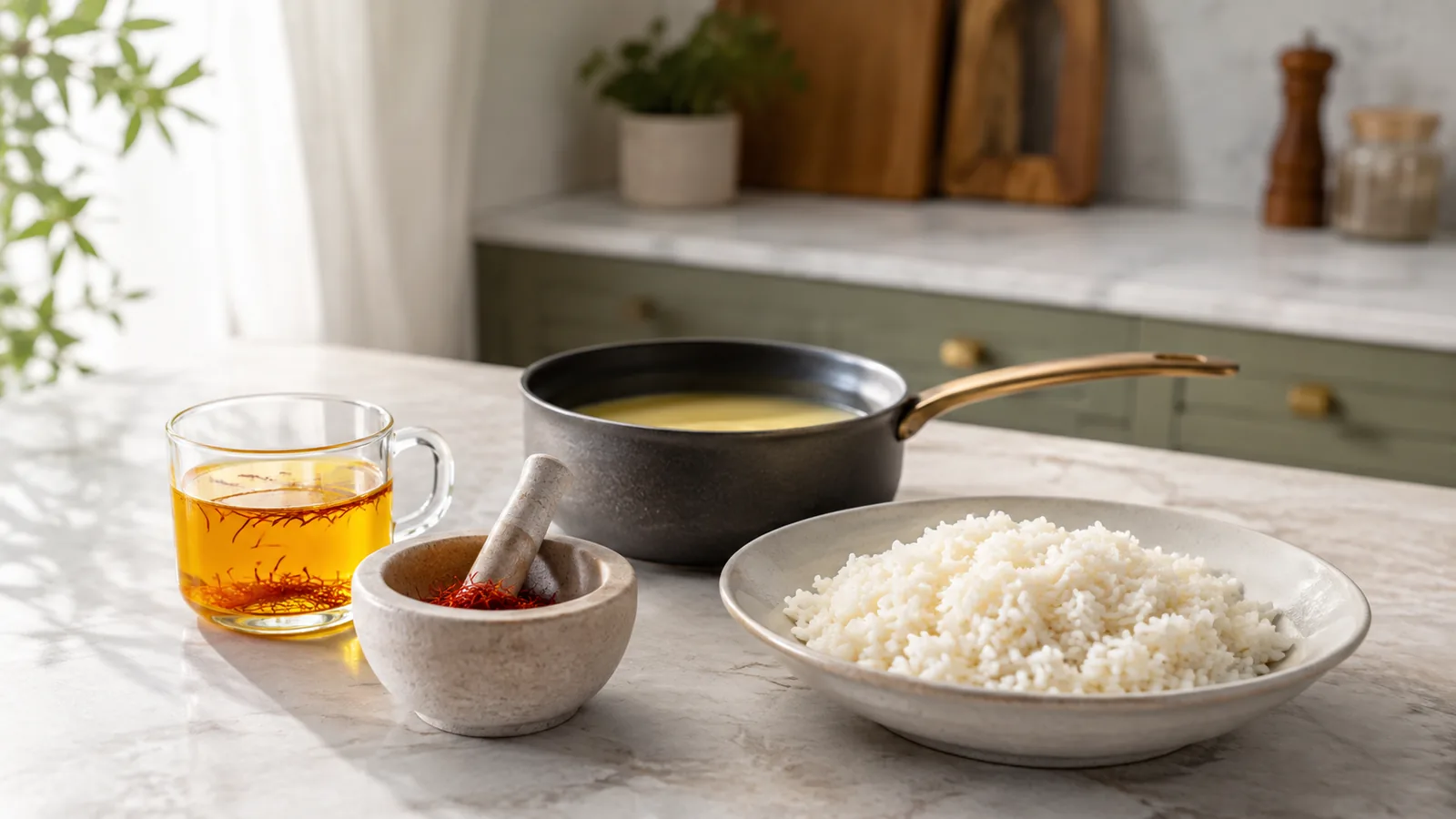
A reliable method for using pure saffron
- Start with a modest amount. Follow the recipe when one is given. Otherwise, begin with a small pinch; you can increase it next time, but an overly bitter dish is difficult to correct.
- Crush the threads lightly. Use a clean, dry mortar and pestle. Breaking them into short pieces exposes more surface area without reducing the saffron to an anonymous dust.
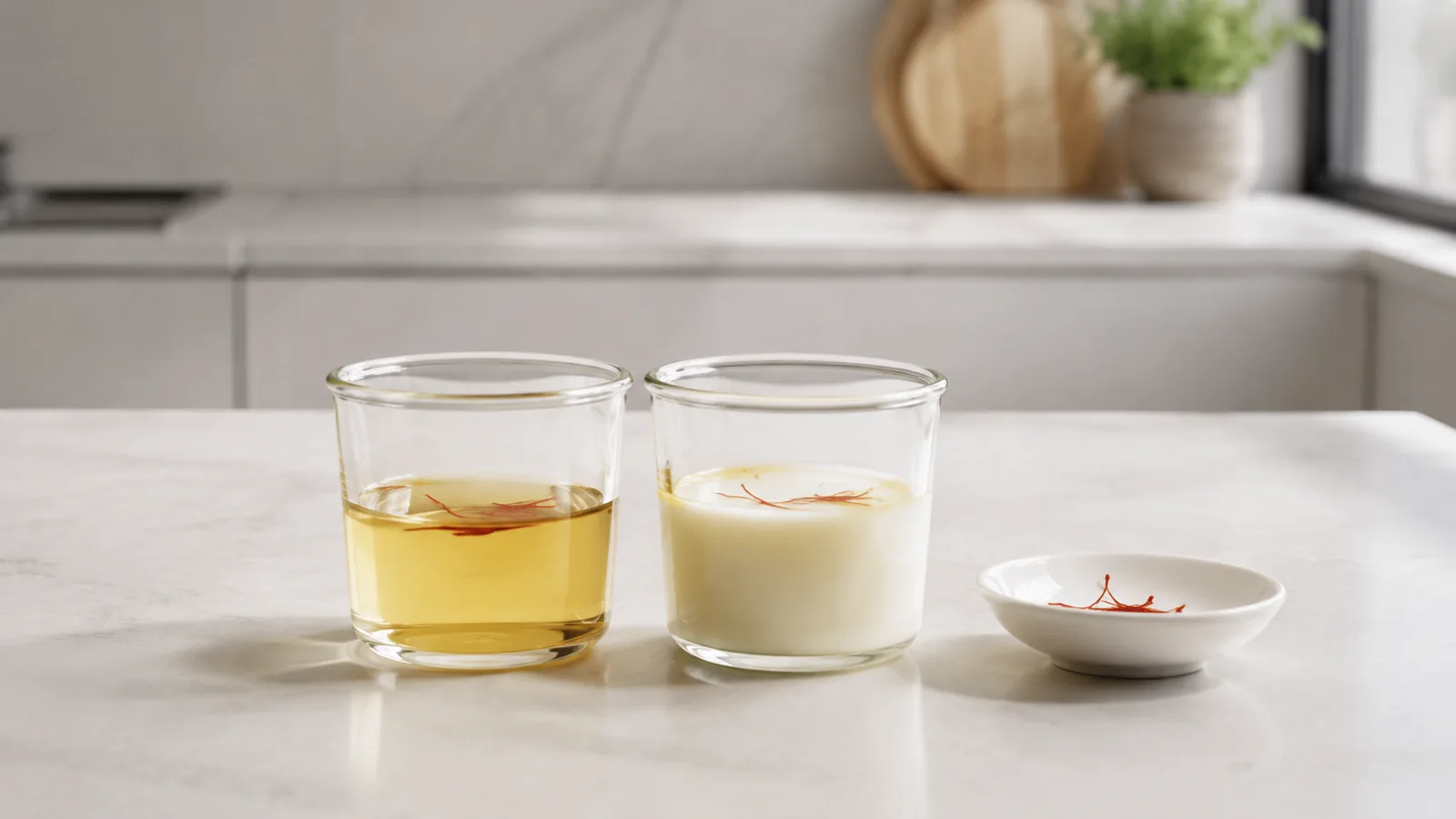
- Choose a suitable liquid. Warm water is the most versatile. Milk, broth or another recipe liquid can work when its flavour belongs in the finished dish.
- Cover and infuse. Leave the saffron for 10–15 minutes. The liquid should turn golden and become fragrant; the red plant fibres will not necessarily disappear.
- Add liquid and threads together. Stir the infusion through the food so it distributes evenly. Strain it only when the texture must be completely smooth.
- Taste in context. Saffron is easier to judge in the finished rice, sauce or dessert than in a concentrated cup.
Why blooming saffron helps
Pure saffron comes from the dried stigmas of Crocus sativus. Crocins supply much of its golden colour, picrocrocin contributes bitterness, and volatile compounds including safranal shape its aroma. They do not all behave in exactly the same way.
A 2024 study compared saffron infusion across several temperatures, times and water-oil mixtures. Its results changed with the compound and medium. That does not produce one compulsory home recipe, but it explains why a short warm bloom is useful: it starts extraction in a controlled amount of liquid before the spice is diluted by the entire dish.
Blooming is a technique, not an “activation” ritual. Saffron can release into a moist recipe without a separate cup, but pre-infusion gives the cook more control over distribution, concentration and timing.
Water, milk or broth?
Warm water is neutral and works for rice, stews, sauces, baking and drinks. Use only enough to make a concentrated infusion that the recipe can comfortably absorb.
Warm milk or cream suits custards, rice pudding, ice cream and milk drinks. Dairy contains water and fat, so it is not identical to a laboratory water infusion, but it can carry saffron effectively in a recipe. A rolling boil is unnecessary; the guide to infusing saffron in milk gives the complete method.
Broth is convenient for savoury food when its salt and flavour already fit the dish. Let a spoonful cool from a vigorous boil before using it for the bloom, then return the infusion to the pan.
Oil alone is a poor default for a home infusion because saffron’s important components do not distribute through oil in the same way they do through water. If the dish contains both oil and liquid, bloom in its water-based component first.
When to add saffron during cooking
There is no single correct minute for every dish. Add saffron early enough to spread, but do not make it endure a long hard boil without a reason.
- Short-cooked sauces and soups: stir in the infusion once the liquid base is established, then give it a few minutes to integrate.
- Long-simmered stews: add it during the later stage rather than at the first minute.
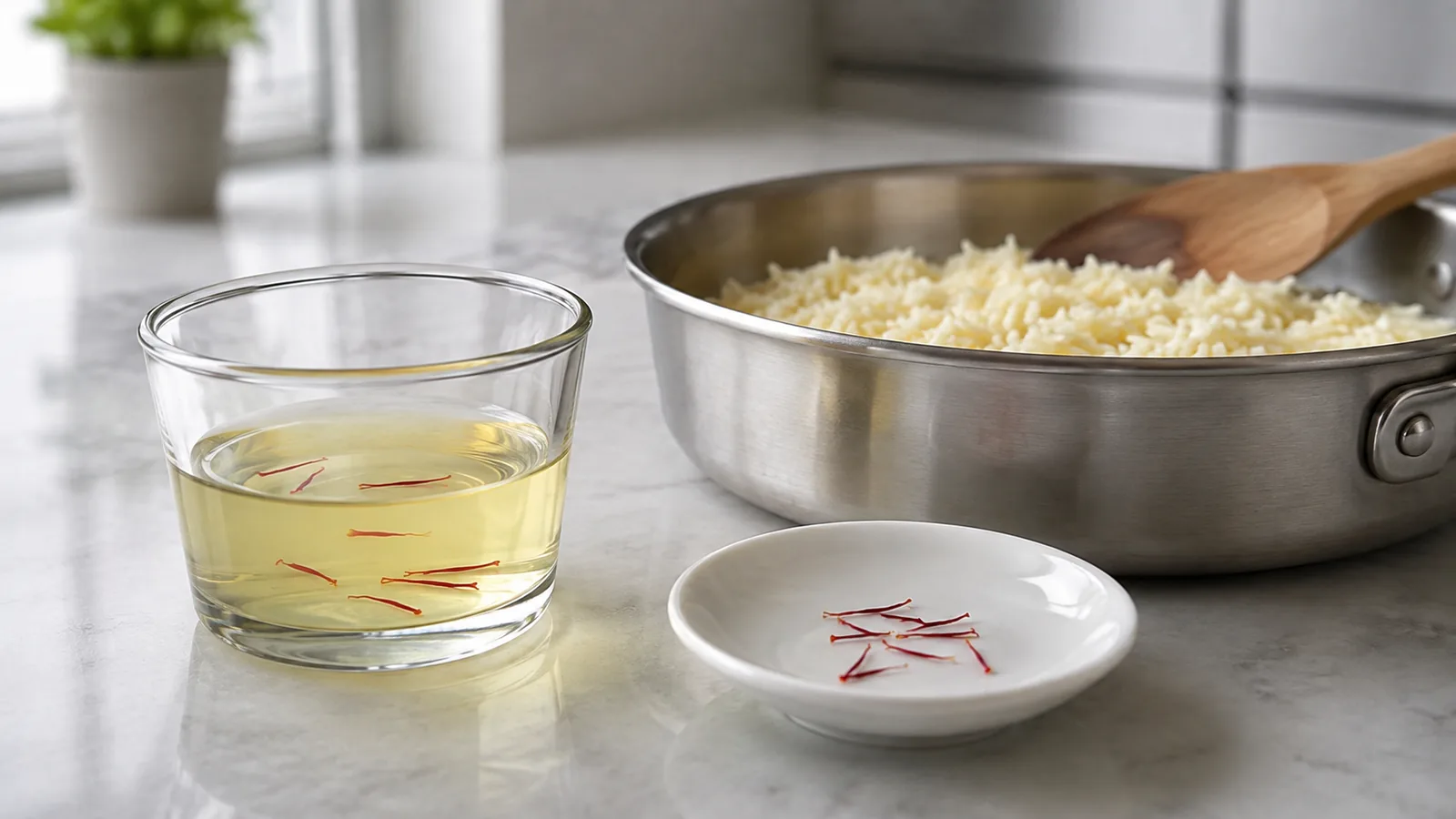
- Rice: use the infusion during cooking for an even result, or mix it with a portion of cooked rice for a distinct golden layer.
- Custards and dairy desserts: infuse the dairy before it enters the final mixture, taking account of eggs and thickening steps in the recipe.
- Baking: mix a concentrated infusion evenly through the wet ingredients and count it as part of the recipe’s liquid.
For recipes with unusual timing, see the detailed explanation of how cooking heat affects saffron.
Using saffron in rice dishes
Saffron and rice work well together because a concentrated infusion can colour either the whole pot or one decorative portion. For an even result, add the infusion with the measured cooking liquid according to the rice method. For a layered result, fold it into a small amount of cooked rice and arrange that over the plain rice.
Paella, biryani, Persian rice and risotto are not interchangeable recipes. Follow the dish’s established liquid ratio and cooking sequence rather than adding an extra cup of saffron water. The saffron method should serve the rice, not change its texture.
Dry threads scattered at the end can look attractive, but they may taste sharply bitter when bitten in a cluster. If you want visible threads, soften them first and distribute them sparingly.
Using saffron in soups, stews and sauces
Add the infusion where it can move through the liquid. In a seafood broth or light sauce, saffron’s character is easy to notice, so start gently. In a robust stew, aromatics, tomato, stock and browning can compete with it; a larger quantity is not always the answer. A later addition may preserve more of the aroma.
Saffron partners naturally with onions, garlic, rice, potatoes, tomatoes, seafood, chicken, vegetables and mild legumes, but it does not need all of them at once. Keep the surrounding flavours coherent and let the spice have a clear role.
Using saffron in desserts and drinks
For custard, pudding, ice cream or cake, infuse saffron in part of the recipe’s milk or water. Sweetness can soften its bitter edge, while cardamom, rose water, vanilla, citrus and nuts can complement it. Choose one or two supporting flavours rather than turning the dessert into a perfume cabinet.
In a cold drink, prepare a warm concentrated infusion first, cool it safely, then mix it with the other ingredients. Dropping whole threads into cold liquid at serving time gives them little opportunity to release evenly.
Whole threads, crushed threads and powder
Whole threads are easiest to inspect before use. A light crush speeds extraction and helps the color spread. If the quantity is too small for the mortar, add a pinch of the recipe’s sugar or salt as a grinding aid, but only when that ingredient belongs in the dish.
Powdered saffron disperses quickly, although its identity is harder to assess by sight. Buy it only from a source that provides clear origin, lot and quality information. Do not assume that every inexpensive red powder is saffron, or that a dramatic instant colour release proves purity.
How much saffron should you use?
Use the recipe’s tested quantity whenever possible. “A pinch” changes from one person to another, and thread counts vary with the length and grade of the saffron. Begin conservatively in an unfamiliar dish, keep the other ingredients in proportion, and record what worked.
More saffron does not create unlimited improvement. At high culinary concentrations its bitterness can dominate, and the cost rises long before the dish necessarily becomes better. A careful infusion often delivers more value than simply adding another pinch.
Common mistakes
- Using a large cup for the bloom: a dilute infusion can upset the dish’s liquid ratio.
- Dry-frying the threads: direct contact with a very hot pan can scorch them quickly.
- Boiling to force colour: excessive heat is not a substitute for crushing, time or adequate saffron.
- Adding all the saffron at the start of a long cook: save some or all of the infusion for later when aroma matters.
- Pairing it with every strong spice available: too much competition hides the quality you paid for.
- Judging purity by colour alone: appearance is one clue, not a complete test.
- Leaving the container open near the stove: light, air, heat and moisture are poor storage conditions.
Questions about using pure saffron in cooking
Do I have to soak saffron first?
No. It can extract directly in moist food, but a separate infusion gives more even colour and better control. Our complete saffron brewing guide compares the practical options.
Can I put saffron straight into rice?
Yes, especially when the rice still contains hot liquid, but a concentrated infusion is easier to distribute. Add it in a way that respects the rice recipe’s measured water.
Should I remove the threads after infusing?
Usually not. The softened thread material is edible and can continue contributing colour. Strain it only for a very smooth sauce or drink.
How do I store saffron after opening?
Keep it tightly closed, dry and away from light and heat. Do not store the jar beside a steaming pan. Use clean, dry utensils so moisture does not enter the container.
A good starting routine
For most cooking, lightly crush a modest pinch, cover it with a little warm water and wait 10–15 minutes. Add the whole infusion at the point where it can spread without enduring unnecessary prolonged heat. From there, adjust the quantity and timing to the dish rather than following a rigid rule.
You can browse our pure saffron products or ask us about saffron for a particular recipe.