How should you eat saffron for weight loss? Use a small culinary amount to flavour satisfying meals or an unsweetened drink if you enjoy it, but do not expect saffron itself to make body fat disappear. Human trials have not shown a reliable reduction in body weight or BMI, and a few threads cannot replace a sustainable eating, activity, sleep and health-care plan.
How to Eat Saffron for Weight Loss
Saffron can fit into a weight-management diet because an ordinary culinary pinch adds aroma and colour without needing a large amount of sugar or fat. Its useful role is as a flavouring, not as a fat burner, detox or metabolism switch.
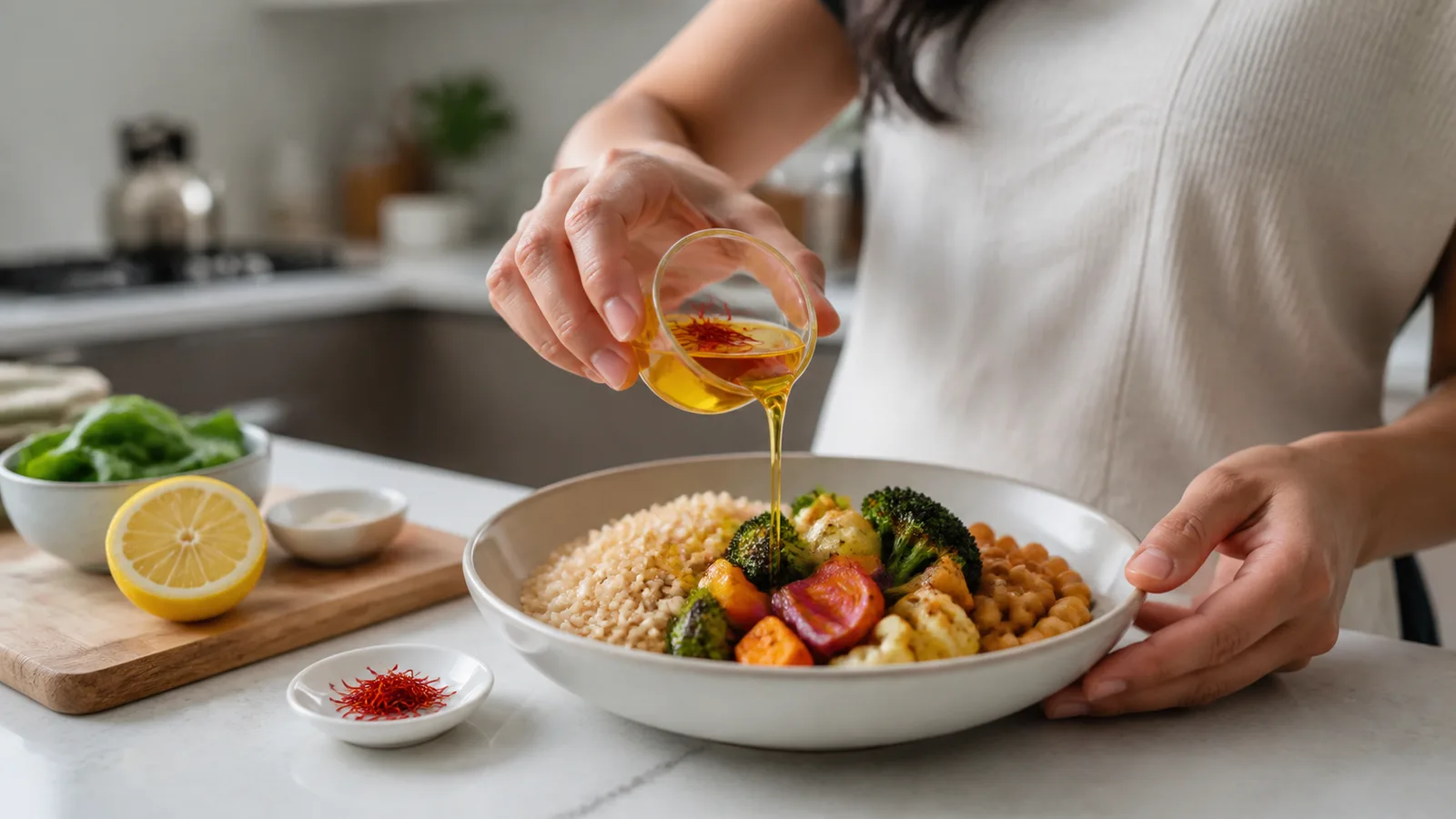
Saffron for weight management works best as a cooking choice: bloom a few threads and use the infusion across a complete meal. Whether that meal supports a calorie deficit depends on the whole recipe and portion, not the presence of saffron.
What Does the Research Say About Saffron and Weight Loss?
A systematic review and meta-analysis of 25 randomised trials in people with overweight or obesity found no statistically significant reduction in body weight, BMI, waist circumference or hip circumference from saffron supplementation. It reported a change in waist-to-hip ratio, but the authors stressed study limitations and the need for stronger evidence.
A more recent meta-analysis in metabolic syndrome and related conditions likewise found no significant change in BMI or waist circumference. These results do not support claims that saffron predictably boosts metabolism or causes meaningful weight loss.
One small older trial of a specific branded saffron extract reported less snacking and greater weight reduction than placebo over eight weeks in 60 mildly overweight women. That finding is interesting, but it does not prove the same effect for culinary threads, saffron tea or every extract sold online.
Practical Ways to Use Saffron in Meals
Bloom it for savoury dishes
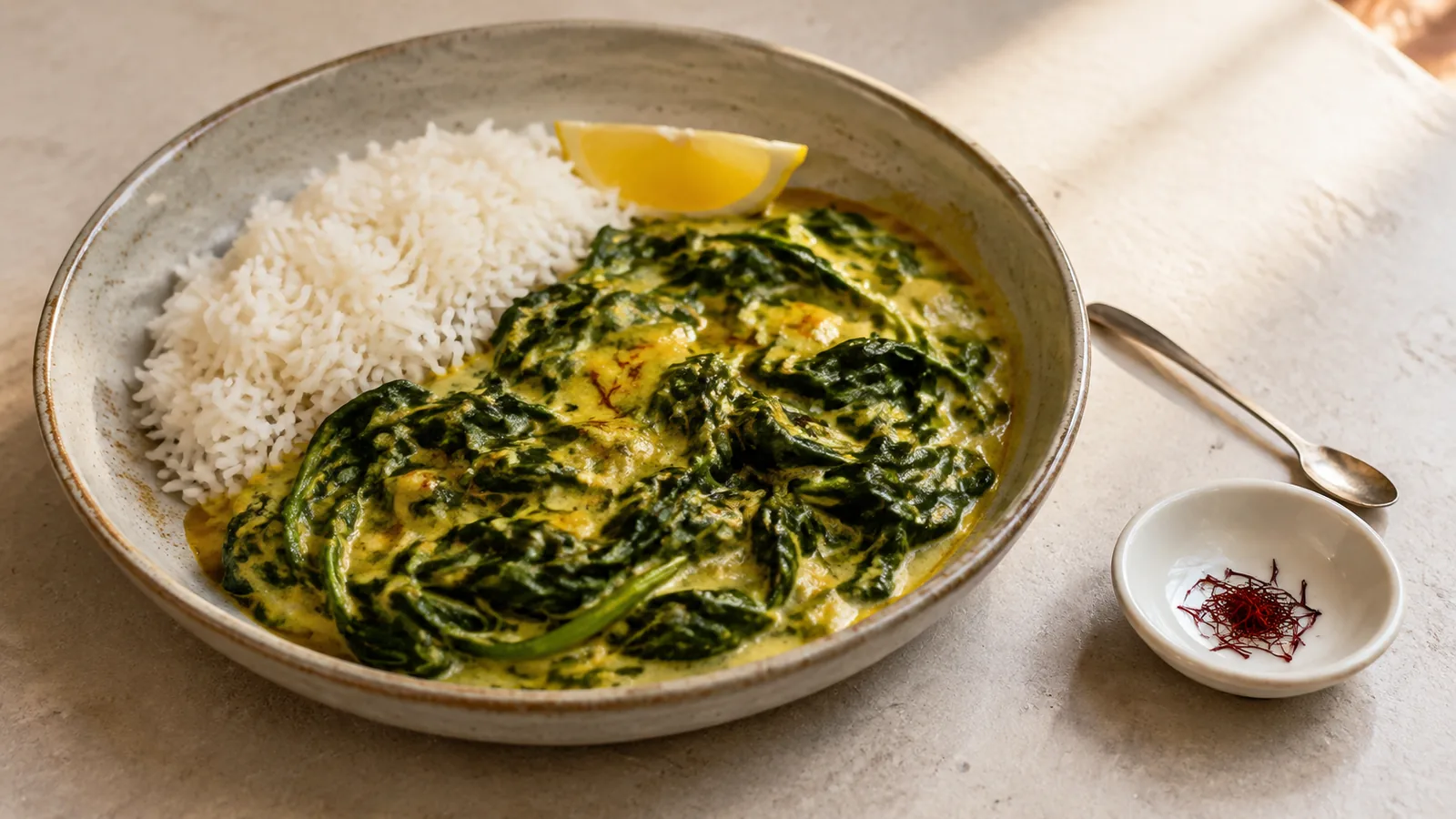
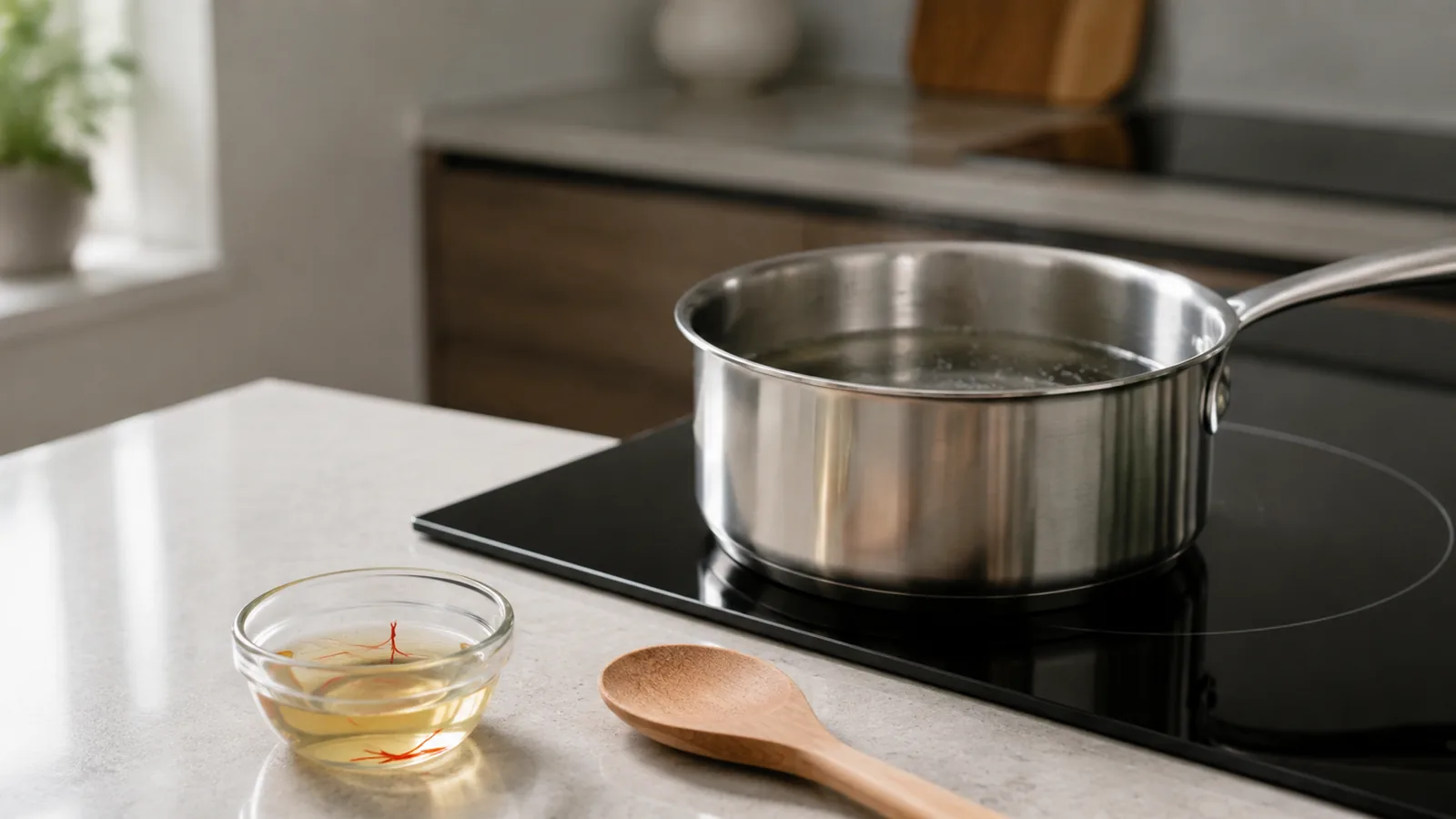
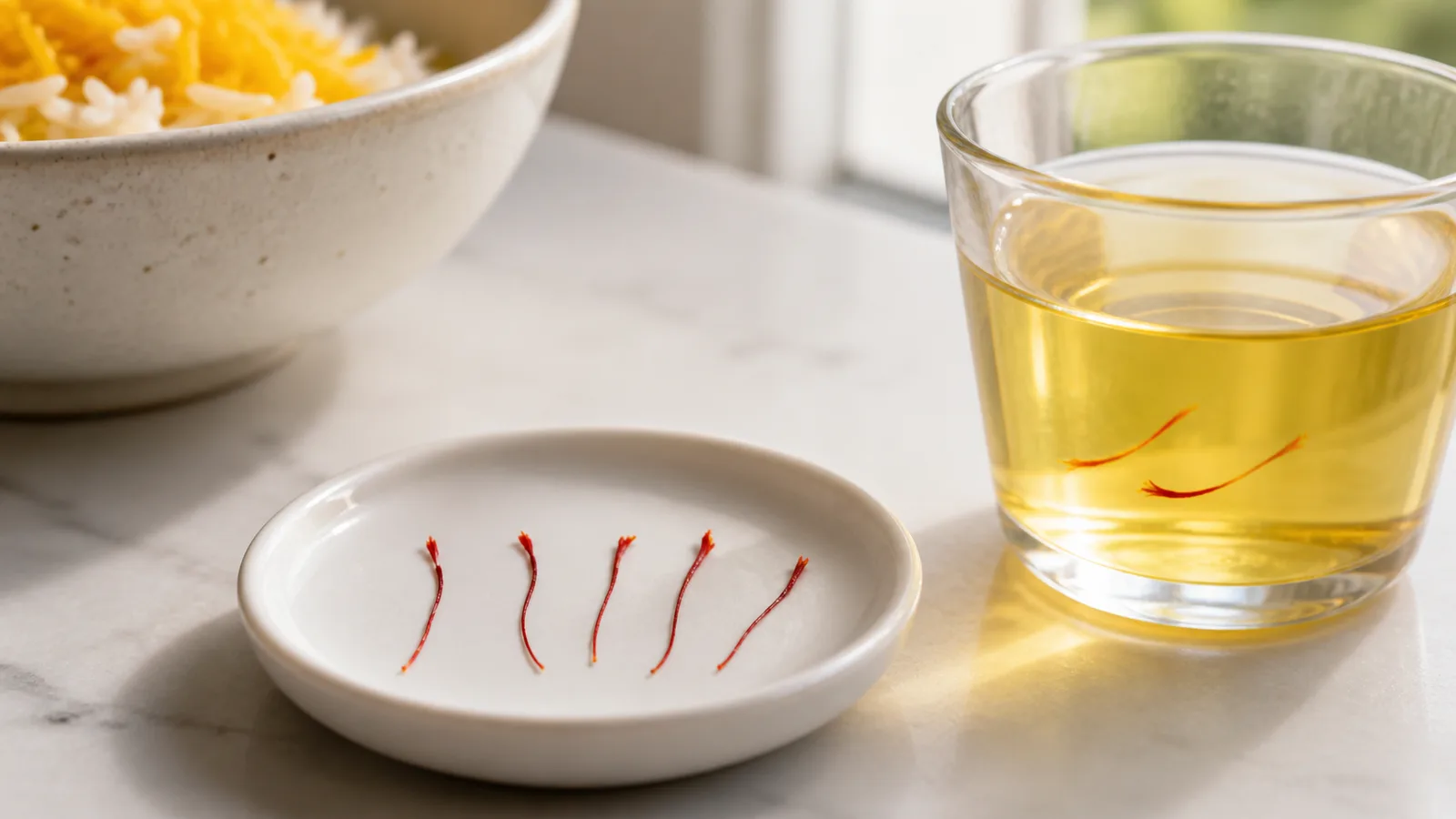
Lightly crush a small pinch and soak it in warm water for 10 to 15 minutes. Stir the infusion into lentil soup, vegetable stew, beans, fish, chicken or a measured portion of rice. Saffron’s aroma can make simple food feel more deliberate, but the calorie content still comes from the complete dish.
Use it in a balanced breakfast
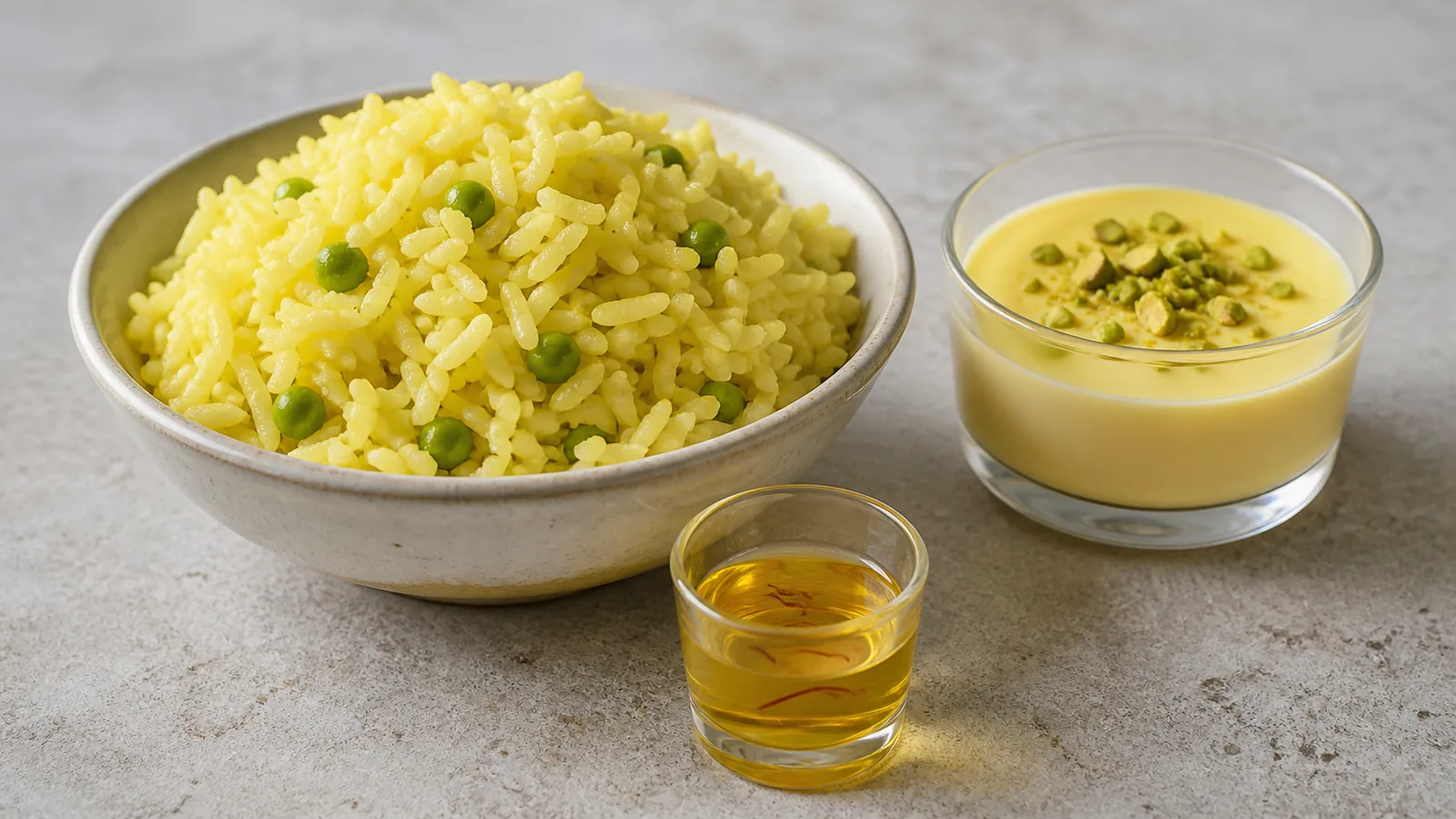
Add a few bloomed threads to plain yogurt, oats or another breakfast that already suits your nutritional needs. Sweeten only if needed and account for the sweetener. Saffron does not cancel the energy in sugar, syrup or a large serving.
Build the meal around filling foods
Use saffron as the accent while vegetables, pulses, whole grains and an appropriate protein source provide the meal’s substance. A registered dietitian can tailor portions and food choices around allergies, diabetes, medication, culture and individual goals.
Saffron Tea for Weight Loss
An unsweetened saffron tea can replace a higher-calorie drink, which may help the overall eating plan. The tea itself has not been shown to burn fat or guarantee appetite control. Any benefit from the swap comes largely from what the drink replaces.
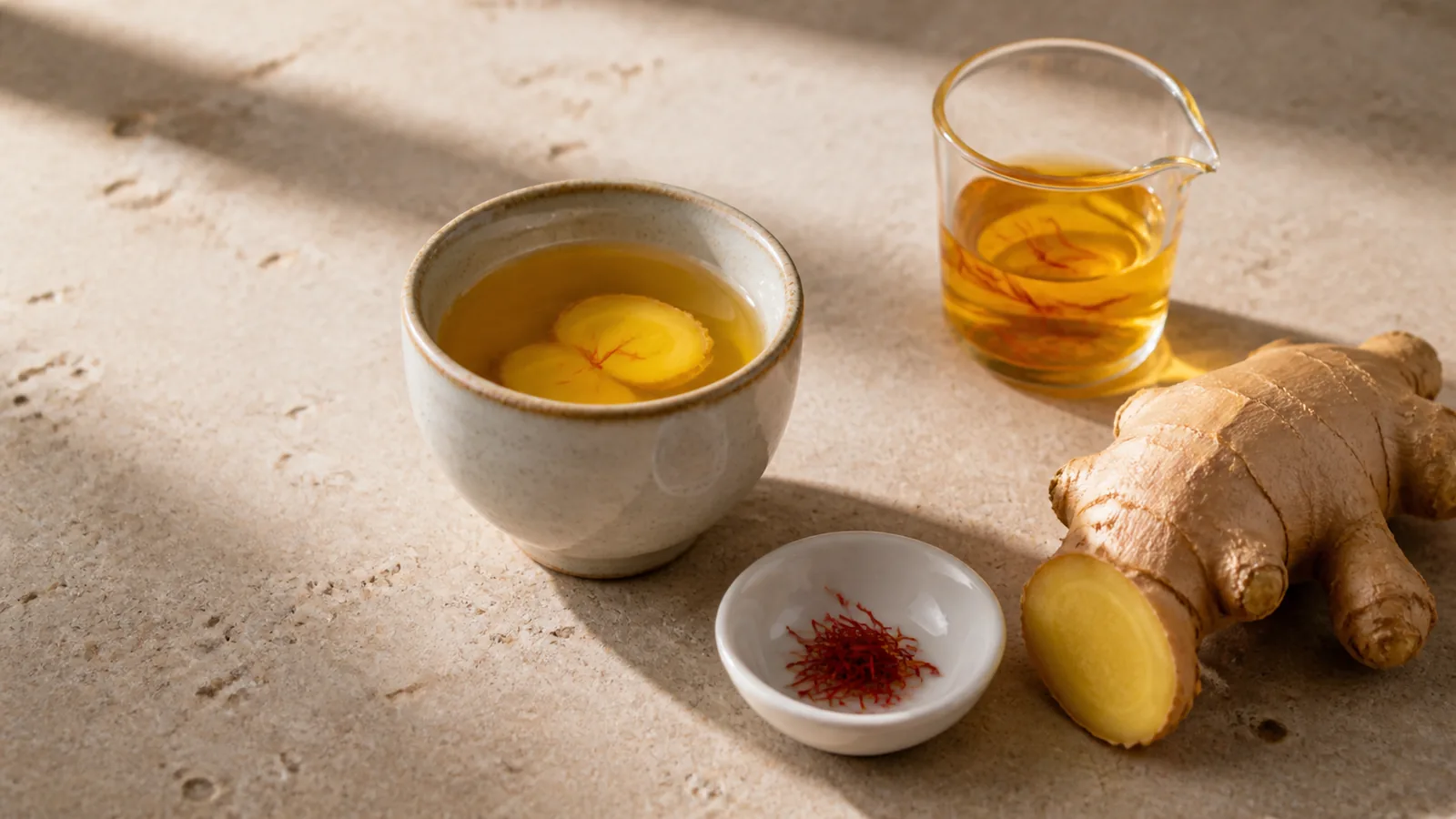
- Lightly crush three to six threads.
- Steep them in a mug of hot water for about 10 minutes.
- Add lemon, mint, ginger or cardamom for flavour if desired.
- Drink it because you enjoy it, not as a meal replacement or rapid-loss treatment.
The previous honey-and-lemon “weight loss drink” was misleading. Honey adds sugar and calories; lemon does not detox the body or kick-start metabolism. Either can be used for taste, but neither turns saffron water into a proven slimming remedy.
How to Use Saffron Extract to Lose Weight
There is no evidence-based generic instruction for how to use saffron extract to lose weight. Research products are standardised preparations with defined amounts and study populations. A retail capsule may use a different extract, concentration or combination of ingredients.
Do not copy a trial dose into self-treatment. Ask a clinician or pharmacist to review the exact label, especially if you are pregnant, take medication, have a medical condition or are considering more than culinary use. The US National Institutes of Health guidance on weight-loss supplements notes that evidence for these products is often limited and that some can interact with medicines or cause harm.
What Actually Supports Weight Management?
The US National Institute of Diabetes and Digestive and Kidney Diseases recommends a science-backed plan tailored to the person’s health and preferences. Useful programmes combine a reduced-calorie eating pattern, appropriate physical activity, support for lasting habits and a plan to maintain the change.
Healthy weight loss is not always suitable or necessary, and medicines, hormones, stress, sleep, illness and age can affect weight. Seek professional help for rapid unexplained change, an eating disorder, pregnancy, a chronic condition or repeated unsuccessful attempts.
The Honest Bottom Line
Saffron and weight loss should not be presented as cause and effect. Enjoy a small amount in satisfying food or unsweetened tea, and let the overall meal pattern do the work. Current trial evidence does not support promising that saffron suppresses appetite, boosts metabolism or reliably reduces body weight.
For culinary threads, browse our saffron products. For preparation rather than weight-loss claims, read how to use saffron in tea.