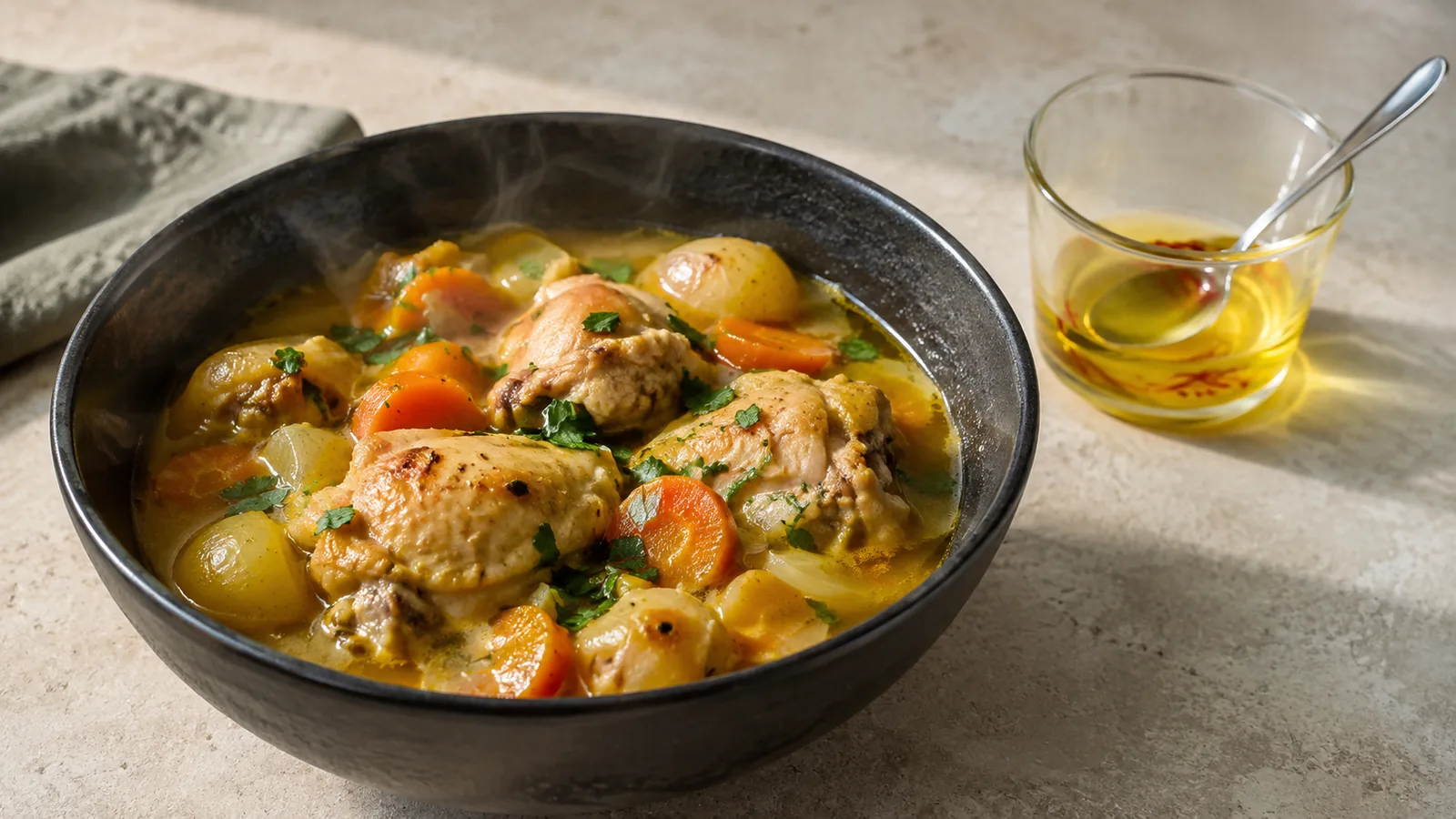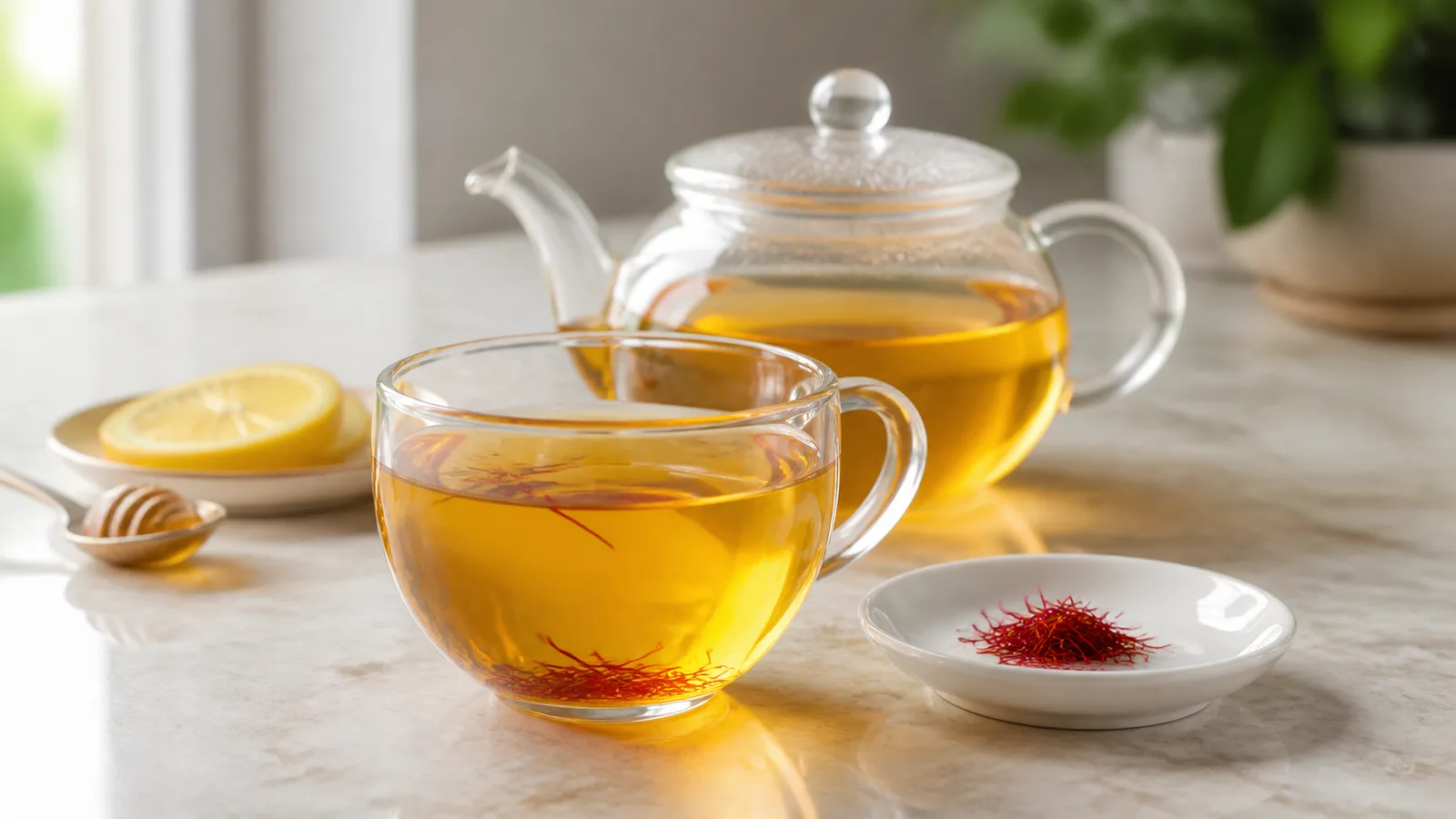
Can I put saffron in tea? Yes. Add a small pinch of saffron threads to black, green or herbal tea and give the spice several minutes to release its colour and aroma. Blooming the threads separately first gives you more control, but you can also steep them directly in the cup.
Can saffron be used in tea you already enjoy, rather than in a special blend? It can. You can use saffron in tea made from ordinary leaves or herbs, provided the other flavours do not completely mask it.
Can I Put Saffron in Tea?
Saffron works especially well in gently flavoured tea because its honeyed, floral character is easy to notice. Strong black tea can carry it too, although a very tannic or heavily spiced blend may cover the finer aroma.
You do not need a special “saffron tea” product. Whole saffron threads let you see what you are using and make the strength easier to adjust. A little bitterness is normal if the infusion is strong; a sharply bitter cup usually means too much saffron or tea was used.
How to Make Saffron Tea
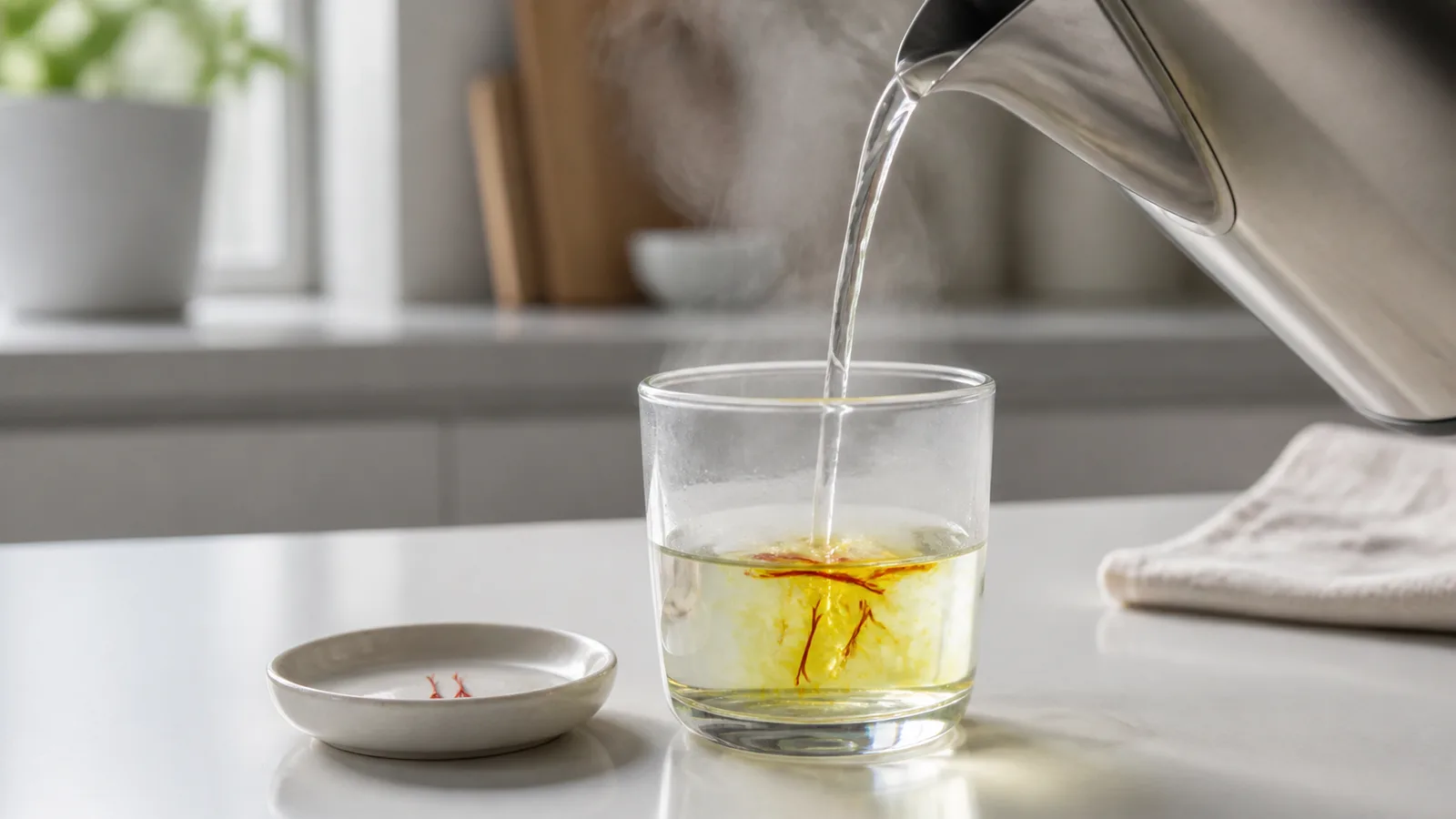
For one cup, start with a small pinch of threads rather than a spoonful. Lightly crush them between clean fingers or in a mortar, then use either of these methods:
- Direct steep: place the threads in the cup with your usual tea. Add hot water and steep until the drink has a golden colour and a clear saffron aroma.
- Bloom first: cover the crushed threads with a little warm water for 10 to 15 minutes. Brew the tea separately, then stir in the saffron infusion.
The blooming method is useful with green tea because you can brew the leaves at their preferred temperature and add the saffron afterwards. With black tea, the threads can normally steep alongside the leaves. Avoid boiling saffron hard for a long time; prolonged aggressive heat can flatten its aroma.
How Much Saffron Should You Use in Tea?
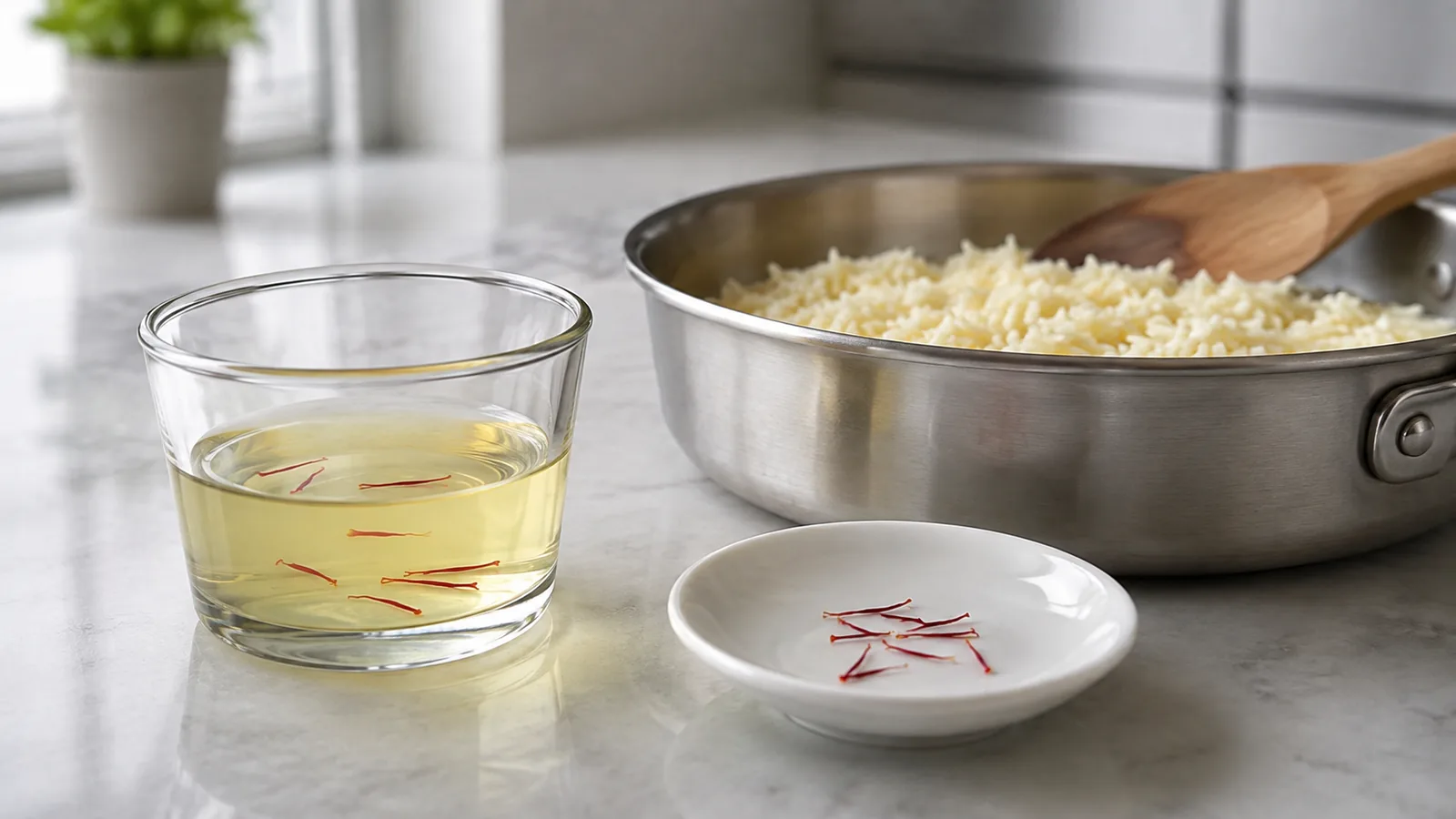
Begin with roughly three to six threads in an ordinary mug, then adjust the next cup to taste. Thread size and strength vary, so counting them is only a practical starting point, not a medical dose. Culinary saffron should add fragrance and a warm golden hue without making the drink medicinal or harsh.
If you are making a pot, bloom one small pinch and add it gradually. This is easier than trying to correct an overpowering infusion. Keep concentrated extracts and supplements separate from ordinary culinary use, since they are not interchangeable with a few threads in tea.
What Can You Add to Saffron Tea?
Saffron pairs naturally with flavours that support rather than overwhelm it:
- honey for gentle sweetness;
- a thin slice of lemon for brightness;
- fresh ginger for a warmer, sharper cup;
- cardamom for a Persian-style aromatic note;
- milk or oat milk for a softer drink.
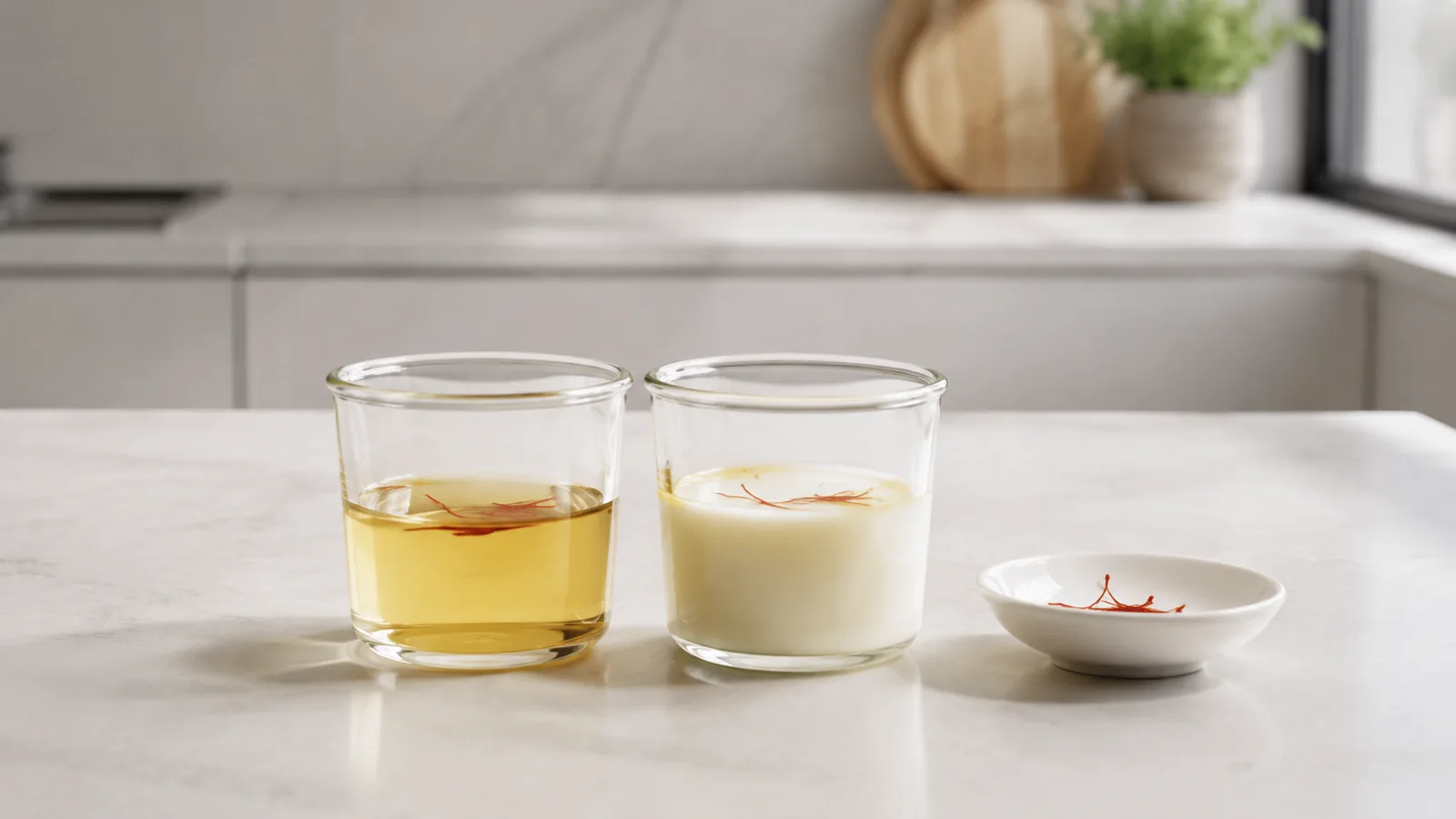
Add lemon after brewing so you can judge the balance. If using milk, bloom the saffron in warm water or milk first; the colour may develop more slowly than it does in clear water.
Saffron Tea Benefits: What Can We Actually Say?
The most dependable saffron tea benefits are culinary: a distinctive aroma, vivid colour and a way to enjoy saffron in a warm drink. Saffron contains compounds such as crocin and safranal, and researchers have studied standardised saffron preparations for several health outcomes. That evidence does not prove that a homemade cup will treat stress, depression, digestive problems or memory loss.
A meta-research review of saffron health outcomes found encouraging results in some areas but also highlighted limitations in the strength and certainty of the evidence. Treat saffron tea as food, not as a substitute for prescribed treatment or professional medical advice.
Practical Safety Notes
A small culinary amount is different from a concentrated product or a large deliberate intake. Anyone with a saffron allergy should avoid it. If you are pregnant, take regular medication, have a bleeding or blood-pressure concern, or plan to use saffron repeatedly in supplement-like amounts, ask a qualified clinician first.
Use threads with a clean, dry aroma and store them away from light, heat and moisture. Our guide to recognising real saffron explains what appearance and simple home checks can—and cannot—tell you.
A Simple Cup to Start With
Crush a few threads, bloom them in a tablespoon of warm water, and brew your preferred tea. Stir the golden infusion into the cup, taste it, and add honey or lemon only if you want it. That simple method answers the practical question: yes, you can use saffron in tea, and careful steeping makes its aroma much easier to enjoy.
For culinary threads, browse our saffron products, or contact us if you need help choosing one.