How do you tell if you have real saffron? Look for several consistent signals: dry irregular red stigmas, a distinctive hay-and-honey aroma, gradual golden colour in warm water, traceable packaging and an accountable seller. No single home trick can certify purity or grade; laboratory testing is the stronger evidence when certainty matters.
How Do You Tell if You Have Real Saffron?
Learning how to identify real saffron is less dramatic than many viral tests suggest. Genuine Crocus sativus varies by cut, harvest and storage. Adulterants vary too. A sample that “passes” one visual or water test may still contain added material, while an unusual but genuine thread can be judged unfairly.
1. Check the Color
Most commercial saffron threads are predominantly deep red, sometimes with an orange-red transition or a small amount of yellow style material depending on the cut. Yellow does not automatically mean fake; it can indicate a style with more of the flower’s style attached and may affect price and colouring strength.
Colour alone proves little. Threads can be dyed, old stock can remain red after losing aroma, and photographs under warm lighting can mislead. Reject visible mould, damp clumps, insects or residue that rubs off like surface paint.
2. Smell the Saffron
Good saffron has a penetrating dry aroma often compared with hay, honey and warm earth. It may seem slightly leathery or mineral to some people. It should not smell musty, sour, smoky from poor drying, perfumed or chemical.
A weak aroma can reflect age, poor storage, a low-aroma lot or material that is not saffron. It is a warning, not a complete laboratory result. Smell the spice at room temperature in a clean container rather than directly above steam.
3. Perform the Water Test
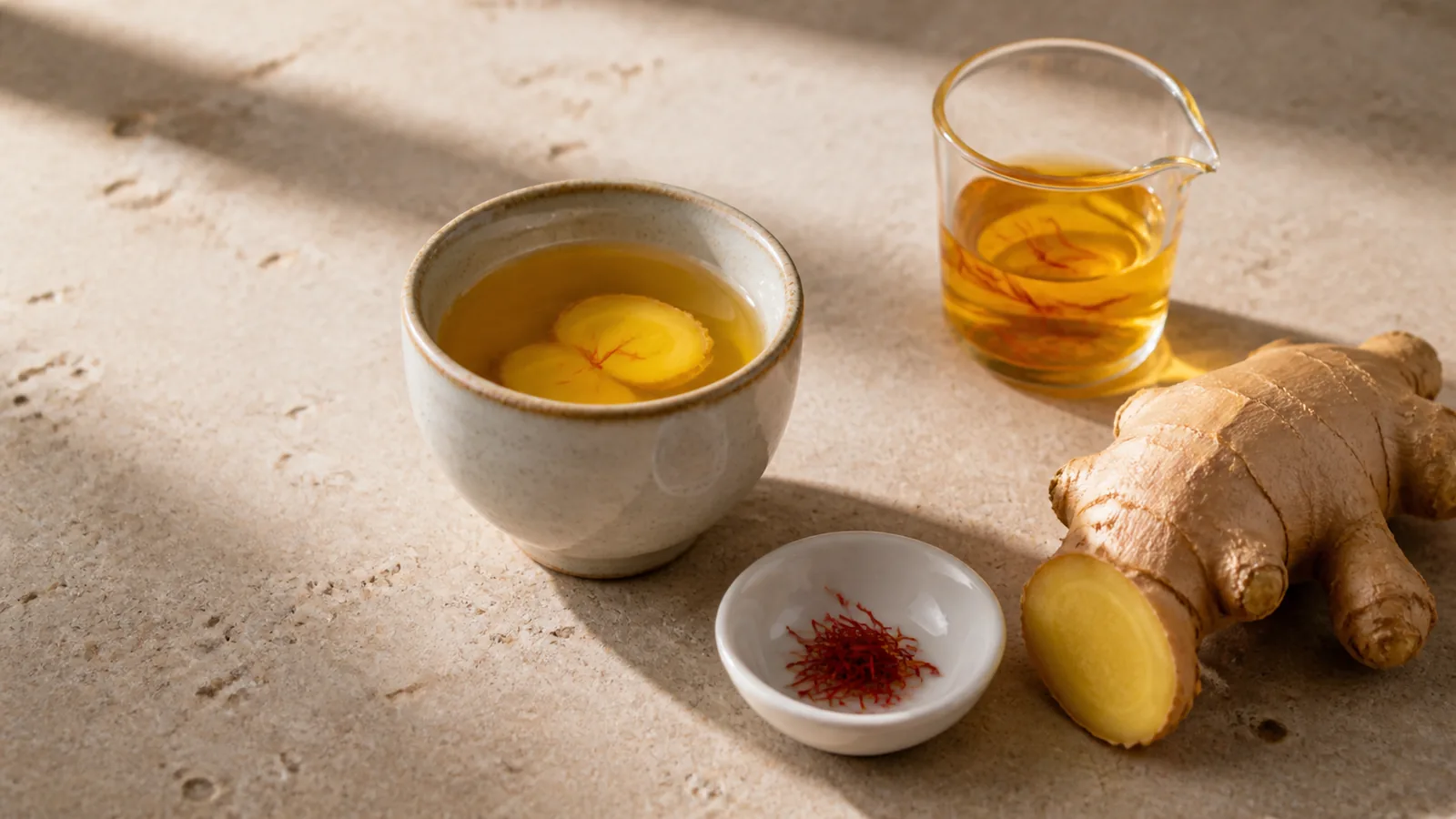
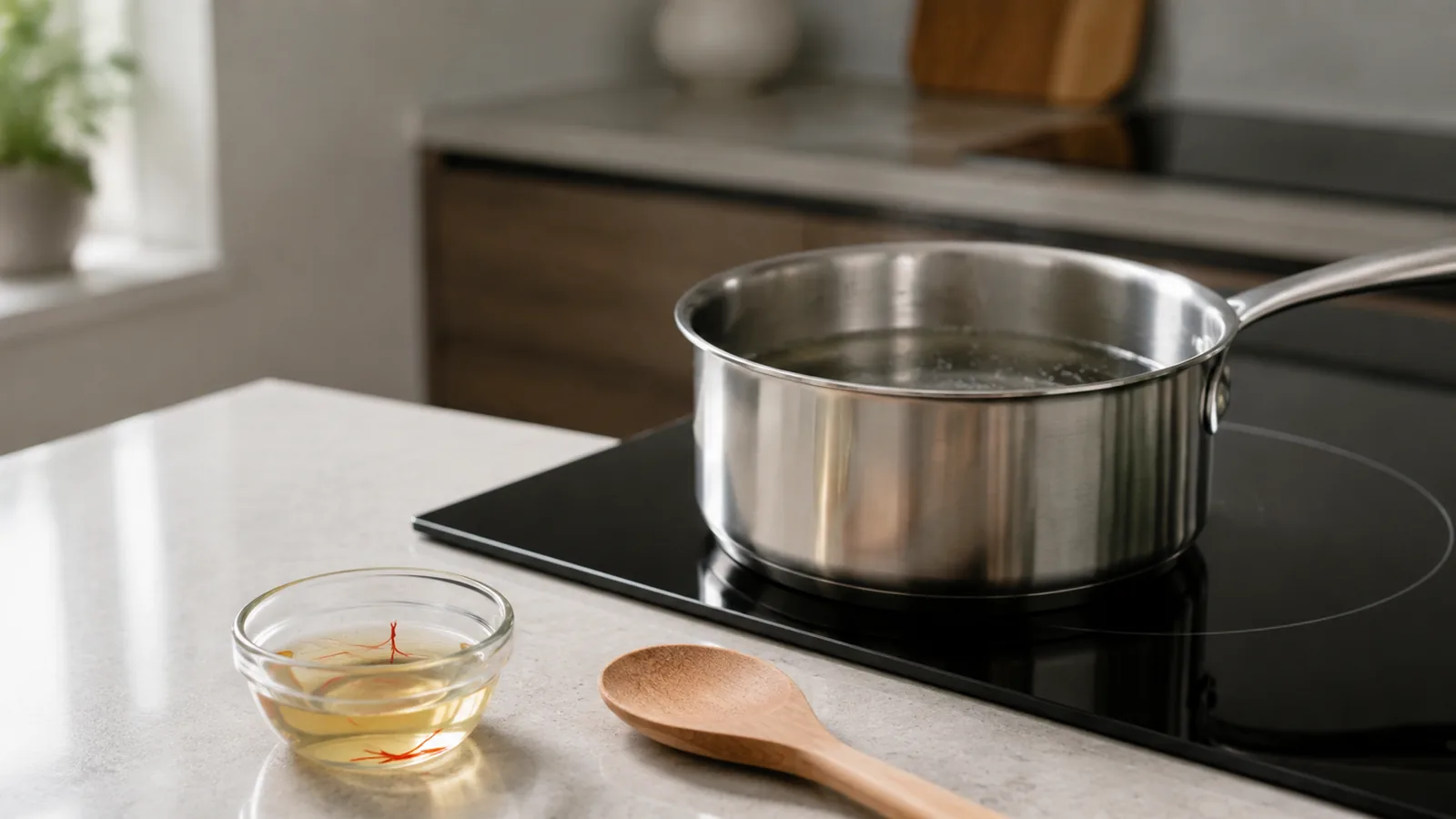
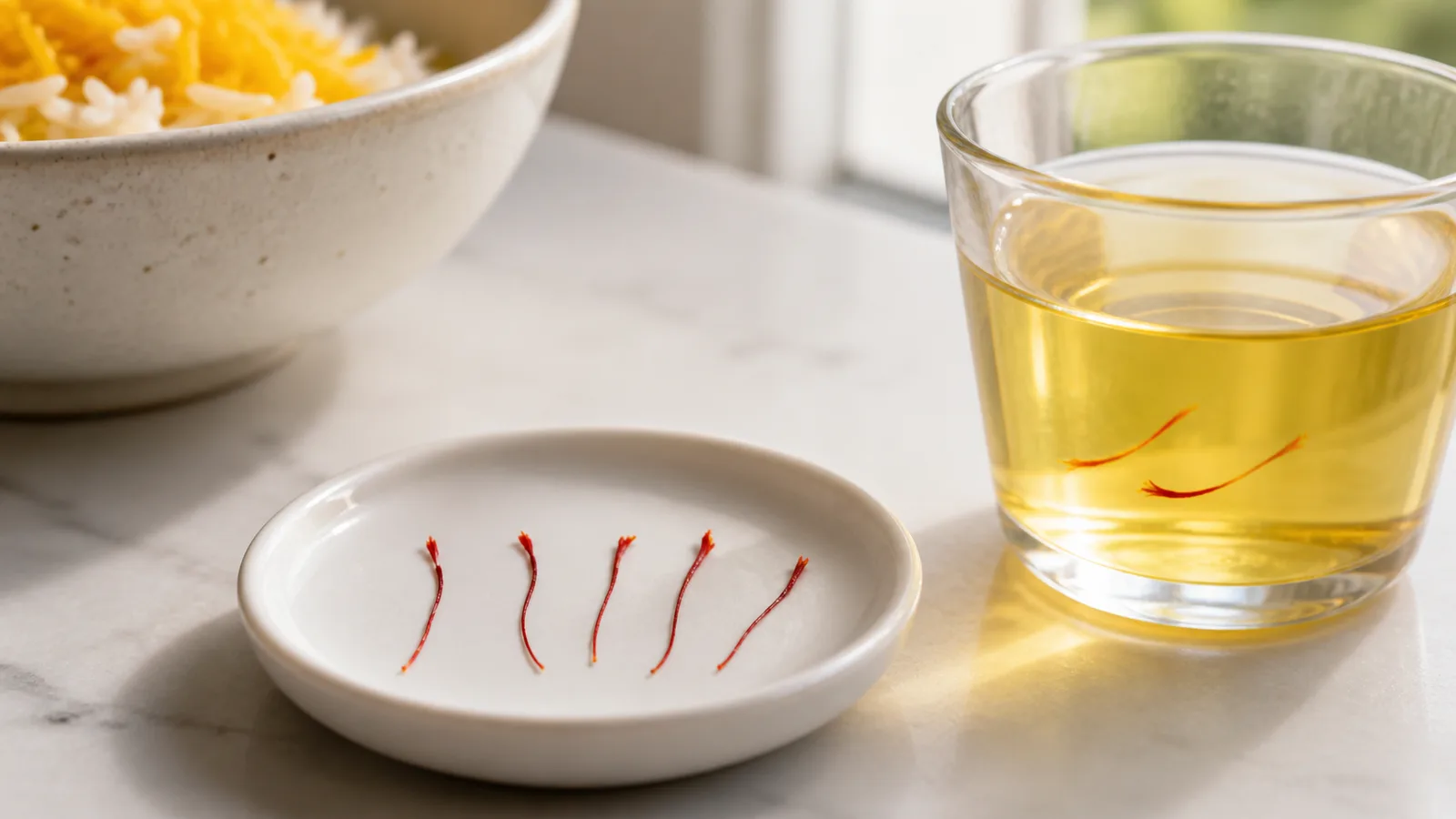
Put a few threads in clear warm water and watch them for 10 to 15 minutes. Genuine saffron normally releases colour gradually, producing a clear yellow-to-golden infusion while the threads retain some structure. The liquid should develop saffron’s aroma rather than a sweet artificial fragrance.
The old claim that real saffron releases a “deep red” liquid or dissolves is misleading. Crocins colour the water golden; the plant tissue does not simply disappear. Instant colour clouds, colour rubbing off the surface or fibres turning white can be suspicious, but a clever adulterant may imitate a normal-looking infusion. The water test is screening, not certification.
4. Check the Shape of the Threads
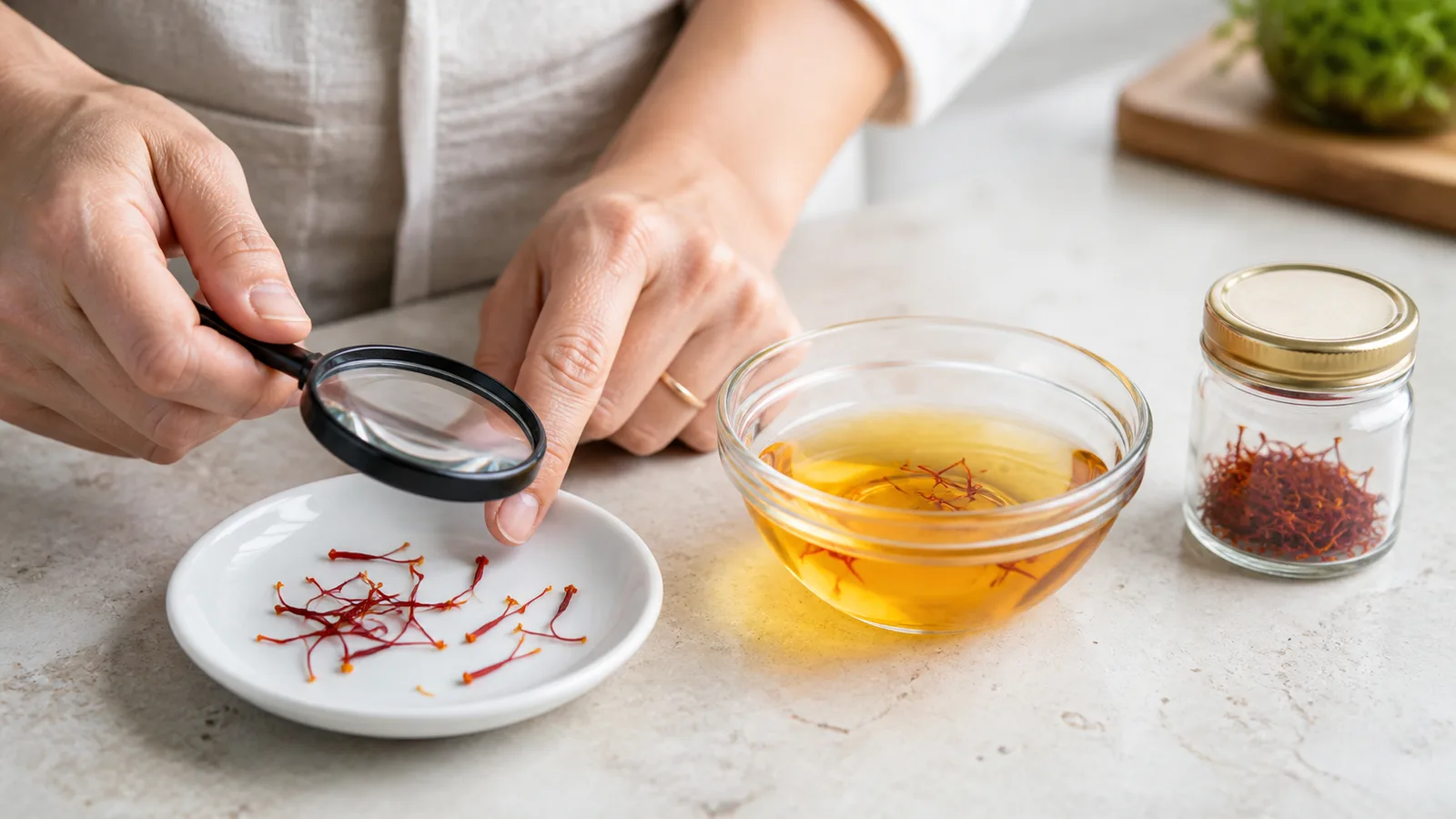
A saffron stigma is fine and irregular, usually widening or flaring toward one end. Threads are not perfectly identical because they are plant material handled and dried by people. Their length and curl depend on processing, so short pieces are not automatically counterfeit.
Be cautious with uniformly cut fibres, flat red strips, silky strands or material that clearly resembles another petal or plant. A magnifying glass can help you see the flared end, but powder is much harder to assess visually.
5. Taste the Saffron
Genuine saffron is gently bitter and aromatic; it is not sugary even though its smell may remind you of honey. Taste can expose a sweet coating or a completely bland sample, but it cannot establish purity. Do not taste material that smells chemical, appears mouldy or was not sold for food use.
One tiny food-grade thread is enough for a sensory check. There is no reason to chew a large quantity, and taste should never be used as a challenge when allergy or contamination is suspected.
6. Price and Packaging
Saffron is labour-intensive, so an unusually low price deserves questions. It is not proof of fraud, just as a high price is not proof of authenticity. Compare net price per gram and the information supplied with the actual lot.
Choose sealed food-contact packaging that identifies the seller or packer, net weight, origin where claimed, lot or batch, and date or storage information. A transparent window can help inspection, but long exposure to light is not ideal. Decorative boxes and generic certificates should not outweigh traceability.
7. Certified Suppliers
Ask what a certificate covers. The current ISO 3632-1:2025 saffron specification defines requirements for dried saffron, while ISO 3632-2 sets test methods. A standard number printed on a website is not a result for the jar in your hand.
Useful evidence links the supplier’s document to the lot, laboratory, date and tested measures. Independent tests can assess identity, moisture, foreign matter and chemical characteristics more reliably than a review score or home trick. For routine cooking, accountable sourcing plus consistent sensory checks may be enough; for wholesale or high-stakes use, request lot-specific documentation.
See our saffron selection or read what to check before buying saffron.
Conclusion
You identify authentic saffron by combining appearance, aroma, infusion behaviour, packaging and seller traceability. Use home checks to notice inconsistencies, not to issue a certificate. When purity or grade must be established, rely on a representative lot sample tested with recognised methods.