What should you know before buying saffron? Start with traceability, condition and value per gram. Choose a sealed food product from an identifiable seller, prefer threads when you want to inspect the spice yourself, and treat an unusually low price as a reason to ask questions—not as proof of fraud by itself.
What to Know Before Buying Saffron: Essential Tips for Quality Selection
Learning how to buy saffron is less about memorising one visual trick and more about collecting several consistent signals. Colour, aroma, cut style, laboratory results, packaging and seller accountability each tell part of the story.
Understand the Different Grades of Saffron
Terms such as Negin, Sargol, Pushal and Bunch describe familiar trade styles and how much of the red stigma and lighter style material is present. They are useful, but they are not one universal global ladder. “Premium” is also a marketing word unless the seller explains the specification behind it.
The current ISO 3632-1:2025 saffron specification applies to dried Crocus sativus in filament, cut-filament and powder forms. Its companion ISO 3632-2 test-method standard covers laboratory evaluation. If a seller cites ISO 3632, ask which lot was tested, by whom, when and for which results; a standard number printed on a page is not itself a test certificate.
Consider the Origin of the Saffron
Origin can explain a product’s farming tradition, style and price, but it does not guarantee saffron quality. Excellent and poor lots can come from the same country. Iran is the largest producer, while Afghanistan, India, Spain, Greece, Morocco and other regions also produce saffron.
Look for a specific, consistent origin statement and an accountable packer or importer. Be cautious when a seller relies on romantic geography but provides no lot, net weight, contact information or storage guidance.
Check for Authenticity
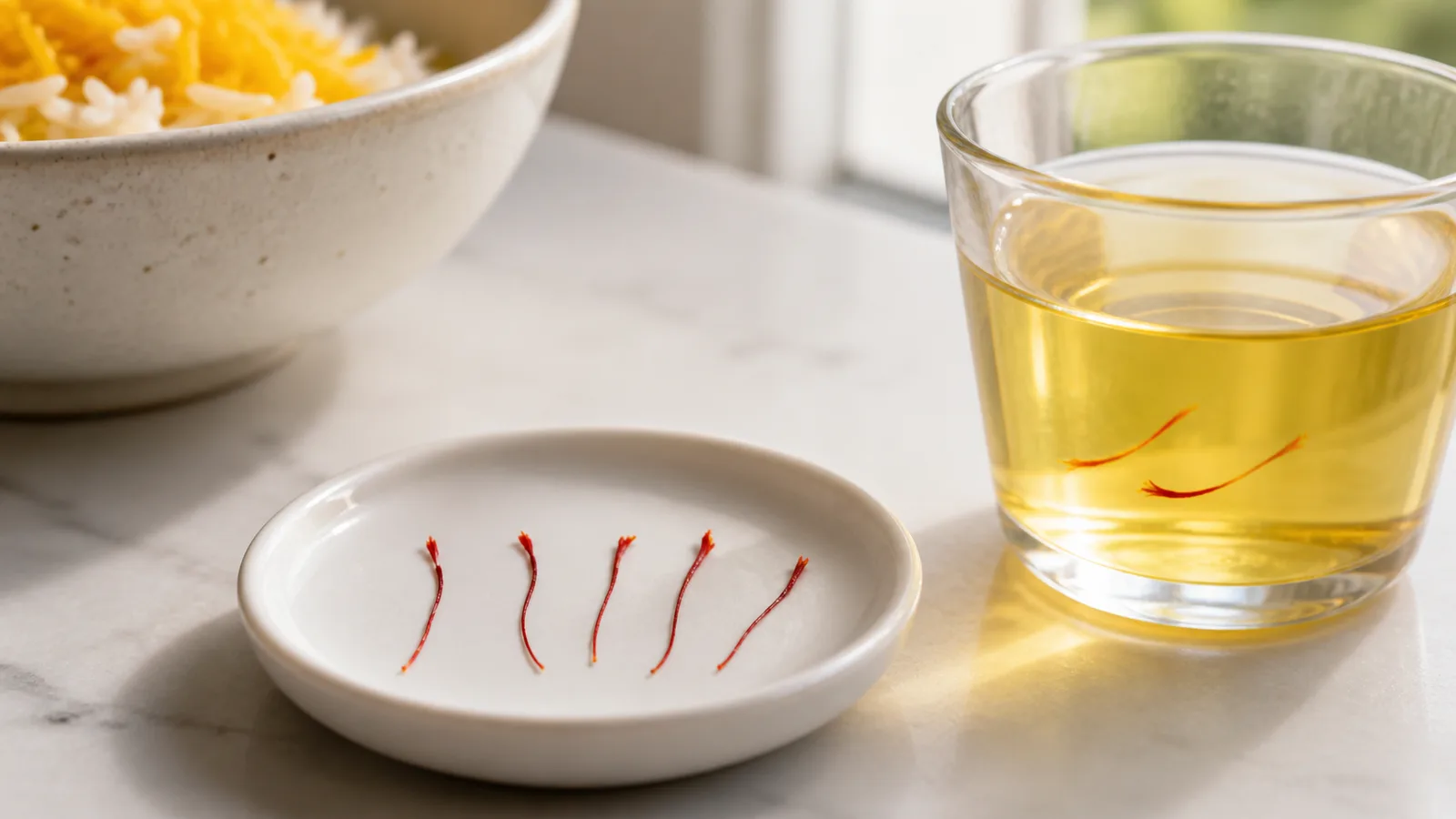
Whole threads are easier to inspect than powder. Genuine stigmas are thin and irregular rather than perfectly identical fibres, predominantly deep red, and often broaden slightly at one end. A small amount of yellow style material can indicate the cut style; it is not automatically fake.
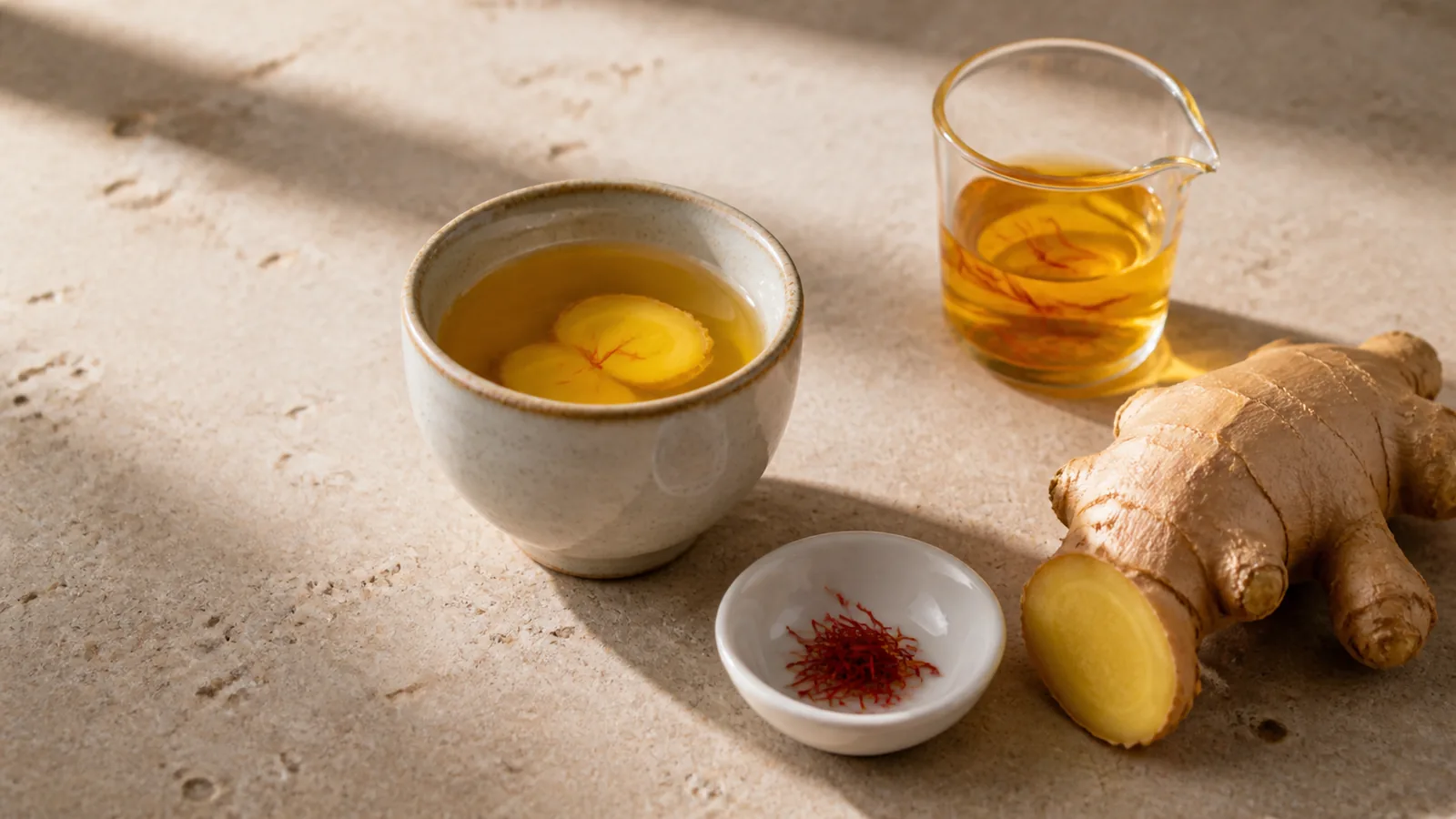
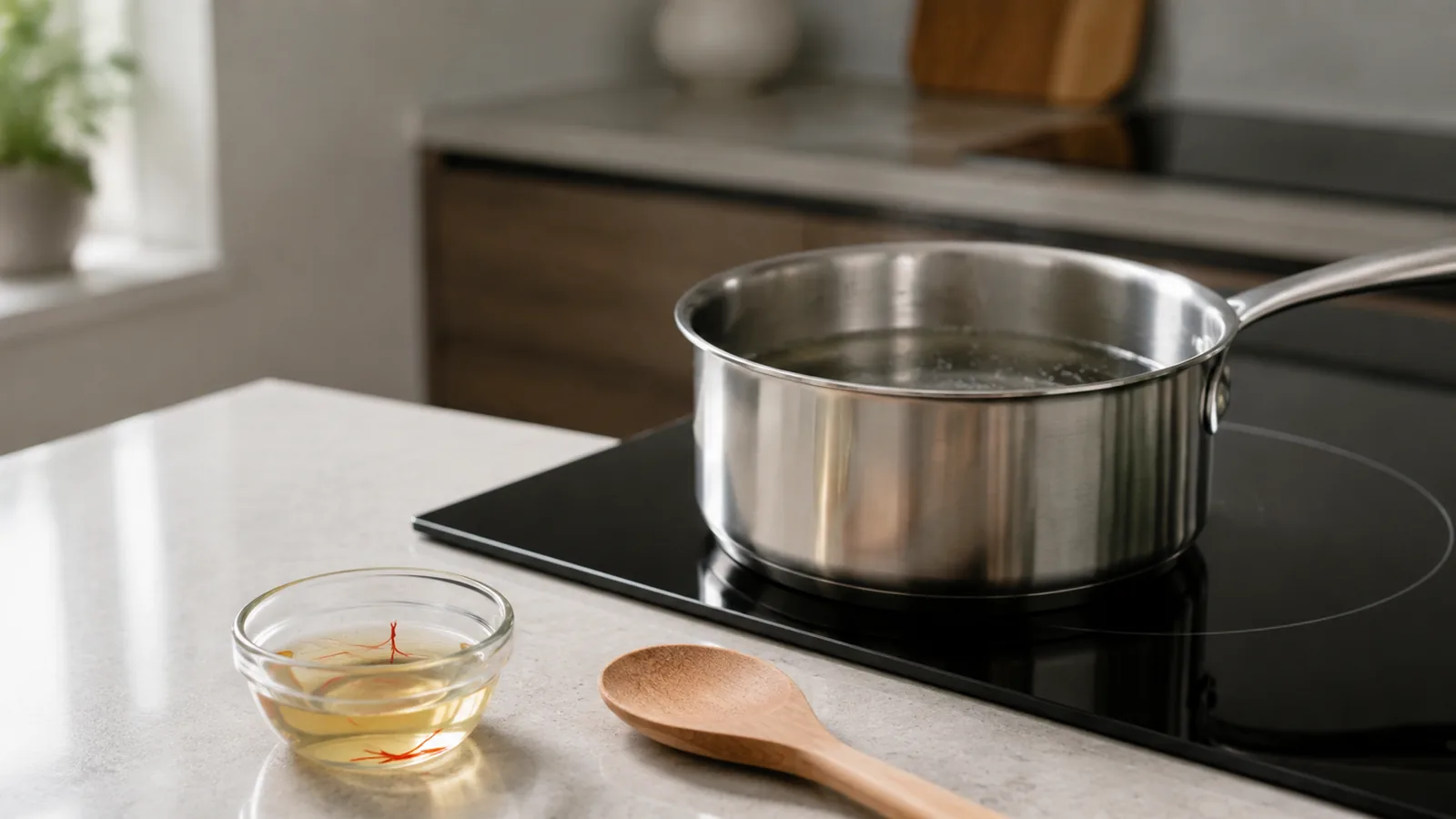
Home water tests can reveal something suspicious, but they cannot certify purity or grade. Genuine saffron gradually colours warm water golden while the threads retain structure, yet dyes and adulterants vary. Laboratory testing and supply-chain traceability carry more weight than a viral “instant test.”
Evaluate the Aroma and Color
Good saffron has a penetrating dry aroma often compared with hay, honey and warm earth, with a gently bitter taste. It should not smell musty, sour, perfumed, smoky from poor drying or chemical. Dampness, mould, insects or sticky clumps are rejection signs.
Bright red colour is desirable in many thread styles, but colour alone cannot prove origin, freshness or freedom from dye. Judge it alongside aroma, dryness, thread structure and documentation.
Price and Quantity Considerations
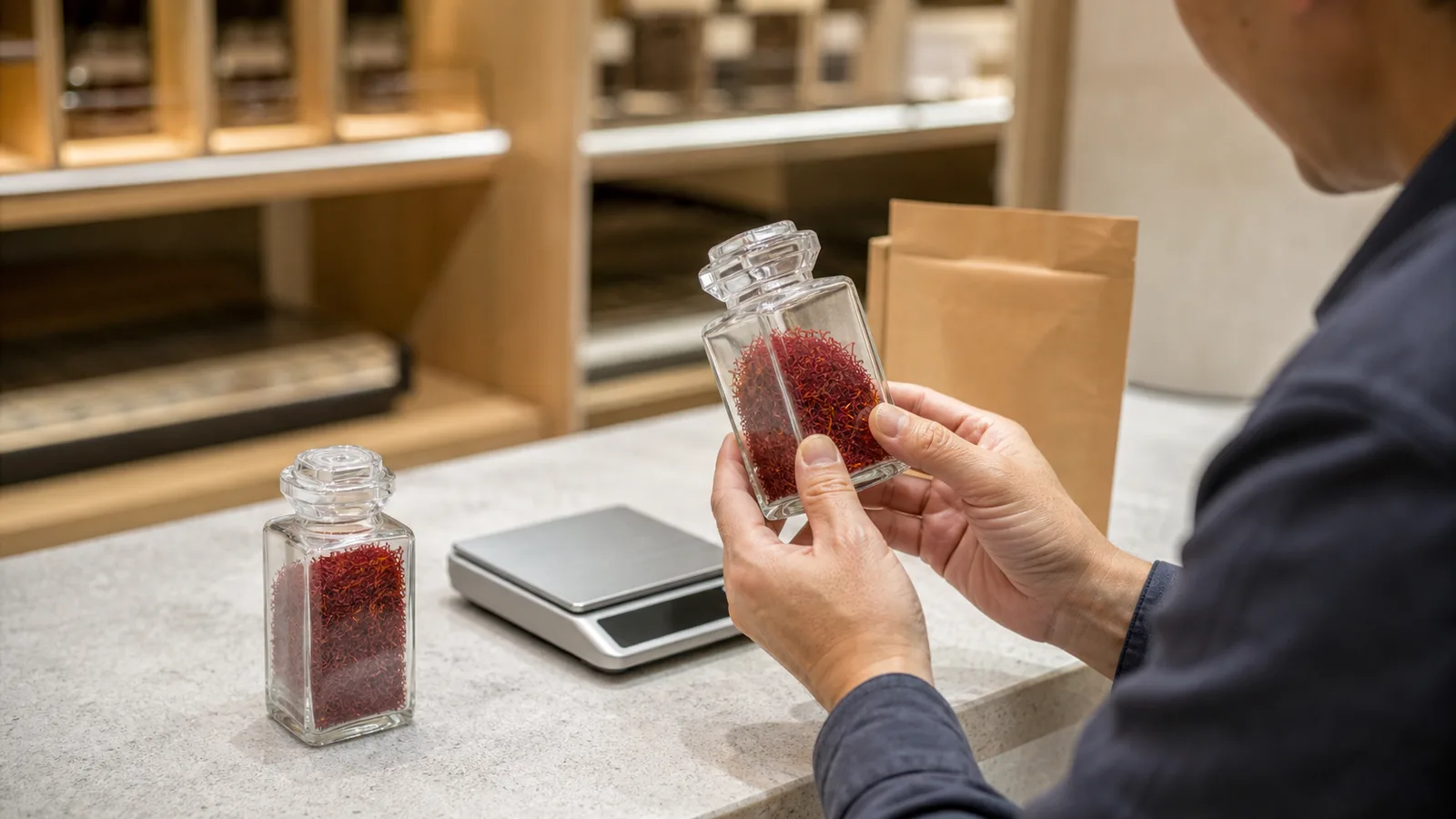
Compare the net price per gram, including delivery, rather than comparing differently sized boxes. A decorative container can cost more than its contents. Small packs are sensible for an occasional cook because opened saffron slowly loses aroma.
A very cheap offer may reflect old stock, a lower cut, uncertain origin, adulteration or simply a different margin. A high price can also be inflated. Value comes from verified saffron quality, freshness, usable aroma and accountable service—not price alone.
Packaging and Seller Questions
- Is the pack sealed and suitable for food contact?
- Are net weight, lot or batch, seller identity and origin clear?
- Is there a quality or best-before date and practical storage advice?
- Can the seller explain any grade or laboratory claim?
- Are returns, damaged-pack procedures and contact details visible?
Where to Buy Saffron
Buy from a specialist, established grocer or retailer that answers those questions plainly. Marketplaces can carry good products, but the individual seller and lot still matter. Avoid loose powder with no traceability and certificates that cannot be matched to the product.
You can review our saffron selection and compare the information provided. For visual checks after purchase, read how to tell if saffron is real.